Hardcover. NY, Norton, 1st, 1961, Book: Very Good, Dust Jacket: Very Good, Hardcover in a bright, lightly worn dust jacket. Memories of growing up in Hancock, New Hampshire. B&w illustrations by Leonard Vosburgh. Clean copy.
Hardcover. New York, Harry N. Abrams, 1st, 1981, Book: Very Good, Dust Jacket: Very Good, Unpaginated. Hardcover with dust jacket. Black and white photographs throughout. Clean, toght copy with only light edge wear to dut jacket and cover boards.
Hardcover. Woodstock, Elm Tree Press, 1st Thus, 1926, Book: Very Good, Dust Jacket: None, 44 pages. INSCRIBED BY MARY M. BILLINGS FRENCH TO HERBERT H. HINES, WHO WROTE THE INTRODUCTION. Black & white tipped-in photographic illustrations. Covers show light wear. Clean, tight copy.
Softcover. self-published, 1st, circa 1990, Book: Very Good, Dust Jacket: None, Softcover, 48 pages. The author was a traveling salesman and railroad buff. In the course of his work in the 1930s, he had the opportunity to photograph many of the trains he traveled on. The variety of locomotives and the trackside structures captured should make this invaluable to historians and railroad fans.. Also includes 2 carefully drawn maps. Clean copy.
Softcover. Manchester, VT, Friends of Hildene, Inc., 1st, 2004, Book: Very Good, Dust Jacket: None, 280 pages. Softcover. "Vermont and the North Shire in the Civil War". B/w illustrations throughout. Very clean inside and out. From the back cover: "This is the story of the Equinox Guards, who joined to fight for the Union cause in the fall of 1861."
Hardcover. Boston, MA, Little Brown & Company, 1st, 1928, Book: Good, Dust Jacket: None, Hardcover, light gray cloth with red lettering, 228 pages. INSCRIBED BY AUTHOR on prelim-page. Slight wear and soil to covers, internally very good
Hardcover. Middletown, CT, Wesleyan University Press, 1st, 1976, Book: Very Good, Dust Jacket: Very Good, Hardcover, 180 pages. b&w illustrations throughout. Brings together for the first time all of Stock's extant papers-his will, one lengthy letter to his brother, various newspaper notices concerning him, and his remarkable journal written sometime after 1846. In addition, it includes reproductions of all known surviving Stock paintings. Green cloth, gilt lettering to spine. yellow pictorial dust jacket, minor wear to spine. Like new. A very nice, clean and tight copy.
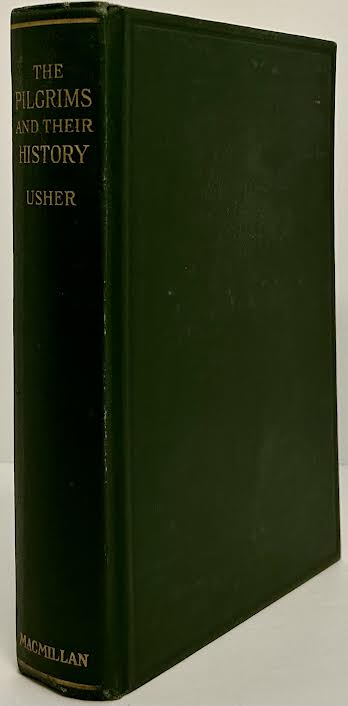
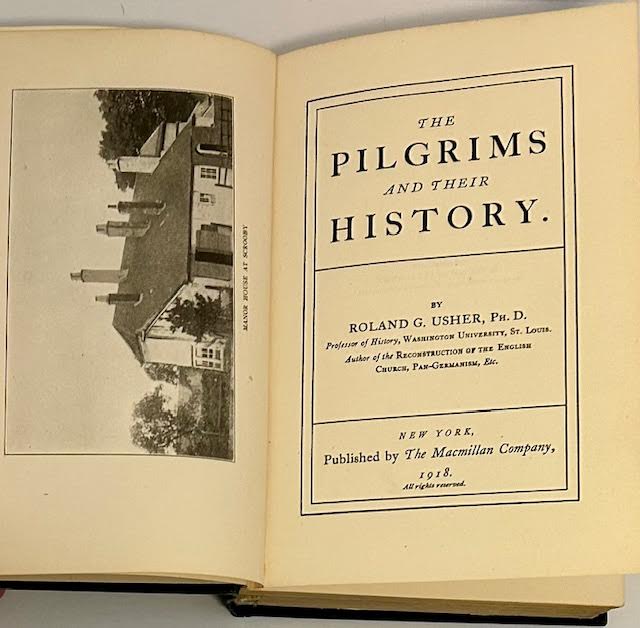
Hardcover. New York, Macmillan Company, 1st Edition, 1918, Book: Very Good, Dust Jacket: None, 310 pages including publisher advertisements. B/w illustrations throughout, including frontispiece. Decorated ribbon bookmark, no longer attached, but laid in. Black cloth cover boards, gilight title on spine. Tanning to pages and edges, otherwise unmarked.
Hardcover. Middletown CT, Wesleyan University Press, 1st, 2011, Book: Very Good, Dust Jacket: Very Good, Hardcover in a bright dust jacket. The first book to look in detail at the turnpikes, steamboats, canals, railroads, and trolleys (street railroads) that helped define Connecticut and shape New England. Advances in transportation technology during the nineteenth century transformed the Constitution State from a rough network of colonial towns to an industrial powerhouse of the Gilded Age. From the race to build the Farmington Canal to the shift from water to rail transport, historian and transportation engineer Richard DeLuca gives us engaging stories and traces the significant themes that emerge as American innovators and financiers, lawyers and legislators, struggle to control the movement of passengers and goods in southern New England. The book contains over fifty historical images and maps, and provides an excellent point of view from which to interpret the history of New England as a whole. Clean copy.
Hardcover. Middletown CT, Wesleyan University Press, 1st, 2011, Book: Very Good, Dust Jacket: Very Good, Hardcover in a bright dust jacket. The first book to look in detail at the turnpikes, steamboats, canals, railroads, and trolleys (street railroads) that helped define Connecticut and shape New England. Advances in transportation technology during the nineteenth century transformed the Constitution State from a rough network of colonial towns to an industrial powerhouse of the Gilded Age. From the race to build the Farmington Canal to the shift from water to rail transport, historian and transportation engineer Richard DeLuca gives us engaging stories and traces the significant themes that emerge as American innovators and financiers, lawyers and legislators, struggle to control the movement of passengers and goods in southern New England. The book contains over fifty historical images and maps, and provides an excellent point of view from which to interpret the history of New England as a whole. Clean copy.
Hardcover. Chapel Hill NC, University of North Carolina, 1st, 1991, Book: Very Good, Dust Jacket: Very Good, Hardcover in a bright dust jacket, 363 pages. In examining the founding of New England towns during the seventeenth century, John Frederick Martin investigates an old subject with fresh insight. Whereas most historians emphasize communalism and absence of commerce in the seventeenth century, Martin demonstrates that colonists sought profits in town-founding, that town founders used business corporations to organize themselves into landholding bodies, and that multiple and absentee landholding was common. In reviewing some sixty towns and the activities of one hundred town founders, Martin finds that many town residents were excluded from owning common lands and from voting. It was not until the end of the seventeenth century, when proprietors separated from towns, that town institutions emerged as fully public entities for the first time. Name on front endpaper, otherwise clean.
Hardcover. Shelburne, Vermont, New England Press, 1st, 1993, Book: Near Fine, Dust Jacket: Very Good, 349 pages. Volume I covers Addison Railroad to the Hardwick & Woodbury Railroad, 27 railroads in all. Red cloth covers, gilt titles to spine, dust jacket illustrate with color watercolor by Laura Brown, textured decorated endpapers, profusely illustrated with b&w plates. Stapled notes on Addison Railroad included. Very slight rubbing to dust jacket, clean covers, crisp, unmarked pages; a beautiful neat, tight copy in great condition.
Hardcover. Boston, L. C. Page & Co., 1st impression, 1912, Book: Very Good, Dust Jacket: None, 243 pages, b&w illustrations, illustrated end paper. Gray covers w/ gilt lettering and design. Gilt top edge. Rough-cut pages. Light edge wear to covers. Sticker inside front cover. Else a very clean, tight copy.
Hardcover. Brattleboro, VT, Stephen Daye Press, 2nd Printing, 1937, Book: Very Good, Dust Jacket: Fair, Hardcover, 39 pages, dust jacket edge fade and small chunks missing, otherwise, internally very clean and tight.
Hardcover. Rutland, Sharp Offsett Printing, 1st, 1990, Book: Very Good, Dust Jacket: None, Hardcovers in bright dustjackets. SIGNED BY AUTHOR. Includes parts 1 and 2. Approx. 400 pages. B&W illustrations throughout. Rail map laid-in to part 1. Black pictorial covers. Pen mark on bottom edge of part 2. Overall, a clean, tight set.
Hardcover. New York, Burt Franklin, reprint, Book: Very Good, Dust Jacket: None, Hardcover, 292 pages, b&w illustrations. Maroon covers w/ gilt lettering on spine. A very clean, tight copy in great condition.
Hardcover. Harrisburg PA, National Historical Society, reprint, 1988, Book: Very Good, Dust Jacket: None, Hardcover, glossy green pictorial boards. No DJ as issued. Volume 16 of the Architectural Treasures of Early America. From material originally published as the Georgian Period edited by Professor William Rotch Ware. 224 page book with historic photographs and home plans. Clean copy.
Hardcover. New York, D. Appleton and Company, 1st Edition, 1931, Book: Very Good, Dust Jacket: None, 406 pages. Hardcover. B/w illustrations throughout. Deckled edges. Previous owner's name on front flyleaf. Some tanning to edges, lighter tanning to pages, though unmarked. Gray cover boards, blue quarter cloth. Slight agewear. Autobiography of childrens' author.
Hardcover. New York, Abbeville Press, 1st, 1987, Book: Very Good, Dust Jacket: Very Good, Hardcover, 280 pages. Red cloth cover with embossed title and gilt lettering to spine, acetate-protected color-illustrated dust jacket, 301 illustrations with 100 in full color. Book in excellent condition.
Hardcover. Boston, David R. Godine, 1st, 2015, Book: Very Good, Dust Jacket: Very Good, Hardcover in a bright dust jacket, oblong format, 188 pages illustrated in color. Long before television and the internet, entertainment was often a performance at the local grange or Town Hall. Since there wasn't much money for costumes or props, the plays relied on all-purpose scenic backdrops - painted canvases of local scenes and interest. And they were often glorious. Many of these minor masterpieces of vernacular art still survive and are presented in all their glory in this richly illustrated book celebrating the colorful and memorable painted curtains that graced the stages of countless New England towns. A remarkable team of conservators from "Curtains Without Borders" has overcome a century of dirt, damage, and neglect to restore hundreds of these historic theater curtains. This book presents exquisite photographs of these enormous pieces of art that have been hidden away and neglected for too long. Bump to top corner, causing mild crease to pages. Otherwise bright and clean.
Softcover. Baltimore, Johns Hopkins University Press, 1st, 2007, Book: Very Good, Dust Jacket: None, Softcover, 155 pages. Thomas Dennis emigrated to America from England in 1663, settling in Ipswich, a Massachusetts village a long day's sail north of Boston. He had apprenticed in joinery, the most common method of making furniture in sixteenth- and seventeenth-century Britain, and he became Ipswich's second joiner, setting up shop in the heart of the village. During his lifetime, Dennis won wide renown as an artisan. Today, connoisseurs judge his elaborately carved furniture as among the best produced in seventeenth-century America. Robert Tarule, historian and accomplished craftsman, brilliantly recreates Dennis's world in recounting how he created a single oak chest. Writing as a woodworker himself, Tarule vividly portrays Dennis walking through the woods looking for the right trees; sawing and splitting the wood on site; and working in his shop on the chest-planing, joining, and carving. Dennis inherited a knowledge of wood and woodworking that dated back centuries before he was born, and Tarule traces this tradition from Old World to New. He also depicts the natural and social landscape in which Dennis operated, from the sights, sounds, and smells of colonial Ipswich and its surrounding countryside to the laws that governed his use of trees and his network of personal and professional relationships. Clean copy.
NY, St. Martin's Press, 1st, 2002, Book: Very Good, Dust Jacket: Very Good, Hardcover in a bright, unclipped dust jacket. A masterful, definitive, and eloquent look at the enormous cultural and economic impact on America of New England's textile mills. The author, an award-winning CBS producer, traces the history of American textile manufacturing back to the ingenuity of Francis Cabot Lodge. The early mills were an experiment in benevolent enlightened social responsibility on the part of the wealthy owners, who belonged to many of Boston's finest families. But the fledgling industry's ever-increasing profits were inextricably bound to the issues of slavery, immigration, and workers' rights. William Moran brings a newsman's eye for the telling detail to this fascinating saga that is equally compelling when dealing with rags and when dealing with riches. Clean copy.

 "New England Flavor: Memories Of A Country Boyhood by: Haydn Sanborn Pearson")
 "New England Past: Photographs 1880-1915by: Sugden (editor), Jane")

 "New England Rail Album: A Traveling Salesman Remembers the 1930'sby: George Phelps")
 "No Braver Deeds: The Story of the Equinox Guardsby: Knight, Brian L.")
 "Not-Quite Puritans, The: Some Genial Follies and Peculiar Frailties of Our Revered New England Ancestors (SIGNED COPY)by: Lawrence, Henry W.")
 "Paintings and the Journal of Joseph Whiting Stock, Theby: Tomlinson, Juliette")
 "Pilgrims and their History, Theby: Usher, Roland G.")
 "Post Roads & Iron Horses: Transportation in Connecticut from Colonial Times to the Age of Steamby: Richard DeLuca")
 "Post Roads & Iron Horses: Transportation in Connecticut from Colonial Times to the Age of Steamby: Richard DeLuca")
 "Profits in the Wilderness: Entrepreneurship and the Founding of New England Towns in the Seventeenth Century by: John Frederick Martin")
 "Railroads of Vermont, Volume 1by: Jones, Robert C.")
 "Romantic Story of the Puritan Fathers, Theby: Addison, Albert Christopher")
 "Rudyard Kipling in New Englandby: Rice, Howard C.")
 "Rutland, The: 60 Years of Trying. Volume V, Parts 1 and 2: The Main Line, Rutland - Alburgh Vt. (SIGNED COPY)by: Nimke, R. W.")
 "Sailors' Narratives of Voyages Along the New England Coast, 1524-1624by: Winship, George Parker (Ed.)")
 "Southerner Discovers New England, Aby: Daniels, Jonathan")
 "Spirit of New England (Architectural Treasures of Early America, Vol. 16) by: Mullins, Lisa C. (editor)")
 "Stepping Westwardby: Richards, Laura E.")

 "Sunlight & Shadow: The Life and Art of Willard L. Metcalfby: de Veer, Elizabeth and Richard J. Boyle")
 "Suspended Worlds: An Illustrated History of New England Theater Scenery by: Christine Hadsel")
 "The Artisan of Ipswich: Craftsmanship and Community in Colonial New England by: Robert Tarule")
 "The Belles of New England:The Women of the Textile Mills and the Families Whose Wealth They Woveby: Moran, William")