Hardcover. NY, University Books, 1sr, 1966, Book: Good, Dust Jacket: None, Hardcover, orange cloth stamped in black, 400 pages. Discusses The Nature and State of Possession, Exorcism, and Shamanism. Looks at the history of possession, and its importance to religious psychology. With an appendix on Parapsychology. Traugott Konstantin Oesterreich [1880-1949] was a German psychologist and philosopher at the University Tubingen. He published numerous works on parapsychology and the occult. This is an ex-lib copy with stamping, residue to endpapers. No dust jacket, small sticker on spine, clean interior.
Softcover. New York, Perigee Books, Reprint, 1981, Book: Very Good, Dust Jacket: None, 446 pages. Softcover with only light shelf wear to covers. Light marginal foxing to top edge. Clean, unmarked copy.
Hardcover. New York, Appleton and Co., reprint, 1896, Book: Very Good, Dust Jacket: None, Three separate hardcover volumes: Vol. 1 - 642 pages. Vol. 2 divided into two parts, 302 pages, 303-696 pages. All bound in half leather with matching marbled boards. Leather is chipped and cracked in places. Overall, a clean and tight set, small name label on front pastedowns. NOTE: THIS LARGE HEAVY SET UNAVAILABLE FOR SHIPPING OUTSIDE THE U.S.
Hardcover. Ithaca, NY, Cornell University Press, 1st, 2007, Book: Near Fine, Dust Jacket: Near Fine, 126 pages. Hardcover. Black cover boards, gilt title on spine. Pages clean and bright. Binding tight. Spine straight. Dust jacket unclipped, vibrant, and glossy. All in like-new condition, excellent. One of the most remarkable discussions on fate, providence and free choice in Late Antiquity. It continues a long debate that had started with the first polemics of the Platonists against the Stoic doctrine of determinism. This first English translation will bring the arguments Proclus formulates again to the fore.
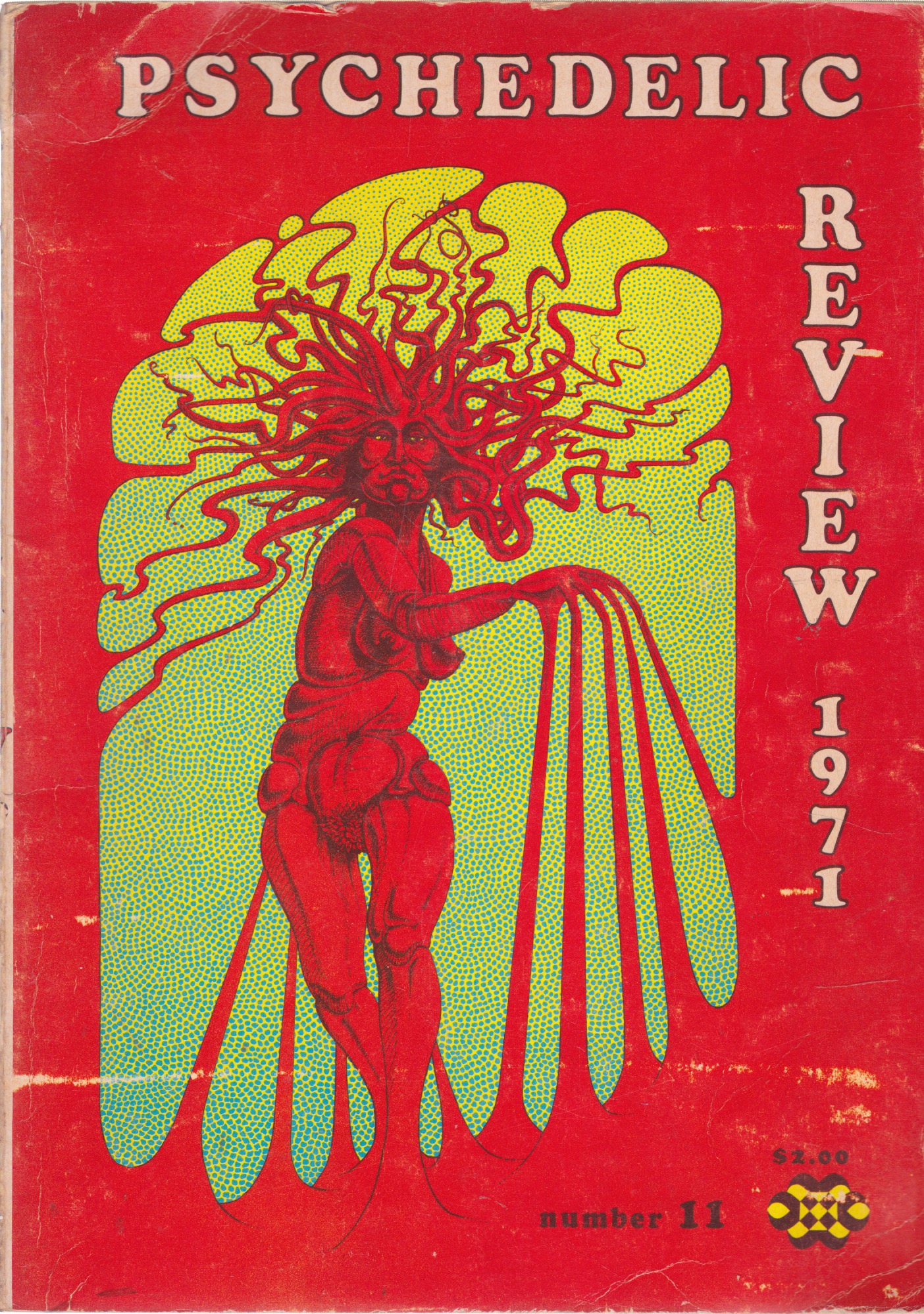
Softcover. San Francisco, Psychedelic Review, 1st, 1971, Book: Very Good, Dust Jacket: None, Softcover with color pictorial wrappers, 85 pages. Black and white illustrations throughout. The last issue of the controversial journal on psychedelic substances, originally founded by Timothy Leary and Richard Alpert. Mild wear, light soil, overall very good, no markings.
Hardcover. New York, Philosophical Library, Inc, 1st, 1961, Book: Good, Dust Jacket: Fair, 138 pages. Hardcover. Dust jacket unclipped. Covers slightly bent with touch of foxing, but otherwise good. Dust jacket has some moisture damage on back and some chipping at spine. Clean inside.
Hardcover. New York , Appleton, 1st, 1920, Book: Good, 336 pages, hardcover with no dust jacket. Green cloth covers with black lettering. Minor wear, clean copy.
Hardcover. Ann Arbor MI, The University of Michigan Press, 1st, 1999, Book: Very Good, Dust Jacket: Very Good, Hardcover in a bright dust jacket, 354 pages. INSCRIBED BY THE AUTHOR on title page. Light pencil marking to 5 pages, otherwise clean.
Hardcover. La Salle, Illinois, Open Court, 1st, 1974, Book: Good, Dust Jacket: Fair, Hardcover, 151 pages. No. 14 of the Paul Carus Lecture Series. Tears on dust jacket and some foxing on rear of dust jacket. Dust jacket rubbing on front. Previous owner's signature on front flyleaf. Small notes and markings in pencil on about 20 pages. Light creasing on top edge. Nice reading copy.
Hardcover. Phildelphia, W.B. Saunders Company, 1st, 1953, Book: Very Good, Dust Jacket: None, Hardcover, red cloth binding with spine labeling in black and gilt. Clean text; 842 pages, indexed; with bibliography and appendices. Title page with 1953 and no other printings indicated so assumed first printing. Based on data collected from 8,000 females, this book covers all aspects of sexuality as it relates to the human female. Owner's small embossed stamp on front fly leaf, otherwise clean. No dust jacket.
Hardcover. Phildelphia, W.B. Saunders Company, 1st, 1948, Book: Very Good, Dust Jacket: None, Hardcover, red cloth binding with spine labeling in black and gilt. Clean text; 804 pages, indexed; with bibliography and appendices. Title page with 1948 and no other printings indicated so assumed first printing. Pioneering study -- influential and highly controversial, followed five years later by the companion "Sexual Behavior in the Human Female." Owner's small embossed stamp on front fly leaf, otherwise clean. No dust jacket.
Hardcover. NY, Julian Press, 1st, 1958, Book: Very Good, Dust Jacket: None, Hardcover, 207 pages. Black cloth with gilt lettering on spine, decorative device on front cover. According to his biographers, Freud was not comfortable in making hand passes and touching the subject, which were the (limited) techniques available at the end of the 19th century. Freud studied with Charcot and Bernheim (the two schools of thought which conflicted with each other), but later gave hypnosis up in favor of his free association technique. This book begins by discussing the reasons Freud did that. It states that Freud at the end of life regretting not using hypnosis more. His followers balked at hypnosis, erroneously believing the cures were temporary since the ego was being bypassed (and their theoretical beliefs required the ego to be the agent). But this book reveals that Freud did not abandon hypnosis for the reasons commonly thought, and so it is essential reading for all students of Freud. The second part of the book goes into commentary on hypnosis in theory and practice. Small ink doodle to front fly leaf, otherwise clean.
Hardcover. Oxford UK, Clarendon Press, 1st, 2000, Book: Very Good, Dust Jacket: Very Good, Hardcover in a bright dust jacket, 461 pages. This, the final volume of the Clarendon Press edition of Burton's Anatomy of Melancholy, contains commentary on the Third Partition, in which Burton considers two especial forms of the disease, Love and Religious Melancholy. The volume includes an index which gives biographical and bibliographical information concerning the more than 1550 authorities cited in the Anatomy, most of whom are little known today. Also included are an index of the major topics discussed in the Anatomy, and a complete bibliography of all the works mentioned in the commentary. Clean, bright copy.
Softcover. Amherst, University of Massachusetts Press,, reprint, 2005, Book: Very Good, Dust Jacket: None, Softcover, 339 pages including index. A wide-ranging exploration of conflicting American attitudes toward affluence. This book charts the reactions of prominent American writers to the unprecedented prosperity of the decades following World War II. Clean, like new.
Hardcover. Cambridge MA, The MIT Press, 4th pr., 2002, Book: Very Good, Dust Jacket: Good, Hardcover in a dust jacket that has a faded spine. Do we consciously cause our actions, or do they happen to us? Philosophers, psychologists, neuroscientists, theologians, and lawyers have long debated the existence of free will versus determinism. With the publication of The Illusion of Conscious Will in 2002, Daniel Wegner proposed an innovative and provocative answer: the feeling of conscious will is created by the mind and brain; it helps us to appreciate and remember our authorship of the things our minds and bodies do. Yes, we feel that we consciously will our actions, Wegner says, but at the same time, our actions happen to us. Although conscious will is an illusion ("the most compelling illusion"), it serves as a guide to understanding ourselves and to developing a sense of responsibility and morality. Clean copy.
Hardcover. London, William Heinemann , 1st, 2000, Book: Very Good, Dust Jacket: Very Good, Hardcover in a bright, unclipped dust jacket. Many aspects of how and why the human mind evolved remain mysterious. While Darwinian natural selection has successfully explained the evolution of much of life on earth, it has never seemed fully adequate to explain the aspects of our minds that seem most uniquely and profoundly human--art, morality, consciousness, creativity, and language. Nor has natural selection offered solutions to how the human brain evolved so quickly--in less than 2 million years--and why such a large brain remains unique to our species. Now, in The Mating Mind, a pioneering work of evolutionary science, these aspects of human nature are at last explored and explained. Until fairly recently most biologists have ignored or rejected Darwin's claims for his other great theory of evolution--sexual selection through mate choice, which favors traits simply because they prove attractive to the opposite sex. But over the last two decades, biologists have taken up Darwin's insights into how the reproduction of the sexiest is as much a focus of evolution as the survival of the fittest. Clean copy.
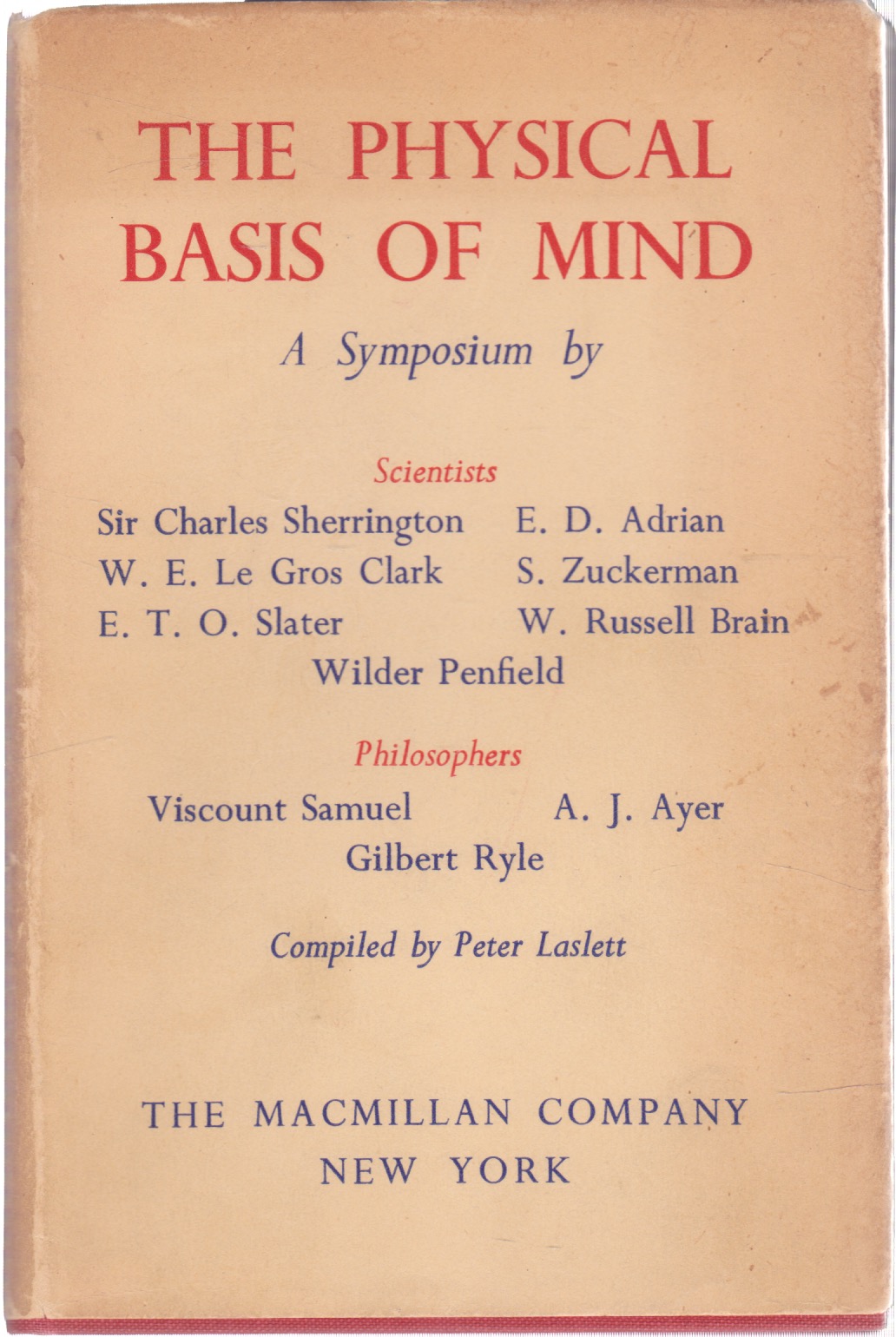
Hardcover. NY, Macmillan, 1st US, 1950, Book: Very Good, Dust Jacket: Good, Hardcover in a worn dust jacket, 79 pages. Talks originally delivered on the BBC Third Programme, on what goes on in the body when men and animals are thinking. A Series of Broadcast Talks by Sir Charles Sherrington, E.D. Adrian, W.E. Le Gros Clark, S. Zuckerman, E.T.O. Slater, Wilder Penfield, W. Russell Brain, Viscount Samuel, A.J. Ayer & Gilbert Ryle. Dust jacket shows wear at edges and darkening to paper. Clean, tight copy.
Softcover. Cambridge UK, Cambridge University Press, reprint, 1991, Book: Very Good, Dust Jacket: None, Softcover, 286 pages, b&w illustrations. This book examines the sense of smell in humans, comparing it with the known functions of the same sense in other animals. Odorous cues play a role in sexual physiology and behavior in animals and there are claims that odor can play the same role in humans. The place of odors and scents in aesthetics and in psychoanalysis serves to illustrate the link between the emotional centers and the brain. The book presents arguments to explain the way in which our ancestral past has given rise to our modern day olfactory enigmas. Contains a glossary and chapter summaries. Clean copy.
Hardcover. London, Kegan Paul Trench Trubner, 1st, 1928, Book: Very Good, Dust Jacket: None, Hardcover, red cloth spine with printed paper label and white paper covered boards with red titles, 110 pages. This copy INSCRIBED & SIGNED by Stefansson on the half title page, and dated 'London, June 5 1931.' No. 16, in the General series of 'Psyche Miniatures'.
Hardcover. NY, W. W. Norton & Company, 1st, 2011, Book: Very Good, Dust Jacket: Very Good, Hardcover in a bright, unclipped dust jacket. Titanic Thompson is the rollicking true story of one of the most charismatic characters in twentieth-century America. Travelling only with his golf clubs, a .45 revolver, and a suitcase full of cash, this is the legendary tale of a man who was married five times to five different girls, all teenagers on their wedding day. He killed five men, though he'd say 'they'd all agree they had it coming to them'. He won and lost millions in a time when being a millionaire still really meant something.Filled with fascinating facts and famous faces - Harry Houdini, Al Capone, Lee Trevino, Arnold Rothstein and Jean Harlow all make appearances - this is a brilliant and compelling snapshot of life on the road in freewheelin' America.
Hardcover. NY, Harrison Smith & Robert Haas, 1st, 1933, Book: Very Good, Dust Jacket: None, Hardcover, blue cloth covers with black and gilt lettering on spine. A scarce study of suicide published in the thirties. B&w photo of co-author Dublin laid-in. Both writers worked for the Metropolitan Insurance Company. Clean copy.
Hardcover. Dallas, The Pegasus Foundation/The Dallas Institute of Humanities and Culture, reprint, 1983, Book: Very Good, Dust Jacket: Very Good, Hardcover in a lightly worn dust jacket, 213 pages. Translated from the French by Edith Farrell. Gaston Bachelard is acclaimed as one of the most significant modern French thinkers. From 1929 to 1962 he authored twenty-three books addressing his dual concerns, the philosophy of science and the analysis of the imagination of matter. The influence of his thought can be felt in all disciplines of the humanities - art, architecture, literature, language, poetics, philosophy, and depth psychology. His teaching career included posts at the College de Bar-sur-Aube, the University of Dijon, and from 1940 to 1962 the chair of history and philosophy of science at the Sorbonne.
Hardcover. NY, Harper & Brothers, 1st, 1941, Book: Very Good, Dust Jacket: Poor, Hardcover, navy cloth, title in gilt to spine. In a worn and chipped dust jacket with some closed tears. 107 pages, b&w illustrations. Clean copy.
Hardcover. Philadelphia, Running Press, 1st, 2021, Book: Very Good, Dust Jacket: None, Hardcover in pictorial boardas. This collection of fifty true disclosures by women around the world from all ages and walks of life reveals their innermost thoughts and feelings during sex, accompanied by full-color interpretive illustrations from cutting-edge artists. Author Lucy-Anne Holmes has spoken to women from around the globe, ranging in age from 19-75, as they reveal their innermost thoughts and feelings during sex. The result is an incredible compendium of true disclosures that are funny and sad, shocking and tender. Clean copy.
Hardcover. NY, Jason Aronson, 1st, 1990, Book: Very Good, Dust Jacket: Very Good, Hardcover in a bright dust jacket. Donald Woods Winnicott (1896 - 1971) was an English paediatrician and psychoanalyst who was especially influential in the field of object relations theory and developmental psychology. Clean, like new.
Hardcover. Cambridge UK, Polity, reprint, 2013, Book: Very Good, Dust Jacket: Very Good, Hardcover in a bright dust jacket, 503 pages. In his major investigation into the nature of humans, Peter Sloterdijk presents a critique of myth - the myth of the return of religion. For it is not religion that is returning; rather, there is something else quite profound that is taking on increasing significance in the present: the human as a practising, training being, one that creates itself through exercises and thereby transcends itself. Rainer Maria Rilke formulated the drive towards such self-training in the early twentieth century in the imperative 'You must change your life'. In making his case for the expansion of the practice zone for individuals and for society as a whole, Sloterdijk develops a fundamental and fundamentally new anthropology. The core of his science of the human being is an insight into the self-formation of all things human. The activity of both individuals and collectives constantly comes back to affect them: work affects the worker, communication the communicator, feelings the feeler. It is those humans who engage expressly in practice that embody this mode of existence most clearly: farmers, workers, warriors, writers, yogis, rhetoricians, musicians or models. By examining their training plans and peak performances, this book offers a panorama of exercises that are necessary to be, and remain, a human being. Clean copy.



 "Primal Scream, The - Priamal Therapy - The Cure for Neurosisby: Janov, Arthur")

 "Proclus On Providenceby: Steel, Carlos (Translator)")


 "Psychoanalysis of the Prostituteby: Choisy, Maryse")


 "Roots of Reference: The Paul Carus Lectures, Theby: Quine, W. V.")


 "Sigmund Freud and Hypnosis: The Interaction of Psychoanalysis & Hypnosis by: Kline, Milton")

 "The Anxieties of Affluence: Critiques of American Consumer Culture, 1939-1979by: Horowitz, Daniel")