Hardcover. London, J. Johnson, R. Faulder, J. Walker, etc., 1st Thus, 1805, Book: Good, Dust Jacket: None, 693 pages plus index and errata. Full leather hardcover with gilt decoration, blindstamping, raised bands along spine. Marbled endpapers and edges. Due to cracked hinge, front cover is detached - good candidate for repair as all original paper is present. Previous owners bookplate on inside front cover. Body of book is clean, tight. Good reference copy. PLEASE NOTE: DUE TO SIZE & WEIGHT, DOMESTIC SHIPPING ONLY.
Softcover. NY, Meridian, reprint, 1994, Book: Very Good, Dust Jacket: None, Softcover, 465 pages, b&w illustrations. This encyclopedic guide explores the rich and varied meanings of more than 2,000 symbols--from amethyst to Zodiac.
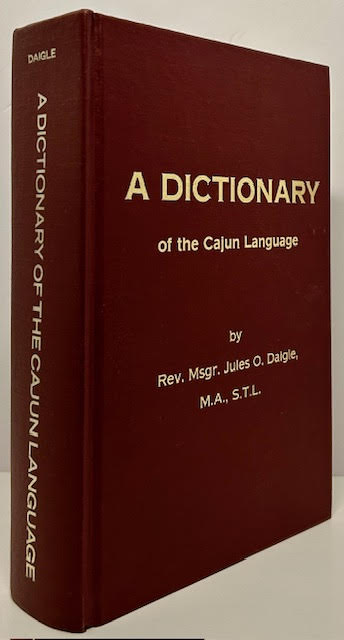
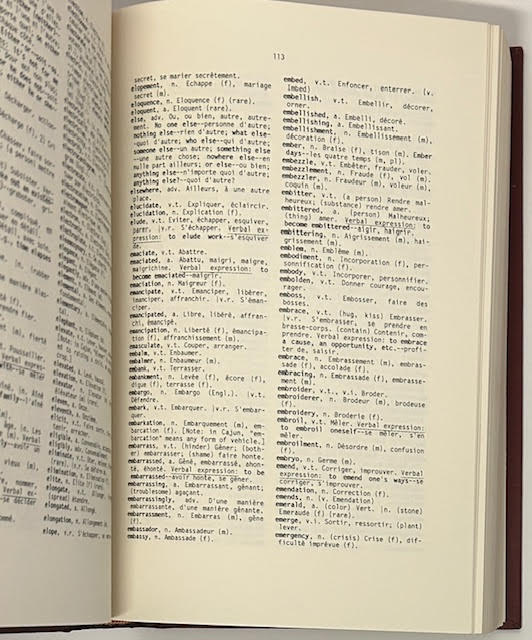
Hardcover. Ann Arbor, MI, Edwards Brothers, Inc., 1st Limited Edition, 1984, Book: Very Good, Dust Jacket: None, 631 pages. Hardcover. SIGNED BY AUTHOR ON FRONT FLYLEAF. Cajun to English/English to Cajun Dictionary. Red cover boards, gilt title on spine and front cover. No Dust jacket. Binding very good. Pages clean and bright. Spine straight.
Hardcover. Columbia MO, University of Missouri, 1st, 1981, Book: Very Good, Dust Jacket: Very Good, Hardcover in a bright dust jacket, 216 pages. This unique reference book is a compendium of makers and manufacturers of every variety of musical instrument made in the United States circa 1981. It provides names and addresses of instrument makers indexed alphabetically. Each entry gives all known information on the total and annual number of instruments the maker has produced, the number of workers in the shop, the year the individual or firm began manufacturing instruments, whether the instruments are available on demand or made to order, and whether a brochure is available from the maker. Complete cross-references are provided for companies known by more than one name, for partnerships, and for parent and subsidiary firms. Instruments are also indexed, and makers are listed by state for the convenience of the reader. Lists of schools of instrument making and relevant organizations and publications are included as appendixes. An invaluable source of information for historians and for the rapidly growing number of collectors of musical instruments, who will be able to use the data gathered here in appraising instruments and tracing their history.
Hardcover. Boston, MA, Isaiah Thomas and Company, 1st Edition, 1789, Book: Good, Dust Jacket: None, 416 pages. Hardcover. Full-calf leather bound with gilt rule edging on the spine (faded--see image), red leather label ruled in gilt (gold), title on spine also in gilt. No pages missing. Previous owner's dated signature on front flyleaf, title page and facing page. Front and rear hinges tender. Signature (pp. 53-66) is coming away from spine at bottom, still attached. Hinge split at gutter after front fly leaf which is slightly detached, as well. Small wear hole on page before title page. Wear to cover boards about the edges and at spine. Small bit of leather missing at bottom of spine (see image). Front cover board has a slight warp (see image). Some foxing and tanning from age throughout including edges. This old volume is a treasure written by the Father of the English Dictionary, with a dedication to Benjamin Franklin, a contributor.
Hardcover. Taschen, 1st, 2006, Book: N, Hardcover in a bright dust jacket. 792 pages. This volume covers the second half of the 1970s, an era marked by the oil crisis and the related global economic crisis. For the first time, architecture and design dealt with alternative resources, ecological building methods, and recyclable materials. Nevertheless synthetics remained present in many fields, especially in interior design. Examples of projects featured are the postmodern and lightflooded buildings by Richard Meier, the modernistic buildings by Foster Associates, the Centre Georges Pompidou by Renzo Piano and Richard Rogers, and the buildings of the Japanese architects Arata Isozaki and Kisho Kurakawa. The industrial design of modern transport systems, office machines, and electrical appliances is also highlighted.
Hardcover. Taschen, 1st, 2006, Book: Very Good, Dust Jacket: Very Good, Hardcover in a bright dust jacket, 580 pages, profusely illustrated. This title covers the years 1985-1989 - the eighties in full force. The many styles of architecture and design that became prominent in the second half of the 1980s are the focus of this volume. Along with Postmodernism - represented by buildings, interior decoration, and designs by Peter Shire, Richard Meier, Gustav Peichl, Ricardo Bofill, Ettore Sottsass, Arata Isozaki, and the Arquitectonica firm - it was the buildings of the High-Tech Style which dominated. The most prominent examples are the Head Office of the Hong Kong & Shanghai Banking Corporation in Hong Kong, designed by the architectural firm Foster Associates, and the Lloyds Building by Richard Rogers in London. In publisher's shrink wrap.
Hardcover. Taschen, 1st, 2006, Book: Very Good, Dust Jacket: Very Good, Hardcover in a bright dust jacket, Taschen's Domus collection is a major publishing achievement and a must-have item for all design and architecture teaching institutions, practicing architects, designers, collectors, students, and anyone who loves design. /// The first half of the 1990s represented a generational change in architecture and design.//// This title covers the years 1990-1994 - the next generation. The first half of the 1990s, this volume's focus, marked a shifting of the generations in architecture and design. "domus" - up to date as always - documented the work of this new generation with elaborate articles and reports. The architects Tadao Ando, Jean Nouvel, David Chipperfield, Philippe Starck, Rem Koolhaas, Peter Eisenman, Jacques Herzog, and Pierre de Meuron made their debuts in domus during this period. In addition, established architectural greats like Frank O. Gehry, Mario Bellini, Richard Meier, Renzo Piano, Norman Foster, Santiago Calatrava, and Zaha Hadid were also featured. In product design, Marc Newson, Rodney Kinsman, Jasper Morrison as well as the brothers Fernando and Humberto Campana appeared in the spotlight.
Hardcover. Taschen, 1st, 2006, Book: Very Good, Dust Jacket: Very Good, Hardcover, 580 pages. 1950-1954: Architecture of the Avant-Garde. This volume covers the first half of the 1950s, a time characterized by great optimism. The consequences of World War II had largely been overcome, the most urgent needs of the population were satisfied, and economic prospects looked bright. Architecture and design looked for new forms of expression, for new materials and their applications - and the possibilities seemed limitless. Volume III shows contemporary trends of the time through detailed reports on the ninth Triennial in Milan and about designers like Tapio Wirkkala, Finn Juhl, Carlo de Carli, Carlo Mollino, Piero Fornasetti, Marco Zanuso, Harry Bertoia and George Nelson. Via features on Le Corbusier's famous Unite d'Habitation in Marseille, the groundbreaking Case Study Houses by Charles and Ray Eames, the efforts of Richard Neutra in California, the work of Oscar Niemeyer in Brazil, and the futuristic Olivetti Showroom by Studio BBPR in New York. In publisher's shrink wrap.
Hardcover. Taschen, 1st, 2006, Book: Very Good, Dust Jacket: Very Good, Hardcover, 580 pages. 1960-1954: Design Goes Pop. This volume concentrates on the architecture and design of the first half of the 1960s, characterized by the coexistence of a number of different styles. The aftermath of the International style and Good Design were still noticeable whereas Organic Design, which had developed in parallel since the late 1940s, gradually lost its influence. From the early 1960s onwards, a new force took its place, geared toward Pop Art and popular culture, leading to Pop Design. This trend is particularly recognizable in interior design, where a variety of new synthetics and foam plastics replaced traditional materials such as metal, glass or wood, pointing the way to completely new designs. Volume V documents this with examples of designs by Ray and Charles Eames, Verner Panton, Achille and Pier Giacomo Castiglioni, and Joe Colombo. On the architectural side, the impressive buildings of Gio Ponti, Carlo Scarpa, Angelo Mangiarotti, James Stirling, and others./// Hardcover, 580 pages. 1960-1954: Design Goes Pop. This volume focuses on the architecture and design of the first half of the 1960s. A new force lead to Pop Design. This trend is particularly recognizable in interior design, where a variety of new synthetics and foam plastics replaced traditional materials such as metal, glass or wood.
Hardcover. Boston, David R. Godine, 1st, 2012, Book: Very Good, Dust Jacket: Very Good, 221 pages. Hardcover. Illustrated with full color and black & white photographs. Price clipped dust jacket with light wear. Clean, tight copy.
Hardcover. New Haven, Yale University Press, 1st, 1964, Book: Very Good, Dust Jacket: None, Two hardcover volumes. V.1; 164 pages with text, V.2; 227 plates in color and b&w. Gray cloth, gilt title spine. Lacking slipcase and dust jacket, but in excellent shape. A very nice, tight, clean set.
Hardcover. Boston, Bruce Humphries, Inc., 1st, 1939, Book: Very Good, Dust Jacket: None, Hardcover, decorated boards with red cloth spine, 96 pages. INSCRIBED BY AUTHOR ON FRONT ENDPAPER. Previous owners signature at top of front endpaper. Illustrated with black & white photographs. Spine cloth faded. Clean, tight copy.
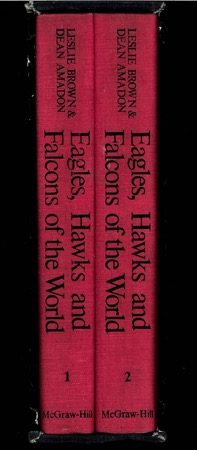
Hardcover. Middlesex UK, Country Life Books, 1st, 1968, Book: Very Good, Dust Jacket: None, 2 hardcover volumes in slipcase. Volume 1 - 414 pages plus section of black & white "Under-wing Plates". Full color and black & white illustrations throughout. A clean, bright copy. Volume 2 - 500 pages. Full color and black & white illustrations throughout. A clean, bright copy. Both volumes with brown cloth covers, gilt titles and decoration. A set that shows minimal wear to books and slipcase. PLEASE NOTE: DUE TO SIZE & WEIGHT, DOMESTIC SHIPPING ONLY.
Hardcover. London, Farrand Press, 1st, 1990, Book: Very Good, Dust Jacket: None, Hardcover, 374 pages. Black & white illustrations. Minor fading to cover cloth. Clean, tight copy. B&w frontispiece & 282 illustrations. An important study of the wide range of uses to which lithography was put through the 19th century, with chapters on military manuals, music printing, shorthand, facsimiles including the publications of Sir Thomas Phillipps; with a catalogue of 423 examples traced by Professor Twyman. No dust jacket.
Hardcover. London UK, Chapman & Hall, 1st, 1995, Book: Very Good, Dust Jacket: None, 510 pages, illustrated throughout in b&w. Pictorial laminated boards, no dust jacket. Light wear to edges of spine. else a very neat, clean, unmarked copy.
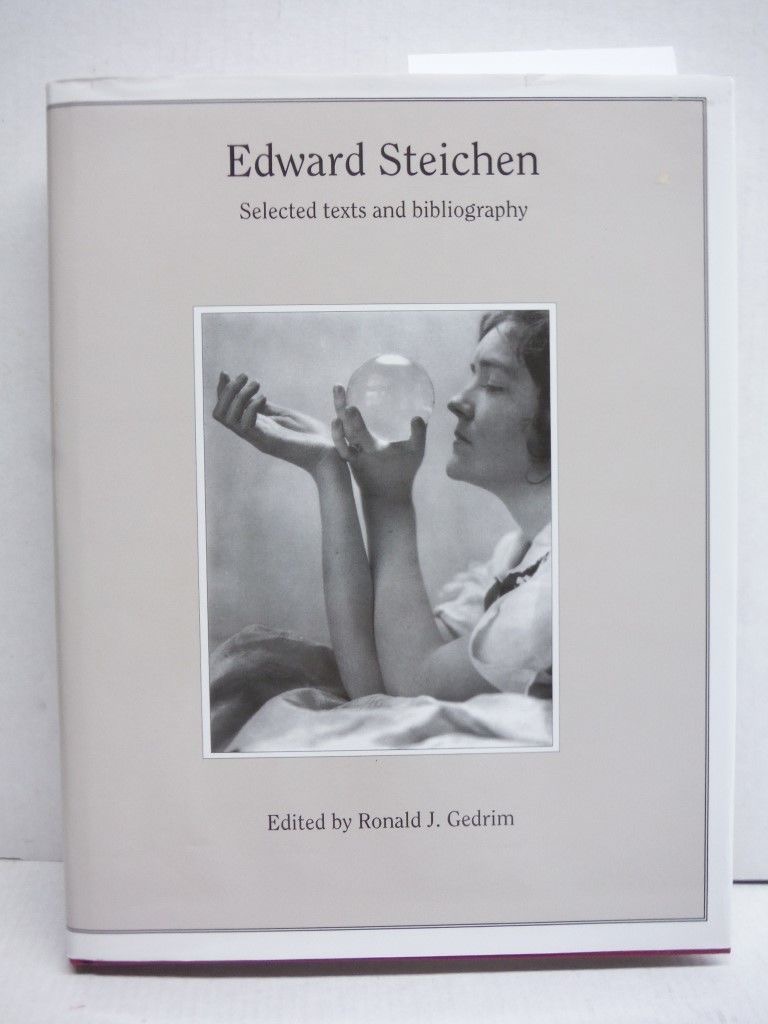
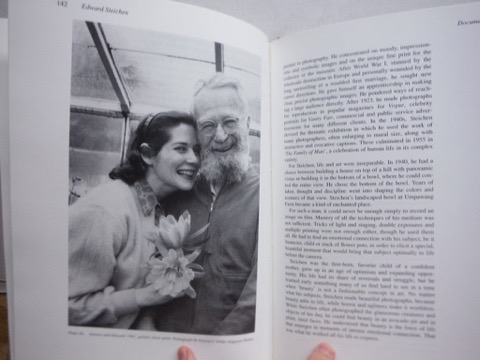
Hardcover. Oxford UK, Clio Press, 1st, 1996, Book: Very Good, Dust Jacket: Very Good, Hardcover in a bright dust jacket, maroon boards with gilt lettering along spine. Binding and hinges tight and square. 1996 publication, in like-new condition with no wear or distress. 202 pages including extensive bibliography; has black & white illustrations. A collection of writings by and about American photographer Steichen (1879-1973) who set new standards for advertising photography, helped pioneer aerial reconnaissance during the First World War and photography as a tool of propaganda during the Second, and served as the first Director of the Department of Photography at the Museum of Modern Art in New York.
Hardcover. London, William Tegg, 1st, 1860, Book: Very Good, Dust Jacket: None, 739 pages, rebound copy with gilt tile on spine and green cloth board. Minor edge fade, otherwise, very clean and tight copy.
Softcover. London/NY, Routledge , 1st, 1996, Book: Very Good, Dust Jacket: None, Softcover, 288 pages, illustrated in b&w. Empire Building is a study of how and why Western architecture was exported to the Middle East and how Islamic and Byzantine architectural ideas and styles impacted on the West.The book explores how far racial theory and political and religious agendas guided British architects (and how such ideas were resisted when applied), and how Eastern ideas came to influence the West, through writers such as Ruskin and buildings such as the Crystal Palace.Beautifully written and lavishly illustrated, Empire Building takes the reader on an extraordinary postcolonial journey, backwards and forwards, into the heart and to the edge of empire.
Hardcover. Plesant Plain OH, David Zimmerman, 1st, 1999, Book: Very Good, Dust Jacket: None, Hardcover, glossy pictorial boards, 268 pages illustrated in color. A visual reference for all kinds of tins for coffee, peanut butter, cocoa, tea, and various other food products. Also tins for spices, tobacco, cosmetics talcum powder, soap, typewriter ribbons, needles, pens, medicines, etc. Clean copy.
Hardcover. San Diego, CA, Advanced Marketing Services, 1st, 1999, Book: Very Good, Dust Jacket: Very Good, Hardcover, 816 pages, illustrated throughout in color. Large heavy volume. Light edgewear to dust jacket, else a clean, tight copy.
Hardcover. New York, Bulfinch, 1st, 2003, Book: Very Good, Dust Jacket: Very Good, 160 pages. Hardcover with dust jacket. Very clean, unmarked copy still in publishers shrik-wrap. An inspirational account of the global initiative to eliminate the scourge of polio offers one hundred stunning duotone photographs that capture the campaign in five polio endemic nations--Democratic Republic of Congo, India, Pakistan, Somalia, and Sudan.
Hardcover. London, Batsford, 1st, 1954, Book: Very Good, Dust Jacket: Very Good, Hardcover in a bright dust jacket, 256 pages, profusely illustrated in color and b/w. A detailed record of important children's books and stories from English literature between 1600 and 1900, with chapters on the "Prehistoric Age", Harris to "Alice", the triumph of nonsense, after Carroll, the importance of pictures, and more. Written by Percy Muir a distinguished English antiquarian bookseller, book collector, and bibliographer who served as president of both the Antiquarian Booksellers Association and the International League of Antiquarian Booksellers. Clean copy.

 "Dictionary of British Miniature Painters (2 vols.)by: Foskett, Daphne")

 "Dictionary of Symbolism: Cultural Icons and the Meanings Behind Them by: Biedermann, Hans")
 "Dictionary of the Cajun Language, A (SIGNED)by: Daigle, Jules O.")
 "Directory of Contemporary American Musical Instrument Makersby: Farrell, Susan Caust")
 "Dissertations on the English Language: with Notes, Historical and Critical, To Which is Added, by Way of Appendix, an Essay on a Reformed Mode of Spelling, with Dr. Franklin's Arguments on that Subject.")

 "Domus, Vol. 8, 1975-1979by: Casati, Cesare Maria")
 "Domus, Volume 10: 1985-1989by: Fiell, Peter")
 "Domus, Volume 11: 1990-1994by: Fiell, Peter")
 "Domus, Volume 3, 1950-1954by: Ponti, Lisa Licitri/ Luigi Spinelli, et al.")
 "Domus, Volume 5, 1960-1964by: Casciani, Stefano")
 "Dorade - The History of an Ocean Racing Yachtby: Adkins, Douglas D.")
 "Drawings From the Clark Art Institute. A Catalogue Raisonne of the Robert Sterling Clark Collection (2 Volumes)by: Haverkamp-Begemann,, Egbert & Standis D. Lawder, &")
 "Dreams Beneath Design - A Story of the History and Background of the Designs of Hooked Rugs, The (SIGNED COPY)by: McGown, Pearl K.")
 "Eagles, Hawks and Falcons of the World - A Detailed Two-Volume Work on Diurnal Birds of Preyby: Brown, Leslie/Dean Amadon")

 "Early Lithographed Booksby: Twyman, Michael")
 "Ecology of World Vegetationby: Archibold, O.W.")
 "Edward Steichen: Selected texts and bibliography (World Photographers Reference) by: Ronald J. Gedrim")
 "Eiiea Iitepoenta, or the Diversions of Purleyby: Tooke, John Horne")
 "Empire Building: Orientalism and Victorian Architectureby: Mark Crinson")
 "Encyclopedia of Advertising Tins: Small & Samples - Vol. IIby: David Zimmerman")
 "Encyclopedia of Civil Aircraft, The by: Bishop, Chris (Editor)")
 "End of Polio, The: A Global Effort To End A Diseaseby: Salgado, Sebastiao")
 "English Children's Books, 1600 to 1900 by: Muir, Percy")