Hardcover. London, George Routledge and Sons, 1st, Book: Very Good, Dust Jacket: None, Hardcover in maroon cloth with bright gilt lettering on spine. 439 pages + 8 pages of publisher's ads in rear.
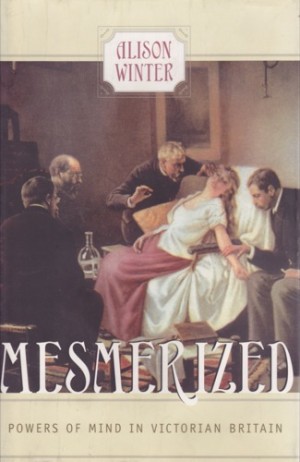
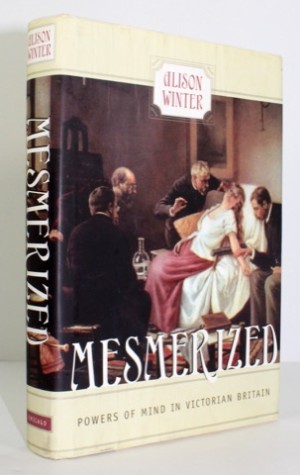
Hardcover. Chicago, University of Chicago Press, First Edition, 1998, Book: Very Good, Dust Jacket: Very Good, 464 pages. Hardcover. Ivory & light grey cloth boards with gilt titles to spine. Black & white illustrations throughout. Bright dust jacket with ligh wrinkles. Clean, unmarked copy.
Hardcover. Ann Arbor, MI, Ardis, 1st English, 1981, Book: Very Good, Dust Jacket: Good, Hardcover, 565 pages. B/w illustrations throughout. Gilt title on spine. Decorated endpapers. Dust Jacket shows some wear due to age: yellowing, fraying and chipping to edges of front, spine and back, but still in tact. Cover boards clean, covered in teal fabric and in good shape. Pages clean, edges slightly yellowed. From the front flap: "...a landmark work in Russian theater scholarship, this study reveals Meyerhold in the context of his time, as seen by friends and enemies, actors and critics, and analyzes the development of his remarkable career as Russia's most celebrated and influential experimental director."
Hardcover. US, Schiffer Publishing, Ltd., 1st, 2014, Book: Very Good, Dust Jacket: Very Good, 176 pages, illustrated throughout in color and b&w. Light edgewear to dust jacket, else a clean, tight copy. Roy Kemp's previously unpublished burlesque portfolio presents thirty-nine dancers performing in authentic clubs and backstage settings in 1950s New York. This nostalgic collection includes nearly 250 never-before-seen black and white and color photographs of well-known dancers, including Tempest Storm, Liz O'Leyar, Murine, Rita Gable, and Princess Domay, as well as other sultry performers, quite famous in their heyday. Kemp's talents as a photojournalist provide a fresh perspective on the lives of burlesque performers in this golden era. An artist as well as an investigator, Kemp created striptease photo montages and composed biographies for several dancers, giving the reader an intimate feel for the campy burlesque culture. This time capsule depicts live performances and peeps into club dressing rooms, and offers unedited material from pin-up photo sessions. It is a must-have for aspiring dancers, aficionados, or any modern-day guy or gal who appreciates the style and grit of this fabulous art form.
Hardcover. NY, Zone Books, 1st, 2011, Book: Very Good, Dust Jacket: Very Good, Hardcover in a bright, unclipped dust jacket. An examination of the ultimate power opera grants to singing: the reversal of death. In Operatic Afterlives, Michal Grover-Friedlander examines the implications of opera's founding myth-the story of Orpheus and Eurydice: Orpheus's attempt to revive the dead Eurydice with the power of singing. Grover-Friedlander examines instances in which opera portrays an existence beyond death, a revival of the dead, or a simultaneous presence of life and death. These portrayals-in operas by Puccini and other composers and performances by Maria Callas-are made possible, she argues, by the unique treatment of voice in the operas in question: the occurrence of a breach in which singing itself takes on an afterlife in the face of the singer's death. Clean copy, 252 pages.
Hardcover. NY, Harry N Abrams, 1st, 1998, Book: Very Good, Dust Jacket: Very Good, Hardcover, 160 pages, illustrated in b&w and color. Long before the movies were created, peepshows were appealing to a public eager for entertainment and enlightenment. The peepshowman and his box were a common sight on bustling city streets and quiet village greens. The book includes nearly 200 annotated images, many never before published.
Hardcover. New York, Pantheon, 1st, 2008, Book: Very Good, Dust Jacket: Very Good, 1330 pages. Hardcover. Small red remainder mark on bottom edge. Light wear. Clean, tight copy.
Hardcover. NY, Simon & Schuster, 1st, Book: Very Good, Dust Jacket: Very Good, Hardcover in a bright dust jacket, A sociological look at the influence of Shakespeare's Shylock on world mythology describes the character's creation and his evolution on the stage, and presents writing about him by Proust, James, T. S. Eliot, and others. Amazingly, Shylock is in only five scenes in the Merchant of Venice. Yet, as pointed out by Gross, the theater critic for the London Sunday Telegraph , his impact and significance transcend his physical presence, so much so that his name and "pound of flesh" idea are almost universally known. In the first part of this character/cultural study, Gross examines the antecedents of Shylock and the play, and his development within the play. The second part considers "interpretations" both theatrical and literary in England and America until World War II; the third part considers Shylock more broadly as a touchstone (e.g., how his "type" is used by the Victorians--Trollope's Lopez, Dickens's Riah, Ruskin's use of him in Munera Pulveris ). Clean copy.
Softcover. NY, Bard Graduate Center, 1st, 2012, Book: Very Good, Dust Jacket: None, Softcover, 208 pages illustrated in color and b&w. Although Jane Hading (1859-1940), Lily Elsie (1886-1962), and Billie Burke (1884-1970) gained fame as stage actresses, their popular appeal also rested on their ability to cultivate a glamorous appearance. Their careers illustrate the early transformation of actresses into marketable commodities whose celebrity status depended on the consumption of their images. This celebrity, in turn, was used to market an array of beauty and fashion goods to women striving to emulate them. The three women featured in Staging Fashion exemplify the factors that ensured success for 20th-century actresses. Each of these women was dressed by a leading couturier (or several couturiers), both onstage and offstage. In major cities such as New York, Paris, and London, actresses depended on exquisite, custom-made gowns both to secure principal roles and to maintain popularity. Their physical beauty, which was consistent with elite notions of class and race, was depicted on postcards and in popular fashion and theatre magazines and newspapers. Finally, these actresses developed distinct "personalities," which were conveyed by their stage roles and in numerous photos and articles.
Hardcover. College Station TX, Texas A & M University Press, 1st, 2000, Book: Very Good, Dust Jacket: Very Good, Hardcover, 174 pages, b&w photos. The show traveled in West Texas, Kansas, Oklahoma and Eastern Colorado from 1920 to 1945. Clean copy in a bright dust jacket.
Hardcover. Cambridge MA, Harvard University Press, 1st, 1940, Book: Very Good, Dust Jacket: Poor, Hardcover, red cloth in a worn and chipped dust jacket with closed tears, 191 pages with index. Dr. Worcester presents a theory of satire, surveying the whole field since Dryden's Discourse of the Origin of Satire and drawing illustrations not only from English but from classical, French, German, and American literature. At the same time he makes a penetrating study of irony and its uses. Name on inside front cover otherwise clean.
Hardcover. NY, H. Bittner and Company, 1st, 1945, Book: Very Good, Dust Jacket: None, Hardcover, blue buckram stamped with gilt code of arms and lettering on spine. Limited to 1000 copies. A study of an artistic family who created theatrical designs dating from the 1680s to the 1780s under eight names. Illustrated with 53 plates. Small review slip tipped on front fly leaf. Some darkening to covers and spine, internally clean and bright. No dust jacket.
Hardcover. Koln GR, Taschen, 1st, 2016, Book: Very Good, Dust Jacket: Very Good, Hardcover, folio trade edition. With photographic gems of early circus performers, as well as original posters, lithographs, sideshow banners and engravings from the 16th to 19th centuries illustrating the worldwide roots of the circus, readers are transported to a world of thrill and skill, grit and glamor. Highlights include iconic circus photographs by Mathew Brady, Cornell Capa, Walker Evans, Weegee, and Lisette Model, and little-known circus images by Stanley Kubrick and Charles and Ray Eames. 670 pages.
Hardcover. Koln GR, Taschen, 1st, 2008, Book: Very Good, Dust Jacket: Very Good, Hardcover, larger slipcased edition of this title and measures 15.5 x 10.5" and weighs approx. 11.8 lbs. Slipcase, book and jacket in very good condition. With photographic gems of early circus performers, as well as original posters, lithographs, sideshow banners and engravings from the 16th to 19th centuries illustrating the worldwide roots of the circus, readers are transported to a world of thrill and skill, grit and glamor. Highlights include iconic circus photographs by Mathew Brady, Cornell Capa, Walker Evans, Weegee, and Lisette Model, and little-known circus images by Stanley Kubrick and Charles and Ray Eames. 670 pages. DOMESTIC SHIPPING ONLY.
Hardcover. NY, Benjamin Blom, 1st, 1964, Book: Very Good, Dust Jacket: None, Hardcover, light orange cloth with brown titles on spine. Traces the history of the time-honored farce, featuring Pulcinella, Harlequin, Pierrot, Pantaleone, and other traditionsl characters, from Roman comedy to Cruikshank's Punch & Judy. Originally published in 1912, this new edition adds 46 pages of illustrations and a folding color frontispiece. Clean copy, no dust jacket.
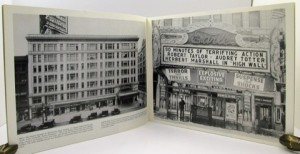
Softcover. Notre Dame IN, Theatre Historical Society, 1st, 1986, Book: Very Good, Dust Jacket: None, Softcover, stapled wrappers, 40 pages. Profusely illustrated in b&w. A visual history of the design and building of the Earle Theatre in Philadelphia. Some of the world's biggest stars performed there in it's heyday. Old price sticker on rear cover, otherwise clean, very good.
Hardcover. NY, Knopf, 1st, 1979, Book: Very Good, Dust Jacket: Very Good, Hardcover in a bright, price-clipped dust jacket, 326 pages. Extensively illustrated in color and black and white. Clean copy. Margot Fonteyn shares her personal vision of the history of dance.
Hardcover. Chicago, University of Chicago Press, 1st, 1988, Book: Very Good, Dust Jacket: Very Good, Hardcover in a bright dust jacket, 178 pages. The drama is the most social of the arts, depending upon physical space, audience, and social factors for its existence. It is no surprise, therefore, that the most successful criticism approaches theater the way Barber and Mullaney do: as historical artifact. Barber is the better known, having authored the classic Shakespeare's Festive Comedy (1959); the present volume is based on his papers and examines three early Elizabethan tragedies"Tamburlaine" and "Dr. Faustus" by Marlowe and "The Spanish Tragedy" by Kyd. Particularly interested in locating these plays in the unstable religious atmosphere of the late 16th century, Barber ably demonstrates his understanding of the social, historical, and economic factors that defined the era. Mullaney takes the novel approach of examining the theater in light of London topography; the title thus refers to the physical location of the playhouses as well as the social importance of the theater. Mullaney points out that the prejudice that forced the great theaters of the age to operate outside the city walls encouraged a drama that was radical and iconoclastichence its greatness. Mullaney's argument is fascinating and thought-provoking, convincingly presented. Clean copy.
Softcover. The New Press, 1st, 2008, Book: Very Good, Dust Jacket: None, Softcover, 364 pages. Collects the Pulitzer Prize-winning oral historian's remarkable conversations with some of the greatest luminaries of film and theater. Originally published under the title The Spectator, this "knowledgeable and perceptive" (Library Journal) look at show business presents the actors directors, playwrights, dancers, lyricists, and others who created the dramatic works of the twentieth century. Among the many highlights in these pages, Buster Keaton explains the wonders of unscripted silent comedy, Federico Fellini reflects on honesty in art, Carol Channing reveals that she is far more serious than she lets on, and Marlon Brando turns the tables and wants to interview Terkel. We learn about crucial artistic decisions in the lives of Arthur Miller, Tennessee Williams, and Edward Albee and hear from a range of film directors, from Vittorio De Sica and King Vidor to Satyajit Ray. We even get to witness Terkel playing straight man to a wildly inventive Zero Mostel. Clean copy.
London, Rupert Hart-Davis, 1st, 1961, Book: Very Good, Dust Jacket: None, Hardcover, green cloth with gilt lettering on spine, 292 pages. Maps on the endpapers. Black and white illustrations by Timothy Birdsall. A illustrated guide to the major theatres in London along with a brief history of each. No dust jacket. A bright, clean copy.
Hardcover. NY, McGraw-Hill Book Company, 1975, Book: Very Good, Dust Jacket: Very Good, Hardcover, 324 pages, color and black and white illustrations throughout. A masterly survey of the world's stages brings to the contemporary reader the entire panorama of the theatre, including its formative stages among primitive peoples and the richly stylized traditions of the East.
Hardcover. NY, McGraw-Hill Book Company, 1975, Book: Very Good, Dust Jacket: Very Good, Hardcover, 324 pages, color and black and white illustrations throughout. A masterly survey of the world's stages brings to the contemporary reader the entire panorama of the theatre, including its formative stages among primitive peoples and the richly stylized traditions of the East.
Hardcover. NY, Harper & Row, 1st, 1977, Book: Very Good, Dust Jacket: Very Good, Hardcover in a bright dust jacket, 435 pages, b&w illustrations. An illustrated world history of the Yiddish theatre covering five continents and more than 300 years. Mild wear to rear panel of dust jacket, clean copy.
Hardcover. NY, George H. Doran, 1st, 1915, Hardcover, black cloth covers with gilt title, top edge gilt. 523 pages, b&w photos. The author wrote this book to depict and commemorate "leading representatives of the Stage". He writes about: William Warren, laura Keene, Matilda Heron, Lester Wallack, James W. Wallace, Mark Smith, Edward Adams, Henry J. Montague; Edwin Booth, Augustin Daly, Henry Irving, Johnston Forbes-Robertson, Edward H. Sothern and Julia Marlowe. Index. Clean, bright copy.

 "Masques and Entertainmentsby: Jonson, Ben, and Morley, Henry (Editor)")
 "Mesmerized - Powers of Mind in Victorian Britainby: Winter, Alison")
 "Meyerhold the Directorby: Rudnitsky, Konstantin")
 "New York Burlesque: Photographs by Roy Kempby: Kemp, Roy")
 "Operatic Afterlivesby: Michal Grover-Friedlander")
 "Peepshows: A Visual Historyby: Balzer, Richard")
 "Reading Dance: A Gathering of Memoirs, Reportage, Criticism, Profiles, Interviews, and Some Uncategorizable Extrasby: Gottlieb (editor), Robert")
 "Shylock: A Legend and Its Legacyby: John Gross")
 "Staging Fashion, 1880-1920: Jane Hading, Lily Elsie, Billie Burke by: Majer, Michele (Editor)")
 "Tent Show: Arthur Names and His 'Famous' Players by: Whisenhunt, Donald W.")
 "The Art of Satire by: David Worcester")
 "The Bibiena Familyby: Mayor, A. Hyatt")
 "The Circus: 1870-1950by: Granfield Linda; Jando Dominique; Dahlinger Fred; Daniel Noel Editor")
 "The Circus: 1870-1950by: Granfield Linda; Jando Dominique; Dahlinger Fred; Daniel Noel Editor")
 "The Commedia Dell'Arteby: Winifred Smith")
 "The EARLE THEATRE, Philadelphia, Penna., Hoffman & Henon, Architects, Opened: March 24, 1924. Theatre Historical Society Annual for 1986by: Irvin R. Glazer")

 "The Magic of Dance by: Margot Fonteyn")
 "The Place of the Stage: License, Play, and Power in Renaissance Englandby: Mullaney, Steven")
 "The Studs Terkel Interviews: Film and Theaterby: Terkel, Studs")
 "The Theatres of London by: Raymond Mander and Joe Mitchenson")
 "Theatre through the Ages by: Molinari Cesare")
 "Theatre through the Ages by: Molinari Cesare")
 "Vagabond Stars: A World History of Yiddish Theater by: Sandrow, Nahma")
 "Vagrant Memories; Being Further Recollections of Other Daysby: Winter, William")