Hardcover. Boston, Little, Brown and Company, reprint, 1957, Book: Very Good, Dust Jacket: None, Hardcover, blue cloth with gilt lettering on spine. Volume IX in The History of United States Naval Operations in World War II. 413 pages, illustrated with maps (one fold-out) and b&w photos. Gilt on spine with light fading, lacks dust jacket, otherwise clean, tight copy.
Hardcover. NY, Knopf, 1st, 2012, Book: Very Good, Dust Jacket: Very Good, Hardcover in a bright, unclipped dust jacket. 418 pages, b&w illustrations. From the author of the best-selling One Minute to Midnight, a riveting account of the pivotal six-month period spanning the end of World War II, the dawn of the nuclear age, and the beginning of the Cold War. When Roosevelt, Stalin, and Churchill met in Yalta in February 1945, Hitler's armies were on the run and victory was imminent. The Big Three wanted to draft a blueprint for a lasting peace--but instead set the stage for a forty-four-year division of Europe into Soviet and western spheres of influence. After fighting side by side for nearly four years, their political alliance was rapidly fracturing. By the time the leaders met again in Potsdam in July 1945, Russians and Americans were squabbling over the future of Germany and Churchill was warning about an "iron curtain" being drawn down over the Continent. These six months witnessed some of the most dramatic moments of the twentieth century: the cataclysmic battle for Berlin, the death of Franklin Roosevelt, the discovery of the Nazi concentration camps, Churchill's electoral defeat, and the dropping of atomic bombs on Japan. While their armies linked up in the heart of Europe, the political leaders maneuvered for leverage: Stalin using his nation's wartime sacrifices to claim spoils, Churchill doing his best to halt Britain's waning influence, FDR trying to charm Stalin, Truman determined to stand up to an increasingly assertive Soviet superpower.
Softcover. New York , Random House, 1st, 2011, Book: Very Good, Dust Jacket: None, Softcover, 279 pages, b&w photos. Clean, unmarked copy with only minor wear to wrappers. This book exposes Chanel's anti-Semitism and her long affair with 'Spatz' Baron von Dincklage, a Nazi spy who ran an intelligence ring and reported to Goebbels. It explains how she became a German intelligence operative, how she lived in exile, how Winston Churchill supported her and how she reinvented herself in the early 1950s.
Softcover. London, Frank Cass, reprint, 2006, Book: Very Good, Dust Jacket: None, Softcover, 526 pages, b&w illustrations. An Account of the Work of the British Special Operations Executive in France 1940-1944. Maps, appends., sources, index, Updated edition of the HMSO Official History Volume. Originally withdrawn shortly after publication due to threats of legal action by Peter Churchill, then re-released with emendations, Clean copy.
New York , Charles Scribner's Sons, 1st, 1944, Book: Very Good, Dust Jacket: Good, Hardcover, 51 pages. INSCRIBED BY NORMAN on front fly leaf, dated with a sketch of a flower vase. Dust jacket edgeworn, chipped. Poems inspired by service in World War II.
Hardcover. Garden City, Doubleday Doran and Company, Inc., 1st, 1943, Book: Very Good, Dust Jacket: Good, Non-paginated. Hardcover. Illustrations by Jeanne Bendick. Dust jacket with light fading to spine, short closed tears along edges. Clean, tight copy.
Hardcover. Chapel Hill, N.C., Algonquin Books, 1st, 1984, Book: Very Good, Dust Jacket: Very Good, Hardcover, 295 pages, b&w photos. INSCRIBED BY AUTHOR on half title page with old photo of author taken just after WW2 mounted on front end paper. Light edgewear to dust jacket and faint foxing to top edge, else a clean, tight copy.
Hardcover. New York, Random House, 1st, 1986, Book: Very Good, Dust Jacket: Very Good, Hardcover in a bright dust jacket, 255 pages. A very clean, tight copy.
Hardcover. NY, Macmillan , 1st, 1980, Book: Very Good, Dust Jacket: Very Good, Hardcover in a bright dust jacket. Account of major league baseball during World War II when all its talent had been stripped by the armed forces. Illustrated with 101 photographs. 290 pages. Name on front fly leaf, otherwise clean.
Hardcover. NY, Macmillan , 1st, 1980, Book: Very Good, Dust Jacket: Very Good, Hardcover in a bright dust jacket. Account of major league baseball during World War II when all its talent had been stripped by the armed forces. Illustrated with 101 photographs. 290 pages. Name on front fly leaf, otherwise clean.
Hardcover. Seattle, University of Washington Press, 1st, 1984-09-01, Book: Very Good, Dust Jacket: Very Good, Hardcover, 316 pages, b&w illustrations. Light edgewear and rubbing o dust jacket. Small stain to fore edge, else a clean, tight copy.
Softcover. New Lebanon NY, Omega Publications, 1st, 2007, Book: Very Good, Dust Jacket: None, Softcover, 234 pages, b&w photos. Everything about Noor Inayat Khan was extraordinary. A great-great-great granddaughter of Tipu Sultan, the Tiger of Mysore, she was born in Moscow to an American mother and an Indian Sufi Muslim father. Due to the unrest in Russia the family moved to London and from there to France where she spent the happiest years of her life studying music, child psychology and writing children's books. In 1940, her father having deserted the family and died in India years before, the family moved once again to England where Noor was trained as a wireless operator with the aim of sending her to German-occupied France to join up with the resistance. Noor was small and delicate, emotional, imaginative, shy, easily flustered and distracted. On the other hand there was her steely determination to serve her country, the desperate need for wireless operators and her perfect French. She was sent on her mission in June 1943. Her biography contains all the elements of an exciting spy novel but it was horrific and deadly reality. Clean copy.
Hardcover. Yorkshire UK, Pen and Sword Military, 1st, 2019, Book: Very Good, Dust Jacket: Very Good, Hardcover in a bright, unclipped dust jacket, 320 pages. So much has been written about the Battle of Stalingrad - the Soviet victory that turned the tide of the Second World War - that we should know everything about it. But the history of the war, and the battle, is evolving and is being written anew, and Alexey Isaev's engrossing account is a striking example of this fresh approach. B&w photos, color maps. Clean copy.
Hardcover. NY, Abrams, 1st, 1981, Book: Very Good, Dust Jacket: Very Good, Hardcover, 256 pages, in a bright, unclipped dust jacket. Edward Steichen virtually created the world of high fashion and advertising photography, but his military coverage of two World Wars was equally remarkable. He received the Croix de Guerre for pioneering photoreconnaissance as part of Pershing's American Expeditionary Force in 1918, and his team's shots of the American Navy's advance across the Pacific from 1942 to 1945 form the visual core of our memory of that crucial period. Tragically, however, Steichen's thousands of incisive images of military action were dissolved into the morass of the National Archives, and attempts to retrieve specific subjects of his are often as effective as trying to taste fine brandy after pouring it into a swimming pool. Hence the value of retrospectives such as Christopher Phillips' hefty book on Steichen's coverage of the U.S. Navy in the Pacific War. Combining skillfully chosen anecdotes from Steichen's life with vivid evocation of the pioneering photographer's joy in capturing memorable images, Phillips gives us not only an unforgettable slice of Steichen's work but also enough historical background to let readers sense the excitement and drama of a nation's best young warriors fighting for freedom's sake. Lieutenant Commander Steichen's parade of images didn't begin until after the pivotal Battle of Midway in June 1942, but the ensuing carrier warfare and savage island fighting appear in unforgettable clarity. As in all great photographs, the humanity of the subjects shines through amid their triumph, or pain, or mere existence. Students of both military history and photography can spend days poring over these astonishingly revealing images. DOMESTIC SHIPPING ONLY.
Hardcover. NY, Abrams, 1st, 1981, Book: Very Good, Dust Jacket: Very Good, Hardcover, 256 pages, in a bright, unclipped dust jacket. Edward Steichen virtually created the world of high fashion and advertising photography, but his military coverage of two World Wars was equally remarkable. He received the Croix de Guerre for pioneering photoreconnaissance as part of Pershing's American Expeditionary Force in 1918, and his team's shots of the American Navy's advance across the Pacific from 1942 to 1945 form the visual core of our memory of that crucial period. Tragically, however, Steichen's thousands of incisive images of military action were dissolved into the morass of the National Archives, and attempts to retrieve specific subjects of his are often as effective as trying to taste fine brandy after pouring it into a swimming pool. Hence the value of retrospectives such as Christopher Phillips' hefty book on Steichen's coverage of the U.S. Navy in the Pacific War. Combining skillfully chosen anecdotes from Steichen's life with vivid evocation of the pioneering photographer's joy in capturing memorable images, Phillips gives us not only an unforgettable slice of Steichen's work but also enough historical background to let readers sense the excitement and drama of a nation's best young warriors fighting for freedom's sake. Lieutenant Commander Steichen's parade of images didn't begin until after the pivotal Battle of Midway in June 1942, but the ensuing carrier warfare and savage island fighting appear in unforgettable clarity. As in all great photographs, the humanity of the subjects shines through amid their triumph, or pain, or mere existence. Students of both military history and photography can spend days poring over these astonishingly revealing images.
Hardcover. NY, Abrams, 1st, 1981, Book: Very Good, Dust Jacket: Very Good, Hardcover, 256 pages, in a bright, unclipped dust jacket. Edward Steichen virtually created the world of high fashion and advertising photography, but his military coverage of two World Wars was equally remarkable. He received the Croix de Guerre for pioneering photoreconnaissance as part of Pershing's American Expeditionary Force in 1918, and his team's shots of the American Navy's advance across the Pacific from 1942 to 1945 form the visual core of our memory of that crucial period. Tragically, however, Steichen's thousands of incisive images of military action were dissolved into the morass of the National Archives, and attempts to retrieve specific subjects of his are often as effective as trying to taste fine brandy after pouring it into a swimming pool. Hence the value of retrospectives such as Christopher Phillips' hefty book on Steichen's coverage of the U.S. Navy in the Pacific War. Combining skillfully chosen anecdotes from Steichen's life with vivid evocation of the pioneering photographer's joy in capturing memorable images, Phillips gives us not only an unforgettable slice of Steichen's work but also enough historical background to let readers sense the excitement and drama of a nation's best young warriors fighting for freedom's sake. Lieutenant Commander Steichen's parade of images didn't begin until after the pivotal Battle of Midway in June 1942, but the ensuing carrier warfare and savage island fighting appear in unforgettable clarity. As in all great photographs, the humanity of the subjects shines through amid their triumph, or pain, or mere existence. Students of both military history and photography can spend days poring over these astonishingly revealing images.
Hardcover. Urbana IL, University of Illinois Press, 1st, 1999, Book: Very Good, Dust Jacket: Very Good, Hardcover in a bright, unclipped dust jacket. 162 pages, b&w illustrations. In the wake of Kristallnacht, November 9, 1938, Sigmund Tobias and his parents fled their home in Germany and relocated to one of the few cities in the world that offered shelter without requiring a visa: the notorious pleasure capital, Shanghai. Seventeen thousand Jewish refugees flocked to Hongkew, a section of Shanghai ruled by the Japanese, and they created an active community that continued to exist through the end of the war. Tobias's coming-of-age story unfolds within his descriptions of Jewish life in the exotic sanctuary of Shanghai. Depleted by disease and hunger, constantly struggling with primitive and crowded conditions, the refugees faced shortages of food, clothing, and medicine. Tobias also observes the underlife of Shanghai: the prostitution and black market profiteering, the brutal lives of the Chinese workers, the tensions between Chinese and Japanese during the war, and the paralyzing inflation and the approach of the communist "liberators" afterward. Richly detailed, Strange Haven opens a little-documented chapter of the Holocaust and provides a fascinating glimpse of life for these foreigners in a foreign land. An epilogue describes the changes Tobias observed when he returned to Shanghai forty years later as a visiting professor.
Hardcover. Somerville MA, Candlewick, 1st, 2015, Book: Very Good, Dust Jacket: Very Good, Hardcover in a bright dust jacket, 456 pages, SIGNED BY AUTHOR on the title page. In September 1941, Adolf Hitlers Wehrmacht surrounded Leningrad in what was to become one of the longest and most destructive sieges in Western history-almost three years of bombardment and starvation. Trapped between the Nazi invading force and the Soviet government itself was composer Dmitri Shostakovich, writing a symphony to rouse, rally, eulogize, and commemorate his fellow citizens: the Leningrad Symphony. This is the true story of a city under siege, the triumph of bravery and defiance in the face of terrifying odds. It is also a look at the power-and layered meaning-of music in beleaguered lives. Symphony for the City of the Dead is a masterwork thrillingly told and impeccably researched by National Book Award-winning author M. T. Anderson. Signed copy sticker on front cover, otherwise like new.
Hardcover. NY, Century Co., 1st, 1918, Book: Very Good, Dust Jacket: None, Hardcover, red cloth with black lettering and decoration on spine and front board. The author's reminiscences of time in the trenches during World War I. An American serving at the time with British 'Tommies', he also wrote 'Over the Top' and other books about his experiences. Front fly leaf missing, book opens to half title page, otherwise a clean, tight copy.
Softcover. NY, International Publishers, 1st, 1944, Book: Good, Dust Jacket: None, Softcover, 128 pages. Author was leader of the American communist party, and the Teheran he refers to, is the meeting between Stalin, Churchill and Roosevelt in Teheran in 1943, and Brewstewr's wish to maintain the colalition post war. Clean, light shelf wear.
Hardcover. Cambridge MA, Harvard University Press, 1st, 2014, Book: Very Good, Dust Jacket: Very Good, Hardcover in a bright dust jacket, 334 pages, b&w photos. In May 1941, Gertrude van Tijn arrived in Lisbon on a mission of mercy from German-occupied Amsterdam. She came with Nazi approval to the capital of neutral Portugal to negotiate the departure from Hitler's Europe of thousands of German and Dutch Jews. Was this middle-aged Jewish woman, burdened with such a terrible responsibility, merely a pawn of the Nazis, or was her journey a genuine opportunity to save large numbers of Jews from the gas chambers? In such impossible circumstances, what is just action, and what is complicity? A moving account of courage and of all-too-human failings in the face of extraordinary moral challenges, The Ambiguity of Virtue tells the story of Van Tijn's work on behalf of her fellow Jews as the avenues that might save them were closed off. Between 1933 and 1940 Van Tijn helped organize Jewish emigration from Germany. After the Germans occupied Holland, she worked for the Nazi-appointed Jewish Council in Amsterdam and enabled many Jews to escape. Some later called her a heroine for the choices she made; others denounced her as a collaborator. Clean copy.
Hardcover. Boston, Little, Brown and Company, reprint, 1957, Book: Very Good, Dust Jacket: None, Hardcover, blue cloth with gilt lettering on spine. Volume X in The History of United States Naval Operations in World War II. 399 pages, illustrated with maps (one fold-out) and b&w photos. Gilt on spine with light fading, lacks dust jacket, dj flap copy pasted inside front cover, otherwise clean, tight copy.
Hardcover. Boston, Little, Brown and Company, reprint, 1950, Book: Very Good, Dust Jacket: None, Hardcover, blue cloth with gilt lettering on spine. Volume I in The History of United States Naval Operations in World War II. 432 pages, illustrated with maps and b&w photos. Gilt on spine with light fading, lacks dust jacket, otherwise clean, tight copy.
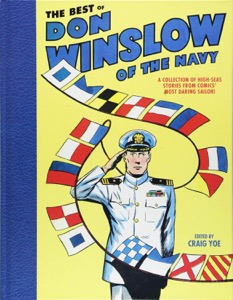
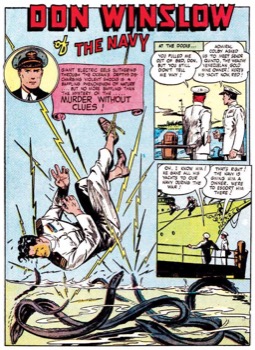
Hardcover. Annapolis MD, Dead Reckoning, 1st, 2018, Book: Very Good, Dust Jacket: None, Hardcover in pictorial boards, 221 pages in color. A collection of the best stories from the classic run of Don Winslow of the Navy, one of the most popular comic books running during and after World War II. Edited by Craig Yoe, the selected stories are digitally remastered and contextualized with Yoe's historical research. Preceding the full, colorful tales is a detailed introduction on the creation of the adventurous Don Winslow. The character served to foster recruitment and entertain Navy personnel and the general public alike during World War II and beyond. Winslow fights the Axis and supervillains like The Snake and the attractive, but deadly, Singapore Sal. Clean copy.

 "Sicily-Salerno-Anzio: January 1943 - June 1944 ( History of United States Naval Operations in World War II) Volume 9by: Morison, Samuel Eliot")
 "Six Months in 1945: FDR, Stalin, Churchill, and Truman--from World War to Cold Warby: Michael Dobbs")
 "Sleeping with the Enemy: Coco Chanel, Nazi Agentby: Vaughan, Hal")
 "SOE in France: An Account of the Work of the British Special Operations Executive in France 1940 1944 by: Foot, M.R.D.")
 "Soldier's Diary, A (SIGNED COPY)by: Norman, Charles")
 "Soldiers, Sailors, Fliers and Marinesby: Elting, Mary/Robert T. Weaver/Jeanne Bendick")
 "Some Survived (SIGNED COPY)by: Lawton, Manny")
 "Something About a Soldierby: Willeford, Charles")
 "Spartan Seasons: How Baseball Survived the Second World War by: Goldstein, Richard")
 "Spartan Seasons: How Baseball Survived the Second World War by: Goldstein, Richard")
 "Spitfire: A Test Pilot's Storyby: Quill, Jeffrey")
 "Spy Princess: The Life of Noor Inayat Khanby: Basu, Shrabani")
 "Stalingrad: City on Fireby: Isaev, Alexey")
 "Steichen At Warby: Christopher Phillips")
 "Steichen At Warby: Christopher Phillips")
 "Steichen At Warby: Christopher Phillips")
 "Strange Haven: A Jewish Childhood in Wartime Shanghai by: Tobias, Sigmund")
 "Symphony for the City of the Dead: Dmitri Shostakovich and the Siege of Leningrad (SIGNED COPY)by: Anderson, M.T.")
 "Tales From a Dugoutby: Empey, Arthur Guy")
 "Teheran: Our Path in War and Peace by: Browder, Earl")
 "The Ambiguity of Virtue: Gertrude van Tijn and the Fate of the Dutch Jewsby: Wasserstein, Bernard")
 "The Atlantic Battle Won, May 1943-May 1945: History of United States Naval Operations in World War II, Volume 10 by: Morison, Samuel Eliot")
 "The Battle of the Atlantic: September 1939 - May 1943 (History of United States Naval Operations in World War Ii, Volume 1)by: Morison, Samuel Eliot")
 "The Best of Don Winslow of the Navy: A Collection of High-Seas Stories from Comics' Most Daring Sailorby: Craig Yoe (Ed.)")