Hardcover. London, W. & R. Chambers , 1st, 1920, Book: Good, Dust Jacket: None, 382 pages, hardcover. Illustrated by Horace Gaffron. Stamped and illustrated boards. Children's book on the Royal Scots in Gallipoli during WWI. Fading to spine. Staining to rear panel. Corners bumped. Heavy age toning and foxing to text block edges. Frontispiece intact. Scarce. A bright copy.
Hardcover. Chapel Hill, North Carolina, Algonquin Young Readers, 1st, 2014, Book: Very Good, Dust Jacket: Very Good, 113 pages. Hardcover. Extensive color illustrations by James McMullan throughout. Illustrated paste downs and end papers. Clean, unmarked copy with only minor wear to dust jacket. McMullan explained, "In my late seventies I decided to organize my memories of my childhood before and during the Second World War into a coherent narrative. The tension of our lives when the Japanese army took over our town in China and the subsequent anxieties of traveling from country to country with my mother has imprinted the incidents of those years into my memory with an enduring lucidity that defies the otherwise fading recall of my aging mind."
Hardcover. Boston, Little, Brown and Company, 1st, 1958, Book: Very Good, Dust Jacket: None, Hardcover, blue cloth with gilt lettering on spine. Volume XII in The History of United States Naval Operations in World War II. 445 pages, illustrated with maps (one fold-out) and b&w photos. Gilt on spine with light fading, light paper residue to front covers, lacks dust jacket, dj flaps pasted onto front endpapers, otherwise clean, tight copy.
Hardcover. Jefferson NC, McFarland Publishing, 1st, 1997, Book: Very Good, Dust Jacket: None, Hardcover, blue cloth with white lettering. 176 pages, b&w illustrations. In 1945, the author found herself in the monsoon-drenched jungles of Assam, caring for soldiers in the China-Burma-India theater of war. Nothing in her nurse's training had prepared her for the tropical diseases her patients faced, nor had her experiences readied her for a hospital where men spat on the floor, rats were pervasive, and patients were as likely to sell their medicine as swallow it. What made the experience tolerable was Nurse Camp's romance with one of the airmen who flew the Hump, supplying O.S.S. troops behind Japanese lines and carrying General Joseph Stillwell's Chinese troops to fight the battle of North Burma. She accompanied her future husband on some of his missions. Based, in part, on letters she wrote to her parents, this is the poignant story of one nurse's experience in World War II and how her service changed her life forever. Name on front fly leaf, otherwise a clean, bright copy.
Hardcover. NY, St. Martin's Press, 1st, 2005, Book: Very Good, Dust Jacket: Very Good, Hardcover in a bright dust jacket, 511 pages, b&w illustrations. When Hitler unleashed a fierce barrage of weapons on the defiant capital of England, London's resilient citizens were undaunted. With colorful detail and rich insight, historian Maureen Waller takes readers through London in the last year of war. She reveals the magnificence of human spirit that carried a besieged people through agonizing travails and the long, giddy transformation the metropolis made as it passed through battle, to celebration, and back to life as usual. Clean copy.
Hardcover. NY, Farrar, Straus and Giroux, 1st, 1971, Hardcover in a bright dust jacket, 378 pages. From dust jacket notes: "For most Americans, the Second World War started on December 7, 1941, and much of the fighting took place in strange, faraway places. For the British, the war started on September 3, 1939, and much of the action took place in the skies over England. In the spring of 1940, after months of uneasy calm, Germany invaded the Lowlands and conquered France within a few days, leaving England without her only meaningful ally on the Continent. A year would pass before the Soviet Union was drawn into the war, and eighteen months before the Japanese attacked Pearl Harbor. The United Kingdom, with a land area about the size of Wyoming, was alone, all alone, with only the Straits of Dover separating the island from Hitler's war machine. For six years Mollie Panter-Downes covered the war for The New Yorker magazine from her native England. Even at the height of the air war over London, when 'all that is best in the good life of civilized effort appears to be slowly and painfully keeling over,' she continued to file her fortnightly reports in an understated but dramatic fashion that reflected the fortitude of her fellow countrymen: 'The announcements of the first air-raid deaths are beginning to appear in the obituary columns of the morning papers. No mention is made of the cause of death, but the conventional phrase "very suddenly" is always used.' William Shawn, editor of The New Yorker, has assembled Miss Panter-Downes' 'Letter from London' columns into a consecutive, on-the-spot chronicle of the war in England."
Hardcover. Central Point OR, Hellgate Press, 1st, 2001, Book: Very Good, Dust Jacket: Very Good, Hardcover in a bright dust jacket, 246 pages, b&w illustrations. Lost Black Sheep tells two amazing stories. The first chronicles the wartime exploits of Marine Corps Ace Chris Magee, former member of the famous Black Sheep Squadron, his improbable postwar odyssey, and the surprising developments of his later years. The second describes the author's personal quest to find a man who seemed to have dropped off the face of the earth and the startling revelations that follow when he finds him. Clean copy.
Softcover. Zenith Press, reprint, 2004, Book: Very Good, Dust Jacket: None, Softcover, 574 pages, b&w illustrations. Originally published in Germany in 1955, and in England and the United States in 1958, this classic memoir of WWII by a man who was an acknowledged military genius and probably Germany's top WWII general, is now made available again. Field Marshal Erich von Manstein described his book as a personal narrative of a soldier, discussing only those matters that had direct bearing on events in the military field. The essential thing, as he wrote, is to "know how the main personalities thought and reacted to events." This is what he tells us in this book. His account is detailed, yet dispassionate and objective. Clean copy.
Hardcover. NY, Abrams, 1st, 2008, Book: Very Good, Dust Jacket: Very Good, Hardcover, 160 pages. In the spirit of his successful books At Ease and Men of WWII, Evan Bachner now focuses on the women of WWII. While traditionally female secretarial and clerical jobs took an expectedly large portion of recruits, thousands of WAVES (Women Accepted for Voluntary Emergency Service) performed previously atypical duties in the aviation community--such as Judge Advocate General corps--medical professions, communications, intelligence, science, and technology. The photography team, headed by legendary photographer Edward Steichen, captured these heroic women at work, rest, and play. All the photos are from the National Archives and most have not been previously published.
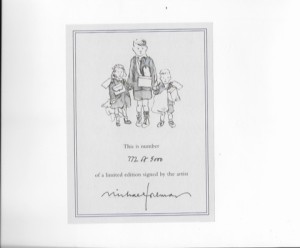
Hardcover. London, Pavilion, 1st combined ed., 2000, Book: Very Good, Dust Jacket: Very Good, Hardcover. SIGNED BY FOREMAN on bookplate opposite title-page - #772/5000. Combines Foreman's stories War Boy and After the War was Over. Color illustrations by Foreman. Minor rubbing to dust jacket.
Hardcover. NY, Harry N. Abrams, Inc., 1st, 2007, Book: Very Good, Dust Jacket: Very Good, Hardcover in a bright dust jacket. 160 pages, with profuse full-page illustrations of black & white photographs of World War II soldiers and sailors during breaks from combat.
Hardcover. NY, McGraw-Hill , 1st, 1986, Book: Very Good, Dust Jacket: Very Good, Hatdcover, 364 pages, b&w photo illustrations. notes. bibliography. index. This is the definitive life story of Dr. Josef Mengele, the notorious "Angel of Death" Responsible for the death and mutilation of thousands of prisoners at Auschwitz, Mengele vanished into South America after World War II, where he remained free for more than three decades. How did he escape from the Allies? And how did he elude his pursuers? Granted exclusive and unrestricted access to the Mengele family papers and diaries, Posner and Ware have sifted through more than 5,000 pages of Mengele's writings to construct this extraordinary record of his life~from his childhood in Germany to the horrors of Auschwitz to his years in exile. previous owner's name, notation on front endpapers. Otherwise a clean copy.
Hardcover. London & New York , The Studio Publications, 1st, 1941, Book: Good, Dust Jacket: None, Hardcover, red cloth stamped in black, 127 pages + ads, illustrated throughout in b&w. INSCRIBED BY AUTHOR on front fly leaf. Light rubbing, fraying to edges, binding slightly shaken. Internally very good.
Hardcover. NY, Stein & Day, Book Club Ed., 1971, Book: Very Good, Dust Jacket: Good, Hardcover in a lightly worn, chipped dust jacket. Frontispiece, photographs, maps, appendix, bibliography, index. Name on front fly leaf, otherwise clean.
Hardcover. London, Hodder and Stoughton, 1st, 1916, Book: Fair, Dust Jacket: None, 158 pages. Hardcover. Features 46 tipped-in plates. Foxing throughout. Front hinged cracked. Covers worn with areas of staining, darkening to spine cloth.
Hardcover. NY , Duell, Sloan and Pearce, 1st, 1948, Book: Very Good, Dust Jacket: Poor, Hardcover in a poor dust jacket with chipping, fading, especially to spine. Wheeler-Bennett worked as the director of the Royal Institute of International Affairs' information department. In particular, Wheeler-Bennett lived in Germany in 1927-1934 and witnessed firsthand the rise of Nazi Germany. After the Second World War, Wheeler-Bennett was a critic of Appeasement, and 10 years after the Munich Agreement wrote a book condemning it. Footnotes. Illustrations, Maps. Bibliography. Index. 507 pages, name on front fly leaf, otherwise clean.
Softcover. NY, Bloomsbury, reprint, 2010, Book: Very Good, Dust Jacket: None, Softcover in pictorial wrappers, 509 pages, b&w illustrations. In 1945, disguised in German greatcoat and helmet, Mussolini attempted to escape from the advancing Allied armies. Unfortunately for him, the convoy of which he was part was stopped by partisans and his features, made so familiar by Fascist propaganda, gave him away. Within 24 hours he was executed by his captors, joining those he sent early to their graves as an outcome of his tyranny, at least one million people. Bosworth's Mussolini allows us to come closer than ever before to an appreciation of the life and actions of the man and of the political world and society within which he operated. With extraordinary skill and vividness, drawing on a huge range of sources, this biography paints a picture of brutality and failure, yet one tempered with an understanding of Mussolini as a human being, not so different from many of his contemporaries. Clean copy.
Hardcover. NY, Farrar, Straus and Giroux, 1st, 2010, Book: Very Good, Hardcover in a bright, unclipped dust jacket. In 1942, a timid, inexperienced twenty-one-year-old Lord reports to Atlantic City, New Jersey, to enlist in the US Army. This title tells the story of this young man's exposure to the terrors, dislocations, and horrors of armed conflict. Along the way he comes to terms with his own sexuality, experiences the thrill of first love and the chill of disillusionment with his fellow man, Clean copy.
Hardcover. NY, Farrar, Straus and Cudahy, 1st, 1958, Book: Very Good, Dust Jacket: Very Good, Hardcover in a bright, lightly worn dust jacket. The author, a German prisoner during WW2, using his prison camp diary tells of his experiences. Clean copy.
Hardcover. NY, Viking, 1st, 2004, Book: Very Good, Dust Jacket: Very Good, Hardcover, 320 pages, b&w photos, in a bright dust jacket. The true, little-known story of a family torn apart by revolution and war. Olga Chekhova, a stunning Russian beauty, was the niece of playwright Anton Chekhov and a famous Nazi-era film actress who was closely associated with Hitler.
Softcover. Washington DC, National Geographic Society, 1st, 1917, Book: Very Good, Dust Jacket: None, Softcover, illustrated with b&w photos, maps, advertisements. Original yellow and black wrappers, spine with light wear, good to very good. Articles include: On the Monastir Road, Niagara at the Battle Front, Our Armies of Mercy, Belgium's Plight, Devasted Poland, others.
Softcover. Washington DC, National Geographic Society, 1st, 1917, Book: Very Good, Dust Jacket: None, Softcover, illustrated with b&w photos, maps, advertisements. Original yellow and black wrappers, spine with light wear, good to very good. Articles include: The Food Armies of Liberty, The Geography of Medicines, A Few Glimpses into Russia, Conserving the Nation's Man Power.
Softcover. Washington DC, National Geographic Society, 1st, 1917, Book: Very Good, Dust Jacket: None, Mid-Winter Double Issue. Softcover, illustrated with b&w photos, maps, advertisements. Original yellow and black wrappers, spine with light wear, good to very good. Articles include: The Geographical and Historical Environment of America's 32 New Soldier Cities, Training the New Armies of Liberty, The Immediate necessity for Military Highways, From the Trenches to Versailles, others.
Softcover. Brighton UK, Sussex Academic Press, 1st, 2010, Book: Very Good, Dust Jacket: None, Softcover, 283 pages. The first book to study the history of the Nazis in Britain. In September 1930, the Nazi Party newspaper, Volkischer Beobachter, sent its first representative to London. Soon afterwards, German residents in London established an Ortsgruppe, or local Nazi group, which provided Party members with a place to congregate and support the new movement. By 1933, more than 100 members belonged to the London group. The Nazis in pre-war London created a dilemma for the Foreign Office and the Home Office, who were divided as to how best to treat residents whose allegiance was to the German Reich. Some felt that all Nazi organizations should be banned, and Party Members should not be allowed to enter the UK. Others, including MI5, argued that it would be easier to keep track of Nazis if they were in-country. Previously unpublished German documents reveal the fates of German diplomats, journalists, and professionals, many of whom were interned in Britain or deported to Nazi Germany once war broke out on September 3, 1939. Clean copy.

 "Lads of the Lothiansby: Lynn, Escott")
 "Leaving China : an artist paints his World War II childhood.by: McMullan, James")
 "Leyte: June 1944-January 1945 (History of United States Naval Operations in World War Ii, Volume 12)by: Morison, Samuel Eliot")
 "Lingering Fever: A World War II Nurse's Memoirby: Lavonne Telshaw Camp")
 "London 1945: Life in the Debris of Warby: Waller, Maureen")
 "London War Notes 1939-1945by: Mollie Panter Downes")
 "Lost Black Sheep: The Search for WWII Ace Chris Magee by: Reed, Robert T.")
 "Lost Victories: War Memoirs of Hitlers Most Brilliant General by: Von Manstein, Field Marshal Erich")
 "Making WAVES: Navy Women of World War IIby: Evan Bachner")
 "Memories of Childhood (SIGNED)by: Foreman, Michael")

 "Men of World War II: Fighting Men at Easeby: Bachner, Evan")
 "Mengele: The Complete Story by: Gerald L. Posner, John Ware")
 "Modern Publicity in War (SIGNED COPY)by: Weir, K.B.E. . M.C., Sir Cecil M.")
 "Montgomery as Military Commander by: Ronald Lewin")
 "Mr. Poilu - Notes and Sketches with the Fighting French by: Ward, Herbert")
 "Munich: Prologue to Tragedyby: Wheeler-Bennett, John W.")
 "Mussolini by: R. J. B. Bosworth")
 "My Queer War by: Lord, James")
 "My Secret Diary 1943-1945 by: Guareschi, Giovanni")
 "Mystery of Olga Chekhova, Theby: Beevor, Antony")
 "National Geographic Magazine - Vol. XXXI No. 5 May 1917by: National Geographic Society")
 "National Geographic Magazine - Vol. XXXII No. 3 September 1917by: National Geographic Society")
 "National Geographic Magazine - Vol. XXXII No. 5 & 6 November - December 1917by: National Geographic Society")
 "Nazis in Pre War London 1930 1939: The Fate and Role of German Party Members and British Sympathizers by: James J. Barnes; Patience P. Barnes")