Hardcover. Hermes Press, 1st, 2015, Book: Very Good, Dust Jacket: Very Good, Hardcover, 192 pages. Music inspired, science fiction and fantasy combined in a way that revolutionized poster art of the Psychedelic 1960's-era. Famous for his rock posters, The Psychedelic Rock Art of Carl Lundgren, a Detroit, Michigan based artist, showcases his posters which were as important to the Detroit Music and Art history as were the music legends themselves; The Who, Jefferson Airplane and Pink Floyd to name a few. The book's forward is written by Mitch Ryder, who was lead vocalist of a Detroit 1960's rock group The Detroit Wheels. The introduction is by Russ Gibb, a former radio personality and rock promoter from Dearborn, Michigan, who played a major role in the late sixties/early seventies Motor City music scene.
Hardcover. NY, Museum of Modern Art, 1st, 2002, Book: Very Good, Dust Jacket: None, Hardcover in pictorial boards, 304 pages, illustrated in color. Russian avant-garde books made between 1910 and 1934 reflect a vivid and tumultuous period in that nation's history that had ramifications for art, society, and politics. The early books, with their variously sized pages of coarse paper, illustrations entwined with printed, hand-written, and stamped texts, and provocative covers, were intended to shock academic conventions and bourgeois sensibilities. After the 1917 Revolution, books appeared with optimistic designs and photomontage meant to reach the masses and symbolize a rational, machine-led future. Later books showcased modern Soviet architecture and industry in the service of the government's agenda. Major artists adopted the book format during these two decades. They include Natalia Goncharova, El Lissitzky, Kazimir Malevich, Aleksandr Rodchenko, Olga Rozanova, the Stenberg brothers, Varvara Stepanova, and others. These artists often collaborated with poets, who created their own transrational language to accompany the imaginative illustrations. Three major artistic movements, Futurism, Suprematism, and Constructivism, that developed during this period in painting and sculpture also found their echo in the book format. The more than 600 color illustrations are accompanied by incisive essays, a bibliography, and a checklist of the 1,200 items in the full collection. Expect additional shipping charges especially if sent overseas.
Softcover. NY, Penguin Books, 1st, 2012, Book: Very Good, Dust Jacket: None, Softcover, 512 pages. In The Sartorialist: Closer, Scott Schuman looks deeper and with great breadth at human style, and the way it is expressed across the world. Always reacting to an inspirational moment, the images in his new book continue to reflect Scott's unique sensibility and vision.
Softcover. Boston, Museum of Fine Arts, 1st, 1987, Book: Very Good, Dust Jacket: None, Softcover, 64 pages. 3 color, 28 bw plates. Issued in conjunction with a 1987 exhibition featuring examples of silver pieces crafted by Tiffany and Company. With an essay by Charles H. Carpenter Jr. INSCRIBED BY CARPENTER on the title page. The exhibition catalogue cites more than 70 pieces, and nearly half are pictured here. Clean copy.
NY, ADC Publications, 1st, 1982, Book: Very Good, Dust Jacket: Very Good, Hardcover, pictorial boards. illustrated in b&w and color. Clean, bright copy. DUE TO WEIGHT, DOMESTIC SHIPPING ONLY.
Softcover. NY, Pocket Books, 1st, 1997, Book: Very Good, Dust Jacket: None, Softcover, 253 pages. Collects the sketches of the artists responsible for the costumes, sets, and aliens from the original Star Trek series, offering insight into the creative talents that contributed to the show's success and the time and budget constraints they overcame. Matt Jefferies created meticulous sketches of every aspect of the Starship Enterprise and the worlds she visited. The energetic illustrations of William Theiss depicted some of the most lavish costumes ever worn in this or any other galaxy. Fred Phillips designed makeup that actualized whole new races, with just humans underneath. Wah Chang created props and hardware that are still the basis of futurist design. Clean, bright copy.
Hardcover. UK, Pi Global Publishing Limited, 1st, 2005, Book: Very Good, Dust Jacket: None, Hardcover, large format pictorial boards, Drawn from Opie''s unrivalled collection, this scrapbook illustrates song sheets, magazine covers, comic postcards, fashion and food, games, propaganda posters and a wealth of British wartime ephemera whose very survival is remarkable. Due to size (10 1/2 X 15"), DOMESTIC SHIPPING ONLY.
Hardcover. London, Unicorn Publishing Group, 1st, 2019, Book: Very Good, Dust Jacket: Very Good, Hardcover in a bright dust jacket. Starting in 1966, Thea Porter designed clothes for the rich and famous for nearly two decades. Her creations were made from sumptuous fabrics that drew inspiration from the Middle East, combining richly patterned silks with antique fabrics. Her clothes were a must for music and film stars such as Pink Floyd, Crystal Gayle, Elizabeth Taylor, and Barbra Streisand. Porter soon became a key member of an innovative group of British designers that included Ossie Clark, Zandra Rhodes, and Jean Muir, and her place in the history of British fashion was ensured when she was named Designer of the Year in 1972. Thea Porter's Scrapbook is her story in her own words, an unpublished autobiography she put together before her death in 2000. Edited by her daughter Venetia and with an essay by fashion historian Amy de la Haye, it reveals Porter's further talents as a keenly observant and descriptive writer. This book, which includes working drawings, sketches, snapshots, and manuscript notes, serves as a memoir of her early life and career, charting many memorable episodes, including the dramatic surge of American interest in her clothes and the opening of her shop in Paris as she pursued her ambition to create dresses "beyond trend and tat, that thirty years from today will still be beautiful."
Softcover. New York, Viking Studio, 1st, 1998, Book: Very Good, Dust Jacket: None, 129 pages, color illustrations. Features 40 of the designers posters for the Lincoln Center. Large softcover, clean, bright copy.
Softcover. NY, Thames & Hudson, 1st, 2005, Book: Very Good, Dust Jacket: None, Softcover, 256 pages. Why did Frankie say "Relax"? Did anyone really want to hurt Boy George? And why didn't anybody walk in L.A.? This Ain't No Disco can't answer all these head-scratchers, but it does bring the New Wave era back with page after totally awesome page of 300 of the best album covers. This rad collection includes covers from the late 1970s to the mid-'80s and will have true believers of a certain generation totally spazzing. New Wave was defined as much by style, fashion, and graphic design as the music itself witness the ruffled cuffs and heavy makeup of the New Romantics, the skinny ties and peg-pants of the neo-Mods, and the unsettling robotic personae of Devo and Gary Numan. Bursting with wild hairstyles, futuristic typography, pastel shapes, and outlandish clothing, these are the album covers that defined an era and continue to influence music and fashion styles today. A nostalgic trek with a mental soundtrack, This Ain't No Disco will inspire readers to don those rubber bracelets once again and proclaim, "Let's dance this mess around!"
NY, ADC, 1st, 198, Book: Very Good, Dust Jacket: None, Hardcover in pictorial boards. No markings. Index, b/w & some color illustrations. DUE TO WEIGHT, DOMESTIC SHIPPING ONLY.
Hardcover. Mark Batty, 1st, 2008, Book: Very Good, Dust Jacket: Very Good, Hardcover, 160 pages. A fresh perspective on movie posters, comparing posters from different countries that promote the same film. The emphasis is on famous movies: Citizen Kane, The Third Man, Sunset Boulevard, The 400 Blows, La Dolce Vita, The Birds, Dr. Strangelove, My Fair Lady, Chinatown, Annie Hall, etc. In the case of each film, posters are presented in brilliant color, or black and white as the case may be, from various countries showing the varying ways that artists sought to promote the film.
Hardcover. NY, American Studio Books/Watson-Guptill, 1st, 1947, Book: Very Good, Dust Jacket: Good, Hardcover, 128 pages, 268 illustrations (17 in color). A nice survey of American book illustration, covering such subjects as children's books, the growth of the American book publishing industry, and dust jackets, followed by illustrations by a wide number of artists in black and white and in color. Artists include Rockwell Kent, N. C. Wyeth, Marguerite de Angeli, the dAulaires, Lois Lenski, William Pene Du Bois, Salvador Dali, Margery Bianco, E. A. Abbey, Wanda Gag, Dorothy P. Lathrop, and numerous others. Bookplate on inside front cover, otherwise clean. In a chipped, edgeworn dust jacket.
Hardcover. Taschen, 1st, 1013, Book: Very Good, Dust Jacket: Very Good, hardcover, 336 pages. At the height of the Jazz Age, when Prohibition was turning ordinary citizens into criminals and ordinary criminals into celebrities, America's true crime detective magazines were born. True Detective came first in 1924, and by 1934, when the Great Depression had produced colorful outlaws like Machine Gun Kelly, Bonnie and Clyde, Baby Face Nelson, and John Dillinger, the magazines were so popular cops and robbers alike vied to see themselves on the pages. Even FBI boss J. Edgar Hoover wrote regularly for what came to be called the "Dickbooks," referring to a popular slang term for a detective. As the decades rolled on, the magazines went through a curious metamorphosis, however. When liquor was once more legal, the Depression over and all the flashy criminals dead or imprisoned, the "detectives" turned to sin to make sales. Sexy bad girls in tight sweaters, slit skirts, and stiletto heels adorned every cover. Cover lines shouted "I Was a Girl Burglar-For Kicks," "Sex Habits of Women Killers," "Bride of Sin!," "She Played Me for a Sucker," and most succinctly, "Bad Woman."True Crime Detective Magazines follows the evolution and devolution of this distinctly American genre from 1924 to 1969. Hundreds of covers and interior images from dozens of magazine titles tell the story, not just of the "detectives," but also of America's attitudes towards sex, sin, crime, and punishment over five decades. With texts by magazine collector Eric Godtland, George Hagenauer, and True Detective editor Marc Gerald, True Crime Detective Magazines is an informative and entertaining look at one of the strangest publishing niches of all time.
Hardcover. New York, Reinhold, 1st, 1967, Book: Very Good, Dust Jacket: Very Good, 270 pages. Illustrated with full color and black & white examples of fine book design. Clean, tight copy.
Hardcover. NY, W. W. Norton, 2nd Ed., 1995, Book: Very Good, Dust Jacket: Very Good, Hardcover in a bright dust jacket, 192 pages. Since its first publication in 1987, this book has become a standard reference work for typographers, designers and students alike. This new edition includes an examination of the latest technological developments in design and composition of type, and introduces the work of some of the more recent designers to have made their mark in the 20th century. Profiles of a new generation of typographers working in the latter half of the 20th century, such as Matthew Carter, Sumner Stone and others, bring the book up to date. Working with entirely different tools than their predecessors, they reflect the new typography in varying degrees. Filmsetting and digital typesetting have brought new opportunities - as well as new disciplines. Clean copy.
Hardcover. New York , Mark Batty Publisher, 1st, 2003, Book: Very Good, Dust Jacket: Very Good, Hardcover, 374 pages. This beautifully typeset and illustrated book offers a singular collection of 35 in-depth articles on typography and the printing arts, from the earliest type design techniques to the latest in digital typeface and design development. Originally printed in Matrix, the renowned and highly respected journal of the printing arts, the articles cover a number of individual typefaces, techniques of making type using both historical and contemporary means, and arguments for the continuing use of obsolete printing technologies. Here too are detailed examinations of book design, ornamentation, and mathematical and other non-Latin typography.
Hardcover. Gloucester MA, Rockport Publishers, 1st, 2000, Book: Very Good, Dust Jacket: Very Good, Hardcover, 192 pages, illustrated throughout in color. Light edgewear to dust jacket, else a clean, tight copy. Work from a diverse pantheon of internationally known designers captures the fluidity, the sensitivity and the art of designing with type. These stylists and practitioners of typographic virtuosity provide a range o work which has individuality, attitude and graphic flair. Collectively they demonstrate the power of type in contemporary design.
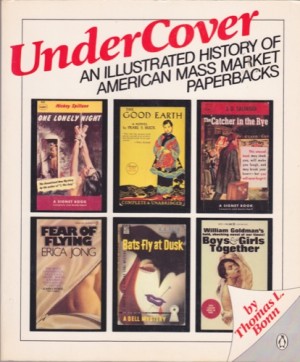
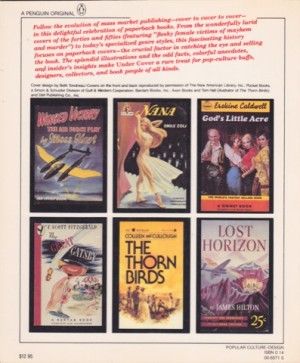
Softcover. NY, Penguin Books, 1st, 1982, Book: Very Good, Dust Jacket: None, Softcover, 144 pages. Nice history of paperbacks from its early beginnings up to the mid 70's. Chapters on collecting. Many b&w stills + 111 color reproductions of covers & artwork. Clean, bright copy.
Softcover. NY, Van Nostrand Reinhold, 1st pbk., 1982, Book: Very Good, Dust Jacket: None, Softcover, 218 pages with 256 b&w illustrations. From cover: "describes the ideals that inspired an earlier generation to leave city and factory in order to practice crafts ranging from bookbinding and metalwork to furniture making." Mild curl to cover, otherwise very good, clean.
Hardcover. Salt Lake City, Peregrine Smith, Inc, 1st US, 1980, Book: Very Good, Dust Jacket: Very Good, Hardcover, 218 pages. Green cloth cover with gilt lettering to spine, color illustrated dust jacket, 256 b&w plates, some in color. Light wear to dust jacket; overall a tight, clean copy.
Hardcover. New York, Harry N. Abrams, 1st, 2014, Book: Very Good, Dust Jacket: Very Good, Hardcover, 320 pages illustrated in color. The sumptuous fashions of Valentin Yudashkin, the first post-Soviet designer to bring a contemporary Russian look to the international fashion world.
Hardcover. New York, Rizzoli , 1st, 2009, Book: Very Good, Dust Jacket: Very Good, Hardcover, 280 pages. Like new in publisher's shrink-wrap. Valentina was the twentieth century's first American fashion designer celebrity, working and living on equal social footing with the clientele she dressed (Greta Garbo, Gloria Swanson, Katharine Hepburn, Millicent Rogers, and Audrey Hepburn, among others). One of the few designers who proved that America could live without the Parisian haute couture, her career is a much needed missing link in the history of American fashion. Beyond merely turning out show-stopping evening gowns, Valentina's exotic beauty, dramatic personality, and incomparable style earned her a legendary reputation. Kohle Yohannan explores the carefully constructed persona and lore of this designer who helped define American Couture. Published in association with the Museum of the City of New York's exhibition Valentina: New York Couture and the Cult of Celebrity, this book includes photographs, never-before-seen personal ephemera, sketches, and original platinum prints from master photographers such as Cecil Beaton, Horst P. Horst, and George Hoyningen-Huene.
Hardcover. New York, Mark Batty Publisher, 1st, 2010, Book: Very Good, Dust Jacket: Very Good, Hardcover, 127 pages. Like new in publishers shrink-wrap. Photographic study documenting the development of vending machines around the world.

 "The Psychedelic Rock Art of Carl Lundgrenby: Lungren, Carl")
 "The Russian Avant-Garde Book: 1910-1934by: Nina Gurianova, Gerald Janecek, Margit Rowell, Deborah Wye")
 "The Sartorialist: Closerby: Schuman, Scott")
 "The Silver of Tiffany & Co., 1850-1987 (SIGNED COPY)by: Carpenter Charles H. Jr. and Janet Zapata")
 "The Sixty First 61st Annual of Advertising Editorial and Television Art and Design Art Directors Club by: Art Directors Club of New York; Solomon Miriam L Editor")
 "The Star Trek Sketchbookby: Herbert F. Solow/Yvonne Fern Solow")
 "The Wartime Scrapbook: The Home Front 1939-1945by: Opie, Robert")
 "Thea Porter's Scrapbook by: Porter, Venetia (Ed.)")
 "Theater Posters of James McMullan, Theby: McMullan, James")
 "This Ain't No Disco : New Wave Album Coversby: McKnight-Trontz, Jennifer")
 "This is the 59th Art Director's Annualby: Art Directors Club Annual; edited by Jennifer Place")
 "Translating Hollywood: The World of Movie Postersby: Sam Sarowitz")
 "Treasury of American Book Illustration, Aby: Pitz, Henry C.")
 "True Crime Detective Magazines by: Hanson, Dian")
 "Twentieth Century Book - Its Illustration and Design, Theby: Lewis, John")
 "Twentieth Century Type Designers: New Edition by: Carter, Sebastian")
 "Type & Typography: Highlights from Matrix--The Review for Printers & Bibliophilesby: Randle, John and John D. Barry")
 "Type Graphics: The Power of Type in Graphic Designby: Richardson, Margaret E.")
 "Undercover: An Illustrated History of American Mass Market Paperbacks by: Bonn, Thomas L.")
 "Utopian Craftsmen: The Arts and Crafts Movement from the Cotswolds to Chicago by: Lambourne, Lionel")
 "Utopian Craftsmen: The Arts and Crafts Movement from the Cotswolds to Chicagoby: Lambourne, Lionel")
 "Valentin Yudashkin: 25 Years of Creationby: Tarkhanov, Alexey")
 "Valentina: American couture and the cult of celebrityby: Yohannan, Kohle/Harold Koda")
 "Vending Machines: Coined Consumerismby: Salyers, Christopher D.")