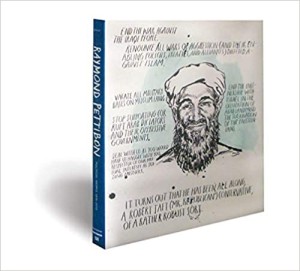
Hardcover. Hatje Cantz, 1st, 2013, Book: Very Good, Dust Jacket: None, Hardcover with illustrated boards, 212 pages. Since the late 1970s, as a pioneer of Southern California underground culture, Raymond Pettibon has blurred the boundaries of "high" and "low," from the deviations of marginal youth to art history, literature, sports, religion, politics and sexuality. Rich in detail, his obsessively worked drawings pull freely from myriad sources spanning the cultural spectrum. The resulting, highly poetic constructions function as acute reflections of contemporary society. Throughout the years, his subjects have included political figures and historical events, with particular intensity since the events of September 11, 2001. Seen here are images of Ronald and Nancy Reagan, J. Edgar Hoover, both Bush presidents, the Kennedys, Hitler, scenes from the Vietnam War and protest movements, wars in Iraq and Afghanistan, the prisoner abuse of Abu Ghraib, President Obama and Osama bin Laden. Raymond Pettibon (born 1957) studied economics at UCLA around the same time he joined his brother in the punk band Black Flag. He soon began to contribute artwork to album covers, flyers and t-shirts, for the band and its label, SST Records, and exhibited his work in group shows in galleries in the 1980s. Since the 1990s his work has been the subject of numerous major solo exhibitions.
Hardcover. Seattle, WA, Fantagraphics, 1st, 2016, Book: Very Good, Dust Jacket: Very Good, 256 pages. Hardcover with dust jacket. Clean, unmarked copy with only minor wear to dust jacket. Black and white pictures throughout. Founded by Paul Krassner, "The Realist" was a satirical magazine that took aim at American culture during the period of 1958 to 2001. Paul Krassner collaborates with Fantagraphics to create a collection of the best of "The Realist" drawings with contributions by R. Crumb, Art Spiegelman, S. Clay Wilson, Jay Lynch, Wallace Wood and others. Illustrated front board, 291 pages plus annotations, black/white and 2-color images. Volume numbers and year published accompanies each cartoon.
Softcover. Seattle, WA, Fantagraphics Books, 1st, 1989, Book: Very Good, Dust Jacket: None, 96 pages Softcover with light edgewear to paper wrappers. Black and white comic illustrations throughout. Tight copy.
Hardcover. New York, Rizzoli International Publications, 1st, July 16, 2004, Book: Very Good, Dust Jacket: Very Good, Hardcover, 240 pages, color illustrations throughout. Light edge wear to dust jacket; small tear on rear cover. Else a very clean, tight copy. A showcase of Groom's drawings, prints & inimitable urban sculpto-pictograms (in full-color).
Hardcover. Washington DC, Smithsonian Institution Scholarly Press , 1st, 2009, Book: Very Good, Dust Jacket: Very Good, Hardcover in a bright, unclipped dust jacket. At least since the Renaissance, artists have created wonderful images of themselves. Some self-portraits are the equivalent of a painter's "signature," while others were inspired by the need to establish social status or gain a commission. In the twentieth century, however, self-representation turned inward, becoming a means by which artists sought to navigate passageways of the mind. In Reflections/Refractions, some of the greatest modern artists--including Andy Warhol, Edward Hopper, Grant Wood, Jasper Johns, Robert Rauschenberg, Jacob Lawrence, Louise Bourgeois, David Hockney, Alexander Calder, and Alex Katz--use sinuous line and gorgeous color to trace the intricacies of their personalities, whether dark and gloomy or bright and fanciful. The book is at once a catalog of twentieth-century self-portraits in the collection of the National Portrait Gallery, Smithsonian Institution, and an exploration of how modern artists view themselves and the world. Eighty color illustrations--drawings and paintings--are accompanied by lively and informative captions, making this volume an endlessly fascinating book. Clean copy.
Hardcover. Indiana University Press, 1st, 2017, Book: Very Good, Dust Jacket: Very Good, Hardcover in a bright dust jacket, 475 pages. Rembrandt's stunning religious prints stand as evidence of the Dutch master's extraordinary skill as a technician and as a testament to his genius as a teller of tales. Here, several virtually unknown etchings, collected by the Feddersen family and now preserved for the ages at the University of Notre Dame, are made widely available in a lavishly illustrated volume. Building on the contributions of earlier Rembrandt scholars, noted art historian Charles M. Rosenberg illuminates each of the 70 religious prints through detailed background information on the artist's career as well as the historical, religious, and artistic impulses informing their creation. Readers will enjoy an impression of the earliest work, The Circumcision (1625-26); the famous Hundred Guilder Print; the enigmatic eighth state of Christ Presented to the People; one of a handful of examples of the very rare final posthumous state of The Three Crosses; and an impression and counterproof of The Triumph of Mordecai. From the joyous epiphany of the coming of the Messiah to the anguish of the betrayal of a father (Jacob) by his children, from choirs of angels waiting to receive the Virgin into heaven to the dog who defecates in the road by an ancient inn (The Good Samaritan), Rembrandt's etchings offer a window into the nature of faith, aspiration, and human experience, ranging from the ecstatically divine to the worldly and mundane. Ultimately, these prints? modest, intimate, fragile objects?are great works of art which, like all masterpieces, reward us with fresh insights and discoveries at each new encounter. Clean copy.
Hardcover. Germany, Hatje Cantz Publishers, 1st, 2006, Book: Very Good, Dust Jacket: Very Good, Hardcover, 104 pages.Like new in publisher's shrink-wrap. There are no smoking cowboys swinging their lassoes or bare-breasted blondes on heavy motorcycles in this droll collection of highly expressive drawings and watercolors. Au contraire, the inventive shapes and joyful colors recall children's drawings or paintings by the mentally ill. Half-figures of indeterminate gender with staring eyes, big ears and frizzy hair smirk challengingly at the viewer, offering an inventory of possibilities, many of which later find their way into Prince's joke paintings of the same period. This extraordinary little book presents these funny yet sinister works to a larger public for the first time, and allows readers to discover a new side of Richard Prince's oeuvre.
Softcover. New York, Prestel Publishing, unknown, 2000, Book: Very Good, Dust Jacket: None, Softcover, 64 pages illustrated in color. Text in German and English. Essay by Veit Loers and photography by Lesley Leslie-Spinks. Pictorial stiff wrappers with light wear to edges and spine. Wrinkle and light rubbing to front cover. Overall a nice, tight, clean copy.
Hardcover. Gloucester MA, Rocky Neck Art Colony, 1st, 2008, Book: Very Good, Dust Jacket: Very Good, Hardcover, 160 pages illustrated throughout with over 130 plates in color. Light edgewear to dust jacket. Clean, tight copy.
Softcover. Paris, Centre Pompidou, 1st, 2003, Book: Very Good, Dust Jacket: None, 80 pages. Softcover. Text in French and English. Illustrated with full color photographs. Slight darkening along cover edges. Clean, tight copy.
Softcover. Washington D.C., National Gallery of Art Washington, 1st, 1982, Book: Very Good, Dust Jacket: None, 271 pages. Softcover. National Gallery of Art publications from exhibition laid in. Color and b/w illustrations throughout. In beautiful condition. Wrapper bright and excellent. Pages clean, binding good. Catalogue to accompany exhibition held from February 7, 1991-May 9, 1982.
Hardcover. Manchester VT , Hudson Hills, 1st, 2001, Book: Very Good, Dust Jacket: Very Good, Hardcover. Text by numerous authors. 104 pages, over 100 color plates. 4to, cloth. Museum of Contemporary Art in association with New York, Hudson Hills Press. This book brings together works from Lichtenstein's "Interiors" series, most of which he painted in the last decade of his career. In addition to paintings, the book includes prints, sculptures, drawings, and some of the source materials Lichtenstein used to develop this imagery. Like new in publisher's shrink-wrap.
Hardcover. Hatje Cantz, 1st, 2010, Book: Very Good, Hardcover, 208 pages. Between 1961 and 1968, at the height of the Pop art movement, Roy Lichtenstein (1923-1997) created about 50 large black-and-white drawings. Not only was their imagery, culled from consumer culture, entirely new--baked potatoes, ads for foot medication and BB Guns--but so was their treatment, which drew on the rudimentary character of cheaply printed commercial drawings. Conceived independently from Lichtenstein's paintings, these drawings recast illustrations from newspaper ads and comic books into works of keen visual intensity, curiously echoing the clean-edge aesthetic of 1960s geometric abstraction. "Drawing is the basis of my art," Lichtenstein later affirmed; "It is where my thinking takes place." Published for an exhibition at the Morgan Library in New York, this richly illustrated publication offers 120 color illustrations, plus essays on Lichtenstein's technique and on his little-known 1967 Aspen project, in which the artist transformed a room into a black-and-white cartoon drawing.
Softcover. NY, Pierpont Morgan Library,, 1979, Book: Very Good, Dust Jacket: None, Softcover, stiff paper wrappers. 298 pages. Catalogue of Rubens and Rembrandt drawings in the Pierpont Morgan Library, New York. Introduction, indexed by artists and former owners. 130 black and white plates. Index of artists. Illustrations of 57 watermarks.
Hardcover. NY, The Cythera Press, 1st, 1970, Book: Very Good, Dust Jacket: None, hardcover in brown faux-leather, gilt lettering and decoration on cover and spine, no dust jacket. With illustrated title-page, 44 full-page drawings by Van Maele and decorated endpapers. A very good copy. Some of the most poignant yet bizarre erotic illustrations to come out of the turn of the century.
Hardcover. NY, Alfred A. Knopf, 1st, 1978, Book: Very Good, Dust Jacket: Very Good, Hardcover in a bright, unclipped dust jacket with light edgewear. INSCRIBED BY STEINBERG in blue pencil and dated Oct 79 on the half-title page. Inscribed to Silvano Arieti (1914-1981), a psychiatrist, regarded as the world's foremost authority on schizophrenia. He was also a longtime professor at New York Medical College. 256 pages, black and white and color reproductions, publisher's brown cloth-backed tan papered boards, lettered in gilt at spine, brown endpapers (minor chipping to rear bottom edge. Pictorial dust jacket minor toning and wear mostly to edges, very good.
Hardcover. NY, Prestel, 1st, 2022, Book: Very Good, Dust Jacket: None, Hardcover, pictorial boards, 152 pages illustrated in color and b&w. Featuring many rare works and a large- scale, previously forgotten masterwork, this wide-ranging yet intimate book reintroduces readers to one of the most versatile and beloved artists of the post-war era. Romanian-born Saul Steinberg (1914-1999) had one of the most remarkable careers in American art. While renowned for the covers and drawings that appeared in The New Yorker for nearly six decades, he was equally acclaimed for the drawings, paintings, prints, collages, and sculptures he exhibited internationally in galleries and museums. Through these parallel yet integrated careers, he crafted a rich, playful and constantly evolving visual language. Known to the larger public as the creator of the iconic View of the World from 9th Avenue, Steinberg lamented being most famous as "the man who drew that poster." This beautiful volume goes a long way toward correcting that limited perception. It brings together more than eighty works in a variety of media: collage, drawings, objects, and photographs. It also features Steinberg's astonishing mural, Art Viewers, a gigantic assemblage that was shown on a single occasion in 1966. Still in publisher's shrinkwrap.
Hardcover. New Haven CT, Yale University Press;, 1st, 2006, Book: Very Good, Dust Jacket: Very Good, Hardcover, 288 pages. Saul Steinberg (1914-99) described himself as a "writer who draws," thus inspiring curator Smith to characterize Steinberg's brilliantly satiric drawings as "illuminations," thus linking his work to illuminated manuscripts and, given Steinberg's love of literature, to a particular favorite, Arthur Rimbaud's Illuminations. Smith also explores Steinberg's mission to illuminate the overlooked and the absurd. In the biographical sections of his beautifully crafted critique, Smith affectingly recounts Steinberg's life as a Jew in anti-Semitic Romania and an architecture student in Fascist Milan whose distinctive cartoons served as his ticket out of Nazi Europe and onto the pages of the New Yorker. Both Smith and renowned poet Charles Simic associate Steinberg's fascination with documents with his harrowing refugee experiences, while Simic, a fellow immigrant from the Balkans and a friend of Steinberg's, offers striking insights into the artist's comic sensibility. Both commentators reflect on the great change in Steinberg's work after 1960, as his images turned hallucinatory and nightmarish, his protest against tyranny more intense. As instantly recognizable as Steinberg's kinetic, punning, and slyly skewering art is, there hasn't been a comprehensive Steinberg book in years, making this outstanding volume invaluable in its reclamation of Steinberg's agile, philosophic, and category-defying art.
Softcover. New Haven, Yale University Press, 1st, 2006, Book: Very Good, Dust Jacket: None, Large softcover, 287 pages, b&w and color illustrations throughout. A very clean, tight copy. Published on the occasion of the exhibition at the Frances Lehman Loeb Art Centre, New York. Illustrated card covers with long inside flaps, minimal wear. An exhaustive compilation of the best graphic work of Steinberg covering his life in advertising, graphic design and fine arts.
Softcover. New York, Whitney/Knopf, 1st, 1978, Book: Very Good, Dust Jacket: None, Softcover, 256 pages, b&w and color illustrations. Light edge wear. Else a clean, tight copy. Illuminates Steinberg's creative genius as a writer of pictures by critically viewing his ability to transcend borders between art and language in his drawings, cartoons, New Yorker covers, watercolors, and three-dimensional constructions.
Softcover. New York, Whitney/Knopf, 1st, 1978, Book: Very Good, Dust Jacket: None, Softcover, 256 pages, b&w and color illustrations. Light edge wear. Else a clean, tight copy. Illuminates Steinberg's creative genius as a writer of pictures by critically viewing his ability to transcend borders between art and language in his drawings, cartoons, New Yorker covers, watercolors, and three-dimensional constructions.
Softcover. Rochester NY, Home Institute, 1940, Book: Very Good, Dust Jacket: None, Softcover, 40 page booklet profusely illustrated in b&w by the author who was an instructor at New York University as well as a professional illustrator. #92 in a series of self-help pamphlets published by the Home Institute. Clean, 6 X 9".

 "Raymond Pettibon: Here's Your Irony Back: Political Works 1975-2013by: Raymond Pettibon/Benjamin Buchloh")
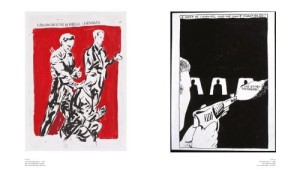
 "Realist Cartoons, Theby: Persoff, Ethan (Editor)")
 "Red Barryby: Gould, Will")
 "Red Groomsby: Danto, Arthur et. al.")
 "Reflections/Refractions: Self-Portraits in the Twentieth Century by: Reaves, Wendy Wick / Anne Collins Goodyear")
 "Rembrandt's Religious Prints: The Feddersen Collection at the Snite Museum of Art by: Rosenberg, Charles M.")
 "Richard Prince: Hippie Drawingsby: Brautigan, Richard")
 "Robert Wilson: 14 Stationsby: Wilson, Robert")
 "Rocky Neck Art Colony, 1850-1950by: Curtis, Judith A.")
 "Roni Horn - Dessins/Drawings - Galerie d'art Graphique - October 1, 2003 - January 5, 2004by: Storsve, Jonas/Paulo Herkenhoff/Centre Pompidou")
 "Rosenwald, Lessing J.: Tribute to a Collectorby: Fine, Ruth E.")
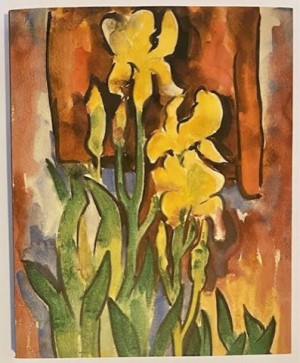
 "Roy Lichtenstein: Interiorsby: Fitzpatrick, Robert")
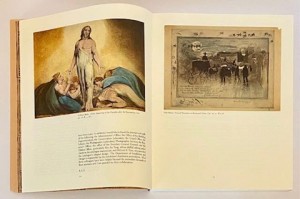
 "Roy Lichtenstein: The Black-and-White Drawings, 1961-1968by: Isabelle Dervaux , Graham Bader, et al.")
 "Rubens and Rembrandt in Their Century: Flemish & Dutch Drawings of the 17th Century from The Pierpont Morgan Libraryby: Stampfle, Felice")
 "Samaras Pastelsby: Schjeldahl, Peter")
 "Satiren / 50 Zeichnungenby: Brockmann, H.M.")
 "Satyrical Drawings of Martin Van Maele by: Maele, Martin Van")
 "Saul Steinberg (INSCRIBED BY SAUL STEINBERG)by: Rosenberg, Harold / Saul Steinberg")
 "Saul Steinberg: Between the Linesby: Saul Steinberg / Anne Montfort-Tanguy, Valérie Loth (Editors)")


 "Saul Steinberg: Illuminationsby: Joel Smith and Charles Simic")
 "Saul Steinberg: Illuminationsby: Smith, Joel")
 "Saul Steinbergby: Rosenberg, Harold")
 "Saul Steinbergby: Rosenberg, Harold")
 "Simple Course in Illustration and Advertising Art, Aby: Zaidenberg, Arthur")