Hardcover. NY, Rizzoli, 1st, 2008, Book: Very Good, Dust Jacket: Very Good, Hardcover, 320 pages. Through all-new, full-color photography, Stanford White, Architect is the first book to explicitly feature the work of the principal genius of the illustrious American architecture firm of McKim, Mead & White. The firm was also a prime mover in the realm of residential design, with Stanford White as its visionary head. As an architect of opulent houses--in Newport, Rhode Island, along the Hudson, on the Long Island Gold Coast, and elsewhere--Stanford White had few peers. His genius for this form is expressed nowhere more wonderfully than in such personal masterpieces as his country home Box Hill and his city home in Gramercy Park. Along with residential commissions for such eminent American families as the Vanderbilts, Astors, Pulitzers, Paynes, and Whitneys, Stanford White lent his eye and hand to New York's Pennsylvania Station, Brooklyn Museum, The American Academy in Rome, and the Boston Public Library, as well as many diverse commissions, including social clubs, public buildings, churches, monuments, university buildings, and many other forms, each of which is represented in this landmark volume.
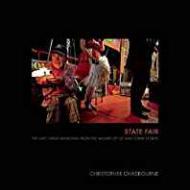
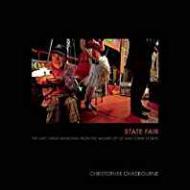
Hardcover. Heidelberg, Germany, Kehrer Verlag, 1st, 2014, Book: Very Good, Dust Jacket: None, 108 pages. Hardcover with no dust jacket. Very clean, unmarked copy still in shrink wrap. Many color photographs throughout. Tight copy. "State Fair" is filled with captivating images. Christopher Chadbourne takes you on a journey filled with interesting characters, vibrant colors, and memorable moments - all compiled from years of photographing the goings-on at this uniquely American institution. Chadbourne knows state fairs and has an uncanny ability to catch often peculiar scenarios as people mingle, eat, and participate in this once a year event.
Hardcover. Heidelberg, Germany, Kehrer Verlag, 1st, 2014, Book: Very Good, Dust Jacket: None, 108 pages. Hardcover with no dust jacket. Very clean, unmarked copy still in shrink wrap. Many color photographs throughout. Tight copy. "State Fair" is filled with captivating images. Christopher Chadbourne takes you on a journey filled with interesting characters, vibrant colors, and memorable moments - all compiled from years of photographing the goings-on at this uniquely American institution. Chadbourne knows state fairs and has an uncanny ability to catch often peculiar scenarios as people mingle, eat, and participate in this once a year event.
Hardcover. New York , Farrar Straus Giroux, 1st, 1983, Book: Very Good, Dust Jacket: Good, Hardcover. INSCRIBED BY AUTHOR, AND CONTAINS SIGNED LETTERS AND NOTES. 456 pages. Blue cloth cover, some fading and wear to edges. Dust jacket has bumped bottom edge, small chip missing from top edge of spine. Light foxing on fore edge, but inside is very bright and clean, with b&w illustrations throughout.
Hardcover. NY, Farrar Straus Giroux, 2nd pr., 1983, Book: Very Good, Dust Jacket: Very Good, Hardcover, 456 pages, b&w illustrations. Very good in a similar dust jacket. Authored by Stieglitz's grandniece.
Hardcover. College Station TX, Texas A&M University Press, 1st, 2009, Book: Very Good, Dust Jacket: Very Good, Hardcover with dust jacket, 232 pages. Like new in publisher's shrink-wrap. A postcard craze gripped the nation from 1905 to 1920, as the rise of outdoor photography coincided with a wave of settlement and prosperity in Texas. "Taming the Land" presents, in a large, detailed format, photographic postcards from twenty-four counties in the booming Texas Panhandle. Each entry includes this historical context of the photo.
Hardcover. GR, Steidl, 1st, 2016, Book: Very Good, Dust Jacket: Very Good, Hardcover in a bright, unclipped dust jacket. Sid Grossman (1913-55) and his work were largely forgotten after his untimely death in 1955. Labeled as a communist by the FBI after the war, his hard-earned reputation as a free-thinking photographer quickly fell into oblivion for the rest of the century and beyond. Grossman was one of the founders of the famous New York Photo League and a notoriously demanding and capricious teacher who always challenged his students. This monograph, the first comprehensive survey of Grossman's life and work, contains more than 150 photographs that demonstrate Grossman's enduring talent. The images range from his early social documentary of the late 1930s to the more personal, dynamic street photography of the late 1940s, as well as later experiments with abstraction in both black and white and color. It features an essay by renowned historian Keith F. Davis, and concludes with excerpted transcripts from recordings of a course Grossman taught in 1950.
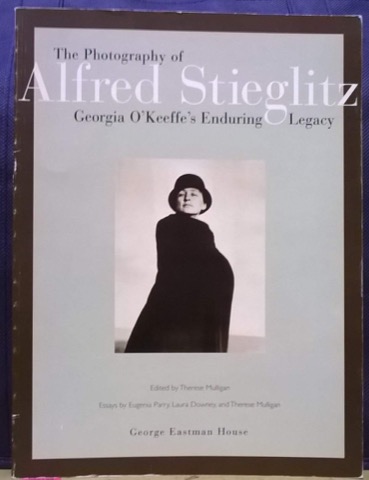
Softcover. Rochester NY, George Eastman House, 1st, 2000, Book: Very Good, Dust Jacket: None, Softcover, 127 page book with 40 black & white and color images by Stieglitz. Essays by Eugenia Parry, Laura Downey and Therese Mulligan. A complete illustrated catalog in rear of the collection O'Keeffe left to George Eastman House in 1951.
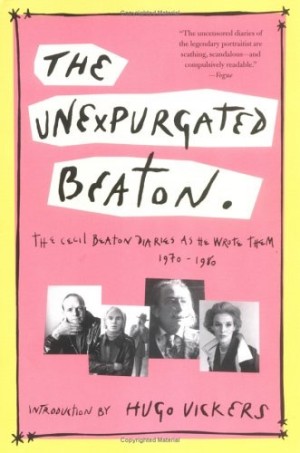
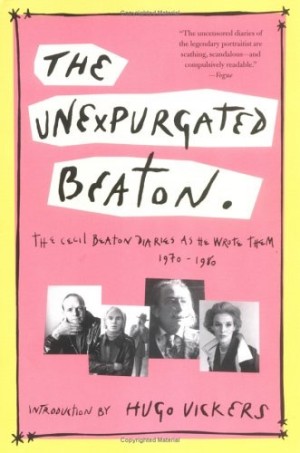
Softcover. NY, Carroll & Graf, Softcover, 500 pages. A twentieth-century photographer, artist, writer and designer for more than fifty years, Cecil Beaton was at the center of the worlds of fashion, society, theater and film. This book brings together for the first time the never-before-published diaries from 1970 to 1980 and, unlike the six slim volumes of diaries published during his lifetime, these have been left uniquely unedited. Hugo Vickers, the executor of Beaton's estate and the author of his acclaimed biography, has added extensive notes that are as lively as the diary entries themselves. Here is the photographer for British and American Vogue, designer of the sets and costumes for the play and film My Fair Lady and the film Gigi, with a cast of characters from many worlds, at shooting parties in the English countryside, on yachts, at garden parties at Buckingham Palace, at costume balls in Venice, Paris or London. Clean copy.
Softcover. NY, Carroll & Graf, Softcover, 500 pages. A twentieth-century photographer, artist, writer and designer for more than fifty years, Cecil Beaton was at the center of the worlds of fashion, society, theater and film. This book brings together for the first time the never-before-published diaries from 1970 to 1980 and, unlike the six slim volumes of diaries published during his lifetime, these have been left uniquely unedited. Hugo Vickers, the executor of Beaton's estate and the author of his acclaimed biography, has added extensive notes that are as lively as the diary entries themselves. Here is the photographer for British and American Vogue, designer of the sets and costumes for the play and film My Fair Lady and the film Gigi, with a cast of characters from many worlds, at shooting parties in the English countryside, on yachts, at garden parties at Buckingham Palace, at costume balls in Venice, Paris or London. Clean copy.
Hardcover. US, North Point Press, 1st, 1998-05-01, Book: Very Good, Dust Jacket: Very Good, 376 pages, b&w photos. Light shelf-wear to dust jacket, else a clean, tight copy. A memoir of her life in the 1930s and 1940s with photographer Edward Weston, by his wife at the time, and sometimes model, Charis Wilson. 86 photographs throughout. including many previously unpublished family pictures, photographs by friends, and many of Weston's own extraordinary images.
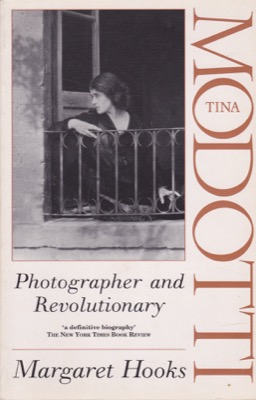
Softcover. NY, HarperCollins, 1st pbk, 1995, Book: Very Good, Dust Jacket: None, Softcover, 296 pages, b&w illustrations. The apt subtitle of this award-winning biography, Photographer & Revolutionary, sums up the creative tensions that characterized Tina Modotti's life and brief photographic career. Active as a photographer for only nine years, Modotti was pulled between formal and social concerns. Producing striking modernist compositions of everyday objects, photojournalism of poverty and conflict, and portraits of celebrities and common people alike, Modotti balanced political concerns with formal rigor. First published in 1993 and long out of print, Tina Modotti: Photographer & Revolutionary is the definitive portrayal of Modotti's life and work. Few photographers are more deserving of a biographical treatment than Modotti, whose work as an actress and artist's model introduced her to Edward Weston, who was to become her lover. Soon after she arrived in Mexico City with Weston, Modotti became increasingly politicized, working for the communist newspaper El Machete and establishing herself as the go-to photographer for the Mexican Muralist movement. The book includes extensive archival material, interviews with Modotti's contemporaries and many rare photographs. Clean copy.
Hardcover. NY, Knopf, 1st US, 1992, Book: Very Good, Dust Jacket: Very Good, Hardcover, 287 pages, b&w illustrations. From the construction of the Berlin Wall through every major conflict of his adult lifetime up to the Syrian Civil War, photographer Don McCullin has left a trail of iconic images. Unreasonable Behavior traces the life and career of one of the top photojournalists of the twentieth century and beyond. Born in London in 1935, McCullin worked as a photographer's assistant in the RAF during the Suez Crisis. His early association with a North London gang led to the first publication of his pictures. As an overseas correspondent for the Sunday Times Magazine beginning in 1966, McCullin soon became a new kind of hero, taking a generation of readers beyond the insularity of post-war domestic life through the lens of his Nikon camera. He captured the realities of war in Biafra, the Congo, Vietnam, Cambodia, and the human tragedy of famine and cholera on the Bangladesh border and later, the AIDs epidemic in Sub-Saharan Africa. McCullin now spends his days in a Somerset village, where he photographs the landscape and arranges still-lifes. Harrowing and poignant, Unreasonable Behavior is an extraordinary account of a witness who triumphed over the memories that could have destroyed him.
Hardcover. New York, Rizzoli , 1st, 2009, Book: Very Good, Dust Jacket: Very Good, Hardcover, 280 pages. Like new in publisher's shrink-wrap. Valentina was the twentieth century's first American fashion designer celebrity, working and living on equal social footing with the clientele she dressed (Greta Garbo, Gloria Swanson, Katharine Hepburn, Millicent Rogers, and Audrey Hepburn, among others). One of the few designers who proved that America could live without the Parisian haute couture, her career is a much needed missing link in the history of American fashion. Beyond merely turning out show-stopping evening gowns, Valentina's exotic beauty, dramatic personality, and incomparable style earned her a legendary reputation. Kohle Yohannan explores the carefully constructed persona and lore of this designer who helped define American Couture. Published in association with the Museum of the City of New York's exhibition Valentina: New York Couture and the Cult of Celebrity, this book includes photographs, never-before-seen personal ephemera, sketches, and original platinum prints from master photographers such as Cecil Beaton, Horst P. Horst, and George Hoyningen-Huene.
Hardcover. Princeton NJ, Princeton University Press, 1st, 2005, Book: Very Good, Hardcover, 208 pages. Like new in publisher's shrink-wrap. This lavishly illustrated book establishes the towering influence of the scientist Victor Regnault (1810-1878) in the earliest decades of photography, a period of experimentation ripe with artistic, commercial, and scientific possibility. Regnault has a double significance to the early history of photography, as the first leader of the Societe Francaise de Photographie (S.F.P.) and as the maker of more than two hundred calotype (paper negative) portraits and landscapes. His photographic and scientific careers intersected a third field with his appointment in 1852 as director of the Sevres porcelain works. Readers are treated to Regnault's own beguiling pastoral, garden, and forest scenes; striking portraits of the scientists and artists in his circle of friends; quirky images of acoustic experiments; and an insider's view of the Sevres porcelain works. Regnault's richly varied photographs also encompass perhaps the most extensive group of family portraits in early photography, and his romanticized landscapes reflect a moment when the rural outskirts of Paris were being aggressively suburbanized and industrialized.
Hardcover. NY, Atria Books, 1st, 2021, Book: Very Good, Dust Jacket: Very Good, Hardcover in a bright, unclipped dust jacket, 368 pages, illustrated in color and b&w. The definitive biography that unlocks the remarkable story of Vivian Maier, the nanny who lived secretly as a world-class photographer, featuring nearly 400 of her images, many never seen before, placed for the first time in the context of her life. Vivian Maier, the photographer nanny whose work was famously discovered in a Chicago storage locker, captured the imagination of the world with her masterful images and mysterious life. Before posthumously skyrocketing to global fame, she had so deeply buried her past that even the families she lived with knew little about her. No one could relay where she was born or raised, if she had parents or siblings, if she enjoyed personal relationships, why she took photographs and why she didn't share them with others. Now, in this definitive biography, Ann Marks uses her complete access to Vivian's personal records and archive of 140,000 photographs to reveal the full story of her extraordinary life. Based on meticulous investigative research, Vivian Maier Developed reveals the story of a woman who fled from a family with a hidden history of illegitimacy, bigamy, parental rejection, substance abuse, violence, and mental illness to live life on her own terms. Left with a limited ability to disclose feelings and form relationships, she expressed herself through photography, creating a secret portfolio of pictures teeming with emotion, authenticity, and humanity. With limitless resilience she knocked down every obstacle in her way, determined to improve her lot in life and that of others by tirelessly advocating for the rights of workers, women, African Americans, and Native Americans. No one knew that behind the detached veneer was a profoundly intelligent, empathetic, and inspired woman--a woman so creatively gifted that her body of work would become one of the greatest photographic discoveries of the century.
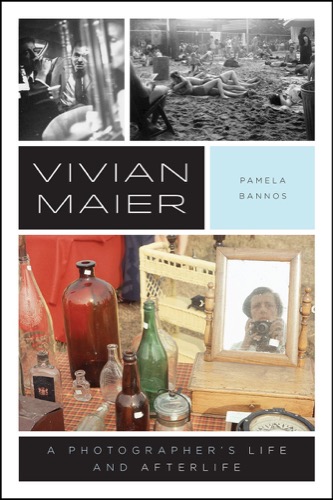
Softcover. Chicago, University of Chicago Press, reprint, 2018, Book: Very Good, Dust Jacket: None, Softcover, 362 pages, 16 pages of b&w illustrations. Who was Vivian Maier? Many people know her as the reclusive Chicago nanny who wandered the city for decades, constantly snapping photographs, which were unseen until they were discovered in a seemingly abandoned storage locker. They revealed her to be an inadvertent master of twentieth-century American street photography. Not long after, the news broke that Maier had recently died and had no surviving relatives. Soon the whole world knew about her preternatural work, shooting her to stardom almost overnight. But, as Pamela Bannos reveals in this meticulous and passionate biography, this story of the nanny savant has blinded us to Maier's true achievements, as well as her intentions. Most important, Bannos argues, Maier was not a nanny who moonlighted as a photographer; she was a photographer who supported herself as a nanny. In Vivian Maier: A Photographer's Life and Afterlife, Bannos contrasts Maier's life with the mythology that strangers-mostly the men who have profited from her work-have created around her absence. Clean, bright copy.
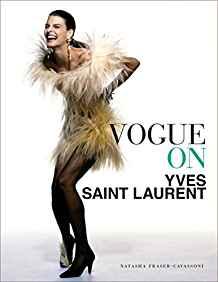
Hardcover. New York, Harry N. Abrams, 1st, 2015, Book: Very Good, Dust Jacket: None, 160 pages. Hardcover with no dust jacket. Clean, unmarked copy with only minor wear to boards. Color and black and white pictures throughout. Originally born in Algeria, Yves Saint Laurent moved to Paris when he was 18, and only three years later he was handpicked by Christian Dior to take the reins as designer of his fashion house. Over time, Saint Laurent resurrected haute couture from the casual mores that predominated in the 1960s, but also offered chic cachet to ready-to-wear clothing. He was among the earliest of designers to incorporate non- European references into his work, and in 1983 he became the first living designer to be feted with a solo exhibition at The Metropolitan Museum of Art in New York. Vogue on Yves Saint Laurent is a stellar volume in the series from the editors of British Vogue, featuring 20,000 words of original biography and history and studded with more than 80 images from their unique archive of images taken by leading photographers.
Hardcover. Princeton NJ, Princeton University Press, 1st, 2020, Book: Very Good, Dust Jacket: Very Good, Hardcocer in a bright dust jacket, 257 pages plus 143 b&w pages of photographs in the front of the book. Walker Evans (1903-75) was a great American artist photographing people and places in the United States in unforgettable ways. He is known for his work for the Farm Security Administration, addressing the Great Depression, but what he actually saw was the diversity of people and the damage of the long Civil War. In Walker Evans, renowned art historian Svetlana Alpers explores how Evans made his distinctive photographs. Delving into a lavish selection of Evans's work, Alpers uncovers rich parallels between his creative approach and those of numerous literary and cultural figures, locating Evans within the wide context of a truly international circle. Alpers demonstrates that Evans's practice relied on his camera choices and willingness to edit multiple versions of a shot, as well as his keen eye and his distant straight-on view of visual objects. Illustrating the vital role of Evans's dual love of text and images, Alpers places his writings in conversation with his photographs. She brings his techniques into dialogue with the work of a global cast of important artists--from Flaubert and Baudelaire to Elizabeth Bishop and William Faulkner--underscoring how Evans's travels abroad in such places as France and Cuba, along with his expansive literary and artistic tastes, informed his quintessentially American photographic style.
Hardcover. New York , Basic Books, 1st, 1999, Book: Very Good, Dust Jacket: Very Good, Hardcover, 651 pages, landmark biography of photographer Walker Evans, once labeled a propagandist, but in reality, was an observer of the true nature of things. Based on unrestricted access to all of Evan's diaries, letters, work logs and contact sheets as well as the diaries of Lincoln Kirstein. Clean copy in an unclipped dust jacket.
Hardcover. NY, Skira Rizzoli, 1st, 2010, Book: Very Good, Dust Jacket: Very Good, Hardcover, 224 pages. Illustrated in color and b&w. The most comprehensive book on the artist to date, offering an insightful look into the legendary musician and his enormous impact on the development of jazz. Miles Davis explores the life and art of one of the greatest visionaries in jazz history--through photographs, handwritten musical scores, album covers, posters, and more--cementing his reputation as the embodiment of cool, both on- and offstage. To examine his extraordinary career is also to examine the history of jazz from the mid-1940s through the early 1990s, as Davis was crucial in almost every important innovation and stylistic development during that time. His genius paved the way for these changes, both with his own performances and recordings, and by choosing collaborators with whom he forged new directions. Miles Davis--trumpeter, bandleader, and composer--was one of the most important figures in jazz history. He was born in a well-to-do family in St. Louis in 1926 and died in a Los Angeles hospital in 1991. He was at the forefront of several major developments in jazz music, including cool jazz, hard bop, free jazz, and fusion. Davis worked with many of the greatest jazz musicians of all time, including Ron Carter, John Coltrane, Chick Corea, Herbie Hancock, Quincy Jones, Charlie Parker, and Max Roach, among numerous others.
Hardcover. NY, Harper, 1st, 2020, Book: Very Good, Dust Jacket: Very Good, Hardcover in a bright dust jacket, 672 pages. 16 pages of photos. What Becomes a Legend Most is the first definitive biography of this luminary--an intensely driven man who endured personal and professional prejudice, struggled with deep insecurities, and mounted an existential lifelong battle to be recognized as an artist. Philip Gefter builds on archival research and exclusive interviews with those closest to Avedon to chronicle his story, beginning with Avedon's coming-of-age in New York between the world wars, when cultural prejudices forced him to make decisions that shaped the course of his life. Compounding his private battles, Avedon fought to be taken seriously in a medium that itself struggled to be respected within the art world. Gefter reveals how the 1950s and 1960s informed Avedon's life and work as much as he informed the period. He counted as close friends a profoundly influential group of artists--Leonard Bernstein, Truman Capote, James Baldwin, Harold Brodkey, Renata Adler, Sidney Lumet, and Mike Nichols--who shaped the cultural life of the American twentieth century. It wasn't until Avedon's fashion work was exhibited at the Metropolitan Museum of Art in the late 1970s that he became a household name. Balancing glamour with the gravitas of an artist's genuine reach for worldy achievement--and not a little gossip--plus sixteen pages of photographs, What Becomes a Legend Most is an intimate window into Avedon's fascinating world. Dramatic, visionary, and remarkable, it pays tribute to Avedon's role in the history of photography and fashion--and his legacy as one of the most consequential artists of his time.
Hardcover. NY, Harper, 1st, 2020, Book: Very Good, Dust Jacket: Very Good, Hardcover in a bright dust jacket, 672 pages. 16 pages of photos. What Becomes a Legend Most is the first definitive biography of this luminary--an intensely driven man who endured personal and professional prejudice, struggled with deep insecurities, and mounted an existential lifelong battle to be recognized as an artist. Philip Gefter builds on archival research and exclusive interviews with those closest to Avedon to chronicle his story, beginning with Avedon's coming-of-age in New York between the world wars, when cultural prejudices forced him to make decisions that shaped the course of his life. Compounding his private battles, Avedon fought to be taken seriously in a medium that itself struggled to be respected within the art world. Gefter reveals how the 1950s and 1960s informed Avedon's life and work as much as he informed the period. He counted as close friends a profoundly influential group of artists--Leonard Bernstein, Truman Capote, James Baldwin, Harold Brodkey, Renata Adler, Sidney Lumet, and Mike Nichols--who shaped the cultural life of the American twentieth century. It wasn't until Avedon's fashion work was exhibited at the Metropolitan Museum of Art in the late 1970s that he became a household name. Balancing glamour with the gravitas of an artist's genuine reach for worldy achievement--and not a little gossip--plus sixteen pages of photographs, What Becomes a Legend Most is an intimate window into Avedon's fascinating world. Dramatic, visionary, and remarkable, it pays tribute to Avedon's role in the history of photography and fashion--and his legacy as one of the most consequential artists of his time.
Hardcover. US, Focal Point, 1st, 2010, Book: Very Good, Dust Jacket: Very Good, 303 pages, illustrated throughout in color. Clean, unmarked copy with only minor wear to dust jacket. Nearly 50 years of photography by seasoned National Geographic photographer Bill Allard. Allard was a pioneer of color photography with a style that called for entering people's homes and hearts; by winning their confidence he was able to capture "off guard" moments, and reveal the depth of human nature as never before seen in the pages of National Geographic. Always in search of "what is happening at the edges," his work reveals beauty, mystery, and a sense of adventure. Part photography retrospective and part personal memoir, this book paints a full picture -through images and narrative -of the life of a globe-trekking photographer over the past half century.
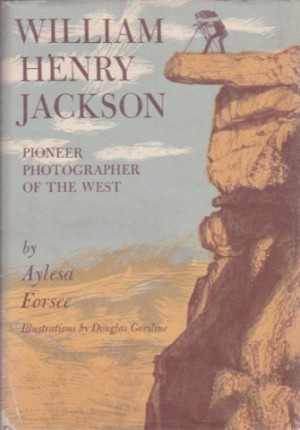
NY, Viking Press, 1st, 1964, Book: Very Good, Dust Jacket: Very Good, Hardcover, 205 pages. Black & white drawings by Douglas Gorsline. Back & white photos by William Henry Jackson. Dust jacket with chip to spine bottom, closed tear.
Hardcover. NY, Rizzoli, 1st, 2010, Book: Very Good, Dust Jacket: Very Good, 208 pages, color and b&w illustrations. Hardcover with dust jacket. Like new in publisher's shrink-wrap. A collection of rarely seen black-and-white photographs taken of women in the 1950s and 1960s, captured by the renowned New York City fashion photographer and filmmaker. Designed by Ruth Ansel, this elegantly produced volume captures the romance and glamour of women in the 1950s and 1960s. A mix of fashion and portraiture, it includes intimate and striking portraits of Nico, Faye Dunaway, Edie Sedgwick, Sharon Tate, and Catherine Deneuve. Jerry Schatzberg's moody snapshots of a more innocent and whimsical New York on the brink of the important societal changes of the sixties form a compellingly nostalgic portrait of a stylish moment. Images of jetsetters at an airport terminal, lovers embracing in Central Park, and a woman waltzing in the street in the Financial District portray a time as well as a style. A New York City native, Schatzberg documented the period with the insider's sensibility of Woody Allen or Martin Scorsese, but with the high-fashion style of Irving Penn and Richard Avedon. With a keen eye for the magic of the in-between moment, Schatzberg stealthily captured the elegance and beauty of a woman as her role was redefined in the sixties, while at the same time retaining an element of humor and surprise.
Hardcover. Boston, David R Godine, 1st, 1993, Book: Very Good, Dust Jacket: Very Good, 226 pages. Oversized. Black cloth cover, gilt design, very little wear. Dust jacket with minor wear. Many b&w photographs throughout. A bright, clean copy. The story of William Notman and his sons and proteges who for over 60 years chronicled North America ( Canada and continental United States ) through the eye of a camera. He gives an invaluable view of what was like to live in the latter part of the Victorian era.
Hardcover. Seattle, University of Washington Press, 1st, 2012, Book: Very Good, Dust Jacket: Very Good, 196 pages. Hardcover with dust jacket. Color photographs. Clean, unmarked copy with only minor wear to dust jacket. In Yamuna Walk, photographer and multimedia artist Atul Bhalla documents a five-day trek along the sacred Yamuna River as it passes through his home city of New Delhi, India. Through his vivid and haunting photographs, Bhalla explores the myriad ways that modern life along the Yamuna is shaped by water, from the rural outskirts of the city to the polluted landscape of urban Delhi. Climbing over fences, crossing concrete overpasses, and navigating between blooming fields and piles of waste on his journeys, Bhalla also shows the diverse marks of human development that can be read in the image of the river.




 "Taming the Land : The Lost Postcard Photographs of the Texas High Plainsby: Morris , John Miller")
 "The Life and Work of Sid Grossmanby: Keith Davis / Sid Grossman")


 "Through Another Lens: My Years With Edward Westonby: Wilson, Charis")
 "Unreasonable Behaviour: An Autobiographyby: McCullin with Lewis Chester, Don")
 "Vivian Maier Developed: The Untold Story of the Photographer Nanny by: Ann Marks")

 "Walker Evans: A Biographyby: Rathbone, Belinda")
 "Walker Evans: Starting from Scratchby: Svetlana Alpers")




 "What Becomes a Legend Most: A Biography of Richard Avedonby: Philip Gefter")


 "What Becomes a Legend Most: A Biography of Richard Avedonby: Philip Gefter")


 "William Albert Allard: Five Decadesby: Allard, William Albert")


 "Yamuna Walkby: Bhalla, Atul (Photographer)")