Hardcover. New York, Umbrage Editions, 1st, 2006, Book: Very Good, Dust Jacket: None, Hardcover, 112 pages. Like new in publishers shrink-wrap. Clayton Burkhart adopts the view of an anonymous wanderer in this mythic city and speaks of absence and loss against a backdrop of steel, stone, concrete, and neon. It is a story of love and redemption after the rain falls, when the damp sidewalks take on the saturated colors of the night.
Hardcover. New Haven, Yale University Press, 1st, 1998, Book: Very Good, Dust Jacket: Very Good, Hardcover, 302 pages, illustrated throughout in b&w. SIGNED BY AUTHOR on title page. Light sun-fade along dust jacket spine. Clean, tight copy. Touring America as the "Apostle of Aestheticism" in 1882, Oscar Wilde brought a witty and controversial message of regeneration through art and beauty to a nation still shaken by the trauma of the Civil War. In this book, the first cultural history of the aesthetic movement in the United States, Mary W. Blanchard shows that it was a wide-ranging popular movement resisted by the moral guardians of Victorianism but advanced by visionary women.
Softcover. Tucson, University of Arizona Press, 3rd pr., 1997, Book: Very Good, Dust Jacket: None, Softcover, 325 pages with index. The devotion to Our Lady of Guadalupe, based on the story of apparitions of the Virgin Mary to Juan Diego, an Indian neophyte, at the hill of Tepeyac in December 1531, is one of the most important formative religious and national forces in the history of Mexico. It has variously been interpreted as the source of Mexican national identity, a means of continuity between the Indian past and Spanish domination, a symbol of national liberation, and a way of evangelizing and pacifying the Indians. The aphorism "Mexico was born at Tepeyac" aptly summarizes its importance. In this, the first work ever to examine in depth every historical source of the Guadalupe apparitions, Stafford Poole traces the origins and history of the account, and in the process challenges many commonly accepted assumptions and interpretations. Small corner clip to front fly leaf, otherwise a clean, tight copy.
Hardcover. New York, Abbeville Press, 1st, 1985, Dust Jacket: Near Fine, 228 pages. Pink cloth covered hardcover with gray lettering on spine. Square quarto. B/W and color plates. a romantic and nostalgic look back at the fabulous nightclubs and palaces of entertainment that lined the Hollywood hills and spread across California's Southland in the heyday of the film capital, from 1915 to 1945. Clean, bright copy.
Hardcover. San Francisco, Pomegranate, 1st, 1992, Book: Very Good, Dust Jacket: Very Good, 164 pages. Hardcover. Black & white photographs by Jazz musician Milt Hinton. Dust jacket with light wear. Clean, tight copy.
Hardcover. Lathem, New York, British American Publishing, 1st, 2004, Book: Very Good, Dust Jacket: Very Good, 269 pages. Hardcover with dust jacket. Clean, unmarked copy with only minor wear to dust jacket.
Hardcover. London, England, Karl Baedeker, 2nd Edition, REvised and Augmented, 1894, Book: Good, Dust Jacket: None, 444 pages. Hardcover (flexible cloth). "With 17 Maps, 44 Plans, and a Panorama of Jerusalem". B/w and color illustrated maps, some fold out. Red fabric cover boards with gilt title on spine (faded) and front cover board. Banded design blind stamped on boards and spine. Fabric ribbon bookmark attached at top of spine. Age wear to covers (see images). Former library book with expected labels, marks, stamps and other identifying characteristics (see images). Decorated marbled edges. Front cover has bump to top right corner (see image). Charming, old, pocket-sized travel book that will tell you everything you ever wanted to know about turn-of-the-century Palestine and Syria.
Softcover. London, Latin America Bureau, 1st, 1990, Book: Very Good, Softcover, 131 pages, illustrated throughout in b&w. How did Manuel Noriega, the CIA's most important agent in Central America, become the US administration's most wanted criminal? Why did 22,000 US troops invade Panama, to arrest a man who had been a staunch ally of the US? Was his involvement in the drug trade the real reason for General Noriega's downfall? Panama: Made in the USA explores the unanswered questions behind the invasion of December 1989 and looks at the turbulent history of US-Panamanian relations, in particular the bitter struggle for control of the Panama Canal. It analyzes the economic and geo-strategic importance of a country literally created by and for the US government. Looking at Panama since the invasion, the authors explore the challenge facing the US-installed Endara government as rebuilds a country shattered by invasion and US sanctions. Clean copy.
Hardcover. New York, Merrell Holberton, 1st, 2007, Book: Near Fine, Dust Jacket: Near Fine, 224 pages, illustrated in color and b&w. Still in publisher's shrinkwrap. Punk is most commonly associated with music, fashion and graphics, but its rebellious and iconoclastic spirit also found expression in the visual arts. Panic Attack! reveals the vibrant art scene that exploded in Britain and the United States between 1974 and 1984, when visual artists shared some of the radical attitudes and aesthetics of punk and post-punk musicians and designers.Featuring essays by both British and American commentators, a detailed chronology of the art and music scenes of the time and stunning reproductions of works by over thirty leading artists, Panic Attack! is an account of one of the most exciting periods in modern art.
Hardcover. Oxford UK, Clarendon Press, 2nd pr., 1969, Book: Very Good, Dust Jacket: Very Good, Hardcover, blue cloth covers with gilt lettering in a lightly worn dust jacket, 452 pages illustrated with 19 plates including frontispiece, figures in text maps and diagrams. Detailed anthropological study of a people of the far south-West of New Guinea, by the Government Anthropologist.
Hardcover. GR, Edel Classica Gmbh , 1st, 2006, Book: Very Good, Dust Jacket: None, Hardcover, 120 pages. Party Tonight: Berlin Hamburg Frankfurt Cologne Munich Dancing, Clubbing, Chilling A night out in Germany's trendsetting metropolises -- five of the life-style magazine MAX's hottest night life photographers set out to party in Berlin, Hamburg, Frankfurt, Cologne, and Munich. Along the way, their fascinating pictures capture a glimpse of all the things the night has to offer. Cruising, Clubbing, Party, and Chill Out in the cities' most stylish places. Music CDs: House and Chill Out music from the trendsetting labels Kontor and MAXELECT-Records on 4 CDs turn night to day.
Hardcover. London, Westzone, 1st, 2001, Book: Very Good, Dust Jacket: Very Good, Hardcover, b&w and color photographs throughout, minor dust jacket edge wear, otherwise, very clean and tight. Bangkok's red light district - it's about addiction; a crazy hedonistic lifestyle that is also a refuge. For everyone caught up in the nightlife, bar girls, transexuals, transients, tourists there is an emotional addiction: and endless cycle of happy illusion, ecstacy, intensity, doubt and despair all captured by photographer Nick Nostitz.
Hardcover. Boston, Houghton Mifflin, Book: Very Good, Dust Jacket: None, Hardcover, black cloth covers with paper label on spine, lettering faded. Introduction by Franz Boas. 291 pages including index. No date on title page, only date is 1934 on copyright page. Previous owner's inscription on front fly leaf dated 1935. A bright, tight copy.
Hardcover. New York, Harper & Brothers, 1st, 1939, Book: Very Good, Dust Jacket: None, Non-Paginated. Hardcover. Previous owners inscription in a fine hand along top edge of inside front cover dated 1939. Full color and black & white illustrations by Barbara Latham. Rubbing to edges and corners of covers. Degree of age toning to page edges. Clean, unmarked copy.
Hardcover. NY, Mark Batty, 1st, 2008, Book: Very Good, Dust Jacket: Very Good, Hardcover, 160 pages. The volume offers a significant selection from the run of Peel Magazine, which exposes the key influence in the recognition of urban stickers, in particular in the USA.A good overview of artists, thematic selections, are peppered with fair interviews, and other elements of urban culture such as decorated or tuned-up toys, or several forms of street art without losing much track of stickers as such.
Hardcover. NY, Mark Batty, 1st, 2008, Book: Very Good, Dust Jacket: Very Good, Hardcover, 160 pages. The volume offers a significant selection from the run of Peel Magazine, which exposes the key influence in the recognition of urban stickers, in particular in the USA.A good overview of artists, thematic selections, are peppered with fair interviews, and other elements of urban culture such as decorated or tuned-up toys, or several forms of street art without losing much track of stickers as such.
Hardcover. New York, George H. Doran Company, 1st Edition, 1922, Book: Very Good, Dust Jacket: None, 227 pages. Hardcover. B/w illustrations throughout. Illustrated by Ralph Barton. Cover boards bound in black cloth, yellow paste down on front cover board and spine with black titles. Deckled untrimmed edges. Light tanning from age to edges and pages. Binding tight, spine straight. A parody outline of etiquette by the author of "A Parody Outline of History".
Hardcover. NY, Rizzoli, 1st, 2006, Book: Very Good, Dust Jacket: Very Good, Hardcover, 384 pages, profusely illustrated in color and b&w. This thought-provoking volume transports readers to France of the eighteenth, nineteenth, and twentieth centuries, beginning with Napoleon's love of perfume and the erotic importance he attached to it, through the lore and symbolism fragrance enjoyed in eighteenth and nineteenth-century Europe. By the early twentieth century, perfume's place as one of France's most important luxury industries was recognized and celebrated, and timeless fragrances--such as Chanel No. 5, Shalimar, Arpeges, and Joy--were launched. The distinctive bottles for these new essences and the art movements that inspired their design are detailed throughout the book, as are paintings, poetry, and literature that reveal the power of perfume and its ability to recall the past and evoke sensuality. According to nineteenth-century perfumer Eugene Rimmel, "the history of perfume is, in some manner, the history of civilization." Through fascinating text accompanied by gorgeous imagery, including packaging, labels, and advertisements, Perfume: Joy, Scandal, Sin explores perfume's impact on history, culture, society, art, and attitudes.
Softcover. NJ, Citadel Press, reprint, 1978, Book: Very Good, Dust Jacket: None, Softcover, 292 pages. Studies the distinctive personalities, problems, and cultural contributions of such women as Margaret Fuller, Lydia Maria Child, and Elizabeth Cady Stanton, examining the extent to which romanticism encouraged intellectualism among women during the three decades prior to the Civil War. Clean copy.
Hardcover. London, B. T. Batsford Ltd., 1st, 1949, Book: Very Good, Dust Jacket: Good, 169 pages. Hardcover. Red cloth edition. Top edge stained red. Illustrated with 126 black & white photographs and a few in color. Previous owners name embossed at top of rear interior dust jacket flap. Dust jacket with darkening to spine, minor smudges at upper left corner - jacket now protected with clear plastic cover. Clean, tight copy.
Hardcover. Manchester UK, Manchester University Press, 1st, 1985, Book: Very Good, Dust Jacket: Very Good, Hardcover in a bright, unclipped dust jacket. 312 pages. Clean, tight copy.
Hardcover. Santa Fe, Twin Palms Pub, 1st, 2008, Book: Very Good, Dust Jacket: None, Hardcover, 60 pages. Clean, unmarked copy with only minor wear to dust jacket. Close to 30 full-page color portraits of phone sex "operators" in the intimate setting of their own homes with comments from each on their work.
Hardcover. Santa Fe, Twin Palms Pub, 1st, 2008-12-03, Book: Very Good, Dust Jacket: None, Hardcover, 60 pages. Clean, unmarked copy with only minor wear to dust jacket. Close to 30 full-page color portraits of phone sex "operators" in the intimate setting of their own homes with comments from each on their work.
Hardcover. New York, Pace Wildenstein, 1st, 2007, Book: Very Good, Dust Jacket: Very Good, Hardcover, 188 pages. Illustrated in full color and black & white. Clean, bright copy.
Hardcover. Washington DC/Canberra, 1st, 1986, Book: Very Good, Dust Jacket: Very Good, Hardcover in a dust jacket with light edgewear, fading to spine. 334 pages, b&w illustrations. INSCRIBED BY MYERS on the front fly leaf. The Pintupi are a hunting-gathering people of Australia's Western Desert. They were among the last Aborigines to come into contact with white society. This book presents a comprehensive ethnographic interpretation of the ways in which Pintupi politics, cosmology, kinship systems, nomadic patterns and social values reinforce and sometimes contradict each other.
Hardcover. New York, D. Appleton and Company, 1st, 1916, Book: Very Good, Dust Jacket: Very Good, 135 pages. Hardcover. Front cover and spine with black and white vertical stripes, and Black & white pastedown illustration. Features 6 black & white illustrations by E. W. Kemble. First edition with (1) at end of text. Dust jacket with light chipping, creasing along edges - jacket now protected with clear plastic cover. Clean, unmarked copy.
Hardcover. Gottingen GR, Steidl, 1st, 2006, Book: Very Good, Dust Jacket: Very Good, Non-paginated. Black & white photographs by Rosalind Solomon. Minor wear. Clean, tight copy .Rosalind Solomon made her first pictures in Poland in 1988 during a time of political change, and returned there in 2003, a time of increasing violence and inhumanity in the world. All of the images are of individuals, their relationships and environments and are observations and commentaries on Poland itself, as well as on the rest of the world.
Softcover. Beijing, China Tibetology Publishing House, 1st, 2014, Book: Very Good, Dust Jacket: None, Softcover, 224 pages. "The publication of Dr. Ben Jiao's dissertation in China is a welcome addition to the growing literature in China about Tibetan culture and society as well as an excellent example of how anthropological approaches and frameworks can bring penetrating analyses to our understanding of complex social institutions. And, of course, it is especially fitting that the first Tibetan to receive a PhD in the West has conducted the first study of Tibetan fraternal polyandry in Tibet-and that his study is a major contribution to the field of anthroplogy and Tibetan studies."
Hardcover. London, Tate, 1st, 2010, Book: Very Good, Dust Jacket: Very Good, 208 pages. Hardcover with dust jacket. A very clean, unmarked copy like new in publishers shrink-wrap. Provocative and entertaining, Pop Life examines how artists since the 1980s have cultivated their public persona as a product, and conjured a dazzling mix of media, commerce, and glamour to build their own "brands."
Softcover. New York, Stewart, Tabori & Chang, 2nd printing, 1991, Book: Very Good, Dust Jacket: None, Softcover, 208 pages. Illustrated with black & white photographs by Charles Moore. Clean, tight copy.
Softcover. New York, Stewart, Tabori & Chang, 2nd printing, 1991, Book: Very Good, Dust Jacket: None, Softcover, 208 pages. Illustrated with black & white photographs by Charles Moore. Clean, tight copy.
Hardcover. New York, Academic Press, 1st USA, 1978, Book: Very Good, Dust Jacket: Good, 313 pages. Hardcover. B/w illustrations throughout. Dust jacket unclipped. Gilt title on spine and front cover. Dust jacket has agewear with light foxing and soil. Some foxing to edges. Clean inside, binding tight.
Hardcover. Cambridge, Cambridge University Press, 1st UK, 1995, Book: Very Good, Dust Jacket: Very Good, Hardcover in a bright, unclipped dust jacket, 269 pages. Clean, bright copy. This is the first scholarly account by a Western historian of the Time of Troubles, the period of civil war and foreign invasion in early-seventeenth-century Russia. The author focuses on the various pretenders or royal imposters who appeared at this time; she traces their careers and offers explanations for their success. Her analysis of the phenomenon of pretense illuminates popular perceptions of the monarchy in early modern Russia, and demonstrates how social protest could take the form of support for imposters claiming to be the "true tsar".
Softcover. New York, Perigee Books, Reprint, 1981, Book: Very Good, Dust Jacket: None, 446 pages. Softcover with only light shelf wear to covers. Light marginal foxing to top edge. Clean, unmarked copy.
Hardcover. NY, powerHouse Books, 1st, 2015, Book: Very Good, Dust Jacket: None, Hardcover, 132 pages. To humanize the inhabitants of the "Projects" (NYC Housing Authority public housing) through their own eyes. Cameras were given out over years to hundreds of residents who then went on to take photographs of things that were important to them in their community. After all these years the resulting photographs are nothing short of breathtaking. Not only do they take you on a 'day in the life' of many of these residents, they introduce to the viewer a gentler, more intimate view of "project life" than has been disseminated throughout pop culture in the last several decades. You will not find images of gangs, drugs, guns or otherwise the criminality of these communities that we have all grown to expect. This is not on purpose. These photographs have not been curated or filtered in any way to hide such themes. The humbling fact of the matter is that all photographs came back depicting positive aspects of their lives: family, friends, pets, children, mothers, fathers.
Hardcover. Los Angeles, J. Paul Getty Museum, 1st, 2012, Book: Very Good, Dust Jacket: Very Good, 164 pages. Like new in publisher's shrink-wrap. The high school prom is an American tradition, a rite of passage, and one of the most important rituals of youth in this country. The internationally recognized documentary photographer Mary Ellen Mark took on the extraordinary challenge of working with the Polaroid 20x24 Land camera to produce this fascinating look at dozens of young people from a diverse range of backgrounds on this memorable night in their lives. Traveling across the United States to complete the project from 2006 to 2009, Mark photographed prom-goers at thirteen schools from New York City to Charlottesville, Virginia, to Houston to Los Angeles. Mark's husband, the filmmaker Martin Bell, collaborated with her on the project to produce and direct a film, also called Prom, featuring interviews with the students about their lives, dreams, and hopes for the future. A DVD of the film is packaged with the book. The 127 large-format photographs are reproduced in rich detail, and quotations from the student interviews punctuate the book. Some of the students' statements are comical, while others are deeply touching. The result is a captivating and revealing document of American youth at the beginning of the twenty-first century.
Hardcover. Los Angeles, J. Paul Getty Museum, 1st, 2012, Book: Very Good, Dust Jacket: Very Good, 164 pages. Like new in publisher's shrink-wrap. The high school prom is an American tradition, a rite of passage, and one of the most important rituals of youth in this country. The internationally recognized documentary photographer Mary Ellen Mark took on the extraordinary challenge of working with the Polaroid 20x24 Land camera to produce this fascinating look at dozens of young people from a diverse range of backgrounds on this memorable night in their lives. Traveling across the United States to complete the project from 2006 to 2009, Mark photographed prom-goers at thirteen schools from New York City to Charlottesville, Virginia, to Houston to Los Angeles. Mark's husband, the filmmaker Martin Bell, collaborated with her on the project to produce and direct a film, also called Prom, featuring interviews with the students about their lives, dreams, and hopes for the future. A DVD of the film is packaged with the book. The 127 large-format photographs are reproduced in rich detail, and quotations from the student interviews punctuate the book. Some of the students' statements are comical, while others are deeply touching. The result is a captivating and revealing document of American youth at the beginning of the twenty-first century.
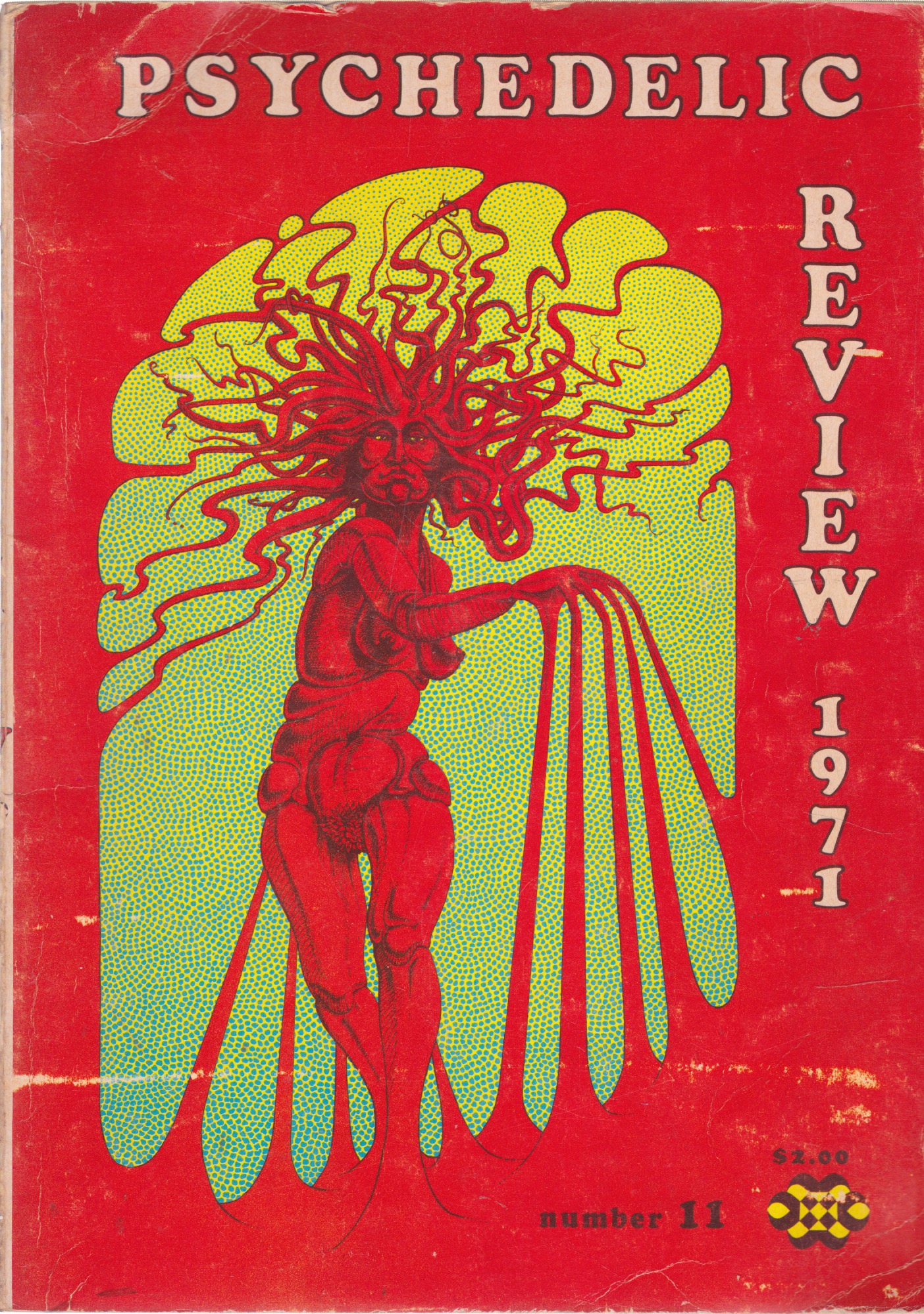
Softcover. San Francisco, Psychedelic Review, 1st, 1971, Book: Very Good, Dust Jacket: None, Softcover with color pictorial wrappers, 85 pages. Black and white illustrations throughout. The last issue of the controversial journal on psychedelic substances, originally founded by Timothy Leary and Richard Alpert. Mild wear, light soil, overall very good, no markings.
Hardcover. Chicago, Albert Whitman & Co., 1st, 1938, Book: Good, Dust Jacket: None, 64 pages. Hardcover. Full color and black & white illustrations by Carol Nay. Some light library stamping and notation - endpapers and at bottom right corner of page 25. Light wear. Clean, unmarked text.
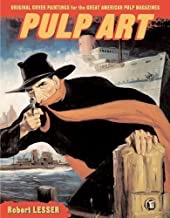
Hardcover. New York, Sterling Publishing, 1st, 2005, Book: Very Good, Dust Jacket: Very Good, 183 pages. Hardcover. Full color illustrations. Light wear. Clean, tight copy. The term pulp fiction has always had a certain resonance; but it is the artwork--bold, energized, dramatic, garishly colorful, and frequently grotesque--that has made pulp magazines memorable to so many people. Pulp Art is the groundbreaking--and ultimate--book on one of America's most important and spectacular forms of illustration art. At last, preserved in this volume are most of the still-existing originals created for the pulp covers, never before seen in all their sharply focused, vibrantly colored brilliance. Robert Lesser, a pioneering collector of this work and an expert on American popular culture, has assembled a gallery of these now-priceless originals. The dynamically pulp-flavored text is a complete historical survey of the pulps and their most important cover artists--Virgil Finlay, J. Allen St. John, Rafael de Soto, Hannes Bok, George and Jerome Rozen, Frank R. Paul, and many others. Also offered are critical discussions of individual paintings, as well as the major themes of the pulp magazines.
Hardcover. NY, W W Norton & Co, 1st, 2003, Book: Very Good, Dust Jacket: Very Good, Hardcover in a bright dust jacket, 608 pages. A startling anecdotal history of gay life in twentieth-century New York explores the confluence of historical and social factors that made Manhattan a mecca for homosexuals in the second half of this century.
Hardcover. Oxford UK, Clarendon Press, 1st, 1923, Book: Very Good, Hardcover, red cloth, 296 pages. Gilt title on spine. Folding maps in rear. Contents: Relation of Bantu to other African races: Africa & Africans - Study of Bantu life & thought: Spirits of things; Spirits of people; Tribal law & politics; Woman & marriage; Training of Bantu youths - Europeanization of Bantu Africa: Discovery of Bantu; White man's burden & how he got it; Some problems of government in Bantu areas; Native labour; Colour bar; Task of Church. Newsp. clippings re author laid in, leaving tan mark.
Hardcover. Paris, Arthaud, 1st, 1981, Book: Very Good, Dust Jacket: Very Good, Hardcover, 32 pages of French text followed by full color photographs of the people and culture of the Rajasthan region of India. Light edge wear to dust jacket. Clean, tight copy.
Hardcover. Philadelphia, PA, George W. Jacobs & Company, 1st Edition, 1924, Book: Very Good, Dust Jacket: Fair, 334 pages. Hardcover. Color frontispiece and b/w illustrations throughout. Previous owner's bookplate, stamp, and pencil markings on front endpapers. Some pages untrimmed. Blue leather cover boards, gilt title on spine and front cover boards with two color decoration. Boards are excellent. Dust jacket has agewear, but present. binding very good. Pages and edges have some tanning. Top edge dyed. Dr. Gordon brings an artist's eye as well as the knowledge of a historian to the beautiful city of London and her historic landmarks.
Hardcover. Philadelphia, PA, J. M. Stoddart & Co., 1st, 1878, Book: Good, Dust Jacket: None, 326 pages. Hardcover. Scarce, early Frost work. Decorated endpapers. B/w illustrations throughout. Back endpapers have a mended rip at gutter. Cover boards bound in orange. Covers have some age wear. Pages are age-yellowed with a touch of foxing in places. Does not affect text or illustrations. In very good shape for its age.
Hardcover. New York, NYUP, 1st, 1970, Book: Very Good, Dust Jacket: Good, 303 pages. Hardcover. 246 black & white illustrations, 6 in color. Light wear to dust jacket at corners, edges. Clean, tight copy. Raphael (The Wrightsman Lectures, Delivered Under the Auspices of the New York University Institute of Fine Arts) [Oct 01, 1979].
Hardcover. New York, New York University Press, 1st Edition, 1970, Book: Very Good, Dust Jacket: Very Good, 303 pages. Hardcover. 246 illustrations in black & white. 6 full page, full color illustrations. Red cloth covers with gilt titles to spine. Bright dust jacket with tears to edges. Clean, unmarked copy.
Hardcover. Surrey UK, Ashgate Publishing, 1st, 2014, Book: Very Good, Dust Jacket: Very Good, Hardcover in a bright dust jacket, 165 pages. Author Leah Knight explores the physical and figurative potentials of green as they were understood in Renaissance England, including some that foreshadow our paradoxical dependence on and sacrifice of the green world. Ranging across contexts from early modern optics and olfaction to horticulture and herbal health care, this study explores a host of human encounters with the green world: both the impressions we make upon it and those it leaves with us. B&w, color illustrations.
Hardcover. New York, Knopf, 1st, 2010, Book: Very Good, Dust Jacket: Very Good, Hardcover, 219 pages. Clean, bright copy. "I doubt very much that I'm the only person who's finding it more and more difficult to want to read or write novels," David Shields acknowledges in Reality Hunger, then seeks to understand how the conventional literary novel has become as lifeless a form as the mass market bodice-ripper. Shields provides an ars poetica for writers and other artists who, exhausted by the artificiality of our culture, "obsessed by real events because we experience hardly any," are taking larger and larger pieces of the real world and using them in their work. Reality Hunger is made of 600-odd numbered fragments, many of them quotations from other sources, some from Shields's own books, but none properly sourced--the project being not a treasure hunt or a con but a good-faith presentation of what literature might look like if it caught up to contemporary strategies and devices used in the other arts, and allowed for samples (that is, quotation from art and from the world) to revivify existing forms. Shields challenges the perceived superiority of the imagination and exposes conventional literary pieties as imitation writing, the textual equivalent of artificial flavoring, sleepwalking, and small talk. I can't name a more necessary or a more thrilling book.

 "Orpheus Descendingby: Burkhart, Clayton")


 "Oxford Daysby: West, Paul")
 "Palestine and Syria: Handbook for Travellersby: Baedeker, K. (Editor)")


 "Panama: Made in the U.S.A.by: Weeks John; Gunson Phil")
 "Panic Attack!: Art in the Punk Yearsby: Sladen, Mark and Ariella Yedgar")


 "Patpong-Bangkok's Twilight Zone: A Photographic Diaryby: Nostitz, Nick")



 "Perfect Behavior: A Guide for Ladies and Gentlemen in All Social Crisesby: Stewart, David Ogden")






 "Phonesexby: Toledano, Phillip")
 "Phonesexby: Toledano, Phillip")




 "Polyandrous Marital Status in Rural Tibetby: Jiao, Ben")



 "Prehistoric Coastal Adaptationsby: Stark, Barbara L., Barbara Voorhies (Editors)")

 "Primal Scream, The - Priamal Therapy - The Cure for Neurosisby: Janov, Arthur")
 "Project Lives: New York Public Housing Residents Photograph Their Worldby: George Carrano , Chelsea Davis , et al.")




 "Pueblo Playmatesby: Brown, Marjorie Webber/Carol Nay")
 "Queer Street: The Rise and Fall of an American Culture, 1947-1985by: McCourt, James")


 "Rambles in Old Londonby: Gordon, George Byron")


 "Random Shotsby: Adeler, Max, Arthur B. Frost (Illustrator)")

 "Raphaelby: Pope-Hennessy, Jean")