Softcover. Sanbornton, Sant Bani Press, First Edition, 1984, Book: Very Good, Dust Jacket: None, 333 pages. Softcover. Full page, full color illustrations and a few in bw. Interviews & reflections with Kirpal Singh, Baba Sawan & Sant Ajaib. Light wear to spine edges, light sunfading to lower spine. Discolored smudge to top edge. Previous owner's signature to preliminary pages. Otherwise, clean & unmarked copy.
Hardcover. Santa Barbara CA, T. Adler Books, 1st, 2009, Book: Very Good, Dust Jacket: Very Good, 128 pages, Like new in publishers shrink-wrap. 127 b&w and 100 duotone illustrations. Designed by Tom Adler. Ron Church"s images of surfing's first organized contests-at once mundane and heroic-caught the sport in a time of change.
Hardcover. London, M Q Publications, 1st, 2006, Book: Near Fine, Dust Jacket: Near Fine, Clean, unmarked copy with only minor wear to dust jacket. Like new. An exclusive collection of drawings that reveal the tender side of R. Crumb. Evocative haunting images of people and places such as Aline, his daughter Sophie, scenes from the village and region he lives in the South of France, Jesse Crumb, his first wife Dana and their son Jesse and of course the Blues musicians he treasures from his 78rpm record collection. Unpaginated, but about 120 pages.
Hardcover. New York, Cambridge University Press, 1st US, 1989, Book: Very Good, Dust Jacket: Very Good, Hardcover in a bright dust jacket, 190 pages. Illustrated with black & white photographs. Clean, tight copy. The documentary style that dominates American photography had its origins in the social reform publicity campaigns of the turn of the century. This book traces the history of this genre and its main participants, including Jacob Riis, Lewis Hine, Walker Evans, Dorothea Lange, Ben Shahn, and Russell Lee. Clean copy.
Hardcover. New Jersey, Princeton University Press, 1st, 1999, Book: Very Good, Dust Jacket: None, 302 pages. Hardcover. B/w illustrations throughout. Red endpapers. Decorated cover boards, black quarter cloth, gilt title on spine. An innovative exploration of the place of the erotic in Renaissance art and culture, focusing on a notorious set of images created by the young Italian master Giulio Romano. Clean copy.
Hardcover. Philadelphia, PA, Carey, Lea & Carey, Second series, 1829, Book: Very Good, Dust Jacket: None, Vol 1: 296 pages. Vol 2: 286 pages Hardcovers. Brown boards, paste down title on spine in black. Original owner inscription on front flyleaf of both books, original owner's signature on back pages. Pages untrimmed, rough edged, tanning and foxing to pages. Binding very good, spine straight. Agewear throughout, in very good condition for its age. Good solid volumes of Sir Walter Scott's tales as told to his grandson.
Hardcover. New York, Bloomsbury , 1st US, 2004-07-02, Book: Very Good, Dust Jacket: Very Good, Hardcover, 296 pages. Clean, unmarked copy with only minor wear to dust jacket.
Hardcover. NY, Thames & Hudson, 1st, 2016, Book: Very Good, Dust Jacket: Very Good, Hardcover in a bright, unclipped dust jacket. 412 pages illustrated in color and b&w. In just a few years, what used to be an immobile piece of living room furniture, which one had to sit in front of at appointed times in order to watch sponsored programming on a finite number of channels, morphed into a glowing cloud of screens with access to a near-endless supply of content available when and how viewers want it. With this phenomenon now a common cultural theme, a writer of David Thomson's stature delivering a critical history, or "biography" of the six-decade television era, will be a significant event which could not be more timely. With Television, the critic and film historian who wrote what Sight and Sound's readers called "the most important film book of the last 50 years" has finally turned his unique powers of observation to the medium that has swallowed film whole. Over twenty-two thematically organized chapters, Thomson brings his provocatively insightful and unique voice to the life of what was television. David Thomson surveying a Boschian landscape, illuminated by that singular glow-always "on"-and peopled by everyone from Donna Reed to Dennis Potter, will be the first complete history of the defining medium of our time. Clean copy.
Softcover. Berkeley CA, University of California Press, 1st, 2010, Book: Very Good, Dust Jacket: None, Softcover, 118 pages, illustrations in color. Clean, unmarked copy in excellent condition. In Telling Stories, David Kaufmann focuses on Philip Guston's controversial figurative paintings of the late 1960s and 1970s. He looks at the early critical reception of these works to see what the artist was actually doing and, at another level, to investigate the odd alchemy of artists and their audiences. Grounding his historical approach in careful readings of the paintings, Kaufmann pays close attention to Guston's intense and complicated relationship to Judaism. At the same time, by situating Guston in the context of the fashions of the New York art world, Kaufmann provides unique insight into the workings of that world at the moment when the strictures of artistic modernism began to fade.
Hardcover. New York, Farrar Straus and Giroux, 1st, 2008, Book: Very Good, Dust Jacket: Very Good, Hardcover, 434 pages, b&w illustrations. Like new condition. When we picture the 1950s, we hear the sound of early rock and roll. The Ten-Cent Plague shows how -- years before music -- comics brought on a clash between children and their parents, between prewar and postwar standards. Created by outsiders from the tenements, garish, shameless, and often shocking, comics spoke to young people and provided the guardians of mainstream culture with a big target. Parents, teachers, and complicit kids burned comics in public bonfires. Cities passed laws to outlaw comics. Congress took action with televised hearings that nearly destroyed the careers of hundreds of artists and writers.
Hardcover. Washington, Government Printing Office, 1st, 1893, Book: Good, Dust Jacket: None, 822 pages, b&w illustrations, several color plates. Olive green cloth covers w/ gilt lettering on spine, gilt design of Native American bust on front cover. Clear plastic dust jacket. Light wear to edges and corners; rubbing to rear cover. Rear hinge cracked and separating. Foxing to edges. Else pages clean and tight.
Hardcover. London, Art / Books Publishing, 1st, 2013, Book: Very Good, Dust Jacket: Very Good, 240 pages. Hardcover with dust jacket. Very clean, like new in publishers shrink-wrap. A tight copy. Terence Donovan was one of the foremost photographers of his generation--among the greatest Britain has ever produced. He came to prominence in London as part of a postwar renaissance in art, fashion, graphic design and photography, and--alongside David Bailey and Brian Duffy (photographers of a similar working-class background)--he captured and helped create the Swinging London of the 1960s. Donovan socialized with celebrities and royalty, and found himself elevated to stardom in his own right, and yet, despite his success and status, there has never been a serious evaluation of Donovan's fashion work: he allowed no monographs to be published during his lifetime. Terence Donovan Fashion is therefore the first publication of his fashion photographs. Arranged chronologically, and with an illuminating text by Robin Muir (ex-picture editor of Vogue), the book considers Donovan in the social and cultural context of his time, showing how his constant experimentation not only set him apart, but also influenced generations to come. Designed by former art director of Nova magazine and Pentagram partner David Hillman, and with images selected by Hillman, the artist's widow Diana Donovan and Grace Coddington, creative director of American Vogue, this volume is indisputably a landmark publication in the history of fashion photography.
Hardcover. US, Glitterati, 1st, 2012, Book: Very Good, Dust Jacket: Very Good, Like new in publisher's shrink-wrap. The only truly personal biography of one of the greatest artists of our time. Eighty interviews with illustrious artists, designers, and others, each of whom was influenced by Andy Warhol
Softcover. Canberra, Australian National University, 1st, 1982, Book: Very Good, Dust Jacket: None, Softcover, 159 pages, black and white photographic illustrations and maps in the text.
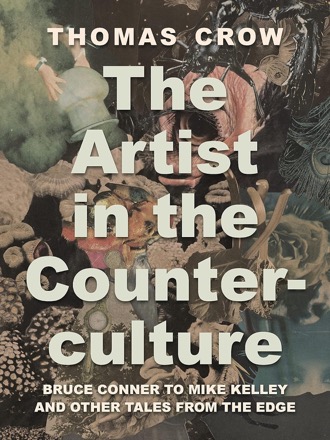
Hardcover. Princeton University Press, 1st, 2023, Book: Very Good, Dust Jacket: Very Good, Hardcover in a bright dust jacket, 288 pages. Crow re-evaluates Conner and other key figures-from Catholic activist Corita Kent to Black Panther Emory Douglas to ecological witness Bonnie Ora Sherk-as part of a generational cohort galvanized by resistance to war, racial oppression, and environmental degradation. Younger practitioners of performance and installation carried the mindset of rebellion into the 1970s and 1980s, as previously excluded artists of color moved to the forefront in Los Angeles. Mike Kelley, their contemporary, remained unwaveringly true to the late countercultural flowering he had witnessed at the dawn of his career. The result is a major new account of the counterculture's enduring influence on modern art. Clean copy. Still in publisher's shrinkwrap.
Softcover. London, Routledge, reprint, 1996, Book: Very Good, Dust Jacket: None, Softcover, 325 pages with index, b&w illustrations. An outstanding piece of scholarship and a fascinating read, The Body Emblazoned is a compelling study of the culture of dissection the English Renaissance, which informed intellectual enquiry in Europe for nearly two hundred years. In this outstanding work, Jonathan Sawday explores the dark, morbid eroticism of the Renaissance anatomy theatre, and relates it to not only the great monuments of Renaissance art, but to the very foundation of the modern idea of knowledge. Though the dazzling displays of the exterior of the body in Renaissance literature and art have long been a subject of enquiry, The Body Emblazoned considers the interior of the body, and what it meant to men and women in early modern culture. Clean, bright copy.
Hardcover. Last Gasp, 1st, 2019, Book: Very Good, Dust Jacket: None, Hardcover, 288 pages. The Book of Weirdo is the definitive - and hugely entertaining- examination of Weirdo magazine, renowned underground comix cartoonist Robert Crumb's legendary humor comics anthology, which was originally published throughout the 1980s. A "low-brow" counterpoint to Art Spiegelman and Francoise Mouley's rather high-faluttin' RAW comix publication, Weirdo influenced an entire generation of alternative and neo-underground artists, as well as creative refuge for the underground comix veterans, and this book features the complete story of the well-recalled comics magazine, along with testimonials from over 130 of the publication's contributors, including interviews with Weirdo's three editors - R. "Keep on Truckin'" Crumb, Peter "Hate" Bagge, and Aline "The Bunch" Kominsky-Crumb - and publisher "Baba Ron" Turner. As much a history of the alternative comics scene of the 1980s - from New York City punk to Seattle grunge - this exhaustive retrospective includes rare and unseen artwork from that era, as well as new comics from modern-day artists celebrating their love for the great oddball magazine. In its time, the periodical featured the finest work of many artists, particularly the best material by Robert Crumb himself, Weirdo's founder and best known for ZAP Comix, Fritz the Cat, and Mr. Natural, and a man widely heralded as the greatest cartoonist of all time. We get photos of the various contributors, some samples of the work, more than a few brand-spanking-new artistic tributes to the magazine and the people who made it. And lots and lots of stories about what it was like to work for and with Robert Crumb.
Softcover. Durham NC, Duke University Press, 1st, 1998, Book: Very Good, Dust Jacket: None, Softcover, 156 pages. In the early 1940s as the conflict between the Axis and the Allies spread worldwide, the U.S. State Department turned its attention to Axis influence in Latin America. As head of the Office of Inter-American Affairs, Nelson Rockefeller was charged with cultivating the region's support for the Allies while portraying Brazil and its neighbors as dependable wartime partners. Genevieve Naylor, a photojournalist previously employed by the Associated Press and the WPA, was sent to Brazil in 1940 by Rockefeller's agency to provide photographs that would support its need for propaganda. Often balking at her mundane assignments, an independent-minded Naylor produced something far different and far more rich--a stunning collection of over a thousand photographs that document a rarely seen period in Brazilian history. Accompanied by analysis from Robert M. Levine, this selection of Naylor's photographs offers a unique view of everyday life during one of modern Brazil's least-examined decades. Clean copy.
Softcover. Honolulu, University of Hawaii Press, 1st, 2009, Book: Very Good, Dust Jacket: None, Softcover, 132 pages. Few if any philosophical schools have championed family values as persistently as the early Confucians, and a great deal can be learned by attending to what they had to say on the subject. In the Confucian tradition, human morality and the personal realization it inspires are grounded in the cultivation of family feeling. One may even go so far as to say that, for China, family reverence was a necessary condition for developing any of the other human qualities of excellence. On the basis of the present translation of the Xiaojing (Classic of Family Reverence) and supplemental passages found in other early philosophical writings, Professors Rosemont and Ames articulate a specifically Confucian conception of "role ethics" that, in its emphasis on a relational conception of the person, is markedly different from most early and contemporary dominant Western moral theories. This Confucian role ethics takes as its inspiration the perceived necessity of family feeling as the entry point in the development of moral competence and as a guide to the religious life as well. Clean copy.
Hardcover. Boston, Little, Brown and Company, 1st, 1974, Book: Very Good, Dust Jacket: Good, Hardcover in a lightly worn, price-clipped dust jacket, white cloth covers with gilt design, 177 pages. B&w illustrations by Demi Hitz. Stated First Edition. INSCRIBED BY TRANSLATOR FRANCIS CARPENTER on the front fly leaf. The 1st complete translation of thousand year old classic work. Includes biography of Lu Yu. Embellished by Demi Hitz's illustrations. Includes ritual of preparation, ingredients, environment Chinese tea ceremony. Light chipping, small tape repairs to rear of dust jacket. Clean copy.
Softcover. Seattle, Fantagraphics, 1st, 2015, Book: Very Good, Dust Jacket: None, Large softcover, 263 pages, b&w photos ad illustrations. In-depth, career-spanning interviews with the cartoonists - Crumb, Shelton, and more - who forever altered the course of American comics with their anthology title, Zap Comix. The definitive Comics Journal interviews with the cartoonists behind Zap Comix, featuring: Supreme 1960s counterculture/underground artist Robert Crumb on how acid unleashed a flood of Zap characters from his unconscious; Marxist brawler Spain Rodriguez on how he made the transition from the Road Vultures biker gang to the exclusive Zap cartoonists' club; Yale alumnus Victor Moscoso and Christian surfer Rick Griffin on how their poster-art psychedelia formed the backdrop of the 1960s San Francisco music scene; Savage Id-choreographer S. Clay Wilson on how his dreams insist on being drawn; Painter and Juxtapoz-founder Robert Williams on how Zap #4 led to 150 news-dealer arrests; Fabulous, Furry, Freaky Gilbert Shelton on the importance of research; Church of the Subgenius founder Paul Mavrides on getting a contact high during the notorious Zap jam sessions; and much more. In these career-spanning interviews, the Zap contributors open up about how they came to create a seminal, living work of art. Partial color.
Softcover. Seattle, Fantagraphics, 1st, 2015, Book: Very Good, Dust Jacket: None, Large softcover, 263 pages, b&w photos ad illustrations. In-depth, career-spanning interviews with the cartoonists - Crumb, Shelton, and more - who forever altered the course of American comics with their anthology title, Zap Comix. The definitive Comics Journal interviews with the cartoonists behind Zap Comix, featuring: Supreme 1960s counterculture/underground artist Robert Crumb on how acid unleashed a flood of Zap characters from his unconscious; Marxist brawler Spain Rodriguez on how he made the transition from the Road Vultures biker gang to the exclusive Zap cartoonists' club; Yale alumnus Victor Moscoso and Christian surfer Rick Griffin on how their poster-art psychedelia formed the backdrop of the 1960s San Francisco music scene; Savage Id-choreographer S. Clay Wilson on how his dreams insist on being drawn; Painter and Juxtapoz-founder Robert Williams on how Zap #4 led to 150 news-dealer arrests; Fabulous, Furry, Freaky Gilbert Shelton on the importance of research; Church of the Subgenius founder Paul Mavrides on getting a contact high during the notorious Zap jam sessions; and much more. In these career-spanning interviews, the Zap contributors open up about how they came to create a seminal, living work of art. Partial color.
Softcover. London/Berkeley, James Currey/University of California, 1989, Softcover, 422 pages, despite a quarter century of "nation building," most African states are still driven by ethnic particularism--commonly known as "tribalism." The stubborn persistence of tribal ideologies despite the profound changes associated with modernization has puzzled scholars and African leaders alike. The bloody hostilities between the tribally-oriented Zulu Inkhata movement and supporters of the African National Congress are but the most recent example of tribalism's tenacity. The studies in this volume offer a new historical model for the growth and endurance of such ideologies in southern Africa. Name on front fly leaf, underlining to Introduction, otherwise clean.
Hardcover. London, Carpet Bombing Culture, 1st, 2015, Book: Very Good, Dust Jacket: None, Hardcover, illustrated boards. 216 pages, b&w photos. A unique collection of portraits personally selected by one of the UKs foremost portrait photographers covering alternative London's unique counter-cultural history from Punks, New Romantics, Goths, Disco Queens, Soul Boys, Fetish Worshippers, Rockers, Cyberpunks, Ravers, Clubbers and Party Animals. Derek Ridgers has been a feature in the clubs and on the streets of the capital for over 50 years - indulging in his obsession for documenting the people dressed up for the glorious night.
Hardcover. NY, Alfred A. Knopf , 1st, 1995, Book: Very Good, Dust Jacket: Very Good, Hardcover in a bright, unclipped dust jacket, 314 pages. Contrasting the Victorian system of virtues - respectability, self-help, discipline, cleanliness, obedience, orderliness - with the opportunistic, superficial morality of modern society, an intellectual historian calls for a deeper commitment to moral responsibility. According to Himmelfarb, Victorian "manners and morals" created a society that emphasized a strong family life for all classes and gave rise to a prosperous economy and the early feminist and social service movements. Furthermore, the influence of these virtues caused the incidence of illegitimate births and violent crimes to drop significantly and remain low until the 1960s. Clean copy.
Hardcover. London, Jonathan Cape, 1st UK, 1960, Book: Very Good, Dust Jacket: Very Good, Hardcover in a lightly worn dust jacket, 431 pages. Clean copy.
Softcover. London, Penguin Books , reprint, 2020, Book: Very Good, Dust Jacket: None, Softcover, 553 pages. The Europeans is richly enthralling, panoramic cultural history of nineteenth-century Europe, told through the intertwined lives of three remarkable people: a great singer, Pauline Viardot, a great writer, Ivan Turgenev, and a great connoisseur, Pauline's husband Louis. Their passionate, ambitious lives were bound up with an astonishing array of writers, composers and painters all trying to make their way through the exciting, prosperous and genuinely pan-European culture that came about as a result of huge economic and technological change. This culture - through trains, telegraphs and printing - allowed artists of all kinds to exchange ideas and make a living, shuttling back and forth across the whole continent from the British Isles to Imperial Russia, as they exploited a new cosmopolitan age. Clean copy.
Hardcover. NY, Random House, 1st, 1954, Book: Very Good, Dust Jacket: Good, 403 pages. Hardcover. 65 illustrations, 40 in full color. Price clipped dust jacket worn with tape repairs, fading - jacket now protected with clear plastic cover. "An account of the life and death of an art, of the men who made it and of the lusty age in which they flourished. 65 illustrations, including 40 in full color." Index, glossary, bibliography, appendices, artist biographies, chronology. Clean, tight copy.
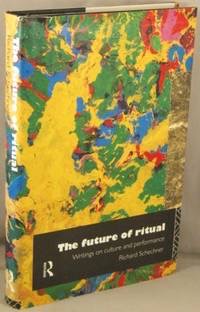
Hardcover. NY/London, Routledge, 1st, 1993, Book: Very Good, Dust Jacket: Very Good, Hardcover in a bright dust jacket, 283 pages, b&w illustrations. " Richard Schechner explores the nature of ritualised behavior and its relationship to performance and politics. A brilliant and uncontainable examination of cultural expression and communal action, THE FUTURE OF RITUAL asks pertinent questions about art, theatre and the changing meaning of 'culture' in today's intercultural world. It is richly illustrated with over 50 photos of pereformances and public events." Clean copy.
Softcover. New Haven CT, Yale University Press, reprint, 1999, Book: Very Good, Dust Jacket: None, Softcover, 436 pages, b&w illustrations. Eighteenth-century women have long been presented as the heroines of traditional biographies, or as the faceless victims of vast historical processes, but rarely have they been deemed worthy of historical inquiry. "The Gentleman's Daughter" provides an account of the lives of genteel women - the daughters of merchants, the wives of lawyers and the sisters of gentlemen. Based on a study of the letters, diaries and account books of over 100 women from commercial, professional and gentry families, mainly in provincial England, "The Gentleman's Daughter" challenges the view that the period witnessed a new division of the everyday worlds of privileged men and women into the separate spheres of home and work. Amanda Vickery invokes the women's own accounts of their lives to argue that in the course of the 18th and early 19th centuries the scope of female experience did not diminish - in fact, quite the reverse. Contrary to orthodoxy, in the 18th century there was neither a loss of female freedoms, nor a novel retreat into the home. In their own writing, genteel women throughout the Georgian era singled out their social and their emotional roles: kinswoman, wife, mother, housekeeper, consumer, hostess and member of polite society. Clean copy.
Softcover. Berkeley, University of California Press, 1st, 1987, Book: Very Good, Dust Jacket: None, Softcover, 248 pages. Name on front fly leaf whited out, otherwise clean.
Hardcover. Rutland, VT, Charles E. Tuttle Company, 1st Edition, 1964, Book: Very Good, Dust Jacket: Good, 495 pages. Hardcover. B/w illustrations throughout. Previous owner's name and info on front flyleaf. Gray, decorated cover boards with blind stamped design on front cover board. Pages and edges have a touch of tanning from age. Binding good. Spine straight. Dust jacket unclipped, has some damage to front flap and agewear. Abundantly illustrated with his own photographs and many of his own drawings, Mr. Engel asserts his creative imagination as a designer, his analytical mind as a scholar, and his intuitive insight as a teacher and a writer. DOMESTIC SHIPPING ONLY.
Hardcover. NY, James Pott & Co., 1st, 1905, Book: Very Good, Dust Jacket: None, Hardcover, blue cloth with bright gilt design to cover, gilt lettering on spine, 127 pages. Introduction by George Meredith. Bookplate/name on inside front cover. Otherwise a clean, bright copy.
Softcover. London, Her Majesty's Stationery Office, 1st, 1954, Book: Good, Dust Jacket: None, Softcover, 113 pages, + 4 plates + folding map + folding genealogical chart. Page dimensions: 335 x 209 mm. "At the end of every festival, there is a period lasting usually until after the fourth night following it, when no one not already in the village is allowed to enter it." Covers worn, chipped, crease to top third of pages where it was once folded. Previous owner's name on cover.
Hardcover. Cambridge UK, Polity Press, 1st, 1996, Book: Very Good, Dust Jacket: Very Good, Hardcover in a bright dust jacket. 223 pages, In this highly original book, Camporesi explores the two worlds of feast and famine in early modern Europe. Camporesi brings together a mosaic of images from Italian folklore: phantasmagoric processions of giants, pigs, vagabonds, down-trodden rogues, charlatans and beggars in rags. He reconstructs a world inhabited by the strange forces of peasant culture, and describes the various rituals - carnivals, festivities, competitions and funerals - in which food played a central role. NOTE: light pencil making to many pages.
Hardcover. Chicago, University Of Chicago Press, 1st, 1998, Book: Very Good, Dust Jacket: Very Good, Hardcover in a bright dust jacket, 321 pages profusely illustrated in color and b&w. For animals that have been dead millions of years, dinosaurs are extraordinarily pervasive in our everyday lives. Appearing in ads, books, movies, museums, television, toy stores, and novels, they continually fascinate both adults and children. How did they move from natural extinction to pop culture resurrection? What is the source of their powerful appeal? Until now, no one has addressed this question in a comprehensive way. In this lively and engrossing exploration of the animal's place in our lives, W.J.T. Mitchell shows why we are so attached to the myth and the reality of the "terrible lizards." Mitchell aims to trace the cultural family tree of the dinosaur, and what he discovers is a creature of striking flexibility, linked to dragons and mammoths, skyscrapers and steam engines, cowboys and Indians. Clean copy.
NY, Hat & Beard Press, 1st, 1918, Book: Very Good, Dust Jacket: None, Softcover, 9 X 12", 196 pages. Beckman mixes her rare, early b&w photos of graffiti artists with splashes of color by celebrated urban artists. This unique collaboration creates an exciting expression of original hip-hop culture. SIGNED BY BECKMAN WITH A SKETCH OF A CAMERA on title page. Very scarce in a small printing.
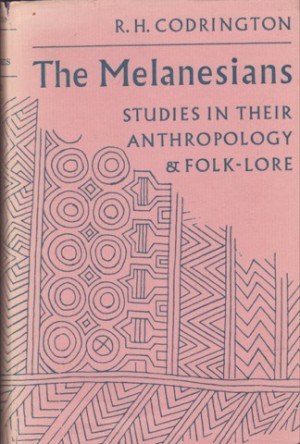
Hardcover. Oxford UK, Clarendon Press, reprint, 1969, Book: Very Good, Dust Jacket: Good, Hardcover, blue cloth covers with gilt lettering on spine. In a lightly worn dust jacket with tape repairs. B&w illustrations, folding map in rear. R. H. Codrington (1830-1922), was an Anglican priest who made the first systematic study of Melanesian society and culture. Described in his obituary in the journal Nature as 'the apostle of Melanesia', his work is still regarded as an ethnographic classic. First published in 1891. Clean copy.
Hardcover. NY, AMS Press, reprint, 1976, Book: Very Good, Dust Jacket: None, Hardcover, light brown cloth with black lettering on spine. A quality reprint of the edition published by Cambridge University in 1910. Pictorial frontis; 79 plates from photographs, figures in text. Fold-out map in rear, fold-out chart. Extensive study of the indigenous Melanesians of Papua New Guinea. Distinctly different from the Papuans of the archipelago, the Melanesians posed an extremely interesting problem to early 20th century ethnographers. There is some light pencil marking to about 20 pages. Also an inked biographical note about a Captain Barton (one of the contributors) on the copyright page. No dust jacket issued.
Hardcover. Ann Arbor MI, UMI Research Press, reprint, 1986, Book: Very Good, Dust Jacket: None, Hardcover, beige cloth stamped in black and red, 355 pages. Illustrations, maps, bibliography, index. Some light pencil markings to about 20 pages.
Softcover. Wellington NZ, Polynesian Society, 1st, 1980, Book: Very Good, Dust Jacket: None, Softcover, 170 pages. Originally published in 1978 as a series of articles in The Journal of the Polynesian Society. Wrappers rubbed, internally very good, clean.
Hardcover. Chicago, University of Chicago Press, 1st, 2017, Book: Very Good, Dust Jacket: Very Good, Hardcover in a bright dust jacket, 541 pages. b&w illustrations. As Joel Dinerstein reveals in this book, cool began as a stylish defiance of racism, a challenge to suppressed sexuality, a philosophy of individual rebellion, and a youthful search for social change. Through portraits of iconic figures, Dinerstein illuminates the cultural connections and artistic innovations among Lester Young, Humphrey Bogart, Robert Mitchum, Billie Holiday, Frank Sinatra, Jack Kerouac, Albert Camus, Marlon Brando, and James Dean, among others. We eavesdrop on conversations among John-Paul Sartre, Simone De Beauvoir, and Miles Davis, and on a forgotten debate between Lorraine Hansberry and Norman Mailer over the 'white negro' and Black cool. We come to understand how the cool worlds of Beat writers and Method actors emerged from the intersections of film noir, jazz, and existentialism. Clean copy.
Softcover. Cambridge UK, Cambridge University Press, reprint, 1999, Book: Very Good, Dust Jacket: None, Softcover, publisher's green wrappers lettered in white, 305 pages. Two pages with light marking (241-242). Otherwise a clean, bright copy. This introduction to the descriptive and historical linguistics of the Papuan languages of New Guinea provide an accessible account of one of the richest and most diverse linguistic situations in the world. The Papuan languages number over 700 (or 20 per cent of the world's total) in more than sixty language families. The Papuan Languages of New Guinea will be of interest not only to general and comparative linguists and to typologists, but also to sociolinguists and anthropologists for the information it provides on the social dynamics of language content.
Hardcover. NY, Farrar, Straus and Giroux, 1st, 1997, Book: Very Good, Dust Jacket: Very Good, Hardcover in a bright, unclipped dust jacket. 721 pages, many b&w illustrations, come color. John Brewster's landmark book shows us how British artists, amateurs, entrepeneurs, and audiences created a culture that is still celebrated for its wit and brilliance. Light notations to five pages, otherwise clean.
Hardcover. Hermes Press, 1st, 2015, Book: Very Good, Dust Jacket: Very Good, Hardcover, 192 pages. Music inspired, science fiction and fantasy combined in a way that revolutionized poster art of the Psychedelic 1960's-era. Famous for his rock posters, The Psychedelic Rock Art of Carl Lundgren, a Detroit, Michigan based artist, showcases his posters which were as important to the Detroit Music and Art history as were the music legends themselves; The Who, Jefferson Airplane and Pink Floyd to name a few. The book's forward is written by Mitch Ryder, who was lead vocalist of a Detroit 1960's rock group The Detroit Wheels. The introduction is by Russ Gibb, a former radio personality and rock promoter from Dearborn, Michigan, who played a major role in the late sixties/early seventies Motor City music scene.
Hardcover. Chicago, University of Chicago Press, 1st, 1988, Book: Very Good, Dust Jacket: Very Good, Hardcover in a bright, unclipped dust jacket, 223 pages. The Nzema of West Africa, who inhabit a land of forest and lagoons along the Atlantic, continue a heritage untapped by anthropologists and scarcely influenced by Western civilization. Vinigi L. Grottanelli first discovered the rich culture of this southern Ghanaian tribe in 1954. Over the next three decades, intermittent sojourns enabled Grottanelli to develop friendships with the Nzema and learn about their beliefs, traditions, and practices. In twenty absorbing vignettes, The Python Killer renders a vivid portrayal of Nzema life. B&w illustrations. Clean copy.
Hardcover. NY, W W Norton & Co, 1st, 1995, Book: Very Good, Dust Jacket: Very Good, Hardcover in a bright, unclipped dust jacket. Controversy has raged around Lasch's targeted attack on the elites, their loss of moral values, and their abandonment of the middle class and poor, for he sets up the media and educational institutions as a large source of the problem. In this spirited work, Lasch calls out for a return to community, schools that teach history not self-esteem, and a return to morality and even the teachings of religion. He does this in a nonpartisan manner, looking to the lessons of American history, and castigating those in power for the ever-widening gap between the economic classes, which has created a crisis in American society. Clean copy.
Softcover. Boston, Back Bay Books, 1st, 1999, Book: Very Good, Dust Jacket: None, Softcover, 246 pages, b&w illustrations. Documents the history of swing music and dancing, covering the important artists, style and fashion, albums, and dance moves of swing. A bright, clean copy that has a light smoker's odor.
Hardcover. Atglen, PA, Schiffer Publishing, 2nd, 2012, Book: Very Good, Dust Jacket: None, 489 pages. Hardcover with no dust jacket. Clean, tight copy. Color photo throughout. While You Were Sleeping was a graffiti and pop culture magazine started by graffiti supply business owner Roger Gastman when he was 19. Here are some of the greatest stories the magazine ever published-and many that are not so good. From stories on admirable serial killers and interviews with child stars to photos of graffiti and people's naked sisters, this book takes you into the dirty minds of Gastman and his team of juvenile delinquents. You've been warned.

 "Support of the Shaken Sangat - Personal Recollections of Three Great Mastersby: Oberoi, A. S.")


 "Surf Contestby: Church, Ron")


 "Taking Positions on the Erotic in Renaissance Cultureby: Talvacchia, Bette")


 "Tales of A Grandfather: Being Stories Taken From Scottish History. Two volume set. Second Series.by: Scott, Sir Walter, Hugh Littlejohn, Esq.")


 "Tales to Astonish: Jack Kirby, Stan Lee, and the American Comic Book Revolutionby: Ro, Ronin")
 "Television: A Biographyby: Thomson, David")
 "Telling Stories: Philip Guston's Later Worksby: Kaufmann, David")
 "Ten-Cent Plague, The: The Great Comic Book Scare and How It Changed Americaby: Hajdu, David")






 "The Book of Weirdo: A Retrospective of R. Crumb's Legendary Humor Comics Anthology by: Cooke, Jon B.")


 "The Brazilian Photographs of Genevieve Naylor, 1940-1942 by: Robert M. Levine")



 "The Classic of Tea by: Lu Yu (Francis Ross Carpenter)")
 "The Comics Journal Library Vol. 9: Zap - The Interviews by: Gary Groth (Editor), Michael Dean (Editor), Bob Levin (Introduction)")


 "The Comics Journal Library Vol. 9: Zap - The Interviews by: Gary Groth (Editor), Michael Dean (Editor), Bob Levin (Introduction)")



 "The Dark Carnival: Portraits from the Endless Night by: Ridgers, Derek (Photographer)")








 "The Japanese House: A Tradition for Contemporary Archiptectureby: Engel, Heinrich")





 "The Mash Up: Hip-Hop Photos Remixed by Iconic Graffiti Artists (SIGNED COPY)by: Janette Beckman/Cey Adams")











 "The Worst of While you were Sleepingby: Gastman, Roger")