Softcover. Chicago, University of Chicago Press, reprint, 1978, Book: Very Good, Dust Jacket: None, Softcover, 400 pages. A landmark work by English historian Frances A. Yates (1899-1981); an examination of the mnemonic systems developed by the ancient Greeks, and their impact on the Renaissance thought of Giordano Bruno and others. Named one of the top 100 nonfiction books of the century by the Modern Library in 1999. One large fold-out plate, clean copy.
Hardcover. Princeton University Press, 1st, 2023, Book: Very Good, Dust Jacket: Very Good, Hardcover in a bright dust jacket, 288 pages. Crow re-evaluates Conner and other key figures-from Catholic activist Corita Kent to Black Panther Emory Douglas to ecological witness Bonnie Ora Sherk-as part of a generational cohort galvanized by resistance to war, racial oppression, and environmental degradation. Younger practitioners of performance and installation carried the mindset of rebellion into the 1970s and 1980s, as previously excluded artists of color moved to the forefront in Los Angeles. Mike Kelley, their contemporary, remained unwaveringly true to the late countercultural flowering he had witnessed at the dawn of his career. The result is a major new account of the counterculture's enduring influence on modern art. Clean copy. Still in publisher's shrinkwrap.
Softcover. London, Routledge, reprint, 1996, Book: Very Good, Dust Jacket: None, Softcover, 325 pages with index, b&w illustrations. An outstanding piece of scholarship and a fascinating read, The Body Emblazoned is a compelling study of the culture of dissection the English Renaissance, which informed intellectual enquiry in Europe for nearly two hundred years. In this outstanding work, Jonathan Sawday explores the dark, morbid eroticism of the Renaissance anatomy theatre, and relates it to not only the great monuments of Renaissance art, but to the very foundation of the modern idea of knowledge. Though the dazzling displays of the exterior of the body in Renaissance literature and art have long been a subject of enquiry, The Body Emblazoned considers the interior of the body, and what it meant to men and women in early modern culture. Clean, bright copy.
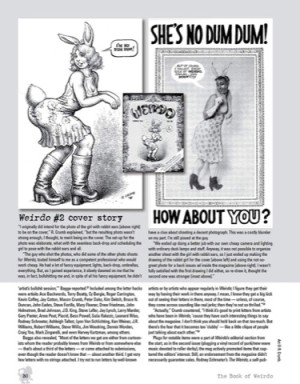
Hardcover. Last Gasp, 1st, 2019, Book: Very Good, Dust Jacket: None, Hardcover, 288 pages. The Book of Weirdo is the definitive - and hugely entertaining- examination of Weirdo magazine, renowned underground comix cartoonist Robert Crumb's legendary humor comics anthology, which was originally published throughout the 1980s. A "low-brow" counterpoint to Art Spiegelman and Francoise Mouley's rather high-faluttin' RAW comix publication, Weirdo influenced an entire generation of alternative and neo-underground artists, as well as creative refuge for the underground comix veterans, and this book features the complete story of the well-recalled comics magazine, along with testimonials from over 130 of the publication's contributors, including interviews with Weirdo's three editors - R. "Keep on Truckin'" Crumb, Peter "Hate" Bagge, and Aline "The Bunch" Kominsky-Crumb - and publisher "Baba Ron" Turner. As much a history of the alternative comics scene of the 1980s - from New York City punk to Seattle grunge - this exhaustive retrospective includes rare and unseen artwork from that era, as well as new comics from modern-day artists celebrating their love for the great oddball magazine. In its time, the periodical featured the finest work of many artists, particularly the best material by Robert Crumb himself, Weirdo's founder and best known for ZAP Comix, Fritz the Cat, and Mr. Natural, and a man widely heralded as the greatest cartoonist of all time. We get photos of the various contributors, some samples of the work, more than a few brand-spanking-new artistic tributes to the magazine and the people who made it. And lots and lots of stories about what it was like to work for and with Robert Crumb.
Softcover. Durham NC, Duke University Press, 1st, 1998, Book: Very Good, Dust Jacket: None, Softcover, 156 pages. In the early 1940s as the conflict between the Axis and the Allies spread worldwide, the U.S. State Department turned its attention to Axis influence in Latin America. As head of the Office of Inter-American Affairs, Nelson Rockefeller was charged with cultivating the region's support for the Allies while portraying Brazil and its neighbors as dependable wartime partners. Genevieve Naylor, a photojournalist previously employed by the Associated Press and the WPA, was sent to Brazil in 1940 by Rockefeller's agency to provide photographs that would support its need for propaganda. Often balking at her mundane assignments, an independent-minded Naylor produced something far different and far more rich--a stunning collection of over a thousand photographs that document a rarely seen period in Brazilian history. Accompanied by analysis from Robert M. Levine, this selection of Naylor's photographs offers a unique view of everyday life during one of modern Brazil's least-examined decades. Clean copy.
Hardcover. Boston, Little, Brown and Company, 1st, 1974, Book: Very Good, Dust Jacket: Good, Hardcover in a lightly worn, price-clipped dust jacket, white cloth covers with gilt design, 177 pages. B&w illustrations by Demi Hitz. Stated First Edition. INSCRIBED BY TRANSLATOR FRANCIS CARPENTER on the front fly leaf. The 1st complete translation of thousand year old classic work. Includes biography of Lu Yu. Embellished by Demi Hitz's illustrations. Includes ritual of preparation, ingredients, environment Chinese tea ceremony. Light chipping, small tape repairs to rear of dust jacket. Clean copy.
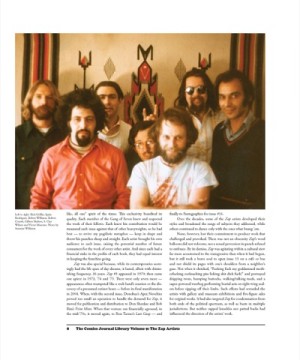
Softcover. Seattle, Fantagraphics, 1st, 2015, Book: Very Good, Dust Jacket: None, Large softcover, 263 pages, b&w photos ad illustrations. In-depth, career-spanning interviews with the cartoonists - Crumb, Shelton, and more - who forever altered the course of American comics with their anthology title, Zap Comix. The definitive Comics Journal interviews with the cartoonists behind Zap Comix, featuring: Supreme 1960s counterculture/underground artist Robert Crumb on how acid unleashed a flood of Zap characters from his unconscious; Marxist brawler Spain Rodriguez on how he made the transition from the Road Vultures biker gang to the exclusive Zap cartoonists' club; Yale alumnus Victor Moscoso and Christian surfer Rick Griffin on how their poster-art psychedelia formed the backdrop of the 1960s San Francisco music scene; Savage Id-choreographer S. Clay Wilson on how his dreams insist on being drawn; Painter and Juxtapoz-founder Robert Williams on how Zap #4 led to 150 news-dealer arrests; Fabulous, Furry, Freaky Gilbert Shelton on the importance of research; Church of the Subgenius founder Paul Mavrides on getting a contact high during the notorious Zap jam sessions; and much more. In these career-spanning interviews, the Zap contributors open up about how they came to create a seminal, living work of art. Partial color.
Softcover. Seattle, Fantagraphics, 1st, 2015, Book: Very Good, Dust Jacket: None, Large softcover, 263 pages, b&w photos ad illustrations. In-depth, career-spanning interviews with the cartoonists - Crumb, Shelton, and more - who forever altered the course of American comics with their anthology title, Zap Comix. The definitive Comics Journal interviews with the cartoonists behind Zap Comix, featuring: Supreme 1960s counterculture/underground artist Robert Crumb on how acid unleashed a flood of Zap characters from his unconscious; Marxist brawler Spain Rodriguez on how he made the transition from the Road Vultures biker gang to the exclusive Zap cartoonists' club; Yale alumnus Victor Moscoso and Christian surfer Rick Griffin on how their poster-art psychedelia formed the backdrop of the 1960s San Francisco music scene; Savage Id-choreographer S. Clay Wilson on how his dreams insist on being drawn; Painter and Juxtapoz-founder Robert Williams on how Zap #4 led to 150 news-dealer arrests; Fabulous, Furry, Freaky Gilbert Shelton on the importance of research; Church of the Subgenius founder Paul Mavrides on getting a contact high during the notorious Zap jam sessions; and much more. In these career-spanning interviews, the Zap contributors open up about how they came to create a seminal, living work of art. Partial color.
Softcover. London/Berkeley, James Currey/University of California, 1989, Softcover, 422 pages, despite a quarter century of "nation building," most African states are still driven by ethnic particularism--commonly known as "tribalism." The stubborn persistence of tribal ideologies despite the profound changes associated with modernization has puzzled scholars and African leaders alike. The bloody hostilities between the tribally-oriented Zulu Inkhata movement and supporters of the African National Congress are but the most recent example of tribalism's tenacity. The studies in this volume offer a new historical model for the growth and endurance of such ideologies in southern Africa. Name on front fly leaf, underlining to Introduction, otherwise clean.
Softcover. Stanford CA, Stanford University Press, 1st pbk, 2004, Book: Very Good, Dust Jacket: None, Softcover, 271 pages, b&w illustrations. The Cult of Art in Nazi Germany presents a new interpretation of National Socialism, arguing that art in the Third Reich was not simply an instrument of the regime, but actually became a source of the racist politics upon which its ideology was founded. Through the myth of the "Aryan race," a race pronounced superior because it alone creates culture, Nazism asserted art as the sole raison d'etre of a regime defined by Hitler as the "dictatorship of genius." Michaud shows the important link between the religious nature of Nazi art and the political movement, revealing that in Nazi Germany art was considered to be less a witness of history than a force capable of producing future, the actor capable of accelerating the coming of a reality immanent to art itself. Light sticker residue to rear cover otherwise clean, very good.
Hardcover. London, Carpet Bombing Culture, 1st, 2015, Book: Very Good, Dust Jacket: None, Hardcover, illustrated boards. 216 pages, b&w photos. A unique collection of portraits personally selected by one of the UKs foremost portrait photographers covering alternative London's unique counter-cultural history from Punks, New Romantics, Goths, Disco Queens, Soul Boys, Fetish Worshippers, Rockers, Cyberpunks, Ravers, Clubbers and Party Animals. Derek Ridgers has been a feature in the clubs and on the streets of the capital for over 50 years - indulging in his obsession for documenting the people dressed up for the glorious night.
Hardcover. NY, Alfred A. Knopf , 1st, 1995, Book: Very Good, Dust Jacket: Very Good, Hardcover in a bright, unclipped dust jacket, 314 pages. Contrasting the Victorian system of virtues - respectability, self-help, discipline, cleanliness, obedience, orderliness - with the opportunistic, superficial morality of modern society, an intellectual historian calls for a deeper commitment to moral responsibility. According to Himmelfarb, Victorian "manners and morals" created a society that emphasized a strong family life for all classes and gave rise to a prosperous economy and the early feminist and social service movements. Furthermore, the influence of these virtues caused the incidence of illegitimate births and violent crimes to drop significantly and remain low until the 1960s. Clean copy.
Hardcover. London, Jonathan Cape, 1st UK, 1960, Book: Very Good, Dust Jacket: Very Good, Hardcover in a lightly worn dust jacket, 431 pages. Clean copy.
Softcover. London, Penguin Books , reprint, 2020, Book: Very Good, Dust Jacket: None, Softcover, 553 pages. The Europeans is richly enthralling, panoramic cultural history of nineteenth-century Europe, told through the intertwined lives of three remarkable people: a great singer, Pauline Viardot, a great writer, Ivan Turgenev, and a great connoisseur, Pauline's husband Louis. Their passionate, ambitious lives were bound up with an astonishing array of writers, composers and painters all trying to make their way through the exciting, prosperous and genuinely pan-European culture that came about as a result of huge economic and technological change. This culture - through trains, telegraphs and printing - allowed artists of all kinds to exchange ideas and make a living, shuttling back and forth across the whole continent from the British Isles to Imperial Russia, as they exploited a new cosmopolitan age. Clean copy.
Hardcover. UK, Cambridge University Press, 1st, 1987, Book: Very Good, Dust Jacket: None, Hardcover in pictorial boards, no dust jacket, 313 pages. This book is an explicitly comparative, anthropological analysis of the societies of the eastern and western highlands of Papua New Guinea. Particular societies have been documented by anthropologists since the 1950s yet until this book's publication in 1987, there had been relatively few attempts at rigourous comparison of the findings. This book argues that the highlands cannot be treated as a homogeneous region, socially, culturally, historically or environmentally. Rather, societies of the eastern highlands have followed markedly different paths of development in the past to those of the western highlands, and it is upon this divergence that a comparative treatment of the twentieth century should be mounted. Clean copy.
Hardcover. NY, Random House, 1st, 1954, Book: Very Good, Dust Jacket: Good, 403 pages. Hardcover. 65 illustrations, 40 in full color. Price clipped dust jacket worn with tape repairs, fading - jacket now protected with clear plastic cover. "An account of the life and death of an art, of the men who made it and of the lusty age in which they flourished. 65 illustrations, including 40 in full color." Index, glossary, bibliography, appendices, artist biographies, chronology. Clean, tight copy.
Hardcover. NY/London, Routledge, 1st, 1993, Book: Very Good, Dust Jacket: Very Good, Hardcover in a bright dust jacket, 283 pages, b&w illustrations. " Richard Schechner explores the nature of ritualised behavior and its relationship to performance and politics. A brilliant and uncontainable examination of cultural expression and communal action, THE FUTURE OF RITUAL asks pertinent questions about art, theatre and the changing meaning of 'culture' in today's intercultural world. It is richly illustrated with over 50 photos of pereformances and public events." Clean copy.
Hardcover. NY, Charles Scribner's Sons, 1st, 1983, Book: Very Good, Dust Jacket: Very Good, Hardcover in a bright, unclipped dust jacket. Illustrated in b&w and color. Clean copy.
Softcover. New Haven CT, Yale University Press, reprint, 1999, Book: Very Good, Dust Jacket: None, Softcover, 436 pages, b&w illustrations. Eighteenth-century women have long been presented as the heroines of traditional biographies, or as the faceless victims of vast historical processes, but rarely have they been deemed worthy of historical inquiry. "The Gentleman's Daughter" provides an account of the lives of genteel women - the daughters of merchants, the wives of lawyers and the sisters of gentlemen. Based on a study of the letters, diaries and account books of over 100 women from commercial, professional and gentry families, mainly in provincial England, "The Gentleman's Daughter" challenges the view that the period witnessed a new division of the everyday worlds of privileged men and women into the separate spheres of home and work. Amanda Vickery invokes the women's own accounts of their lives to argue that in the course of the 18th and early 19th centuries the scope of female experience did not diminish - in fact, quite the reverse. Contrary to orthodoxy, in the 18th century there was neither a loss of female freedoms, nor a novel retreat into the home. In their own writing, genteel women throughout the Georgian era singled out their social and their emotional roles: kinswoman, wife, mother, housekeeper, consumer, hostess and member of polite society. Clean copy.
Softcover. Berkeley, University of California Press, 1st, 1987, Book: Very Good, Dust Jacket: None, Softcover, 248 pages. Name on front fly leaf whited out, otherwise clean.
Softcover. Berkeley CA, University of California Press, 1st pbk, 1981, Book: Very Good, Dust Jacket: None, Softcover, yellow wrappers, 258 pages. Examines the unique religious brotherhoods of Morocco, tracing their origins to two saints from the late 17th and early 18th centuries, Sidi Ali ben Hamdush and Sidi Ahmed Dghughi. Known for their dramatic and sometimes controversial rituals, such as trance dances and acts of self-mutilation, the Hamadsha are healers who address spiritual and psychogenic ailments through symbolic and therapeutic practices. Their activities, deeply rooted in the Moroccan cult of saints, reflect a complex interplay of Islamic mysticism, local traditions, and social dynamics. Through these rituals, the Hamadsha incorporate patients into their brotherhoods, providing them with new roles and a symbolic framework to articulate and resolve personal and societal tensions. Drawing on extensive fieldwork, historical analysis, and psychoanalytic perspectives, this study explores the Hamadsha's history, their organizational structure, and their relationship with Moroccan culture and religion. It examines the saints' tombs as focal points of veneration, the social dynamics of the brotherhoods, and their therapeutic methods, including pilgrimages and trance dances. Clean copy.
Hardcover. NY, James Pott & Co., 1st, 1905, Book: Very Good, Dust Jacket: None, Hardcover, blue cloth with bright gilt design to cover, gilt lettering on spine, 127 pages. Introduction by George Meredith. Bookplate/name on inside front cover. Otherwise a clean, bright copy.
Softcover. London, Her Majesty's Stationery Office, 1st, 1954, Book: Good, Dust Jacket: None, Softcover, 113 pages, + 4 plates + folding map + folding genealogical chart. Page dimensions: 335 x 209 mm. "At the end of every festival, there is a period lasting usually until after the fourth night following it, when no one not already in the village is allowed to enter it." Covers worn, chipped, crease to top third of pages where it was once folded. Previous owner's name on cover.
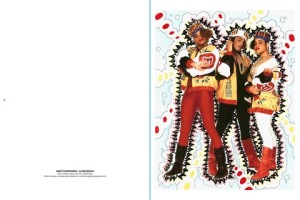
NY, Hat & Beard Press, 1st, 1918, Book: Very Good, Dust Jacket: None, Softcover, 9 X 12", 196 pages. Beckman mixes her rare, early b&w photos of graffiti artists with splashes of color by celebrated urban artists. This unique collaboration creates an exciting expression of original hip-hop culture. SIGNED BY BECKMAN WITH A SKETCH OF A CAMERA on title page. Very scarce in a small printing.

 "The Art of Memory by: Frances A. Yates")
 "The Artist in the Counterculture: Bruce Conner to Mike Kelley and Other Tales from the Edgeby: Thomas Crow")
 "The Body Emblazoned: Dissection and the Human Body in Renaissance Culture by: Sawday, Jonathan")
 "The Book of Weirdo: A Retrospective of R. Crumb's Legendary Humor Comics Anthology by: Cooke, Jon B.")

 "The Brazilian Photographs of Genevieve Naylor, 1940-1942 by: Robert M. Levine")


 "The Classic of Tea by: Lu Yu (Francis Ross Carpenter)")
 "The Comics Journal Library Vol. 9: Zap - The Interviews by: Gary Groth (Editor), Michael Dean (Editor), Bob Levin (Introduction)")

 "The Comics Journal Library Vol. 9: Zap - The Interviews by: Gary Groth (Editor), Michael Dean (Editor), Bob Levin (Introduction)")

 "The Creation of Tribalism in Southern Africaby: Leroy Vail")
 "The Cult of Art in Nazi Germany by: Eric Michaud")
 "The Dark Carnival: Portraits from the Endless Night by: Ridgers, Derek (Photographer)")


 "The De-Moralization of Society: From Victorian Virtues to Modern Valuesby: Gertrude Himmelfarb")
 "The End of American Innocence: A Study of the First Years of Our Own Time: 1912-1917 by: May, Henry Farnham")
 "The Europeans: Three Lives and the Making of a Cosmopolitan Cultureby: Orlando Figes")
 "The Evolution of Highland Papua New Guinea Societiesby: D. K. Feil")
 "The Floating World - The Story of Japanese Printsby: James A. Michener")
 "The Future of Ritual: Writings on Culture and Performanceby: Richard Schechner")
 "The Gardens of China: History, Art, and Meanings by: Morris, Edwin T.")
 "The Gentleman's Daughter: Women's Lives in Georgian England by: Vickery, Amanda")
 "The Gold Standard and the Logic of Naturalism: American Literature at the Turn of the Centuryby: Michaels, Walter Benn")
 "The Hamadsha: A Study in Moroccan Ethnopsychiatry by: Crapanzano, Vincent")
 "The Japanese Spirit by: Okakura Yoshisaburo")
 "The Land Dayaks of Sarawak: A Report on a Social Economic Surveyby: Geddes, W. R.")
 "The Mash Up: Hip-Hop Photos Remixed by Iconic Graffiti Artists (SIGNED COPY)by: Janette Beckman/Cey Adams")