Hardcover. New York , PowerHouse Books, reprint, 2006, Book: Very Good, Dust Jacket: Very Good, 192 pages. Hardcover with dust jacket. Clean, unmarked copy with only minor wear to dust jacket. Black and white pictures throughout. Every city-dweller has seen them, and ever city-dweller could list the telltale signs: the fur, the gold, the hats, the cars. They are the original macks, the original players. They are Big City pimps--the heroes of gangsta rap. Bob Adelman and Susan Hall dive headlong into their world in the classic investigative docudrama Gentleman of Leisure: A Year in the Life of a Pimp, an in-depth exploration of the underworld figures that populate our streets at night. The first book of its kind, Gentleman of Leisure, originally published in 1972 and now reproduced in a facsimile edition, is a collection of photographs and interviews dramatically documenting the private life of a pimp and his prostitutes. The people who appear in this book are not models: they are real people with real lives. Only their names have been changed to protect the guilty, their stories are real. Armed only with a camera and a tape recorder, Adelman and Hall entered the lives of the pimp Silky and his women. What they found flew in the face of prevailing prejudices: stripped of stereotype and myth, the pimps and whores that shared their tales were complex people embroiled in romantic dramas, with a code of behavior as intricate as the Mafia's, and a defined sense of self.
Hardcover. NY, New American Library, 1st, 1972, Book: Very Good, Dust Jacket: Very Good, Hardcover. Black & white photos by Bob Adelman. 189 pages. The life of a pimp. Text by Hall.
Softcover. Boston, The Solio Foundation, 1st, 1987, Book: Very Good, Dust Jacket: None, 107 pages. Softcover with minor wear to edges. Full color and black & white illustrations throughout. Clean unmarked text.
Hardcover. Gottingen, Steidl/ICP , 1st, 2007, Book: Very Good, Dust Jacket: None, Hardcover, pictorial boards, 175 pages. In 1934, after reading John Dos Passos' 1919, Gerda Taro left her home in Stuttgart for Paris. There she met the now legendary photographer Robert Capa, with whom she traveled to Spain at the start of the Civil War. As his lover and photographic partner--and as his manager--she is often credited with launching his career. She was also the first woman photojournalist to enter the heat of battle. The couple worked together until Taro was killed while photographing a crucial clash near Madrid in July 1937, just six days shy of her twenty-sixth birthday. The International Center of Photography holds by far the world's largest collection of Taro's work, including approximately 200 prints as well as original negatives. This selective survey of the ICP's holdings is organized chronologically, and set in context with the inclusion of magazine layouts; it is the first major collection of Gerda Taro's photographs ever published. Clean, bright copy.
Hardcover. NY, Abrams, 1st, 1981, Book: Very Good, Dust Jacket: Very Good, Hardcover, 96 pages, in a bright dust jacket. Photographs taken by Alfred Eisenstaedt in Germany in the 1920s and 1930s and on a return trip to Germany in 1979.
Softcover. Albuquerque NM, University of New Mexico Press, 1st, 2002, Book: Near Fine, Dust Jacket: None, 178 pages, 70 color plates by Fitch of deserted buildings and locations in the Great Plains. Soft cover edition, published simultaneously iwith the hardcover. In publisher's shrinkwrap.
Softcover. Albuquerque NM, University of New Mexico Press, 1st, 2002, Book: Near Fine, Dust Jacket: None, 178 pages, 70 color plates by Fitch of deserted buildings and locations in the Great Plains. Soft cover edition, published simultaneously with the hardcover. In publisher's shrink wrap.
Hardcover. Spain, La Fabrica, 1st, 2011, Book: Near Fine, Dust Jacket: None, Hardcover, 63 pages. Like new in publishers shrink-wrap. Reveals the Mexican photographer`s extended explorations in (mostly) cities in the north of India--Varanasi, Delhi and Calcutta, as well as Bombay--over the past 13 years. Iturbide`s black-and-white images are strikingly at ease with their subject matter, able to locate arrangements of objects, architectural outline and urban signage without ever lapsing into visual tourism. Text in English and Spanish.
Hardcover. Spain, La Fabrica, 1st, 2011, Book: Near Fine, Dust Jacket: None, Hardcover, 63 pages. Like new in publishers shrink-wrap. Reveals the Mexican photographer's extended explorations in (mostly) cities in the north of India--Varanasi, Delhi and Calcutta, as well as Bombay--over the past 13 years. Iturbide`s black-and-white images are strikingly at ease with their subject matter, able to locate arrangements of objects, architectural outline and urban signage without ever lapsing into visual tourism. Text in English and Spanish.
Hardcover. Thistle Hill Publications & Vermont Folklife Center, 1st, 2001, Book: Very Good, Dust Jacket: Very Good, Hardcover in a bright dust jacket, 108 pages, 68 b&w photographs. SIGNED BY BOTH MOSHER AND MILLER on the half-title page. Granite and Cedar represents an unusual collaboration between a documentary photographer and a writer of fiction to produce a haunting portrait of the people and the land of Vermont's most rural area, often referred to as the "Northeast Kingdom." Veteran photographer JOHN M. MILLER uses his brilliant collection of elegiac, but unsentimental, images dating from the 1970s to evoke the disappearing folkways, the rugged people, and the desolate and abandoned landscape of his native corner of the Green Mountain State. Miller's austere, black-and-white photos richly detail the erosion and the breakup of the small farms of the region and of the families who worked those farms. While they emphasize the stark beauty of the land, they also pay homage to the innate dignity and fierce pride of the people who live in such hardscrabble circumstances.
Hardcover. Thistle Hill Publications & Vermont Folklife Center, 1st, 2001, Book: Very Good, Dust Jacket: Very Good, Hardcover in a bright dust jacket, 108 pages, 68 b&w photographs. Granite and Cedar represents an unusual collaboration between a documentary photographer and a writer of fiction to produce a haunting portrait of the people and the land of Vermont's most rural area, often referred to as the "Northeast Kingdom." Veteran photographer JOHN M. MILLER uses his brilliant collection of elegiac, but unsentimental, images dating from the 1970s to evoke the disappearing folkways, the rugged people, and the desolate and abandoned landscape of his native corner of the Green Mountain State. Miller's austere, black-and-white photos richly detail the erosion and the breakup of the small farms of the region and of the families who worked those farms. While they emphasize the stark beauty of the land, they also pay homage to the innate dignity and fierce pride of the people who live in such hardscrabble circumstances.
Hardcover. New York, Harper & Row, 1st, 1978, Book: Very Good, Dust Jacket: Very Good, 170 pages, hardcover with price-clipped dust jacket. A photographic document of the Rocky Mountain West. Foxing to top copy edge. Light edgewear to dust jacket, boards lightly rubbed. Price-clipped. Unmarked. Bright and clean; a tight copy.
Softcover. London, Reaktion Books , 1st, 2002, Book: Very Good, Dust Jacket: None, Softcover, 192 pages, b&w photos throughout. Documenting the grave sites of famous people. Memorializing as an art form; sculpture and text within a confined space, examples from all over the world, including: Vladimir Nabokov, Charles Chaplin, Thomas Hardy, Lewis Carroll, many others. Clean copy.
Hardcover. New York, Knopf, 1st, 1991, Book: Very Good, Dust Jacket: Very Good, Hardcover, 100 photos by Arnold, 25 in color. Clean, bright copy in an unclipped dust jacket.
Hardcover. NY, Harper & Brothers, 1st, 1949, Book: Very Good, Dust Jacket: None, Hardcover, black cloth covers with yellow lettering. No dust jacket. 161 pages illustrated with 72 striking black-and-white photogravures by Berenice Abbott. Having spent most of the 1920s in Paris photographing such famous literati as James Joyce, Jean Cocteau and Andre Gide, Abbott returned to New York with the intention "to do in Manhattan what Atget did in Paris. " Throughout the 30s she captured New York "with a straightforward style that nodded toward 19th-century classicism while signaling a new sort of stripped-down modernism" (Roth, 100). Included here are her images of such artists as Isamu Noguchi, Edward Hopper, John Sloan and William Auerbach-Levy, each in their studios, along with numerous glimpses into the buildings, people and life of Greenwich Village. Text by Henry W. Lanier, editor, writer and son of renowned southern poet Sydney Lanier. Bright, clean copy.
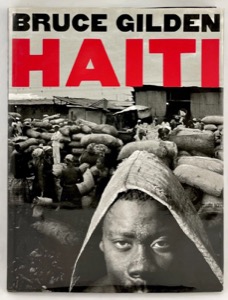
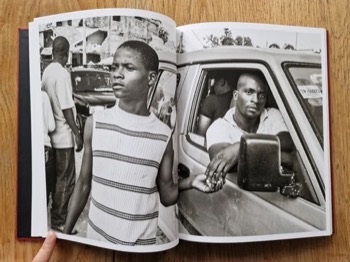
Hardcover. London, Dewi Lewis Publishing, 1st UK, 1996, Book: Very Good, Dust Jacket: Very Good, Hardcover in a bright dust jacket with a small close tear. The corpse of a young man lies in the street, his eyes half open, his face covered with insects. The uncaptioned image is like a jolt of electricity; no words could improve upon it. Ian Thomson's introduction confirms that life has little value in Haiti (cheap for humans, worthless for animals), a once proud nation that has declined into a police state where brutal poverty is the order of the day. Bruce Gilden's largely shocking black-and-white pictures reveal that decline as perhaps never before in a shoot-from-the-hip style of photojournalism. 120 pages. Clean copy. DOMESTIC SHIPPING ONLY.
Hardcover. Steidl , 1st, 2015, Hardcover, terra-cotta cloth with pastedown photo on front cover. 264 pages, 170 color illustrations. Balls and Bulldust is a rich collection of images that explores life and work among the cattlemen in the Northern Territory in Australia. It is not another cowboy story, rather one about men and women working very hard, and seeking some kind of solitude and sense of space in the midst of harsh conditions. For some, life in Australia's outback is a life-long routine. The young are attracted by its romanticism, which is-more often than not-shattered by reality's hardships. The red dust covering this vast scrubby landscape and filling the air is prevalent in Ludwigson's images. Days can be blistering hot and temperatures at nights may sometimes fall below zero. People sleep on "swags" on the ground for weeks. The food is drab and the men are in their saddles twelve hours a day mustering herds of cattle, branding and castrating young bulls. Hakan Ludwigson spent three months with the cattlemen of the Australian outback early in his career, and returned to his native Sweden with a body of work that became Balls and Bulldust. DOMESTIC SHIPPING ONLY.
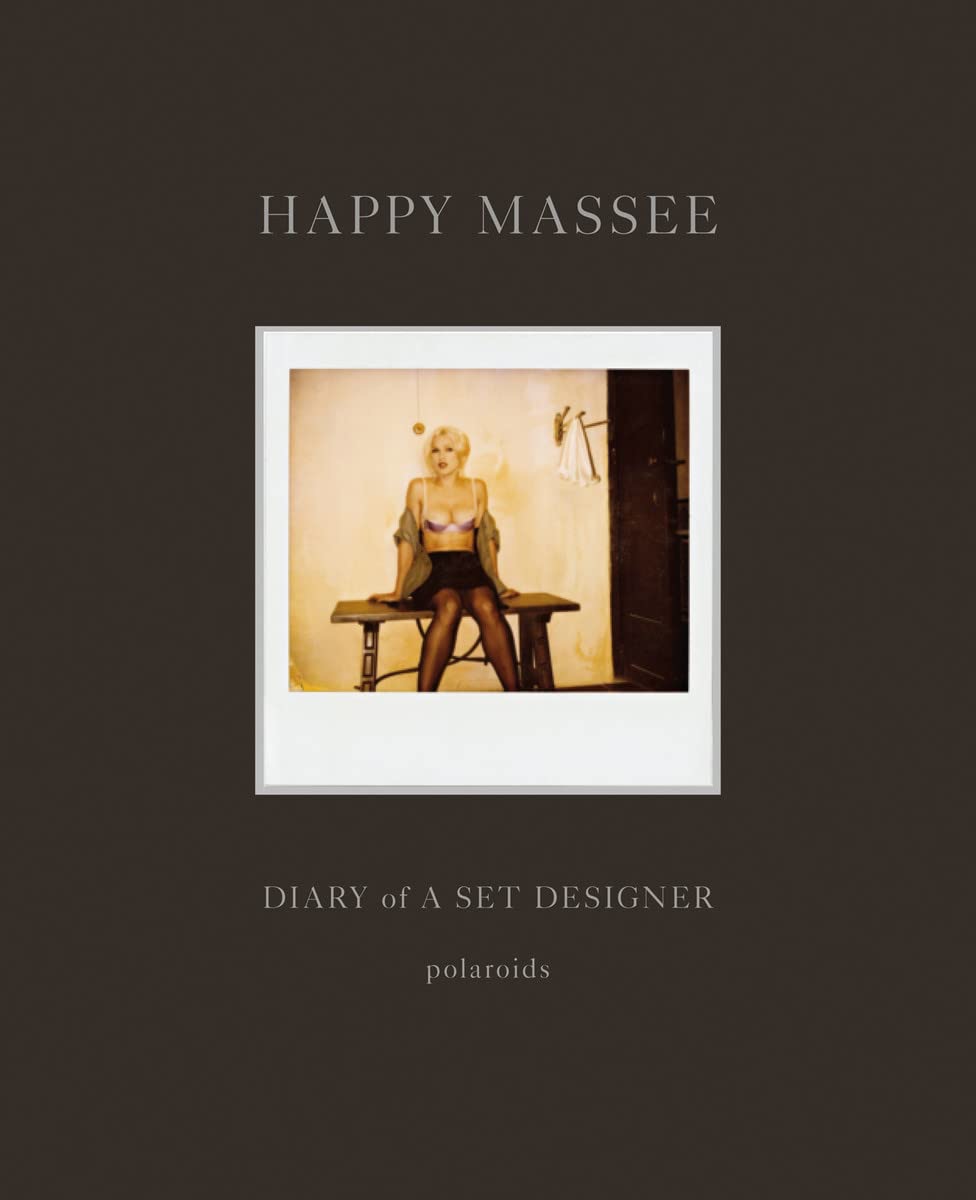
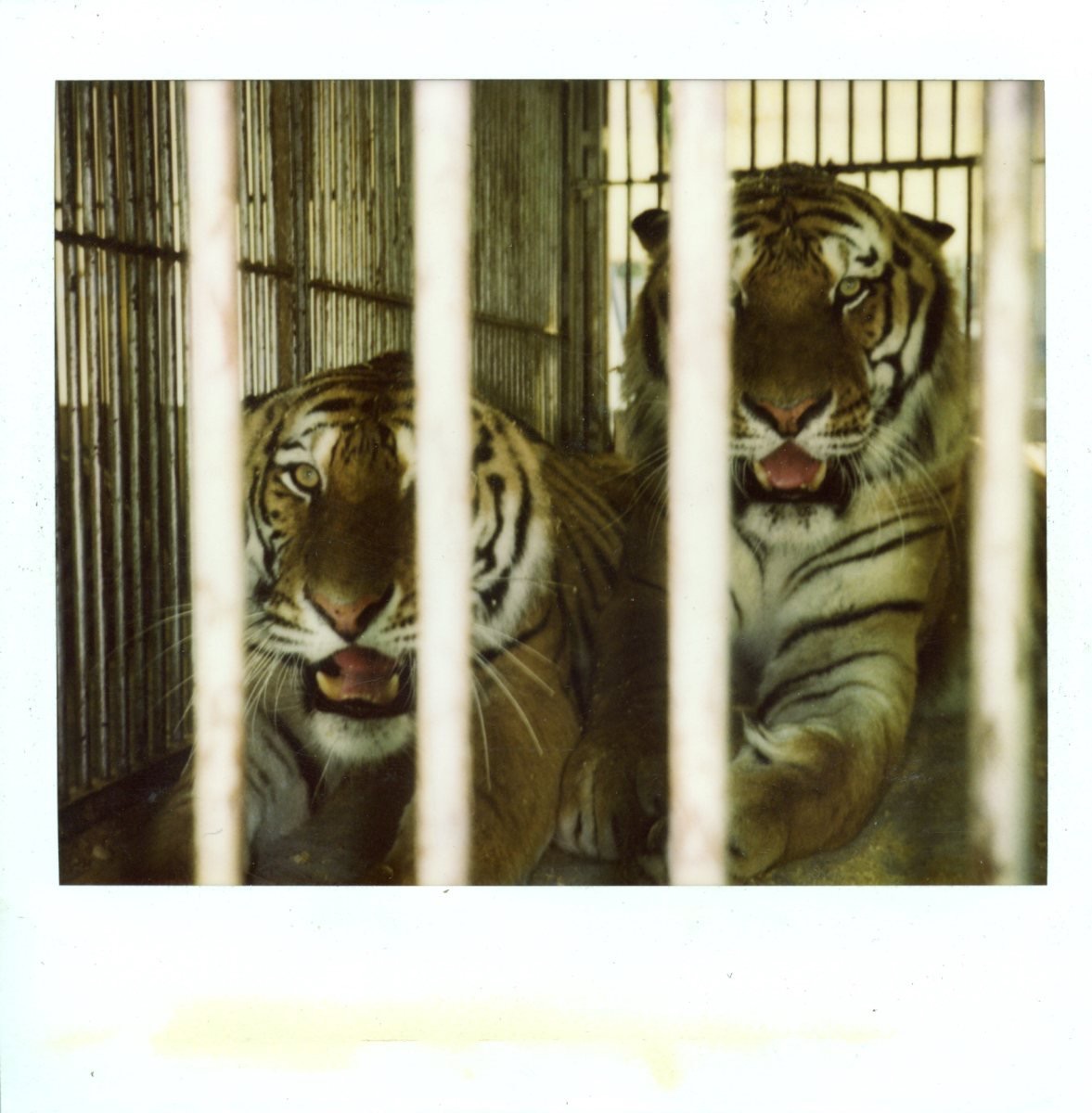
Hardcover. Bologna, Damiani , 1st, 2016, Book: Very Good, Dust Jacket: None, Hardcover, brown cloth with gilt lettering, cover label on front cover, 160 pages. Diary of a Set Designer is a book of Polaroids taken over 25 years by Happy Massee while traveling the world as a production designer. The photographic journal is a journey through time, with a collection of images taken with the now-defunct Polaroid camera--which, at the time, was essential to the art of designing for film. One of the industry's top production designers, Massee has enjoyed a career spanning the realms of theater, film, commercials and fashion. He has worked with established directors such as Wes Anderson, David Lynch, David Fincher, Michel Gondry and more, while in the world of fashion he has collaborated with the likes of Inez and Vinoodh, Peter Lindbergh and Craig McDean, and worked for brands such as Gucci, Valentino, Armani, Bulgari and Swarovski. His film credits include, among others, Broken English, directed by Zoe Cassavetes, and Two Lovers, directed by James Gray, and he has designed sets for music videos such as Jay Z's "99 Problems" and Madonna's "Take a Bow." In this volume, "the images of personalities, sets, locations and encounters," Massee explains, "all tell a story related to my work and travels, and the people I met while on them. The images, raw and unretouched, are candid, and capture my art as well as my life as I like to travel through it." Still in publisher's shrinkwrap.
Softcover. NY, Harmony Books, 1st, 1982, Book: Very Good, Dust Jacket: None, Softcover, 176 pages, illustrated in b&w, some color. In a charming, straightforward way, Benson tells of his life in photography. Benson presents a useful mix of his own photography with personal ancedotes and specific lists of how-to's. The photos are useful for showing some of the great moments that can be caught on film, as well as for giving the newer photographer something to aspire towards. Mixed in with the photo sections are pages of up-front writing about how Benson achieved what you are looking at. "Certain qualities are essential to a photojournalist -- an inherent love of photography, a strong determination to succeed, and a willingness to put everything second to your work. You also need a sense of history, an awareness of human behavior, physical stamina, a fascination with gossip, a survival instinct, a naive belief in yourself, and a bit of luck." -- Harry Benson
Hardcover. New York, Harry N. Abrams, 1st, 2005, Book: Very Good, Dust Jacket: Very Good, Hardcover, 222 pages, color and b&w photographs of celebrities from 50 years of work. Small remainder dot on bottom edge.
Hardcover. Atglen, PA, Schiffer Publishing, Ltd., 1st, 2010, Book: Very Good, Dust Jacket: Very Good, 176 pages. Hardcover with dust jacket. Clean, unmarked copy with only minor wear to dust jacket. Black and white pictures throughout. Freelance photographer Harvey Caplin recorded ranch life in the American West from the 1940s to the 1980s, before the last roundup, magnificent landscapes, and picturesque people. See 173 of his beautiful images and revel at the grandeur of the land and drama of life played out upon it.
Hardcover. NY, Prestel, 1st, 1999, Book: Very Good, Dust Jacket: Very Good, Hardcover, 104 pages. Ever since Fidel Castro came to power as the leader of Cuba's communist regime in 1959, Havana has remained all but impenetrable to the outside world. The revolution cut Cuba off from the West, but at the same time preserved a century of built substance and style through the accident of fmancial stagnation. Without capital investment, time stood still, and five epochs of architectural style have survived to the present day. From the majesty of colonial city palaces to the half-hearted hope of heroic modernism, Engels' photographs show a city in silent transition, a microcosm of architecture through the ages. All of the structures picttired here were built in the twentieth century, but for the most part they have suffered from neglect in the form of peeling paint and stucco, &M grime, and abandonment. Yet there is utter beauty and dignity here-a sense of being trapped in time-that is no longer evident in America's everchanging cities. Like the structures he photographs, Engels uses a timeless approach to the artistic and technical aspect of his work. He uses a Sinar catnera with a 4 x 5 inch format, standing under a darkening cloth, just as photographers did a century ago. Using a Polaroid image to feel and see the light, Engels takes a single shot of each building. Most of these images were taken during die month of February, in 1997 and 1999 respectively. These photographs of apartment dwellings, office buildings, private residences, and places of worship tell a story on their own. Their haunting images seem to speak about more than just the men who made them or the materials they are made of. The buildings and streetscapes depicted in Havana speak to us of yesterday, today, and tomorrow.
Softcover. London, Secker & Warburg, 1st, 1980, Book: Very Good, Dust Jacket: None, Softcover, 9 3/4 " - 12" tall. 156 pages, 120 b&w photos. Introduction by John Le Carre who found these photos " electric, haunting and at times unearthly". Fading to color on spine, previous owner's signature on front fly leaf otherwise very good.

 "Gentleman of Leisure: A Year in the Life of a Pimpby: Adelman, Bob (Photographer)")
 "Gentleman of Leisureby: Hall, Susan and Bob Adelman")
 "Gentlemen Photographers - The Work of Loring Underwood and Wm. Lyman Underwoodby: Lyons, Robert/Carol Shloss & Joel Snyder")
 "Gerda Taroby: Irme Schaber; Richard Whelan; Kristen Lubben")
 "Germanyby: Eisenstaedt, Alfred")
 "Gone: Photographs of Abandonment on the High Plainsby: Fitch, Steve")
 "Gone: Photographs of Abandonment on the High Plainsby: Fitch, Steve")
 "Graciela Iturbide: No Hay Nadie, There is No-Oneby: Iturbide, Graciela")
 "Graciela Iturbide: No Hay Nadie, There is No-Oneby: Iturbide, Graciela")
 "Granite and Cedar: The People and the Land of Vermont's Northeast Kingdom (SIGNED COPY)by: Miller/Howard Frank Mosher, John M.")
 "Granite and Cedar: The People and the Land of Vermont's Northeast Kingdom by: Miller/Howard Frank Mosher, John M.")
 "Grass Roots People, The: An American Requiemby: Wood, Nancy")
 "Grave Matters by: Lammerts, Dietrich Christian; Taylor, Mark")
 "Great British, Theby: Arnold, Eve")
 "Great War, The: The Persuasive Power of Photographyby: Thomas, Gail Fann")
 "Greenwich Village Today & Yesterday by: Lanier, Henry Wysham / Berenice Abbott")
 "Haiti by: Bruce Gilden")
 "Hakan Ludwigson: Balls and Bulldust by: Hakan Ludwigson")
 "Happy Massee: Diary of a Set Designerby: Happy Massee")
 "Harry Benson on Photojournalismby: Gigi and Harry Benson")
 "Harry Benson's Americaby: Benson, Harry")
 "Harvey Caplin's Real Cowboys & the Old Westby: Caplin, Abbie")
 "Havana: The Photography of Hans Engelsby: Engels/ Beth Dunlop, et al., Hans")