Hardcover. New York, Bramhall House, 2nd Printing, 1958, Book: Good, Dust Jacket: Fair, Hardcover. Illustrations throughout, with a treatise on The Balista and Catapult of the Ancients and an appendix on The Catapult, Balista and the Turkish Bow. Dust jacket soiled and worn, foxing on top edge, otherwise, very clean and tight.
Hardcover. New York, Charles Scribner's Sons, 1st, 1898, Book: Very Good, Dust Jacket: None, Hardcover, tan cloth covers stamped in blue and red, 360 pages. 116 b&w photos throughout, color maps in rear. In 1898 America intervened in the Cuban War of Independence, leading to conflict with Spain. This is a detailed account of this campaign, together with American military sea and land operations on the island of Puerto Rico during the Spanish American War. Cloth spine darkened otherwise clean, tight copy.
Hardcover. Oxford, Clarendon Press, 1st, 1912, Book: Very Good, Dust Jacket: None, 319 pages, illustrated with 2 portrait plates and a diagram. Gilt ruled brick-red cloth with gilt lettering on spine. Edited by Atkinson. Bright, tight copy.
Hardcover. NY, Sol Lewis & Liveright, 1st, 1975, Book: Very Good, Dust Jacket: None, Hardcover, blue cloth boards and spine with silver letters over a red background on spine. 288 pages, b&w illustrations. The author has provided a new interpretation of General Custer's tenure in Texas following the Civil War where he comes to life as a wise and successful military leader during Reconstruction. This is the first work that focuses entirely on Custer's tenure in the Lone Star State the first to detail his successful stay in Austin. No dust jacket.
Hardcover. Philadelphia, J.B. Lippincott, 2nd Ed., 1865, Book: Very Good, Dust Jacket: None, Hardcover, dark green pebbled cloth with gilt lettering on spine, 4" x 6 1/4", 303 pages including index. A detailed instructional guide for the Civil War era soldier. Copyright page states 1964, title page says 1865. Probably a second edition. Still scarce in this nice condition. A few pages with dog ears, previous owner's pencil signature on front fly leaf. Otherwise clean, tight copy.
Hardcover. NY, Time Life, reprint, 1982, Book: Very Good, Dust Jacket: None, 288 pages. Hardcover with no dust jacket. Dark blue leather bound with gilt titles to front cover and spine. Embossed decoration on front cover. Gilt text block edges, red ribbon marker. Light scuffing to fore edge gilt. Otherwise, clean, tight copy. A History of the Andrews Railroad Raid into Georgia in 1862, Embracing a Full and Accurate Account of the Secret Journey to the Heart of the Confederacy, the Capture of a Railway Train in a Confederate Camp, the Terrible Chase that Followed, and the Subsequent Fortunes of the Leader and His Party. Reprint of the 1877 edition.
Hardcover. Munchen GR%, C. Bertelsmann, 1st, 1995, Book: Very Good, Dust Jacket: Very Good, Hardcover, 255 pages, profusely illustrated with b&w photographs. GERMAN TEXT.
Hardcover. np, Privately printed, 1st, 1914, Book: Very Good, Dust Jacket: None, 225 pages. Hardcover with no dust jacket. Gilt lettering and decoration on front cover. Previous owner's name on front end paper. Light edgewear to covers.
Hardcover. NY, Time Life, reprint, 1983, Book: Very Good, Dust Jacket: None, 274 pages. Hardcover with no dust jacket. Dark blue leather bound with gilt titles to front cover and spine. Embossed decoration on front cover. Gilt text block edges, red ribbon marker. Clean, tight copy. This memoir by Confederate General Richard Taylor is usually considered one of the best and least biased by a general officer. The work is full of considered analysis on both the strategy of the war and the personalities of his fellow officers. Taylor is always fair in his criticism and seems to have no real scores to settle. While he makes little mention of his own talents, his tactical brilliance and strategic insight does shine through. Many contemporaries said Richard Taylor was one of the best soldiers of the war, but he is comparatively little known due to his posting to peripheral theaters. While he was a man of his time, the work (with the exception of some of his Reconstruction writings) is much less tainted by Lost Cause polemics than most Confederate memoirs.
Hardcover. NY, Time Life, reprint, 1982, Book: Very Good, Dust Jacket: None, 224 pages. Hardcover with no dust jacket. Dark blue leather bound with gilt titles to front cover and spine. Embossed decoration on front cover. Gilt text block edges, red ribbon marker. Clean, tight copy. This Civil War classic of soldiering in the ranks debunks all the romantic notions of war. Like his Northern counterpart, the Confederate soldier fought against bullets, starvation, miserable weather, disease, and mental strain. But the experience was perhaps even worse for Johnny Reb because of the odds against him. Never as well equipped and provisioned as the Yankee, he nevertheless performed heroically. Carlton McCarthy, a private in the Army of Northern Virginia, describes the not-always-regular rations, various improvisations in clothing and weaponry, etc.
Hardcover. New York, Hovendon & Co., 1st, 1899, Book: Very Good, Dust Jacket: None, 366 pages. Blue cloth covers with bright gilt and 3-color design. Illustrated with black & white engravings and color plates. Previous owners inscription on front endpaper. Light fraying at top and bottom of spine. Otherwise clean, tight copy.
Hardcover. NY, HarperCollins, 1st, 2004, Book: Very Good, Dust Jacket: Very Good, Hardcover in a bright dust jacket, 518 pages with index. B&w illustrations. The allied bombing of Dresden created a massive fire that swept the city center, killing thousands of people and destroying its medieval heart. Debate began almost immediately: Was the destruction of this seemingly civilian city necessary militarily, or was it, some asked, equivalent to a war crime? Not just another in an endless parade of books on Dresden, Taylor's account may go a long way toward putting such questions to rest. It opens with the start, by British bombers, of the nighttime attack, and immediately turns to the past, meandering through several centuries of Dresden history, from its founding in the Middle Ages to the 20th century and the rise of the Nazis. Taylor, translator of The Goebbels Diaries, also covers the history of aerial bombardment and its international laws; gives glimpses of life under the Nazi regime; details the Allied bombing campaign against Germany; and, most excitingly, puts forth new information concerning Dresden's part in the German war effort, which turns out to be much greater than postwar information generally portrays. Clean copy.
Hardcover. NY, W. W. Norton, 1st, 1967, Book: Very Good, Dust Jacket: Very Good, Hardcover in a worn, chipped dust jacket, 119 pages, maps, index. As WWII ground to a close, whose forces would be the first to reach Berlin? General Dwight David Eisenhower, supreme commander of the British and American armies, chose to halt at the Elbe River and leave Berlin to the Red Army. Could he have beaten the Russians to Berlin? If so, why didn't he? If he had, would the Berlin question have arisen? Would Germany have been divided as it was? Name on front fly leaf, otherwise clean.
Hardcover. Munchen GR%, C. Bertelsmann, 1st, 1992, Book: Very Good, Dust Jacket: Very Good, Hardcover, 255 pages, profusely illustrated with b&w photographs, text illustrations., maps, bibliog., Foreword by Lew Kopelew. GERMAN TEXT. Highly pictorial account of the disastrous German campaign 1942-43. Cllean copy.
Hardcover. Boston, Wright & Potter/ Commonwealth of Massachusetts, 1st, 1903, Book: Good, Dust Jacket: None, Hardcover, 202 pages, b&w illustrations. Brown cloth binding with gilt decoration. Some rubbing, light residue to covers, back hinge partially cracked. Interior very good.
Hardcover. NY, NYU Press , 1st, 2014, Book: Very Good, Dust Jacket: None, Hardcover, illustrated boards, no dust jacket issued, 272 pages. Returning Vietnam veterans had every reason to expect that the government would take care of their readjustment needs in the same way it had done for veterans of both World War II and Korea. But the Vietnam generation soon discovered that their G.I. Bills fell well short of what many of them believed they had earned. Mark Boulton's groundbreaking study provides the first analysis of the legislative debates surrounding the education benefits offered under the Vietnam-era G.I. Bills. Specifically, the book explores why legislators from both ends of the political spectrum failed to provide Vietnam veterans the same generous compensation offered to veterans of previous wars. Clean copy.
Hardcover. Boston / New York, Houghton Mifflin Company, 1st US, 1920, Book: Very Good, Dust Jacket: None, TWO VOLUMES. Volume I, 621 pages. Volume II, 581 pages. In depth history of WWI. In very good condition, some wear to maroon boards and soiled edges of pages. Otherwise clean and well-bound. Pages unmarked.
Hardcover. NY, Charles Scribner's Sons, reprint, 1926, Book: Very Good, Dust Jacket: None, Hardcover, salmon-color pictorial boards with green cloth spine with gilt lettering. Profusely illustrated by author with color frontis. and many b&w plates and text drawings, Thomason's semi-fictionalized first book, based on his own experiences as a career officer in the Marines as part of the AEF. A clean, bright copy.
Hardcover. NY, Charles Scribner's Sons, reprint, 1926, Book: Very Good, Dust Jacket: None, Hardcover, salmon-color pictorial boards with green cloth spine with gilt lettering. Profusely illustrated by author with color frontis. and many b&w plates and text drawings, Thomason's semi-fictionalized first book, based on his own experiences as a career officer in the Marines as part of the AEF. Previous owner's signature on inside front cover and on blank preim page. Otherwise a clean, bright copy.
Hardcover. New York, Penguin Publishing Group, 1st, 2018, Book: Very Good, Dust Jacket: Very Good, 304 pages. Hardcover with dust jacket. A very clean, unmarked copy with only minor wear to dust jacket edges. A tight copy.
Softcover. Charleston, SC, Arcadia Publishing, 1st, 2004, Book: Very Good, Dust Jacket: None, Softcover, 128 pages, b&w photos throughout. At the foot of the Huachuca Mountains, the U.S. Army founded one of the most crucial military posts for American expansion into the southwest frontier. Soldiers had been stationed in the region for decades, but in 1877 Fort Huachuca became the symbolic cornerstone of America's western domain. The Native American word huachuca, meaning "place of thunder," described the sporadic but marvelous electrical storms in the area, but the skies would not be the only thing booming. During the tumultuous campaigns to resolve American and Indian disputes, the U.S. infantry and famed Buffalo Soldiers faced off with Geronimo and his Apache nation in both tense negotiations and bitter combat. As time marched on, the fort developed into a permanent installation with barracks, modern training grounds, and other facilities to accommodate troop rotations and eventually became the innovative Center for Military Intelligence. Clean copy.
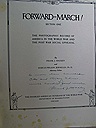
Hardcover. Chicago, The Disabled Veterans of the World War, reprint, 1939, Book: Very Good, Dust Jacket: None, Two volumes complete, 496 pages total. INSCRIBED BY MACKEY on title page. Matching hardcover volumes in blue striped moire cloth boards with silvered title and ornament on front; silvered ornament on spine. No dust jackets, as issued. Both books are crisp and clean and almost as new, with barely any wear at all. Interior pages are in fine condition, with page after page of photos and maps documenting the First World War and its aftermath. Produced by the Disabled Veterans of the World War, Department of Rehabilitation. Folio. The two volumes are numbers sequentially. Volume 2 concludes with a Pronouncing Dictionary of War Names and a bibliography. Very heavy-- about 12 pounds; will require substantial additional postage if shipped outside the U.S.

 "Crossbow, The: Mediaeval and Modern, Military and Sporting, It's Construction, History & Managementby: Payne-Gallwey, Sir Ralph")
 "Cuban and Porto Rican Campaigns, Theby: Davis, Richard Harding")
 "Curtail'd Memoir of Incidents and Occurrences in the Life of John Surman Carden: Vice-Admiral in the British Navy. Written by Himself 1850by: Carden, John Surman and")
 "Custer in Texas: An Interrupted Narrativeby: Carroll, John M. (Comp. & Ed. )")
 "Customs Of Service for Non Commissioned Officers and Soldiers as Derived from Law and Regulations and Practised in the Army of the United States by: Kautz, August V.")
 "Daring and Suffering: A History of the Great Railroad Adventure (Collector's Library of the Civil War)by: Pittenger, William")
 "Das Ende 1945 Der verdammte Kriegby: Guido Knopp")
 "Dedication of the Statue to Brevet Major-General William Wells and the Officers and Men of the First Regimanet Vermont Cavalryby: N/A")
 "Destruction and Reconstruction - Personal experiences of the late war (Collector's Library of the Civil War)by: Taylor, Richard")
 "Detailed Minutiae of Soldier Life in the Army of Northern Virginia, 1861-1865 (Collector's Library of the Civil War)by: McCarthy, Carlton")
 "Dewey and Other Naval Commandersby: Ellis, Edward S.")
 "Dresden: Tuesday, February 13, 1945by: Frederick Taylor")
 "Eisenhower and Berlin 1945: The Decision to Halt at the Elbeby: Stephen E. Ambrose")
 "Entscheidung Stalingrad-Das Buch zur TV Reihe Der verdammte Krieg by: Guido Knopp")
 "Equestrian Statue of Major-General Joseph Hooker, Theby: N/A")
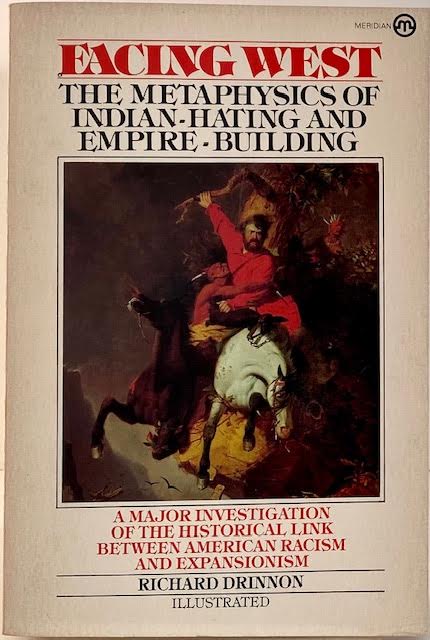
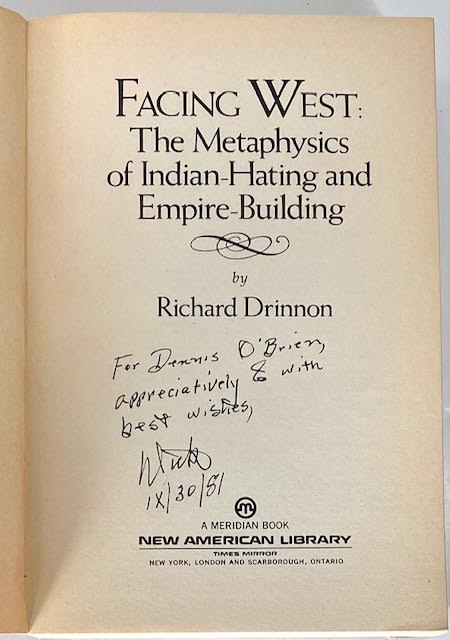
 "Facing West: The Metaphysics of Indian-Hating and Empire-Building: A Major Investigation of the Historical Link Between American Racism and Expansionism (INSCRIBED BY AUTHOR)by:")
 "Failing Our Veterans: The G.I. Bill and the Vietnam Generationby: Mark Boulton")
 "First World War N/R UKby: Gilbert, M")
 "First World War, The : 1914-1918 - Personal Experiences of Lieut. Col. C.A. Court Repington (2 Volumes)by: Repington, Colonel")
 "Fix Bayonets!by: Thomason, Jr, John W")
 "Fix Bayonets!by: Thomason, Jr, John W")
 "Flying Tigers, The: The Untold Story of the American Pilots Who Waged a Secret War Against Japanby: Kleiner, Sam")
 "Fort Huachuca by: Price, Ethel Jackson")
 "Forward-March!: The Photographic Record of America in the World War and the Post War Social Upheaval (Volumes 1 and 2) SIGNED COPYby: Mackey, Frank J. and Marcus Wils")