Hardcover. NY, Lyle Stuart, 1st, 1983, Book: Very Good, Dust Jacket: Good, Hardcover in a lightly worn dust jacket, 190 pages, b&w illustrations. The story of the rise and near-collapse of the Playboy Empire, told by the manager of Playboy's London casinos. Clean copy.
Hardcover. NY, Alfred A. Knopf , 1st, 1995, Book: Very Good, Dust Jacket: Very Good, Hardcover in a bright, unclipped dust jacket, 314 pages. Contrasting the Victorian system of virtues - respectability, self-help, discipline, cleanliness, obedience, orderliness - with the opportunistic, superficial morality of modern society, an intellectual historian calls for a deeper commitment to moral responsibility. According to Himmelfarb, Victorian "manners and morals" created a society that emphasized a strong family life for all classes and gave rise to a prosperous economy and the early feminist and social service movements. Furthermore, the influence of these virtues caused the incidence of illegitimate births and violent crimes to drop significantly and remain low until the 1960s. Clean copy.
Hardcover. Cambridge MA, Harvard University Press, 2nd pr., 2017, Book: Very Good, Dust Jacket: Very Good, Hardcover in a bright dust jacket, 502 pages, b&w illustrations. "Superb...A remarkable achievement, by far the best general account of the war now available. It is critical, insightful, and rooted in a wealth of archival sources; it brings far more of the Mexican experience than any other work...and it clearly demonstrates the social and cultural dynamics that shaped Mexican and American politics and military force." -Journal of American History It has long been held that the United States emerged victorious from the Mexican-American War because its democratic system was more stable and its citizens more loyal. But this award-winning history shows that Americans dramatically underestimated the strength of Mexican patriotism and failed to see how bitterly Mexicans resented their claims to national and racial superiority. Their fierce resistance surprised US leaders, who had expected a quick victory with few casualties. By focusing on how ordinary soldiers and civilians in both countries understood and experienced the conflict, The Dead March offers a clearer picture of the brief, bloody war that redrew the map of North America. Clean copy.
Hardcover. NY, Library of America, 8th pr., Book: Very Good, Dust Jacket: Very Good, Hardcover in a bright dust jacket, 1175 pages. Part Two of a two-volume set. Assembled here in chronological order are hundreds of newspaper articles, pamphlets, speeches, and private letters written or delivered in the aftermath of the Constitutional Convention. Along with familiar figures like Franklin, Madison, Patrick Henry, Jefferson, and Washington, scores of less famous citizens are represented, all speaking clearly and passionately about government. The most famous writings of the ratification struggle - the Federalist essays of Hamilton and Madison - are placed in their original context, alongside the arguments of able antagonists, such as "Brutus" and the "Federal Farmer." Part Two gathers collected press polemics and private commentaries from January to August 1788, including all the amendments proposed by state ratifying conventions as well as dozens of speeches from the South Carolina, Virginia, New York, and North Carolina conventions. Included are dramatic confrontations from Virginia, where Patrick Henry pitted his legendary oratorical skills against the persuasive logic of Madison, and from New York, where Alexander Hamilton faced the brilliant Antifederalist Melancton Smith. Like new.
Hardcover. Princeton NJ, Princeton University Press, 1st, 1958, Book: Very Good, Dust Jacket: Very Good, Hardcover in a lightly worn, price-clipped dust jacket, 513 pages, b&w illustrations. In 1918 the U.S. government decided to involve itself with the Russian Revolution by sending troops to Siberia. This book re-creates that unhappily memorable story: the arrival of British marines at Murmansk, the diplomatic maneuvering, the growing Russian hostility, the uprising of Czechoslovak troops in central Siberia which threatened to overturn the Bolsheviks, the acquisitive ambitions of the Japanese in Manchuria, and finally the decision by President Wilson to intervene with American troops. Of this period Kennan writes, "Never, surely, in the history of American diplomacy, has so much been paid for so little." Name on front fly leaf, otherwise clean.
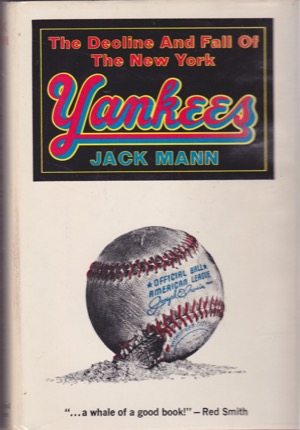
NY, Simon and Schuster, 1st, 1967, Book: Very Good, Dust Jacket: Very Good, Hardcover in a bright, unclipped dust jacket. 256 pages, 16 pages of B&W photos. Over a 45 year span the Yankees were the most magnetic drawing card in American sports. Why did the House That Ruth Built come tumbling down after so many years of triumph? Long inscription on front fly leaf otherwise clean.
Hardcover. Rochester NY, Du Bois Press, 1st, 1944, Book: Very Good, Dust Jacket: None, Hardcover, blue cloth with gilt lettering and rules, 444 pages. Written with numerous extracts from period sources. This is a social and economic history of the settlement of the lands west of the Mohawk River. Well done. Includes notes, appendices & index. A nice copy. Name on front fly leaf, otherwise clean.
Hardcover. NY, Dial Press, 1st, 1976, Book: Very Good, Dust Jacket: Very Good, Hardcover in a bright, unclipped dust jacket. A view of American film-making from the author's viewpoint.
Hardcover. Evanston IL, Northwestern University Press, 1959-1963, Book: Very Good, Dust Jacket: None, Four hardcover volumes: Vol. 1, East Africa November 1889 to December 1890, 432 pages. Vol. 2, East Africa December 1890 to December 1891, 481 pages. Vol. 3, East Africa January 1892 to August 1892, 454 pages. Vol. 4, Nigeria 1894-5 and 1898, 444 pages. Black-and-white illustrations and maps; Bindings vary: Vols. 1, 3 and 4 are matching green cloth with gilt lettering on spine. Vol. 2 is terra-cotta cloth with a black clorh spine. Previous owner'e signature in 1 and #. Otherwise clean and tight set.
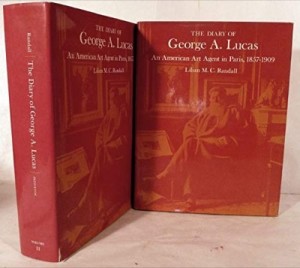
Hardcover. Princeton NJ, Princeton University Press, 1st, 1979, Book: Very Good, Dust Jacket: Very Good, Two volume set. Matching gold cloth boards with titles in gold on spine, in bright dust jackets. Transcribed and with Introduction by Lilian M.C. Randall. B&w illustrations of the sculptures, paintings, drawings and etchings that Lucas dealt with while in Europe. Double-column English text. Provides an extraordinary archive for historians and dealers. Provides a hugely empirical database for prices paid and commissions issued to artists, dealers, and craftsmen. George A. Lucas's acquaintances include Daumier, Cassatt, Whistler and Barye, among many, many others. Volume Two is given over wholly to Lucas's daily diary, which ran for an extraordinary length of time. Volume 1: xv [2], 3-148 pages.; Volume 2: iv [ii], 3-965 pages. DUE TO WEIGHT, DOMESTIC SHIPPING ONLY.
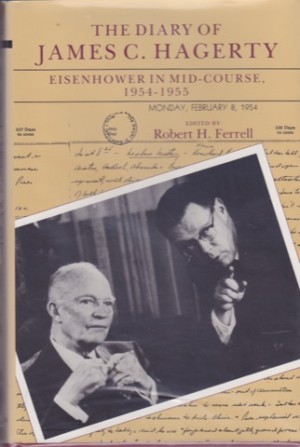
Hardcover. Bloomington, Indiana University Press, 1st, 1983, Book: Very Good, Dust Jacket: Very Good, Hardcover in an dust jacket with mild fading to spine. A valuable record of the first Presidency of the TV age. Hagerty was President Eisenhower's only press secretary. Clean copy.
Hardcover. Oxford UK, Clarendon Press, reprint, 2003, Book: Very Good, Dust Jacket: None, Hardcover in glossy boards, 171 pages. Volume 1 ONLY of a six volume set. Name and date on front fly leaf, otherwise clean, bright copy.
Hardcover. Oxford UK, Clarendon Press, reprint, 2003, Book: Very Good, Dust Jacket: None, Hardcover in glossy boards, 639 pages. Volume 3 ONLY of a six volume set. Clean, bright copy.
Hardcover. Bristol UK, Thoemmes , 1st, 2003, Hardcover set, two volumes complete, black cloth with red and gilt titles on spine, 1116 pages, ribbon bookmarks. No slipcase. In this Dictionary, more than four hundred biographical entries encompass all the Dutch thinkers who exercised a major influence on the intellectual life of the Golden Age, as well as those who developed their ideas and beliefs through interaction with other scholars. Additional entries describe foreign philosophers who lived in the country temporarily and whose work was influenced by their stay. These include John Locke, Rene Descartes and Pierre Bayle. Ther is some pencil marking to the endpapers, mostly in Vol. 1. Otherwise clean, tight copies. PLEASE NOTE: DUE TO WEIGHT, DOMESTIC SHIPPING ONLY.
Hardcover. NY, Alfred A. Knopf, 1st, 1935, Book: Very Good, Dust Jacket: None, Hardcover, maroon cloth with gilt lettering on spine, pages 415-797, plus index. Volume 2 ONLY. No dust jacket. Name on front fly leaf otherwise a clean, bright copy.
Hardcover. NY, Alfred A. Knopf, 1st, 1935, Book: Very Good, Dust Jacket: None, Hardcover, maroon cloth with gilt lettering on spine, 414 pages. Volume 1 ONLY. No dust jacket. Name on front fly leaf otherwise a clean, bright copy.
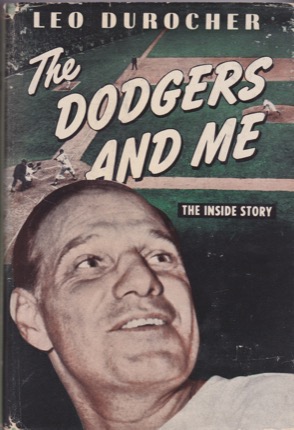
Hardcover. Chicago, Ziff-Davis Publishing , 1st, 1948, Book: Very Good, Dust Jacket: Good, Hardcover in a worn, chipped dust jacket that has the $2.50 flap price. The Brooklyn Dodgers and Leo "Lippy" Durocher were made for each other. Here are the breezy accounts of internal struggles, clubhouse brawls and front-office tempests that marked the Dodgers climb to national fame and the National League Pennant. Has green boards and is in good condition. Has a number of black and white photos: Pete Reiser, Pee Wee Reese, Al Gionfriddo's World Series catch, and Leo arguing with the umpires. Mild soil and rubbing to rear of dj, book is bright and clean.
Hardcover. Baltimore, Johns Hopkins University, 1st, 1978, Book: Very Good, Dust Jacket: Very Good, Hardcover in a bright dust jacket with light edgewear, 460 pages. Translated by Lawrence Lipson. A vivid historical narrative of the US military intervention in Central America. Uncommon. Name on front fly leaf otherwise clean.
Hardcover. Cambridge MA, Harvard University Press, 1st, 1972, Book: Very Good, Dust Jacket: Very Good, Hardcover in a bright, unclipped dust jacket, 246 pages. Preface, Introduction, Chapters on: The United States and the Dominican Republic to 1965: Background to Intervention; The Origins of the 1965 Dominican Crisis: Setting the Stage; The Decision to Intervene; Deploying the Troops; and Explaining the Dominican Intervention. Drawing on nearly 150 personal interviews with individuals in the Dominican Republic and the United States, on rare access to classified U.S. government documents, and on his own first-hand experiences during the crisis, Abraham F. Lowenthal rejects official, liberal, and radical accounts of the intervention. Instead, he explains it as the product of fundamental premises, of decision-making procedures, and of bureaucratic politics. Name on front fly leaf, otherwise clean.
Hardcover. NY, Orion/Crown, 1st, 1989, Book: Very Good, Dust Jacket: Very Good, Hardcover, 272 pages. Recaptures the World War II bombing raid over Tokyo under the command of Lt. Col. "Jimmy" Doolittle and the incredible seek-and-destroy mission that he and other American pilots endured after the bombing.
Softcover. Luminare Press, 1st, 2016, Book: Very Good, Dust Jacket: None, Softcover, pictorial wrappers, 138 pages. This memoir immerses the reader in post-World War II rural Oregon where logging trucks laden with timber rumbled along gravel roads and moonshine was secreted in nearby shadows. Here a man's measure was taken not by his wealth or success but by his toil, and a woman was assessed not by her virtues but by her virtue. Rivers and reputations rose and fell swiftly. Electricity came to this rural area almost to the day the girl and her family arrived at the farm. Lowell and Fall Creek were charged for change. Even though families of pioneers and newcomers together celebrated in 1948 the centennial of the Oregon Territory, the landscape flush with virgin forests and rivers in very short time changed exponentially. Clean copy.
Softcover. Luminare Press, 1st, 2016, Book: Very Good, Dust Jacket: None, Softcover, pictorial wrappers, 138 pages. This memoir immerses the reader in post-World War II rural Oregon where logging trucks laden with timber rumbled along gravel roads and moonshine was secreted in nearby shadows. Here a man's measure was taken not by his wealth or success but by his toil, and a woman was assessed not by her virtues but by her virtue. Rivers and reputations rose and fell swiftly. Electricity came to this rural area almost to the day the girl and her family arrived at the farm. Lowell and Fall Creek were charged for change. Even though families of pioneers and newcomers together celebrated in 1948 the centennial of the Oregon Territory, the landscape flush with virgin forests and rivers in very short time changed exponentially. Clean copy.
Hardcover. Leiden/Boston, Brill, 1st, 2002, Book: Very Good, Dust Jacket: None, Hardcover, decorated cloth, 482 pages. This book explores the dynamics of the commentary and textbook traditions in Aristotelian natural philosophy under the headings of doctrine, method, and scientific and social status. It inquires what the evolution of the Aristotelian commentary tradition can tell us about the character of natural philosophy as a pedagogical tool, as a scientific enterprise, and as a background to modern scientific thought. In a unique attempt to cut old-fashioned historiographic divisions, it brings together scholars of ancient, medieval, Renaissance and seventeenth-century philosophy. The book covers a remarkably broad range of topics: it starts with the first Greek commentators and ends with Leibniz. Small ink stamp on front fly leaf, otherwise clean.
Softcover. Notre Dame IN, Theatre Historical Society, 1st, 1986, Book: Very Good, Dust Jacket: None, Softcover, stapled wrappers, 40 pages. Profusely illustrated in b&w. A visual history of the design and building of the Earle Theatre in Philadelphia. Some of the world's biggest stars performed there in it's heyday. Old price sticker on rear cover, otherwise clean, very good.
Hardcover. Cambridge MA, The MIT Press, 1st, 2016, Book: Very Good, Dust Jacket: Very Good, Hardcover in a bright dust jacket. The daguerreotype, invented in France, came to America in 1839. By 1851, this early photographic method had been improved by American daguerreotypists to such a degree that it was often referred to as "the American process." The daguerreotype-now perhaps mostly associated with stiffly posed portraits of serious-visaged nineteenth-century personages-was an extremely detailed photographic image, produced though a complicated process involving a copper plate, light-sensitive chemicals, and mercury fumes. It was, as Sarah Kate Gillespie shows in this generously illustrated history, something wholly and remarkably new: a product of science and innovative technology that resulted in a visual object. It was a hybrid, with roots in both fine art and science, and it interacted in reciprocally formative ways with fine art, science, and technology. Gillespie maps the evolution of the daguerreotype, as medium and as profession, from its introduction to the ascendancy of the "American process," tracing its relationship to other fields and the professionalization of those fields. She does so by recounting the activities of a series of American daguerreotypists, including fine artists, scientists, and mechanical tinkerers. She describes, for example, experiments undertaken by Samuel F. B. Morse as he made the transition from artist to inventor; how artists made use of the daguerreotype, both borrowing conventions from fine art and establishing new ones for a new medium; the use of the daguerreotype in various sciences, particularly astronomy; and technological innovators who drew on their work in the mechanical arts.
Hardcover. Philadelphia, W.A. Henry Press, 3rd Ed., 1926, Book: Very Good, Dust Jacket: None, Hardcover, pictorial gray cloth stamped in black and white. 330 pages, top edge gilt. frontis., b/w plates, text illustrations appendix, index. A highly regarded social history of Nantucket treats the purchase and settlement of the island, the early proprietors, and various events in Nantucket history, such as Nantucket's role in the Revolution. The balance of the work consists of histories of some thirty founding families. Genealogists should also consult the appendices for a list of Quakers who visited Nantucket between 1664 and 1847. Small embossed stamp on front fly leaf, otherwise a bright, clean copy.
Hardcover. NY, NBM, 1st, 2007, Book: Very Good, Dust Jacket: Very Good, Hardcover, 192 pages. Early b&w comic strips. Mutt and Jeff was the first successful daily comic strip; before it, the funnies were Sunday features. It debuted in 1907, however, as A. Mutt, limning the follies of lanky racetrack gambler Augustus Mutt. Diminutive sidekick Jeff appeared the following year to form a partnership that lasted until the strip's overdue demise in 1983. Mutt and Jeff was the first strip to essay weeks-long story lines, such as a trip to Mexico to join Pancho Villa's revolution. Compared to better-remembered strips of the era, Mutt and Jeff was crudely drawn, yet it captured the nation's fancy. Despite its significance in comics history, Mutt and Jeff is scantly regarded today. By the mid-1920s, Fisher handed creative duties over to ghosts to free up time for the playboy lifestyle that the strip's sizable revenues allowed him. Clean copy.
Hardcover. London, Edward Arnold, 2nd pr., 1905, Book: Fair, Dust Jacket: None, Hardcover, original blue cloth covers worn with faded gilt lettering. Frontis. missing, hinges cracked, B&w photos, folding maps present. An account of the British territories in East Africa, intended as a guide for prospective colonisers, and future developers. Topics discussed include the physical geography, native peoples such as the Swahilis, the Masai, Somalis, and Nandi, vegetations and animals, slavery, the Uganda railway and more. Sir Charles Eliot was a British colonial administrator and commissioner for the Protectorate of British East Africa, now Kenya.
Hardcover. Salem, MA, The Essex Institute, 2nd pr., 1922, Book: Good, Hardcover, 122 pages. Ex-library copy with white tape on spine and small stamp on copyright page, otherwise clean. Blue cloth, gilt title to spine, no dust jacket. The second edition adds additional material and illustrations. Clean, tight copy.
Softcover. Washington D. C., Eastern High School, 1st, 1915, Book: Very Good, Dust Jacket: None, Softcover with heavy gray wrappers stamped in blue and black, 40 pages, stapled. Magazine format. Illustrated with black & white photographs and drawings, local ads. Cover chipped, interior clean, sound.
Hardcover. Berlin/Boston, De Gruyter, 1st, 2016, Book: Very Good, Dust Jacket: None, Hardcover, blue boards, 205 pages. INSCRIBED BY PERLMAN on the front fly leaf. Abraham Heschel believed that the Holocaust was an "Eclipse of Humanity." In the philosophical and historical context in which it occurred, Heschel saw this eclipse as embedded in the phenomenological approach of Heidegger. Focusing on their respective phenomenological methods, attitudes toward being, Heschel's view of Adam and Heidegger's notion of Dasein, this book is an analysis of Heschel's critique of Heidegger and the postmodernism that followers of Heidegger espoused. Clean, bright copy.
Hardcover. NY, St. Martin's Press, 1st, 1986, Book: Very Good, Dust Jacket: Very Good, Hardcover in a dust jacket with light fading to spine, 487 pages. In this book Ryoshin Minami studies the last hundred years of Japan's remarkable economic growth from the Meiji period up to the present day. First, he reveals the factors which account for Japan's successful economic take-off during the Meiji period. Second, he explains why Japan achieved a more rapid rate of economic growth than other developed countries. This forms the major part of the book and will interest those in the developed countries who have felt the full force of Japan's export drive and whose own industries are consequently in decline. Finally, the author evaluates the results of Japan's economic growth and makes predictions for its future. The book makes a comprehensive survey of the Japanese experience in the pre- and post-war periods and points out lessons not only for developed countries but also for developing countries. Name on front fly leaf, otherwise clean.
Hardcover. Chapel Hill NC, University of North Carolina Press, 1st, 2005, Book: Very Good, Dust Jacket: Very Good, Hardcover in a bright, unclipped dust jacket. The personal correspondence between President Dwight D. Eisenhower and Prime Minister Anthony Eden during the time they were simultaneously in office tells the dramatic story of a relationship that began with great promise but ended in division and estrangement. Many of the letters have only recently been declassified, making it possible for the first time to publish this unique historic collection in its entirety. Peter G. Boyle's introduction, annotations, and conclusion provide context for the letters--details about the personalities and careers of Eden and Eisenhower and major issues that influenced the Anglo-American relationship up to 1955, such as relations with the Soviet Union, nuclear concerns, colonialism, the Middle and Far East, economic issues, and intelligence matters. The letters themselves offer an intimate look into the special connection between Britain and the United States through the often eloquent words of their leaders. Clean copy.
Softcover. Charlottesville, University of Virginia Press, 1st pbk, 1991, Book: Very Good, Dust Jacket: None, Softcover, 256 pages. A collection of scholarly essays on Virginia in the 1800s. Clean copy.
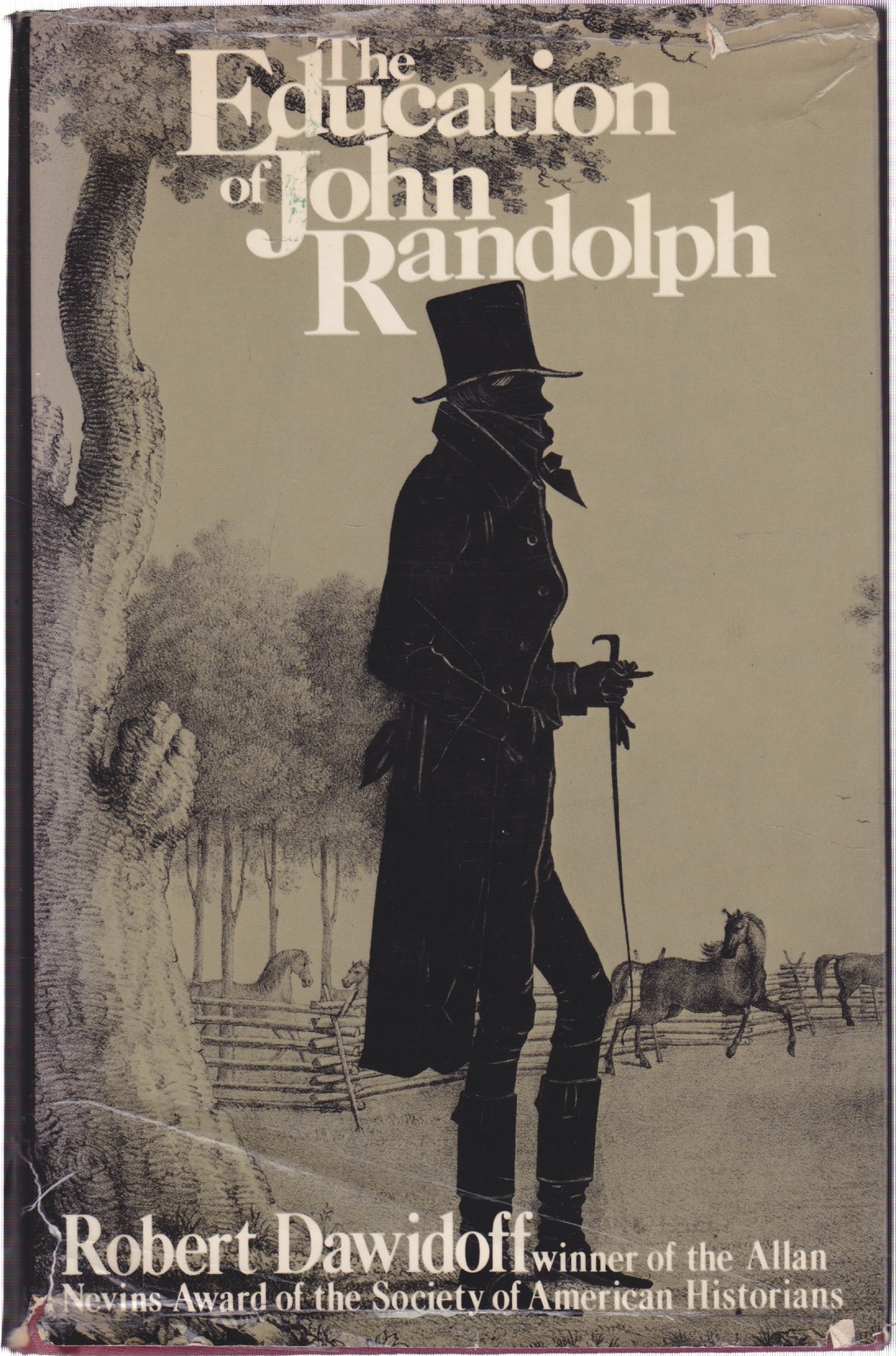
Hardcover. NY, W.W. Norton and Co., 1st, 1979, Book: Very Good, Dust Jacket: Good, Hardcover in a worn, price-clipped dust jacket, 346 pages. John Randolph of Roanoke, the notorious Virginian congressman and senator, was as renowned for his eccentric behavior as for his unusual political positions. Frontispiece portrait. Clean copy.
Hardcover. Charlottesville VA, The University Press of Virginia, 1st thus, 1968, Book: Very Good, Dust Jacket: None, Hardcover, red cloth stamped in red, 139 pages. Facsimile of a Wotton presentation inscription as frontispiece. A facsimile reproduction of the original 1624 edition. Includes an 83 page introduction, with explanatory notes. (Folger Documents of Tudor and Stuart Civilization). Name on front fly leaf, otherwise clean.
Softcover. NY, Cambridge University Press, reprint, 1996, Book: Very Good, Dust Jacket: None, Softcover, 434 pages. Of all the terms with which Americans define themselves as members of society, few are as elusive as "middle class." This book traces the emergence of a recognizable and self-aware "middle class" between the era of the American Revolution and the end of the nineteenth century. The author focuses on the development of the middle class in larger American cities, particularly Philadelphia and New York. He examines the middle class in all its complexity, and in its day-to-day existence--at work, in the home, and in the shops, markets, theaters, and other institutions of the big city. The book places the new language of class---in particular the new term "middle class"--in the context of the concrete, interwoven experiences of specific anonymous Americans who were neither manual workers nor members of urban upper classes. Clean copy.
Softcover. UK, Liverpool University Press, 2nd Ed., 1989, Book: Very Good, Dust Jacket: None, Softcover, green wrappers, 146 pages. This collection makes available in English for the first time the panegyric of Claudius Mamertinus (Panegyrici Latini XI/3), a substantial part of the treatise of John Chrysostom on St Babylas and against Julian (de S. Babyla c. Julianum et gentiles XIV-XIX), and Emphrem Syrus' Hymns Against Julian. Each text covers an important period of the reign of Julian, his rise to power, his stay at Antioch and his ill-fated Persian campaign. Clean, bright copy.
Hardcover. London, Jonathan Cape, 1st UK, 1960, Book: Very Good, Dust Jacket: Very Good, Hardcover in a lightly worn dust jacket, 431 pages. Clean copy.
Hardcover. Boston, Little, Brown and Company, 1st US, 1943, Book: Very Good, Dust Jacket: None, Hardcover, red cloth covers lettered in gold with black letterbox, 322 pages. Contains speeches throughout 1942. This year was a low point of the war, full of setbacks and disappointments across the globe for the British. Throughout the year Churchill's speeches conveyed sober, resolved, and eloquent defiance - with of course an occasional sparkle of Churchillian wit, even in the dark hours of the war. The title of this volume comes from Churchill's 10 November 1942 speech at the Lord Mayor's Day Luncheon in London at a time when fortune finally favored the British with victories in North Africa: "The Germans have received back again that measure of fire and steel which they have so often meted out to others. Now this is not the end. It is not even the beginning of the end. But it is, perhaps, the end of the beginning." Light marking to front endpapers.
Softcover. Middletown CT, Wesleyan University Press, 1st, 1974, Book: Very Good, Dust Jacket: None, Softcover, 225 pages. First published in 1930 and untranslated until now, this is one of the minor classics of French historical literature. The author relates the bizarre beginnings of the Third Republic during the presidency of Adolphe Thiers (1871-1873), when an assembly dominated by monarchists groped uncertainly toward the establishment of a republican government.
Hardcover. Chicago, University of Chicago Press, 1st thus, 2004, Book: Very Good, Dust Jacket: Very Good, Hardcover in a bright, unclipped dust jacket. 87 pages. Foreword, black and white photographs, and colophon. A description of the Allied bombing campaign from the perspective of the German survivors.
Hardcover. NY, Penguin Press, 3rd pr., 2011, Book: Very Good, Dust Jacket: Very Good, Hardcover in a bright, unclipped dust jacket. 564 pages. From the preeminent Hitler biographer, a fascinating and original exploration of how the Third Reich was willing and able to fight to the bitter end of World War II. As Kershaw shows, the structure of Hitler's "charismatic rule" created a powerful negative bond between him and the Nazi leadership- they had no future without him, and so their fates were inextricably tied. Terror also helped the Third Reich maintain its grip on power as the regime began to wage war not only on its ideologically defined enemies but also on the German people themselves. Yet even as each month brought fresh horrors for civilians, popular support for the regime remained linked to a patriotic support of Germany and a terrible fear of the enemy closing in. Based on prodigious new research, Kershaw's The End is a harrowing yet enthralling portrait of the Third Reich in its last desperate gasps. B&w illustrations. Clean copy.
Hardcover. NY, Harper & Row, Revised Ed., 1974, Book: Very Good, Dust Jacket: Very Good, Hardcover in a bright dust jacket, 282 pages. INSCRIBED BY CHAMBERLAIN on the front fly leaf. The Updated Edition of a title first published in the 1960s. Clean copy.
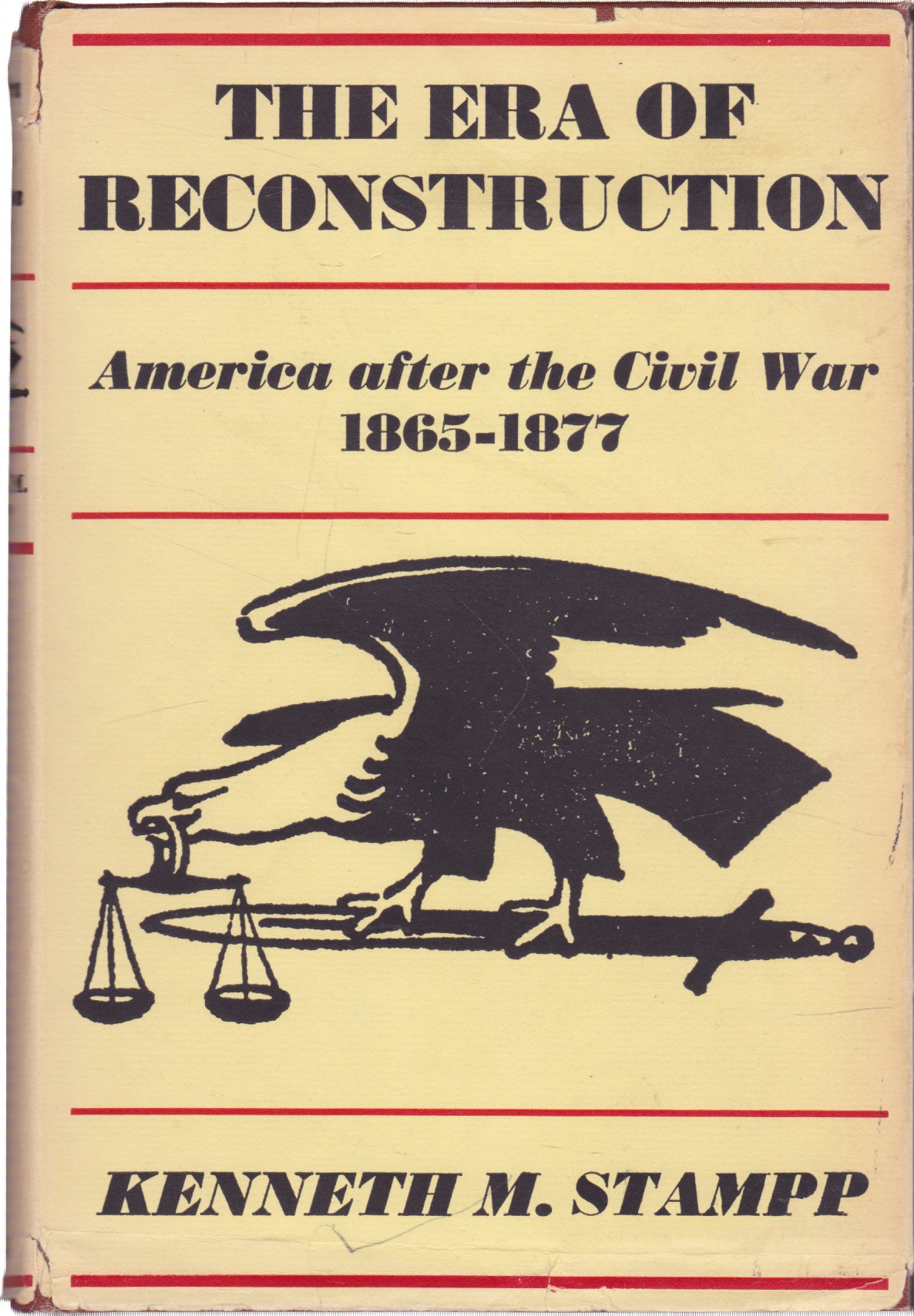
Hardcover. London, Eyre & Spottiswoode, 1st UK, 1965, Book: Very Good, Dust Jacket: Fair, Hardcover in a worn dust jacket with pieces gone, 229 pages plus index. A study of the controversial period in America which followed the Civil War examining the political situation in the South.
Hardcover. Princeton NJ, Princeton University Press, 1st, 1994, Book: Good, Dust Jacket: Good, Hardcover in a dust jacket with minor wear, 278 pages. A re-examination of the roles played by authors, readers, scribes and texts in medieval literature, which describes how consideration of marks on the physical manuscript - elements added by scribes and readers - can shed light on interpretive issues that have puzzled modern readers. Light underlining to 18 pages in first chapter.
Softcover. London, Penguin Books , reprint, 2020, Book: Very Good, Dust Jacket: None, Softcover, 553 pages. The Europeans is richly enthralling, panoramic cultural history of nineteenth-century Europe, told through the intertwined lives of three remarkable people: a great singer, Pauline Viardot, a great writer, Ivan Turgenev, and a great connoisseur, Pauline's husband Louis. Their passionate, ambitious lives were bound up with an astonishing array of writers, composers and painters all trying to make their way through the exciting, prosperous and genuinely pan-European culture that came about as a result of huge economic and technological change. This culture - through trains, telegraphs and printing - allowed artists of all kinds to exchange ideas and make a living, shuttling back and forth across the whole continent from the British Isles to Imperial Russia, as they exploited a new cosmopolitan age. Clean copy.





 "The Development of Central and Western New York: From the Arrival of the White Man to the Eve of the Civil War by: Mau, Clayton")
 "The Devil Finds Workby: Baldwin, James")







 "The Doolittle Raid: America's daring first strike against Japanby: Carroll V. Glines")


![The Dynamics of Aristotelian Natural Philosophy from Antiquity to the Seventeenth Centuryby: Herausgeber: Leijenhorst, C., Herausgeber: L]thy, C., Herausgeber: Thijss](http://www.browsingisarousing.com/images-books/383974.jpg "The Dynamics of Aristotelian Natural Philosophy from Antiquity to the Seventeenth Centuryby: Herausgeber: Leijenhorst, C., Herausgeber: L]thy, C., Herausgeber: Thijss")
 "The EARLE THEATRE, Philadelphia, Penna., Hoffman & Henon, Architects, Opened: March 24, 1924. Theatre Historical Society Annual for 1986by: Irvin R. Glazer")








 "The Economic Development of Japan: A Quantitative Study by: Ryoshin Minami")







![The End: Hamburg 1943by: Nossack, Hans Erich; Andres, Erich [Photographer]; Agee, Joel [Translator]](javascript:largeIMTop('https://www.browsingisarousing.com/shop/images/The-End-Hamburg-1943_by_Nossack-Hans-Erich-Andres-Erich-Photographer-Agee-Joel-Translator372848-395803.jpg','https://www.browsingisarousing.com/shop/images/The-End-Hamburg-1943_by_Nossack-Hans-Erich-Andres-Erich-Photographer-Agee-Joel-Translator372848-395803.jpg',0,'372848',0,'') "The End: Hamburg 1943by: Nossack, Hans Erich; Andres, Erich [Photographer]; Agee, Joel [Translator]")


 "The Ethics of Reading in Manuscript Culture:Glossing the Libro de Buen Amorby: Dagenais, John")