Hardcover. Boston, Little, Brown and Company, 2nd pr., 1950, Book: Very Good, Dust Jacket: None, Hardcover, blue cloth with gilt lettering on spine. Volume IV in The History of United States Naval Operations in World War II. 307 pages, illustrated with maps (one fold-out) and b&w photos. Gilt on spine with light fading, lacks dust jacket, otherwise clean, tight copy.
Hardcover. NY, Rodale Books , 1st, Book: Very Good, Dust Jacket: Very Good, Hardcover in a bright, unclipped dust jacket. Robert Hilburn's storied career as a rock critic has allowed him a behind-the-scenes look at the lives of some of the most iconic figures of our time. He was the only music critic to visit Folsom Prison with Johnny Cash. He met John Lennon during his lost weekend period in Los Angeles and they became friends. Bob Dylan granted him his only interviews during his "born-again" period and the occasion of his 50th birthday. Michael Jackson invited Hilburn to watch cartoons with him in his bedroom. When Springsteen took to playing only old hits, Hilburn scolded him for turning his legendary concerts into oldies revues, and Springsteen changed his set list. In this totally unique account of the symbiotic relationship between critic and musical artist, Hilburn reflects on the ways in which he has changed and been changed by the subjects he's covered; Bono weighs in with an introduction about how Hilburn's criticism influenced and altered his own development as a musician.
Hardcover. NY, Farrar, Straus & Giroux, 1st US, 1966, Book: Good, Dust Jacket: Good, Hardcover in a worn, chipped dust jacket, 192 pages, b&w white illustrations. The history of a small volcanic island, 24 miles in circumference, that was settled by an English soldier and his family in 1816. And what happened in 1961 when it's descendants, cut off from civilization for 150 years, were rescued after a volcanic eruption into the modern world.
Softcover. Chicago, University of Chicago Press, 2nd pr., 2007, Book: Very Good, Dust Jacket: None, Softcover, 246 pages. Between the years 1643 and 1649, Princess Elisabeth of Bohemia (1618-80) and Rene Descartes (1596-1650) exchanged fifty-eight letters--thirty-two from Descartes and twenty-six from Elisabeth. Their correspondence contains the only known extant philosophical writings by Elisabeth, revealing her mastery of metaphysics, analytic geometry, and moral philosophy, as well as her keen interest in natural philosophy. The letters are essential reading for anyone interested in Descartes's philosophy, in particular his account of the human being as a union of mind and body, as well as his ethics. They also provide a unique insight into the character of their authors and the way ideas develop through intellectual collaboration.
Hardcover. London, England, Pickering & Chatto, 1st, 2001, Book: Very Good, Dust Jacket: None, Six volumes, Hardcovers. 1636-1691. Volume 1: 521 pages. Two bumps to front cover board edge. Volume 2: 674 pages. front cover board top right corner bump. Volume 3: 445 pages. Volume 4: 528 pages. Volume 5: 474 pages. Volume 6: 616 pages. Some b/w illustrations. Blue cover boards, gilt title on black with decoration on spines. Previous owner's name and information on flyleaf of volumes 1, 2, and 6. Pages clean and bright. Binding tight. Spines straight. Beautiful set right out of a professor's library. Domestic Shipping Only.
Softcover. NY, Semiotext(e)/MIT, 1st transl., 2008, Book: Very Good, Dust Jacket: None, Softcover, 400 pages. Letters by writer, filmmaker, and cultural revolutionary Guy Debord conjure a vivid picture of the dynamic first years of the Situationist International movement. Debord's letters-published here for the first time in English-provide a fascinating insider's view of just how this seemingly disorganized group drifting around a newly consumerized Paris became one of the most defining cultural movements of the twentieth century. Clean copy.
Hardcover. NY, Harry N. Abrams, 2nd pr., 2014, Book: Very Good, Dust Jacket: Very Good, Hardcover in a bright dust jacket. 320 pages, 9.9x1.2x12.3 inches. Color illustrations throughout. Michael Benson, one of the world's leading authorities on the visual legacy of space exploration and astronomy, tells a riveting story of the discovery of the universe through pictures. Selecting strikingly powerful and intriguing illustrations and maps, many hidden away in the world's great science libraries and virtually unknown today, he chronicles more than three thousand years of humanity's ever-expanding understanding of the size, shape and visual texture of the cosmos from the planets of our Solar System to the Milky Way and to the large-scale structure of the greater universe, with its teeming swarms of galaxies. These illustrations - some are maps, some are diagrams, some are speculative works of representation- are among history's most powerfully compelling works of data visualization, an art that is increasingly necessary in today's data-intensive world. NOTE: DUE TO WEIGHT, DOMESTIC SHIPPING ONLY.
Softcover. Detroit MI, Burroughs Adding Machine Company, 1st, 1910, Book: Very Good, Dust Jacket: None, Gray cardboard covers with brown cloth spine, two-color title label on front. 179 page booklet promoting their new product-an adding machine. Illustrated with photos (several in color) and diagrams and charts. This is the original printing of 1910. Small name on half-title page, otherwise clean, sound.
Softcover. NY, Cambridge University Press, 1st, 2010, Book: Very Good, Dust Jacket: None, Softcover, 216 pages. A collection of pathbreaking essays on Aztec and Maya culture in the sixteenth century. In the title work Inga Clendinnen reconstructs the sequence of experiences through which young Aztec warriors were brought to embrace their duty to their people, to their city, and to the forces that moved the world and the heavens. Subsequent essays explore the survival of Yucatec Maya culture in the face of Spanish conquest and colonisation, the insidious corruption of an austere ideology translated into dangerously novel circumstances, and the multiple paths to the sacred constructed by 'defeated' populations in sixteenth-century Mexico. The collection ends with Clendinnen's transition to the colonial history of her own country: a close and loving reading of the 1841 expedition journal of George Augustus Robinson. Clean copy.
Hardcover. NY, Rizzoli, 1st, 2010, Book: Very Good, Dust Jacket: Very Good, Hardcover, More than a century ago, when Abbot Kinney built his Venice-of-America with its network of canals and fanciful buildings, cultural aspirations were high. Over the years, this aura of fantasy and imaginative possibility endured as integral to the zeitgeist of the place. Today, this spirit of innovation and creativity is richly expressed in the vintage bungalows and cottages that have been embraced and brought back to life by homeowners more in love with place than size. Stalwart survivors of the ebb and flow of the area's fortunes over a century, these small homes channel the creative spirit of the place and provide a welcome counterpoint to oversize houses. Color, landscape, treasured collections, personal narrative, contemporary overlays and additions, art and craft, and inventive design--all combine in various ways to produce domestic environments with unique and deeply personal points of view.
Hardcover. Brooklyn NY, Melville House, 1st, 2013, Book: Very Good, Dust Jacket: Very Good, Hardcover in a bright, unclipped dust jacket. This is the original 30,000 word article Agee wrote for Fortune magazine in 1936 that was never published. Accompanied by 30 Walker Evans photos. Clean copy.
Hardcover. NY, Assouline, 1st, 2004, Book: Very Good, Dust Jacket: Very Good, Hardcover, 240 pages. Celebrates its centennial in 2004 with a global operation in more than 25 countries. With wit, spirit, and luminous images, Orla Healy tells the inspiring story of Coty, both the man and the company..
Hardcover. London, The Folio Society, 1st illust thus, 2010, Book: Very Good, Dust Jacket: None, Hardcover, decorative boards with black slipcase. 445 pages, color frontispiece and 12 color plates by David Hughes. First published in 1938, recounting the life of the Byzantine general Belisarius (AD 500-565), It was not a peaceful time for the Roman empire. Invaders threatened all fronts, but they grew to respect and fear the name of Belisarius, Emperor Justinian's greatest general. With this book Robert Graves again demonstrates his command of a vast historical subject, creating a startling and vivid picture of a decadent era. Forward by Lindsey Davis. Clean copy.
Hardcover. New York, Algonquin Books, 1st, 1990, Book: Very Good, Dust Jacket: Very Good, 183 pages. Hardcover with dust jacket. A very clean, unmarked copy with only minor wear to dust jacket edges. A tight copy.
Hardcover. New York , Thomas Y. Crowell Company, reprint, 1974, Book: Very Good, Dust Jacket: Good, Hardcover, 274 pages. Blue cloth cover, minor wear to corners and edges of spine. Inside is bright and clean, with many b&w illustrations throughout. A nice copy in a lightly worn dust jacket.
Hardcover. Princeton, NJ, Princeton University Press, 1st US, 1982, Book: Very Good, Dust Jacket: Good, Hardcover. 360 pages. Dust jacket with edgewear, sun-fading. Clean, tight copy. The first monograph on English medieval county courts, this book provides a major revision of traditional conceptions of the character of these courts and the organization of English society from the twelfth to the fourteenth century. THe county courts have been considered courts of custom dominated by local knights unskilled in the law. By analyzing county peronnel and their role of the courts, Robert C. Palmer shows that these courts were, on the contrary, clearly professional and controlled by the magnates through their lawyers. Nevertheless, as the author demonstrates by his study of the process of jurisdictional change, the county courts were increasingly relegated to lesser roles by changes meant to assure justice to county litigants, while the king's court became the normal court of original jurisdiction for most important cases.
Softcover. New Haven CT, Yale University Press, reprint, 1977, Book: Very Good, Dust Jacket: None, Softcover, 284 pages. Samuel Decalo presents detailed evidence from Dahomey, Togo, Congo/Brazzaville, and Uganda that African military coups are engineered by coteries of cliques composed of ambitious officers seeking self-advancement. He successfully refutes prevailing theories that military rule has fostered socioeconomic or political development or stability. Clean, tight copy.
Hardcover. London, Henry Colburn, 1st, 1848, Book: Good, Dust Jacket: None, Two volumes. 1/2 leather bindings with gold marbled covers and end papers. Gilt top edges. Volume 1 - 476 pages plus 16 pages of ads. Raised bands on spine. Rubbing to edges. Clean, unmarked text. Volume 2 - 510 pages. Raised bands on spine. Rubbing to edges. Clean, unmarked text.
Hardcover. New York, Funk Wagnalls, 4th pr., 1967, Book: Very Good, Dust Jacket: Fair, Hardcover, 110 pages. Black & white illustrations by Eric Sloane. Dust jacket heavily chipped. Dust jacket is protected by a mylar cover.
Hardcover. Hoboken, John Wiley & Sons, Inc., First Edition, 2006, Book: Very Good, Dust Jacket: Very Good, 272 pages. Hardcover. Black cloth covered boards with red printed titles to spine. Dust jacket in very good condition. Illustrations in bw throughout. Clean & unmarked copy.
Softcover. Austin, University of Texas Press, 1st, 1993, Book: Very Good, Dust Jacket: None, Softcover, yellow wrappers, 287 pages. Light fading to spine. In ancient Mediterranean cultures, diamonds were thought to endow their owners with invincibility. In contemporary United States culture, a foreign-made luxury car is believed to give its owner status and prestige. Where do these beliefs come from In this study of craft production and long-distance trade in traditional, nonindustrial societies, Mary W. Helms explores the power attributed to objects that either are produced by skilled artisans and/or come from 'afar.' She argues that fine artisanship and long-distance trade, both of which are more available to powerful elites than to ordinary people, are means of creating or acquiring tangible objects that embody intangible powers and energies from the cosmological realms of gods, ancestors, or heroes. Clean copy.
Hardcover. Chicago, University of Chicago Press, 1st, 2020, Book: Very Good, Dust Jacket: Very Good, Hardcover in a bright, unclipped dust jacket. In Crap: A History of Cheap Stuff in America, Wendy A. Woloson takes seriously the history of objects that are often cynically-made and easy to dismiss: things not made to last; things we don't really need; things we often don't even really want. Woloson does not mock these ordinary, everyday possessions but seeks to understand them as a way to understand aspects of ourselves, socially, culturally, and economically: Why do we--as individuals and as a culture--possess these things? Where do they come from? Why do we want them? And what is the true cost of owning them? Woloson tells the history of crap from the late eighteenth century up through today, exploring its many categories: gadgets, knickknacks, novelty goods, mass-produced collectibles, giftware, variety store merchandise. As Woloson shows, not all crap is crappy in the same way--bric-a-brac is crappy in a different way from, say, advertising giveaways, which are differently crappy from commemorative plates. Taking on the full brilliant and depressing array of crappy material goods, the book explores the overlooked corners of the American market and mindset, revealing the complexity of our relationship with commodity culture over time.
Hardcover. Middle Village, Jonathan David, 1st, 1978, Book: Very Good, Dust Jacket: Good, Hardcover, 438 pages. Black & white illustrations. Price clipped dust jacket with 2 tape repaired short tears on top edge. Clean, tight copy.
Hardcover. Boston, MA, University of Massachusetts Press, 1st, 2013, Book: Very Good, Dust Jacket: Very Good, 516 pages. Hardcover with dust jacket. A very clean, unmarked copy with only minor wear to dust jacket edges. This volume documents Fenn's prolific career from the 1860s until his death in 1911. Sue Rainey also recounts his adventurous sketching trips in the western United States, Europe, and the Middle East, which enhanced his reputation for depicting far-flung places at a time when the nation was taking a more prominent role on the world stage.
Hardcover. Boston, MA, University of Massachusetts Press, 1st, 2013, Book: Very Good, Dust Jacket: Very Good, 516 pages. Hardcover with dust jacket. A very clean, unmarked copy with only minor wear to dust jacket edges. This volume documents Fenn's prolific career from the 1860s until his death in 1911. Sue Rainey also recounts his adventurous sketching trips in the western United States, Europe, and the Middle East, which enhanced his reputation for depicting far-flung places at a time when the nation was taking a more prominent role on the world stage.
Softcover. Jackson MS, University Press of Mississippi , 1st, 2018, Book: Very Good, Dust Jacket: None, Softcover, 235 pages. Throughout his life, Louis Armstrong tried to explain how singing with a barbershop quartet on the streets of New Orleans was foundational to his musicianship. Until now, there has been no in-depth inquiry into what he meant when he said, "I figure singing and playing is the same," or, "Singing was more into my blood than the trumpet." Creating the Jazz Solo: Louis Armstrong and Barbershop Harmony shows that Armstrong understood exactly the relationship between what he sang and what he played, and that he meant these comments to be taken literally: he was singing through his horn. Clean copy, like new.
Hardcover. Berkeley CA, University of California Press, 1st, 2012, Book: Very Good, Dust Jacket: Very Good, Hardcover, 267 pages, b&w photos. Clean, unmarked copy with only minor wear to dust jacket. This book examines the often-neglected role played by immigrant artists and critics in the circle of Alfred Stieglitz, including Japanese-German author Sadakichi Hartmann, Mexican-born caricaturist Marius de Zayas and English Sri-Lankan curator Ananda Coomaraswamy, as well as better-known U.S.-born painters, including Arthur Dove and Georgia O'Keeffe.
Hardcover. New York, Charles Scribner's Sons, 1st, 1884, Book: Good, Dust Jacket: None, Hardcover, maroon cloth stamped in red and gilt, 320 pages. Frontispiece, b&w plates and illustrations. Folding map. Spine sunned, light wear to extremities, previous owner's name, inscription on inside front cover, otherwise clean.
Softcover. Beverly Hills, CA, Lawrence Bassoff Collection, 1st, 1997, Book: Very Good, Dust Jacket: None, Large softcover, 159 pages, illustrated throughout in color. Light wear to pictorial covers, else a very nice, tight. clean copy. Foreword by Robert Wise. 100 beautiful reproductions of classic crime film posters.
New York, Van Nostrand Reinhold, 1st, 1981, Book: Very Good, Dust Jacket: Very Good, Hardcover in a bright dust jacket, 196 pages. Black & white photography. Reveals the war with Russia, the first war to be extensively recorded by photography. Here are 85 photos and commentary. Many of the photos were taken by two Englishmen, Roger Fenton and William Robertson.
Hardcover. Tokyo, Sophia University, 1st, 1970, Book: Very Good, Dust Jacket: Very Good, 87 pages. INSCRIBED BY GEORGE M. WILSON ON FRONT ENDPAPER. Black boards, cream cloth spine with gilt titles, white dust jacket with illustration. Price-clipped, slight rubbing to dust jacket, pages crisp and unmarked; overall, a very clean, tight copy in great condition.
Hardcover. Boston, Little Brown , 1st, 1966, Book: Very Good, Dust Jacket: Good, Hardcover, 319 pages, b&w photos. In a bright, unclipped dust jacket with a couple closed tears, mild soil.
Hardcover. New York, Bramhall House, 2nd Printing, 1958, Book: Good, Dust Jacket: Fair, Hardcover. Illustrations throughout, with a treatise on The Balista and Catapult of the Ancients and an appendix on The Catapult, Balista and the Turkish Bow. Dust jacket soiled and worn, foxing on top edge, otherwise, very clean and tight.
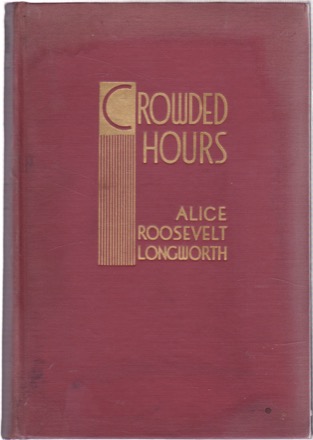
Hardcover. NY, Charles Scribner's Sons, 1st, 1933, Book: Good, Dust Jacket: None, Hardcover, red cloth with cover and spine lettered in gilt, 16 pages of b&w plates. Popular memoirs of Alice Roosevelt Longworth (1884-1980), eldest child of President Theodore Roosevelt and Alice Hathaway Lee Roosevelt. Rubbing and fading to boards and spine. Internally clean, Sound copy.
Hardcover. Chicago, Poole Brothers, 1st, 1894, Book: Good, Dust Jacket: None, 125 pages. Hardcover. Title and decoration in silver on cloth cover - darkening to edges. Illustrated with Sepia photographs. All edges gilt. Front hinge tender. Clean, unmarked copy.
Hardcover. NY, Pegasus, 1st, 2012, Book: Very Good, Dust Jacket: Very Good, Hardcover in a bright, unclipped dust jacket, 338 pages, b&w illustrations. A remarkable literary hybrid--part biography, part detective story--about the enduring figure of Robinson Crusoe. January 1719. A man sits at a table, writing. Nearly sixty,Daniel Defoe is troubled with gout and mired in political controversy and legal threats. But for the moment he is preoccupied by a younger man on a barren shore--Robinson Crusoe. Several miles south, another old man, Robert Knox, sits bent over a heavy volume--published nearly forty years before.Knox's Historical Relation was a best seller when it was published in 1681, just a year after he escaped from Ceylon and returned to England. Where did Crusoe come from? And what is the secret of his endurance? Crusoe explores the intertwined lives of two real men, Daniel Defoe and Robert Knox, and the character and book that emerged from their peculiar conjunction. It is the biography of a book and its hero: the story of Defoe, the man who wrote Robinson Crusoe, and of Robert Knox, the man who was Crusoe. Clean copy.
Hardcover. Cambridge MA, Harvard University Press , 1st, 2017, Book: Very Good, Dust Jacket: Very Good, Hardcover in a bright, unclipped dust jacket. 586 pages, b&w illustrations. Cuba's Revolutionary World examines in forensic detail how the turmoil that rocked a small Caribbean nation in the 1950s became one of the twentieth century's most transformative events. Initially, Castro's revolution augured well for democratic reform movements gaining traction in Latin America. But what had begun promisingly veered off course as Castro took a heavy hand in efforts to centralize Cuba's economy and stamp out private enterprise. Embracing the Soviet Union as an ally, Castro and his lieutenant Che Guevara sought to export the socialist revolution abroad through armed insurrection. Castro's provocations inspired intense opposition. Cuban anticommunists who had fled to Miami found a patron in the CIA, which actively supported their efforts to topple Castro's regime. The unrest fomented by Cuban-trained leftist guerrillas lent support to Latin America's military castes, who promised to restore stability. Brazil was the first to succumb to a coup in 1964; a decade later, military juntas governed most Latin American states. Thus did a revolution that had seemed to signal the death knell of dictatorship in Latin America bring about its tragic opposite. Clean copy.
Hardcover. NY, Street & Smith, 1st, 1898, Book: Good, Dust Jacket: None, Hardcover. Book is divided into 4 sections: Cuba, Porto Rico, The Philippines, & Hawaii. Each with a fold-out color map. 178, 171, 174, & 178 pages respectively. All maps present and in very good condition. Previous owner's inscription on front fly leaf. The pale green covers suffer from rubbing and abrasions causing discoloration, fading. Internally very good.
Hardcover. Washington, D. C., Smithsonian, 1st, 1998, Book: Very Good, Dust Jacket: Very Good, Hardcover, 58 pages. Illustrated with full color photographs. Clean, bright copy.
Softcover. US, Prestel, 1st, 2009, Book: Very Good, Dust Jacket: None, Softcover, 424 pages, color and b&w illustrations. Like new in publisher's shrink-wrap. No dust jacket, as issued. From the exhibition produced by the Montreal Museum of Fine Arts in partnership with the Museo Nacional de Belias Artes and the Fototeca de Cuba in Havana. A comprehensive history of Cuban art and design.
Hardcover. New York, Charles Scribner's Sons, 1st, 1898, Book: Very Good, Dust Jacket: None, Hardcover, tan cloth covers stamped in blue and red, 360 pages. 116 b&w photos throughout, color maps in rear. In 1898 America intervened in the Cuban War of Independence, leading to conflict with Spain. This is a detailed account of this campaign, together with American military sea and land operations on the island of Puerto Rico during the Spanish American War. Cloth spine darkened otherwise clean, tight copy.
Softcover. Jefferson NC, McFarland & Company, 1st, 2015, Book: Very Good, Dust Jacket: None, Softcover, 222 pages. The changes Cuba experienced following the collapse of the Soviet Union compelled Cuban filmmakers to rethink the values developed after the 1959 Castro revolution. Long-forgotten genres re-emerged, established auteurs incorporated new aesthetics into their films and an influx of foreign capital led to the repackaging of revolutionary ideology into more visually attractive narratives. Films such as Alice in Wondertown (1991), Strawberry and Chocolate (1993) and Juan of the Dead (2011) stirred controversy, criticized revolutionary discourse and helped establish new models that allowed post-Castro cinema to find global audiences on an unprecedented scale. This book offers a detailed analysis of key post-Cold War Cuban films. Recurrent sociopolitical tropes are examined to reveal how Cuban cinema reflects the turbulent changes in the island.
Softcover. Durham NC, Duke University Press, reprint, 1995, Book: Very Good, Dust Jacket: None, Softcover, 312 pages plus index. Though written over fifty years ago, Cuban Counterpoint is recognized as one of the most important books of Latin American and Caribbean intellectual history. Treating tobacco and sugar both as agricultural commodities and as social characters in a historical process, he examines changes in their roles as the result of transculturation. Clean copy. Spine faded.
Hardcover. Albany NY, New York Agricultural Society, 1st, 1834, Book: Very Good, Dust Jacket: None, 192 pages, the first 12 issues of this early farming periodical, each 16 pages. Issues start with March 1834 and continue through February 1835. Bound in linen covered boards with a calf spine. Nice condition, minor foxing.
Hardcover. New York, Zone Books, 1st, 1996, Book: Very Good, Dust Jacket: Very Good, 565 pages. Hardcover. B/w illustrations throughout. Dust jacket unclipped, excellent, in protective brodart. Boards bound in black cloth, gilt title on spine. Binding tight. Some light pencil underlining throughout. Boards have a touch of rubbing, but in very good shape. A little light foxing to edges (shelfwear). A stunning, innovative blend of microsociology, cultural history, and philosophical reflection that will fascinate anyone concerned with problems of authenticity, identity, and originality.
Softcover. Durham NC, Duke University Press, 1st, 1993, Book: Very Good, Dust Jacket: None, Softcover, 672 pages. Pointing to a glaring blind spot in the basic premises of the study of American culture, leading critics and theorists in cultural studies, history, anthropology, and literature reveal the "denial of empire" at the heart of American Studies. Challenging traditional definitions and periodizations of imperialism, this volume shows how international relations reciprocally shape a dominant imperial culture at home and how imperial relations are enacted and contested within the United States.Drawing on a broad range of interpretive practices, these essays range across American history, from European representations of the New World to the mass media spectacle of the Persian Gulf War. The volume breaks down the boundary between the study of foreign relations and American culture to examine imperialism as an internal process of cultural appropriation and as an external struggle over international power. Clean copy.
Hardcover. New York, Covici-Friede, 2nd pr., 1936, Book: Very Good, Dust Jacket: Very Good, Hardcover, 269 pages. Previous owners name and the number "10" on front endpaper. Top edge stained black. Price clipped dust jacket with light chipping along edges. Clean, tight copy.
Hardcover. Oxford, Clarendon Press, 1st, 1912, Book: Very Good, Dust Jacket: None, 319 pages, illustrated with 2 portrait plates and a diagram. Gilt ruled brick-red cloth with gilt lettering on spine. Edited by Atkinson. Bright, tight copy.


 "Corporal Glass's Island: The Story of Tristan Da Cunha by: Hosegood, Nancy")

 "Correspondence of Robert Boyle, The (Six volumes, complete set)by: Hunter, Michael (Editor), Antonio Clericuzio (Editor), Lawrence M. Principe (Editor)")





 "Cotton Tenants: Three Familiesby: Agee James; Summers John Editor; Evans Walker Photographer; Haslett Adam Introduction;")


 "Country Furnitureby: Watson, Aldren A.")
 "County Courts of Medieval England, 1150-1350, Theby: Palmer, Robert C.")


 "Cowboy Upby: Introduction: Johnson, Dirk, Photographer: Frank, Arthur")
 "Cracker Barrel, Theby: Sloane, Eric")
 "Cradle of Violence - How Boston's Waterfront Mobs Ignited the American Revolutionby: Bourne, Russell")


 "Crawford's Encyclopedia of Comic Booksby: Crawford, Hubert H.")


 "Creating the Jazz Solo: Louis Armstrong and Barbershop Harmony by: Vic Hobson")
 "Creative Composites: Modernism, Race, and the Stieglitz Circle (The Phillips Book Prize Series)by: Kroiz, Lauren")


 "Crimea - The War With Russia from Contemporary Photographs 1854-56by: James, Lawrence")

 "Cristianis, The - The Story of the World's Most Colorful Circus Familyby: Hubler, Richard")
 "Crossbow, The: Mediaeval and Modern, Military and Sporting, It's Construction, History & Managementby: Payne-Gallwey, Sir Ralph")


 "Cuba: Art and History from 1868 to Todayby: Bondil, Nathalie")



 "Cultivator, The: A Monthly Publication devoted to Agricultureby: New York State Agricultural Society")
 "Culture of the Copy, The: Striking Likenesses, Unreasonable Facsimilesby: Schwartz, Hillel")


