Hardcover. NY, Sol Lewis & Liveright, 1st, 1975, Book: Very Good, Dust Jacket: None, Hardcover, blue cloth boards and spine with silver letters over a red background on spine. 288 pages, b&w illustrations. The author has provided a new interpretation of General Custer's tenure in Texas following the Civil War where he comes to life as a wise and successful military leader during Reconstruction. This is the first work that focuses entirely on Custer's tenure in the Lone Star State the first to detail his successful stay in Austin. No dust jacket.
Hardcover. Philadelphia, J.B. Lippincott, 2nd Ed., 1865, Book: Very Good, Dust Jacket: None, Hardcover, dark green pebbled cloth with gilt lettering on spine, 4" x 6 1/4", 303 pages including index. A detailed instructional guide for the Civil War era soldier. Copyright page states 1964, title page says 1865. Probably a second edition. Still scarce in this nice condition. A few pages with dog ears, previous owner's pencil signature on front fly leaf. Otherwise clean, tight copy.
Hardcover. NY, Bounty Books , 1975, Book: Very Good, Dust Jacket: Very Good, Hardcover in a bright dust jacket. A study of censorship in the cinema. Many illustrations, a few in color. 112 pages. Small ink note on half-title page, otherwise clean.
Hardcover. Vista CA, Ibis Publishing, 1st, 1997, Book: Very Good, Dust Jacket: Very Good, Hardcover in a bright dust jacket, 315 pages. As Financial Advisor to China, Arthur N. Young had an intimate insight as an on-the-spot observer of events during the critical 18 years leading to the fall of the Nationalists and the Communist takeover. Along with Generalissimo Chiang Kai-shek, Dr. Young worked closely with the highest-ranking officials of the National Government in carrying out monetary and fiscal reforms prior to World War II, and stayed through the war to aid with problems of war finance, including procurement of American aid. As the Pacific Rim gains increasing international prominence, this book will prove to be of particular importance to students, scholars, business and political leaders with an interest in Asian affairs. Clean copy.
Softcover. Ausyin TX, University of Texas Press, 1st, 1997, Book: Very Good, Dust Jacket: None, Softcover, 282 pages, b&w illustrations. The simple question "How did the Maya come up with a calendar that had only 260 days?" led Vincent Malmstrom to discover an unexpected "hearth" of Mesoamerican culture. In this boldly revisionist book, he sets forth his challenging, new view of the origin and diffusion of Mesoamerican calendrical systems--the intellectual achievement that gave rise to Mesoamerican civilization and culture. Malmstrom posits that the 260-day calendar marked the interval between passages of the sun at its zenith over Izapa, an ancient ceremonial center in the Soconusco region of Mexico's Pacific coastal plain. He goes on to show how the calendar developed by the Zoque people of the region in the fourteenth century B.C. gradually diffused through Mesoamerica into the so-called "Olmec metropolitan area" of the Gulf coast and beyond to the Maya in the east and to the plateau of Mexico in the west. Clean copy.
Hardcover. Vilnius, Baltos Lankos, 1st, 1995, Book: Very Good, Dust Jacket: Very Good, 69 duotone plates, images taken by the Lithuanian photographer Jozef Chechowicz (1819-1888). Mostly landscapes of the city and it's buildings, some with people. Beautifully produced volume, limited to 2000 copies. Light edgewear to dust jacket.
Hardcover. NY, Oxford University Press, 1st, 1993, Book: Very Good, Dust Jacket: Very Good, Hardcover in a bright dust jacket, 365 pages. A fascinating and poignant exploration of wartime America and of one generation's odyssey from childhood to middle age. The author views the experiences of ordinary children through the lens of developmental psychology and argues that WW II left an indelible imprint on the dreams and nightmares of an American generation, not only in childhood, but in adulthood as well. Clean copy.
Hardcover. Seattle, University of Washington Press, 1st, 1966, Book: Very Good, Dust Jacket: Good, Hardcover, black cloth stamped in gilt, 204 pages. Dust jacket with partial fading, edgewear. Clean copy. The author's last work, a study of the Dahomean Kingdom, it's history and the part gold, colonialism and the slave trade played in it's fortunes. Scarce title.
Hardcover. New York, Harry Abrams, 1st, 1992, Book: Very Good, Dust Jacket: Very Good, 208 pages. Hardcover with dust jacket. Clean, tight copy. Illustrated heavily by author. To create this latest gem, Poortvliet found inspiration in the rich legacy of Dutch landscape and genre painting traditions and in his own Dutch heritage as well. He became intrigued by a document dating from the year 1566 that revealed the existence of an armoire owned by his distant ancestor, Jacob Jansz Poortvliet. That armoire led Rien Poortvliet to come upon something valuable indeed - a treasure trove of insights into the world of his ancestor. Characteristically evocative, the words and images in Daily Life in Holland are rich in detail and delicate in coloration, and perhaps the most beautiful of any of Poortvliet's works to date. In this fascinating saga, he recreates the lives of his forebears as they toiled and celebrated their way through daily existence. He does not conjure up a romantic vision of the past - the Dutch countryside was not all tulips and windmills! There were adversity and hard work, and we learn that 1566 was an extraordinary year in Holland, marked by famine and plague, great freezes, floods and droughts, comets and earthquakes, and an invasion by the Spanish as well.
Softcover. London, Phoenix Press, reprint, 2002, Book: Very Good, Dust Jacket: None, Softcover, 500 pages. The youngest member ever of the esteemed Academie Francaise--and winner of the Legion of Honor--produces a towering, erudite study of the humble men and women who were Christ's very first followers. Historically rich, it captures everything from the occupations, families, and homes to the flowers and birds native to the land. ".wealth of information.about customs, language, habits, clothes, food and all the other features.will make the reading of the New Testament far more real and vivid."--The Times. Clean copy.
Softcover. Brownington VT, Orleans County Historical Society, 1st, 1983, Book: Very Good, Dust Jacket: None, Softcover, 122 pages. Previous owner's name, embossed stamp on title pg. A charming, nostalgic portrait of Vermont through the eyes of Daisy Dopp, a beloved figure in the state's history, this book is a collection of anecdotes, illustrations, and historical details that capture the essence of Vermont's rural life and traditions. B&w drawings by Peter Schumann.
Softcover. Durham NC, Duke University Press, 1st, 2014, Book: Very Good, Dust Jacket: None, Softcover, 416 pages. Open from 1942 until 1945, the Hollywood Canteen was the most famous of the patriotic home front nightclubs where civilian hostesses jitterbugged with enlisted men of the Allied Nations. Since the opening night, when the crowds were so thick that Bette Davis had to enter through the bathroom window to give her welcome speech, the storied dance floor where movie stars danced with soldiers has been the subject of much U.S. nostalgia about the 'Greatest Generation.' Drawing from oral histories with civilian volunteers and military guests who danced at the wartime nightclub, Sherrie Tucker explores how jitterbugging swing culture has come to represent the war in U.S. national memory. Yet her interviewees' varied experiences and recollections belie the possibility of any singular historical narrative. Some recall racism, sexism, and inequality on the nightclub's dance floor and in Los Angeles neighborhoods, dynamics at odds with the U.S. democratic, egalitarian ideals associated with the Hollywood Canteen and the 'Good War' in popular culture narratives. Clean copy in publisher's shrinkwrap.
Softcover. Durham NC, Duke University Press, 1st, 2014, Book: Very Good, Dust Jacket: None, Softcover, 416 pages. Open from 1942 until 1945, the Hollywood Canteen was the most famous of the patriotic home front nightclubs where civilian hostesses jitterbugged with enlisted men of the Allied Nations. Since the opening night, when the crowds were so thick that Bette Davis had to enter through the bathroom window to give her welcome speech, the storied dance floor where movie stars danced with soldiers has been the subject of much U.S. nostalgia about the 'Greatest Generation.' Drawing from oral histories with civilian volunteers and military guests who danced at the wartime nightclub, Sherrie Tucker explores how jitterbugging swing culture has come to represent the war in U.S. national memory. Yet her interviewees' varied experiences and recollections belie the possibility of any singular historical narrative. Some recall racism, sexism, and inequality on the nightclub's dance floor and in Los Angeles neighborhoods, dynamics at odds with the U.S. democratic, egalitarian ideals associated with the Hollywood Canteen and the 'Good War' in popular culture narratives. Clean copy in publisher's shrinkwrap.
Softcover. San Francisco, Chronicle Books, 1st, 1993, Book: Very Good, Dust Jacket: None, Softcover, 144 pages. An illustrated history of the fabulous pulp magazines from 1896 to 1953. After tracing the birth of the pulps back to the 1882 launching of Golden Argosy magazine, printed on pulpwood pages, Server organizes his unwieldy subject into categories of pulps: adventure, romance and sex, horror and fantasy, private eye, weird menace, science fiction. Each receives a lively capsule history that covers trends, reader (and sometimes, as in the case of the ``Spicys,'' government) response, and writers' bios--which, though sketchy (Hammett's Hollywood experience gets one sentence), resurrect a number of relatively obscure but seminal and fascinating figures, like Conan- creator Robert E. Howard, who shot himself dead at age 30 on the day his mother died, and Frederick Faust (a.k.a. Max Brand), who sometimes wrote around the clock, piling up two or three million words a year. Server attributes the pulps' demise to, among other factors, the advent of TV, paperbacks, and comic books, and he winds up with a note on pulp-collecting. For all of the author's savvy, though, it's above all the eye- popping illustrations (100 color, 57 b&w) that will have readers beaming. Magazine covers (some lurid, some of eerie beauty), sample pages of text and ads (``Raise Giant Frogs'')--the pulps come alive once again here, in all their eccentric glory.
Hardcover. Auburn, Miller, Orton & Mulligan, 1st, 1854, Book: Good, Dust Jacket: None, 390 pages. Noted as "Fifth Thousand" at top of title page. Previous owners name on front endpaper. Brown leather covers with gilt title on faded spine. Rubbing to cover corners. Light foxing to some pages. Copy tight and unmarked.
Hardcover. London, Arthur Baker, 1st, 1967, Book: Very Good, Dust Jacket: Good, Hardcover in a dust jacket with partial fading, 449 pages, b&w illustrations. The definitive biography of the larger-than-life figure of the French Revolution who was found guilty of loyalist inclinations and executed at the guillotine. Name on front fly leaf otherwise clean.
Hardcover. NY, Time Life, reprint, 1982, Book: Very Good, Dust Jacket: None, 288 pages. Hardcover with no dust jacket. Dark blue leather bound with gilt titles to front cover and spine. Embossed decoration on front cover. Gilt text block edges, red ribbon marker. Light scuffing to fore edge gilt. Otherwise, clean, tight copy. A History of the Andrews Railroad Raid into Georgia in 1862, Embracing a Full and Accurate Account of the Secret Journey to the Heart of the Confederacy, the Capture of a Railway Train in a Confederate Camp, the Terrible Chase that Followed, and the Subsequent Fortunes of the Leader and His Party. Reprint of the 1877 edition.
Hardcover. Atglen PA, Schiffer Fashion Press, 1st, 2017, Book: Very Good, Dust Jacket: Very Good, Hardcover in a bright dust jacket. This nostalgic look at children's costume, from 1860 to 1920, reveals diverse cultural influences on its manufacture and design. More than 300 historic photographs, fashion plates, and selections from vintage catalogs and magazines, plus 115 color images, show examples of costume and accessories. See infants in period dress plus school-aged and teen fads and trends. Learn about the history of clothing use and development, fabric types, conservation and storage of textiles, and artistic inspiration, all arranged by decade. All types of clothing are represented, including christening gowns; boys' breeches, knickerbockers, and sack suits; swimwear and underwear; bloomers and blouses; fur, feather boas, and frocks; sailor suits and uniforms; collars and belts; capes and hoods; lingerie and dresses; sweaters and cardigans; overalls; and many more. Whether you are interested in clothing children wore in 1920 or to church in the Victorian era, this reference is a fun and evocative collection. Clean copy.
Hardcover. Chicago, University of Chicago, 1st, 1987, Book: Very Good, Dust Jacket: Very Good, Hardcover in a bright dust jacket, 700 pages, b&w illustrations. With insight and wit, Robert J. Richards focuses on the development of evolutionary theories of mind and behavior from their first distinct appearance in the eighteenth century to their controversial state today. Particularly important in the nineteenth century were Charles Darwin's ideas about instinct, reason, and morality, which Richards considers against the background of Darwin's personality, training, scientific and cultural concerns, and intellectual community. Many critics have argued that the Darwinian revolution stripped nature of moral purpose and ethically neutered the human animal. Richards contends, however, that Darwin, Herbert Spencer, and their disciples attempted to reanimate moral life, believing that the evolutionary process gave heart to unselfish, altruistic behavior. Name on front fly leaf, otherwise clean.
Hardcover. Munchen GR%, C. Bertelsmann, 1st, 1995, Book: Very Good, Dust Jacket: Very Good, Hardcover, 255 pages, profusely illustrated with b&w photographs. GERMAN TEXT.
Hardcover. Berlin GR, Nicolai Publishing, 1st, 1997, Book: Very Good, Dust Jacket: Very Good, Hardcover in a bright dust jacket. GERMAN TEXT. The history of Berlin's grand hotel. The Adlon opened on October 23, 1907, with the Kaiser, his wife, and many other notables in attendance. It quickly became the social center of Berlin. As the rooms in the Stadtschloss were cold and drafty, the Kaiser paid an annual retainer to keep suites available for his guests.[2] Likewise the Foreign Office used the Adlon for accommodation during state visits, with guests including Tsar Nicholas II of Russia and Maharaja Bhupinder Singh of Patiala. Notable guests of the early years included industrialists such as Thomas Edison, Henry Ford, and John D. Rockefeller, as well as politicians like Walter Rathenau, Gustav Stresemann and the French prime minister Aristide Briand. Many wealthy Berliners lived for extended periods of time in the hotel, while its ballrooms hosted official government functions and society events. Many photos. Clean copy.
Hardcover. Rome, Institut Suisse De Rome, 1st Edition, 1976, Book: Good, Dust Jacket: Good, 159 pages followed by 46 plates in black & white. Hardcover limited edition to 800 copies in German Text. White cloth boards with brick titles to spine. Previous owner's name to front flyleaf. Spotting, foxing to preliminary pages & edges. Dust jacket with light foxing, now protected with plastic cover. Plates detail fresco cycle of the Oratorio di San Giovanni Decollato in Rome commissioned by the Florentine confraternity of the Misericordia, related drawings & sculptures. Clean, unmarked copy.
Hardcover. Nevada City CA, Carl Mautz Publishung, 1st, 1999, Book: Very Good, Dust Jacket: Very Good, Oblong hardcover. 111 pages. Researched and edited by Susan Herzig and Paul Hertzman. Essay by Peter Palmquist. Includes 60 illustrations with 47 color and duotone plates.
Hardcover. London ; Boston, Faber & Faber, 1st, 1979, Book: Very Good, Dust Jacket: Very Good, Hardcover, 256 pages, b&w illustrations. Light shelf-wear and rubbing to dust jacket. Previous owner's blind stamp on front end paper, else a clean, tight copy.
Hardcover. NY, Harper and Row, 1st, 1988, Book: Very Good, Dust Jacket: Very Good, Hardcover in a bright, unclipped dust jacket, 244 pages. The author spent 6 weeks with a courageous and devoted group of black reporters from the Johannesburg Star. This book focuses on the dilemma of these men and women caught between the militant black community, the police who harass them mercilessly, and their white editors who, fearful of the truth and wary of government disapproval, sometimes refuse to print the stories the reporters risked their lives to get. Clean copy.
Hardcover. Cleveland, OH, World Publishing, 1st, 1967, Book: Very Good, Dust Jacket: Good, 143 pages. Hardcover with clipped-dust jacket. SIGNED BY ILLUSTRATOR, WENDY WATSON, ON TITLE PAGE. Fading to dust jacket spine, light rubbing to edges. Tight copy.
Softcover. Bennington VT, Bennington Historical Museum and Art Gallery, 1st, 1945, Book: Very Good, Dust Jacket: None, Softcover, cream color card wrappers, 67 pages, frontispiece of the author. "From several points of view, I think the strange story of David Redding, the mystery surrounding his trials and condemnation, is as interesting as any in our history. From my study I can look out upon the place where stood the gallows upon which David Redding was executed. These pages contain the result of many years' study of this man's tragic story." - from the Foreword. Clean, bright copy.
Hardcover. NY, G. P. Putnam's Sons, 1st, 1961, Book: Very Good, Dust Jacket: Good, Hardcover. 371 pages. Grey cloth with gilt decoration & gilt titles to spine. Previous owner's pen marks in small writing to back top title page, table of contents & bibliography. Signature to front endpaper. Black & white illustrations throughout. Dust jacket with toning & edgewear, small chips, now protected with a plastic cover. Light marginal foxing to top edge & front fly leaf. Otherwise, clean & unmarked.
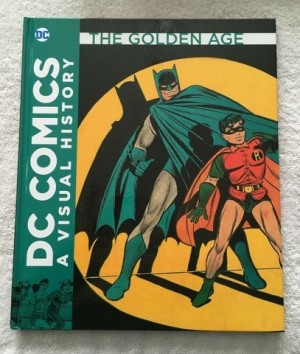
Hardcover. NY, DK Publishing, 1st, 2017, Book: Very Good, Hardcover, glossy pictorial boards, 72 pages. Embark on an amazing, visually dazzling adventure across the Golden Age of DC Comics history! The Golden Age heralded the birth of the Super Hero, and DC Comics paved the way. From the big bang debut of Superman in 1938 to the sensational arrival of the Amazon Princess, Wonder Woman in 1942, the face of comics books was to change forever. Profusely illustrated in color. Clean, bright copy.
Hardcover. New York, DC Comics, 1st, 2010, Book: Very Good, Hardcover, 352 pages, a visual history of the DC comics line from the 30s to the present, color illustrations throughout. No dj issued. In a bright, very good slipcase.
Hardcover. University of Notre Dame Press, 1st, 1995, Book: Very Good, Dust Jacket: None, Hardcover, maroon cloth stamped in gilt and silver, 271 pages. This volume is the result of an international conference held at the University of Notre Dame in 1991 in which leading scholars, classicists, medievalists, theologians, philologists, rhetoricians, literary critics, and philosophers-gathered to focus on one of the most remarkable and influential books of late antiquity, Augustine's De doctrina christiana. Contributors to this volume place the historical setting of De doctrina christiana within the context of contemporary scholarship and explore in detail its theological meaning and impact on western culture and Christian education. The essays cover the entire field of current Augustinian studies starting with the historic setting of late antiquity in which De doctrina christiana was written. They then examine the work itself, its literary structure and interpretive and theological significance, how it was received by later patristic writers, and how it has been used as an authoritative source in contemporary times. An extensive bibliography facilitates further study.
Hardcover. Clark NJ, The Lawbook Exchange,, 2005, Hardcover, blue cloth stamped in green with gilt lettering, 752 pages. No dust jacket. Reprint of the standard critical Latin edition of Grotius's magnum opus of 1625, which established the framework of modern international law. Grotius describes the situations in which war is a valid tool of law enforcement and outlines the principles of armed combat. Though based on Christian natural law, Grotius advanced the novel argument that his system would still be valid if it lacked a divine basis. In this regard he pointed to the future by moving international law in a secular direction. A work of painstaking philological research, this edition is based on the final version edited by the author, which issued posthumously in 1646. Name on front fly leaf, otherwise clean.
Hardcover. Buffalo NY, William S. Hein, reprint, 1995, Book: Very Good, Dust Jacket: None, Hardcover, tan buckram with black spine lettering. This is a reprint of the first English translation from the Latin, originally published in 1925 by The Clarendon Press. 946 pages. Name on front fly leaf, otherwise clean. PLEASE NOTE: DUE TO WEIGHT DOMESTIC SHIPPING ONLY.
Softcover. Milano, Franco Angeli, 1st, 2004, Book: Very Good, Dust Jacket: None, Softcover, 400 pages. Introductory texts in English, main text in Italian. Girolamo Cardano (1501-76) was one of the most original thinkers of his day, a polymath who applied his mind to philosophy, medicine, mathematics, mechanics and astrology and whose intellectual career led him to teach in Milan and Bologna. Today, Cardano is well known for his achievements in algebra. In his 1545 book Ars Magna he made the first systematic use of negative numbers in Europe, published (with attribution) the solutions of other mathematicians for cubic and quartic equations, and acknowledged the existence of imaginary numbers.
Hardcover. Amsterdam, Schetern & Giltay, 1st, 1915, Book: Very Good, Dust Jacket: None, Hardcover, color illustrated boards, 190 pages. A collection of b&w (a few 2-color) political cartoons preceding WW I. Dutch text. Scarce.
Softcover. NY, Abbeville Press, 3rd printing, 1982, Book: Very Good, Dust Jacket: None, Softcover, 255 pages, illustrated throughout in color and b&w. a Clean, tight copy. Third printing of this large trade paperback published for the Walker Art Center in Minneapolis for the 1982 exhibition. Illustrated with 205 b&w and color plates.
Softcover. NY, Abbeville Press, 3rd printing, 1982, Book: Good, Dust Jacket: None, Softcover, 255 pages, illustrated throughout in color and b&w. a Clean, tight copy. Third printing of this large trade paperback published for the Walker Art Center in Minneapolis for the 1982 exhibition. Illustrated with 205 b&w and color plates.
Hardcover. UK, Gregg International Publishing, 1st thus., 1969, Book: Very Good, Dust Jacket: None, Hardcover, blue textured cloth, gilt title on spine, 364 pages plus index. A facsimile reprint of the 1687 volume in Latin. The text of Limborch's debate with Isaac Orobio de Castro, (1620-1687). At the end Uriel Da Costa's {Exemplar humanae vitae}. To this, Limborch added his {Brevis refutatio}. Name, pencil notations on front fly leaf, otherwise clean.
Hardcover. Amsterdam, Uitgeverij Van Oorschot , 1st, 2017, Book: Very Good, Dust Jacket: Very Good, Hardcover, 1060 pages, DUTCH LANGUAGE. Bright copy in a similar dust jacket. Clean.
Hardcover. NY, Dodd, Mead & Co., 1st, 1976, Book: Very Good, Dust Jacket: Very Good, Hardcover in a bright dust jacket, 466 pages, b&w illustrations. Name on front fly leaf, minor wear to dj. Otherwise a clean, tight copy.
Hardcover. Freeport ME, Bond Wheelwright Co. , 1st, 1966, Book: Very Good, Dust Jacket: Good, Hardcover in a lightly worn dust jacket. 204 pages, b&w illustrations. The author, great grandson of Captain Barry, contextualizes the captain's correspondence and journals with information about transportation, economic conditions and the ice trade of the 19th century. Documents vessels commanded by Capt. Barry, including the James Perkins, Oakland, Madagascar, Delhi and William Lord. Glossary of sea terms; bibliography. Name stamp to front fly leaf, otherwise clean.
Softcover. Burlington VT, University of Vermont, 1st, 2002, Book: Very Good, Dust Jacket: None, Softcover, 231 pages plus 9 pages of photos from the Leach family album. These 200+ letters were written during the Civil War to Leach's wife, Ann Leach, from June 1861 - June 1864. Leach's hometown was Fletcher, Vermont and many members of Fletcher, as well as surrounding towns of Fairfax and Fairfield, enlisted in what would become Company H of the 2nd Vermont Volunteer Infantry Regiment. It has been reported that during the Civil War, at least one out of every five military aged Vermont males served at some time. Leach gives his (and his Regiment's) opinion on the war as well as details history about developments, strategies, and occurrences. The close of the book also features 30+ pages titled "Who is Who." This is a large listing of Vermont Civil War soldiers, their rank, and details with dates (enlisted, commissioned, discharged, wounded, died, mustered, taken prisoner, etc.) INSCRIBED BY FEIDNER on the title page. Some sun fading to front cover, otherwise very good, clean. Newspaper review laid in.
Hardcover. NY, Random House, 2nd pr., 1967, Book: Very Good, Dust Jacket: Very Good, Hardcover in a lightly worn dust jacket, 594 pages. In Japan, "hibakusha" means "the people affected by the explosion"--specifically, the explosion of the atomic bomb in Hiroshima in 1945. In this classic study, winner of the 1969 National Book Award in Science, Lifton studies the psychological effects of the bomb on 90,000 survivors. He sees this analysis as providing a last chance to understand--and be motivated to avoid--nuclear war. This compassionate treatment is a significant contribution to the atomic age. Small notation on dj flap otherwise clean.
Hardcover. Groningen, Wolters, 1st, 1955, Book: Very Good, Dust Jacket: None, Hardcover, red cloth with gilt lettering, 241 pages. Name on front fly leaf, otherwise clean. Everyone who wonders what history is or how it should be written will derive enjoyment and profit from the book. Ranke, Carlyle, Michelet, Macaulay and Toynbee are among the historians whom the author engages in debate.
Softcover. Salisbury VT, Vermont Society of Colonial Dames, 1st, 1905, Book: Very Good, Dust Jacket: None, Softcover, 48 pages, bound in green card wrappers with gilt lettering, b&w plates. Inscribed by a member of the Vermont Society of Dames, Sarah Clement on the front fly leaf.
Hardcover. E.L. Hildreth & Co., Inc. (printers), Ltd. Ed., 1937, Book: Very Good, Dust Jacket: None, Hardcover, brick-red cloth with bright gilt lettering an cover and spine. Signed by Booth on the limitation page, #193 of 500 copies. No dust jacket if issued. 98 pages, illustrated with b/w photographs. Clean copy.
Hardcover. np, Privately printed, 1st, 1914, Book: Very Good, Dust Jacket: None, 225 pages. Hardcover with no dust jacket. Gilt lettering and decoration on front cover. Previous owner's name on front end paper. Light edgewear to covers.
Hardcover. Philadelphia, Macrae Smith Company, 1st, 1929, Book: Very Good, Dust Jacket: None, Hardcover, 506 pages, illustrated throughout in color and black & white. Gilt titles and decorations on black cloth board, minor edge wear and rubbing, otherwise, very clean and bright copy.
Hardcover. Philadelphia, Macrae Smith Company, 1st, 1929, Book: Very Good, Dust Jacket: None, Hardcover, 506 pages, illustrated throughout in color and black & white. Gilt titles and decorations on black cloth board, minor edge wear and rubbing, otherwise, very clean and bright copy.

 "Custer in Texas: An Interrupted Narrativeby: Carroll, John M. (Comp. & Ed. )")

 "Cut: The Unseen Cinema by: Philips, Baxter")


 "Daisy Dopp's Vermont by: Schumann, Elka (Ed.)")


 "Darlings of Dress: Children's Costume 1860-1920by: Shephard, Norma")

 "Das Ende 1945 Der verdammte Kriegby: Guido Knopp")

 "Das Oratorium Von San Giovanni Decollato In Rom - Eine Studie Seiner Freskenby: Keller, Rolf E.")
 "Dassonville: William E. Dassonville, California Photographer, (1879-1957)by: Paul Hertzmann and Susan Heraig")



 "Dawn and Twilight of Zoroastrianism, Theby: Zaehner , R. C.")

 "De Doctrina Christiana: A Classic of Western Cultureby: N/A")


 "De Oorlog In Prent / Karikaturen Uit De Versehillende Landenby: Feith, Jan")
 "De Opstand der Nederlanden - Dutch Editionby: Schiller, Friedrich")



 "De Wereld Waar ik Buiten Sta: Oorlogsdagboek 1940-1945 (Dutch Edition)by: Michaelis, Hanny")


 "Deep Water Daysby: Swan (Editor), Oliver G.")
)
)