Hardcover. NY, Abrams , 1st, 2023, Book: Very Good, Dust Jacket: None, Hardcover, large format, blue cloth with color paste-downs on covers. 430 pages. The ultimate and most comprehensive collection of Slim Aarons photography ever released, featuring more than 100 previously unpublished images. This deluxe edition provides a deep and comprehensive look at the groundbreaking career of Slim Aarons, spanning five decades. The book begins with Slim's field work as an Army photographer and continues through his fledgling days in Hollywood, opening the LIFE bureau in Rome, fashion and travel shoots for Holiday, and finally traveling the world for Harper's Bazaar. With a new and definitive biographical essay, spotlights on key moments in his career, and exclusive insight from former associates, Slim Aarons: The Essential Collection gives readers an unprecedented look into Slim's private world. Author Shawn Waldron's text digs into Slim's biography in unprecedented detail and reveals new information, while award-winning journalist, historian, and New York Times bestselling author Lesley Blume provides historical context to Slim's career. Additionally, Slim's former assistant and author Laura Hawk reveals the intricacies of her and Slim's friendship, and historian, author, and Vanity Fair contributing editor Nick Foulkes explores Slim's influence on our current cultural moment. DOMESTIC SHIPPING ONLY.
Hardcover. NY, Charles Scibner's Sons, 1st, 1956, Book: Very Good, Dust Jacket: Fair, Hardcover, color frontis, 82 black & white photos by Dan Weiner. Dust jacket with chunks gone from all edges, closed tears. Clean copy.
Hardcover. NY, Abrams, 1st, 1981, Book: Very Good, Dust Jacket: Very Good, Hardcover, 256 pages, in a bright, unclipped dust jacket. Edward Steichen virtually created the world of high fashion and advertising photography, but his military coverage of two World Wars was equally remarkable. He received the Croix de Guerre for pioneering photoreconnaissance as part of Pershing's American Expeditionary Force in 1918, and his team's shots of the American Navy's advance across the Pacific from 1942 to 1945 form the visual core of our memory of that crucial period. Tragically, however, Steichen's thousands of incisive images of military action were dissolved into the morass of the National Archives, and attempts to retrieve specific subjects of his are often as effective as trying to taste fine brandy after pouring it into a swimming pool. Hence the value of retrospectives such as Christopher Phillips' hefty book on Steichen's coverage of the U.S. Navy in the Pacific War. Combining skillfully chosen anecdotes from Steichen's life with vivid evocation of the pioneering photographer's joy in capturing memorable images, Phillips gives us not only an unforgettable slice of Steichen's work but also enough historical background to let readers sense the excitement and drama of a nation's best young warriors fighting for freedom's sake. Lieutenant Commander Steichen's parade of images didn't begin until after the pivotal Battle of Midway in June 1942, but the ensuing carrier warfare and savage island fighting appear in unforgettable clarity. As in all great photographs, the humanity of the subjects shines through amid their triumph, or pain, or mere existence. Students of both military history and photography can spend days poring over these astonishingly revealing images.
Hardcover. NY, Abrams, 1st, 1981, Book: Very Good, Dust Jacket: Very Good, Hardcover, 256 pages, in a bright, unclipped dust jacket. Edward Steichen virtually created the world of high fashion and advertising photography, but his military coverage of two World Wars was equally remarkable. He received the Croix de Guerre for pioneering photoreconnaissance as part of Pershing's American Expeditionary Force in 1918, and his team's shots of the American Navy's advance across the Pacific from 1942 to 1945 form the visual core of our memory of that crucial period. Tragically, however, Steichen's thousands of incisive images of military action were dissolved into the morass of the National Archives, and attempts to retrieve specific subjects of his are often as effective as trying to taste fine brandy after pouring it into a swimming pool. Hence the value of retrospectives such as Christopher Phillips' hefty book on Steichen's coverage of the U.S. Navy in the Pacific War. Combining skillfully chosen anecdotes from Steichen's life with vivid evocation of the pioneering photographer's joy in capturing memorable images, Phillips gives us not only an unforgettable slice of Steichen's work but also enough historical background to let readers sense the excitement and drama of a nation's best young warriors fighting for freedom's sake. Lieutenant Commander Steichen's parade of images didn't begin until after the pivotal Battle of Midway in June 1942, but the ensuing carrier warfare and savage island fighting appear in unforgettable clarity. As in all great photographs, the humanity of the subjects shines through amid their triumph, or pain, or mere existence. Students of both military history and photography can spend days poring over these astonishingly revealing images. DOMESTIC SHIPPING ONLY.
Hardcover. NY, Abrams, 1st, 1981, Book: Very Good, Dust Jacket: Very Good, Hardcover, 256 pages, in a bright, unclipped dust jacket. Edward Steichen virtually created the world of high fashion and advertising photography, but his military coverage of two World Wars was equally remarkable. He received the Croix de Guerre for pioneering photoreconnaissance as part of Pershing's American Expeditionary Force in 1918, and his team's shots of the American Navy's advance across the Pacific from 1942 to 1945 form the visual core of our memory of that crucial period. Tragically, however, Steichen's thousands of incisive images of military action were dissolved into the morass of the National Archives, and attempts to retrieve specific subjects of his are often as effective as trying to taste fine brandy after pouring it into a swimming pool. Hence the value of retrospectives such as Christopher Phillips' hefty book on Steichen's coverage of the U.S. Navy in the Pacific War. Combining skillfully chosen anecdotes from Steichen's life with vivid evocation of the pioneering photographer's joy in capturing memorable images, Phillips gives us not only an unforgettable slice of Steichen's work but also enough historical background to let readers sense the excitement and drama of a nation's best young warriors fighting for freedom's sake. Lieutenant Commander Steichen's parade of images didn't begin until after the pivotal Battle of Midway in June 1942, but the ensuing carrier warfare and savage island fighting appear in unforgettable clarity. As in all great photographs, the humanity of the subjects shines through amid their triumph, or pain, or mere existence. Students of both military history and photography can spend days poring over these astonishingly revealing images.
Hardcover. New York, Aperture, 1st, 2002, Book: Very Good, Dust Jacket: Very Good, Hardcover, 192 pages. Stunning black and white photos by award winning photographer of the aftermath of the September 11 terrorist attack on NYC. These images are accompanied by Janine Altongy's dramatic interviews with family members who lost loved ones, with survivors, rescue workers, firefighters, a police officer, a funeral director, and other witnesses to September 11th.
Hardcover. New York, Aperture, 1st, 2002, Book: Very Good, Dust Jacket: Very Good, Hardcover, 192 pages, b&w images. Like new in publisher's shrink-wrap. Richards' response to the trauma of September 11, 2001, with interviews with some of the families who lost sons, daughters, husbands, wives, mothers, and fathers. According to one reviewer: "It may be the best photo book yet on those hard days." Photographs and afterword by Eugene Richards; interviews by Janine Altongy.
Hardcover. New York, Aperture, 1st, 2002, Book: Very Good, Dust Jacket: Very Good, Hardcover, 192 pages, b&w images. Like new in publisher's shrink-wrap. Richards' response to the trauma of September 11, 2001, with interviews with some of the families who lost sons, daughters, husbands, wives, mothers, and fathers. According to one reviewer: "It may be the best photo book yet on those hard days." Photographs and afterword by Eugene Richards; interviews by Janine Altongy.
Hardcover. St. Paul MN, Borealis Books, 1st, 2004, Book: Very Good, Dust Jacket: Very Good, Hardcover, 224 pages. The photographs in this collection are taken from the files of the St. Paul Pioneer Press and the St. Paul Dispatch, and span a period from the nineteen-forties to the mid-sixties. Among the many records of long-forgotten civic functions are shocking crime-scene photographs, a reminder of an era when the country's newspaper photographers--an army of Weegees, equipped with oversized Speed Graphic flash cameras and radios tuned to the police scanners--regularly provided readers with lurid coverage of violent crimes and spectacular accidents. There is a harsh intimacy to these photographs, which bring us as close as possible to car-crash victims, suicides, and mass murderers confessing their crimes. But the welter of detail in the pictures--the seamed stockings of a murder victim, the huddle of bystanders after a bar shooting--provides a nuanced portrait of a Midwestern city and of American culture at mid-century.
Hardcover. Bologna, Damiani, 1st, 2018, Book: Very Good, Dust Jacket: None, Hardcover, 184 pages. This exhaustive monograph of Susan Meiselas will be released in occasion of the retrospective that will take place at Tapies Foundation in Barcelone, Jeu de Paume in Paris and SFMOMA in San Francisco. Mediations is published by Damiani/Jeu de Paume/Fondation Tapies. This exhibition and monograph propose a selection of works from the 1970s to today which reveal the particular approach of Susan Meiselas toward to the underlying reasons for making photographs, how the image concerns it's subject as much as the photographer and the role that these images can have at different levels in society and particularly in photojournalism. She questions the relationship between the image and the subject in such a way as to include the people portrayed in the image in the process of the making. There is nothing systematic in her approach: each work expresses in a very strong manner that context is vital to the understanding of photography. Therefore her work is specific to the persons portrayed, to the notion of community to which they belong and to the locality of the geographic and political territories that the artist addresses. The way of the showing the work is equally a part of the thought process. How does the spectator behold the artwork? It is often comprised of many parts, made in different media: each "layer" is used to document a level of meaning. For Meiselas one should be able to grasp why the image was taken. Both the subject of the image and the context in which the images are shown are taken into account in the elaboration of each project.
Hardcover. Seattle, University of Washington Press, 1st, 2009, Book: Very Good, Dust Jacket: Very Good, Hardcover, 210 pages, illustrated throughout in b&w. Clean, unmarked copy with only minor wear to dust jacket. Stafford worked for Commerical Press in Shanghai and his photographs capture both sides of the revolutionary struggle in China.
Hardcover. NY, D.A.P. /Distributed Art Publishers, 1st, 2012, Book: Very Good, Dust Jacket: Very Good, Hardcover in a bright dust jacket, 288 pages. The Bitter Years was the title of a seminal exhibition held in 1962 at The Museum of Modern Art, New York, curated by Edward Steichen, and 2012 marks its fiftieth anniversary. The show featured 209 images by photographers who worked under the aegis of the U.S. Farm Security Administration (FSA) in 1935-41, as part of Roosevelt's New Deal. The FSA, set up to combat rural poverty during the Great Depression, included an ambitious photography project that launched many photographic careers, most notably those of Walker Evans and Dorothea Lange. The exhibition featured their work as well as that of ten other FSA photographers, including Ben Shahn, Carl Mydans and Arthur Rothstein. Their images are among the most remarkable in documentary photography--testimonies of a people in crisis, hit by the full force of economic turmoil and the effects of drought and dust storms. This volume includes all the photographs in the original show, in a structure and sequence that reflect those devised by Steichen for the exhibition. Clean copy. DOMESTIC SHIPPING ONLY.
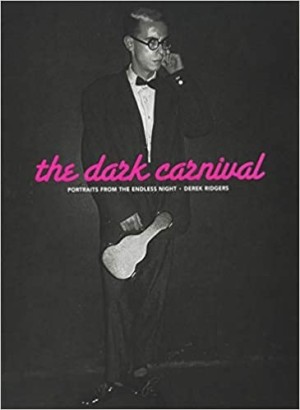
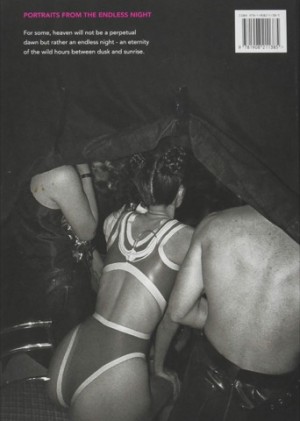
Hardcover. London, Carpet Bombing Culture, 1st, 2015, Book: Very Good, Dust Jacket: None, Hardcover, illustrated boards. 216 pages, b&w photos. A unique collection of portraits personally selected by one of the UKs foremost portrait photographers covering alternative London's unique counter-cultural history from Punks, New Romantics, Goths, Disco Queens, Soul Boys, Fetish Worshippers, Rockers, Cyberpunks, Ravers, Clubbers and Party Animals. Derek Ridgers has been a feature in the clubs and on the streets of the capital for over 50 years - indulging in his obsession for documenting the people dressed up for the glorious night.
Hardcover. NY, Epicenter Communications / Random House, 1st, 1993, Book: Very Good, Dust Jacket: Very Good, Hardcover in a bright dust jacket, 272 pages. "contains over 230 of the most compelling photographs and images of healers in the battlefield, many of them in color, culled from over one hundred archives in more than a dozen countries... Beginning with Matthew Brady's photographs of surgery at Antietam during the Civil War... through two world wars, to Vietnam, the Gulf War, and regional struggles ongoing today." Clean copy. DOMESTIC SHIPPING ONLY.
Hardcover. New York, Thames & Hudson, 1st, 2001-12-01, Book: Very Good, Dust Jacket: Very Good, Hardcover. Like new in publishers shrink-wrap. Contains 136 illustrations, 126 in color. A collection of photographs of the ancient and spiritual lands of Indochina: Vietnam, Laos and Cambodia taken during a lifetime of traveling and living there by Tim Page. They provide an account of a deeply religious society whose age-old Buddhist principles have endured to this day. The book also represents a personal passage for Page himself, drawing a line beneath the loss of many friends and colleagues in the Vietnam War.
Hardcover. New York, Thames & Hudson, 1st, 2001-12-01, Book: Very Good, Dust Jacket: Very Good, Hardcover. Like new in publishers shrink-wrap. Contains 136 illustrations, 126 in color. A collection of photographs of the ancient and spiritual lands of Indochina: Vietnam, Laos and Cambodia taken during a lifetime of traveling and living there by Tim Page. They provide an account of a deeply religious society whose age-old Buddhist principles have endured to this day. The book also represents a personal passage for Page himself, drawing a line beneath the loss of many friends and colleagues in the Vietnam War.
Softcover. New York, Holt, Rinehart & Winston, 1st pbk, 1981, Book: Very Good, Dust Jacket: None, Softcover, 154 pages. Michael Harrington was a political scientist and activist best known for The Other America, an examination of poverty in the midst of affluence in the U.S. Here, he reexamines the state of the U.S. twenty years after his landmark book. Bob Adelman is a respected photojournalist, b&w photos throughout; 11 x 8.5 inches. SIGNED BY ADELMAN. "Adelman has moved beyond the familiar cliches of most documentary photography into that rare sphere wherein technical ability and social vision combine to create a great work of art." Quote by Ralph Ellison.
Hardcover. Greenwich CT, New York Graphic Society, 1st, 1972, Book: Very Good, Dust Jacket: Very Good, Hardcover, 208 pages. Margaret Bourke-White was "a war correspondent, a compassionate witness of famine in India, a dedicated seeker of the truth, whether it be among sharecroppers, South African goldminers, American GI's or Jesuits. . All of her important work is shown in this major retrospective of her career." Tan cloth binding, illustrated dust jacket.
Softcover. Buffalo NY, Buffalo Fine Arts Academy, 1st, 2002, Book: Very Good, Dust Jacket: None, Softcover, 278 pages. Illustrated throughout with 195 b/w plates. Clean, unmarked copy with only minor wear to wrappers. The Cold War, Sputnik, Joseph McCarthy, Fidel Castro, the Rosenbergs, Marilyn Monroe, Rosa Parks, Father Knows Best and Rebel Without a Cause are just a few of the events, people, and cultural phenomena that marked the decade of the 1950s. This stunning book, a collection of two hundred large-scale duotone photographs of the 1950s culled from the New York Times photo archives, brings this watershed period to life and examines who and what was important and why.
Hardcover. Boston MA, Boston Globe, 1st, 1977, Book: Very Good, Dust Jacket: Very Good, Hardcover in a bright, unclipped dust jacket. 122 pages, b&w plates. A collection of over 100 b&w photographs about various subjects & impressions by a German immigrant who became a staff photographer on 'The Boston Globe'. SIGNED, inscribed & dated in year of publication by the Author on copyright page. Previous owner's name in bold letters on front fly leaf, otherwise clean.
Softcover. NY, Knopf, 1st, 1983, Book: Very Good, Dust Jacket: None, Softcover, 117 pages. Introduction by William Shawcross. Text and photographs by Tim Page, a photo-journalist. Cover is a photograph of soldier with rifle in a rice paddy with yellow lettering. Rear cover is white with black lettering, states price of $14.95, and shows date of 3/83. Last page of book has list of photographs. Almost all photographs are in color. Book is square and tight.
Hardcover. St. Ann's Press, 1st, 2002, Book: Very Good, Dust Jacket: Very Good, Hardcover, 172 pages. On May 25, 1961, Bruce Davison joined a group of Freedom Riders traveling by bus from Montgomery, Alabama to Jackson, Mississippi. The actions of these youths challenged and disobeyed federal laws allowing for integrated interstate bus travel. These historic episodes, which ended in violence and arrests, marked the beginning of Davidson's exploration into the heart and soul of the civil rights movement in the United States during the years 1961-1965. In 1962, Davidson received a Guggenheim Fellowship and continued documenting the era, including an early Malcolm X rally in Harlem, steel workers in Chicago, a Ku Klux Klan cross burning near Atlanta, farm migrant camps in South Carolina, cotton picking in Mississippi, protest demonstrations in Birmingham, and the heroic Selma March that led to the Voting Rights Act of 1965, which was instrumental in changing the political power base in the segregated Southern states. In the 140 photographs collected here, many of which have never before been published, we see intimate and revealing portraits of Dr. Martin Luther King Jr., John Lewis, and other leaders made by Davidson during those turbulent times. These images describe the mood that prevailed during the civil rights movement with a lyrical imagery that is both poignant and profound. As Davidson bears witness to these historical events, and documents the degradation and segregation that were endured, he gives testimony to the struggle for freedom, equality, justice, and human dignity.
Hardcover. Stockbridge MA, Prospecta Press, 1st, 2014, Book: Very Good, Dust Jacket: Very Good, Hardcover, pictorial boards, 144 pages. INSCRIBED BY PHOTOGRAPHER on title page. Essay by Anna Gyorgy. This collection of vivid photographs tells the story of citizens who spoke up against the nuclear power industry, who refused to be nuclear neighbors, and who fought for years to stop construction or to close reactors in their backyards. The photographs also introduce us to the victims of nuclear power, among them the children who developed cancer and other grave health problems, even generations after the 1986 explosion at Chernobyl. Through Lionel Delevingne's record, we can see for ourselves the tragedies of the worst accident sites: Three Mile Island in the United States, Chernobyl in Russia, and Fukushima in Japan.
Hardcover. NY, Knopf, 1st US, 1992, Book: Very Good, Dust Jacket: Very Good, Hardcover, 287 pages, b&w illustrations. From the construction of the Berlin Wall through every major conflict of his adult lifetime up to the Syrian Civil War, photographer Don McCullin has left a trail of iconic images. Unreasonable Behavior traces the life and career of one of the top photojournalists of the twentieth century and beyond. Born in London in 1935, McCullin worked as a photographer's assistant in the RAF during the Suez Crisis. His early association with a North London gang led to the first publication of his pictures. As an overseas correspondent for the Sunday Times Magazine beginning in 1966, McCullin soon became a new kind of hero, taking a generation of readers beyond the insularity of post-war domestic life through the lens of his Nikon camera. He captured the realities of war in Biafra, the Congo, Vietnam, Cambodia, and the human tragedy of famine and cholera on the Bangladesh border and later, the AIDs epidemic in Sub-Saharan Africa. McCullin now spends his days in a Somerset village, where he photographs the landscape and arranges still-lifes. Harrowing and poignant, Unreasonable Behavior is an extraordinary account of a witness who triumphed over the memories that could have destroyed him.

 "Slim Aarons: The Essential Collectionby: Waldron, Shawn")
 "South Africa In Transitionby: Alan Paton and Dan Weiner")
 "Steichen At Warby: Christopher Phillips")
 "Steichen At Warby: Christopher Phillips")
 "Steichen At Warby: Christopher Phillips")
 "Stepping Through the Ashes by: Richards, Eugene & Janine Altongy")
 "Stepping Through the Ashesby: Richards, Eugene")
 "Stepping Through the Ashesby: Richards, Eugene")
 "Strange Days, Dangerous Nights: Photos from the Speed Graphic Eraby: Larry Millett and John Sandford")
 "Susan Meiselas: Mediationsby: Meiselas, Susan")
 "The Birth of a Republic: Francis Stafford's Photographs of China's 1911 Revolution and Beyond (A China Program Book)by: Lu, Hanchao")
 "The Bitter Years: Edward Steichen and the Farm Security Administration Photographsby: Francoise Poos, Jean Back, Gabriel Bauret")
 "The Dark Carnival: Portraits from the Endless Night by: Ridgers, Derek (Photographer)")
 "The Face of Mercy: A Photographic History of Medicine at War by: Naythons, Matthew (produced by); with narrative by Sherwin B. Nuland, M.D.; [Prologue by William Styr")
 "The Mindful Momentby: Page, Tim")
 "The Mindful Momentby: Page, Tim")
 "The Next America; the decline and rise of the United States. Photographs by Bob Adelman (SIGNED BY ADELMAN)by: Harrington/Bob Adelman, Michael")
 "The Photographs of Margaret Bourke-Whiteby: Sean Callahan, Margaret Bourke-White , et al.")
 "The Tumultuous Fifties: A View from the New York Times Photo Archivesby: Trachtenberg, Alan")
 "The World I Love to See (SIGNED COPY)by: Ulrike Welsch")
 "Tim Page's Namby: Tim Page; William Shawcross, introduction")
 "Time of Change: Civil Rights Photographs, 1961-1965by: Bruce Davidson , John Lewis, et al.")
 "To the Village Square: From Montague to Fukushima: 1975 - 2014 (SIGNED COPY)by: Lionel Delevingne")
 "Unreasonable Behaviour: An Autobiographyby: McCullin with Lewis Chester, Don")