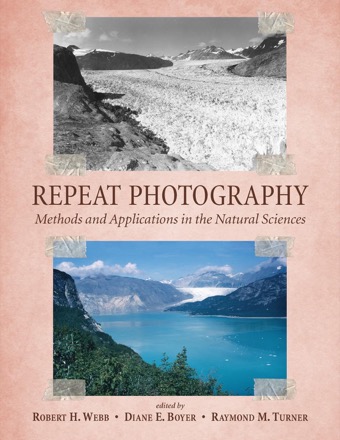
Softcover. Washington DC, Island Press, 1st, 2010, Book: Very Good, Dust Jacket: None, Softcover, 337 pages. Repeat photography is a scientific technique in which photographs are taken from the same vantage point over different points in time. This text explores the technical and geographic scope of this method through a series of essays by 35+ scholars. Topics include techniques for creation and analysis of repeat photographs, applications in the geosciences, population ecology, and ecosystem change. Thirty two pages of color photographs are included. Clean copy.
Hardcover. New York, George Braziller, 1st, 1993, Book: Very Good, Dust Jacket: Very Good, Hardcover in a bright dust jacket, Unpaginated. Color and black & white photography. British artist Long ( Walking in Circles ) takes nature treks--in England's Lake District, the Sahara, Japan, Nepal--and creates site-specific works along the way. He fashions a mud circle in the river Avon, traces a line of snow near a temple in Kyoto and erects a circle of stones on a Swiss mountainside. The spare, deeply meditative photographs that he took en route sometimes call to mind prehistoric British megalithic monuments or Native American earthworks, as if he wants to tune in on planetary patterns of energy. At other times Long simply records what he sees, providing dramatic vistas of Iceland's vast rolling hills, Bolivia's high plateau, Washington's forests and Mount Everest's calm majesty. His images, poetic captions and unobstrusive siteworks reflect an artist who is at once traveler, nature-lover and adventurer.
Hardcover. New Haven, Yale University Press, 1st, 2008, Book: Very Good, Dust Jacket: Very Good, 129 pages. Hardcover. Color and b/w illustrations throughout. Clean inside and out. In excellent shape. From the Foreward: "River of No Return is organized like a long poem or a piece of music...a stunning look at an actual place, a meditation on rivers, nature history, the history of landscape photography of the American West and the idea of the American West. And the nature of fact and the nature of myth, and how we hold the world in our hands."
Softcover. Los Angeles, Spurl Editions, 1st, Book: Very Good, Dust Jacket: None, Softcover, Color plates throughout, unpaginated. Limited to 500 copies. Clean. Documents the eerie fragments of existence left behind in one city. John Brian King photographed RIVIERA from 2016 to 2018 in Palm Springs, California, and its surroundings; a full-time resident at the time, he used a cheap instant film camera to give his photographs a unique, washed-out, hazy aesthetic. King depicts a city that is frozen in a visually arresting state of decline.
Softcover. New York , Matthew Marks Gallery, 1st, 2003, Book: Very Good, Dust Jacket: None, 116 pages, softcover, 52 duotone illustrations. Designed by Catherine Mills. Produced in conjunction with a 2003 New York gallery exhibition, this is a somber volume that reproduces fifty-two photographs taken by Robert Adams between 1974 and 1984 of everyday folks traversing parking lots and city streets in the metropolitan Denver area. Like new in publishers shrink-wrap.
Softcover. New York , Matthew Marks Gallery, 1st, 2003, Book: Very Good, Dust Jacket: None, 116 pages, softcover, 52 duotone illustrations. Designed by Catherine Mills. Produced in conjunction with a 2003 New York gallery exhibition, this is a somber volume that reproduces fifty-two photographs taken by Robert Adams between 1974 and 1984 of everyday folks traversing parking lots and city streets in the metropolitan Denver area. Like new in publishers shrink-wrap.
Hardcover. San Francisco, Fraenkel Gallery, 1st, 2005, Book: Very Good, Dust Jacket: Very Good, Hardcover in a bright dust jacket, 234 pages with 164 tritone photographs. beautiful copy still in shrinkwrap. Like new. Turning Back: A photographic journal of Re-exploration is published to coincide with the bicentennial of the Lewis and Clark Expedition.
Hardcover. Berlin , Steidl, 1st, 2014, Book: Very Good, Dust Jacket: None, Hardcover. Like new in publisher's shrink-wrap. Robert Polidori is known for his large format photographs of habitats and rooms saturated with the traces of human intervention. In EYE and I, he turns the lens around to reveal the portraits of people he has encountered in his work of over thirty years photographing around the world, particularly in the Middle East and India. These instantaneous portraits of mutual recognition reveal the photographed subject and the photographer intersecting with each other in a fleeting gaze of mutual regard.
Hardcover. London/NY, Phaidon Press, 1st, 2014, Book: Very Good, Dust Jacket: Very Good, Hardcover in a bright dust jacket, 240 pages. Photography has played an important role in how architecture is communicated and this book examines the critical relationship between the two practices today through the work of fifty international renowned and emerging artists including Annie Liebovitz, James Welling , Thomas Struth, Wolfgang Tillmann's, Walter Niedermayr and many others. Lavishly illustrated with color reproductions of many iconic buildings. Divided into five chapters, the book covers collaborations between photographer and architect, globaL urbanization, alterations to the landscape, reappraised Modernist icons, and imagined environments. Clean copy. DUE TO WEIGHT, DOMESTIC SHIPPING ONLY.
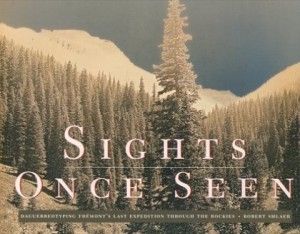
Hardcover. Santa Fe NM, Museum of New Mexico Press, 1st, 2000, Book: Very Good, Dust Jacket: Very Good, Hardcover in a bright dust jacket, 165 pages. Little is known about the fifth and last western expedition of the celebrated explorer John Charles Frmont. The great effort to survey a transcontinental railway route across the 38th parallel ended short of success in the snows of Utah in 1854 but involved a meticulous photographic documentation-in daguerreotypes-of the route from the Mississippi westward. It was believed that a central railroad across the country would favor abolitionists in the great debate then raging in the country over slavery. Solomon Nunes Carvalho was hired by Frmont to photograph the expedition-the first time a western expeditionary survey had been systematically documented in photographs. Tragically, the daguerreotypes were destroyed by fire, and Fremont's fifth expedition was lost to history. Author and daguerreotypist Robert Shlaer remarkably has reconstructed the expedition in 120 original daguerreotypes. Using Frmont's maps, expedition documents, and Carvalho's diary accounts, Shlaer recreates the lost expedition across America's most breathtaking landscape using photography's first and most venerable method of daguerreotypy.
Hardcover. US, 5 Continents, 1st, 2006, Book: Very Good, Dust Jacket: Very Good, Hardcover, 144 pages. Like new in publisher's shrink-wrap. French photographer Olivier Mriel (b. 1955) has practiced photography for over 26 years. His work focuses on landscapes with a taste for the obscure. The son of a chemist, he lives and works in France in the small seaside town of Saint Aubin-sur-Mer, just as his ancestors did before him. His photographs perfectly capture the feeling of history this region is steeped in. Mriel's landscapes, while dark and moody, ultimately document his search for light. This light is reflected off the land and as surfaces act as mirrors, they exude a subtle glow that seeps into even the darkest corners. A human presence that is felt but not seen subtly leads us to explore and to contemplate the secrets of these magical places and the profound meaning of existence.
Hardcover. San Francisco, Chronicle Books, 1st, 2000, Book: Very Good, Dust Jacket: None, Hardcover, gray boards with a dark brown cloth spine and a pictorial label on the cover. No dust jacket issued. Legendary for his massive photographic undertaking, The North American Indian, Edward Sheriff Curtis (1868-1952) recorded much more than portraits of Native American tribespeople. Among his huge body of work are numerous images of all manner of native dwellings: tipis, hogans, huts, cliff houses, adobes, and many more that are far less familiar to the public eye. Though people are largely absent from these photographs, each image speaks volumes about the lives and lifestyles of the tribes to which they belonged. Other structures such as tombs, religious buildings, granaries, and totem poles are also featured prominently, further glimpses into ways of life that were in the process of disappearing. Taken from the Dan and Mary Solomon collection,Sites & Structures: The Architectural Photographs of Edward S. Curtis is the first book of Curtis photographs to explore these dwellings and structures, faithfully reproduced from the original prints and gravures.
Softcover. Tokyo, Bijutsu Shuppan-Sha, 1st, 1989, Book: Very Good, Dust Jacket: None, Softcover, 111 pages. Japanese photographer on the road from Xi'an to Kashi and back again. Color throughout.
Hardcover. NY, Abrams, 1st, 1994, Book: Very Good, Dust Jacket: Very Good, Hardcover in a bright dust jacket, 160 pages, b&w plates. An accomplished photographer of the American scene presents a unique artistic record that captures a vanishing part of our country, the main streets, barber shops, schoolhouses, and inhabitants of our small towns. In his 19th book on the American scene, Plowden has focused on what epitomizes small towns-before this endangered species disappears altogether. The well-produced images, arranged roughly by topic (e.g., schools, theaters, churches, home interiors, restaurants, stores, and grain elevators) and representing towns in many states (including Iowa, Kansas, West Virginia, New York, Minnesota, and Idaho), speak eloquently of small-town life. Even more so, they speak of change; by the time Plowden photographed these towns, most had been cut off from their rural heritages. Nevertheless, the photographs convey order, calm, and congeniality; the best of them evoke the work of Walker Evans, who, like Plowden, left scenes unaltered when he photographed them. Clean copy.
Hardcover. NY, Abrams, 1st, 1994, Book: Very Good, Dust Jacket: Very Good, Hardcover in a bright dust jacket, 160 pages, b&w plates. An accomplished photographer of the American scene presents a unique artistic record that captures a vanishing part of our country, the main streets, barber shops, schoolhouses, and inhabitants of our small towns. In his 19th book on the American scene, Plowden has focused on what epitomizes small towns-before this endangered species disappears altogether. The well-produced images, arranged roughly by topic (e.g., schools, theaters, churches, home interiors, restaurants, stores, and grain elevators) and representing towns in many states (including Iowa, Kansas, West Virginia, New York, Minnesota, and Idaho), speak eloquently of small-town life. Even more so, they speak of change; by the time Plowden photographed these towns, most had been cut off from their rural heritages. Nevertheless, the photographs convey order, calm, and congeniality; the best of them evoke the work of Walker Evans, who, like Plowden, left scenes unaltered when he photographed them. Clean copy.
Hardcover. New York, The Monacelli Press, 1st, 2009, Book: Very Good, Dust Jacket: None, Hardcover, 127 pages, color plates. Like new in publishers shrink-wrap. Lynn Davis, known for surveys of natural and man-made wonders, has long been fascinated with the objects and venues of space exploration. Her photographs of the architectural icons, cornerstones, and abandoned sites of the space race reflect the many facets of a historically complex industry: the beginnings of space exploration; the changing nature of technology; and a fascination with otherworldly ruins. She emphasizes the bold modernism of these sites while evoking the presence of obsolete technologies. Davis traveled to historic sites in Kazakhstan, Russia, Germany, French Guiana, and the United States. She received special permission to visit Baikonur in Kazakhstan, a leading launch site shrouded in secrecy since the 1950s, and her photographs offer one of the first inside glimpses of launches, transmission towers, fuel lines, and satellites.
Hardcover. US, Carpet Bombing Culture, 1st, 2013, Book: Very Good, Dust Jacket: None, Unpaginated. Hardcover with no dust jacket. Clean, unmarked copy. If America is the Roman Empire of our time then New York City is Rome. The pulsating heart of the West pumps greenbacks through the veins of Manhattan, the richest place in the world. Power emanates from it's corporate brains and financial muscle across the whole surface of the globe. So how is it that even in the body of America, land of eternal youth, there is failure, death and decay hidden just beneath its glossy surfaces? A new breed of urban adventurers take a savage ride through the invisible story of the North Eastern USA. From NYC to the infamous Rust Belt, once home to America's heavy industry, States of Decay brings you a glimpse of the broken, the doomed, the entropic dreamlands on the flipside of the silver dollar coin. A unique exploration of everything from abandoned power plants, hospitals, asylums, schools, theatres, steel mills, prisons, factories, hotels, cathedrals, blast furnaces, convents to a boat graveyard. This extended photo-essay functions as a visual poem allowing the reader to draw their own experiences and conclusions from the images themselves. No interpretation necessary. This book will ask disturbing questions and inspire unexpected answers from anyone with an imagination and a heart. Sit back and let us take you on a walk around the Bad Apple.
Softcover. Yosemite National Park CA, Yosemite Association, 1st, 1999, Book: Very Good, Dust Jacket: None, Softcover, 122 pages. A well-researched compilation of Brewer's documentation of his explorations in the High Sierra, with gripping photographs of the areas he visited. Additional contributions from his contemporaries enhance the experience for the reader. Introductory material from photographer William Alsup gives a good overall narrative of the action as well as an account of the significance of the survey. Clean copy.
Hardcover. San Francisco, Chronicle Books, 1st, 2008, Book: Very Good, Dust Jacket: None, Hardcover, 175 pages, illustrated throughout in color. Clean, unmarked copy in excellent condition. Antarctica remains largely unknown and infinitely fascinating. Stuart Klipper has traveled to Antarctica six times in twentyyears to photograph this astounding body of work, offering a sweeping look at this majestic continent, which has lately become central to global climate change concerns. Shot in panoramic formatthe only way to encompass a landscapethat seems to stretch on foreverKlipper's work captures major features and surprising details: ships suspended in the frozen sea, glowing blue icebergs, vistas of endless snow, and troops of penguins. This volume's substantial size, panoramic shape, and unique vertical-opening case emphasize the grandeur of these austere and lovely photographs from the bottom of the world.
Hardcover. NY, Prentice Hall Press, 1st, 1991, Book: Very Good, Dust Jacket: Very Good, Hardcover in a bright dust jacket, oblong format, b&w illustrations. A revealing look at the changing face of the American landscape, from the 1850s to today, as depicted by some of America's greatest photographers. 150 photographs provide a fascinating view of our land, juxtaposing what it once looked like with what it is today. Mild fade to dj spine, clean copy.
Center for American Places, 1st, Book: Very Good, Dust Jacket: None, Softcover, 180 pages, profusely illustrated in b&w. Foreword by Bill Kurtis. Contemporary Photographs by Judith Bromley and James Iska. Historic images from the Chicago Park District's Special Collections. Even Chicagoans who routinely enjoy its diverse open spaces -from the magnificent lakeshore parks to intimate neighborhood settings- may be surprised about their parkland legacy. The City in a Garden, developed in association with the Chicago Park District, is the first official history of Chicago's parks and it reveals why they are second to none in America and abroad. Clean copy.
Hardcover. New Haven CT, Yale /Houston Museum of Fine Arts, 1st, 2007, Book: Very Good, Dust Jacket: Very Good, Hardcover, 168 pages. Chen Changfen (b. 1941) began to photograph the Great Wall twenty years before the Chinese government officially adopted it as the national symbol in 1984. This fascinating book presents a small fraction of his decades-long study of the monumental form and conveys the fertile range of themes and ideas that Chen has investigated, each informed by traditional Chinese art, history, and philosophy. Combining a unique blend of traditional and contemporary technical processes, Chen's richly evocative photographs at once celebrate the remarkable series of building campaigns that produced the Wall and memorialize the thousands of conscripted laborers whose lives were sacrificed to its construction.One of the most striking features of Chen's photographs is their unexpected variety of perspectives and moods, capturing the vicissitudes of weather, time, and human history that have acted upon it. By excluding the people, highways, factories, and modern buildings that encroach on and daily destroy sections of the Wall, however, Chen eliminates major aspects of the Wall's present reality from his pictures. In a thoughtful essay and interview with the artist, Anne Wilkes Tucker probes the meanings of such omissions and guides the reader through Chen's extraordinary images. The Great Wall of China is essential reading for photographers, historians, and travelers.
Hardcover. Princeton Architectural Press , 1st, 2004, Book: Very Good, Dust Jacket: Very Good, Hardcover, 144 pages. With photos taken in the mid 1980s the author takes us on a pictorial trip along the former Iron Curtain from the Baltic sea coast at Travemunde (West-East Germany) to the Adriatic sea coast at Trieste (Italy-Yugolsalvia [today Slovenia]); with a separate chapter on the Berlin Wall. They are superb photos full of (sad) atmosphere, poignancy and historical importance.
Hardcover. Center for American Places, 1st, 2005, Book: Very Good, Dust Jacket: Very Good, Hardcover, 232 pages. The Mississippi River flows through American history and culture as a mythic waterway brimming with tragedy and hope, and awash in passionate ambitions and harsh realities. In 1953, a young Charles Dee Sharp traveled twice down the Mississippi (first by towboat and then by car along the renowned river road Highway 61) to make a documentary film of it, taking black-and-white photographs of the river, its communities, and its people. While Sharp's documentary never came to fruition, the striking images he captured survived as moving and evocative historical testaments to a lost era, now collected in his new book The Mississippi in 1953. These images create a vivid portrait of America's heartland a half century ago, and they are enriched with excerpts from Sharp's original trip journal, intriguing anecdotes from the people he encountered along his journey, and an engaging environmental history of the river by historian John O. Anfinson. The Mississippi in 1953 offers an original and poignant look at the living artery of the American landscape and how it molded the United States into the nation it is today.
Hardcover. London, Merrell, 1st, 2008, Book: Very Good, Dust Jacket: Very Good, Hardcover, 239 pages, Color and b&w images throughout by various photographers. In publisher's shrinkwrap.
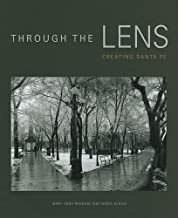
Hardcover. New Mexico, Museum of New Mexico Press, 1st, 2009, Book: Very Good, Dust Jacket: Very Good, Hardcover, 276 pages. Combining images from early masters and well-known fine art photographers with text and observations from noted writers, this is one of a kind book. It provides stimulating perspectives on Santa Fe's transformation over the last 160 years, presenting a historical and contextual perspective on the important role photography has played in documenting and shaping Santa Fe's image. Includes selected images from more than one hundred noted photographers.
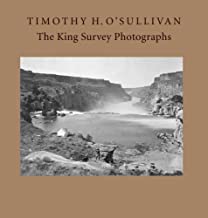
Hardcover. Nelson-Atkins Museum, 1st, 2011, Hardcover, 252 pages. Clarence King's Survey, undertaken between 1867 and 1872, covered a vast swath of terrain, from the border of California eastward to the edge of the Great Plains. It was the first survey to include a full-time photographer--Timothy O'Sullivan--who produced about 450 finished photographs in large-format and smaller-format stereographs. O'Sullivan's images convey a distinct individual quality of perception, at once direct and laconic, as well as a perfect union of objective fact and personal interpretation. As such, O'Sullivan remains the most admired, studied, and debated photographer who worked on the great western surveys of the 19th century. The volume also includes an essential catalogue raisonne of O'Sullivan's King Survey work.
Hardcover. Univ of Louisiana at Lafayette, 1st, 2019, Book: Very Good, Dust Jacket: Very Good, Hardcover in a bright dust jacket, 80 pages. Over the past eight years, Tina Freeman has photographed the Louisiana wetlands and Arctic and Antarctic glaciers. In Lamentations, Freeman pairs images from each place in a series of diptychs that address climate change, ecological balance, and the connectedness of things across time and space. Lamentations demonstrates how the rising waters along the coast of Louisiana are both visually and physically connected to the melting glaciers at the poles, despite the separation of vast distances. Freeman's work makes plain the crucial, threatening, and global dialogue between water in two physical states. Lamentations is published to accompany an exhibition of the same name, organized by and presented at the New Orleans Museum of Art, September 11, 2019 to February 22, 2020. Text was provided by Tina Freeman, Russell Lord, Brent Goehring, and Jady Surrounding along with a forward by Susan M. Taylor.
Hardcover. New York, Aperture, 1st, 1989, Book: Very Good, Dust Jacket: Very Good, 176 pages. Hardcover. Features 136 black & white photographs by Robert Adams. Poem by Cid Corman and an essay by Adams. Beautifully reproduced landscape images. Very good in very good, unclipped dust jacket. Clean, unmarked pages.
Hardcover. Boston, Bulfinch, 1st, 2001, Book: Very Good, Dust Jacket: Very Good, Hardcover, 204 pages. Combines photography with the writings of a Pulitzer Prize-winning author to create a portrait of contemporary Vietnam healed from the war and replete with lush landscapes, customs, villages, traditions, and cities.
Softcover. Cambridge MA, The MIT Press, 1st, 1997, Book: N, Softcover, 119 pages. Ultimately, Viewing Olmsted is a savvy and thought-provoking, yet diminutive picture book. The collaboration of three brilliant photographers under the sponsorship of the Canadian Centre for Architecture, it guides the reader down three highly personal, present day tours of legendary parks designed by Olmsted, the patron saint of American landscape architecture. Happily, though, its readers are left to intellectually fend for themselves as to meanings or implications of Frederick Olmsted's work, genius, and lasting influence as the man who designed such famous spaces as Central Park. Academics and artists will appreciate the fresh visual perspectives offered on the man's legacy, the sometimes soothing, sometimes haunting nature-by-design retreats for the urban soul. Those with more than a passing interest in the ways in which man interacts with his `natural' surroundings will appreciate vistas evocative of place rather than time. To the authors' credit, the book raises more questions than it answers, and is of a scale to fit neatly into a travel case. Far from definitive, the book is, nevertheless, a must have for architects, landscape architects, photographers, and Olmsted aficionados.
Hardcover. Lars Muller Publishers, 1st, 2008, Book: Very Good, Dust Jacket: None, Hardcover in publisher's shrink-wrap. 320 pages. The photographer Lukas Felzmann was fascinated by the very thing that some driving past would find boring, flat, and disconsolate: the vast Sacramento Valley, located just a hundred miles from San Francisco. Felzmann discovers with his camera the hidden charms of that seeming nonplace. For him, exploring a place means both walking around and lingering quietly, until the valley opens up like a book, with stories that cry out to be read and discovered. With his camera he traces how time, determined here by the growth of the plants, slows on the plane, and how the horizontality of the surface becomes a reassuring balance to the hectic city of millions nearby. The photographs show the diversity of the plane: the original landscape in its natural state, the large swaths put to agricultural use, the modern provincial towns, and the transitional areas in between. Photographs of water in all its facets run through the book, just as water runs through and forms a valley.
Hardcover. Lars Muller Publishers, 1st, 2008, Book: Very Good, Dust Jacket: None, Like new in publisher's shrink-wrap. 320 pages. The photographer Lukas Felzmann was fascinated by the very thing that some driving past would find boring, flat, and disconsolate: the vast Sacramento Valley, located just a hundred miles from San Francisco. Felzmann discovers with his camera the hidden charms of that seeming nonplace. For him, exploring a place means both walking around and lingering quietly, until the valley opens up like a book, with stories that cry out to be read and discovered. With his camera he traces how time, determined here by the growth of the plants, slows on the plane, and how the horizontality of the surface becomes a reassuring balance to the hectic city of millions nearby. The photographs show the diversity of the plane: the original landscape in its natural state, the large swaths put to agricultural use, the modern provincial towns, and the transitional areas in between. Photographs of water in all its facets run through the book, just as water runs through and forms a valley.
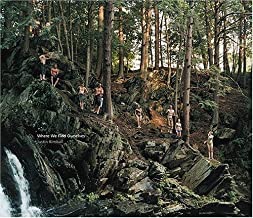
Hardcover. Center for American Places, 1st, 2006, Book: Very Good, Dust Jacket: Very Good, Hardcover, 88 pages. Clambering down slippery rocks to a swimming hole. Ducking the plume of smoke from a barbecue grill. Wishing for a breeze in a too-small dome tent. Scanning the sky for rain from a postage-stamp backyard. It is in these small moments of action--and inaction--that Justin Kimball captures our everyday attempts to relax. Indeed, one might argue that the events depicted are everyday life. Kimball's compelling photographs depict ordinary people--parents and teens, grandparents and kids--in landscapes of leisure. These are not the exclusive resorts and white sand beaches of the affluent; rather, they are the parks, campgrounds, and fishing piers where most Americans vacation. They are natural landscapes--inviting, green, and sometimes beautiful--but at the same time they are imperfect--muddy, crowded, and partially paved. There is nothing idyllic about these vacation spots; indeed, Kimball's photographs make clear that daily life can never be fully left behind. The people in his pictures, though momentarily transformed by cascading water or the shade of towering trees, remain enmeshed in ties of family and obligation, shadowed by thoughts of home.
Hardcover. Dobbs Ferry NY, Morgan and Morgan / Amon Carter Museum, 1st, 1974, Book: Very Good, Dust Jacket: Very Good, Hardcover in a bright, pric-clipped dust jacket, 158 pages. Complete with a List of Photographs, Preface, Introduction, a long presentation of the photographs of William H. Jackson, Chronology and full Bibliography. Over 100 of Jackson's finest photographs in black-and-white and duotone. With a critical essay by William L. Broecker. Ink inscription on front fly leaf otherwise clean.
Hardcover. NY, Holiday House, 1st, 1999, Book: Very Good, Dust Jacket: Very Good, Hardcover in a bright, unclipped dust jacket. An exploration of the career of Western photographer William Henry Jackson features forty photographs of such subjects as Yellowstone and the Grand Canyon and discusses how his work and life parallel the opening of the West in the 1800s. 132 pages, clean copy.
Hardcover. New York, Harper & Row, 1st, 1978, Book: Very Good, Dust Jacket: Very Good, Hardcover in a bright dust jacket. Text assenbled by Arno Karten. SIGNED BY ORKIN on half-title page. Previous owner's inscription front fly leaf. Color photographs of Central Park and environs from Orkin's 15th floor window, with short quotations from the famous authors assembled by Arno Karlen. 119 pages.
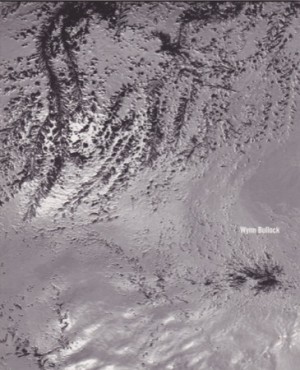
Softcover. Chicago, Stephen Daiter Gallery, 1st, 2002, Book: Very Good, Dust Jacket: None, Softcover, 32 pages. The catalog for an exhibition of Wynn Bullock's nudes and landscapes. Photographs by Bullock; essay by James Rhem. 32 pages; duo-toned b&w plates + text illustrations; 8.5 x 10.5 inches. Clean copy.

 "Richard Long: Mountains and Watersby: Long, Richard")

 "Robert Adams: No Small Journeys, Across Shopping Center Parking Lots, Down City Streetsby: Adams, Robert")
 "Robert Adams: No Small Journeys, Across Shopping Center Parking Lots, Down City Streetsby: Adams, Robert")


 "Silent Worldsby: Olivier Mriel")
 "Sites and Structures: The Architectural Photographs of Edward S. Curtis by: Solomon, Mary/Slemmons, Rod")


 "Space Projectby: Davis, Lynn")

 "Such a Landscape!: A Narrative of the 1864 California Geological Survey Exploration of Yosemite, Sequoia & Kings Canyon from the Diary, Field Notes, Letters & Reports of William Henry Brewerby:")


 "Tetons and the Yellowstone, Theby: Adams, Ansel and Nancy Newhall")
 "The Antarctic: From the Circle to the Poleby: Klipper, Stuart")



 "The Mississippi River in 1953: A Photographic Journey from the Headwaters to the Deltaby: Sharp, Charles Dee")

 "Tina Freeman: Lamentations by: Tina Freeman")

 "Viewing Olmsted: Photographs by Robert Burley, Lee Friedlander, and Geoffrey Jamesby: Lambert, Phyllis")




 "World Through My Window, A (SIGNED COPY)by: Orkin, Ruth")