Softcover. La Salle, Ill., Open Court, reprint, 1999, Book: Very Good, Dust Jacket: None, Softcover, 214 pages. Minor wear to edges of cover. Previous owner's inscription on front flyleaf. A bright and clean copy.
Hardcover. UK, Oxford University Press, 1st, 2013, Book: Very Good, Dust Jacket: Very Good, Hardcover in a bright dust jacket, 326 pages. Lucretius' didactic masterpiece De Rerum Natura (On the Nature of Things) is one of the most brilliant and powerful poems in the Latin language, a passionate attempt at dispelling humanity's fear of death and its enslavement by false beliefs about the gods, and a detailed exposition of Epicurean atomist physics. For centuries, it has raised the question of whether it is primarily a poem or primarily a philosophical treatise, which also presents scientific doctrine. The current volume seeks to unite the three disciplinary aspects -- poetry, philosophy, and science -- in order to offer a holistic response to an important monument in cultural history. With ten original essays and an analytical introduction, the volume aims not only to combine different approaches within single covers, but to offer responses to the poem by experts from all three scholarly backgrounds. Philosophers and scholars of ancient science look closely at the artistic placement of individual words, while literary critics explore ethical matters and the contribution of Lucretius' poetry to the argument of the poem. Topics covered include death and grief, evolution and the cosmos, ethics and politics, perception, and epistemology.Name and date on front fly leaf, light pencil marking to about 25 pages.
Hardcover. London, Rudolf Steiner Publishing, 1st, 1945, Book: Good, Hardcover, red cloth faded to tan on front and spine, 211 pages. Translation by H. Collison. Name and stamp on front fly leaf, no other markings.
Hardcover. Berg Publishers, 1st, 1988, Book: Very Good, Dust Jacket: None, Hardcover, 528 pages. This historico-critical edition of Schopenhauer's manuscript remains contains Schopenhauer's entire surviving philosophical notes, from his university years until his death in 1860. Translated here into English for the first time, it provides a fascinating insight into the workings of Schopenhauer's mind and an important key to his philosophical work. Translated by E.F.J. Payne
Hardcover. NY, D. Appleton and Company, 1st US, 1875, Book: Very Good, Dust Jacket: None, Hardcover, terra-cotta cloth with black design and gilt lettering, 363 pages plus publisher's ads. A late nineteenth century reference on natural science and philosophy. Papillon's engrossing essays, written at various times and put together in this volume as - after the fashion of the time - an effort to dovetail science, metaphysics and philosophy into a higher understanding of life. Name on front fly leaf otherwise a clean, bright copy.
Softcover. Ithaca NY, State University of New York , 2nd pr., 1990, Book: Very Good, Dust Jacket: None, Softcover, 350 pages. The contributors discuss the current debate about what philosophy is, how it works, and how Nietzsche's thought clarifies or complicates its understanding. They represent a wide range of views and practices, some aggressively postmodern in their approach, some profoundly skeptical about postmodernism. Although the issue of postmodernism is the central focus, the essays also touch on many other areas of interest to readers of Nietzsche. Spine faded, light pencil underlining to a few pages.
Softcover. Cambridge University Press, reprint, 1992, Book: Very Good, Dust Jacket: None, Softcover, 314 pages. Essays on language, action and interpretation. This is a collection in translation of essays by Paul Ricoeur which presents a comprehensive view of his philosophical hermeneutics, its relation to the views of his predecessors in the tradition and its consequences for the social sciences. The major theme that unites his writings is that of a philosophical anthropology. This anthropology, which Ricoeur came to call an anthropology of the "capable human being," aims to give an account of the fundamental capabilities and vulnerabilities that human beings display in the activities that make up their lives.
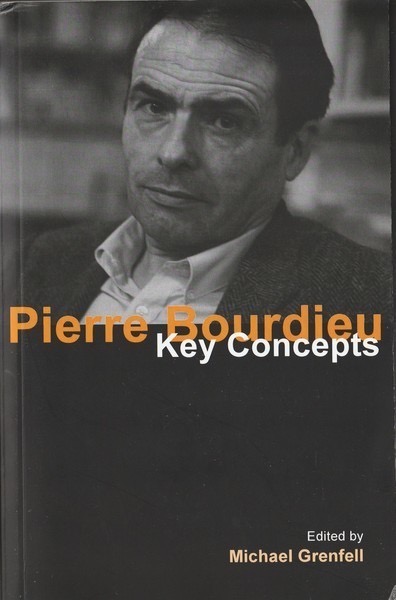
Softcover. Durham UK, Acumen, reprint, 2011, Book: Very Good, Dust Jacket: None, Softcover, 248 pages. The French social philosopher Pierre Bourdieu is now recognized as one of the major thinkers of the twentieth century. In a career of over fifty years, Bourdieu studied a wide range of topics: education, culture, art, politics, economics, literature, law, and philosophy. Throughout these studies, Bourdieu developed a highly specialised series of concepts that he referred to as his "thinking tools", which were used to uncover the workings of contemporary society. Pierre Bourdieu: Key Concepts highlights his most important concepts and examines them in detail. Each chapter deals with an individual concept and is written to be of immediate use to the student with little or no previous knowledge of Bourdieu. Clean copy.
Softcover. UK, Oxford University Press, Revised Ed., 2001, Book: Very Good, Dust Jacket: None, Softcover, 384 pages. Published here for the first time is much of a final and long-anticipated work on the philosophy of history by the great Oxford philosopher and historian R. G. Collingwood (1889-1943). The original text of this uncompleted work has only recently been discovered and is accompanied here by Collingwood's shorter writings on historical knowledge and inquiry. Besides containing entirely new ideas, these incredible writings discuss many of the issues which Collingwood famously raised in The Idea of History and in his Autobiography. This book also includes two conclusions written by Collingwood, which were eventually revised and published as The Idea of Nature. and a lengthy editorial introduction that puts Collingwood's writings in their context and discusses the philosophical questions they initiate. A landmark publication, this work will appeal not only to those studying Collingwood but also to anyone broadly curious about philosophy of history. Clean copy.
Hardcover. NY/London, Oxford University Press, 1st, 2013, Book: Very Good, Dust Jacket: Very Good, Hardcover in a bright, unclipped dust jacket, 450 pages. The essays in Religion and Public Reasons seek to argue for, and illustrate, a central element of John Finnis' theory of natural law: that the main tenets of personal and political morality, and of a good legal order, are taught both by reason (arguments accessible to everyone) and by authentic divine revelation (teachings accessible to all who have a reasonable faith in its witnesses). The author's main books each include arguments for rejecting atheism and agnosticism; several papers here take up these arguments and indicate ways in which they open onto the reasonable grounds for accepting that more about God's nature, and about the meaning of Creation (including ongoing natural evolution), is disclosed by the revelation carried far forward among the Jewish people, and given definitive form by the Jews and Greeks who assembled in the universal Church, as witnesses of Christ, to carry forward that revelation into our present. Several papers argue that "public reason" properly includes such a religion, and that Humeian, Nietzschean, Deweyian, Rawlsian or other atheistically or deistic understandings of a reasonable secularism are badly mistaken. Many substantial papers record the author's position in controversies within Catholicism since the 1960's: on social justice, contraception and abortion; nuclear deterrence; Newman on conscience before pope; Maritain's hopes for a new Christendom and von Balthasar's for a hell empty of human persons; and on "proportionalism" and Lonerganian "historical consciousness" as moral-theological methods. Previously unpublished papers include several University and college sermons, and a substantial introduction.
Hardcover. UK, Cambridge University Press, 1st, 1996, Book: Very Good, Dust Jacket: None, Hardcover, blue cloth with gilt lettering on spine, 518 pages. This volume collects for the first time in a single volume all of Kant's writings on religion and rational theology. These works were written during a period of conflict between Kant and the Prussian authorities over his religious teachings. The historical context and progression of this conflict are charted in the general introduction to the volume and in the translators' introductions to particular texts. All the translations are new with the exception of The Conflict of the Faculties, where the translation has been revised and redited to conform to the guidelines of the Cambridge Edition. Name on front fly leaf, otherwise a clean, bright copy.
Hardcover. London, NLB, 1st transl. thus, 1972, Book: Very Good, Dust Jacket: None, Hardcover, light blue cloth stamped in gilt, 257 pages. The articles and essays collected in this book were written during the decade of Lukacs's life when he was most active in politics. The first texts mark his transition from an anti-bourgeois aestheticism to Marxism and the newly founded Hungarian Communist Party. They are followed by material which displays the full range of his activity and thought during the subsequent ten years. Some of these essays were written when Lukacs was deputy commissar of education in the embattled, short-lived Hungarian Soviet Republic. Others include the famous article on parliamentarianism which earned its author the respectful yet severe criticism of Lenin.The volume includes short studies on German revisionism, Bukharin's Marxism, and Karl Wittfogel, and longer pieces on Lassalle and Moses Hess. The collection ends with the theses Luckas wrote, under his cover name "Blum", in opposition to the policies of the Third Period of the Comintern. Clean copy.
Softcover. UK, Cambridge University Press, 1st pbk, 2014, Book: Very Good, Dust Jacket: None, Softcover, 562 pages with index. This volume is the first systematic presentation of the work of Albert Einstein, comprising fourteen essays by leading historians and philosophers of science that introduce readers to his work. Following an introduction that places Einstein's work in the context of his life and times, the book opens with essays on the papers of Einstein's 'miracle year', 1905, covering Brownian motion, light quanta, and special relativity, as well as his contributions to early quantum theory and the opposition to his light quantum hypothesis. Further essays relate Einstein's path to the general theory of relativity (1915) and the beginnings of two fields it spawned, relativistic cosmology and gravitational waves. Essays on Einstein's later years examine his unified field theory program and his critique of quantum mechanics. The closing essays explore the relation between Einstein's work and twentieth-century philosophy, as well as his political writings. Clean, bright copy.
Hardcover. NY, St. Martin's Press, 1st, 1963, Book: Very Good, Dust Jacket: None, Hardcover, blue cloth with gold lettering on spine, 272 pages. The nine essays compiled in this work deal with the nature of philosophical arguments and the degree to which they are linguistic; the possibility and status of private experience; the criteria of personal identity and the relation between mind and body; the interplay of the referential and descriptive functions of language; the criteria of truth; the interpretation of judgments of probability; the distinction between generalizations of law and generalizations of fact; and the status of judgments about the future and the question of free will and determinism. New theories are advanced and old theories are criticized. Bright, clean copy, lacks dust jacket.
Hardcover. NY, Random House, 1st, 1967, Book: Very Good, Dust Jacket: Very Good, Hardcover in a bright, unclipped dust jacket, 327 pages. George Lichtheim (1912-1973) was a German-born intellectual whose works focused on the history and theory of socialism and Marxism. He defined himself as a socialist and stated in a 1964 letter to the New York Review of Books that "I am not a liberal and never have been. I find liberalism almost as boring as communism and have no wish to be drawn into an argument over which of these two antiquated creeds is less likely to advance us any further." His work appeared in the Palestine Post, Commentary, Partisan Review, Dissent, the New Leader, Encounter, the Times Literary Supplement and the New York Review of Books. Additionally, he translated Gershom Scholem's Main Currents in Jewish Mysticism. His death was by suicide. Clean, tight copy.
Hardcover. Duke University Press, 1st, 2003, Book: Very Good, Dust Jacket: None, Hardcover, 440 pages. Black cloth, no dust jacket. The Edge of Surrealism is an essential introduction to the writing of French social theorist Roger Caillois. Caillois was part of the Surrealist avant-garde and in the 1930s founded the College of Sociology with Georges Bataille and Michel Leiris. He spent his life exploring issues raised by this famous group and by Surrealism itself. Though his subjects were diverse, Caillois focused on concerns crucial to modern intellectual life, and his essays offer a unique perspective on many of twentieth-century France's most significant intellectual movements and figures. Including a masterful introductory essay by Claudine Frank situating his work in the context of his life and intellectual milieu, this anthology is the first comprehensive introduction to Caillois's work to appear in any language. These thirty-two essays with commentaries strike a balance between Caillois's political and theoretical writings and between his better known works, such as the popular essays on the praying mantis, myth, and mimicry, and his lesser-known pieces. Presenting several new pieces and drawing on interviews and unpublished correspondence, this book reveals Caillois's consistent effort to reconcile intellectual rigor and imaginative adventure. Perhaps most importantly, The Edge of Surrealism provides an overdue look at how Caillois's intellectual project intersected with the work of Georges Bataille and others including Breton, Bachelard, Benjamin, Lacan, and Levi-Strauss.
Hardcover. NY, Oxford University Press, 1st, 2018, Book: Very Good, Dust Jacket: Very Good, Hardcover in a bright dust jacket, 239 pages. The Harvard philosopher Donald C. Williams (1899-1983) was a key figure in the history of analytic philosophy. He played a crucial role in reviving metaphysics at a time when other philosophers ridiculed, criticized, and committed it to the flames. He constructed an explanatorily powerful and parsimonious ontology and cosmology founded on logic, science, and common sense. His most influential articles were on the metaphysics of properties ('The Elements of Being') and the meta-physics of time ('The Sea Fight Tomorrow', 'The Myth of Passage'). His ontology of abstract particulars or tropes and his four-dimensional manifold theory of time remain leading hypotheses in metaphysics. Because of his novel contributions and his defense of metaphysics he made a lasting impact on philosophers of the next generation who in turn believed in the substance of metaphysical inquiry. Name on front fly leaf, light pencil marking to first 30 pages. Otherwise clean, very good.
Hardcover. University of Chicago Press, 1st, 1991, Book: Good, Dust Jacket: Good, Hardcover in a bright dust jacket, 307 pages. This book analyzes the thought behind practices of government and argues that criticism represents a true force for change in attitudes and actions, and that extending the limits of some practices allows the invention of others. This unique and extraordinarily useful collection of articles and primary materials will open the way for a whole new set of discussions of the work of Michel Foucault as well as the status of liberalism, social policy, and insurance. Some yellow high-lighting in the first 50 pages.
Hardcover. Rochester NY, University of Rochester Press, 1st, 1996, Book: Very Good, Dust Jacket: Very Good, Hardcover in a bright dust jacket, 224 pages. 10 Essays, ranging from Locke, Berkeley, and Hume to Foucault's Critique of the Enlightenment, with an Introduction by Sylvana Tomaselli. Contributors include Richard H. Popkin, Peter Laslett, and Michael Ayers.
Hardcover. UK, Cambridge University Press, 1st, 2017, Book: Very Good, Dust Jacket: None, Hardcover, pictorial glossy boards, 514 pages. Following a long-term international collaboration between leaders in cosmology and the philosophy of science, this volume addresses foundational questions at the limit of science across these disciplines, questions raised by observational and theoretical progress in modern cosmology. Space missions have mapped the Universe up to its early instants, opening up questions on what came before the Big Bang, the nature of space and time, and the quantum origin of the Universe. As the foundational volume of an emerging academic discipline, experts from relevant fields lay out the fundamental problems of contemporary cosmology and explore the routes toward finding possible solutions. Written for graduates and researchers in physics and philosophy, particular efforts are made to inform academics from other fields, as well as the educated public, who wish to understand our modern vision of the Universe, related philosophical questions, and the significant impacts on scientific methodology. Clean, bright copy.
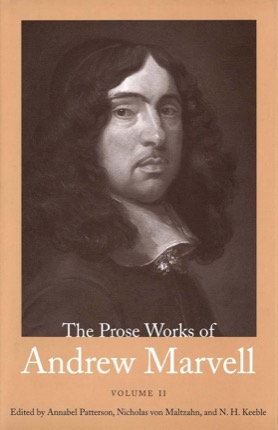
Hardcover. New Haven CT, Yale University Press, 1st, 2003, Two hardcovers in dust dackets with sunning to spines, 479 and 493 pages. Andrew Marvell (1621-78) is best known today as the author of a handful of exquisite lyrics and provocative political poems. In his own time, however, Marvell was famous for his brilliant prose interventions in the major issues of the Restoration, religious toleration, and what he called "arbitrary" as distinct from parliamentary government. This is the first modern edition of all Marvell's prose pamphlets, complete with introductions and annotation explaining the historical context. Four major scholars of the Restoration era have collaborated to produce this truly Anglo-American edition. From the Rehearsal Transpros'd, a serio-comic best-seller which appeared with tacit permission from Charles II himself, through the documentary Account of the Growth of Popery and Arbitrary Government, Marvell established himself not only as a model of liberal thought for the eighteenth century but also as an irresistible new voice in political polemic, wittier, more literary, and hence more readable than his contemporaries. Name, date on front fly leafs, otherwise clean. DUE TO WEIGHT, DOMESTIC SHIPPING ONLY.
Softcover. Oxford UK, Blackwell, 1st, 1999, Book: Very Good, Dust Jacket: None, Softcover, 332 pages. The Zizek Reader - which includes a Foreword by Zizek and a new, previously unpublished essay on cyberspace - provides a comprehensive and accessible introduction to the flamboyant work of a figure who has been variously described as 'one of the most arresting, insightful and scandalous thinkers in recent memory' and 'the Giant of Ljubljana'. His work is an extraordinary mix of Hegel and Hitchcock, Schelling and science fiction, Kant and courtly love, Stalin and Stephen King, all of which is strongly seasoned with Lacanian psychoanalysis. Divided into three parts - Culture, Woman and Philosophy - the Reader not only provides careful explications of the individual extracts within each section but also connects these extracts in a general introduction, mapping the shiftings of Zizek's thought within the Lacanian framework. The essays on woman offer feminism ammunition from unexpected sources, within a reading of Lacan that goes counter to his ambiguous reception by feminists. In fact, at this collection dazzlingly demonstrates, Zizek provides us with one of the most limpid and persuasive readings so far produced of Lacan's difficult thought. Name on inside of front cover, otherwise clean.
Softcover. Princeton, Princeton University Press, 1st Edition, 2000, Book: Very Good, Dust Jacket: None, 382 pages. Softcover in very good condition with full color photo of Isaiah Berlin to cover. Tight copy. Clean & unmarked text.

 "Language, Logic, and Experience: The Case For Anti-Realismby: Luntley, Michael")
 "Lucretius: Poetry, Philosophy, Scienceby: Lehoux, Daryn; Morrison, A. D.; Sharrock, Alison (Editors)")
 "Man as Symphony of the Creative Word: (Esoteric Studies) Twelve lectures given in Dornach, Switzerland from October 19th to November 11th, 1923 by: Steiner, Rudolf")
 "Manuscript Remains, Volume II: Critical Debates (1809-1818) by: Schopenhauer/ Arthur Hubscher (Editor), Arthur")
 "Modes of Thought: Six lectures delivered in Wellesley College, Massachusetts, and two lectures in the University of Chicago. by: Whitehead, Alfred North")
 "Nature and Life. Facts and Doctrines Relating to The Constitution of Matter, the New Dynamics, and the Philosophy of Nature by: Papillon, Fernand")
![Nietzsche as Postmodernist: Essays Pro and Contra by: Clayton Koelb [Ed.]](javascript:largeIMTop('https://www.browsingisarousing.com/shop/images/399735.jpg','https://www.browsingisarousing.com/shop/images/399735.jpg',0,'399735',0,'') "Nietzsche as Postmodernist: Essays Pro and Contra by: Clayton Koelb [Ed.]")
 "Paul Ricoeur: Hermeneutics & the Human Sciencesby: John B. Thompson (Ed.)/Paul Ricoeur")
 "Principles of History: And Other Writings in Philosophy of History by: R. G. Collingwood; Editor W. H. Dray; Editor W. J. van der Dussen")
 "Religion and Public Reasons: Collected Essays Volume V (Collected Essays of John Finnis)by: John Finnis")
 "Religion and Rational Theology (The Cambridge Edition of the Works of Immanuel Kant)by: Immanuel Kant / Allen W. Wood (Translator)")
 "Tactics and Ethics: Political Writings 1919-1929 by: Georg Lukacs")
 "The Cambridge Companion to Einstein by: Janssen, Michel; Lehner, Christoph (Editors)")
 "The Concept of a Person and Other Essaysby: Ayer, A. J.")
 "The Concept of Ideology and Other Essays by: Lichtheim, George")
 "The Edge of Surrealism: A Roger Caillois Readerby: Roger Caillois; Editor Claudine Frank; Translator Camille Naish")
 "The Elements and Patterns of Being: Essays in Metaphysics by: Williams, Donald C. (Editor: Fisher, A. R. J.)")
 "The Foucault Effect: Studies in Governmentality by: Burchell, Graham; Colin Gordon and Peter Miller, eds.")
 "The Philosophical Canon in the 17th and 18th Centuries: Essays in Honour of John W. Yolton by: Rogers, G. A. J.; Tomaselli, Sylvana (eds.)")
 "The Philosophy of Cosmology by: Chamcham, Khalil; Silk, Joseph; Barrow, John D.; Saunders, Simon")
 "The Prose Works of Andrew Marvell (Two Volumes)by: Marvell, Andrew/ Editors: Dzelzainis, Martin, Patterson, Annabel")

 "The Zizek Reader by: Elizabeth Wright / Edmond Wright (Editors)")
 "Three Critics of the Enlightenment - Vico, Hamann, Herderby: Berlin, Isaiah/Henry Harder (Editor)")