Hardcover. Bloomington, IN, Indiana University Press, 1st, 2016, Book: Very Good, Dust Jacket: Very Good, 152 pages. Hardcover with dust jacket. A very clean, unmarked copy with only minor wear to dust jacket edges. A tight copy. As a photographer for Life and Fortune magazines, Margaret Bourke-White traveled to Russia in the 1930s, photographed the Nazi takeover of Czechoslovakia in 1938, and recorded the liberation of Buchenwald at the end of WWII. In 1949, Life sent her to South Africa to take photographs in a country that was becoming racially polarized by white minority rule. Life published two photo-essays highlighting Bourke-White's photographs, but much of her South African work remained unpublished until now. Here, these stunning photographs collected by Alex Lichtenstein and Rick Halpern offer an unparalleled visual record of white domination in South Africa during the early days of apartheid. In addition to these powerful and historically significant photographs, Lichtenstein and Halpern include two essays that explore Bourke-White's artistic and political formation and provide background material about the cultural, political, and economic circumstances that produced the rise and triumph of Afrikaner nationalism in South Africa. This richly illustrated book brings to light a large body of photography from a major American photographer and offers a compelling history of a reprehensible system of racial conflict and social control that Bourke-White took such pains to document.
Hardcover. Koln GR, Taschen , reprint, 2007, Book: Very Good, Dust Jacket: Very Good, Hardcover in a bright dust jacket. 233 pages. Edited by Steve Crist and Shirley T. Ellis De Dienes. Very large, heavy book, smooth glossy white covers, gray lettering on front and spine, light blue background with pattern of photographer's name inside covers and adjacent end papers, 233 very heavy glossy pages with photographs of the young and virtually undiscovered Marilyn Monroe. No nudity. Author's notes. Clean copy. DOMESTIC SHIPPING ONLY.
Hardcover. New York, Knopf, 1st, 1987, Book: Very Good, Dust Jacket: Very Good, Hardcover, 141 pages, 70 b&w and color photos of Marilyn Monroe. Over a ten-year period from the early 1950's until shortly before Marilyn Monroe's death - the years in which she went from virtual anonymity to super-stardom,photographer Eve Arnold had six photo sessions with her. And here she has chosen the best images. Bright, clean copy in an unclipped dust jacket.
Hardcover. NY, Calla Editions, 1st, 2010, Book: Very Good, Dust Jacket: Very Good, Hardcover. 128 pages. Picture this: A master photographer shoots the most breathtaking movie star of her time high in the Canadian Rockies in the summer of 1953. And the negatives are filed away for nearly 60 years -- most never seen until now! It was yet another assignment for LOOK magazine staff photographer John Vachon. But when he arrived in Banff, Alberta, in mid-August of 1953 to shoot Marilyn Monroe on location making River of No Return, Vachon encountered an opportunity never afforded the many great photographers who took pictures of Marilyn during her short life. Due to an injured ankle that prevented her from filming, Vachon got access to Marilyn over a period of several days. Vachon's lens captured her in a variety of contexts and countenances. Here is Marilyn the way we want to remember her: luminous, sexually charismatic, smiling radiantly -- even on crutches. This extraordinary portfolio of revealing images ranges from her mugging poolside to riding high on a ski lift to nuzzling with her then-husband-to-be, the legendary Joe DiMaggio -- the only time that the two posed formally together for a photographer.
Hardcover. New York, St. Martin's Press, 2nd Printing, 1985, Book: Very Good, Dust Jacket: Very Good, Hardcover, 155 pages, large black & white photographs throughout. Minor dust jacket edge wear and fade, otherwise, very clean and tight copy.
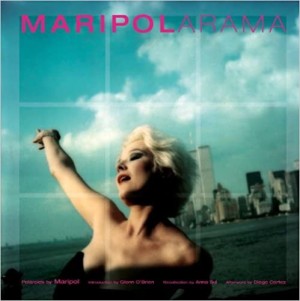
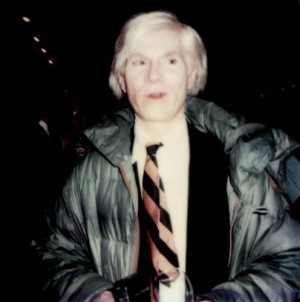
Hardcover. NY, powerHouse, 1st, 2005, Book: Very Good, Dust Jacket: None, Hardcover, pictorial boards, 128 pages. During the early 80s, New York's Lower East Side was a hotbed of creative activity. Unknown artists were synthesizing the fertile ground at the legendary New York nightclubs Studio 54, the Mudd Club, Club 57, Palladium, and Danceteria while on their way to international fame and acclaim. Among those emerging were Madonna, Jean-Michel Basquiat, Grace Jones, Keith Haring, Kenny Scharf, Vincent Gallo, Anna Sui, Exene Cervenka, Kid Creole, and Diego Cortez. Maripol was part of a collective of artists, graffiti writers, street dancers, and performers who all thrived together in the explosive downtown eccentricity. As an image maker and stylist for Madonna during her "Like a Virgin" days, jewelry designer, art director, and producer Maripol relentlessly documented the movers and shakers of the early 80s scene through the lens of her instant Polaroid SX-70. Collected for the first time in Maripolarama, Maripol's photographs vividly depict the extraordinary personalities that inhabited the "forever" hip, arty Manhattan clubland during the post-punk era when hip hop was in its earliest stages and graffiti covered the landscape. Whether it's Andy Warhol, Debbie Harry, Basquiat, or Madonna modeling a bright pink wig, Maripolarama provides lively and inspiring insight into a time long gone.
Hardcover. NY, Random House, 1st, 2001, Book: Very Good, Dust Jacket: Very Good, Hardcover, 304 pages, 289 photographs from her own collection. Legendary actress Marlene Dietrich is honored in this beautiful coffee-table book, which is introduced by brief recollections from director Josef von Sternberg, Orson Welles (who worked with her in Touch of Evil), Ernest Hemingway, and others. The Film Museum of Berlin contains 25,000 objects and 18,000 images related to Dietrich, and this book is like a museum exhibition held expressly for Dietrich lovers. It is divided into sections such as "Portraits," "Beads, Furs, and Feathers," and "Possessions" and displays her dresses and accessories in pristine condition, alongside excerpts from letters and diaries. Daughter Maria Riva (author of a 1994 biography, Marlene Dietrich) provides extended captions to the many photographs of the actress and her belongings. Also included are a filmography, theatography, concertography, discography, and collection inventory with exhibitions.
Hardcover. Munchen, Schirmer/Mosel., 1st US, 1984, Book: Very Good, Dust Jacket: Very Good, Hardcover in a bright dust jacket, 269 pages. "Here is a breathtaking visual celebration of this all-time movie goddess, with the world's greatest photographers contributing their most famous landmark portraits collected from the thirty-five years during which Marlene Dietrich reigned supreme in the history of motion pictures."
Hardcover. New York, Aperture, 1st, 1998, Book: Very Good, Dust Jacket: Very Good, Hardcover, 112 pages, color and b&w pictures by various photographers. In a bright dust jacket, clean. Essays by Karen Finley, Dario Fo, Charles Simic. Alluring symbols of womanhood, breasts have fascinated generations of image-makers. Here, for the first time in book form, is the breast in photography: the titillating, maternal ageing and symbolic.
Hardcover. NY, Aperture, 1st, 1997, Book: Very Good, Dust Jacket: Very Good, Hardcover in a bright dust jacket. In 1918, August Sander meticulously photographed the defeated citizenry of Germany who needed photo identification cards for the occupying forces. By 1929 he had photographed all classes and types of people. During this time, Sander came under the influence of modern art and its intellectual practitioners whom he befriended in Cologne. Through his discussions with them he came to understand the importance of his portrait work and was encouraged to continue. He produced the first volume of an extended series he hoped would provide an exhaustive catalogue, but in the 1930s his work fell into disfavor and was banned by the Nazis. The photography of August Sander comprises an extraordinary human document. This volume of the Masters of Photography series, which includes 43 portraits of a cross section of German society, from pastry chefs to industrialists, is a provocative glance at the Weimar Republic. Clean copy.
Hardcover. NY, Ballantine Books, 1st, 1988, Book: Very Good, Dust Jacket: Very Good, Hardcover, 287 pages. This beautifully printed volume belongs on your Hollywood shelf beside the works of Kobal, Trent & Lawton, Vieira, and anything else on or by George Hurrell. A brief 30-page recap of the history of still photography in the movie industry is followed by 255 pages showing examples of the work of 43 of the most notable stills men (including two women) who snapped the stars, scenes, and environment of the movies during their first 60 years. A brief chronology of the career of each photogher is included. All the photos are given their best reproduction on heavy enameled stock. Clean copy.
Hardcover. New York, NY, Collins Design, 1st, 2010, Book: Very Good, Dust Jacket: Very Good, 205 pages. Hardcover with dust jacket. Minor yellowing to dust jacket edges. Minor soiling to dust jacket rear and top edge of front. An otherwise clean, unmarked copy with only minor wear to dust jacket edges. Match Prints is a visual and editorial dialogue between two renowned photographers of music and film celebrities, Jim Marshall and Timothy White. Marshall, one of the foremost photographers of the rock music scene in the 1960s and 1970s, shot some of the most iconic images of the era, including Jimi Hendrix burning his guitar at Woodstock; White, one of the most in-demand music and Hollywood photographers working today, has built an equally impressive portfolio of photos in his 20 year career. Match Prints features images from the worlds of film and music, compares the work of the two photographers, and provides first-hand behind-the-scenes anecdotes. With an introduction by renowned music writer Anthony DeCurtis.
Hardcover. Germany , Steidl, 1st, 2010, Book: Very Good, Dust Jacket: None, 156 pages. Hardcover with no dust jacket. Very clean, unmarked copy with only minor edgewear. Color photographs throughout. In the early 1970s, the workers at a steel smelting factory east of Havana wrote to Fidel Castro describing their housing needs. Out of this exchange a new city called Alamar was born, conceived by the same workers who would build it and live there. Today it is abandoned; Mauro D'Agati's photographs examine its eccentric spaces.
Softcover. NY, Callaway Editions, 1st, 2000, Book: Very Good, Dust Jacket: None, First edition. Softbound oversize book housed in publisher's slipcase. Clean, still in publisher's shrinkwrap. DOMESTIC SHIPPING ONLY.
Hardcover. Berlin, Museum fur Verkehr und Technik, 1st, 1990, Book: Very Good, Dust Jacket: None, Hardcover, tan boards with paste-down label, 40 pages. Wonderful duotone photos, mostly portraits of Berliners in 1948. GERMAN TEXT. Introduction by Alfred Gottwaldt. Clean copy.
Softcover. Italy, Charta, 1st, 2009, Book: Very Good, Dust Jacket: None, Like new in publisher's shrink-wrap. 64 pages, color photos. Michael Itkoff has traveled the world since 2002 taking portraits of everyday people in the street. In the photographs gathered here, a makeshift backdrop is held behind subjects in London, Sydney, Hanoi, Bangkok and New York, allowing the larger urban scene to fill out the frame. Born in 1981 in Philadelphia, Itkoff is a Founding Editor of Daylight magazine.
Softcover. US, Damiani, 1st, 2014, Book: Very Good, Dust Jacket: None, 110 pages, softcover. Like new in publisher's shrink-wrap. Absence of Subject and Two Crowns of the Egg are Somoroff's most intriguing books of photography. In this edition of Two Crowns, the still life art work is as stunning as the female nudes. Of note, the rare combinations of objects (such. books of literature, high polished knives, exquisite dishes) and life matter (such pomegranates, honey, eggs, human skulls) set one's imagination in fire. These strange image compositions are as odd as the pairing of words by Postmodern poet Giannina Braschi who writes love poems to objects, animals, beings. The scholarly introduction by art historian Donald Kuspit is respectable but a bit dry. Regardless the imagery and poetry tower over any essay that one could write about them.
Hardcover. NY, Random House, 1st, 1966, Book: Very Good, Dust Jacket: Very Good, Hardcover, 160 pages with photographic images throughout. Text by Francoise Sagan and Federico Fellini. Illustrated in black & white, some color. 12" high X 9" wide. More than seventy-five images from Paine?s first solo exhibition, and they look charmingly innocent by today?s standards. Working with a trio of regular models, the photographer was able to achieve a sense of sweet, playful intimacy and suggest moments of sexual abandon. Clean copy.
Hardcover. NY, The Burns Archive Press, 1st, 2012, Book: Very Good, Dust Jacket: None, Hardcover, laminated boards, measures 6 x 6 3/4". SIGNED AND INSCRIBED BY BURNS on the title page. Mirror, Mirror features an extraordinary scope of early photography from one of the most important and comprehensive private collections in the world. Over 250 daguerreotypes presented in full-color reproductions illustrate the depth and beauty of this special medium. Showcasing a wide range of American, British and French images, revealing the clear distinctions in the style and presentation of each country, makes this book an excellent guide for novice collectors as well as a resource for connoisseurs and curators. Clean copy.
Softcover. New York, Universe, 1st wraps, 1998, Book: Very Good, Dust Jacket: None, 192 pages. Paperback. Interviews with top models, - Jean Shrimpton, Penelope Tree, Jerry Hall, Iman, Isabella Rossellini, Helena Christensen, Christy Turlington, Cindy Crawford, Naomi Campbell, Kate Moss, Georgina Cooper, James, Karen Elson, and Alek Wek--as well as their agents, photographers, fashion editors, and designers, Illustrated with color and b&w photos by Bailey. Clean, bright copy.
Softcover. Damiani , 1st, 2017, Book: Very Good, Dust Jacket: None, Softcover, 124 pages. In 2008, Christopher Niquet, a well-known French stylist, spotted the 1960s supermodel Peggy Moffit in a Beverly Hills restaurant. Never an autograph chaser, he nonetheless felt compelled to ask for hers. This candid moment ignited an obsessive, ongoing quest. Niquet began to reach out to the models he considered quintessential figures in his industry, for their epic beauty and remote auras. Deploying a sleuth's methods to locate these models around the globe, he collected 100 signatures, most of which are framed along with an iconic portrait. "My original purpose was to get beyond the abstract, incorporeal beauty of these icons, and bring back a sense of their physicality. For me, each signature restored a womanly reality to the imaginary being." This book highlights the unique personalities of celebrated or forgotten women from the late 1950s to the 1990s and what they all have in common: the power to awaken creativity in the people who see them. Through generations of cover stories, Models That Matter explores a multi-layered history of feminine beauty, from Jean Shrimpton to Jerry Hall, from Lauren Bacall to Linda Evangelista, from Anita Pallenberg to Naomi Campbell, muses for extraordinary fashion lensmen like Steven Meisel-who wrote the preface-to Irving Penn or Richard Avedon. Clean in shrinkwrap.
Softcover. New York, Independent Curators Inc, 1st, 1995, Book: Near Fine, Dust Jacket: None, Softcover, 80 pages, illustrated throughout in b&w. Clean, unmarked copy in excellent condition. Exhibition catalog for a group show that ran January 21 through March 6, 1992 and then May 20 through June 30, 1992 at the Zabriskie Gallery in New York. Introduction by Klaus Ottmann. Essay by Leslie Tonkonow. Includes numerous black and white images from these photographers who were in the show: Robert Doisneau, Diane Arbus, Thomas Struth, Neal Slavin, William Klein, Walker Evans and many others.
Hardcover. OH, Kent State University, 1st, 2006, Book: Very Good, Dust Jacket: Very Good, Hardcover, 328 pages. During the nineteenth century-a time of great technical and cultural change-fashion was a cultivating force in the development of American society, influenced by one's social status, geographic location, and economic standing. My Likeness Taken is a collection of daguerreotype portraits of men, women, and children taken between 1840 and 1860. Selected from the top collections in the United States, each image is analyzed to clarify datable clothing and fashion components. With subjects from among the best-dressed members of society, these portraits-reproduced in full color-reflect the latest fashion developments, trends, and influences. For students of photographic and costume history, this is extraordinary material. Many of these images have never before been published, and Severa's keen analysis adds immeasurably to our understanding of the importance of dress in American society. Photo archivists and collectors, costume curators, social historians, material culturalists, and theater designers will find My Likeness Taken an invaluable resource.
Hardcover. University Press of Mississippi, 1st, 2000, Book: Very Good, Dust Jacket: Very Good, Hardcover in a bright dust jacket, text by Morris, color photos by David Rae Morris. The author's last book, written in his characteristically limpid, lyrical prose, offers a heartfelt appreciation of his home state, a place often dismissed as poor and backward by "outlanders," Morris' term for non-Mississippians. This is not a defensive recitation of Mississippi's virtues nor is it a whitewash of its less-than-attractive features. First, Morris wants the reader to understand the state's beauty--"physically beautiful in the most fundamental and indwelling way, [in that] it never leaves you." Then, with both pride and understanding, he brings into sharp focus Mississippi's peculiar tensions and ambivalence and also its passions--"we are a singular people," he says of his native folk. The second half of the book is an album of full-color photographs taken by Morris' son, a professional photojournalist. These shots informally capture ordinary moments in the lives of Mississippians, from a young couple standing next to their truck with their new baby in their arms to a group of local citizens hanging out in front of the main store in a small town. Together, the text and the photographs showcase Mississippians doing what they do best--being themselves completely without artifice. Clean copy.

 "Margaret Bourke-White and the Dawn of Apartheidby: Lichtenstein, Alex")
 "Marilyn by: André De Dienes")
 "Marilyn Monroe: An Appreciation by: Arnold, Eve")
 "Marilyn, August 1953: The Lost LOOK Photos by: Mr. Brian Wallis Chief Curator and John Vachon")
 "MARILYN, MON AMOUR: The private album of Andre de Dienes, her preferred photographerby: Dienes, Andre de (Photographer)")
 "Maripolaramaby: Anna Sui (Author), Glenn O'Brien (Author, Introduction), Diego Cortez (Author, Afterword)")
 "Marlene Dietrich: Photographs and Memoriesby: Marlene Dietrich, Filmmuseum Berlin")
 "Marlene Dietrich: Portraits, 1926-1960 by: Wensinger, Arthur S.")
 "Master Breasts: Objectified, Aestheticized, Fantasized, Eroticized, Feminizedby: Prose (Introduction), Francine")
 "Masters of Photography: August Sanderby: August Sander and John von Hartz")
 "Masters of Starlight: Photographers in Hollywoodby: David Fahey and Linda Rich")
 "Match Printsby: Marshall, Jim")
 "Mauro D'Agati: Alamarby: D'Agati, Mauro (Photographer)")
 "Max: Photographs By Max Vadukul by: Vadukul, Max")
 "Menschen am Zerstorten Anhalter Bahnhof: Fotografien Henry Ries Berlin 1948by: Ries, Henry")
 "Michael Itkoff: Street Portraitsby: Kouwenhoven, Bill")
 "Michael Somoroff: Two Crowns of the Eggby: Kuspit, Donald")
 "Mirror of Venusby: Paine, Wingate. Words By Francoise Sagan, Federico Fellini")
 "Mirror, Mirror: The Burns Collection Dageurreotypes (SIGNED COPY)by: Stanley B. Burns MD")
 "Models - Close-Upby: Bailey, David and James Sherwood")
 "Models Matter by: Niquet, Christopher / Meisel, Steven")
 "Multiple Exposure: The Group Portrait in Photographyby: Tonkonow, Leslie")
 "My Likeness Taken: Daguerreian Portraits in America, 1840-1860by: Joan L. Severa")
 "My Mississippiby: Willie Morris (Author), David Rae Morris (Photographer)")