Hardcover. New Haven CT, Yale University Press, 1st, 2019, Book: Very Good, Dust Jacket: None, Hardcover, pictorial boards, 232 pages. The question "What is American art?" might conjure the hyperrealism of Raphaelle Peale and William Harnett, the bold graphic style of Stuart Davis and Jacob Lawrence, or the Precisionist forms of Charles Sheeler. Little known, however, is that such notions of American art are significantly owed to a Russian Jewish immigrant named Edith Halpert. The founder of the Downtown Gallery in New York, Halpert shaped an identity for American art, declaring that its thrilling heterogeneity and democratic values were what most distinguished it from the European avant-garde. For forty-plus years, Halpert's gallery brought recognition and market success to now-legendary American artists--among them Arthur Dove, Marsden Hartley, and Georgia O'Keeffe, in addition to the artists mentioned above. She relentlessly championed nonwhite, female, and unknown artists and was a formative advisor in the shaping of many of the nation's most celebrated art museums and collections, from San Francisco to Boston. Not content with those achievements, she also pioneered the appreciation and collecting of American folk art. Richly illustrated with works that passed through her groundbreaking gallery, this book tells the extraordinary and largely overlooked story of her career and legacy. The artists Halpert launched into the American canon are household names--and this book compellingly argues that hers should be, as well. In publisher's shrinkwrap.
Hardcover. NY, Rizzoli, Revised Ed., 2007, Book: Very Good, Dust Jacket: None, Hardcover, 777 pages. In the art of Edward Hopper (1882-1967), tense, unhappy men and women, in whom we recognize something of our neighbors and ourselves, play out mysterious dramas in silent, stripped-down spaces - stages raked by an unrelenting and revealing light. These paintings, and Hopper's equally evocative landscapes and houses, make us wonder: what kind of man had this haunting vision, and what kind of life engendered this art? No one is better qualified to answer these questions than the art historian Gail Levin, author of the major studies of Hopper's work (including the catalogue raisonne) and curator of many exhibitions that explored his development and cultural context. Delving deeply into his art and into a rich archive of unpublished letters and diaries, she now constructs "An Intimate Biography, " which reveals the true nature and personality of the man himself - and of the woman who shared his life and helped to shape his art. Jo Hopper's diaries permit an intimate look at the interactions of an indissolubly bonded couple, revealing for the first time the personal tensions that lie behind some of Hopper's most haunting works. Lacks dust jacket but a clean, bright copy.
Softcover. NY, Hirschl & Adler Galleries, 1st, 1988, Book: Very Good, Dust Jacket: None, Softcover, 60 pages, 67 illustrations (13 color). Catalogue of 106 paintings, watercolors, etchings and drawings, with notes on selected works. Essay by Peter Schjeldahl. Includes a collection of drawings, forming the basis of the exhibition, bequeathed by the artist's widow Jo Hopper to her friend Mrs. Mary R. Schiffenhaus. Clean, bright copy.
Hardcover. NY, W. W. Norton, 1st, 1967, Book: Very Good, Dust Jacket: Very Good, Hardcover in a worn, chipped dust jacket, 119 pages, maps, index. As WWII ground to a close, whose forces would be the first to reach Berlin? General Dwight David Eisenhower, supreme commander of the British and American armies, chose to halt at the Elbe River and leave Berlin to the Red Army. Could he have beaten the Russians to Berlin? If so, why didn't he? If he had, would the Berlin question have arisen? Would Germany have been divided as it was? Name on front fly leaf, otherwise clean.
Softcover. Philadelphia Museum of Art, 1st, 1996, Book: Very Good, Dust Jacket: None, Softcover 215 pages. Many illustrations, 78 in full color. Published on the occasion of the exhibition from the National Gallery of Art, Washington DC September 22, 1996-January 26, 1997 and the Philadelphia Museum of Art, Philadelphia PA March 2-May 11, 1997. Still in publisher's shrinkwrap.
Hardcover. NY, Te Neues, 1st, 1998, Book: Very Good, Dust Jacket: Very Good, Hardcover in a bright dust jacket, 109 pages. This is a high-quality publication with printing on heavy stock paper with incredible depth to its black and white plates of Atget's iconic images of Paris; and some less common ones too. Clean, like new.
Hardcover. Boston, Houghton Mifflin Harcourt, 1st, 2001, Book: Very Good, Hardcover board book illustrated by Marla Frezee. Every day, everywhere, babies are born. They're kissed and dressed and rocked and fed and completely adored by families that love them. With an irresistible rhyming text and delightfully endearing illustrations, this book is an exuberant celebration of playing, sleeping, crawling, and, of course, very noisy babies doing all the wonderful things babies do best. Clean copy. No "Baby on Board" window cling. Clean copy.
Hardcover. NY, Oxford University Press, 2nd pr., 2013, Book: Very Good, Dust Jacket: Very Good, Hardcover in a bright dust jacket, 197 pages. Forged explores art forgery from ancient times to the present. In chapters combining lively biography with insightful art criticism, Jonathon Keats profiles individual art forgers and connects their stories to broader themes about the role of forgeries in society. From the Renaissance master Andrea del Sarto who faked a Raphael masterpiece at the request of his Medici patrons, to the Vermeer counterfeiter Han van Meegeren who duped the avaricious Hermann G?ring, to the frustrated British artist Eric Hebborn, who began forging to expose the ignorance of experts, art forgers have challenged "legitimate" art in their own time, breaching accepted practices and upsetting the status quo. They have also provocatively confronted many of the present-day cultural anxieties that are major themes in the arts. Keats uncovers what forgeries --and our reactions to them-- reveal about changing conceptions of creativity, identity, authorship, integrity, authenticity, success, and how we assign value to works of art. The book concludes by looking at how artists today have appropriated many aspects of forgery through such practices as street-art stenciling and share-and-share-alike licensing, and how these open-source "copyleft" strategies have the potential to make legitimate art meaningful again. Clean copy.
Hardcover. NY, Oxford University Press, 2nd pr., 1980, Book: Very Good, Dust Jacket: Very Good, Hardcover in a bright, unclipped dust jacket, 657 pages. Robert Dallek vigorously and convincingly defends Roosevelt's foreign policy. He emphasizes how Roosevelt operated as a master politician in maintaining a national consensus for his foreign policy throughout his presidency and how he brilliantly achieved his policy and military goals. Name on half-title page otherwise a clean copy.
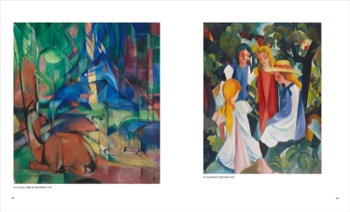
Hardcover. Munich / New York, Prestel / Neue Galerie, 1st, 2019, Book: Very Good, Dust Jacket: Very Good, Hardcover in a bright dust jacket, 207 pages. profusely illustrated in color and black & white throughout, including several full-page illustrations. Includes a preface by Ronald S. Lauder, a foreword by Renee Price and essays by Vivian Endicott Barnett, Erich Franz, Ursula Heiderich, Annegret Hoberg, Isabelle Jansen, and Olaf Peters. This generously illustrated volume focuses on the poignant friendship of Franz Marc and August Macke, two innovative members of the Blue Rider group. During the five years Franz Marc and August Macke knew each other, the two men carried on an artistic and personal friendship that had an immense impact of each of their careers. This book traces their relationship and features meticulously reproduced images that bring their paintings, and the bond they shared, to life. In addition to paintings, watercolors, and drawings from both artists, this book includes objects and documents that show their connection to one another. Clean copy.
Softcover. Hanover NH, Hood Museum of Art, 1st, 2006, Book: Very Good, Dust Jacket: None, Softcover, pictorial wraps, French flaps, 75 pages with 36 figures and 12 color plates. Issued in conjunction with a 2005 exhibition / installation by American artist Fred Wilson (b. 1954). With essays by Barbara Thompson, Mary K. Coffey, and Jessica Hagedorn, and many fine views of the artist's creativity. Clean copy.
Hardcover. Baton Rouge, Louisiana State University , 1st, 1979, Book: Very Good, Dust Jacket: Very Good, Hardcover in a bright dust jacket, 173 pages. This work is a brief look at worldwide slave revolts in the 17th through 19th centuries, emphasizing their interrelations with European power struggles, which gave rebels hope of finding weak spots in the defenses of the slave powers. The French Revolution also had an influence on slave revolts, but the canny European powers used indigenous peoples to suppress slave revolts (e.g., native Americans) and took advantage of African ethnic divisions as well. American slaves stood little chance of revolt and were under constant surveillance from Southerners, who coward in fear after the successful rebellions in the Caribbean, particularly in Hispaniola, and after Nat Turner and John Brown's efforts. Genovese also brings up religion's double-edged sword: one side used to pacify slaves and the other side to inspire them to break their chains. In short, this scholarly treatise is thought-provoking as well as informative and ends with an inspirational quote from one of Frederick Douglass's lectures. Name on front fly leaf, otherwise a clean copy.
Hardcover. NY, Frederick A. Stokes, 2nd pr., 1941, Book: Good, Dust Jacket: None, Hardcover, blue cloth stamped in black, 161 pages, many b&w drawings. This Book Gives More Than 150 Delightful And Practical Uses Carefully Selected From Magicians' And Seaman's Manuals, Craft Books, Accounts Of Native Games, And Other Widely Scattered Sources. Ranging From Tricks And Games To Serious Knotwork And Netting, They Will Keep You Entertained While Opening Up A Host Of New Crafts And Recreational Areas. Shelf worn copy, clean internally.
Hardcover. Geneva, Skira, 1st, 1953, Book: Very Good, Dust Jacket: None, Hardcover, 115 pages with tipped-in color plates. publisher's textured white cloth, red lettering on spine, Skira "S", red, embossed on cover. Translated by James Emmons. Chronological Survey. Bibliography. Index. The first title in "The Taste of Our Time" Series. No dust jacket, a clean, bright copy.
Hardcover. New York, Bloomsbury USA, 1st, 2017, Book: Very Good, Dust Jacket: None, 176 pages. Hardcover with no dust jacket. A very clean, unmarked copy with only minor wear to edges. A tight copy. Color illustrations throughout by Roz Chast
Hardcover. NY, William Morrow, reprints, Book: Very Good, Dust Jacket: None, Five hardcover books, all pictorial cloth Weekly Reader Book Club editions. Various dates, all illustrated in color by Seymour Fleishman. Clean copies.
Hardcover. Racine WI, Whitman, 1st, 1962, Book: Very Good, Dust Jacket: None, Hardcover, pictorial boards, color art by the Mattinsons based on the animated TV show.
Hardcover. London/NY, Thames & Hudson, 1st, 2019, Book: Very Good, Dust Jacket: Very Good, Hardcover in a bright dust jacket The first visual chronicle of a little-known chapter in the career of Henri Cartier-Bresson--one of the great photographers of the twentieth century. In December 1948, Henri Cartier-Bresson traveled to China at the request of Life magazine. He wound up staying for ten months and captured some of the most spectacular moments in China's history: he photographed Beijing in "the last days of the Kuomintang," and then headed back to Shanghai, where he bore witness to the new regime's takeover. Moreover, in 1958, Henri Cartier-Bresson was one of the first Western photographers to go back to China to explore the changes that had occurred over the preceding decade. The "picture stories" he sent to Magnum and Life on a regular basis played a key role in Westerners' understanding of Chinese political events. Many of these images are among the best-known and most significant photographs in Cartier-Bresson's oeuvre; his empathy with the populace and sense of responsibility as a witness making them an important part of his legacy. This volume allows these photographs to be reexamined along with all of the documents that were preserved: the photographer's captions and comments, contact sheets, and abundant correspondence, as well as the published versions that appeared in both American and European magazines. Clean copy. DOMESTIC SHIPPING ONLY.
Hardcover. Baltimore, Johns Hopkins University, 1st, 2011, Book: Very Good, Dust Jacket: Very Good, Hardcover in a bright dust jacket, 318 pages. From the time they emerged in American cities in the 1820s, commercial luxury hotels were far more than places where a traveler could eat and sleep-they were icons of style, opulence, and technological sophistication. Molly W. Berger offers a compelling history of the American hotel and how it captured the public's imagination as it came to represent the complex-and often contentious-relationship among luxury, economic development, and the ideals of a democratic society. From New York to San Francisco and points in between, Berger profiles the country's most prestigious hotels, including Boston's 1829 Tremont, which served as a model for luxury hotel design; San Francisco's world famous Palace, completed in 1875; and Chicago's enormous Stevens, built two years before the great crash of 1929. The fascinating stories behind their design, construction, and marketing reveal in rich detail how these buildings became cultural symbols that shaped the urban landscape. Clean copy.
Hardcover. NY, Schwartz & Wade, 4th pr., 2010, Book: Very Good, Dust Jacket: None, Hardcover in pictorial cloth, color art by Hills. Learn to read with this New York Times bestselling picture book, starring an irresistible dog named Rocket and his teacher, a little yellow bird. Follow along as Rocket masters the alphabet, sounds out words, and finally . . . learns to read all on his own! Clean copy, no dust jacket.
Softcover. Durham NC, Duke University Press, 5th pr., 1999, Book: Very Good, Dust Jacket: None, Softcover, 250 pages, b&w illustrations. This entertaining and playful book views Disney World as much more than the site of an ideal family vacation. Blending personal meditations, interviews, photographs, and cultural analysis, Inside the Mouse looks at Disney World's architecture and design, its consumer practices, and its use of Disney characters and themes. This book takes the reader on an alternative ride through "the happiest place on earth" while asking "What makes this forty-three-square-mile theme park the quintessential embodiment of American leisure?" Turning away from the programmed entertainment that Disney presents, the authors take a peek behind the scenes of everyday experience at Disney World. In their consideration of the park as both private corporate enterprise and public urban environment, the authors focus on questions concerning the production and consumption of leisure. Featuring over fifty photographs and interviews with workers that strip "cast members" of their cartoon costumes, this captivating work illustrates the high-pressure dynamics of the typical family vacation as well as a tour of Disney World that looks beyond the controlled facade of themed attractions. Clean copy.
Hardcover. NY, George Braziller, 1st, 1959, Book: Very Good, Dust Jacket: Very Good, Hardcover in a lightly worn, price-clipped dust jacket, yellow cloth covers with Pollock's signature stamped in black. 125 pages in color and b&w. About 20 pages of text by noted poet and playwright O'Hara, followed by over 80 reproductions, 16 in color. Clean copy.
Hardcover. NY, Columbia University Press, 1st, 1984, Book: Very Good, Dust Jacket: Very Good, Hardcover in a bright dust jacket, 410 pages with index. Contains selected translations from Taiheiyo senso e no michi: kaisen gaiko shi. Name on front fly leaf, otherwise clean. The first volume in Morley's 4 volume set "Japan's Road to the Pacific War".
Hardcover. Cambridge MA, MIT Press, 1st, 1974, Book: Very Good, Dust Jacket: Very Good, Hardcover in a price-clipped dust jacket, 162 pages. Japan's economy enjoyed unprecedented technological growth in the decades after World War II. At first stereotyped as an exported of shoddy goods, Japan enjoyed a worldwide reputation as an efficient manufacturer of high-quality products. This comprehensive analysis of Japanese management treats four related but distinct subject matters: the economic, social, cultural, and political environment pertinent to Japan's industrial and managerial system; the ideologies and background to the Japanese business elite structure and the relationship between government and business; and managerial practices (organizational structure, personnel practices, decision making). The book first describes the postwar technological environment in and outside Japan. It identifies the Schumpeterian characteristics of economic development and the particular set of relationships that Japan had with the United States and with developing nations in Asia that provided it with the incentive and the necessary mechanisms to advance technologically. Name on front fly leaf, otherwise clean.

 "Edith Halpert: The Downtown Gallery and the Rose of American Artby: Shaykin, Rebecca")
 "Edward Hopper: An Intimate Biographyby: Gail Levin")
 "Edward Hopper: Light Yearsby: Peter Schjeldahl")
 "Eisenhower and Berlin 1945: The Decision to Halt at the Elbeby: Stephen E. Ambrose")
 "Encounters With Modern Art: The Reminiscences of Nannette F. Rothschild : Works from the Rothschild Family Collectionsby: Rothschild, Nannette F. and Marcus, George H")
 "Eugene Atget: Paris (Masters of the Camera)by: Eugene Atget")
 "Everywhere Babies by: Susan Meyers/Marla Frazee")
 "Forged: Why Fakes are the Great Art of Our Age by: Keats, Jonathon")
 "Franklin D. Roosevelt and American Foreign Policy 1932-1945 by: Dallek, Robert")
 "Franz Marc and August Macke: 1909-1914 by: Barnett Endicott, Vivian")

 "Fred Wilson: So Much Trouble in the World: Believe It or Not! by: Barbara Thompson /Mary K. Coffey /Jessica Hagedorn")
 "From Rebellion to Revolution. Afro-American Slave Revolts in the Making of the Modern Worldby: Genovese, Eugene D.")
 "Fun with String: A Collection of String Games, Useful Braiding and Weaving, Knot Work and Magic with String and Rope by: Joseph Leeming")
 "Gauguinby: Charles Estienne")
 "Going into Town: A Love Letter to New Yorkby: Chast, Roz")
 "Gus Was a Friendly Ghost/Gus and the Baby Ghost/Gus Goes to School/ Gus Loved His Happy Home/What's A Ghost Going to Do? ( 5 titles)by: Jane Thayer/Seymour Fleishman")


 "Hanna-Barbera's Top Catby: Hanna-Barbera/Eileen Daly")
 "Henri Cartier-Bresson in China: 1948-1949/1958 by: Michel Frizot/Ying-lung Su")
 "Hotel Dreams: Luxury, Technology, and Urban Ambition in America, 1829-1929 by: Berger, Molly W.")
 "How Rocket Learned to Readby: Tad Hills")
 "Inside The Mouse: Work and Play at Disney World by: The Project on Disney")
 "Jackson Pollock. The Great American Artist Series by: O'Hara, Frank")
 "Japan Erupts: The London Naval Conference and the Manchurian Incident 1928-1932 (Studies of the East Asian Institute)by: Morley, James William (Editor)")
 "Japan's Technological Challenge to the West, 1950-1974:Motivation and Accomplishment by: Ozawa, Terutomo")