Hardcover. NY, E.P. Dutton & Co., 1933, Book: Very Good, Dust Jacket: Very Good, Hardcover in a bright, lightly worn dust jacket that's been price-clipped. 88 pages, "with the standard of points as authorized by the German Shepherd Dog Club of America", b&w frontis repeated on dust jacket. Name on rear fly leaf, otherwise clean.
Softcover. Chicago, University of Chicago , 1992, Book: Very Good, Dust Jacket: None, Softcover, 201 pages. In this concise but ambitious historiographical essay, Wilson argues for an approach to the Meiji Restoration that emphasizes multiple lines of motive and action. The four groups under discussion: 1. The loyalists -wanted to redeem the national image and thought themselves patriots. 2.The old guard -the samurai loyal to the shogunate. 3. The common people who only wanted stability. Some favored one side or the other and some just wanted change. 4. The foreigners -most sided with the Shogunate for economic stability. Name on front fly leaf, otherwise clean.
Hardcover. London, Art/Books, reprint, 2019, Book: Very Good, Dust Jacket: None, Hardcover, yellow cloth with black decoration, 186 pages. A beautiful facsimile of the earliest English translation of Gauguin's frank and entertaining memoir, written just before he died, in which he reveals his most inner thoughts on art, life and love Unappreciated in his own lifetime, Paul Gauguin is now recognized as one of the giants of French post-Impressionism and a pioneer of early modernism. A rebel in both art and life, he rejected his bourgeois upbringing and comfortable stockbroker's job to devote his life to painting. Eventually, dismayed by the 'hypocrisy of civilization' and in search of a primitive idyll, he left his wife and children behind in Paris and took up residence in the South Seas, first in Tahiti and, later, in the Marquesas Islands. He would never return to Europe. In the final months of his life, he wrote this witty and revealing autobiographical memoir with the request that it be published upon his death. It first appeared in the original French in 1918, and was translated into English three years later. As his son Emile wrote in the preface, 'These journals are an illuminating self-portrait of a unique personality. They bring sharply into focus for me his goodness, his humor, his insurgent spirit, his clarity of vision, his inordinate hatred of hypocrisy and sham.' Wide-ranging and elliptical, these candid reflections reveal Gauguin's inner thoughts about many subjects, including frank views on his fellow artists back in Paris, his turbulent relationship with Van Gogh, and the charms of Polynesian women, while providing glimpses into his often far-from-idyllic life in the islands. This beautiful facsimile reproduces the first American translation of the journals, a rare limited edition privately published in New York in 1921 for a select group of subscribers. With full-page sketches by the artist, these entertaining and enlightening musings give us a unique insight into Gauguin the man and the artist. Clean copy.
Hardcover. Ostfildern GR, Hatje Cantz, 1st, 2004, Book: Very Good, Dust Jacket: None, Hardcover, illustrated paper-covered boards; no dust jacket as issued. Photographs by Paul Pfeiffer. 80 pages with 35 four-color plates and 2 black-and-white plates. Essays (in German and English) by Valeria Liebermann and Stefano Basilico. Conversation with the artist (in German and English) by Thomas Ruff. Includes a list of works, biography, list of awards, exhibition history and publications. Clean copy.
Hardcover. NY, Burns Archive Press, 1st, 2005, Book: Very Good, Dust Jacket: None, Hardcover in pictorial boards. Twenty-five photographs from the Burns Archive documenting conditions presented in the 19th century in what is now called podiatry; this selection emphasizing skin conditions in the lower extremities. Clean, bright copy.
Hardcover. NY, Museum of Modern Art, 1st, 2016, Book: Very Good, Dust Jacket: Very Good, Hardcover in a bright dust jacket, 416 pages. The history of photography has been told many times, but never before through the incomparable collection of photographs at The Museum of Modern Art. This publication charts the medium during the height of the modernist period, from 1920 to 1960. with 550 b/w and color illustrations. The book begins with an in-depth introduction followed by eight chapters of full-color plates, each introduced by a short essay. Masterworks by photographers such as Alfred Stieglitz, Dorothea Lange, Man Ray and Aleksander Rodchenko appear alongside lesser-known gems, and diverse notions of modernism enrich classic interpretations, so that the beautiful fictions and messy realities of photography are complicated, refreshed and, above all, enjoyed. Clean copy. DOMESTIC SHIPPING ONLY.
Hardcover. NY, Museum of Modern Art, 1st, 2015, Book: Very Good, Dust Jacket: Very Good, Hardcover in a bright dust jacket, 367 pages, color and b&w illustrations. This publication comprises a comprehensive catalogue of the collection post-1960s and brings much-needed new critical perspective on the most prominent artists working with the photographic medium of the late twentieth and early twenty-first centuries. At a moment when photography is undergoing fast-paced changes and artists are seeking to redefine its boundaries in new and exciting ways, Photography at MoMA serves as an excellent resource for understanding the expanded field of contemporary photography today. The book is organized with an in-depth introductory chapter and eight chapters of full-colour plates, each introduced by a short essay, and features work by over 250 artists, including Diane Arbus, John Baldessari, Jan Dibbets, Rineke Dijkstra, William Eggleston, Lee Friedlander, Louise Lawler, Zoe Leonard, Helen Levitt, Sigmar Polke, Cindy Sherman, Wolfgang Tillmans, Jeff Wall, Carrie Mae Weems, Hannah Wilke and Garry Winogrand, among many others. Clean copy. DOMESTIC SHIPPING ONLY.
Hardcover. San Francisco, Jossey-Bass , 1st, 1993, Book: Very Good, Dust Jacket: Very Good, Hardcover, 384 pages, b&w illustrations. In this book, Judy Weiser shows how mental health professionals can use clients' personal photos and family albums as catalysts for therapeutic communication. She reveals how initiating a dialogue based on such personally symbolic artistic expressions gives form to feelings which otherwise might be resistant to verbal investigations. She shows how to use this dialogue to stimulate recall of forgotten, blocked, or denied information and memories, and to apply these insights to an effective therapeutic framework. A comprehensive guide to PhotoTherapy, this book provides the theoretical principles, detailed techniques, anecdotal illustrations, and practical exercises that will help mental health professionals apply this approach in practice. Looking at all types of photographs - whether they are ones that clients respond to, collect, pose for, or create - Weiser describes various ways to engage clients with photographic imagery. Providing several examples from actual cases to illustrate how clients' responses to photographs can be integrated into the therapeutic process, she offers practitioners a powerful therapeutic tool, regardless of their particular theoretical orientation. Clean copy.
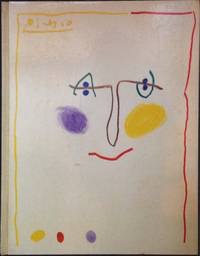
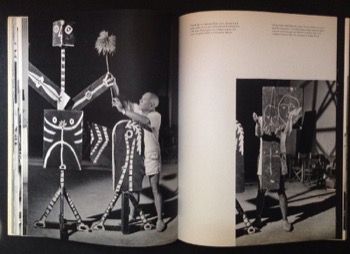
Hardcover. NY, Doubleday and Co., 1st, 1964, Book: Very Good, Dust Jacket: None, Hardcover, glossy boards with Picasso art on covers, white cloth spine with gilt lettering.. Illustrated with 282 photos including 52 in full color by Quinn. No wraparound title band or acetate jacket. Mild soil to covers, name on front fly leaf, front hinge partially cracked, otherwise clean. DOMESTIC SHIPPING ONLY.
Softcover. Hanover, Brandeis University Press, 1st pbk, 2000, Book: Very Good, Dust Jacket: None, Softcover, 338 pages, a study of Alice Neel and her paintings. Illustrated with b/w photographs and color plates, with notes, bibliography, and index. Clean, bright copy.
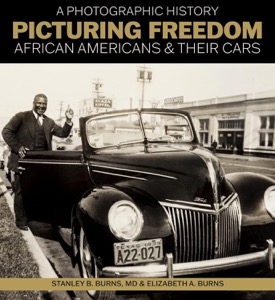
Softcover. NY, Burns Archive Press, 1st, 2022, Book: Very Good, Dust Jacket: None, Softcover, 272 pages. SIGNED BY STANLEY BURNS on title page. Picturing Freedom chronicles and celebrates the photographic history of African Americans and their cars by focusing on personal images of the pride and joy of car ownership (1900-1980+). Owning a car was a significant life-changing achievement. It offered special freedoms--the freedom to travel, the freedom to work further from home, the freedom to visit family and friends, the freedom to avoid Jim Crow laws, and the freedom to migrate. The car was unequivocal evidence of Black success and an important symbol of status in a country that had long fought their advancement in every area. Car ownership was purposely and proudly photographed. All of the photographs were taken in Black communities by a family member or a friend and reveal how African Americans represented themselves. This 2022 IPPY award-winning compilation of over 450 unique photographs is an inspiring visual narrative of American life. Clean, bright copy.
Softcover. London/NY, Thames & Hudson, 1st, 2024, Book: Very Good, Dust Jacket: None, Softcover, 288 pages. An accessible and visually rich study of Japanese photography since 1945 by an experienced curator specializing in Japanese art and culture. From the severity of post-war Realism to the diversity and technical ingenuity of the present, via movements and groups such as Vivo in the 1960s and 'girls' photography' in the 1990s, this visually bold and richly volume traces the development of Japanese photography since 1945. Interleaved are new interviews with some of the most influential practitioners in photographic history, from Moriyama Daido to Araki Nobuyoshi and Kawauchi Rinko. Lena Fritsch writes with imagination and clarity, interrogating a cross-section of photographic movements and works against the vivid, shifting backdrop of Japanese social, cultural and political history. The result is both an accessible introduction and an illuminating work of analysis for general readers and aficionados alike.
Softcover. Canberra AU, National Portrait Gallery, 1st, 1999, Book: Very Good, Dust Jacket: None, Softcover, color plates. Percy Leason was one of Max Meldrum's followers who painted over 30 'full blood' aborigines for 'The Last of the Victorian Aborigines' exhibition which he held at the Athenaeum Gallery (Melb) as part of Victoria's centennary celebrations (1934). This book documents these portraits and the politics that produced them. Clean copy.
Hardcover. Carmel CA, Ventana Editions, 1st, 2006, Book: Very Good, Dust Jacket: Very Good, Hardcover in a bright dust jacket, 140 pages, 55 b&w plates. John Sexton's highly anticipated fourth book. invites the viewer into the contemplative landscapes and human-made environments, filled with viant luminosity. Seen through Sexton's eyes. his subjects are transformed into images of tranquility. wonder. and mystery. From the purity of a fresh snowfall in Yosemite Valley to the enigmatic rock forms of the Colorado Plateau. Sexton explores the subtle nuances of details rather than grand vistas. Clean copy. DOMESTIC SHIPPING ONLY.
Softcover. NY, Academic Press, 1st, 1985, Book: Very Good, Dust Jacket: None, Softcover, 271 pages. Reconstitutions of Transporters, Receptors, and Pathological States presents lectures about the reconstitutions of transporters, receptors, and pathological states. The book discusses the principles and strategies of the resolution and reconstitution of soluble pathways and membrane complexes; and lessons in the resolution and reconstitution after the natural structure of the membrane has been destroyed. The text then describes the analyses of reconstituted vesicles; the ATP synthetase of oxidative phosphorylation; and the pumps of plasma membranes. The ATP-driven ion pumps in organelles, microorganisms, and plants; the proton motive force generators, electron transport chains, and bacteriorhodopsin; and facilitated diffusion, symporters, and antiporters are also considered. The book further tackles plasma membrane receptors, as well as the reconstitutions of pathological states. Biochemists, molecular biologists, and cell biologists will find the book invaluable. Name on front fly leaf, otherwise clean.
Hardcover. London/NY, Routledge, 1st, 2005, Book: Very Good, Dust Jacket: None, Hardcover, pictorial boards, 280 pages with index. Color and b&w illustrations. Why does art matter to us, and what makes it good? Why is the role of imagination so important in art? Illustrated with carefully chosen color and black-and-white plates of examples from Michaelangelo to Matisse and Poussin to Pollock, Revealing Art takes us on a compelling and provocative journey. Kieran explores some of the most important questions we can ask ourselves about art: how can art inspire us or disgust us? Is artistic judgement simply a matter of taste? Can art be immoral or obscene, and should it be censored? He brings such abstract issues to life with fascinating discussions of individual paintings, photographs and sculptures, such as Michelangelo's Pieta, Andres Serrano's Piss Christ and Francis Bacon's powerful paintings of the Pope. He also suggests some answers to problems that any one in an art gallery or museum is likely to ask themselves: what is a beautiful work of art? and can art really reveal something true about our own nature? Clean copy.
Softcover. Racine/Lannoo, 1st, 2017, Book: Very Good, Dust Jacket: None, Softcover, 239 pages, b&w and color plates. Text in English and French. Featuring the most well-known photos from Robert Doisneau since the beginning of his career. This retrospective also gives an insight in the lives of famous artists such as Picasso and Niki de Saint Phalle. The book is themed by three subjects: the main characteristics of his work and his importance for 20th century photography, the notion of the poetry of realism and 164 photos, which are also themed: daily beauty, Palm Springs, artists' studios. Published to accompany an exhibition in Musee Ixelles (Brussels) from 19 October 2017 until 4 February 2018. Clean, bright copy.
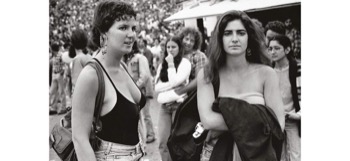
Hardcover. Bologna IT, Damiani , 1st, 2015, Book: Very Good, Dust Jacket: None, Hardcover, pictorial boards, 128 pages. In 1978 two of Joseph Szabo's high school students invited him to join them at a Rolling Stones concert at JFK Stadium in Philadelphia. Sensing a promising photo opportunity, Szabo agreed, packing three 35mm cameras and plenty of black-and-white film. Some 90,000 Rolling Stones fans converged on the stadium for the concert, where Szabo captured them drinking, kissing, smoking, dancing and hanging out. Their young subjects transported by the music, the drugs, the alcohol and the community, Szabo's Rolling Stones Fans photographs show unguarded moments of absorption and abandon in the sublimity of the rock and roll gig. Still in publisher's shrinkwrap.
Softcover. Los Angeles, Rare Bird Books, 1st US, 2024, Book: Very Good, Dust Jacket: None, Softcover, 122 pages. Advance Readers Copy. 'A great Russian novel in the grand Russian tradition' - LE FIGARO. Years after the death of their beloved son, there is a knock at the door of Nikolai and Vera's apartment. Introducing himself simply as 'Sergeant Bertrand', the unknown visitor triggers a precipitous journey into the depths of the human soul. Hailed as an early masterpiece of post-Soviet literature, Russian Gothic is now available in English for the first time. Three decades after it was written, its complex portrait of grief, misogyny, violence and love is as fresh, shocking and relevant as ever. Aleksandr Skorobogatov was born in Grodno in what is now Belorussia. He is one of the most original Russophone writers of the post-communist era. Clean copy.
Softcover. NY, Burns Archive Press, 1st, 2017, Book: Very Good, Dust Jacket: None, Softcover, 106 pages, color plates throughout. SIGNED/INSCRIBED BY STANLEY BURNS on the title page. Japan, an island nation isolated until the mid-nineteenth century, opened its doors to foreign photographers in the 1860s. These photographers presented a visual cultural kaleidoscope of Japanese life to an eager outside world. The 160 photographs in this volume are curated from tourist albums and presented in the typical sequence. The modern reader will experience Meiji Japan in the way of a nineteenth century armchair traveler. While photographers in other countries were marketing sepia-toned prints, photographers in Japan took advantage of local artists and had their prints exquisitely painted. As with all hand-rendered artworks, quality varied; many photographs were executed so well as to challenge modern color photography. Photographers were limited by government restrictions and many scenes were set in studios rather than in real life. Despite the limitations, tourists visiting the country could purchase albums filled with colorful renditions of Japan's peoples and places. The carefully staged and approved photographs promoted an idealized and romanticized vision of Meiji Japan. Modernization and industrialization changed the country dramatically and the last vestiges of the disappearing feudal culture are captured by the camera. These intriguing photographs are beautiful multi-media artworks representing a vanished world. Clean copy.
Hardcover. NY, The Burns Archive Press, 1st, 2011, Book: Very Good, Dust Jacket: None, Hardcover, laminated boards, measures 6 x 6 3/4", 164 pages. SIGNED AND INSCRIBED BY BURNS on title page. The first published expose focusing on the war-time clinical photographs of Dr. Reed Bontecou. Photographs of wounded Civil War soldiers from New York regiments, on display for the first time since the 19th century, show the supreme sacrifices made by Americans and their families in sobering detail. Clean copy.
Hardcover. NY, The Burns Archive Press, 1st, 2011, Book: Very Good, Dust Jacket: None, Hardcover, laminated boards, measures 6 x 6 3/4", 164 pages. SIGNED BY BURNS on title page. The first published expose focusing on the war-time clinical photographs of Dr. Reed Bontecou. Photographs of wounded Civil War soldiers from New York regiments, on display for the first time since the 19th century, show the supreme sacrifices made by Americans and their families in sobering detail. Clean copy.
Hardcover. NY, Prestel, 1st, 2019, Book: Very Good, Dust Jacket: None, Hardcover, pictorial boards, 160 pages. Illustrated with color and b&w photos. A captivating exploration of London's iconic Soho district, capturing its vibrant and eclectic mix of people, subcultures, and street life. This photographic collection delves into Soho's rich history of art, nightlife, and diversity, revealing both the allure and the edgier, untamed aspects of this unique area. Opening with a look at Soho through the years, this book includes archival images of Suffragettes learning Jiu-jitsu in a Soho gym, David Bowie preparing to record at Trident Studios, and Francis Bacon drinking at the French House. The book then presents the work of photographers who have shed light on Soho's many faces through the decades, including Kelvin Brodie, Clancy Gebler Davies, Corinne Day, William Klein, and Anders Petersen. Also featured is a new series of work by young, up-and-coming photographer Daragh Soden, whose images were specially commissioned by The Photographers' Gallery for this project. These streetscapes and portraits are by turns intimate and haunting, visceral and vibrant, nostalgic and provocative. Clean copy.
Hardcover. Urbana IL, University of Illinois Press, 1st, 1964, Book: Very Good, Dust Jacket: Good, Hardcover in a dust jacket with two small holes to front cover, 227 pages with index. "Slavery was a social and an economic institution of such power that it sustained and extended an economic system whose demands went far to determine the domestic and foreign policy of the "agrarian" party in our early history. For the agrarian politics of Jefferson, while possibly benefiting the small freeholder, very closely served the interests of the plantation system, at least as the planters conceived their interests." Name on front fly leaf, otherwise clean.

 "Our Friend the German Shepherd Dog by: Johns, Rowland")
 "Patriots and Redeemers in Japan: Motives in the Meiji Restoration by: Wilson, George M.")
 "Paul Gauguin's Intimate Journalsby: Van Wyck Brooks/Paul Gaugin")
 "Paul Pfeifferby: Stefano Basilico, Valeria Liebermann")
 "Photographic History of Early Podiatry: Selections from the Burns Archiveby: Stanley B. Burns")
 "Photography at MoMA: 1920-1960by: Quentin Bajac (Ed.)")
 "Photography at MoMA: 1960 to Now-Volume II by: Quentin Bajac (Ed.)")
 "PhotoTherapy Techniques: Exploring the Secrets of Personal Snapshots and Family Album by: Weiser, Judy")
 "Picasso At Work: an Intimate Photographic Studyby: Roland Penrose photos by Edward Quinn")
 "Pictures of People: Alice Neel's American Portrait Galleryby: Allara, Pamela")
 "Picturing Freedom: African Americans & Their Cars, A Photographic History (SIGNED COPY)by: Stanley B. Burns; Elizabeth A. Burns")
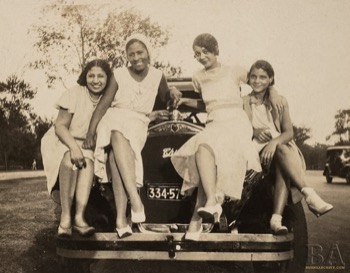
 "Ravens & Red Lipstick: Japanese Photography Since 1945 by: Lena Fritsch")
 "Recognition: Percy Leason's Aboriginal Portraits by: Galimany, Michael D. (Curator)")
 "Recollections: Three Decades of Photographyby: John Sexton")
 "Reconstitutions of Transporters, Receptors, and Pathological States by: Racker, Efraim")
 "Revealing Art by: Kieran, Matthew")
 "Robert Doisneau by: Danielle Leenarts & Virginie Devillers")
 "Rolling Stones Fans by: Joseph Szabo")

 "Russian Gothic by: Aleksandr Skorobogatov")
 "Setting Sun: Painted Photographs of Meiji Japan (SIGNED COPY)by: Elizabeth A. Burns; Stanley B. Burns")
 "Shooting Soldiers: Civil War Medical Photography By Reed B. Bontecou (SIGNED COPY)by: Stanley B. Burns MD")
 "Shooting Soldiers: Civil War Medical Photography By Reed B. Bontecou (SIGNED COPY)by: Stanley B. Burns MD")
 "Shot in Soho: Photographing Love And Lawlessness in the Heart of Londonby: Rodriguez Julian; McQuaid Karen")
 "Slavery and Jeffersonian Virginia by: McColley, Robert")