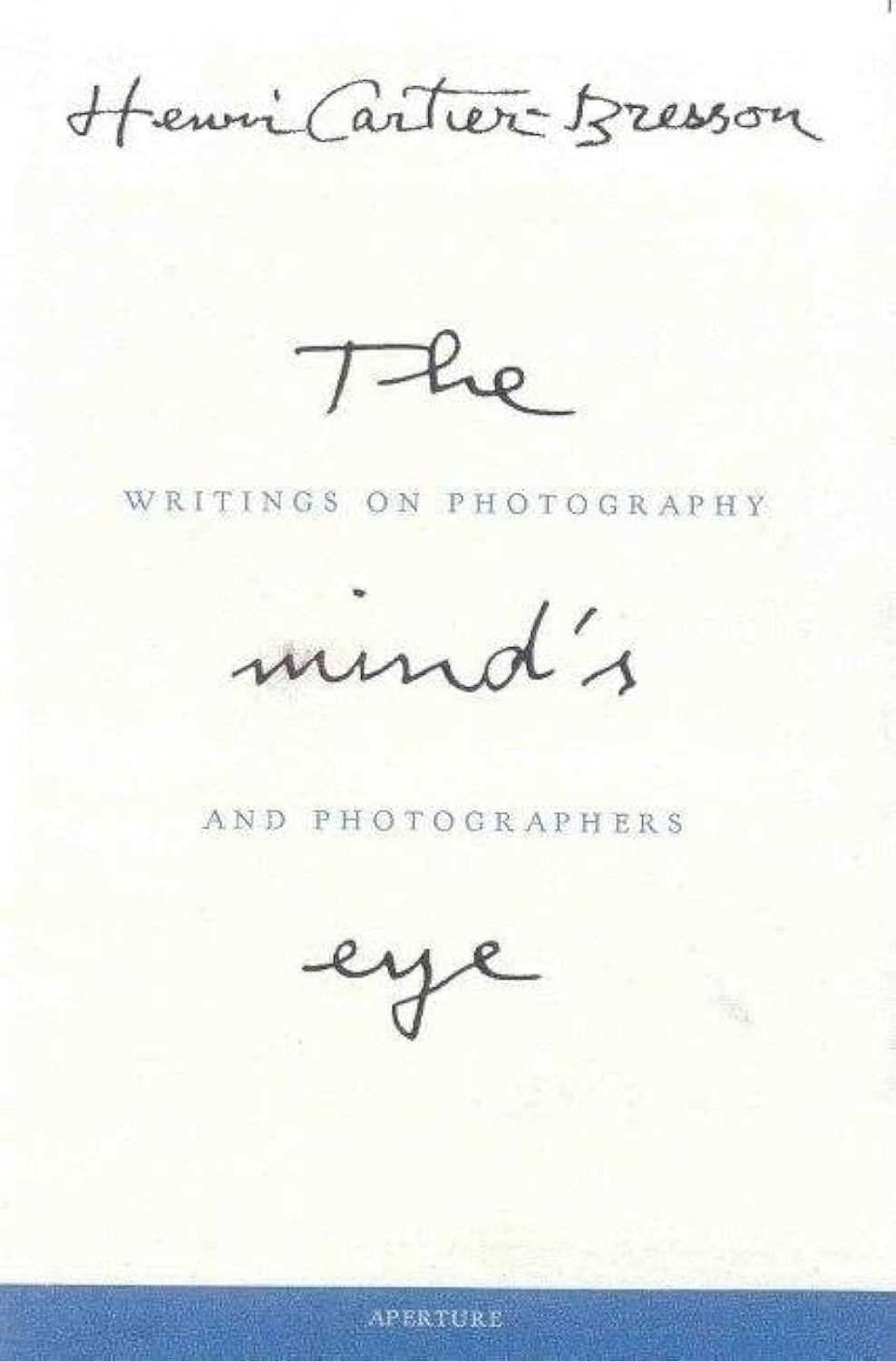
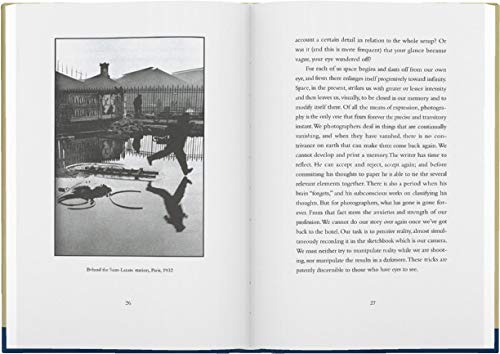
Hardcover. NY, Aperture, reprint, 1999, Book: Very Good, Dust Jacket: Very Good, Hardcover in a bright dust jacket, 107 pages. Henri Cartier-Bresson's writings on photography and photographers have been published sporadically over the past 45 years. His essays--several of which have never before been translated into English--are collected here for the first time. The Mind's Eye features Cartier-Bresson's famous text on "the decisive moment" as well as his observations on Moscow, Cuba and China during turbulent times. These essays ring with the same immediacy and visual intensity that characterize his photography. Clean copy.
Hardcover. Rutland VT, Charles E. Tuttle Co., 1st, 1971, Book: Very Good, Dust Jacket: Very Good, Hardcover, color frontis, many black & white photos. 252 pages + index. Previous owner's signature front fly leaf, dj with spine fading otherwise VG/VG. A publication of The Historical Society of Early American Decoration, Inc. Based on Esther Stevens Brazer's Photographic Collection.
Softcover. NY, Harper Torchbooks, reprint, 1966, Book: Very Good, Dust Jacket: None, Softcover, 302 pages. This book presents the historical setting of the industrial revolution in a form suitable for the general reader. It seeks to explain why 18th-century England was the theatre of the great series of mechanical inventions that caused the revolution, and what were the great social changes that preceded, accompanied and followed it. Clean copy.
Hardcover. Boston, Little Brown & Company, 1st, 2001, Book: Very Good, Dust Jacket: Very Good, Hardcover in a bright, unclipped dust jacket, 408 pages, b&w illustrations. Imperial Green Jade, also known as jadeite, is one of the rarest stones in the world. This volume combines original historical research, a travelogue, and investigative journalism to tell the secret history of jadeite. Clean copy.
Softcover. New Haven CT, Yale University Press, reprint, 1992, Book: Very Good, Dust Jacket: None, Softcover, 654 pages, b&w illustrations. This major revisionist account of the pre-Reformation Church recreates lay people's experience of religion in 15th-century England. Eamon Duffy shows that late mediaeval Catholicism was neither decadent nor decayed, but was a strong and vigorous tradition, and that the Reformation represented a violent rupture from a popular and theologically respectable religious system. Clean copy.
Softcover. Minneapolis, University of Minnesota Press, 1st, 2001, Book: Very Good, Dust Jacket: None, Softcover, 205 pages, b&w illustrations. A comprehensive look at a controversy that continues to fuel debates about the role of public art in America. Since its installation at and subsequent removal from New York City's Federal Plaza, noted sculptor Richard Serra's Tilted Arc has been a touchstone for debates over the role of public art. Installed in 1981, the 10-foot-high, 120-foot-long curved wall of Cor-Ten self-rusting steel instantly became a magnet for criticism. Art critics in the New York Times and the Village Voice labeled it the city's worst public sculpture, and many denounced it as an example of the elitism associated with art and as an obstacle to the use and enjoyment of the plaza. Harriet F. Senie explores the history of Tilted Arc, including its 1979 commission and the heated public hearings that eventually led to its removal in 1989 (it was dismantled and is currently stored in a government warehouse in Maryland). Analyzing the archive of popular opinion, Senie shows how the sculpture was caught in an avalanche of shifting local and national discussions about public funding for the arts. Clean copy.
Softcover. NY, Doubleday Anchor Book, 1st US, 1968, Book: Very Good, Dust Jacket: None, Softcover, 298 pages. First published in 1917 and long regarded as a classic of English social history. Preface by Asa Briggs. Clean, bright copy.
Softcover. Boston, Museum of Fine Arts, 1st, 2009, Book: Very Good, Dust Jacket: None, Softcover, 315 pages. Color illustrations. For nearly four decades in the sixteenth century, the careers of Venice's three greatest painters-, Titan, Tintoretto and Veronese, overlapped, producing mutual influences and bitter rivalries that changed art history. Venice was then among Europe's richest cities, and its plentiful commissions fostered an exceptionally fertile and innovative climate. In it, the three artists, brilliant, ambitious and fiercely competitive, vied with one another for primacy, employing such new media as oil on canvas, with its unique expressive possibilities, and such new approaches as a personal and identifiable signature style. They also pioneered the use of easel painting, a newly portable format that led to unprecedented fame in their lifetimes. With more than 150 stunning examples by the three masters and their contemporaries, this volume elucidates the technical and aesthetic innovations that helped define the uniquely rich "Venetian style," as well as the social, political and economic context in which it flourished. Essays range from examinations of seminal new techniques to such crucial institutions as state commissions and the patronage system. Most of all, by concentrating on the lives and careers of Venice's three greatest painters, Titian, Tintoretto, Veronese paints a vibrant human portrait--one brimming with savage rivalry, one-upmanship, humor and passion. Clean copy. DOMESTIC SHIPPING ONLY.
Hardcover. Minneapolis, University of Minnesota Press, 1st thus, 2022, Book: Very Good, Dust Jacket: Very Good, Hardcover in a bright dust jacket, 92 pages illustrated in color and b&w by the author. In this book, first published as Troldskab in 1892, Kittelsen spins tales of wonder around creatures rumored to haunt the fields, forests, and waterfalls of Norway. Striding, gamboling, and slithering across these pages are witches and gnomes and sea monsters, fiery dragons waking from their stiff-winged slumber, mermaids rising from the deep, and the sly, shape-shifting nokk. But first and foremost are the trolls, hapless, horrible, or just plain silly, working their spells and making their mischief to the terror and delight of the presumably human reader. Tailoring his whimsical artistic style to each tale, Kittelsen's stories, in Tiina Nunnally's nimble translation, reveal a Nordic world of wonder, myth, and magic as real as the imagination allows. Clean copy.
Softcover. University of Chicago Press, reprint, 1965, Book: Very Good, Dust Jacket: None, Softcover, 555 pages. Traces the political fortunes of the Puritans from 1524, the year in which William Tyndale left London for Germany, to the Stuart Settlement at the beginning of the seventeenth century. The author then examines the social, cultural, and intellectual aspects of Puritanism which, he believes, represented a more genuine idealism than any rival religious movement during the Tudor period. Remainder mark to bottom edge, otherwise a clean copy.
Softcover. UK, Antony Rowe, reprint, nd, Book: Very Good, Dust Jacket: None, Softcover, 112 pages, b&w illustrations. 178 b/w photos. The great German assault on Verdun opened on 21 February 1916 and the battle went on with furious attacks and counterattacks till it finally petered out on 18 December, ten months later, some two and a half months longer than the British offensives of the Somme and Third Ypres combined. After describing the origins and conduct of the battle with maps and illustrations the book takes us on a tour of the town and of various parts of the battlefield with its numerous forts. Originally published in 1919 by Michelin. Clean copy.
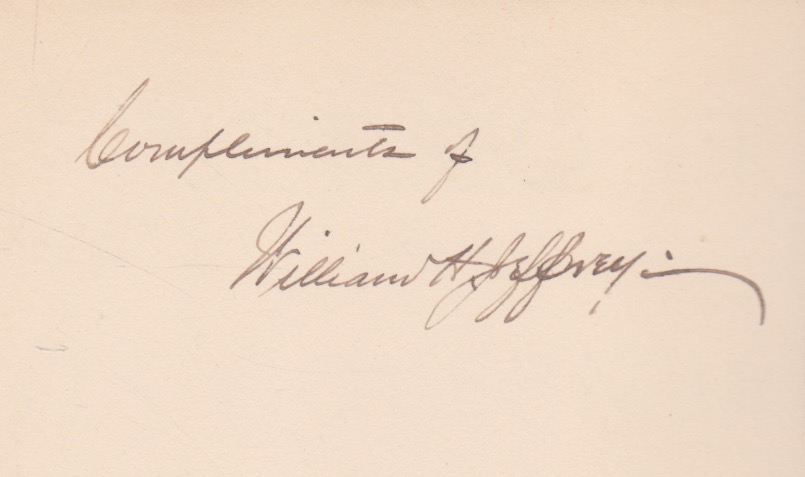
Hardcover. East Burke VT, The Historical Publishing Company, 1st, 1905, Book: Very Good, Dust Jacket: None, Hardcover, green cloth stamped in gilt. 104 pages with b&w photos of government officials. "Compliments of William H. Jeffrey" in his hand on front fly leaf. Valuable historical research book covering all Vermont office holders at the federal, state, and county levels with professional photo-portraits and details. Printed on heavy glossy paper stock. Mild scuffing to spine, otherwise clean.
Softcover. San Francisco, Chronicle Books, 1st, 1986, Book: Very Good, Dust Jacket: None, Softcover, 186 pages, b&w illustrations. Warm, wonderfully entertaining accounts by a general store proprietor, a basket weaver, a gravedigger, a town gadfly, and 34 others reveal how time-honored traditions are carried on in spite of the inroads of the 20th century. As colorful as the state's autumn hues, and, in the matter of opinions, as obdurate as mountain granite, these recollections are accompanied by candid portraits. Clean copy.
Softcover. NY, Harper Torchbooks, reprint, 1970, Book: Very Good, Dust Jacket: None, Softcover, 397 pages. "Few works that I know convey the excitement of the intellectual life of nineteenth-century England as immediately as Gertrude Himmelfarb's Victorian Minds. The essays are remarkable no less for the cogency of their wit than for the range and precision of their scholarship" ` ~ Lionel Trilling. Clean copy.
Hardcover. Harrisburg PA, National Historical Society, reprint, 1988, Book: Very Good, Dust Jacket: None, Hardcover, glossy green pictorial boards. No DJ as issued. Volume 7 of the Architectural Treasures of Early America. From material originally published as White Pine Series of Architectural Monographs edited by Russell F. Whitehead and Frank Chouteau Brown. 238 page book with historic photographs and home plans. Clean copy.
Hardcover. NY, Alfred A. Knopf, 2nd pr., 1967, Book: Very Good, Dust Jacket: Very Good, Hardcover in a bright, unclipped dust jacket, 302 pages. A follow-up to Margaret Murie's classic Two in the Far North about their earlier life in Alaska, this book set in and around Jackson Hole was co-authored with her husband Olaus, who died before its publication. In alternating chapters, Olaus, a renown wildlife biologist, writes about his animal studies, especially of elk (wapiti), and Margaret writes more generally about "their life together, on the trail, in the various camps, and nature adventures in the wilderness during four seasons." The Muries were pivotal in the wilderness movement and lived at the base of the Tetons in Moose, Wyoming. Their home is now the Murie Center in the National Park. Margaret has been called "the grandmother of the conservation movement." With photographs and illustrations by Olaus. Clean copy.
Hardcover. Long Beach CA, Safari Press, 2nd Ed., 2000, Book: Very Good, Dust Jacket: Very Good, Hardcover in a bright dust jacket, 289 pages. Thirty-five enchanting tales by distinguished experts from 1888-1913--bring back the flavor of incredible shooting from British Columbia, Montana, and Oregon down to Arizona and Mexico.
Hardcover. NY, New York University Press, 1st, 1970, Book: Very Good, Dust Jacket: Very Good, Hardcover in a bright dust jacket, 116 pages, b&w illustrations. Name on front fly leaf otherwise clean.
Hardcover. Hamden CT, Archon Books, reprint, 1970, Book: Very Good, Dust Jacket: Good, Hardcover in a lightly worn dust jacket, 243 pages, b&w portrait frontis. A biography of the Virginia cavalier and landowner who lavished his wealth in the building of Westover where he lived on an almost feudal estate and gathered the most valuable library in the colonies. Originally published in 1932.
Softcover. NY, DC Comics, 1st, 2020, Book: Very Good, Dust Jacket: None, Softcover, 320 pages. For the first time ever, DC collects the best Wonder Woman tales from the 1950s. In this decade, the Amazon Princess fought for justice against spy rings, robots, hidden societies of evil, supernatural beings, and much more. Plus, a female reporter uncovers Diana's greatest secrets on a trip to Paradise Island. Clean, bright copy.
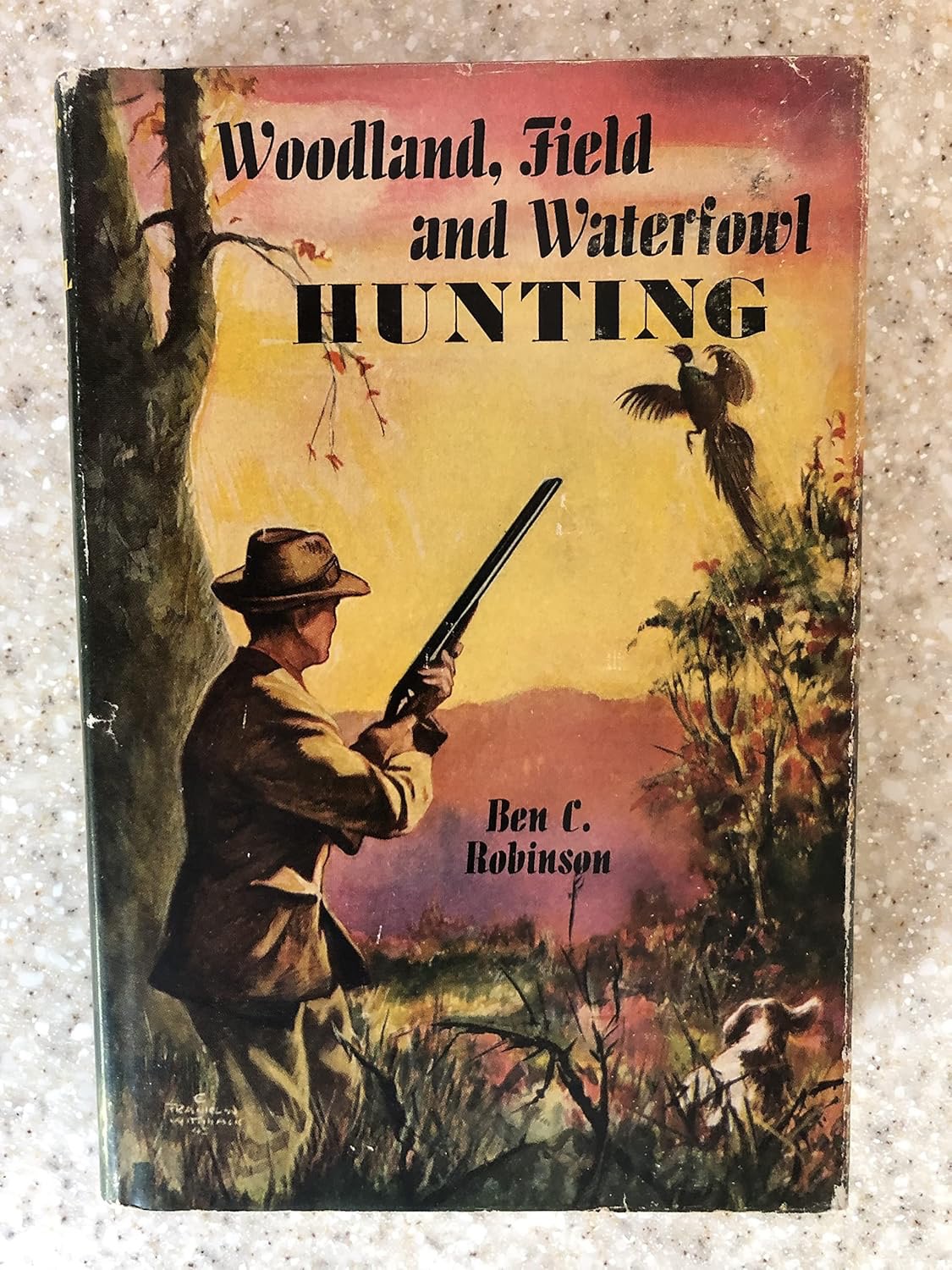
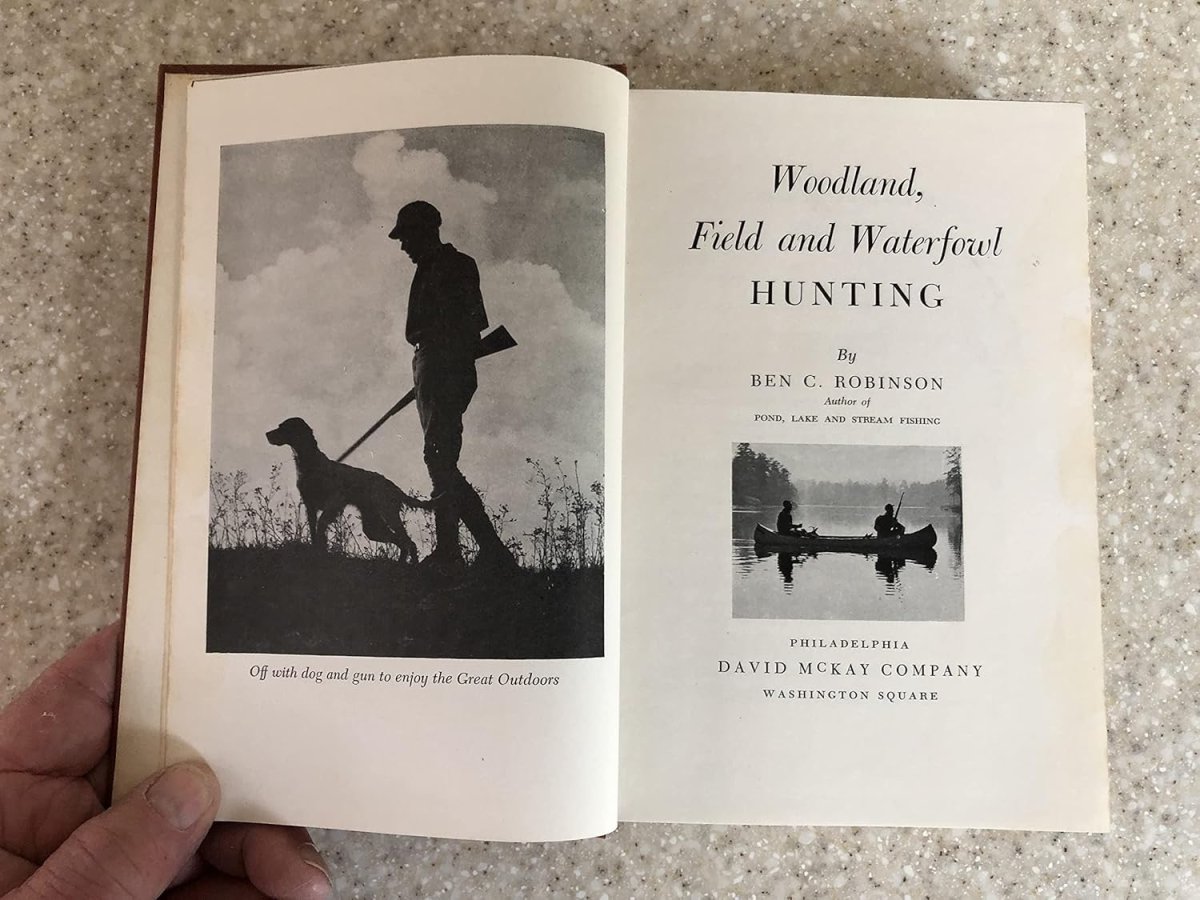
Hardcover. Philadelphia, David McKay Company, 1st, 1946, Book: Very Good, Dust Jacket: Very Good, Hardcover in a bright, price-clipped dust jacket, 333 pages with b&w illustrations. A handsome volume on hunting ducks and geese, upland game birds, small game and deer, with chapters on shotguns, rifles, blinds, decoys and sporting dogs. Lovely wrap-around dust jacket with a colorful illustration. Clean copy.
Hardcover. Munich, Hirmer, 1st, 2024, Book: Very Good, Dust Jacket: None, Hardcover in pictorial boards, 240 pages. Ylla (1911-1955) devoted herself exclusively to animal portraiture at a time when no one had thought of only photographing animals. Driven by her symbiotic relationship with animals, she created a new genre in animal photography: the expression and personality in animals. Ylla: The Birth of Modern Animal Photography recounts the eventful odyssey of a "New Woman" par excellence, fearless and knowing no limits. She was part of artists' circles in Belgrade and Paris, however during WW II she fled to New York via Marseille where she started her career again from square one. Originally taking beguiling photos in her studio and zoos, Ylla finally traveled to Africa and India where she died in a tragic accident during a water buffalo race. Her Animals in Africa and Animals in India are some of the first books on the subject. Ylla also introduced photography to children's literature. Her books The Sleepy Little Lion and Two Little Bears are juvenile classics. This book details her remarkable life and work.

 "The Mind's Eye: Writings on Photography and Photographers by: Cartier-Bresson, Henri")
 "The Night The Revolution Began: The Boston Tea Party, 1773by: Wesley S. Griswold")
 "The Ornamented Tray: Two Centuries of Ornamented Trays (1720-1920)by: Lea, Zilla Rider (editor)")
 "The Rise of Modern Industry by: Hammond, J. L. and Barbara")
 "The Stone Of Heaven: Unearthing The Secret History Of Imperial Green Jadeby: Levy, Adrian / Scott-Clark, Cathy")
 "The Stripping of the Altars: Traditional Religion in England, 1400-1580 by: Duffy, Eamon")
 "The Tilted Arc Controversy: Dangerous Precedent? by: Harriet F. Senie")
 "The Town Labourerby: J.L. and Barbara Hammond")
 "Titian Tintoretto Veronese: Rivals in Renaissance Venice by: Frederick Ilchman et al.")
 "Troll Magic: Hidden Folk from the Mountains and Forests of Norway by: Kittelsen, Theodor/ Nunnally, Tiina (Translator)")
 "Tudor Puritanism: A Chapter in the History of Idealismby: Knappen, M.M.")
 "VERDUN and the Battles for its Possessionby: (Michelin)")
 "Vermont Its Government 1904-1905 (SIGNED COPY)by: Jeffrey, William H.")

 "Vermonters: Oral Histories from Down Country to the Northeast Kingdomby: Strickland, Ron")
 "Victorian Minds: A Study of Intellectuals in Crisis and of Ideologies in Transitionby: Himmelfarb, Gertrude")
 "Village Architecture of Early New England (Architectural Treasures of Early America Vol 7)by: Mullins, Lisa C. (editor)")
 "Wapiti Wildernessby: Margaret & Olaus Murie Murie")
 "Western Bird Huntingby: Worth Mathewson (Ed.)")
 "William Brewster of the Mayflower: Portrait of a Pilgrim by: Brewster, Dorothy")
 "William Byrd of Westoverby: Richmond Croom Beatty")
 "Wonder Woman in the Fiftiesby: Kanigher, Robert/ Broome, John")
 "Woodland, Field And Waterfowl Hunting by: Robinson, Ben C.")
 "Ylla: The Birth of Modern Animal Photographyby: Pryor Dodge")