Hardcover. Chicago, University Of Chicago Press , 1st, 2017, Book: Very Good, Dust Jacket: Very Good, Hardcover in a bright dust jacket, 330 pages with index. At the close of the nineteenth century, new printing and paper technologies fueled an expansion of the newspaper business and publishers were soon reeling off as many copies as Americans could be convinced to buy. Newspapers quickly saturated the United States, especially its cities, which were often home to more than a dozen daily papers apiece. Using New York, Philadelphia, Milwaukee, and Chicago as case studies, Julia Guarneri shows how city dailies became active agents in creating metropolitan spaces and distinctive urban cultures. Newsprint Metropolis offers a vivid tour of these papers, from the front to the back pages. Paying attention to much-loved features, including comic strips, sports pages, advice columns, and Sunday magazines, she tells the linked histories of newspapers and the cities they served. Themed sections for women, businessmen, sports fans, and suburbanites illustrated entire ways of life built around consumer products. Guarneri also argues that while papers provided a guide to individual upward mobility, they also fostered a climate of civic concern and responsibility. Charity campaigns and metropolitan sections painted portraits of distinctive, cohesive urban communities. Real estate sections and classified ads boosted the profile of the suburbs, expanding metropolitan areas while maintaining cities' roles as economic and information hubs. Clean, like new.
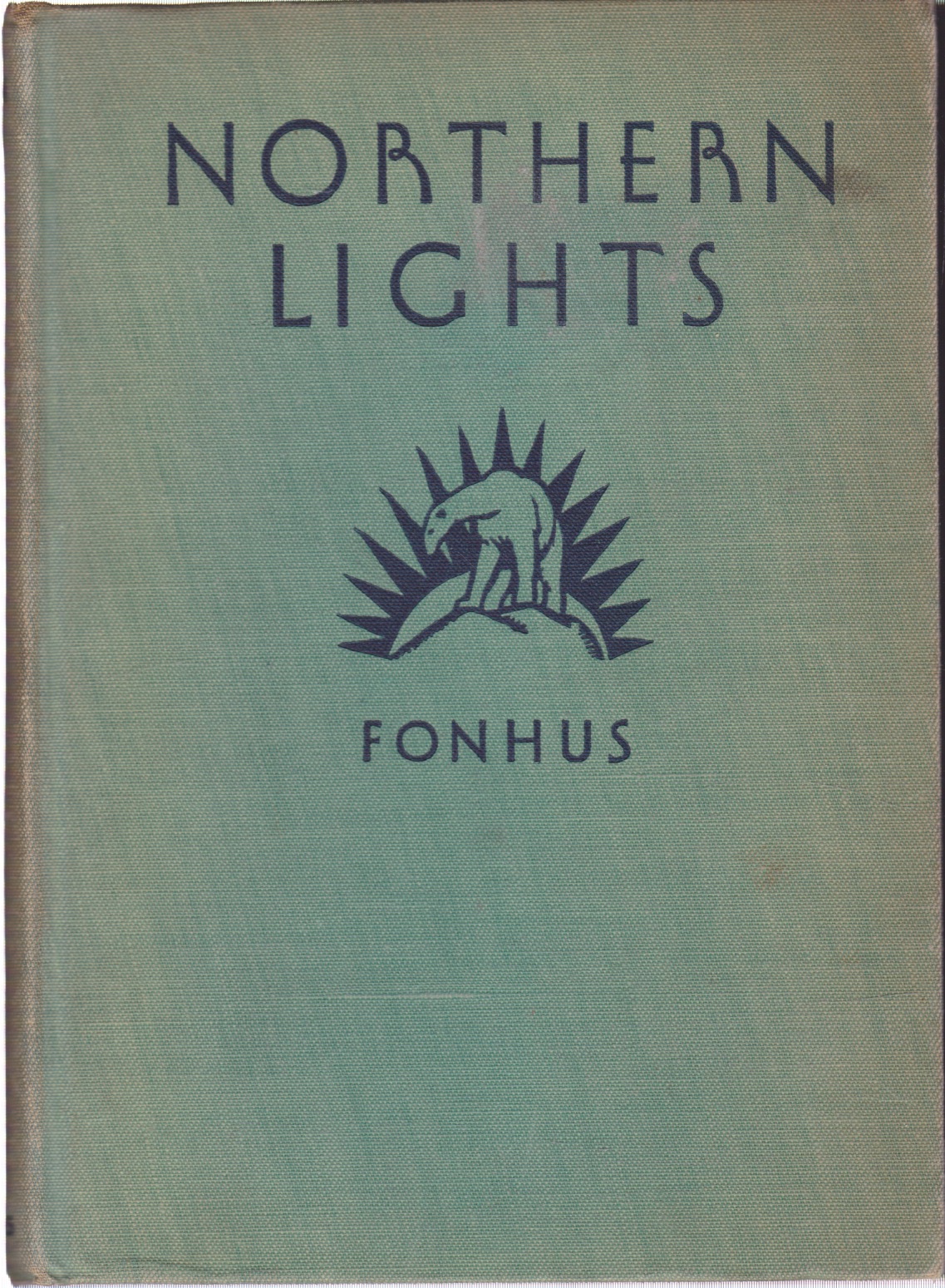
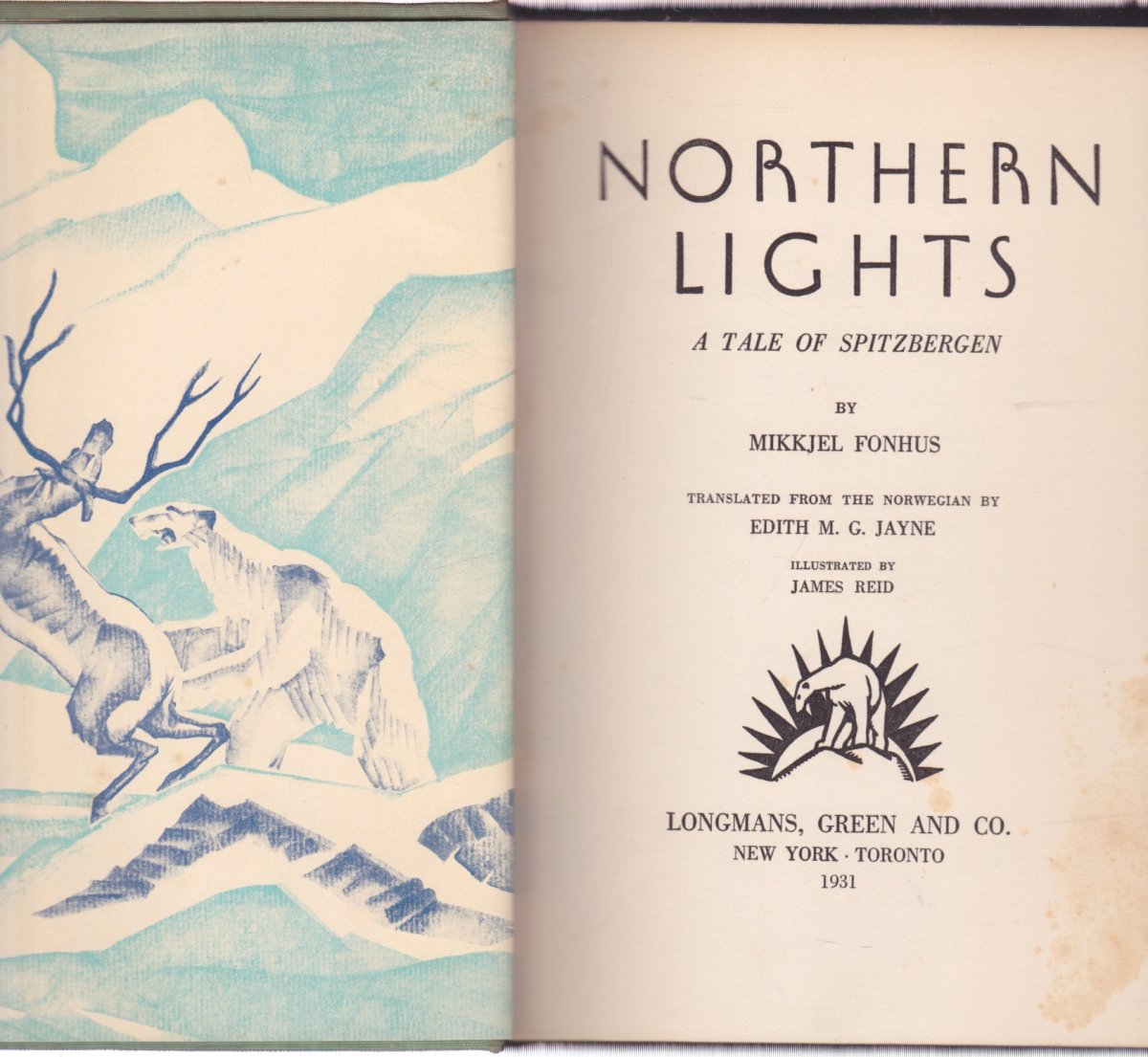
Hardcover. NY, Longmans, Green, 1st US, 1931, Book: Good, Dust Jacket: None, Hardcover, green cloth covers with dark green lettering and decoration, 151 pages. Four 2-color plates, endpapers design and b&w text drawings by James Reid. The story of a polar bear. Mild shelf wear.
Hardcover. NY, Harper & Row , 1st, 1972, Book: Very Good, Dust Jacket: None, Hardcover, pictorial cloth, 64 pages illustrated in color by Kessler. When the animals in the woods decide to hold the first All-Animal Olympic Games a series of humorous events follow. Clean copy.
Hardcover. NY, Thomas Y Crowell, 1st, 1974, Book: Very Good, Dust Jacket: Good, Hardcover in a lightly worn dust jacket, 193 pages including index, illustrated with 34 reproductions, some in color. George Caleb Bingham (1811-1879) who painted his world as it really was, everyday people in their everyday lives. His family was one of the early pioneer settlers, moving to the frontier in 1819. George began is art career painting tavern signs, later graduating to portraits, views of everyday life and "river paintings". He also was a Missouri politician, holding several important offices. Clean copy.
Hardcover. NY, Doubleday, Doran & Company, 1st, 1929, Book: Very Good, Dust Jacket: None, Hardcover, publisher's blue cloth with yellow titles and front decoration, 321 pages. Illustrations by Gordon Grant. Book number three in the Penrod trilogy. Booth Tarkington (1869-1946) was an American novelist known for his portrayals of Midwestern life and humorous portrayals of boyhood and adolescence. Many of his novels have become young-people's classics. Clean copy.
Softcover. NY, Farrar, Straus and Giroux, 1986, Book: Very Good, Dust Jacket: None, Softcover, 280 pages. This entertaining and social history of women and cooking at the turn of the 20th century is laced with sly humor and lucid insight. The author uncovers our ancestors' widespread obsession with food, and tells readers why we think as we do about food today. The most memorable of the culinary movers was Fannie Farmer, whose cookbook was published in a modest 3000-copy edition in 1896. Stories about Farmer and other domestic scientists of the period add strong appeal to Shapiro's report. So do the parallels between early feminists and today's advocates of equal rights. Name on front fly leaf, otherwise clean.
Hardcover. Middlebury VT, PhotoPlace Gallery, 1st, 2012, Book: Very Good, Dust Jacket: Very Good, Hardcover in a bright dust jacket. A collection of 75 portraits in color and b&w chosen by Frank Goodyear, Associate Curator at the National Portrait Gallery. Clean copy.
Hardcover. New York, John Day, 1st, 1927, Book: Very Good, Dust Jacket: None, Hardcover, slate blue boards with black cloth spine with gilt lettering, 9 page introduction by Calkins, followed by 50 b&w plates. The best of ad brochures and catalogs from the 1920s. Front hinge cracked, small stamped name to endpapers, otherwise clean.
Hardcover. Cambridge MA, MIT Press, 3rd pr., 2010, Book: Very Good, Dust Jacket: Very Good, Hardcover in a bright dust jacket, 354 pages. As curator Steve Dietz has observed, new media art is like contemporary art -- but different. New media art involves interactivity, networks, and computation and is often about process rather than objects. New media artworks are difficult to classify according to the traditional art museum categories determined by medium, geography, and chronology and present the curator with novel challenges involving interpretation, exhibition, and dissemination. This book views these challenges as opportunities to rethink curatorial practice. It helps curators of new media art develop a set of flexible tools for working in this fast-moving field, and it offers useful lessons from curators and artists for those working in such other areas of art as distributive and participatory systems. The authors, both of whom have extensive experience as curators, offer numerous examples of artworks and exhibitions to illustrate how the roles of curators and audiences can be redefined in light of new media art's characteristics. Rethinking Curating offers curators a route through the hype around platforms and autonomous zones by following the lead of current artists' practice. Name on front fly leaf, otherwise clean.
Hardcover. Baltimore, Genealogical Publishing Company, 2nd pr., 1997, Book: Very Good, Dust Jacket: None, Hardcover, blue cloth stamped with gilt lettering, 608 pages. After the Revolutionary War, the federal government awarded bounty lands to citizens and soldiers for services rendered. In its simplest form, this involved the exchange of free land for military service. Federal records of these Revolutionary War bounty land awards are well known and readily accessible to genealogists. But the federal government was not alone in rewarding its citizens and soldiers with bounty lands. Nine state governments adopted similar policies, generating even more records. Unlike the federal bounty land records, however, these state records are not centralized; instead, they are found in the various states in the form of manuscript records and printed books and are all but inaccessible to the researcher. Until now, that is! Because with this work by Lloyd Bockstruck we now have a master index to state bounty land records, a Revolutionary War resource unparalleled for freshness, originality, and research potential. The nine states that awarded bounty lands in their western reserves or on their western borders (directly affecting the future states of Indiana, Kentucky, Maine, Ohio, and Tennessee) are Connecticut, Georgia, Maryland, Massachusetts, New York, North Carolina, Pennsylvania, South Carolina, and Virginia. (The basis for the Connecticut and Georgia awards, by the way, differ from the norm.) Clean, bright copy.
Softcover. New York , Monacelli Press, 1st, 2000, Book: Very Good, Dust Jacket: None, Softcover, 224 pages, color illustrations throughout by Robert Risko. These celebrity caricatures are instantly recognizable -- recognizable both as unmistakable portraits of famous subjects and as examples of Risko's bold and fluid style. Risko's career was launched in 1978 when Andy Warhol gave him an assignment for Interview magazine. Since then he has drawn likenesses of hundreds of notables from the worlds of film, television, politics, and culture. In addition to countless images for Vanity Fair, Rolling Stone, The New Yorker, and other major magazines, Risko has illustrated book jackets, video covers, movie posters, and CD packages. Very good plus.
Hardcover. London, John Murray, 1st, 1965, Book: Very Good, Dust Jacket: Good, Hardcover in a lightly worn dust jacket, 236 pages. Name on front fly leaf otherwise clean.
Hardcover. NY, Harper and Row, 1959, Book: Very Good, Dust Jacket: None, Hardcover, pictorial cloth, 64 pages illustrated throughout by Hoff in color. Without publisher's zip code on copyright page, so an early printing. Name on blank prelim page otherwise clean. Not a book club.
Softcover. University of Chicago Press, 1st, 2021, Book: Very Good, Dust Jacket: None, Softcover, pictorial wrappers, 112 pages. It's hard to imagine a place more central to American mythology today than Silicon Valley. To outsiders, the region glitters with the promise of extraordinary wealth and innovation. But behind this image lies another Silicon Valley, one segregated by race, class, and nationality in complex and contradictory ways. Its beautiful landscape lies atop underground streams of pollutants left behind by decades of technological innovation, and while its billionaires live in compounds, surrounded by redwood trees and security fences, its service workers live in their cars. With arresting photography and intimate stories, Seeing Silicon Valley makes this hidden world visible. Instead of young entrepreneurs striving for efficiency in minimalist corporate campuses, we see portraits of struggle--families displaced by an impossible real estate market, workers striving for a living wage, and communities harmed by environmental degradation. If the fate of Silicon Valley is the fate of America--as so many of its boosters claim--then this book gives us an unvarnished look into the future. Clean copy.
Softcover. Ontario CA, ECW Press, 1st, 2024, Book: Very Good, Dust Jacket: None, Softcover/Advanced Reading Copy, 228 pages. A restorative and resonant memoir of a year in the life of an aging shepherd. For 50 years, Barbara McLean has tended a flock of Border Leicester sheep on her small Ontario farm, Lambsquarters. In Shepherd's Sight she shares the crises, pleasures, and challenges of farm life over the course of a year. Now in her 70s, McLean faces a new problem: how much longer she can continue with the physically taxing work that is her central source of meaning and satisfaction. Through her unsentimental gaze, we witness the highs and heartbreaks of delivering and rearing lambs, the shearing and spinning of wool, the wildlife in the woods (and occasionally in the house), and the garden produce moving from seed to harvest to table. Even after half a century on this land, McLean is still making fresh observations, and she shares them in evocative, elegant prose. As she moves through the calendar year, she also reflects on years past, offering a long view on climate, stewardship and agriculture. With its vivid description and absorbing storytelling, Shepherd's Sight offers an unforgettable glimpse of a life lived on the land. Clean copy.
Hardcover. london, Reaktion Books, 1st, 2019, Book: Very Good, Dust Jacket: Very Good, Hardcover in a bright dust jacket, 444 pages, b&w illustrations. Show People offers a comprehensive history of the idea of the film star from Mary Pickford to Andy Serkis, traversing more than one hundred years and drawing on examples from America, Britain, Europe, and Asia. Renowned film writer Michael Newton explores our enduring love affair with fame, glamour, and the cinematic image. Newton builds up an expansive picture of movie stardom through explorations of striking and diverse figures such as Ingrid Bergman and John Wayne, Anna Karina and Sidney Poitier, Maggie Cheung, and Raj Kapoor. He celebrates the great performers of the past, and he looks forward to developments in the future, while also illuminating the inner workings of the movie industry and what moves us in a film and in an actor's performance. An encyclopedic, illustrated history of film idols ready for their close-ups, Show People is ultimately a book about cinephilia, the love of cinema, and our complex connection to that celebrated and beleaguered figure, the movie star. Clean, like new.
Softcover. Gwinn MI, Avery Color Studios, 1st, 2014, Book: Very Good, Dust Jacket: None, Softcover, 201 pages, b&w illustrations. The Reverend Law was in peril on the Great Lakes and was rescued by a U.S. Life-Saving Service Station crew. As a result of that rescue, seeing their heroic efforts first hand, Reverend Law dedicated the rest of his life to the men and women stationed at Light and Life-Saving stations throughout the United States. Whether it was bringing his "Floating Library" to stations located on the Great Lakes, regular correspondence with the crews of stations far too remote for a personal visit, or his relentless pursuit of Congress to approve a bill to provide better pay and pensions, Reverend Law became a fast friend to those serving in the Lighthouse and Life-Saving services. "Sky Pilot" was sailors' slang for a chaplain. To the men and women he served, Reverend Law was lovingly known as "The Sky Pilot of the Great Lakes." A true tale of unconquerable optimism,
Hardcover. Chicago, University of Chicago Press, 2nd pr., 2015, Book: Very Good, Dust Jacket: Very Good, Hardcover in a bright dust jacket, 233 pages, b&w illustrations. From the minute it opened--on Christmas Day in 1865--it was Chicago's must-see tourist attraction, drawing more than half a million visitors each year. Families, visiting dignitaries, even school groups all made trips to the South Side to tour the Union Stock Yard. There they got a firsthand look at the city's industrial prowess as they witnessed cattle, hogs, and sheep disassembled with breathtaking efficiency. At their height, the kill floors employed 50,000 workers and processed six hundred animals an hour, an astonishing spectacle of industrialized death. Slaughterhouse tells the story of the Union Stock Yard, chronicling the rise and fall of an industrial district that, for better or worse, served as the public face of Chicago for decades. Dominic A. Pacyga is a guide like no other--he grew up in the shadow of the stockyards, spent summers in their hog house and cattle yards, and maintains a long-standing connection with the working-class neighborhoods around them. Pacyga takes readers through the packinghouses as only an insider can, covering the rough and toxic life inside the plants and their lasting effects on the world outside. He shows how the yards shaped the surrounding neighborhoods and controlled the livelihoods of thousands of families. He looks at the Union Stock Yard's political and economic power and its sometimes volatile role in the city's race and labor relations. And he traces its decades of mechanized innovations, which introduced millions of consumers across the country to an industrialized food system. Clean copy.
Hardcover. NY, AMS Press, reprint, 1966, Book: Very Good, Red cloth, gilt lettering on spine, 305 pages. Originally published in 1939. Name on front fly leaf, otherwise a clean, bright copy.
Softcover. NY, Schocken Books, reprint, 1967, Book: Very Good, Dust Jacket: None, Softcover, 520 pages. In order to understand the English Revolution and Civil War we need to understand Puritanism. Using his consummate skill as a historian, Professor Hill suggests that there might have been non-theological reasons for supporting the Puritans, or for being a Puritan. He shows Puritanism as a living faith, answering the hopes and fears of yeomen and gentlemen, merchants and artisans. He looks at oath-taking, the Sabbath, bawdy courts, and poor relief and assesses the significance of the household (rather than the Parish) and the dignity of labor. He shows Puritanism in daily life and discusses the emergence of the seemingly paradoxical Puritan revolutionaries. Light bump to top corner of about 50 pages, clean copy.
Hardcover. NY, Alfred A. Knopf, BD Ed., 1977, Book: Very Good, Dust Jacket: Good, Hardcover in a lightly worn dust jacket. 499 pgs. illustrated with photographs and maps. Who speaks for England? A farmer, a miner, a housewife, factory workers, dog breeders, shopkeepers and pigeon fanciers, more than sixty men and women of various ages and occupations, all inhabitants of the small northern English town, Wigton. Stated First Edition but no price on dj, embossed square to back cover, so a Book Club Ed. Name on front fly leaf, otherwise clean.
Hardcover. Harrisburg PA, National Historical Society, reprint, 1988, Book: Very Good, Dust Jacket: None, Hardcover, glossy green pictorial boards. No DJ as issued. Volume 16 of the Architectural Treasures of Early America. From material originally published as the Georgian Period edited by Professor William Rotch Ware. 224 page book with historic photographs and home plans. Clean copy.
Hardcover. London, Allen & Unwin, 1st, 1972, Book: Very Good, Dust Jacket: Very Good, Hardcover in a bright dust jacket, 208 pages, b&w illustrations. An account of the water between the Isle of Wight & the Mainland, its Naval base and its importance to British Naval history. Clean copy.
Softcover. Paradise Press, 1st, 1976, Book: Very Good, Dust Jacket: None, Softcover, Voyage Four #4 Collectors Issue - Folds out to giant 22 x 33.5" movie poster of an Alien Entity (Klingon & Terran). Includes pictures of the cast in character, as well as The Super Aliens of Star trek; Klingons! Romulans; Journey to Babel. Clean.

 "Newsprint Metropolis City Papers and the Making of Modern Americans by: Guarneri, Julia")
 "Northern Lights: A Tale of Spitzbergenby: Mikkjel Fonhus")
 "On Your Mark, Get Set, Go!by: Kessler, Leonard")
 "Paintbox on the Frontier: The Life and Times of George Caleb Binghamby: Alberta Wilson Constant")
 "Penrod Jashberby: Tarkington, Booth")
 "Perfection Salad: Women and Cooking at the Turn of the Centuryby: Shapiro, Laura")
 "Personal Portraitsby: Kirsten Hoving/Rick Clark")
 "Printing for Commerce: Specimens Exhibited By the Institute 1926by: Calkins (Introduction), Ernest Elmo")
 "Rethinking Curating: Art After New Mediaby: Beryl Graham, Sarah Cook, Steve Dietz")
 "Revolutionary War Bounty Land Grants Awarded by State Governmentsby: Bockstruck, Lloyd DeWitt")
 "Risko Book, Theby: Carter, Graydon and Kevin Sessums")
 "Roosevelt and Wilson: A Comparative Study by: D. H. Elletson")
 "Sammy The Sealby: Syd Hoff")
 "Seeing Silicon Valley: Life inside a Fraying America by: Mary Beth Meehan / Fred Turner")


 "Shepherd's Sight: A Farming Lifeby: Barbara McLean")
 "Show People: A History of the Film Starby: Michael Newton")
 "Sky Pilot of the Great Lakes: A Biography of the Reverend William H. Law (INSCRIBED COPY)by: John Kotzian / Frederick Stonehouse (Foreword)")
 "Slaughterhouse: Chicago's Union Stock Yard and the World It Made by: Pacyga, Dominic A.")
 "Social Ferment in Vermont 1791-1850 by: David M. Ludlum")
 "Society and Puritanism in Pre Revolutionary England: Second Edition by: Christopher Hill")
 "Speak for England An Oral History of England: 1900 1975 Based on Interviews with Inhabitants of Wigton Cumberlandby: Melvyn Bragg")
 "Spirit of New England (Architectural Treasures of Early America, Vol. 16) by: Mullins, Lisa C. (editor)")
 "Spithead: An Informal Historyby: Michael Lewis")
 "Star Trek Giant Poster Book: Voyage #4by: N/A")