Hardcover. NY, The Monacelli Press, 1st, 2005, Book: Very Good, Dust Jacket: Very Good, Hardcover, 640 pages, pofusely illustrated. In the late nineteenth century, Chicago -- the birthplace of modern architecture in the United States -- was a magnet for aspiring architects. The city was forced to rebuild after the destruction wrought by the Great Fire of 1871 and also to expand to accommodate a surge in the population. The seemingly endless demand for taller and more sophisticated buildings offered young draftsmen an unprecedented opportunity to influence the design of the American skyscraper. The Chicago Architecture Club: Prelude to the Modern documents the history of these draftsmen, the organization they founded, and its role in shaping architectural education and modern architectural practice.
Hardcover. NY, Simon & Schuster, 1st, 1993, Book: Very Good, Dust Jacket: Very Good, Hardcover in a bright, unclipped dust jacket, 303 pages. Eighty percent of everything ever built in America has been built since the end of World War II. This tragic landscape of highway strips, parking lots, housing tracts, mega-malls, junked cities, and ravaged countryside is not simply an expression of our economic predicament, but in large part a cause. It is the everyday environment where most Americans live and work, and it represents a gathering calamity whose effects we have hardly begun to measure. In The Geography of Nowhere, James Howard Kunstler traces America's evolution from a nation of Main Streets and coherent communities to a land where everyplace is like noplace in particular, where the city is a dead zone and the countryside a wasteland of cars and blacktop. Now that the great suburban build-out is over, Kunstler argues, we are stuck with the consequences: a national living arrangement that destroys civic life while imposing enormous social costs and economic burdens. Kunstler explains how our present zoning laws impoverish the life of our communities, and how all our efforts to make automobiles happy have resulted in making human beings miserable. Name on front fly leaf, otherwise like new.
Hardcover. Baltimore, Johns Hopkins University, 1st, 1968, Book: Very Good, Dust Jacket: Very Good, Hardcover in a lightly worn, unclipped dust jacket, 350 pages, b&w illustrations. This illustrated account of the impact of the English Gothic revival on American church architecture in the mid-nineteenth century finds that this fundamentally conservative movement provided the foundation for a new, influential aesthetic. Clean copy.
Softcover. Barcelona/NY, Actar, 1st, 2009, Book: Very Good, Dust Jacket: None, Softcover with pictorial wrappers, 251 pages, illustrated in color and b&w. Once the greatest American example of a modern city served by infrastructure, Los Angeles is now in crisis. Infrastructure has ceased to support architecture's plans for the city. This provocative collection looks at infrastructure as a way of mapping residents' place in the city, remaining optimistic about the role of architecture to affect change. Clean copy.
Hardcover. NY, The Monacelli Press, 1st, 2008, Book: Very Good, Dust Jacket: None, Hardcover, 208 pages. Debate and banter between the irascible Philip Johnson and the equally articulate and opinionated Robert A. M. Stern generates a provocative combination of astute commentary and personal observation on the state of architecture in the twentieth century. Philip Johnson's multifaceted career as an architect, curator, and collector extended from the early 1920s to his death in 2005. Captivated by the work of the European modernists Gropius, Le Corbusier, and Mies van der Rohe, Johnson assembled the seminal exhibition "Modern Architecture--International Exhibition" at the Museum of Modern Art in 1932. Among his most notable achievements are the famous Glass House in Connecticut, designed for his own use, and the Seagram Building in New York, in association with Mies van der Rohe. Recognized as the dean of American architecture, Johnson had a profound influence on the next generation of architects, including Robert A. M. Stern. Stern has conducted a series of ten interviews with Johnson, each covering a decade of his life, that provide an illuminating assessment of a significant period of American architecture. No dj issued.
Softcover. Albany NY, Mount Ida Press, 1st, 2001, Book: Very Good, Dust Jacket: None, Softcover, B&w photos and plans; 11" - 13" tall; 160 pages. Traces the history of Roosevelt?s long-forgotten retreat near Hyde Park? from the president?'s original drawings for the modest, two-bedroom cottage to its recent preservation by the Open Space Institute, the Franklin and Eleanor Roosevelt Institute and the National Park Service. Examines Top Cottage as a symbol of Roosevelt?s love of the Hudson Valley and as one of the country?s first barrier-free buildings. Top Cottage joins Thomas Jefferson?s Monticello and Poplar Forest as the only homes designed by a U. S. President while in office. Clean copy.
Hardcover. NY, Knopf, 1st, 2003, Book: Very Good, Dust Jacket: Very Good, Hardcover in a bright dust jacket. 185 pages, color and b&w illustrations. With these character sketches of key figures of the American Revolution and illuminating probes of its circumstances, Bernard Bailyn reveals the ambiguities, complexities, and uncertainties of the founding generation as well as their achievements. Using visual documentation--portraits, architecture, allegorical engravings--as well as written sources, Bailyn, one of our most esteemed historians, paints a complex picture of that distant but still remarkably relevant world. He explores the powerfully creative effects of the Founders' provincialism and lays out in fine detail the mingling of gleaming utopianism and tough political pragmatism in Thomas Jefferson's public career, and the effect that ambiguity had on his politics, political thought, and present reputation. And Benjamin Franklin emerges as a figure as cunning in his management of foreign affairs and of his visual image as he was amiable, relaxed, and amusing in his social life. Bailyn shows, too, why it is that the Federalist papers--polemical documents thrown together frantically, helter-skelter, by Alexander Hamilton, James Madison, and John Jay in a fierce political battle two hundred years ago--have attained canonical status, not only as a penetrating analysis of the American Constitution but as a timeless commentary on the nature of politics and constitutionalism.
Hardcover. NY, Parents Magazine Press, 1st, 1967, Book: Very Good, Dust Jacket: Very Good, Hardcover in a bright dust jacket. Wonderful introduction to different styles of architecture. Illustrated in color by Devlin. Related notes & articles to various landmark houses laid-in. Dust jacket price clipped. Clean copy.
Hardcover. NY, Rizzoli, 1st, 1996, Book: Very Good, Dust Jacket: Very Good, Hardcover in a bright, unclipped dust jacket, 304 pages, illustrated in color and b&w throughout. Spotless and tight copy. American architect Morris Lapidus is best known as the designer of glamorous postwar resort hotels in Florida, such as the Fontainebleau (1954) and the Eden Roc (1955) in Miami Beach, and the Americana in Bal Harbour (1956). Yet in a remarkable sixty-year career that began in 1926, he designed more than 500 retail stores, hotels, apartment complexes, and stage sets that captured the popular spirit and changing face of Main Street America in the twentieth century.
Softcover. Cambridge MA, MIT Press, 1st pbk, 1970, Book: Very Good, Dust Jacket: None, Softcover, yellow card wraps with b&w designs and black lettering. 287 pages with 55 b/w line drawings and 96 b/w plates. The first publication in English that gives a general survey of the development of the inner structure of the town from a dual point of view: that of the function of the square in the life of the community and that of its conception in purely aesthetic terms. Zucker shows a continuous development from Greece and Rome, through the Middle Ages and Renaissance, to the creative heights of the 17th and 18th centuries, periods which he considers the culmination of this development. The concluding chapter surveys the role of the square in early American life. Clean copy.
Softcover. Cambridge MA, The MIT Press, 1st, 1997, Book: N, Softcover, 119 pages. Ultimately, Viewing Olmsted is a savvy and thought-provoking, yet diminutive picture book. The collaboration of three brilliant photographers under the sponsorship of the Canadian Centre for Architecture, it guides the reader down three highly personal, present day tours of legendary parks designed by Olmsted, the patron saint of American landscape architecture. Happily, though, its readers are left to intellectually fend for themselves as to meanings or implications of Frederick Olmsted's work, genius, and lasting influence as the man who designed such famous spaces as Central Park. Academics and artists will appreciate the fresh visual perspectives offered on the man's legacy, the sometimes soothing, sometimes haunting nature-by-design retreats for the urban soul. Those with more than a passing interest in the ways in which man interacts with his `natural' surroundings will appreciate vistas evocative of place rather than time. To the authors' credit, the book raises more questions than it answers, and is of a scale to fit neatly into a travel case. Far from definitive, the book is, nevertheless, a must have for architects, landscape architects, photographers, and Olmsted aficionados.
Hardcover. New Haven CT, Yale University Press, 1st, 1977, Book: Very Good, Dust Jacket: Very Good, Two volume set. 575 pages, 63 b&w illustrations. Latrobe (1764-1820), English-born architect of the United States Capitol under Jefferson, Madison, and Monroe, set the course for a vast amount of nineteenth-century American architecture with such works as the Capitol, the Bank of Pennsylvania, and the Baltimore Cathedral. A pioneering engineer as well, he designed the nation"s first comprehensive steam-powered waterworks in Philadelphia. Latrobe combined his professional concerns with an astonishing range of other interests and an acutely ob- servant eye. His papers form one of the finest existing literary and pictorial descriptions of the young republic.
Softcover. London, Afterall Books, 1st, 2019, Book: Very Good, Dust Jacket: None, Softcover, 88 pages. Illustrated with b&w and color plates. Kitchen Corner, Tenant Farmhouse, Hale County, Alabama shows a painstakingly clean-swept corner in the house of an Alabama sharecropper. Taken in 1936 by Walker Evans as part of his work for the Farm Security Administration, Kitchen Corner was not published until 1960, when it was included in a new edition of Walker Evans and James Agee's classic Let Us Now Praise Famous Men. The 1960 reissue of Evans and Agee's book had an enormous impact on Americans' perceptions of the Depression, creating a memory-image retrospectively through Walker's iconic photographs and Agee's text. In this latest addition to the Afterall One Work series, photographer Olivier Richon examines Kitchen Corner. The photograph is particularly significant, he argues, because it uses a documentary form that privileges detachment, calling attention to overlooked objects and to the architecture of the dispossessed.
Softcover. London, Afterall Books, 1st, 2019, Book: Very Good, Dust Jacket: None, Softcover, 88 pages. Illustrated with b&w and color plates. Kitchen Corner, Tenant Farmhouse, Hale County, Alabama shows a painstakingly clean-swept corner in the house of an Alabama sharecropper. Taken in 1936 by Walker Evans as part of his work for the Farm Security Administration, Kitchen Corner was not published until 1960, when it was included in a new edition of Walker Evans and James Agee's classic Let Us Now Praise Famous Men. The 1960 reissue of Evans and Agee's book had an enormous impact on Americans' perceptions of the Depression, creating a memory-image retrospectively through Walker's iconic photographs and Agee's text. In this latest addition to the Afterall One Work series, photographer Olivier Richon examines Kitchen Corner. The photograph is particularly significant, he argues, because it uses a documentary form that privileges detachment, calling attention to overlooked objects and to the architecture of the dispossessed.
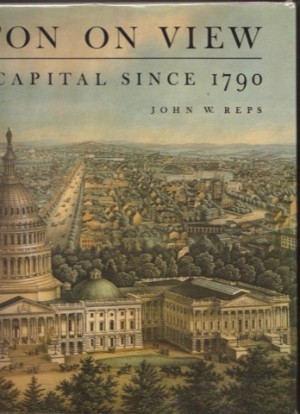
Hardcover. Chapel Hill & London, The University Of North Carolina Press,, 1st, 1991, Book: Very Good, Dust Jacket: Very Good, Hardcover, 297 pages. illustrated throughout in color and b&w. Oblong folio. Light gray cloth with gilt title to spine. Pictorial dust jacket. Minor wear to covers, else like new. The 15x11.5" format accommodates 160 color and 12 b&w illustrations, many of them decidedly horizontal, and accompanying text laid out in two wide (5.5") columns. Before photography, Washington, DC was the subject of numerous engravings, aquatints, and lithographs which were published separately as well as in newspapers and magazines, souvenir booklets, and guidebooks and brochures. A selection of these illustrations depicting buildings or districts, views from public structures, and bird's-eye views is presented along with descriptions of Washington from contemporary published works by journalists, architects, travelers, politicians, and others. Nine chapters review successive periods of growth and identify events that shaped the city's character.
Hardcover. Newtown CT, The Taunton Press, 1st, 2006, Book: Very Good, Dust Jacket: Very Good, Hardcover in a bright dust jacket, 266 pages. The past has left behind only scattered clues that, on their own, provide little insight into how the people of early America lived and the details of their daily lives. The photographs in this book, the deeply informed narrative that accompanies them, and the eyewitness accounts of daily life that the author weaves throughout, provide a fresh perspective on our early American ancestors and the places they called home. This book is about how their houses and their life in them, from the wealthy to the impoverished, from New York City to the small farms and plantations of the South, from coastal fishing towns to the Western frontier of Indiana and Kentucky. The stories focus on the remarkably vivid differences from one part of the country to the next, class and culture, and the realities of everyday life for American families. These stories twine around a wide selection of HABS photographs of early houses, covering the variety and evolutions of house styles -- not by labeling the style but by explaining the style in the context of everyday life. Richly illustrated with handsome black-and-white photography of old houses from the Library of Congress Historic American Building Survey (HABS) collection and supplemented with period woodcuts, engravings, drawings, paintings, artifacts, and maps, the book is printed on a 4-color press for a depth of tone. Sidebar excerpts from diaries, journals, and letters inject graphic eyewitness descriptions, adding an additional layer of insight. The book also includes sidebars called Still Standing that traces the history of specific houses, from their origins to the present and includes information on the original family, how the house has evolved over the centuries, and how it's used today.
Hardcover. Birmingham AL, University of Alabama Press, 1st, 2007, Book: Very Good, Dust Jacket: Very Good, Hardcover, 64 pages. William Christenberry is enjoying wide exposure of his artistic body of work. Since the early 1960s, he has plumbed the regional identity of the American South, primarily centering on his early home in the Black Belt counties of Alabama, His poetic elucidation of Southern vernacular landscape and architecture using the media of photography, drawing, painting, collage, sculpture, and miniaturization reveals how history, the very story of place, is at the heart of his lifelong project.
Hardcover. Berkeley, California University Press, 1st, 1996, Book: Very Good, Dust Jacket: Good, 164 pages. Hardcover. Illustrated with full color and black & white photographs. Dust jacket with light wear. Clean tight copy.
Hardcover. New Haven, Connecticut, Yale University Press, 1st, 1974, Book: Near Fine, Dust Jacket: Good, Hardcover. Illustrated history of the Yale's 1969 architectural competition. 117 pages, illustrated fully with black/white photographs and drawings, mostly full-page. Book is cloth bound and in near fine condition, dust jacket is in good condition: bottom of the spine and few edges show wear, small rip on the back at the top edge and small stain on the back as well.
Hardcover. NY, Farrar, Straus and Giroux, 3rd pr., 2017, Book: Very Good, Dust Jacket: Very Good, Hardcover in a bright dust jacket, 416 pages. Wendy Lesser's You Say to Brick: The Life of Louis Kahn is a major exploration of the architect's life and work. Kahn, perhaps more than any other twentieth-century American architect, was a "public" architect. Rather than focusing on corporate commissions, he devoted himself to designing research facilities, government centers, museums, libraries, and other structures that would serve the public good. But this warm, captivating person, beloved by students and admired by colleagues, was also a secretive man hiding under a series of masks.

 "The Chicago Architectural Club: Prelude to the Modernby: Wilbert Hasbrouck")
 "The Geography of Nowhere: The Rise and Decline of America's Man Made Landscape by: Kunstler, James Howard")
 "The Gothic Revival and American Church Architecture: An Episode in Taste, 1840-1856 by: Stanton, Phoebe B.")
 "The Infrastructural City: Networked Ecologies in Los Angelesby: Kazys Varnelis")
 "The Philip Johnson Tapes: Interviews by Robert A. M. Sternby: Robert A.M. Stern")
 "The President as Architect: Franklin D. Roosevelt's Top Cottage by: John G. Waite Associates, Architects")
 "To Begin the World Anew: The Genius and Ambiguities of the American Foundersby: Bernard Bailyn")
 "To Grandfather's House We Go - A Roadside Tour of American Homesby: Harry Devlin")
 "Too Much Is Never Enoughby: Lapidus, Morris")
 "Town and Square: From the Agora to the Village Greenby: Zucker, Paul")
 "Viewing Olmsted: Photographs by Robert Burley, Lee Friedlander, and Geoffrey Jamesby: Lambert, Phyllis")
 "Virginia Journals of Benjamin Henry Latrobe, The: 1795-1798 (2 Volumes)by: Benjamin Henry Latrobe; Editor-Edward Carter II; Editor-Angeline Polites")
 "Walker Evans: Kitchen Corner by: Olivier Richon")
 "Walker Evans: Kitchen Corner by: Olivier Richon")
 "Washington On View: The Nation's Capital Since 1790by: Reps, John William")

 "Where We Lived: Discovering the Places We Once Called Home by: Jack Larkin")
 "William Christenberry's Black Beltby: William Christenberry , Guin A. Nance, et al.")
 "William Faulkner and the Tangible Past - The Architecture of Yoknapatawphaby: Hines, Thomas S.")
 "Yale Mathematics Building Competition, The: Architecture for a Time of Questioningby: Moore & Pyle, Ed., Charles W. & Nicholas")
 "You Say to Brick: The Life of Louis Kahnby: Wendy Lesser")