Softcover. Montpelier VT, Vermont Division for Historic Preservation, 1st, 1992, Book: Good, Dust Jacket: None, Softcover, 309 pages, illustrated throughout in b&w. Light edgewear and rubbing to wrappers with slight crease and sun-fade to spine. Clean, tight copy.
Softcover. Montpelier VT, Vermont Division for Historic Preservation, 1st, 1992, Book: Very Good, Dust Jacket: None, Softcover, green wrappers, 309 pages, b&w illustrations. Building by building description of the pre-20th century residential and commercial building stock of each town in Addison County Vermont. Clean copy.
Hardcover. Philadelphia, J. B. Lippincott Company, 1st, 1915, Book: Very Good, Dust Jacket: None, 527 pages, with 316 illustrations throughout, gilt top edge and titles on green cloth board. Minor corner bumps and edge wear and fade, frontispiece page loose, and previous owner's bookplate on front fly leaf. Overall, clean and tight copy, a limited edition. PLEASE NOTE: DUE TO WEIGHT, DOMESTIC SHIPPING ONLY.
Hardcover. New York, Harper & Brothers, 1st, 1880, Book: Good, Dust Jacket: None, 331 pages, with gilt top edge and titles. Minor corner and edge wear, light crack along spine but no loose pages, overall, clean and tight copy.
Hardcover. Florida, Brevard County Historical Commission, 1st, 1995, Book: Very Good, Dust Jacket: Good, Hardcover, 271 pages. Extensive b&w photography throughout. Gilt decoration on cover. Gilt titles on spine. Small tear to bottom corner of dust jacket repaired with tape. Light wear to dust jacket. Otherwise clean, tight copy.
Hardcover. London, Architectural Press, 1931, Book: Very Good, Dust Jacket: Good, Hardbound, 487 pages. Oversized book. Black & white photography of English architecture. Light spinewear. Dust jacket with soiling and chipping. Small chunk missing from top of spine.
Hardcover. Woodstock NY, Overlook Press, 1st US, 2003, Book: Very Good, Dust Jacket: Very Good, Hardcover in a bright dust jacket, 456 pages with b&w and color illustrations. In Hitler and the Power of Aesthetics, acclaimed historian Frederic Spotts presents a startling reassessment of Hitler's aims and motivations. Spotts dismisses the traditional biographical view that Hitler was an "unperson," who had no life outside of politics, Spotts shows that Hitler's interest in the arts was as intense as his racism and his argument is punctuated with photographs and illustrations, including reproductions of Hitler's watercolors and drawings from his 1925 sketchbook. The book offers the first full analysis of Hitler's own work as a painter, as well as of his art collection. It also treats the entire range of his personal interests: from architecture, painting, symphony, opera, and sculpture, to the German autobahn system and the development of the Volkswagen. A riveting and highly original work, Hitler and the Power of Aesthetics provides a key to an understanding of the Third Reich which has, until now, been missing from biographies and studies of the arts in the Third Reich, as well as from political and military studies of Hitler. Clean copy.
Hardcover. Haarlem Holland, Jon. Enschede En Zonen, 1st, 1939, Book: Very Good, Dust Jacket: None, Hardcover, pictorial boards. A delightfully written and whimsically illustrated history of the Netherlands and its contributions to world history. Illustrated boards, 123 pages. Light rubbing to the edges and a little age-toning to the spine and tiny portion of the front cover, good hinges, sound text block, very clean pages free from names or other markings.
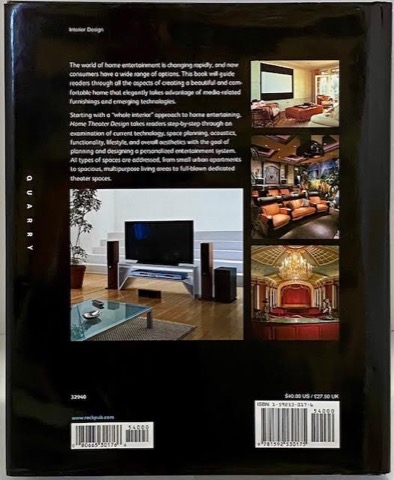
Hardcover. Gloucester, MA, Quarry Books, 1st, 2004, Book: Near Fine, Dust Jacket: Near Fine, 144 pages. Hardcover. Color and b/w illustrations throughout. Dust jacket unclipped, glossy, excellent. Black cover boards, gilt title on spine. Pages clean and unmarked. Binding tight, spine straight. In beautiful, nearly new condition. This book guides readers through all the aspects of creating a beautiful and comfortable home that elegantly takes advantage of media-related furnishings and emerging technologies.
Hardcover. New York, G. P. Putnam, 1st, 1853, Book: Good, 366 pages. Leather cover with raised bands and ornate decoration. Gilt all edges and marled endpapers. B&w frontispiece with tissue-guard and b&w and color illustrations with tissue guards throughout. Color illustrations on tipped-in plates. Rubbing and wear to cover edges and some light foxing throughout. Else a clean, good copy.
Hardcover. Harrisburg PA, National Historical Society, reprint, 1988, Book: Very Good, Dust Jacket: None, Hardcover, glossy green pictorial boards. No DJ as issued. A like new copy, no marks. Volume 5 of the Architectural Treasures of Early America. From material originally published as White Pine Series of Architectural Monographs edited by Russell F. Whitehead and Frank Chouteau Brown. 254 page book with black and white photos of the finer houses in New York and Connecticut.
Hardcover. New York, Doubleday, Page, and Company, 1st, 1925, Book: Fair, Dust Jacket: None, Volume to accompany the American Wing of the Metropolitan Museum of Art in New York. 302 pp. Features 20 color plates in addition to 217 other black/white illustrations (mostly photographs). Covers beginnings of New England through the Early Days of the Republic. Development of Interior Architecture and House Decoration from craftsmen influenced by old world style and the evolution.Shows significant wear due to age and water damage. Discoloration throughout, though text still entirely legible and color still vivid in the plates. Edges show significant wear as well. Prior owner's name and date (1929) written in ink twice inside the cover.
Hardcover. NY, Abrams, 1st, 1999, Book: Very Good, Dust Jacket: Very Good, Hardcover in a bright, unclipped dust jacket. A staff photographer for the "Philadelphia Inquirer" presents intimate pictures and lively personal anecdotes for readers nostalgic for their own hometown diner. 145 photos, 125 in color. Clean copy.
Hardcover. New Haven CT, Yale University Press, 1st, 2008, Hardcover, 384 pages. When George Washington embarked on his presidential tours of 1789-91, the rudimentary inns and taverns of the day suddenly seemed dismally inadequate. But within a decade, Americans had built the first hotels--large and elegant structures that boasted private bedchambers and grand public ballrooms. This book recounts the enthralling history of the hotel in America--a saga in which politicians and prostitutes, tourists and tramps, conventioneers and confidence men, celebrities and salesmen all rub elbows. Hotel explores why the hotel was invented, how its architecture developed, and the many ways it influenced the course of United States history. The volume also presents a beautiful collection of more than 120 illustrations, many in full color, of hotel life in every era.
New Haven CT, Yale University Press, 1st, 2008, Book: Very Good, Dust Jacket: Very Good, Hardcover in a bright dust jacket. 375 pages including index, color and b&w illustrations. When George Washington embarked on his presidential tours of 1789?-91, the rudimentary inns and taverns of the day suddenly seemed dismally inadequate. But within a decade, Americans had built the first hotels?, large and elegant structures that boasted private bedchambers and grand public ballrooms. This book recounts the enthralling history of the hotel in America?a saga in which politicians and prostitutes, tourists and tramps, conventioneers and confidence men, celebrities and salesmen all rub elbows. Hotel explores why the hotel was invented, how its architecture developed, and the many ways it influenced the course of United States history. The volume also presents a beautiful collection of more than 120 illustrations, many in full color, of hotel life in every era. Clean, bright copy.
Hardcover. NY, Monacelli, 1st, 2006, Book: Very Good, Dust Jacket: Very Good, Hardcover, 160 pages. Driving the glossy shelter magazines -- Architectural Digest, House and Garden, and many more -- is an enduring fascination with other people's lives and houses. But the pristine photographs in these publications do not represent reality. In his "Households" series, artist and architect Mark Robbins has invented the "flip side" of interior design magazines: a compelling series of photographs of actual people in actual homes. A young family at a writers retreat, a gay couple in a Long Island beach house, a husband and wife in a family compound, a single parent in a city apartment: Robbins has photographed residents and environments that comment on contemporary life and relationships. Robbins's design and photography work, which bridges the fields of art and architecture, has long focused on the complex social and political forces that contribute to the built environment. The thoughtfully arranged compositions reinforce, undermine, and even confuse stereotypes; the collection as a whole comments on present-day customs and ways of life in all their complexity.
Hardcover. Boston, Houghton Mifflin, 1st US, 1993, Book: Very Good, Dust Jacket: Very Good, 64 pages. Hardcover with dust jacket. Color illustrations by the author. Illustrated end papers. Tight copy.
Hardcover. NY, D. Appleton-Century Co,, 1st, 1939, Book: Very Good, Dust Jacket: None, Hardcover, brown cloth with light blue lettering, 420 pages. Many b&w illustrations and photos. A resource for new home owners (circa 1930s) covering all aspects: financing, design, furnishings, improvements, household labor, etc. A nice visual resource for the time period. Name on front fly leaf otherwise clean.
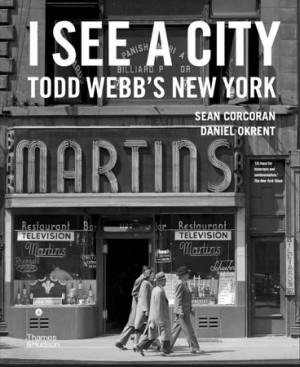
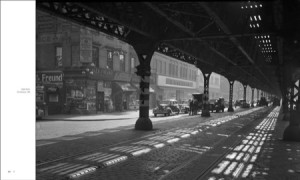
Hardcover. NY, Thames & Hudson, 1st, 2021, Book: Very Good, Dust Jacket: None, Hardcover in pictorial boards. An evocative portrait of mid-century New York City by master documentary photographer. It focuses on the work photographer Todd Webb produced in New York City in the 1940s and 1950s. Webb photographed the city day and night, in all seasons, and in all weather. Buildings, signage, vehicles, the passing throngs, isolated figures, curious eccentrics-from the Brooklyn Bridge to Harlem, this book is a rich portrait of the everyday life and architecture of New York. Webb's work is focused and layered with light and shadow, capturing the soul of this city shaped by the friction and frisson of humanity. Remainder line to bottom edge, otherwise clean.
Hardcover. NY, Thames & Hudson, 1st, 2021, Book: Very Good, Dust Jacket: None, Hardcover in pictorial boards. An evocative portrait of mid-century New York City by master documentary photographer. It focuses on the work photographer Todd Webb produced in New York City in the 1940s and 1950s. Webb photographed the city day and night, in all seasons, and in all weather. Buildings, signage, vehicles, the passing throngs, isolated figures, curious eccentrics-from the Brooklyn Bridge to Harlem, this book is a rich portrait of the everyday life and architecture of New York. Webb's work is focused and layered with light and shadow, capturing the soul of this city shaped by the friction and frisson of humanity. Remainder line to bottom edge, otherwise clean.
Softcover. Yucatan, Mexico, Dante, 1st, 1997, Book: Very Good, Dust Jacket: None, 164 pages. Softcover with French flaps. B/w illustrations throughout. Touch of agewear to covers, a little foxing to top edge, otherwise clean inside. In very good condition.
Hardcover. NY/Boston, Bulfinch Press, 1st, 1997, Book: Very Good, Dust Jacket: Very Good, Hardcover in a bright dust jacket, 203 pages. Introduction by Alan Trachtenberg. 170 duotone illustrations, chronology. Published in conjunction with a series of retrospective exhibitions chronicling forty years of the author's photographs of industrial and rural landscapes. Clean copy.
Hardcover. NY, powerHouse, 1st, 2005, Book: Very Good, Dust Jacket: Very Good, Hardcover, 96 pages. In 1999, photographer Thomas Roma found himself within the walls of Philadelphia's Holmesburg Prison, one of the most notorious prisons in the United States, doing a special photographic project for Steve Buscemi's Animal Factory. During downtime Roma wandered through this nineteenth-century fortress, walking in and out of many of its seven hundred or so cells. After Holmesburg's inception in 1896--on the occasion of which one Philadelphia reporter warned, "Abandon all hope all ye who enter here"--it quickly became the prison for Philadelphia's worst criminals, eventually packing up to five prisoners into six by eight foot cells designed for single-occupancy. After leaving the site, Roma found his mind often inhabiting the space of the prison with its halls of flaking paint and graffiti-covered cells. Overwhelmed by the evidence of the lives spent inside those small rooms, Roma returned to photograph on his own, creating the images now collected for In Prison Air: The Cells of Holmesburg Prison.

 "Historic Architecture of Addison County, The : Including a Listing of the Vermont State Register of Historic Placesby: Johnson, Curtis B.")
 "Historic Architecture of Addison County, The : Including a Listing of the Vermont State Register of Historic Placesby: Johnson, Curtis B.")
 "Historic Architecture of Addison County: Including a Listing of the Vermont State Register of Historic Places by: Curtis B. Johnson (editor)")

 "Historical Studies of Church-Building in the Middle Ages: Venice, Siena, Florenceby: Norton, Charles Eliot")
 "History of Brevard County, Vol. 1by: Shofner, Jerrell H")
 "History of the English House from Primitive Times to the Victorian Period, Aby: Lloyd, Nathaniel")
 "Hitler and the Power of Aestheticsby: Spotts, Frederic")
 "Holland's House: A Nation Building a Homeby: Bricklayer, Peter/Illustrated By Jo Spier")
 "Home Theater Design: Planning and Decorating Media-Savvy Interiorsby: Rushing, Krissy")

 "Homes of American Authorsby: n/a")
 "Homes of New York and Connecticut [Architectural Treasures of Early America, Vol 5by: Mullins, Lisa C. (editor)")
 "Homes of Our Ancestors, Theby: Halsey & Tower, R. T. H. & Elizabeth")
 "Hometown Diners by: Williams, Robert O.")
 "Hotel: An American Historyby: Andrew K. Sandoval-Strausz")
 "Hotel: An American Historyby: Andrew K. Sandoval-Strausz")
 "Householdsby: Robbins, Mark")
 "Houses - Structures, Methods, and Ways Of Livingby: Ventura, Piero")
 "Housing and the Homeby: Shultz, Hazel")


 "I See a City: Todd Webb's New Yorkby: Corcoran, Sean/ Okrent, Daniel/ Webb, Todd (Photographer)")
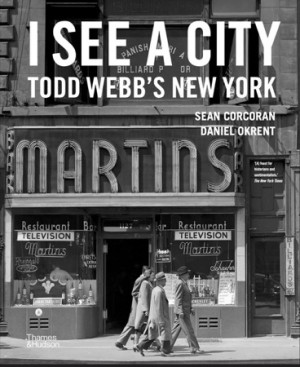
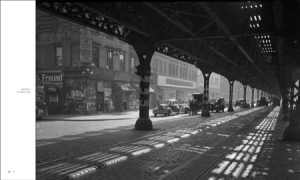
 "I See a City: Todd Webb's New Yorkby: Corcoran, Sean/ Okrent, Daniel/ Webb, Todd (Photographer)")
 "Iglesias de Yucatan (Spanish Text)by: Miquel A. Bretos")
 "Imprints: A Retrospective by: Plowden, David")
 "In Prison Air: The Cells of Holmesburg Prisonby: John Szarkowski and Thomas Roma")