Hardcover. NY, The Monacelli Press, 1st, 2005, Book: Very Good, Dust Jacket: Very Good, Hardcover, 640 pages, pofusely illustrated. In the late nineteenth century, Chicago -- the birthplace of modern architecture in the United States -- was a magnet for aspiring architects. The city was forced to rebuild after the destruction wrought by the Great Fire of 1871 and also to expand to accommodate a surge in the population. The seemingly endless demand for taller and more sophisticated buildings offered young draftsmen an unprecedented opportunity to influence the design of the American skyscraper. The Chicago Architecture Club: Prelude to the Modern documents the history of these draftsmen, the organization they founded, and its role in shaping architectural education and modern architectural practice.
Softcover. UK, Cambridge University Press, 1st pbk, 2008, Book: Very Good, Dust Jacket: None, Softcover in pictorial wrappers, 352 pages. A groundbreaking study of cultural life during a turbulent and formative decade in contemporary China, this book seeks to explode several myths about the Cultural Revolution (officially 1966-1976). Through national and local examination of the full range of cultural forms (film, operas, dance, other stage arts, music, fine arts, literature, and even architecture), Clark argues against characterizing this decade as one of chaos and destruction. Rather, he finds that innovation and creativity, promotion of participation in cultural production, and a vigorous promotion of the modern were all typical of the Cultural Revolution. Using a range of previously little-used materials, Clark forces us to fundamentally reassess our understanding of the Cultural Revolution, a period which he sees as the product of innovation in conflict with the effort by political leaders to enforce a top-down modernity. Clean copy.
Hardcover. New , Yale University Press, 1st, 2016, Book: Very Good, Dust Jacket: Very Good, Hardcover in a bright dust jacket, 180 pages. The authors explain some of the forces behind urban change and offer new visions of the many possibilities for tomorrow's city. Pervasive digital systems that layer our cities are transforming urban life. The authors provide a front-row seat to this change. Their work at the MIT Senseable City Laboratory allows experimentation and implementation of a variety of urban initiatives and concepts, from assistive condition-monitoring bicycles to trash with embedded tracking sensors, from mobility to energy, from participation to production. They call for a new approach to envisioning cities: futurecraft, a symbiotic development of urban ideas by designers and the public. With such participation, we can collectively imagine, examine, choose, and shape the most desirable future of our cities. Clean copy.
Softcover. Dallas TX, Southern Methodist University, reprint, 2001, Book: Very Good, Dust Jacket: None, Softcover, 221 pages, 202 b&w plates, 20 in color. Historical and cultural history of religious, popular and folk architecture of colonial New Spain. Clean copy.
Hardcover. London, Paul Holberton Publishing, 1st, 2015, Book: Very Good, Dust Jacket: Very Good, Hardcover in a bright dust jacket, 197 pages. Color and b&w plates throughout. This groundbreaking architectural history examines what people actually wanted in their institutional and private patronage over the last two centuries as opposed to what architects and theorists thought they should want - as seen through the prism of Oxford's principal building contractor and craft practitioner, Symm & Company. Clean, bright copy.
Hardcover. NY, British Heritage Press, reprint, 1984, Book: Very Good, Dust Jacket: Very Good, Hardcover in a bright dust jacket, 287 pages, 64 color plates by Helen Allingham. A nice reprint of a book first published in 1909 in the UK. Clean copy.
Hardcover. Minneapolis MN, The Country Press, 1st, Book: Good, Dust Jacket: Poor, Hardcover in marbled green boards with orange front label, in a worn, chipped dust jacket. 28 pages on outhouses and privies in a humorous vein. No date but probably the early 1930s.
Hardcover. University Park PA, Pennsylvania State University Press, 1st, 2010, Book: Very Good, Dust Jacket: Very Good, Hardcover in a bright dust jacket, 295 pages illustrated in b&w and color. Beginning in the 1730s, Heather Minor tells us, Rome "began to resemble one huge construction site," with a series of ambitious and expensive new building campaigns that transformed the face and substance of the city. From renovations of the Santa Maria Maggiore and San Giovanni in Laterano and the restoration of the Arch of Constantine to the creation of the Capitoline Museum and the establishment of the papacy's Calcografia, the push for reform not only renewed papal and Church identity but also revived Italian culture as a whole. Based on extensive archival research and full of fascinating stories about the often stormy theological and intellectual debates central to the attempts at reform, The Culture of Architecture in Enlightenment Rome brings to life the personalities of architects, theologians, and intellectuals and links the extensive architectural programs with powerful shifts in the intellectual climate of the time. Clean, bright copy.
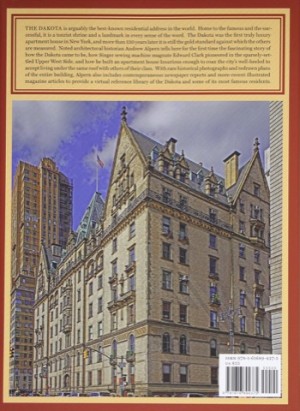
Hardcover. NY, Princeton Architectural Press, 1st, 2015, Book: Very Good, Dust Jacket: Very Good, Hardcover in a bright, unclipped dust jacket, 224 pages. The Dakota is arguably the best-known residential address in the world, home to dozens of New York City's most famous artists, performers, and successful executives. The rare sale of an apartment there, usually at jaw-dropping prices, is newsworthy, as is the financial and architectural health of the building itself, a landmark in every sense of the word. The first true luxury apartment house built in New York City, more than 130 years ago, the Dakota is still the gold standard against which all other apartment buildings are weighed. Historian Andrew Alpern tells the fascinating story of how the Dakota came to be, how Singer sewing magnate Edward Clark dared to build an apartment building luxurious enough to coax the city's wealthy from their mansions downtown for ultra-modern living on what was then the swamplands of the Upper West Side. Redrawn plans of the entire building, published here for the first time, show how Clark created apartments glamorous enough that they made living under a shared roof as acceptable in Manhattan as it already was in Europe's grand capitals, forever revolutionizing apartment life in New York City.
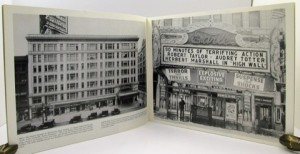
Softcover. Notre Dame IN, Theatre Historical Society, 1st, 1986, Book: Very Good, Dust Jacket: None, Softcover, stapled wrappers, 40 pages. Profusely illustrated in b&w. A visual history of the design and building of the Earle Theatre in Philadelphia. Some of the world's biggest stars performed there in it's heyday. Old price sticker on rear cover, otherwise clean, very good.
Softcover. Thousand Oaks CA, Sage Publications, 1st, 1998, Book: Very Good, Dust Jacket: None, Softcover, 182 pages, b&w illustrations. In 1960, Kevin Lynch wrote The Image of the City, which transformed the way design professionals and social scientists dealt with the urban form and design. The Evaluative Image of the City follows the work of Lynch and further explores the role of human evaluations of the cityscape. This book describes how to assess, plan, and design the appearance of cities to please inhabitants. It presents a series of studies on evaluative images, discusses methodologies, findings, and applications to design and planning at various stages. Urban designers and planners, architects, business people, and the general public will find this book a valuable guide for improving the image of their surroundings. Clean copy.
Hardcover. Newtown CT, Taunton , 1st, 2006, Book: Very Good, Dust Jacket: Very Good, Hardcover in a bright dust jacket, 218 pages in color. There are hundreds of books on the market about designing the interior of a home, but none for homeowners that focuses on the design of a home's exterior. And yet the exterior of the house is what we all see and remember- it's the "face" of home we fall in love with, whether we are looking for a new home or just taking in the sights during a Sunday afternoon drive. All of us can relate to a house's exterior, but few understand how they're put together, or how the outside and inside should work in harmony. When people describe the exterior of a house, they usually give a label or a style- Cape, Colonial, Ranch. But, in truth, what they are referring to are not only its exterior physical characteristic- the particular blend of roof-lines, siding, trim, windows, doors and porches, but also its emotional characteristics- inviting, austere, friendly. The author examines these physical and emotional characteristics, explores the concepts and applications of exterior design and how they can be successfully used to enhance the experience of home and provides a fresh, new language for describing, understanding, and shaping the face of home. Clean copy.
Softcover. NY, Dover Publicastions, 1st pbk, 1968, Book: Very Good, Dust Jacket: None, Softcover, 208 pages. Reprint; The 203 Plates & Text of His Architectura published in 1598. Late Renaissance and early Baroque architectural ornament. Clean copy.
Hardcover. NY, Simon & Schuster, 1st, 1993, Book: Very Good, Dust Jacket: Very Good, Hardcover in a bright, unclipped dust jacket, 303 pages. Eighty percent of everything ever built in America has been built since the end of World War II. This tragic landscape of highway strips, parking lots, housing tracts, mega-malls, junked cities, and ravaged countryside is not simply an expression of our economic predicament, but in large part a cause. It is the everyday environment where most Americans live and work, and it represents a gathering calamity whose effects we have hardly begun to measure. In The Geography of Nowhere, James Howard Kunstler traces America's evolution from a nation of Main Streets and coherent communities to a land where everyplace is like noplace in particular, where the city is a dead zone and the countryside a wasteland of cars and blacktop. Now that the great suburban build-out is over, Kunstler argues, we are stuck with the consequences: a national living arrangement that destroys civic life while imposing enormous social costs and economic burdens. Kunstler explains how our present zoning laws impoverish the life of our communities, and how all our efforts to make automobiles happy have resulted in making human beings miserable. Name on front fly leaf, otherwise like new.
Hardcover. Harrisburg PA, National Historical Society, reprint, 1988, Book: Very Good, Dust Jacket: None, Hardcover, glossy green pictorial boards. No DJ as issued. Volume 15 of the Architectural Treasures of Early America. From material originally published as the Georgian Period edited by Professor William Rotch Ware. 224 page book with historic photographs and home plans. Clean copy.
Hardcover. Baltimore, Johns Hopkins University, 1st, 1968, Book: Very Good, Dust Jacket: Very Good, Hardcover in a lightly worn, unclipped dust jacket, 350 pages, b&w illustrations. This illustrated account of the impact of the English Gothic revival on American church architecture in the mid-nineteenth century finds that this fundamentally conservative movement provided the foundation for a new, influential aesthetic. Clean copy.
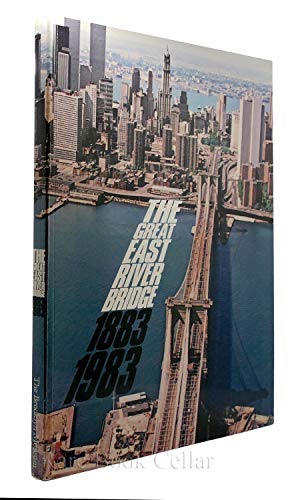
Softcover. New York, Brooklyn Museum, 1st, 1983, Book: Very Good, Dust Jacket: None, 180 pages, b&w and color photography. Very light edge wear, else a very clean, tight copy. Wonderful book on the great Brooklyn Bridge. Includes much historical material, chapters on the design of the bridge with several beautiful fold-outs, and many full color repros. of the many paintings and artwork that have been inspired by the beauty of one of the wonders of the modern world. Even includes a small filmog. of films that have used the Bridge as a background or a major location/set. Published on the 100th anniversary of the opening of the bridge and an exhibition celebrating it, held at The Brooklyn Museum.
Hardcover. NY, Rizzoli, 1st, 1995, Book: Very Good, Dust Jacket: Very Good, 192 pages. Hardcover. Dust jacket unclipped. Color and b/w illustrations throughout. A tour of the private domains of world-renowned architects. Previous owner initials in right upper corner of endpapers. In excellent condition, clean inside and out.
Hardcover. NY, Rizzoli, 1st, 1998, Book: Very Good, Dust Jacket: Very Good, Hardcover in a bright, lightly worn dust jacket. 252 pages illustrated in color. With nearly one thousand commissions executed between 1879 and 1912, McKim, Mead & White was the architectural firm of choice of the most prestigious projects of the era, including the redesign of the White House and the Mall in Washington, D.C., and the campuses of Harvard and Columbia Universities. Among its residential clients were many of the most powerful figures of the Gilded Age-Vanderbilts, Whitneys, Pulitzers-for whom the firm built splendid summer cottages in Newport and throughout Long Island and the Hudson valley and sumptuous town houses in Boston, Washington, Baltimore and New York. More than thirty houses are presented here, their exteriors and interiors elegantly recorded in lush new color photographs. The book also provides the first look at the recent restoration of the Isaac Bell house in Newport and newly reinstalled Venetian room at the Payne Whitney house, now the French Cultural Services, in New York City. Clean copy. DOMESTIC SHIPPING ONLY.
Softcover. Barcelona/NY, Actar, 1st, 2009, Book: Very Good, Dust Jacket: None, Softcover with pictorial wrappers, 251 pages, illustrated in color and b&w. Once the greatest American example of a modern city served by infrastructure, Los Angeles is now in crisis. Infrastructure has ceased to support architecture's plans for the city. This provocative collection looks at infrastructure as a way of mapping residents' place in the city, remaining optimistic about the role of architecture to affect change. Clean copy.
Hardcover. Princeton Architectural Press , 1st, 2004, Book: Very Good, Dust Jacket: Very Good, Hardcover, 144 pages. With photos taken in the mid 1980s the author takes us on a pictorial trip along the former Iron Curtain from the Baltic sea coast at Travemunde (West-East Germany) to the Adriatic sea coast at Trieste (Italy-Yugolsalvia [today Slovenia]); with a separate chapter on the Berlin Wall. They are superb photos full of (sad) atmosphere, poignancy and historical importance.
Hardcover. The McKernon Group. Inc., 1st, 2005, Book: Very Good, Dust Jacket: Very Good, Hardcover, 114 pages. Jack McKernon has created an easy-to-read guide for those about to embark on the adventure of building or renovating homes of their own. Pulling together details from his own experiences and those of his colleagues at the design-build firm he founded in Brandon, Vermont, he takes the reader through the process of creating a home that evokes the past but lives in the present. Illustrated with over 290 color photographs, the book offers narrative advice on finding and working with the right design-build contractor, siting the home on the property, incorporating elements of the Vermont vernacular farmhouse, ensuring convenience and comfort in the home, building responsibly, and designing a space that incorporates one's personal desires.

 "The Chicago Architectural Club: Prelude to the Modernby: Wilbert Hasbrouck")
 "The Chinese Cultural Revolution: A Historyby: Paul Clark")
 "The City of Tomorrow: Sensors, Networks, Hackers, and the Future of Urban Life by: Ratti, Carlo, Autor: Claudel, Matthew")
 "The Colonial Architecture of Mexicoby: James Early")
 "The Comfort of the Past: Building Styles and Patronage in Oxford and Beyond 1815-2015by: Steven Parissien")
 "The Cornell Journal of Architecture: Vol 4by: Imran Ahmed and Merritt W Bucholz (Ed.)")
 "The Cottage Homes of Englandby: Dick, Stewart, Illustrator: Allingham, Helen")
 "THE COUNTRY PLUMBER: Rebutting Some Arguments Set Forth By Other Noted Specialists in America's Backyard Architectureby: Phil Potts")
 "The Culture of Architecture in Enlightenment Rome by: Minor, Heather Hyde")
 "The Dakota: A History of the World's Best-Known Apartment Buildingby: Andrew Alpern/Christopher Gray/Kenneth Grant (Photos)")

 "The EARLE THEATRE, Philadelphia, Penna., Hoffman & Henon, Architects, Opened: March 24, 1924. Theatre Historical Society Annual for 1986by: Irvin R. Glazer")

 "The Evaluative Image of the Cityby: Nasar, Jack L.")
 "The Face of Home: A New Way to Look at the Outside of Your House by: Eck, Jeremiah")
 "The Fantastic Engravings of Wendel Dietterlin by: Dietterlin, Wendel")
 "The Geography of Nowhere: The Rise and Decline of America's Man Made Landscape by: Kunstler, James Howard")
 "The Georgian Heritage (Architectural Treasures of Early America, Vol. 15)by: Mullins, Lisa C. (editor)")
 "The Gothic Revival and American Church Architecture: An Episode in Taste, 1840-1856 by: Stanton, Phoebe B.")
 "The Great East River Bridge, 1883-1983by: No Author (Brooklyn Museum)")

 "The House of the Architectby: Zabalbeascoa, Anatxu")
 "The Houses of McKim, Mead & Whiteby: Samuel G. White (Author), Jonathan Wallen (Photographer)")
 "The Infrastructural City: Networked Ecologies in Los Angelesby: Kazys Varnelis")
 "The Lost Border: The Landscape of the Iron Curtainby: Brian Geoffrey Rose")
 "The Making of Beaubourg: A Building Biography of the Centre Pompidou, Paris by: Silver, Nathan")
 "The Master Builders' Guide to the Perfect Home: A Design-Build Approach to Living Vermont Styleby: Jack McKernon")