Softcover. Canberra AU, Australian Institute of Aboriginal Studies, 1st, 1984, Book: Very Good, Dust Jacket: None, Softcover, oblong, 160 pages. Details an Australian film made in 1976 and released in 1979. The traditional, extremely complex mortuary rites for a young child at an Aboriginal homeland settlement on the Gulf of Carpentaria. Foreword by Ian Dunlop. Previous owner's name opposite half-title page, otherwise clean.
Hardcover. NY, W. W. Norton & Company, 1st, 2008, Book: Very Good, Dust Jacket: Very Good, Hardcover, 320 pages. Extraordinary photographs, along with extensive captions, document the transition from a barely explored paradise to a modern nation. This stunning collection of 720 photographs, many of them drawn from family archives and scrapbooks and all carefully restored, is one of the most important visual records of Africa in the late nineteenth and early twentieth centuries ever to have been published. The early photographers captured the beauty and dangerous allure of life on this spectacular frontier: the ceremonies and traditional attire of the native people, the fantastic machinery used in construction of the Uganda Railway, the gradual development of trade on the coast and in the country's interior, the hardships of the East African Campaign during World War I, and the pioneering spirit of early European settlers and farmers. Many of the most famous names and places connected with Africa appear in these pages, including Karen Blixen's farm and Ernest Hemingway and Theodore Roosevelt on safari.
Hardcover. Oslo University Press, 1st, 1962, Book: Very Good, Dust Jacket: Good, Hardcover in a lightly worn dust jacket, 271 pages, b&w illustrations. A first-hand account of the changing social structures of the Aborigines based on accounts from the tribe members.
Hardcover. Woodstock VT, Countryman Press, 4th pr., 1999, Book: Very Good, Dust Jacket: Very Good, Hardcover in a bright, price-clipped dust jacket, 416 pages, b&w illustrations. Now largely forgotten, the massacres of 1675 to 1676, known as King Philip's War, ended the harmonious relations that had existed between native Americans and the colonists since their arrival at Plymouth Rock in 1620. Tensions had been rising as the number of settlers grew, and the pillaging of an outlying farm by affronted young braves escalated into open hostilities. Pitched battles were fought from Rhode Island to Maine. Hundreds of English died as farmers fled and cowered behind stockades or in the few port towns. Thousands of natives were slaughtered and the rest dispersed or sold into slavery in the West Indies. The savagery resulted in the clearing of the native populations from southern New England and the unopposed expansion of the New England colonies. It also became the brutal model on which the United States came to deal with its native peoples. King Philip's War tells the story with such close attention to detail that each ambush, each burned-out farm, becomes a vivid image. The authors make abundant use of maps and photographs of old sites to enable the reader to follow the course of the war: the book forms an exhaustive guide for the armchair historian or anyone wishing to visit the monuments and battlefields today. Clean copy.
Hardcover. Athens GA, University of Georgia Press, 1st, 2015, Book: Very Good, Dust Jacket: Very Good, Hardcover in a bright dust jacket. 254 pages, b&w illustrations. George Alexander Grant is an unknown elder in the field of American landscape photography. Just as they did the work of his contemporaries Ansel Adams, Edward Weston, Eliot Porter, and others, millions of people viewed Grant's photographs; unlike those contemporaries, few even knew Grant's name. Landscapes for the People shares his story through his remarkable images and a compelling biography profiling patience, perseverance, dedication, and an unsurpassed love of the natural and historic places that Americans chose to preserve. A Pennsylvania native, Grant was introduced to the parks during the summer of 1922 and resolved to make parks work and photography his life. Seven years later, he received his dream job and spent the next quarter century visiting the four corners of the country to produce images in more than one hundred national parks, monuments, historic sites, battlefields, and other locations. He was there to visually document the dramatic expansion of the National Park Service during the New Deal, including the work of the Civilian Conservation Corps. Grant's images are the work of a master craftsman. His practiced eye for composition and exposure and his patience to capture subjects in their finest light are comparable to those of his more widely known contemporaries. Nearly fifty years after his death, and in concert with the 2016 centennial of the National Park Service, it is fitting that George Grant's photography be introduced to a new generation of Americans.
Softcover. Fort Worth TX, Amon Carter Museum, 1st, 1986, Book: Good, Dust Jacket: None, Softcover in sun faded wraps, 339 pages. Laura Gilpin (1891-1979) was a photographer of the American Southwest for over sixty years. She was intrigued by the Navajo Indians but also made excursions to other parts of the United States and to Yucatan as well as documenting life during the Great Depression. The book accompanied a retrospective exhibition and includes a chronological bibliography of her other exhibitions and published work. 167 superb full-page reproductions in tritone, color and duotone. Paper cover with wear, inside bright and clean. DOMESTIC SHIPPING ONLY.
Hardcover. Cincinnati OH, George Conclin, 6th Ed., 1841, Book: Very Good, Dust Jacket: None, Hardcover, 288 pages, 9 b&w woodcut illustrations. Sixth edition, first published in 1838. Tan cloth, paper label on spine, label is chipped, worn in areas. Covers with light soil. Still, internally a tight, clean copy with light foxing.
Hardcover. NY, Time Life, reprint, 1983, Book: Very Good, Dust Jacket: None, 456 pages. Hardcover with no dust jacket. Dark blue leather bound with gilt titles to front cover and spine. Embossed decoration on front cover. Gilt text block edges, red ribbon marker. Clean, tight copy. In 1861 William Watson, a native Scot who had established himself as a Louisiana businessman, enlisted in the Confederate forces although still a British subject. In 1887 he penned his memoirs "to give", he said, "a simple narrative of my experience in a war campaign". Far from simple, Watson's work clearly and forcefully describes his experiences with the 3rd Louisiana infantry in battles at Wilson's Creek and Pea Ridge while depicting the mundane aspects of camp life and providing delightful and colorful character sketches of fellow soldiers and officers, including the legendary General Ben McCulloch. But Watson offers much more than the story of a soldier's life. He also provides an excellent depiction of southern society undergoing the crisis of secession and the tumultuous early years of the Civil War.
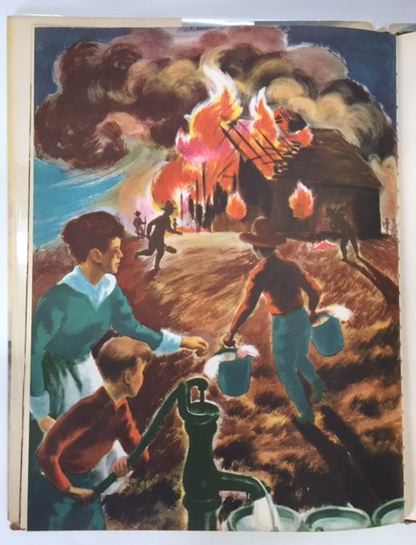
Hardcover. Kansas City, MO, Tell-Well Press, 1st, 1948, Book: Very Good, Dust Jacket: Good, Nonpaginated. Hardcover. Decorated endpapers. Vivid color illustrations throughout. Dust jacket unclipped, has some age wear, still intact and wrapped in protective brodart. Cover boards decorated with same image as dust jacket. Covers have a little soil a top and age wear. Clean inside and in great shape for its age.
Hardcover. Boston, Bradbury Soden & Co., 1st thus, 1844, Book: Good, Dust Jacket: None, Hardcover, 336 pages, frontispiece engraving with tissue guard, extra engraved title page, several other full page engraved plates as well as text illustrations. Brown cloth with black leather spine stamped in gilt. Pages with tanning to edges, faint water stain to top corners of some pages, not affecting text or images. Covers show mottling, discoloration to foredges, front and rear. Interior clean, binding tight.
NY, Morrow, 1st , 1973, Book: Very Good, Dust Jacket: Good, Hardcover in a bright, unclipped dust jacket. Black & white illustrations by Ted Lewin. Light edgewear to dust jacket. A twelve year old boy tries to return the mountain lion he's raised from a cub to her native habitat in the Idaho mountains.
Hardcover. Joliet IL, P.F. Volland Company, reprint, Book: Fair, Dust Jacket: None, Hardcover, pictorial boards. This delightful storybook tells about Little Big Bye-and-Bye who really REALLY wants a pony! His father told him he can have one when he is bigger, which seems marvelous at first - until he realizes he's not very big yet. Story and illustrations are by Holling Clancy Holling, who wrote and illustrated many wonderful Indian books such as "Claws of the Thunderbird", "Paddle-to-the-Sea", "Tree in the Trail" and others. The Hollings lived among Native Americans for a time, and their books have been praised for their authenticity. Boards lightly worn/soiled, mild thumbing, wrinkling to pages. Colors bright.
Hardcover. US, Combined Books, 1st, 1993, Book: Very Good, Dust Jacket: Very Good, Hardcover, 312 pages, b&w illustrations. Light shelf-wear to dust jacket, else a clean, tight copy. The destruction of George Armstrong Custer's command at Little Bighorn by the Sioux and Northern Cheyenne on 25 June, 1876 has been etched in the national memory and has remained one of America's longest lingering controversies. The Little Bighorn Campaign penetrates the mysteries of Custer's disaster as well as the broader context of the 1876 campaign against the Sioux.
Hardcover. New York, Frederick A. Stokes, 1st, 1902, Book: Very Good, Dust Jacket: None, 42 pages. Hardcover. Features 6 full color and black & white illustrations in text by Edwin Willard Deming. Short separations of preliminary pages from interior hinge at top and bottom. Areas of foxing and abrasion to title page. Printers unusual binding method has created creasing before the page margins. Short closed tears on some pages. Front cover pastedown intact with some surface abrasions. Scarce.
Hardcover. NY, Grosset & Dunlap, 1st, 1934, Book: Very Good, Dust Jacket: Good, Hardcover in a bright, unclipped dust jacket with minor soil, tape repair. Frontispiece illustrated by Lee Haynes. Many illustrations in b/w, a few indicate B. Stevenson as artist, the rest are not specifically identified. Illustrated end papers. The story of the life of an Indian boy- his adventures are closely interwoven with the habits, customs and beliefs of his people.
hardcover. NY, Viking Press, 12th pr., 1967, Book: Very Good, Dust Jacket: Good, Hardcover. Black & white illustrations by Paul Lantz. Very Good with worn dj. Previous owner's inscription front fly leaf. The beautiful rhythms of the Navajo life in Red Rocks Country of Arizona for a young girl named Doli, who must face the outer world in this coming of age story.
Hardcover. NY, Viking Press, 1st, 1943, Book: Good, Dust Jacket: None, Hardcover, blue cloth with maroon stamping, 143 pages, b&w illustrations by Paul Lantz. Very light paper residue to rear endpapers indicating ex-lib, but otherwise clean with no marking, stamping. Covers with mild soil, spine fading.
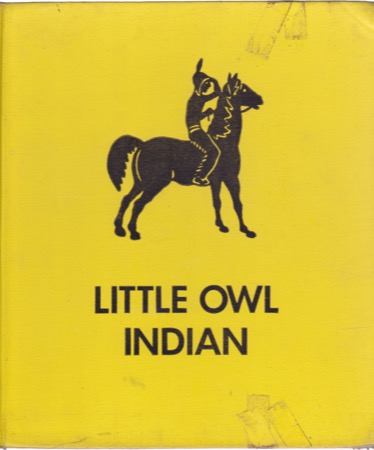
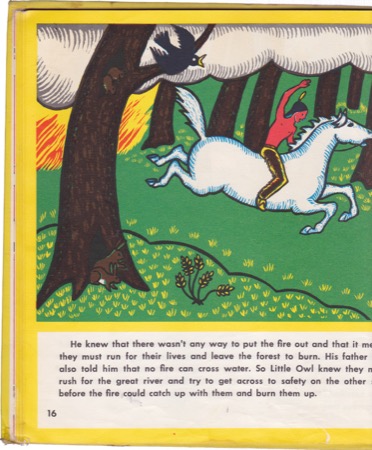
Hardcover. Boston, Houghton Mifflin, reprint, Book: Good, Dust Jacket: None, Hardcover, yellow cloth with black stamping. 32 pages illustrated with bold colors by the author. A young Indian boy gives timely warning of a forest fire, saving both the wild animals and his people. Tape residue on covers where dj was taped to book, light stamp to front endpaper. Ex-lib. Interior clean.
Hardcover. NY, Farrar, Straus and Giroux, 1st, 1971, Hardcover in a bright dust jacket, 378 pages. From dust jacket notes: "For most Americans, the Second World War started on December 7, 1941, and much of the fighting took place in strange, faraway places. For the British, the war started on September 3, 1939, and much of the action took place in the skies over England. In the spring of 1940, after months of uneasy calm, Germany invaded the Lowlands and conquered France within a few days, leaving England without her only meaningful ally on the Continent. A year would pass before the Soviet Union was drawn into the war, and eighteen months before the Japanese attacked Pearl Harbor. The United Kingdom, with a land area about the size of Wyoming, was alone, all alone, with only the Straits of Dover separating the island from Hitler's war machine. For six years Mollie Panter-Downes covered the war for The New Yorker magazine from her native England. Even at the height of the air war over London, when 'all that is best in the good life of civilized effort appears to be slowly and painfully keeling over,' she continued to file her fortnightly reports in an understated but dramatic fashion that reflected the fortitude of her fellow countrymen: 'The announcements of the first air-raid deaths are beginning to appear in the obituary columns of the morning papers. No mention is made of the cause of death, but the conventional phrase "very suddenly" is always used.' William Shawn, editor of The New Yorker, has assembled Miss Panter-Downes' 'Letter from London' columns into a consecutive, on-the-spot chronicle of the war in England."
Hardcover. Scarsdale NY, Bradbury Press, 2nd pr., 1973, Book: Very Good, Dust Jacket: Very Good, Hardcover in a lightly worn, unclipped dust jacket. Color illustrations by Paul Goble. Two young Sioux join in a raiding party to capture horses from some neighboring Crows. Front endpapers with stamp inside front cover, otherwise clean.
Hardcover. Baton Rouge, Louisiana State University Press, 1st, 2011, Book: Very Good, Dust Jacket: Very Good, Hardcover in a bright dust jacket, 175 pages, b&w illustrations. Vermont-native Twitchell sets out from his current home in Florida on the inauguration day of America's first black president to find the "real" South and to try to understand the truth about his illustrious ancestor. He travels in an RV from Georgia's Okefenokee Swamp across Alabama and Mississippi to Coushatta, Louisiana. As he drives through the heart of Dixie, Twitchell sorts through the prejudices he learned from his northern rearing. In searching for the culture he had held at arm's length for so long, he tours small-town southern life -- in campgrounds, cotton gins, churches, country fairs, and squirrel dog kennels -- and uncovers some fundamental truths along the way. Notably, he discovers that prejudices of race, class, and ideology are not limited by geography. As one man from Georgia mockingly summed up North versus South stereotypes, "Y'all are rude and we're stupid." Unexpectedly, Twitchell also uncovers facts about his great-grandfather and sheds new light on his family's past. An enlightening, humorous, and refreshingly honest search, Look Away, Dixieland reveals some of the differences and similarities that ultimately define us as a nation. Clean copy.
Hardcover. New York, William Morrow & Co, 1st, 1992, Book: Very Good, Dust Jacket: Very Good, Hardcover, 250 pages, spotless and tight copy with dust jacket. Pulitzer Prize winner's debut collection of short stories, set in his native Washington, D.C.
Hardcover. NY, Frederick A. Stokes, 1st, 1918, Book: Fair, Dust Jacket: None, Hardcover, brick-red cloth with cover label, gilt lettering and design faded. This is a American Indian legend called Lost Indian Magic, a mystery story of the Red Man as he lived before the White Man came, Eight color plates by Carl Moon, the one opposite page 70 is loose and laid in. Covers worn, hinges cracked, no markings.
Hardcover. NY, W W Norton & Co , 1st, 1995, Book: Very Good, Dust Jacket: Very Good, Hardcover in a bright, unclipped dust jacket. In this compelling new study of one of the century's most memorable poets, Jon Stallworthy has produced an outstanding full-scale biography of Louis MacNeice, drawing on the testimony of family, friends, lovers, and MacNeice's extensive unpublished correspondence and papers. Stallworthy, whose Wilfred Owen was described by Graham Greene as "one of the finest biographies of our time," has produced another no less remarkable life of an equally haunting figure. MacNeice's mother died when he was seven and Stallworthy shows how his imagination transmuted her ghostly presence, and the powerful presence of his father, into an elemental opposition structuring most of what he would write - from anguished indictments of his native Ireland to poignant love poems.

 "Journey to the Crocodile's Nest. an Accompanying Monograph to the Film Madarrpa Funeral at Gurka'Wuyby: Morphy, Howard")
 "Kenya: A Country in the Making, 1880-1940by: Pavitt, Nigel")
 "Kin and Totem: Group Relations of Australian Aborigines in the Port Keats Districtby: Falkenberg, Johannes")
 "King Philip's War : The History and Legacy of America's Forgotten Conflictby: Eric B. Schultz, Michael J. Tougias")
 "Landscapes for the People: George Alexander Grant, First Chief Photographer of the National Park Serviceby: Ren Davis (Author), Helen Davis (Author), Timothy Davis (F")
 "Laura Gilpin: An Enduring Grace by: Sandweiss, Martha A.")
 "Life and Adventures of Black Hawk with Sketches of Keokuk, the Sac and Fox Indians, and the Late Black Hawk Warby: Drake, Benjamin")
 "Life in the Confederate Army: Being the Observations and Experiences of an Alien in the South During the American Civil War (Collector's Library of the Civil War)by:")
 "Lightning: A Cowboy's Coltby: Martin, Bill, Bernard Martin")

 "Lights and Shadows of African History (Parley's Cabinet Library #10)by: Goodrich, Samuel G.")
 "Lion On the Runby: Rumsey/Ted Lewin, Marian")
 "Little Big-Bye-and-Bye by: Holling Clancy Holling")
 "Little Bighorn Campaign, The : March-September 1876 (Great Campaigns Series)by: Sarf, Wayne Michael")
 "Little Brothers of the Westby: Deming, Edwin Willard/Therese O. Demig")
 "Little Indian (Little Indian Series) by: Cory, David")
 "Little Navajo Bluebirdby: Clark/Paul Lantz, Ann Nolan")
 "Little Navajo Bluebirdby: Clark/Paul Lantz, Ann Nolan")
 "Little Owl Indianby: Hetty Burlingame Beatty")
 "London War Notes 1939-1945by: Mollie Panter Downes")
 "Lone Bull's Horse Raidby: Paul and Dorothy Goble")
 "Look Away Dixielandby: Twitchell, James B.")
 "Lost in the City: Storiesby: Jones, Edward P.")
 "Lost Indian Magic; a Mystery Story of the Red Man As He Lived before the White Men Cameby: Moon, Grace and Carl")
 "Louis MacNeice by: Stallworthy, Jon")