Hardcover. Philadelphia, The American Philosophical Society, 1st, 1939-47, Book: Very Good, Dust Jacket: Very Good, Two hardcover volumes. 293+468 pages. B&w illustrations throughout both volumes. Blue cloth, gilt lettering to spine and front cover. Dust jackets in protective mylar cover, some pieces missing from spine and some dark age stains on vol. 2. Both copies excellent shape, volume 1 looks almost new, while volume 2 has aged gracefully. A very nice, tight and clean set.
Hardcover. NY, Bloomsbury, 1st, 2021, Book: Very Good, Dust Jacket: Very Good, Hardcover in a lightly worn dust jacket, 284 pages, color illustrations. Winfred Rembert grew up in a family of Georgia field laborers and joined the Civil Rights Movement as a teenager. He was arrested after fleeing a demonstration, survived a near-lynching at the hands of law enforcement, and spent seven years on chain gangs. During that time he met the undaunted Patsy, who would become his wife. Years later, at the age of fifty-one and with Patsys encouragement, he started drawing and painting scenes from his youth using leather tooling skills he learned in prison. Chasing Me to My Grave presents Remberts breathtaking body of work alongside his story, as told to Tufts Philosopher Erin I. Kelly. Rembert calls forth vibrant scenes of Black life on Cuthbert, Georgias Hamilton Avenue, where he first glimpsed the possibility of a life outside the cotton field. Pulitzer Prize sticker on dj. Foreword by Bryan Stevenson. Clean copy.
Hardcover. NY, Abrams, 1st, 2004, Book: Very Good, Dust Jacket: None, 128 pages, pictorial boards. A lighthearted exploration of pop culture's fascination with gag and practical joke novelty items celebrates the history of the industry, exploring the originality, if tastelessness, of such items as the Whoopee Cushion, the artificial ink spot, and the rubber chicken.
Hardcover. Chicago, IL, Chicago Historical Society, 1st, 1979, Book: Very Good, Dust Jacket: Very Good, Hardcover. History of the art of glass and ceramics in Chicago. Focuses on both small-scale, decorative works and larger, architectural pieces. Illustrated with 221 photographs (mostly black/white, few color). Dust jacket in very good condition, shows slight rubbing on the back, but cloth bound book in near fine condition with virtually no flaws.
Softcover. University of Washington Press, 1st, 1999, Softcover, 176 pages. Traces the development of the comic strip since its birth at the turn of the century. The reproductions of vintage strips are strikingly pristine, due to the use of original artwork rather than published versions in the production of the volume. The author, a seasoned writer and scholar of the subject is good at historical and aesthetic discussion, less so at discussing the sociological context of various strips. Two other experts in the field, Brian Walker and Richard V. West, contribute a foreword and afterword. An attractive and enjoyable volume. 9x12
Singapore, Asiapac Books, reprint, 1994, Book: Very Good, Dust Jacket: None, Softcover 121 pages. The infamous and powerful eunuchs of the Ming and Qing Dynasties come to life in this graphic novel. Illustrated in b&w line.
Hardcover. London, Ernest Benn, 1st, 1925, Book: Very Good, Dust Jacket: None, Hardcovers, four volume set complete. Matching gray-brown buckram cloth with gilt front cover decoration and gilt spine lettering. Set from architect Albert Kahn's library with his pencil signature on each fly leaf. Vol. 1 Text, cxlvi plus 168 page index with detailed descriptions of plates. B&w frontispiece. Vol. II Plates 1-205. Vol. III Plates 206-421. Volume IV Plates 422- . Small stickers on bottom of spine. An exceptional set and reference. Very heavy volumes. DOMESTIC SHIPPING ONLY.
Softcover. New York, Skyhorse Publishing, 1st, 2016, Book: Very Good, Dust Jacket: None, 192 pages. Softcover. Very clean, unmarked copy with only minor edgewear. In this book, shoe enthusiast Hal Peterson takes an in-depth look at the history, significance, and magic of "Chucks." Originally a rubber shoe company, Converse rolled out the canvas All Star in 1917, nicknamed "Chucks" for the basketball hall-of-famer, Charles "Chuck" Taylor, who was a lifelong promoter. Color photographs throughout.
Hardcover. US, Prestel Publishing, 1st, 2012, Book: Good, Dust Jacket: Good, This comprehensive monograph explores the conceptual complexity and diversity of Claes Oldenburg's early work to reveal this influential artist's extraordinary inventiveness. Accompanying an exhibition of Oldenburg's seminal early work, this publication examines the breadth of his artistic career from the late 1950s to 1970. It features works including the landmark installations The Street and The Store and their accompanying performances; the highly influential spectacular sculptures of everyday objects as well as drawings and preparatory collages for public projects from the 1960s. The book traces the development of Oldenburg's practice as it follows his work up to the Mouse Museum. Also included in the publication is an extensive chronology, alongside notes as well as a variety of installation views that showcase the careful consideration given to modes of presentation. In addition to imagery of his Pop icons, this richly illustrated book contains an extensive selection of drawings, collages, and magazine and newspaper clippings as well as a wealth of previously unpublished notebook pages, preparatory studies, and photographs taken by the artist. This volume probes diverse aspects of his work to offer fresh perspectives on Oldenburg's artistic development and unprecedented insights into the conceptual process of his artistic explorations. Gash through dust jacket on front cover.
Princeton University Art Museum, 1st, 2017, Book: Very Good, Dust Jacket: Very Good, Hardcover, 408 pages. Clarence H. White (1871-1925) was one of the most influential art photographers and teachers of the early 20th century and a founding member of the Photo-Secession. This beautiful publication offers a new appraisal of White's contributions, including his groundbreaking aesthetic experiments, his commitment to the ideals of American socialism, and his embrace of the expanding fields of photographic book and fashion illustration, celebrity portraiture, and advertising. Based on extensive archival research, the book challenges the idea of an abrupt rupture between prewar, soft-focus idealizing photography and postwar "modernism" to paint a more nuanced picture of American culture in the Progressive era. The illustrations are well reproduced and comprehensive.
Softcover. New York, Metro Books, 1st, 2013, Book: Very Good, Dust Jacket: None, Softcover, 272 page, illustrated throughout in color and b&w. Light shelf-wear to wrappers, else a clean, tight copy.
Hardcover. Princeton NJ, Princeton University Press, 1st, 2018, Book: Very Good, Dust Jacket: Very Good, Hardcover in a bright dust jacket, 358 pages, color and b&w illustrations. What we call classical art did not simply appear in ancient Rome, or in the Renaissance, or in the eighteenth-century Academy. Endlessly repackaged and revered or rebuked, Greek and Roman artifacts have gathered an amazing array of values, both positive and negative, in each new historical period, even as these objects themselves have reshaped their surroundings. Vout shows how this process began in antiquity, as Greeks of the Hellenistic period transformed the art of fifth-century Greece, and continued through the Roman empire, Constantinople, European court societies, the neoclassical English country house, and the nineteenth century, up to the modern museum. Clean copy.
Hardcover. New York, Assouline, 1st, 2013, Book: Very Good, Dust Jacket: Very Good, 3 volumes in slipcase. Very clean, like new in publishers shrink-wrap. For over a century Coca-Cola has been a touchstone of modern culture and a global icon. First sipped at an Atlanta soda fountain, the beverage has become an instantly recognizable symbol around the world, woven into people's lives and memories. This newest addition to Assouline's best-selling Memoire collection, Coca-Cola: Film, Music, Sports celebrates the iconic brand's broad-reaching influence in the domains of film, music, and athletics. With imagery of some of these industries' most revered names, and forewords penned by Ridley Scott, Quincy Jones, and LeBron James, these volumes explore the beverage's prominence in some of the greatest films of all time, its inspiration for legendary musicians of all genres, and its motivational support of athletes from the Olympics to professional sports.This slipcase set is a must-have accessory not only for collectors of Coca-Cola memorabilia but also for lovers of American culture everywhere.
Hardcover. New York, Assouline, 1st, 2013, Book: Very Good, Dust Jacket: Very Good, 3 volumes in slipcase. Very clean, like new in publishers shrink-wrap. For over a century Coca-Cola has been a touchstone of modern culture and a global icon. First sipped at an Atlanta soda fountain, the beverage has become an instantly recognizable symbol around the world, woven into people's lives and memories. This newest addition to Assouline's best-selling Memoire collection, Coca-Cola: Film, Music, Sports celebrates the iconic brand's broad-reaching influence in the domains of film, music, and athletics. With imagery of some of these industries' most revered names, and forewords penned by Ridley Scott, Quincy Jones, and LeBron James, these volumes explore the beverage's prominence in some of the greatest films of all time, its inspiration for legendary musicians of all genres, and its motivational support of athletes from the Olympics to professional sports.This slipcase set is a must-have accessory not only for collectors of Coca-Cola memorabilia but also for lovers of American culture everywhere.
Hardcover. New York, Hastings House, 1st, 1963, Book: Good, Dust Jacket: Good, Hardcover, 574 pages. Nearly 400 photographs pictures 345 still standing houses of worship ranging from English medieval Gothic to classical Georgian, most of them pinpointed on 15 maps. Blue cloth, gilt lettering to spine and front cover. Dust jacket with minor edge wear. Original blue slip case, edge wear at bottom and opening edge. previous owner's inscription in front. Otherwise a clean, tight and crisp copy.
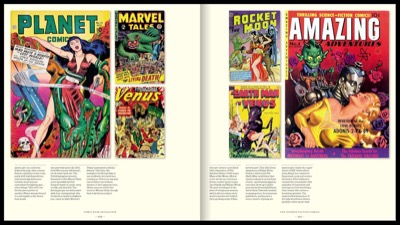
Hardcover. Atglen PA, Schiffer Publishing, 1st, 2025, Book: Very Good, Dust Jacket: None, Hardcover, pictorial boards, 255 pages. illustrated in color. Explore the rise and fall of pre-Code comics with 500 covers revealing America's cultural shifts, censorship, and controversy. From 1940 to 1955, American society and culture underwent dramatic changes, including the introduction of the Comics Code in October 1954, which heavily impacted comic books. The Code aimed to moderate comic content in response to public opinion, including such topics as juvenile delinquency, wartime sentiment, teenage sex, drugs, violent crime, and more. While compliance was technically voluntary, most publishers followed its strict rules. Those who didn't faced ruin when wholesalers and distributors refused to handle noncompliant comics, returning them unopened to publishers, who soon self-destructed. Comic Book Apocalypse! explores this downfall through 500 examples of pre-Code cover art, highlighting why some deemed the Code necessary. The book also examines who decided what content was acceptable, demonstrating how pre-Code comics reflect the larger story of 1950s America. DOMESTIC SHIPPING ONLY.
Hardcover. NY/London, Tate Publishing, 1st, 2013, Book: Very Good, Dust Jacket: None, 144 pages, illustrated throughout in color and b&w. Clean, tight copy. In this richly illustrated and accessible survey, acclaimed author Paul Gravett considers the vast output of comics culture from the late 19th century to today, including syndicated comics, graphic novels, and contemporary art and illustration. From foundational masterpieces such as Rodolphe Topffer's and Wilhelm Busch's albums, George McManus's Art Deco "Bringing Up Father," and Alex Raymond's "Flash Gordon" to the later retro stylings of Robert Crumb, Gravett considers lines of influence from around the world and examines how comics have shifted from supporting the status quo to becoming the voice of alternative subcultures. Gravett traces the major themes taking place in contemporary comics, noting the rise of publications that function as questioning, transgressive outlets for outsider stories and ideas, and includes the ways that folk art traditions are reinvigorating the form.
Hardcover. NY/London, Tate Publishing, 1st, 2013, Book: Very Good, Dust Jacket: None, 144 pages, illustrated throughout in color and b&w. Clean, tight copy. In this richly illustrated and accessible survey, acclaimed author Paul Gravett considers the vast output of comics culture from the late 19th century to today, including syndicated comics, graphic novels, and contemporary art and illustration. From foundational masterpieces such as Rodolphe Topffer's and Wilhelm Busch's albums, George McManus's Art Deco "Bringing Up Father," and Alex Raymond's "Flash Gordon" to the later retro stylings of Robert Crumb, Gravett considers lines of influence from around the world and examines how comics have shifted from supporting the status quo to becoming the voice of alternative subcultures. Gravett traces the major themes taking place in contemporary comics, noting the rise of publications that function as questioning, transgressive outlets for outsider stories and ideas, and includes the ways that folk art traditions are reinvigorating the form.
Hardcover. Seattle, Fantagraphics Books, 1st, 2016, Book: Very Good, Dust Jacket: None, Hardcover, pictorial boards, 696 pages illustrated in color, b&w. Tells of Fantagraphics Books' key role in helping build and shape an art movement around a discredited, ignored and fading expression of Americana the way insiders share the saga with one another other: in anecdotal form, in the words of the people who lived it and saw it happen. Comics historian and critic Tom Spurgeon and longtime Comics Journal editor Michael Dean assemble an all-star cast of industry figures, critics, cartoonists, art objects, curios, and groundbreaking publications to bring you a detailed account of Fantagraphics' first 40 years.
Hardcover. Jackson MS, University Press of Mississippi, reprint, 1991, Book: Very Good, Dust Jacket: Very Good, Hardcover, 364 pages, b&w illustrations. A reprint of the classic survey published in 1947. In a bright dust jacket, clean.
Hardcover. Milwaukie, OR, Dark Horse Books, 1st, 1998, Book: Very Good, Dust Jacket: Very Good, 500 pages. Hardcover with dust jacket. Very clean, unmarked copy with only minor edgewear. Features 670 illustrations and photos. This lavish volume takes an in-depth look at the history of comics in a manner decidedly unlike the dry timelines and profiles of most reference-style titles.Containing countless stories gleaned from over 150 interviews of comics industry veterans, Comics Between the Panels is loaded with more than half a century of insider information on the talented and eccentric creators who forged the comics industry and art form.
Hardcover. NY/Paris, Pergamon Press, reprint, 1969, Book: Very Good, Dust Jacket: None, Approximately 7000 pages, 5 hardcover volumes complete, each book is 10" by 15'', bound in burgundy cloth covers with gilt lettering. Reproduced from the original 1651 17-volume edition, reduced here allowing 4 pages per sheet. French text. Clean, bright copies. No dust jackets ever issued. HUGE VOLUMES, DOMESTIC SHIPPING ONLY.
Hardcover. New York, Dodd, Mead and Company, 1st Edition, 1920, Book: Good, Dust Jacket: None, 370 pages. Hardcover. Green cloth covers with gilt titles to cover & spine. Fraying, scuffing to edges. Light sunfade to spine. As is, with light pencil marking throughout. Cracked rear hinge.
Hardcover. Cambridge MA, MIT Press, 1st, 1993, Book: Very Good, Dust Jacket: Very Good, Hardcover in a bright dust jacket. Surrealism has long been seen as its founder, Andre Breton, wanted it to be seen: as a movement of love and liberation. In Compulsive Beauty, Foster reads surrealism from its other, darker side: as an art given over to the uncanny, to the compulsion to repeat and the drive toward death. To this end Foster first restages the difficult encounter of surrealism with Freudian psychoanalysis, then redefines the crucial categories of surrealism-the marvelous, convulsive beauty, objective chance-in terms of the Freudian uncanny, or the return of familar things made strange by repression. Next, with the art of Giorgio de Chirico, Max Ernst, and Alberto Giacometti in mind, Foster develops a theory of the surrealist image as a working over of a primal fantasy. This leads him finally to propose as a summa of surrealism a body of work often shunted to its margins: the dolls of Hans Bellmer, so many traumatic tableaux that point to difficult connections not only between sadism and masochism butal so between surrealism and fascism. At this point Compulsive Beauty turns to the social dimension of the surrealist uncanny. First Foster reads the surrealist repertoire of automatons and mannequins as a reflection on the uncanny processes of mechanization and commodification. Then he considers the surrealist use of outmoded images as an attempt to work through the historical repression effected by these same processes. In a brief conclusion he discusses the fate of surrealism today in a world become surrealistic. Compulsive Beauty not only offers a deconstructive reading of surrealism, long neglected by Anglo-American art history, but also participates in a postmodern reconsideration of modernism, the dominant accounts of which have obscured its involvements in desire and trauma, capitalist shock and technological development.

 "Charles Willson Peale: Early Life, 1741-1790, Later Life, 1790-1827 (2 Volumes)by: Sellers, Charles Coleman")
 "Chasing Me to My Grave: An Artist's Memoir of the Jim Crow South by: Rembert, Winfred/Kelly, Erin I.")
 "Cheap Laffs: The Art of the Novelty Itemby: Newgarden, Mark and Picturebox, Inc")
 "Chicago Ceramics & Glass: An Illustrated History from 1871 to 1933by: Darling, Sharon S.")
 "Children of the Yellow Kid: The Evolution of the American Comic Stripby: Walker, Brian/ Robert Harvey")
![Chinese Eunuchs: Inside Stories of the Chinese Courtby: Wang Yongsheng; Wang Yongsheng [Editor]](javascript:largeIMTop('https://www.browsingisarousing.com/shop/images/397659.jpg','https://www.browsingisarousing.com/shop/images/397659.jpg',0,'397659',0,'') "Chinese Eunuchs: Inside Stories of the Chinese Courtby: Wang Yongsheng; Wang Yongsheng [Editor]")
 "Chinese Sculpture from the Fifth to the Fourteenth Centuryby: Siren, Osvald")


 "Chucks!: The Phenomenon of Converse: Chuck Taylor All Starsby: Peterson, Hal")
 "Claes Oldenburg: The Sixtiesby: Hochoerfer, Achim")
 "Clarence H. White and His World: The Art and Craft of Photography, 1895-1925by: McCauley, Anne")
 "Classic Rock Posters: Sixty Years of Posters and Flyers, 1952 to 2012by: Loren, Dennis")
 "Classical Art: A Life History from Antiquity to the Presentby: Caroline Vout")
 "Coca Cola Slipcase Set of 3: Film, Music, Sportsby: N/A")
 "Coca Cola Slipcase Set of 3: Film, Music, Sportsby: N/A")
 "Colonial Houses of Worship in America, Theby: Rose, Harold Wickliffe")
 "Comic Book Apocalypse!by: David J. Hogan")

 "Comics Artby: Gravett, Paul")
 "Comics Artby: Gravett, Paul")
 "Comics as Art: We Told You Soby: Spurgeon, Tom; Dean, Michael")
 "Comics, Theby: Waugh, Coulton")
 "Comics: Between the Panelsby: Richardson, Mike")

 "Complex Vision, The by: Powys, John Cowper")


 "Compulsive Beauty by: Foster, Hal")