Softcover. Oxford UK, Blackwell, reprint, 1998, Book: Very Good, Dust Jacket: None, Softcover, 630 pages. This is an account of 110 years of turbulence and change. At the offset there were not one, but two revolutions: by intent the first was egalitarian, the second - Bonaparte's - authoritarian. The tension between the two characterized the period and shaped the Republic that in the end emerged from the ruins of the Ancien Regime. Clean copy.
Hardcover. New York, Harry N. Abrams, 1st, 2012, Book: Very Good, Dust Jacket: Very Good, Like new in publishers shrink-wrap. Hardcover in the dust jacket , 263 page book with color and black & white photo illustrations. Written in collaboration with Bernard Matussiere. Translated from the French by Nicholas Elliot. Focuses on Capa's Paris studio, which he used as a global platform for his work; and explores both his professional and personal adventures.
Hardcover. New York, Harry N. Abrams, 1st, 2012, Book: Very Good, Dust Jacket: Very Good, Like new in publishers shrink-wrap. Hardcover in the dust jacket , 263 page book with color and black & white photo illustrations. Written in collaboration with Bernard Matussiere. Translated from the French by Nicholas Elliot. Focuses on Capa's Paris studio, which he used as a global platform for his work; and explores both his professional and personal adventures.
Softcover. Racine/Lannoo, 1st, 2017, Book: Very Good, Dust Jacket: None, Softcover, 239 pages, b&w and color plates. Text in English and French. Featuring the most well-known photos from Robert Doisneau since the beginning of his career. This retrospective also gives an insight in the lives of famous artists such as Picasso and Niki de Saint Phalle. The book is themed by three subjects: the main characteristics of his work and his importance for 20th century photography, the notion of the poetry of realism and 164 photos, which are also themed: daily beauty, Palm Springs, artists' studios. Published to accompany an exhibition in Musee Ixelles (Brussels) from 19 October 2017 until 4 February 2018. Clean, bright copy.
Hardcover. Germany, Steidl, 1st, 2010, Book: Very Good, Dust Jacket: None, Hardcover, 224 pages. Like new in publisher's shrink-wrap. Nowhere is the breezy and urbane romance of Paris conjured as memorably as in the photography of Robert Doisneau (1912-1994). A gentle minstrel of visual anecdote, Doisneau interpreted the city's charms in an iconography that both natives and Francophiles instantly recognize: the young hip couple stealing a spontaneous kiss at a busy intersection, the gendarme chatting with a mother while her kid tiptoes along a riverbank bench, the sweetly melancholic abandoned merry-go-round in the rain and the entire pageant of Parisian life mingling at cafes, bus shelters and on the banks of the Seine. Doisneau was possessed of both lightness of touch and spontaneity, as a result of which he has been sometimes championed as a photographer of the "pure" moment. But his ocular touch is even lighter than that suggests-his images are not so much "seized" as "netted." Accompanying the Fondation Cartier-Bresson's exhibition of around 100 prints from the Doisneau estate, From Craft to Art presents these treasures alongside a new version of Jean-Francois Chevrier's classic 1983 essay on the photographer, which describes Doisneau's knack for capturing "the shining melancholy that separates an individual from the crowd.
Softcover. London, Tauris Parke Books, 1st, 1992, Book: Very Good, Dust Jacket: None, Softcover, 126 pages. 107 b&w plates. A retrospective for exhibition at Museum of Modern Art, Oxford. Clean, bright copy.
Hardcover. Paris, Zodiaque, 1st, 1982, Book: Very Good, Dust Jacket: Very Good, Hardcover, 407 pages plus index. Color and b&w gravure plates, plans of medieval churches of France. French text. A clean, tight copy in a bright dust jacket.
Hardcover. Paris, Denoel, reprint, 1977, Book: Very Good, Dust Jacket: None, Hardcover, 123 pages of b&w cartoons by Sempe, originally published in 1964. Green cloth covers with fading to spine. previous owner's signature on front fly leaf. Otherwise clean, very good. French language but most of his cartoons are wordless.
Paperback. Albany, NY, Education Department, Albany Institute of History and Art., revised, 1984, Book: Very Good, Dust Jacket: None, Softcover, 201 pages. Very little wear to cover. Inside is bright and clean with many b&w illustrations throughout.
Hardcover. New Haven/New York, Yale University Press/Metropolitan Museum of Art, 1st, 2001, Book: Very Good, Dust Jacket: Very Good, Hardcover, 340 pages, 223 color, 92 b&w plates. Still in publisher's shrinkwrap. DUE TO WEIGHT, DOMESTIC SHIPPING ONLY.
Hardcover. US, 5 Continents, 1st, 2006, Book: Very Good, Dust Jacket: Very Good, Hardcover, 144 pages. Like new in publisher's shrink-wrap. French photographer Olivier Mriel (b. 1955) has practiced photography for over 26 years. His work focuses on landscapes with a taste for the obscure. The son of a chemist, he lives and works in France in the small seaside town of Saint Aubin-sur-Mer, just as his ancestors did before him. His photographs perfectly capture the feeling of history this region is steeped in. Mriel's landscapes, while dark and moody, ultimately document his search for light. This light is reflected off the land and as surfaces act as mirrors, they exude a subtle glow that seeps into even the darkest corners. A human presence that is felt but not seen subtly leads us to explore and to contemplate the secrets of these magical places and the profound meaning of existence.
Softcover. New York , Random House, 1st, 2011, Book: Very Good, Dust Jacket: None, Softcover, 279 pages, b&w photos. Clean, unmarked copy with only minor wear to wrappers. This book exposes Chanel's anti-Semitism and her long affair with 'Spatz' Baron von Dincklage, a Nazi spy who ran an intelligence ring and reported to Goebbels. It explains how she became a German intelligence operative, how she lived in exile, how Winston Churchill supported her and how she reinvented herself in the early 1950s.
Softcover. London, Frank Cass, reprint, 2006, Book: Very Good, Dust Jacket: None, Softcover, 526 pages, b&w illustrations. An Account of the Work of the British Special Operations Executive in France 1940-1944. Maps, appends., sources, index, Updated edition of the HMSO Official History Volume. Originally withdrawn shortly after publication due to threats of legal action by Peter Churchill, then re-released with emendations, Clean copy.
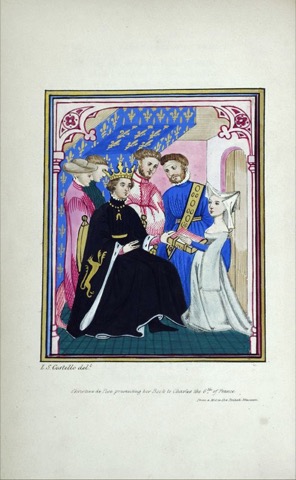
Hardcover. London, William Pickering, 1st, 1835, Book: Good, Dust Jacket: None, Hardcover, 298 pages. Black leather covers with gilt rules, faded gilt title on ribbed spine. All edges gilt. Covers with edgewear and the top 6th of the spine leather is gone. Marbled endpapers with bookplate inside front cover. Rear flyleaf with a chunk cut out. Interior is very good. Medieval and Renaissance French poetry, translated into English by an acclaimed poet, travel writer, historian, and painter. Louisa Costello (1799-1870), was an accomplished Anglo-Irish artist and prolific poet and author. She was also a fine miniature painter, and her illustrations show her exquisite sensibility. 4 beautifully hand-colored lithograph plates by the author. Not all copies contain these plates.
Softcover. Mancheser, U.K., Manchester University, Reprint, 1995, Book: Very Good, Dust Jacket: Very Good, Softcover, 221 pages. Foreword by George Melly. Highlighting on two pages. B&W photos and illustrations. Street Noises combines the diverse materials of mass culture with literary and archival sources, to produce an innovative and critical re-reading of twentieth-century Paris as the city of the people and of cultural modernity. It concentrates on popular song and opera, cultural theory and records of police surveillance (such as the unpublished archives concerning the sexual mores of sailors in Toulon), sensational weekly magazines (including the weekly Detective Magazine with its remarkable photomontage) and writers of the Academie Goncourt. The author picks out their common realisation of the experience of the city, also showing how the faits divers and the entertainment industries frame the writing of a Benjamin, a Colette or a Genet. Rifkin reworks modern critical theory through these sources, reflecting on its relation to the production of mass cultures.
Hardcover. Harrisburg, Stackpole Company, 1st, 1961, Book: Good, Dust Jacket: None, 322 pages. Hardcover. Features 16 pages of black & white photographs. Notations in red pencil on 2 maps - pages 92 and 97. Light wear to yellow cloth covers. No dust jacket.
Softcover. Paris, S.N.E.P., 1st, 1952, Book: Very Good, Dust Jacket: None, Softcover. very good. 116 tipped-in color plates, folio, printed beige boards. Paris: Editions SNEP, (1952). Very good (+). The evolution of painting in Europe, from the Middle Ages to the 18th century. PLEASE NOTE: DUE TO WEIGHT, DOMESTIC SHIPPING ONLY.
Softcover. NY, W. W. Norton & Company, reprint, 1985, Book: Very Good, Dust Jacket: None, Softcover, 447 pages, b&w illustrations. Sylvia Beach ran a bookshop in Paris in the 1920s and 30s and was at the heart of the literary world there which also included Hemingway, Pound, Flanner, Gide, and of course Joyce whose novel "Ulysses" she published. Clean, bright copy.
Softcover. NY, Vintage, 1st pbk, 2008, Book: Very Good, Dust Jacket: None, Softcover, pages. That Sweet Enemy brings both British wit (Robert Tombs is a British historian) and French panache (Isabelle Tombs is a French historian) to bear on three centuries of the history of Britain and France. From Waterloo to Chirac's slandering of British cooking, the authors chart this cross-channel entanglement and the unparalleled breadth of cultural, economic, and political influence it has wrought on both sides, illuminating the complex and sometimes contradictory aspects of this relationship--rivalry, enmity, and misapprehension mixed with envy, admiration, and genuine affection--and the myriad ways it has shaped the modern world. Clean copy.
Softcover. UK, Faber & Faber, reprint, 1988, Book: Very Good, Dust Jacket: None, Softcover, 271 pages. In the twelfth century, Languedoc, in the far south, was among the most beautiful parts of France, far away from the world of the feudal north. However, it was in this rich region that a heresy of Eastern origin took hold, forcing the Catholic Church to confront a rival whose teachings questioned the foundations of Christian thought. These heretics, called Cathars, held a profoundly pessimistic view of the world that was based on the duality of all things, including good and evil: according to one heretic, "The one, the good God, made the invisible world, while the other, the evil God, made the visible one." Jonathan Sumption's acclaimed history examines the roots of this heresy as well as of the crusade the Church undertook in 1208 to stamp out the infidels, who ultimately were conquered by the Catholic armies. But this book does more than simply describe this terrible war; it reconstructs a lost world of great cultural richness, one that saw the creation in Languedoc of the troubadour tradition as well as the magnificent castles at Cabaret and Carcassonne. Clean copy.
Softcover. Durham NC, Duke University Press, 1st, 2013, Book: Very Good, Dust Jacket: None, Softcover, 384 pages. Noel Burch and Genevieve Sellier adopt a sociocultural approach to films made in France before, during, and after World War II, paying particular attention to the Occupation years (1940-44). The authors contend that the films produced from the 1930s until 1956--when the state began to subsidize the movie industry, facilitating the emergence of an "auteur cinema"--are important, both as historical texts and as sources of entertainment. Citing more than 300 films and providing many in-depth interpretations, Burch and Sellier argue that films made in France between 1930 and 1956 created a national imaginary that equated masculinity with French identity. They track the changing representations of masculinity, explaining how the strong patriarch who saved fallen or troubled women from themselves in prewar films gave way to the impotent, unworthy, or incapable father figure of the Occupation. After the Liberation, the patriarch reemerged as protector and provider alongside assertive women who figured as threats not only to themselves but to society as a whole. Still in publisher's shrinkwrap.
Hardcover. NY/London, Verso, 1st, 2003, Book: Very Good, Dust Jacket: Very Good, Hardcover in a bright, unclipped dustjacket. The violence that has ravaged Algeria has often defied explanation. Regularly invoked in debates about political Islam, transitions to democracy, globalization, and the right of humanitarian interference, Algeria's tragedy has been reduced to a clash of stereotypes: Islamists vs.a secular state, terrorists vs. innocent civilians, or generals vs. a defenseless society. The prevalence of such simplistic representations has disabled public opinion inside as well as outside the country and contributed to the intractability of the conflict. This collection of essays offers a radical corrective to Western misconceptions. Rejecting essentialist and determinist approaches, Hugh Roberts explores the outlook and evolution of the various internal forces as they emerged--the Islamists, the Berberists, the factions within the army, and the regime in general--and he looks at external interests and actors. Clean copy.
Hardcover. Berkeley CA, University of California Press, 1st, 1994, Book: Very Good, Dust Jacket: Very Good, Hardcover in a bright dust jacket, 200 pages, b&w illustrations. Kathleen Kete's wise and witty examination of petkeeping in nineteenth-century Paris provides a unique window through which to view the lives of ordinary French people. She demonstrates how that cliche of modern life, the family dog, reveals the tensions that modernity created for the Parisian bourgeoisie. Kete's study draws on a range of literary and archival sources, from dog-care books to veterinarians's records to Dumas's musings on his cat. The fad for aquariums, attitudes toward vivisection, the dread of rabies, the development of dog breeding-all are shown to reflect the ways middle-class people thought about their lives. Petkeeping, says Kete, was a way to imagine a better, more manageable version of the world-it relieved the pressures of contemporary life and improvised solutions to the intractable mesh that was post-Enlightenment France. Clean copy.
Hardcover. Belgium, Brepols , 1st, 2012, Book: Very Good, Dust Jacket: None, Hardcover, pictorial boards, 696 pages, 34 b/w illustrations.The rise of modern science and European colonial and imperial expansion are indisputably two defining elements of modern world history. James E. McClellan III and Francois Regourd explore these two world-historical forces and their interactions in this comprehensive and in-depth history of the French case in the Old Regime presented here for the first time. The case is key because no other state matched Old-Regime France as a center for organized science and because contemporary France closely rivaled Britain as a colonial power, as well as leading all other nations in commodity production and participating in the slave trade. Based on extensive archival research and vast primary and secondary literatures and sharply reframing the historiography of the field, this landmark volume traces the development and significance for early-modern history of the Colonial Machine of Old-Regime France, an unparalleled agglomeration of institutions geared to the success of the French colonial enterprise, including the Royal Navy, the Academie Royale des Sciences, the Jardin du Roi, and a host of related specialist institutions working together at home and overseas. Mainly supported by the French state, the Colonial Machine reveals itself through its actions from the time of Colbert and Louis XIV as it grappled with fundamental problems facing contemporary European colonialism. SIGNED LETTER from co-author McClelland laid in. Clean copy.

 "Revolutionary France 1770-1880 by: Furet, Francois")
 "Robert Capa: The Paris Years 1933-54by: Lefebvre, Michel")
 "Robert Capa: The Paris Years 1933-54by: Lefebvre, Michel")
 "Robert Doisneau by: Danielle Leenarts & Virginie Devillers")
 "Robert Doisneau: From Craft to Artby: Chevrier, Jean-Franaois")
 "Robert Doisneau: Retrospectiveby: Hamilton, Peter")
 "Routes Romanes: 1- La Route aux Saintsby: Oursel, Raymond")
 "Sauve Qui Peutby: Sempe")
 "Seventeenth Century Albany: A Dutch Profile.by: Wilcoxen, Charlotte")
 "Signac 1863-1935by: Ferretti-Bocquillon, Marina")
 "Silent Worldsby: Olivier Mriel")
 "Sleeping with the Enemy: Coco Chanel, Nazi Agentby: Vaughan, Hal")
 "SOE in France: An Account of the Work of the British Special Operations Executive in France 1940 1944 by: Foot, M.R.D.")
 "SPECIMENS OF THE EARLY POETRY OF FRANCE, from the Time of the Troubadours and Trouveres to the Reign of Henry Quatre by: Costello, Louisa Stuart")
 "Street Noises: Parisian Pleasure 1900-40by: Rifkin, Adrian")
 "Street Without Joy - Indochina at War - 1946-54by: Fall, Bernard B.")
 "Sur l'?©volution de la grande peinture ?©trangereby: Baschet, Roger")
 "Sylvia Beach and the Lost Generation: A History of Literary Paris in the Twenties and Thirties by: Fitch, Noel Riley")
 "That Sweet Enemy: Britain and France: The History of a Love-Hate Relationshipby: Tombs, Robert; Tombs, Isabelle")
 "The Albigensian Crusade by: Jonathan Sumption")
 "The Battle of the Sexes in French Cinema, 1930??\"1956by: Burch, Noel/ Sellier, Genevieve/ Graham Peter A. Translator")
 "The Battlefield: Algeria 1988 2002 Studies in a Broken Polity by: Roberts, Hugh")
 "The Beast in the Boudoir: Petkeeping in Nineteenth-Century Parisby: Kathleen Kete")
 "The Colonial Machine: French Science and Overseas Expansion in the Old Regime by: James McClellan III, /Francois Regourd")