Hardcover. Munchen GR%, C. Bertelsmann, 1st, 1992, Book: Very Good, Dust Jacket: Very Good, Hardcover, 255 pages, profusely illustrated with b&w photographs, text illustrations., maps, bibliog., Foreword by Lew Kopelew. GERMAN TEXT. Highly pictorial account of the disastrous German campaign 1942-43. Cllean copy.
Hardcover. New York, Prestel, 1st, 2014, Book: Very Good, Dust Jacket: None, Hardcover, 10 x 13", 207 pages. Color and b&w images. Widely considered one of the major works of Expressionist printmaking, this series of spectacular woodcuts by Ernst Ludwig Kirchner is presented for the first time in a comprehensive study, specifically designed to allow readers a full understanding of the artist's achievement. No dust jacket issued.
Softcover. West Lafayette IN, Purdue University Press , 1st, 2020, Book: Very Good, Dust Jacket: None, Softcover, 529 pages, b&w illustrations. Eva and Otto is a true story about German opposition and resistance to Hitler as revealed through the early lives of Eva Lewinski Pfister (1910-1991) and Otto Pfister (1900-1985). It is an intimate and epic account of two Germans-Eva born Jewish, Otto born Catholic-who worked with a little-known German political group that resisted and fought against Hitler in Germany before 1933 and then in exile in Paris before the German invasion of France in May 1940. After their improbable escapes from separate internment and imprisonment in Europe, Eva obtained refuge in America in October 1940 where she worked to rescue other endangered political refugees, including Otto, with the help of Eleanor Roosevelt. As revealed in recently declassified records, Eva and Otto later engaged in different secret assignments with the US Office of Strategic Services (OSS) in support of the Allied war effort. Despite their vastly different backgrounds, Eva and Otto gave each other hope and strength as they acted upon what they understood to be an ethical duty to help others threatened by fascism. The book provides a sobering insight into the personal risks and costs of a commitment to that duty. Their unusually beautiful writing-directed to each other in diaries and correspondence during two long periods of wartime separation-also reveals an unlikely and inspiring love story.
Softcover. Berkeley CA, University of California Press, 1st, 2001, Book: Very Good, Dust Jacket: None, Still wrapped in plastic. Accompanied the exhibition "Expressionist Utopias" at the Los Angeles County Museum in 1993. In great condition. Color illustrations throughout. A nice, tight copy.
Softcover. Berkeley CA, University of California Press, 1st, 2001, Book: Near Fine, Dust Jacket: Near Fine, Still wrapped in plastic. Accompanied the exhibition "Expressionist Utopias" at the Los Angeles County Museum in 1993. In great condition. Color illustrations throughout. A nice, tight copy.The notion of utopia exists in every culture, capturing shared dreams and common goals. This book--prepared to accompany the exhibition Expressionist Utopias mounted at the Los Angeles County Museum in 1993--explores how the optimistic themes of utopia and fantasy sustained faith among artists and architects in the power of art to shape a better world during the tumultuous World War I era in Germany. The exhibition's curator, Timothy O. Benson along with David Frisby, Reinhold Heller, Anton Kaes, Wolf Prix, and Iain Boyd White present the diverse manifestations of the utopia metaphor in its progression throughout Expressionism from Arcadian to manmade utopias.
Hardcover. New York , Charles Scribner's Sons, 1st, 1972, Book: Very Good, Dust Jacket: Good, 176 pages, illustrated throughout in b&w. Dust jacket price clipped with slight rubbing, wear, sunning to edges and spine. Internally very good.
Hardcover. Princeton University Press , 1st, 1967, Book: Very Good, Dust Jacket: None, Hardcover, gray cloth-covered boards, gilt titles to spine on black ground, 350 pages., illustrated with tables. The book sets out to "describe the inception, organisation, and administration of the Nazi foreign labor program and the relationship of the program to the Nazi war economy and government". It uses captured documents as well as material published during the war. Spine slightly cocked, clean copy.
Gudensberg-Gleichen GR, Wartberg, 1st, 1998, Book: Very Good, Dust Jacket: None, Hardcover, pictorial boards, no dust jacket issued. 72 pages of b&w photos of Frankfurt and it's citizens in the 1950s. GERMAN TEXT.
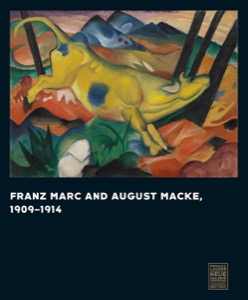
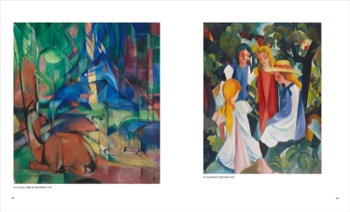
Hardcover. Munich / New York, Prestel / Neue Galerie, 1st, 2019, Book: Very Good, Dust Jacket: Very Good, Hardcover in a bright dust jacket, 207 pages. profusely illustrated in color and black & white throughout, including several full-page illustrations. Includes a preface by Ronald S. Lauder, a foreword by Renee Price and essays by Vivian Endicott Barnett, Erich Franz, Ursula Heiderich, Annegret Hoberg, Isabelle Jansen, and Olaf Peters. This generously illustrated volume focuses on the poignant friendship of Franz Marc and August Macke, two innovative members of the Blue Rider group. During the five years Franz Marc and August Macke knew each other, the two men carried on an artistic and personal friendship that had an immense impact of each of their careers. This book traces their relationship and features meticulously reproduced images that bring their paintings, and the bond they shared, to life. In addition to paintings, watercolors, and drawings from both artists, this book includes objects and documents that show their connection to one another. Clean copy.
Hardcover. Milan, Artvera's, 1st, 2012, Book: Very Good, Dust Jacket: None, Hardcover without dust jacket. Like new in publisher's shrink-wrap. This one-of-a-kind book brings the work of German Expressionist artist Friedrich Karl Gotsch (1900-1984) to a larger, well-deserved audience. Gotsch, whose paintings are in the collections of the Brooklyn Museum and the Museum of Modern Art in New York, trained at the Dresden School of Fine Arts in the early 1920s and was inspired by the works of Oskar Kokoschka and Edvard Munch. While his early paintings follow a straightforward Expressionist style, he truly came into his own after World War II, when his work became distinct and easily recognizable: The energy, contrasting primary colors, vivid outlines, and free brushwork combine to produce powerful, spellbinding images. In addition to stunning color reproductions of his work, this book includes essays on Gotsch's art and life, illuminating the artist's creative development and the cultural milieu and influences that inspired him.
Softcover. Providence RI, Berghahn Books, 1st, 1996, Book: Very Good, Dust Jacket: None, Softcover, 256 pages. Known as one of the great producers and promoters of the film industry, Eric Pommer had a life-long commitment to German film - despite his emigration in 1933 - and worked in France and Britian, as well as the United States. As German producer, studio executive, and film politician in the pre-Hitler era Erich (later Eric) Pommer (1889-1966), a native of Germany, was an innovator and pioneer, a vital force in leading German cinema to international acclaim with successes such as The Cabinet of Dr Caligari, The Nibelungen and The Blue Angel. As Motion Picture Control Officer of the US Military Government he undertook , from 1946-49, the difficult task of rebuilding West Germany's film industry from the ashes of the Second World War. He succeeded brilliantly, but not without paying the hefty price of becoming embroiled in the turmoil of postwar German politics which made him many friends, but also many enemies. This book is the first detailed account in English of the remarkable career of Pommer who became a legend in his own lifetime. Clean copy.
Hardcover. NY, Neue Galerie, 1st, 2009, Book: Very Good, Dust Jacket: Very Good, Hardcover in a bright dust jacket, Foreword by Ronald S. Lauder. More than 160 works illustrated in color. 123 pages. Clean, bright copy.
Hardcover. NY, Neue Galerie, 1st, 2009, Book: Very Good, Dust Jacket: Very Good, Hardcover in a bright dust jacket, Foreword by Ronald S. Lauder. More than 160 works illustrated in color. 123 pages. Short closed tear to dust jacket in rear. Otherwise a clean, bright copy.
Hardcover. Leipzig, B.G. Teubner, 1st, 1896, Book: Good, Dust Jacket: None, 693 pages, ex-library bound in 3/4 leather with marbled boards, spines with raised bands and gilt titles. Usual stamping, residue to end papers, previous owner's signature. Top of leather spine frayed with a split along back edge along top half of spine. Appears to be very repairable with some glue. Internally clean, very good.
Softcover. Berlin GR, Walther Konig/Contemporary Fine Arts, Berlin, 1st, 2007, Book: Very Good, Dust Jacket: None, Softcover, 56 pages, color and b&w illustrations. Collection of new works on paper by the German neo-Expressionist Georg Baselitz is beautifully printed on deluxe paper and includes a tipped in centerfold on glossy paper. Here Baselitz revisits and remixes early works in fresh new ways. Bright, clean copy. English and German text.
Hardcover. New York, Macmillan Publishing, 1st , 1983, Book: Near Fine, Dust Jacket: Very Good, Hardcover, 312 pages, illustrated throughout with drawings in b&w. Black blind-stamped boards, brown cloth spine with gilt title. White pictorial dust jacket. Light wear to covers and spine, else a very nice, tight copy.
Hardcover. Galerie Raeber, 1st, 1976, Book: Very Good, Dust Jacket: Very Good, Hardcover in a bright dust jacket. GERMAN TEXT. 190 pages plus a photo gallery showing 572 works in b&w in rear. The main section has a generous selection of paintings reproduced in color. Georges Einbeck was born in 1871 in the West Prussian town Golluschutz (Goluszyce). After several trips to Paris, Einbeck begins self-taught with painting in 1897, followed by studies at the Academy of Arts in Munich and at the Ecole des Beaux Arts as well as the Academie de la Grande Chaumiere in Paris. He also studied with Henri Matisse. In the 1920s, he lived in Switzerland for some time. His early works still show influences of Art Nouveau style, the later works, however, are influenced by Expressionism especially the Fauvism painting. He died in 1951. Book is clean and tight.
Hardcover. Kunsthalle Bremen & Verlag Fred Jahn, 1st, 1993, Book: Very Good, Dust Jacket: Very Good, Black cloth with dust jacket. Text in German by numerous contributors. illustrated checklist to the exhibition. 170 pages with 69 four-color plates and numerous b/w reference illustrations. GERMAN LANGUAGE.
Hardcover. New York, Museum of Modern Art, 3rd pr., 2003, Book: Very Good, Dust Jacket: Very Good, Hardcover, 303 illustrations 138 in color. Essay by Robert Storr and with an interview of Richter by Storr as well. Includes numerous color and black and white illustrations, artist chronology, list of previous exhibitions, and a selected bibliography. Published on the occasion of the exhibition from The Museum of Modern Art, New York NY February 14-May 21, 2002. In a bright, unclipped dust jacket.
Hardcover. NY, Museum of Modern Art/Abrams, 1st, 2000, Book: Very Good, Dust Jacket: None, Hardcover, black cloth with cover paste-down plate, white lettering. Gerhard Richter (b. 1932) is one of the most highly regarded of contemporary artists, and his series of 15 paintings known as October 18, 1977, is one of the 20th century's most famous works on a political theme. It commemorates the day on which three young German radicals, members of the militant Baader-Meinhof group, were found dead in a Stuttgart prison; they were pronounced suicides, but many people suspected that they had been murdered. Richter's paintings, created 11 years after this traumatic event, are among the most challenging works of the artist's career. These hauntingly powerful images, derived from newspaper and police photography, are now in the collection of the Museum of Modern Art, New York. Clean copy.
Hardcover. Atglen, PA, Schiffer Military History Book, 1st, 2008, Book: Very Good, Dust Jacket: Very Good, 256 pages. Hardcover with dust jacket. Profusely illustrated with b&w photos. Clean, tight copy.
Hardcover. Greenwich CT, New York Graphic Society, 1st, 1968, Book: Very Good, Dust Jacket: Very Good, Hardcover in a lightly worn dust jacket with short, closed tears, 516 pages. 623 black and white illustrations, 42 color plates. "By 'German Art' we mean here 'Art in Germany,' the art that developed on German soil, even if it was created by a Swiss (Obrist), an Austrian (Kokoschka), a Russian (Kandinsky) or a Hungarian (Moholy). This definition should not be interpreted as nationalistic presumption, for cultural environment is more significant than the birth certificate." DOMESTIC SHIPPING ONLY.

 "Emil du Bois-Reymond (1818-1896)-Anton Dohrn (1840-1909): Briefwechsel. Hrsg. von Christiane Groeben in Zusammenarbeit mit Klaus Hierholzer. Mit einer historischen Einfuhrung von Ernst Floreyby:")
 "Entscheidung Stalingrad-Das Buch zur TV Reihe Der verdammte Krieg by: Guido Knopp")
 "Ernst Ludwig Kirchner: Peter Schlemihl's Wondrous Storyby: Moeller, Magdalena M.; Gercken, Gunther")
 "Eva and Otto: Resistance, Refugees, and Love in the Time of Hitlerby: Pfister, Tom; Pfister, Kathy; Pfister, Peter")
 "Expressionist Utopias: Paradise, Metropolis, Architectural Fantasyby: Benson, Timothy O.")
 "Expressionist Utopias: Paradise, Metropolis, Architectural Fantasyby: Benson, Timothy O.")
 "Felix Mendelssohn: His Life, His Family, His Musicby: Kupferberg, Herbert")
 "Flame of Freedom - The German struggle against Hitler, Theby: Zeller, Eberhard")
 "Foreign Labor in Nazi Germany by: Edward L. Homze")
 "Frankfurt am Main : Bewegte Zeiten - Die 50er Jahreby: Klaus, Meier-Ude")
 "Franz Marc and August Macke: 1909-1914 by: Barnett Endicott, Vivian")

 "From Caligari to California: Eric Pommer's Life in the International Film Warsby: Hardt, Ursula")
 "From Klimt to Klee: Masterworks from the Serge Sabarsky Collection by: Serge Sabarsky; Renee Price")
 "From Klimt to Klee: Masterworks from the Serge Sabarsky Collection by: Serge Sabarsky; Renee Price")
 "Georg Baselitz: The Bridge Ghost's Supperby: Baselitz, Georg")
 "George Grosz: An Autobiographyby: Grosz, George")
 "Georges Einbeck (Malerei Text- und Bilddokumente Werkverzeichnis)by: Kneubuhler, Theo/Einbeck, Georges")
 "Gerhard Richter Editionen 1965-1993by: Butin, Hubertus")
 "Gerhard Richter: Forty Years of Painting by: Storr, Robert")
 "Gerhard Richter: October 18, 1977by: Gerhard Richter, Robert Storr")
 "German Art in the 20th Century: Painting. Sculpture. Architecture by: Roh, Franz")