Hardcover. US, A&C Black, 1st, 2011-03-01, Book: Very Good, Dust Jacket: None, Hardcover, 200 pages, illustrated throughout color. Clean, unmarked copy with only minor wear to covers. Propaganda Prints reviews the history, cultural diversity and legacy of Art in the service of social and political change.
Hardcover. San Francisco, Chronicle Books, 1st, 2010, Book: Very Good, Dust Jacket: Very Good, Hardcover in a bright dust jacket, 186 pages. A 21st century retelling of a 2500-year-old story: Artist and veteran Pixar animator Sanjay Patel lends a lush, whimsical illustration style and lighthearted voice to one of Hindu mythology's best-loved and most enduring tales. Teeming with powerful deities, love-struck monsters, flying monkey gods, magic weapons, demon armies, and divine love, Ramayana: Divine Loophole tells the story of Rama, a god-turned-prince, and his quest to rescue his wife Sita after she is kidnapped by a demon king. Clean copy
Hardcover. NY, Universe / Vendome, 1st, 1999, Book: Very Good, Dust Jacket: Very Good, Hardcover in a bright, unclipped dust jacket. A illustrated survey of the career and influence of a master of design showcases some of his most famous and influential works, including the Coca-Cola bottle and truck, the package for Lucky Strike cigarettes, and the Studebaker automobile.Clean copy.
Hardcover. New York, Assouline, 1st, 2005, Book: Very Good, Dust Jacket: Very Good, 80 pages, illustrated in color and b&w. In publisher's shrinkwrap. While Andy Warhol is known for creating icons, it is Raymond Loewy who built monuments. At once an engineer and a visionary, this master of streamlined design integrated movement into his designs in what would become a characteristic American way. Indeed, his drawings of the Coca Cola truck, the Greyhound bus, the package of Lucky Strike cigarettes, the Studebacker automobile, and the bullet-nose train molded our vision of twentieth-century American iconography. Illustrated with photographs of Loewy s most notable designs, this memoir pays a tribute to a man who shaped the image of an entire nation with his pencil strokes.
Hardcover. New York, Abbeville Press, 1st, 1988, Book: Very Good, Dust Jacket: Very Good, Hardcover, large format, 342 pages. "Each of the 300 posters included in Reel Art has been reproduced to the uncompromising standards of all Abbeville's fine art books. The selection of posters is world-class, many never been published, and the definite text, by screenwriter and film historian Stephen Rebello, tells the vastly entertaining story behind the posters and their creators." The four decades between 1910 and 1950 were the golden age of the American movie poster, an era when wonderful films wer promoted through the talents of legendary illustrators like Thomas Hart Benton, Norman Rockwell, Howard Chandler Christy and Jmes Montgomery Flagg, as well as a small army of unknowns. It was a time when big studios lavished fortunes on poster campaigns - from modest one-sheets posted on neighbourhood fences to the gargantuan forty-eight sheets that usurped entire sides of multi-storey buildings. Hollywood knew that the right image could seduce millions past the box office and into the theatre. Today such graphics fetch five-figure prices from collectors seeking a Casablanca or a King Kong.
Hardcover. The Monacelli Press , 1st, 2018, Book: Very Good, Dust Jacket: Very Good, Hardcover in a bright dust jacket, 264 pages. Richard Filipowski (1923-2008) was among the most gifted polymaths in the annals of American modernism. Whether as a painter, sculptor, or designer of furniture and jewelry, Filipowski developed a lush, abstract, and amazingly consistent visual language that marks him among the finest figures of midcentury art and design. As a student at the Institute of Design (formerly the New Bauhaus) in Chicago, he quickly became a protege of founder Laszlo Moholy-Nagy, who featured several of Filipowski's works in his seminal text Vision in Motion (1947); Filipowski was the only student Moholy-Nagy called upon to join the faculty, where he taught alongside Walter Gropius and Marcel Breuer. Recruited by Gropius to develop a course in design fundamentals at Harvard, which remains a cornerstone of design pedagogy to this day, he would move to MIT where he taught for more than three decades, until his retirement in 1988. With a foreword by Laszlo Moholy-Nagy's daughter Hattula, Richard Filipowski: Art and Design Beyond the Bauhaus is the first monograph of this master, who over the course of his career created a unique body of work in diverse media that has largely, until recently, been held in private collections due to his relative lack of compulsion to seek media attention or worldly rewards. But now through the efforts of the Filipowski family and new attention by design scholars--several of whom contribute essays here on Filipowski's graphic and painted works, sculpture, furniture, and position in design history--the work is being revealed to a new generation of aficionados. Richard Filipowski is a rich document of a life and career that is poised to reenter the canon of modernism.
Hardcover. US, Taschen, 1st, 2014, Book: Very Good, Dust Jacket: Very Good, 560 pages. A compilation of more than 750 remarkable album covers, from legendary to rare record releases. Artists as varied as Elvis Presley, The Beatles, The Sex Pistols, Pink Floyd, The Cure, Iron Maiden, and Sonic Youth are gathered together in celebration of the cover art that defined their albums and their cult status. Each cover is accompanied by a fact sheet listing the art director, photographer or illustrator, year, label, and more, while nearly 250 records that marked particular turning points for a band, an artist, or the music genre, are highlighted with short descriptions. Large heavy volume. Like new in publisher's shrink-wrap.
Hardcover. NY, Abrams, 1st, Book: Very Good, Dust Jacket: Very Good, Hardcover, 272 pages. Reproduces all 728 of the magazine's covers and includes behind-the-scenes stories and excerpts from articles and interviews with the idols of rock and rythym-and-blues.
Hardcover. NY, Thames & Hudson, 1st, 2022, Book: Very Good, Dust Jacket: None, Hardcover, pictorial boards, oversize format. 408 pages with 534 color illustrations. Rudolph de Harak (1924-2002) is one of the most influential graphic designers of the mid-twentieth century. This beautifully produced, comprehensive monograph is devoted to this fascinating and significant figure and provides an in-depth account of de Harak's life and work. From his early years in Los Angeles to his success as a design consultant and educator in New York City, de Harak brought inventiveness to everything he designed, from record covers to book jackets, from furniture to exhibitions. De Harak's work was influenced by early modernist masters, such as Will Burtin, Gyorgy Kepes, Alvin Lustig, and Max Bill, as well as by the rigor, simplicity, and rationalism of the International Style, Abstract Expressionism, Op Art, and Pop Art. Organized chronologically into six chapters that cover de Harak's life and career, each supported by sidebars on the designers, architects, and art movements that have influenced his work, Rudolph de Harak Graphic Designer documents de Harak's pioneering and prolific fifty-year career in graphic, experiential, industrial, and furniture design for a wide range of clients, including the Metropolitan Museum of Art, Cummins engine company, McGraw Hill publishing, and many others. PLEASE NOTE: DUE TO WEIGHT, DOMESTIC SHIPPING ONLY.
Hardcover. London, VIVAYS, 1st, 2012, Book: Very Good, Dust Jacket: Very Good, 200 pages. Hardcover with dust jacket. Like new in publisher's shrink-wrap. "This volume, based on rarely seen Russian archives, traces the history of the silent film poster in Russia, starting with a poster designed by Paul Assaturov ("Stenka Razin", 1908) in the style of ancient naive Russian imagery to the latest advertise- ment for a silent movie by Yuri Pimenov from 1934. Full-page reproductions of 161 Russian silent film posters are presented here in chronological order - from the very beginning of the 20th century until the 1930s.
Hardcover. London, Laurence King, 1st, 2011, Book: Very Good, Dust Jacket: Very Good, Hardcover, 428 pages. This is the first book to be published on one of the greatest American designers of the 20th Century, who was as famous for his work in film as for his corporate identity and graphic work. With more than 1,400 illustrations, many of them never published before and written by the leading design historian Pat Kirkham, this is the definitive study that design and film enthusiasts have been eagerly anticipating. Saul Bass (1920-1996) created some of the most compelling images of American post-war visual culture. Having extended the remit of graphic design to include film titles, he went on to transform the genre. His best known works include a series of unforgettable posters and title sequences for films such as Alfred Hitchcock's Vertigo and Otto Preminger's The Man With The Golden Arm and Anatomy of a Murder. He also created some of the most famous logos and corporate identity campaigns of the century, including those for major companies such as AT&T, Quaker Oats, United Airlines and Minolta. His wife and collaborator, Elaine, joined the Bass office in the late 1950s. Together they created an impressive series of award-winning short films, including the Oscar-winning Why Man Creates, as well as an equally impressive series of film titles, ranging from Stanley Kubrick s Spartacus in the early 1960s to Martin Scorsese s Cape Fear and Casino in the 1990s. Designed by Jennifer Bass, Saul Bass's daughter and written by distinguished design historian Pat Kirkham who knew Saul Bass personally, this book is full of images from the Bass archive, providing an in depth account of one of the leading graphic artists of the 20th century.
Hardcover. New Haven CT, Yale University Press, 1st, 2007, Book: Very Good, Dust Jacket: Very Good, Hardcover in a bright dust jacket, firm and clean; Binding tight; Pages bright, internally clean, no ownership markings or annotations, illustrated with color and b&w plates, 9.1 X 6.1 X 0.8 inches; 287 pages. Best known for his barbed and brilliant art for The New Yorker, Saul Steinberg (1914-1999) did much more. He executed public murals, designed fabrics and stage sets, was an inventive collagist and printmaker, and turned his magic touch to the fields of painting, sculpture, advertising, and even wartime propaganda. This is the first comprehensive look at Steinberg's extraordinary contribution to 20th-Century art, which was that of a modern-day illuminator, putting word and image in play to create art that spoke to the eyes, and minds, of readers. Previously unseen sketches, documents, and printed matter from the artist's papers illustrate the essay, career chronology, and entries for 120 objects featured in this important book. DOMESTIC SHIPPING ONLY.
Softcover. New Haven CT, Yale University Press, 1st, Book: Very Good, Dust Jacket: None, Softcover, stiff card wrappers firm and clean; Binding tight; Pages bright, internally clean, no ownership markings or annotations, illustrated with color and b&w plates, 9.1 X 6.1 X 0.8 inches; 287 pages. Best known for his barbed and brilliant art for The New Yorker, Saul Steinberg (1914-1999) did much more. He executed public murals, designed fabrics and stage sets, was an inventive collagist and printmaker, and turned his magic touch to the fields of painting, sculpture, advertising, and even wartime propaganda. This is the first comprehensive look at Steinberg's extraordinary contribution to 20th-century art, which was that of a modern-day illuminator, putting word and image in play to create art that spoke to the eyes, and minds, of readers. Previously unseen sketches, documents, and printed matter from the artist's papers illustrate the essay, career chronology, and entries for 120 objects featured in this important book.
Softcover. New Haven, Yale University Press, 1st, 2006, Book: Very Good, Dust Jacket: None, Large softcover, 287 pages, b&w and color illustrations throughout. A very clean, tight copy. Published on the occasion of the exhibition at the Frances Lehman Loeb Art Centre, New York. Illustrated card covers with long inside flaps, minimal wear. An exhaustive compilation of the best graphic work of Steinberg covering his life in advertising, graphic design and fine arts.
Hardcover. London, Phaidon Press, 1st, 2003, Book: Near Fine, Dust Jacket: Near Fine, Hardcover, 272 pages. Color illustrations throughout, very clean and tight copy. American adman and image-maker George Lois (b. 1931) was a leader of the Creative Revolution of the 1960s and is the mind behind an astonishing array of branding campaigns and unforgettable magazine covers during his fifty-year career. Illustrated with the original ads and images, $ellebrity presents the stories behind the ads, explaining how each ad was conceived and produced, and the unexpected pitfalls, scuffles, and friendships that ensued.
Hardcover. Seattle, Fantagraphics Books, 1st, 2006, Book: Very Good, Dust Jacket: Very Good, Hardcover, 144 pages. Sex, Rock 'N' Roll, & Optical Illusions is Victor Moscoso's first major, career-spanning retrospective, from his earliest poster work in 1966 to his most recent graphic experimentation. Optical Illusions contains his best posters that advertised bands playing in San Francisco's famous dance ballrooms of the time - the Avalon, the Matrix, and the Fillmore - as well as many of his Zap Comix contributions, and his solo comix work, many in Moscoso's signature color. This wide-ranging career retrospective - Moscoso's famous technique employing "vibrating colors" that he pioneered in his posters is impeccably reproduced with as much fidelity to the original as modern printing can achieve, his black-and-white and full color comix work is collected here for the first time - is an intense, vibrant, and revelatory experience. Introductions by Steve Heller and Milton Glaser.
Schiffer Publishing, 1st, 2015, Book: Very Good, Dust Jacket: Very Good, Hardcover in a bright, unclipped dust jacket. 272 pages illustrated in color. Explore fashion history with legs at center stage--from the dawn of civilization through current-day trends. This book examines society's role in moving hemlines and in shaping "legcentric" traditions throughout history. What has changed or stayed the same in the course of fashion eras? How have legs appeared in dance, sport, performance, pageantry, and conventional or outre outfits? Find out how athletics, depictions in literature and art, and motifs in advertising and films reflect our changing times. Discover the styles, attitudes, customs, sex appeal, socially acceptable postures and walks, and more in this comprehensive view of leg fashions through the ages. Enjoy fashions from the waist down through 319 striking images explained in their historical context.
Hardcover. Hoboken NJ, John Wiley & Sons, 1st, 2007, Book: Very Good, Dust Jacket: None, Hardcover, glossy pictorial boards, 210 pages illustrated in color and b&w. Utilizing a cross-disciplinary approach that makes the information relevant to architects, interior designers, landscape architects, graphic designers, and industrial engineers alike, this book arms you with the skills needed to apply a standard, proven design process to large and small projects in an efficient and systematic manner. Clean copy.
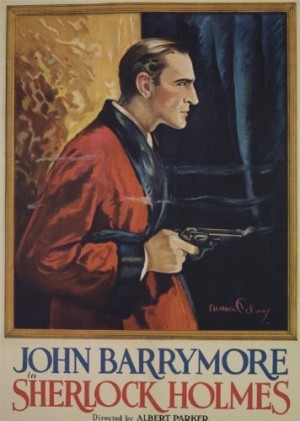
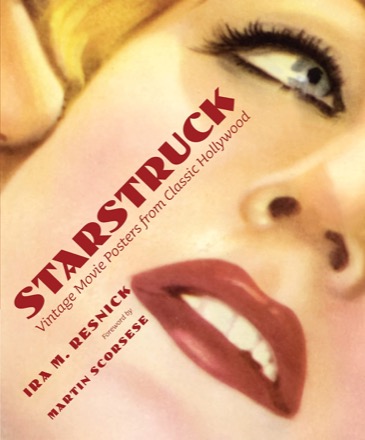
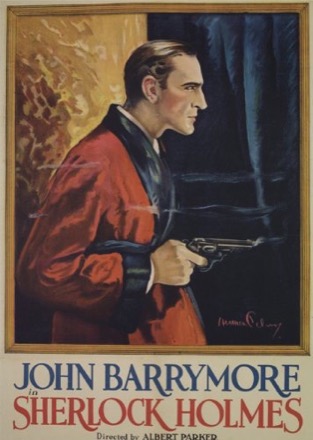
NY, Abbeville Press, 1st, 2010, Book: Very Good, Dust Jacket: Very Good, Hardcover, in a bright unclipped dust jacket. A one-of-a-kind collection of movie posters spanning fifty years, from silent films to Cinemascope For four decades film historian Ira M. Resnick has been amassing a superb collection of 2,000 vintage movie posters and 1,500 stills, which has never before been published. Starstruck: Vintage Movie Posters from Classic Hollywood features the best of Resnick's collection, with vivid reproductions of 250 posters and forty stills from the golden age of Hollywood, 1912 to 1962. In a moving introduction, Resnick relates how his love of vintage movie art translated into a career as a collector and the founder of the Motion Picture Arts Gallery, the first gallery devoted exclusively to the art of the movies. Resnick's firsthand account offers entertaining anecdotes about how he managed to acquire such stellar film artwork, as well as historical information about the stars and films shown on the pieces he collected. Guiding the reader through the best posters and stills of his collection, Resnick provides a tour of cinematic history, starting in the silent film era and continuing up to Breakfast at Tiffany's (1961). By showcasing several posters for each performer--such as Lillian Gish, the Marx Brothers, Marilyn Monroe, John Barrymore, and Audrey Hepburn--Resnick offers a unique method of charting the evolution of each movie star's career. Still like new in publisher's shrinkwrap. NOTE: Due to size and weight DOMESTIC SHIPPING ONLY.
Hardcover. NY, Abbeville Press, 1st, 2010, Book: Very Good, Dust Jacket: Very Good, Hardcover, in a bright unclipped dust jacket. A one-of-a-kind collection of movie posters spanning fifty years, from silent films to Cinemascope For four decades film historian Ira M. Resnick has been amassing a superb collection of 2,000 vintage movie posters and 1,500 stills, which has never before been published. Starstruck: Vintage Movie Posters from Classic Hollywood features the best of Resnick's collection, with vivid reproductions of 250 posters and forty stills from the golden age of Hollywood, 1912 to 1962. In a moving introduction, Resnick relates how his love of vintage movie art translated into a career as a collector and the founder of the Motion Picture Arts Gallery, the first gallery devoted exclusively to the art of the movies. Resnick's firsthand account offers entertaining anecdotes about how he managed to acquire such stellar film artwork, as well as historical information about the stars and films shown on the pieces he collected. Guiding the reader through the best posters and stills of his collection, Resnick provides a tour of cinematic history, starting in the silent film era and continuing up to Breakfast at Tiffany's (1961). By showcasing several posters for each performer--such as Lillian Gish, the Marx Brothers, Marilyn Monroe, John Barrymore, and Audrey Hepburn--Resnick offers a unique method of charting the evolution of each movie star's career. Still like new in publisher's shrinkwrap. NOTE: Due to size and weight DOMESTIC SHIPPING ONLY.
Softcover. London, Booth-Clibborn Editions, 1st, 2002, Book: Very Good, Dust Jacket: None, Softcover. Unpaginated, a collection of sticker art reproduced in color. Color illustrated wrappers. Today's stickers are the new flyers, a major means of street-based communications, and are used by the hippest advertising agencies and the most underground messengers alike. This is the first book to cover this latest street-art phenomenon, and features truly international coverage of the sticker scene.
Hardcover. Milan, Mondadori, 1st, 1945, Book: Good, Dust Jacket: None, Hardcover, 6 unnumbered pages including the inside of both covers. Publisher's thick pictorial boards backed in white cloth-patterned paper & saddle stapled. Lightly soiled, edges slightly rubbed, otherwise very good. A nice example with all flaps and concealed color illustrations in perfect working order. Three stories of birds each with it's own open-the-flap text and graphic art. Laid in is a typed English translation of the text. Bruno Munari was "one of the most celebrated names in twentieth century Italy in graphic designing who fundamentally altered the landscape of many fields of visual arts, futurism and modernism He is credited for his contribution to industrial design, sculpture, painting, literature, film and concrete art." A collector's copy of this scarce title.
Softcover. Washington DC, Planners Press, revised ed., 1988, Book: Very Good, Dust Jacket: None, Softcover, This seminal report outlines a street-graphics system that ensures on-premise signs are expressive, appropriate, legible, and compatible with the character of the community. The system is a legally enforceable regulatory framework that makes good design possible. It offers benefits to business owners by eliminating the visual cacophony that often drowns out their messages and to drivers and pedestrians by making it easier and safer for them to find what they're looking for. Clean copy.

 "Propaganda Prints: A History of Art in the Service of Social and Political Changeby: Moore, Colin")
 "Ramayana: Divine Loophole by: Patel, Sanjay")


 "Raymond Loewy and Streamlined Designby: Tretiack, Philippe")
 "Raymond Loewy: Never Leave Well Enough Alone!by: Tretriack , Philippe")
 "Reel Art: Great Posters from the Golden Age of the Silver Screen by: Rebello Stephen; Richard Allen")
 "Richard Filipowski: Art and Design Beyond the Bauhausby: Marisa Bartolucci (Editor), Hattula Moholy-Nagy (Foreword)")
 "Rock Coversby: Busch, Robbie")
 "Rolling Stone The Complete Covers 1967-1997by: Fred Woodward, Jann S. Wenner , et al.")
 "Rudolph de Harak Graphic Designer: Rational Simplicity by: Richard Poulin")
 "Russian and Soviet Collages : 1920s - 1990sby: Vasily Elkin/ et al")
 "Russian Film Posters: 1900-1930by: Boerner, Maria-Christina")
 "Saul Bass: A Life in Film and Designby: Jennifer Bass , Pat Kirkham , et al.")
 "Saul Steinberg Illuminationsby: Smith, Joel & Steinberg, Saul")
 "Saul Steinberg Illuminationsby: Smith, Joel & Steinberg, Saul")
 "Saul Steinberg: Illuminationsby: Smith, Joel")
 "Sellebrity: My Angling and Tangling With Famous Peopleby: Lois, George")
 "Sex, Rock & Optical Illusionsby: Moscoso, Victor")
 "She's Got Legs: A History of Hemlines and Fashionby: Jane Merrill , Keren Ben-Horin , et al.")


 "Signage and Wayfinding Design: A Complete Guide to Creating Environmental Graphic Design Systemsby: Calori, Chris")
 "Starstruck: Vintage Movie Posters from Classic Hollywoodby: Ira M. Resnick, Martin Scorsese (Foreword)")

 "Starstruck: Vintage Movie Posters from Classic Hollywoodby: Ira M. Resnick, Martin Scorsese (Foreword)")
 "Stick 'Em Upby: Dorrian, Mike, Liz Farrelly and David Recchia")
 "Storie di tre uccellini by: Bruno Munari")
 "Street Graphics and the Law by: Mandelker, Daniel R., /Ewald, William R.")