Hardcover. New York, Charles Scribner's Sons, 1st, 1891, Book: Good, Dust Jacket: None, 128 pages. Hardcover with decorated front cover. Covers have heavy wear on edges. Light soil and darkening to pages. Gutter lightly cracked.
Hardcover. Princeton NJ, Princeton University Press, 1st, 1982, Book: Very Good, Dust Jacket: Good, Hardcover in a lightly worn dust jacket with a hole on front fore-edge, 318 pages. Mutsu Munemitsu was the Foreign Minister of Japan during the time of the Sino-Japanese War from 1894 until the signing of the peace treaty on May 8, 1895. Mutsu was responsible for the secret documents on diplomatic matters in which he was involved, such as the Sino-Japanese War of 1894-1895 and the facts about the Triple Intervention. The phrase "kenken" means "serving the sovereign with a pained heart," thus showing his loyalty to serve the Emperor. The documents in this book are exceedingly important as they are virtually the only material mentioning the diplomatic situations in the days of the Sino-Japanese War of 1894-1895. Name on front fly leaf otherwise clean.
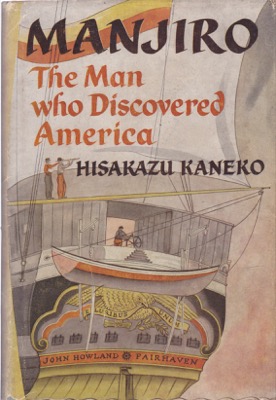
Hardcover. Boston, Houghton Mifflin, 1st, 1956, Book: Very Good, Dust Jacket: Good, Hardcover in a lightly worn and chipped dust jacket, 149 pages. Life of a Japanese, rescued from shipwreck by an American whaler, who spent his youth in New England, returned to Japan, and was important in the opening of Japan to the Occident in the 19th century. Clean copy.
Hardcover. New York, St. Martin's Press, 1st US, 1986, Book: Very Good, Dust Jacket: Very Good, Hardcover, 233 pages, black cloth covers with gilt lettering on spine. Previous owner's signature on front fly leaf. Some light pencil marking to pages. Nihonjinron is a school of thought about Japanese persons exceptional uniqueness espoused by Japanese intellectuals in the early 20th century. The author attempts to prove that "nihonjinron" it is a kind of 'fictional mentality' supposedly based on ancient traditions.
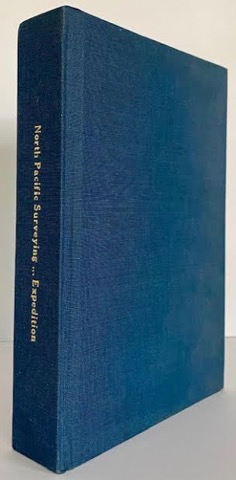
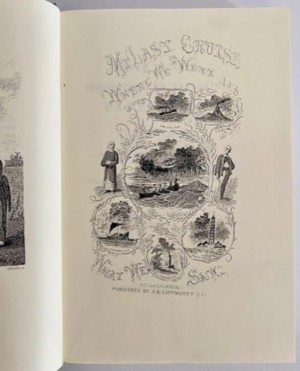
Hardcover. Michigan, Scholarly Publishing Office University of Michigan, Reprint, Book: Very Good, Dust Jacket: None, 507 pages. Hardcover. Reprint of 1857 J.B. Lippincott & Co. publication produced from digital images created through the University of Michigan University's Library's preservation reformatting program. B/w illustrations throughout. Pages clean, spine straight, binding tight. ISBN label on back cover. Light foxing to edges. Blue cloth cover boards, gilt title on spine. "Visits to the Malay and Loo-Choo Islands, the Coasts of China, Formosa, Japan, Kamtschatka, Siberia, and the Mouth of the Amoor River."
Hardcover. Yokyo Japan, Tokyo Lawn Tennis Club, 1st, 2001, Book: Very Good, Dust Jacket: None, 168 pages. Hardcover. Color and b/w illustrations throughout. Signed letter by Chairman of the Board presenting book to previous owner inserted. Very clean inside and out. Covered by plastic bookcover/sleeve.
Softcover. Chicago, University of Chicago , 1992, Book: Very Good, Dust Jacket: None, Softcover, 201 pages. In this concise but ambitious historiographical essay, Wilson argues for an approach to the Meiji Restoration that emphasizes multiple lines of motive and action. The four groups under discussion: 1. The loyalists -wanted to redeem the national image and thought themselves patriots. 2.The old guard -the samurai loyal to the shogunate. 3. The common people who only wanted stability. Some favored one side or the other and some just wanted change. 4. The foreigners -most sided with the Shogunate for economic stability. Name on front fly leaf, otherwise clean.
Hardcover. Westport CT, Greenwood Press, reprint, 1981, Book: Very Good, Dust Jacket: None, Hardcover, black cloth with gilt lettering on spine, 210 pages. Professor Dunn presents an account of the making of the Japanese peace treaty. He discusses the international environment from the outbreak of World War II to 1950, the San Francisco conference of September 1951 and the security arrangements which the United States helped to create in the Pacific and Asian area. Originally published in 1963 by Princeton. Name on front fly leaf, otherwise clean.
Softcover. NY, Pantheon Books, 1st, 1982, Book: Very Good, Dust Jacket: None, Softcover, 297 pages. This compelling social history uses diaries, memoirs, fiction, trial testimony, personal recollections, and eyewitness accounts to weave a fascinating tale of what ordinary Japanese endured throughout their country's era of economic growth. Through vivid, often wrenching accounts of peasants, miners, textile workers, rebels, and prostitutes, Mikiso Hane forces us to see Japan's "modern century" (from the beginnings of contact with the West to World War II) through fresh eyes. In doing so, he mounts a formidable challenge to the success story of Japan's "economic miracle." Starting with the Meiji restoration of 1868, Hane vividly illustrates how modernization actually widened the gulf, economically and socially, between rich and poor, between the mo-bo and mo-ga ("modern boy" and "modern girl") of the cities and their rural counterparts. He interlaces his scholarly narrative with sharply etched individual stories that allow us see Japan from the bottom up. Clean copy.
Hardcover. Princeton NJ, Princeton University Press, 2nd pr., 1969, Book: Very Good, Dust Jacket: Very Good, 637 pages, black cloth covers with red and gilt design on spine. Previous owner's signature on front fly leaf. Bright, price-clipped dust jacket.
Hardcover. Cambridge MA, Harvard University Press , 1st, 1967, Book: Very Good, Dust Jacket: Good, Hardcover in an edgeworn dust jacket with minor tape repairs. 346 pages. A study of the bakufu, or administrative structure of the predominant ruling family in early modern Japan. The achievements of the Tokugawa family, who gave Japan 250 years of peace, are placed in a broad context through comparisons with contemporary institutional developments in other Asian countries and in Europe. Name on front fly leaf, otherwise clean.
Hardcover. NY, W. W. Norton, 1st, 2018, Book: Very Good, Dust Jacket: Very Good, Hardcover in a bright, unclipped dust jacket, 635 pages. The definitive history of one of the most brutal campaigns of the war in the Pacific. "What Iris Chang did for our understanding of the Rape of Nanking, James M. Scott has now done for the Battle of Manila. Here is a sweeping tale of frenzied fighting and heartbreaking devastation, written by a meticulous historian who has unflinchingly probed the truth of this largely forgotten episode from the Pacific." Clean copy.
Hardcover. Tokyo, Sophia University, 1st, 1970, Book: Very Good, Dust Jacket: Very Good, 210 pages, b&w illustrations. Beige cloth spine with patterned boards and a bright dust jacket with a glassine wrapper.
Softcover. NY, Burns Archive Press, 1st, 2017, Book: Very Good, Dust Jacket: None, Softcover, 106 pages, color plates throughout. SIGNED/INSCRIBED BY STANLEY BURNS on the title page. Japan, an island nation isolated until the mid-nineteenth century, opened its doors to foreign photographers in the 1860s. These photographers presented a visual cultural kaleidoscope of Japanese life to an eager outside world. The 160 photographs in this volume are curated from tourist albums and presented in the typical sequence. The modern reader will experience Meiji Japan in the way of a nineteenth century armchair traveler. While photographers in other countries were marketing sepia-toned prints, photographers in Japan took advantage of local artists and had their prints exquisitely painted. As with all hand-rendered artworks, quality varied; many photographs were executed so well as to challenge modern color photography. Photographers were limited by government restrictions and many scenes were set in studios rather than in real life. Despite the limitations, tourists visiting the country could purchase albums filled with colorful renditions of Japan's peoples and places. The carefully staged and approved photographs promoted an idealized and romanticized vision of Meiji Japan. Modernization and industrialization changed the country dramatically and the last vestiges of the disappearing feudal culture are captured by the camera. These intriguing photographs are beautiful multi-media artworks representing a vanished world. Clean copy.
Hardcover. NY, W. W. Norton, 1st, 1992, Book: Very Good, Dust Jacket: Very Good, Hardcover in a bright, unclipped dust jacket. This stimulating and comprehensive collection of original essays on twentieth-century Japan's history and culture provides a unique mix of American and Japanese perspectives on Showa. With an important, substantial Introduction by Carol Gluck, the volume explores the strengths of the Japanese economy, the issue of democracy and Japan's political culture, Japan's achievements in technology and the arts, and its relations with other Asian nations and the United States. Name on front fly leaf, otherwise clean.
Hardcover. NY, Orion/Crown, 1st, 1989, Book: Very Good, Dust Jacket: Very Good, Hardcover, 272 pages. Recaptures the World War II bombing raid over Tokyo under the command of Lt. Col. "Jimmy" Doolittle and the incredible seek-and-destroy mission that he and other American pilots endured after the bombing.
Hardcover. NY, St. Martin's Press, 1st, 1986, Book: Very Good, Dust Jacket: Very Good, Hardcover in a dust jacket with light fading to spine, 487 pages. In this book Ryoshin Minami studies the last hundred years of Japan's remarkable economic growth from the Meiji period up to the present day. First, he reveals the factors which account for Japan's successful economic take-off during the Meiji period. Second, he explains why Japan achieved a more rapid rate of economic growth than other developed countries. This forms the major part of the book and will interest those in the developed countries who have felt the full force of Japan's export drive and whose own industries are consequently in decline. Finally, the author evaluates the results of Japan's economic growth and makes predictions for its future. The book makes a comprehensive survey of the Japanese experience in the pre- and post-war periods and points out lessons not only for developed countries but also for developing countries. Name on front fly leaf, otherwise clean.
Hardcover. NY, Random House, 1st, 1954, Book: Very Good, Dust Jacket: Good, 403 pages. Hardcover. 65 illustrations, 40 in full color. Price clipped dust jacket worn with tape repairs, fading - jacket now protected with clear plastic cover. "An account of the life and death of an art, of the men who made it and of the lusty age in which they flourished. 65 illustrations, including 40 in full color." Index, glossary, bibliography, appendices, artist biographies, chronology. Clean, tight copy.
Hardcover. NY, New York University Press, 1st, 2002, Book: Very Good, Dust Jacket: Very Good, Hardcover in a bright dust jacket, pages. The GI War Against Japan recounts the harrowing experiences of American soldiers in Asia and the Pacific. Based on countless diaries and letters, it sweeps across the battlefields, from the early desperate stand at Guadalcanal to the tragic sinking of the U.S.S. Indianapolis at war's very end. From the daunting spaces of the China-India theater to the fortress islands of Iwo Jima and Okinawa, Schrijvers brings to life the GIs' struggle with suffocating wilderness, devastating diseases, and Japanese soldiers who preferred death over life. Amidst the frustration and despair of this war, American soldiers abandoned themselves to an escalating rage that presaged Hiroshima and Nagasaki.
Hardcover. NY, Oxford University Press, 1st, 1985, Book: Very Good, Dust Jacket: Very Good, Hardcover in a bright, unclipped dust jacket, 364 pages. The Second World War's Pacific conflict was one of the most complex in history. It embrioled peoples from opposite sides of the globe; it was fought in China, across the expanses of the Pacific, and in the jungles of Southeast Asia; and it was devastating in its consequences for civilians and servicemen alike. It saw the first use of atomic weapons, hastened the end of the Western empires in Asia, and marked America's rise to the position of the most powerful nation in the world. Christopher Thorne, whose previous studies of the war in the Pacific have become landmarks in the field, here weaves together both the entire network of international relations surrounding the war and the impact the war had on all the societies involved--Indian as well as American; Australian and New Zealand as well as Japanese; Korean, Chinese, and Southeast Asian as well as British, French, and Dutch. The Issue of War draws on material gathered over many years in the Far East, Western Europe, and the U.S.--material including wartime films, broadcasts, and newspapers,as well as countless private and offical papers. Representing a synthesis of military, diplomatic, economic, intellectual, and social history, it not only places the war in the context of developments before 1941, but illuminates various patterns that cut across the familiar distinctions between Asia and the West or between Japan and the Allies. Name on front fly leaf, otherwise clean.
Hardcover. Pinceton NJ, Princeton University Press, 1st, 1979, Book: Very Good, Dust Jacket: Very Good, Hardcover in a bright dust jacket, 315 pages. The Western ideal of individualism had a pervasive influence on the culture of the Meiji period in Japan (1868-1912). Janet Walker argues that this ideal also had an important influence on the development of the modern Japanese novel. Focusing on the work of four late Meiji writers, she analyzes their contribution to the development of a type of novel whose aim was the depiction of the modern Japanese individual. Professor Walker suggests that Meiji novels of the individual provided their readers with mirrors in which to confront their new-found sense of individuality. Her treatment of these novels as confessions allows her to discuss the development of modern Japanese literature and "the modern literary self" both in themselves and as they compare their prototypes and analogues in European literature. The author begins by examining the evolution of a literary concept of the inner self in Futabatei Shimei's novel Ukigumo (The Floating Clouds), Kitamura Tokoku's essays on the inner life, and Tayama Katai's I-novel Futon (The Quilt). She devotes the second half of her book to Shimazaki Toson, the Meiji novelist who was most influenced by the ideal of individualism. Here she traces Toson's development of a personal ideal of selfhood and analyzes in detail two examples of the lengthy confessional novel form that he created as a vehicle for its expression.
Hardcover. NY, James Pott & Co., 1st, 1905, Book: Very Good, Dust Jacket: None, Hardcover, blue cloth with bright gilt design to cover, gilt lettering on spine, 127 pages. Introduction by George Meredith. Bookplate/name on inside front cover. Otherwise a clean, bright copy.
Hardcover. Hoboken NJ, Wiley Publishing, 1st, 2003, Book: Very Good, Dust Jacket: Very Good, Hardcover in a bright, unclipped dust jacket. The Last Samurai traces Saigo's life from his early days as a tax clerk in far southwestern Japan, through his rise to national prominence as a fierce imperial loyalist. Saigo was twice exiled for his political activities - sent to Japan's remote southwestern islands where he fully expected to die. But exile only increased his reputation for loyalty, and in 1864 he was brought back to the capital to help his lord fight for the restoration of the emperor.
Softcover. NY, Quill/ William Morrow, reprint, 1988, Book: Very Good, Dust Jacket: None, Softcover, 432 pages, b&w illustrations. Dotted with stunning disclosures of crimes and cover-ups, this is a startling narrative of the way Japan conducted World War II: from Nanking to Pearl Harbor to the attempted assassination of Stalin to their final surrender. Clean copy.

 "Japonicaby: Arnold, Sir Edwin")
 "Kenkenroku: a Diplomatic Record of the Sino-Japanese War, 1894-1895 by: Munemitsu, Mutsu /Translated By Gordon Mark Berger")
 "Myth of Japanese Uniqueness, Theby: Dale, Peter N.")
 "North Pacific Surveying and Exploring Expedition, the or My Last Cruise: Where We Went and What We Sawby: Habersham, A.W.")
 "On Hundred Years of Tokyo Lawn Tennis: Tokyo Lawn Tennis Club Centennial 1900-2000by: Sugihara (Chairman of the Board), Yasuma")
 "Patriots and Redeemers in Japan: Motives in the Meiji Restoration by: Wilson, George M.")
 "Peace-Making and the Settlement with Japan by: Frederick S. Dunn")
 "Peasants, Rebels, Women, and Outcastes: The Underside of Modern Japanby: Mikiso Hane")
 "Political Development in Modern Japanby: Ward (Ed.), Robert E.")
 "Politics in Tokugawa Bakufu, 1600-1843by: Conrad D. Totman")
 "Rampage: MacArthur, Yamashita, and the Battle of Manilaby: James M. Scott")
 "Religious Study of the Mount Haguro Sect of Shugendo, A: An Example of Japanese Mountain Religionby: Earhart, H. Byron")
 "Setting Sun: Painted Photographs of Meiji Japan (SIGNED COPY)by: Elizabeth A. Burns; Stanley B. Burns")
 "Showa: The Japan of Hirohito by: Gluck, Carol & Stephen R. Graubard (Eds.)")
 "The Doolittle Raid: America's daring first strike against Japanby: Carroll V. Glines")
 "The Economic Development of Japan: A Quantitative Study by: Ryoshin Minami")
 "The Floating World - The Story of Japanese Printsby: James A. Michener")
 "The GI War Against Japan: American Soldiers in Asia and the Pacific During World War IIby: Peter Schrijvers")
 "The Issue of War: States, Societies, and the Far Eastern Conflict, 1941-1945 by: Thorne, Christopher")
 "The Japanese Novel of the Meiji Period and the Ideal of Individualismby: Janet A. Walker")
 "The Japanese Spirit by: Okakura Yoshisaburo")
 "The Last Samurai: The Life and Battles of Saigo Takamori by: Mark Ravina")
 "The Other Nuremberg: The Untold Story of the Tokyo War Crimes Trialsby: Arnold C. Brackman")