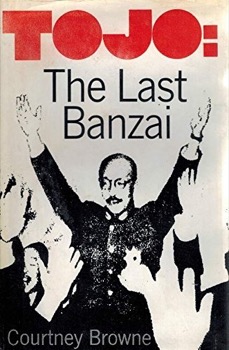
Hardcover. London, Angus and Robertson, 1st UK, 1967, Book: Very Good, Dust Jacket: Very Good, Hardcover in a lightly worn dust jacket. General, minister of war, prime minister, and unrepentant ultranationalist, Hideki Tojo was the most powerful leader in the Japanese government during World War II. This clear and compelling portrait of Tojo illuminates the spartan, single-minded, incorruptible personality of the man who chose war rather than succumb to U.S.-induced economic strangulation. 20 photos. 288 pages. Clean copy.
Hardcover. Princeton NJ, Princeton University Press, 1st, 1979, Hardcover in a nice dust jacket with mild fading to spine, 347 pages. This work is the autobiography of Arai Hakuseki, the celebrated Confucian scholar who holds a prominent position in Japanese history as the influential adviser to Shogun Tokugawa Ienobu and his successor Ietsugu. Hakuseki's administrative reforms, his voluminous writings, and his advice on a multitude of topics--coinage, foreign trade, taxation, diplomatic protocol, justice, the samurai code and benevolent government, for example. governed most of the policies implemented during Ienobu's rule and influenced many of those of his successors. The book contains notes, biographical notes, appendices, a chronology, maps, and an index. Name on front flyleaf, otherwise a clean, tight copy.
Hardcover. Westport CT, Greenwood Press, 1st, 2003, Book: Very Good, Dust Jacket: None, Hardcover, maroon cloth covers stamped in silver, 242 pages. Previous owner's inscription on front fly leaf, otherwise clean. Over the course of the American Occupation of Japan, the U.S. attitude toward the Japanese Communist Party (JCP) gradually shifted from one of friendly cooperation to one of mutual opposition. This new study examines the initial approach toward communism in Japan; internal and external factors that affected American attitudes; the various phases of the relationship; and how Japan ultimately became a democratic nation. Oinas-Kukkonen investigates American information gathering techniques used at the time to determine possible links with the Soviet Union. He also discusses the possibility that Nosaka Sanzo, one of the main leaders of the JCP, was an American spy. Using previously secret records of General MacArthur's intelligence staff and plentiful archival materials on the Occupation, this study explores how the United States originally sought to utilize the JCP to assist in the democratization process. It identifies the perceived threat of a revolution in March 1947 as a key turning point in U.S. attitudes. Involved in a delicate balancing act with multiple Japanese interests, some American officials feared that elements of the extreme left might even evolve into extreme right-wing terrorists. In this comprehensive account, Oinas-Kukkonen includes information on the indirect role of the Europeans in this affair, as well as the roles of outsider groups such as the outcaste burakumin and the Koreans residing in Japan.
Softcover. Berkeley CA, University of California Press, 2nd pr., 2004, Book: Very Good, Dust Jacket: None, Softcover, 421 pages, b&w illustrations. Located only blocks from Tokyo's glittering Ginza, Tsukiji-the world's largest marketplace for seafood-is a prominent landmark, well known but little understood by most Tokyoites: a supplier for countless fishmongers and sushi chefs, and a popular and fascinating destination for foreign tourists. Early every morning, the worlds of hi-tech and pre-tech trade noisily converge as tens of thousands of tons of seafood from every ocean of the world quickly change hands. Clean, bright copy.
Hardcover. New York, Gallery Books, 1st US, 1991, Book: Very Good, Dust Jacket: Very Good, 390 pages, illustrated throughout in color. INSCRIBED BY YOSHIDA on half title page. Large, very heavy book. Light shelf-wear to dust jacket. Clean, tight copy.
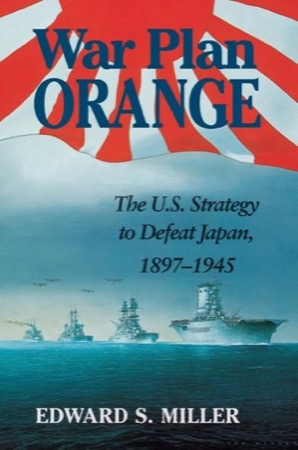
Softcover. Annapolis MD, Naval Institute Press, reprint, 2007, Book: Very Good, Dust Jacket: None, Softcover, 509 pages, b&w illustrations. Based on twenty years of research in formerly secret archives, this book reveals for the first time the full significance of War Plan Orange-the U.S. Navy's strategy to defeat Japan, formulated over the forty years prior to World War II. The author does a good job of describing how the plan changed over time regarding possible objectives (rescuing Philippines, capturing Truk, making Guam into the "Gibraltar of the Pacific) as well as the different groups who pushed for their vision on how to best execute the plan from the gung-ho thrusters to the cautionaries to name the major approaches. The book also details the interplay between the navy and the army as they worked together to create a global plan of war as the world became more dangerous in the 1930's (the Rainbow Plans). The work concludes with an analysis of just how successful all the effort that went into creating Plan Orange was to the waging of the Pacific War in 1941-45. Clean copy.
Hardcover. Lewiston NY, Edwin Mellen Press, 1st, 1998, Book: Very Good, Dust Jacket: None, Hardcover, red cloth with b&w decoration to front cover, 295 pages. INSCRIBED BY AUTHOR on front fly leaf, possibly to the publisher Edwin Mellen. (the name has been corrected and is difficult to read.)

 "Told Round a Brushwood Fire: the Autobiography of Arai Hakuseki by: Arai Hakuseki /Joyce Ackroyd (Translator)")
 "Tolerance, Suspicion, and Hostility: Changing U.S. Attitudes toward the Japanese Communist Movement, 1944-1947by: Oinas-Kukkonen, Henry")
 "Tsukiji: The Fish Market at the Center of the Worldby: Bestor, Theodore C.")
 "Ukiyo-E: 250 Years of Japanese Art (SIGNED COPY)by: Yoshida, Susugu/Roni Neuer")
 "Yang Kuei-Fei Legend in Japanese Literature, The (Japanese Studies, Vol 6) (SIGNED COPY)by: Masako Nakagawa Graham")