Softcover. Norman OK, University of Oklahoma Press, reprint, 1997, Book: Very Good, Dust Jacket: None, Softcover, 351 pages. George Wilkins Kendall, who founded the New Orleans Picayune in 1837, was a restless, impatient, and colorful character in an exciting era. For thirty years he guided the Picayune and built it into a powerful force in behalf of America's westward expansion. Kendall's vigorous editorials championed the cause of the infant Republic of Texas. When the Texan Santa Fe Expedition was organized in 1841, for the purpose of occupying New Mexico (then still under Mexican rule), Kendall left his editorial chair to participate--and was marched off to Mexico as a captive for seven months when the expedition was overwhelmed at Santa Fe. A few years later, when Kendall accompanied American forces invading Mexico during the Mexican War, he became America's first war correspondent--reporting directly from the battlefront. His effective "courier expresses" brought the first news of each battle to an eager nation, including President Polk, who often read news of the war in Kendall's Picayune before hearing it from his field commanders. Clean copy.
Hardcover. London, Quartet Books, 1st, 1987, Book: Very Good, Dust Jacket: Very Good, Hardcover, 144 pages. A great collection of photographs , mainly taken in and around a bordello in Mexico , during the years 1900-1915 They are very reminiscent of the bordello photographs that Ernest J. Bellocq took in New Orleans during the twenties. Ava Vargas , the compiler of these photographs, masterfully restored the original glass plates , and also managed to get them reproduced on the good quality paper of this enjoyable book.
Hardcover. Chicago, University of Chicago Press, 1st, 2009, Book: Very Good, Dust Jacket: Very Good, Hardcover, 132 pages. Sight is central to the medium of photography. But what happens when the subjects of photographic portraits cannot look back at the photographer or even see their own image? An in-depth pictorial study of blind schoolchildren in Mexico, Look at me draws attention to (and distinctions between) the activity of sight and the consciousness of form. Combining aspects of his earlier, acclaimed street work with an innovative approach to portraiture, Chicago-based photographer Jed Fielding has concentrated closely on these children's features and gestures, probing the enigmatic boundaries between surface and interior, innocence and knowing, beauty and grotesque. Design, composition, and the play of light and shadow are central elements in these photographs, but the images are much more than formal experiments; they confront disability in a way that affirms life. Fielding's sightless subjects project a vitality that seems to extend beyond the limits of self-consciousness. In collaborative, joyful participation with the children, he has made pictures that reveal essential gestures of absorption and the basic expressions of our creatureliness.
Softcover. Boston/Washington DC, David R. Godine/Corcoran Gallery, 1st, 1978, Book: Very Good, Dust Jacket: None, Softcover, 82 b&w photo-plates plus catalogue of exhibition, biographical notes, exhibitions/catalogues/reviews, general bibliography. One of 2000 softbound copies. Issued as a monograph and the catalogue to accompany a major retrospective exhibition. With an essay on the photographer by Alex Castro. Clean copy.
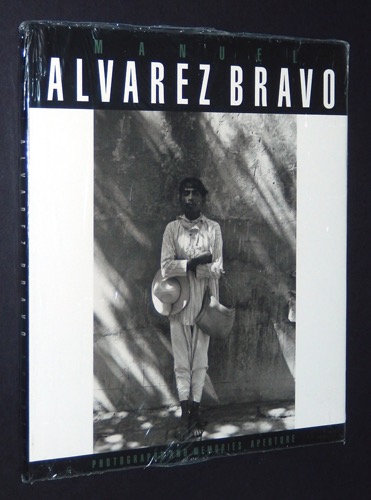
Hardcover. NY, Aperture, 1st, 1997, Book: Very Good, Dust Jacket: Very Good, Hardcover in a bright, price-clipped dust jacket. Published simultaneously with a major exhibition of Alvarez Bravo's work at the Museum of Modern Art, NYC, this is a nice survey of the photographer's work. Photographs by Manuel Alvarez Bravo; essay by Frederick Kaufman. 80 pages; 62 duo-toned b&w plates + 6 text illustrations. Clean copy.
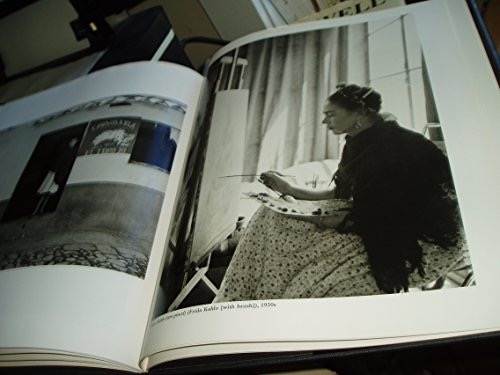
Hardcover. Santa Monica CA, RoseGallery/DAP, 1st, 2007, Book: Very Good, Dust Jacket: None, Red and burgundy cloth boards with yellow stamped lettering. 144 pages. Color and b&w illustrations, portraits. Eyes in His Eyes reintroduces some of the artist's overlooked masterpieces, and reveals, for the first time, a broad selection of never-before-seen images from his private archives. In his 80-year career, Alvarez Bravo printed, published and exhibited only a thousand images. This portfolio, culled with the help of the artist himself, and completed after his death, is full of unfamiliar abstractions, portraits, landscapes and street photography.
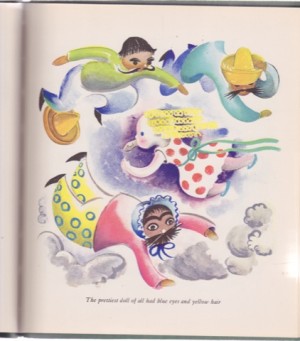
Hardcover. NY, Jr. Literary Guild/ Albert Whitman, BC Ed., 1939, Book: Very Good, Dust Jacket: None, Color illustrations by Bannon, 48 pages. Green cloth covers decorated in 2-colors. Tight, clean condition with a slight nick to front cover at bottom corner. Miss Bannon and her friend, Katherine Evans, also a children's book illustrator, were living in a small Mexican village. While painting, the two friends were beguiled by a little girl. When they found she wanted a special doll, they combined their talents to make a very unusual gift. Light pencil inscription on prelim page, otherwise clean.
Hardcover. NY, Albert Whitman & Company, 1st, 1937, Book: Very Good, Dust Jacket: None, 80 pages. Hardcover with no dust jacket. Black & white and color illustrations by Berta and Elmer Hader. Shows some wear on edges. Tight copy.
Hardcover. NY, Albert Whitman & Company, 1st, 1937, Book: Very Good, Dust Jacket: None, Black & white and color illustrations by Berta and Elmer Hader. Shows some wear but mostly clean and nice. Hardbound, no dust jacket.
Hardcover. Chicago, Albert Whitman & Company, 4th pr., 1942, Book: Very Good, Dust Jacket: Good, Hardcover, orange cloth with colr pastedown on cover. Black & white and color illustrations by Berta and Elmer Hader. Shows some wear but mostly clean and nice. No dust jacket.Some chipping to cover labe;, mostly on title.
Softcover. San Francisco, Chronicle Books, 1st, 2007, Book: Very Good, Dust Jacket: None, Softcover, 132 pages, color illustrations. Culling more than 150 of the most colorful and sometimes unbelievable posters from 1957-1990. Includes an illuminating bilingual essay discussing the posters' creation, the role of cinema in Mexican popular culture, and the ups and downs of its film industry.
Softcover. San Francisco, Chronicle Books, 1st, 2007, Book: Very Good, Dust Jacket: None, Softcover, 132 pages, color illustrations. Culling more than 150 of the most colorful and sometimes unbelievable posters from 1957-1990. Includes an illuminating bilingual essay discussing the posters' creation, the role of cinema in Mexican popular culture, and the ups and downs of its film industry.
Hardcover. Hatje Cantz, 1st, 2011, Book: Very Good, Dust Jacket: Very Good, Hardcover, 224 pages. The years from 1945 to 1985 are often identified as the moment in which Los Angeles established itself as a leading cultural center in America. However, this conception of its history entirely excludes the very controversial presence of the Mexican muralists, as well as the work of other artists who were influenced by them and responded to their ideas. It is likewise often thought that Los Angeles' Mexican culture arrived full formed from outside it, when in fact that culture originated within the city--it was in Los Angeles and Southern California that Jose Vasconcelos, Ricardo Flores Magon, Octavio Paz and other intellectuals developed the iconography of modern Mexico, while Anglos and Chicanos were developing their own. David Alfaro Siqueiros, Clemente Orozco, Alfredo Ramos Martinez and Jean Charlot made some of their earliest murals in Los Angeles, influencing the Mexican, Mexican-American and Chicano artists of the 1970s and 80s. MEX/LA: Mexican Modernism(s) in Los Angeles 1930-1985 focuses on the construction of different notions of "Mexicanidad" within modernist and contemporary art created in Los Angeles. From the Olvera Street mural by Siqueiros, to the Golden Age of Mexican cinema and the Disney silver-screen productions, to the revitalization of the street mural, up to the performance art of Guillermo Gomez-Pena, MEX/LA explores the bi-national and hybrid forms of artistic practices, popular culture and mass-media arts that have so uniquely shaped Los Angeles' cultural panorama.
Hardcover. Chapel Hill NC, University of North Carolina , 1st, 1938, Book: Very Good, Dust Jacket: None, Hardcover, decorated yellow cloth covers with light soil, 227 pages. Illustrated with 7 b&w photos. These five one-act plays, originally produced by the Carolina Playmakers at Chapel Hill and on various tours, offer an unusual combination of brilliant local color and truth about human nature everywhere. Well written, with skillful stage directions and notes on Mexican costume and Spanish pronunciation, they are highly practical for production. Internally clean, no dust jacket.
Hardcover. UK, Cambridge University Press, 1st, 2001, Book: Very Good, Dust Jacket: Very Good, 444 pages. Hardcover with dust jacket. Light fading to dust jacket front. Light edgewear to dj. Black and white pictures throughout. Clean, tight copy. In 1999 Pope John Paul II proclaimed Our Lady of Guadalupe a patron saint of the Americas. According to oral tradition and historical documents, in 1531 Mary appeared as a beautiful Aztec princess to Juan Diego, a poor Indian. Speaking to him in his own language, she asked him to tell the bishop her name was La Virgen de Guadalupe and that she wanted a church built on the mountain. During a second visit, the image of the Virgin miraculously appeared on his cape. Through the centuries, the enigmatic power of this image has aroused such fervent devotion in Mexico that it has served as the banner of the rebellion against Spanish rule and, despite skepticism and anticlericalism, still remains a potent symbol of the modern nation. In Mexican Phoenix, David Brading traces the intellectual origins, the sudden efflorescence, and the theology that has sustained the tradition of Our Lady of Guadalupe. Brading also documents the interaction of religion and patriotism, and describes how the image has served as a banner both for independence and for the Church in its struggle against the Liberal and revolutionary state.
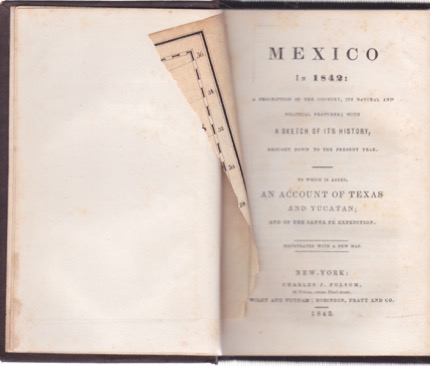
Hardcover. NY, Charles J. Folsom, 1st, 1842, Book: Very Good, Dust Jacket: None, Hardcover, publisher's brown cloth, stamped in blind, spine gilt. 256 pages including index with a color folded map laid in. Map was tipped-in and removed leaving a sliver or the map still attached at title page (see photos), map itself is clean, no wear to folds. First edition of this important work. The section on Texas and the Santa Fe expedition is attributed to Franklin Coombs, a veteran of the latter ill-fated debacle, and his account of the expedition and his captivity (which first appeared in NILES WEEKLY REGISTER) is reprinted herein, along with another account (Wagner-Camp 86) of a trip to Santa Fe appearing here for the first time in book form. The map shows Texas, Mexico, and the southwest region as far north as the Arkansas River, south to Yucatan, west to the Pacific, and east to New Orleans. Light chipping to spine cloth at top, penciled notation on front fly leaf, mild foxing to several pages, otherwise a clean, bright copy.
Hardcover. Norman OK, University of Oklahoma Press, 1st, 2001, Book: Very Good, Dust Jacket: Very Good, Hardcover in a bright dust jacket, 348 pages, b&w illustrations. This handsomely illustrated book offers a panoramic view of ancient Mexico, beginning more than thirty thousand years ago and ending with European occupation in the sixteenth century. Drawing on archaeological and ethnohistorical sources, the book is one of the first to offer a unified vision of Mexico's precolonial past. Typical histories of Mexico focus on the prosperity and accomplishments of Mesoamerica, located in the southern half of Mexico, due to the wealth of records about the glorious past of this region. Mesoamerica was only one of three cultural superareas of ancient Mexico, however, all interlinked by complex economic and social relationships. Tracing the large social transformations that took place from the earliest hunter-gatherer times to the Postclassic states, the authors describe the ties between the three superareas of ancient Mexico, which stretched from present-day Costa Rica to what is now the southwestern United States. According to the authors, these superareas-Mesoamerica, Aridamerica, and Oasisamerica - cannot be viewed as independent entities. Instead, they must be considered as a whole to understand the complex reality of Mexico's past.
Hardcover. Norman OK, University of Oklahoma Press, 1st, 1996, Book: Very Good, Dust Jacket: Very Good, Hardcover, 212 pages, b&w photos. Clean, unmarked copy with only minor wear to dust jacket. Today, roughly fifty thousand Tarahumara continue living in ways similar to those of their ancestors, retaining many customs from their pre-Columbian past. Striking sepia-toned monochrome photographs and a historical narrative document the lives and past of people in mountainous southwestern Chihuahua, Mexico.
Hardcover. New York, Aperture, 1st, 2003, Book: Near Fine, Dust Jacket: Near Fine, 220 pages, 155 b&w photographs by Casasola. Edited by Pablo Ortiz Monasterio, essay by Pete Hamill. Agustin Victor Casasola photographed everyone of consequence in Mexico at the time of the revolution, from Francisco (Pancho) Villa, Emiliano Zapata and the exiled Russian leader Leon Trotsky to artists Diego Rivera and Frida Kahlo. For this splendid collection of Casasola's work, the noted American author Pete Hamill has written a rich essay on the photographer and the Mexico he pictured so well.
Softcover. New York, Macmillan Company, Reprint, 1938, Book: Very Good, Dust Jacket: Good, 92 pages. Hardcover. Previous owners names at top of front endpaper. Price clipped dust jacket with foxing, wear along darkened edges. Book is clean, unmarked.
Softcover. Tucson, AZ, Arizona University Press , 1st paperback, 1993, Book: Very Good, Dust Jacket: None, Softcover. Black & white photos by George Alexander Grant. Some color fade to edges of cover. The Spanish missions founded by Padre Eusebio Kino in Sonora, Mexico, during the 1690s and early 1700s are historical as well as architectural marvels. Once self-supporting villages with central churches, the missions stand today as monuments to perseverance in the face of a hostile New World. These "Kino Missions" were surveyed in 1935 by the National Park Service to prepare for the restoration of the mission at Tumacacori, Arizona, then a National Historic Monument. That report, which was never published, provided insights into the missions' history and architecture that remain of lasting relevance. Perhaps more important, it documented these structures in photographs and drawings--the latter including floor plans and sketches of architectural detail--that today are of historic as well as aesthetic interest. This volume reproduces that 1935 report in its entirety, focusing on sixteen missions and including two maps, 52 drawings, and 76 photographs. With a new introduction and appendixes that place the original study in context,
Hardcover. 1st, 2002, Book: Very Good, Dust Jacket: None, Hardcover, 96 pages. Born in 1902, Manuel Alvarez Bravo is Mexico's most celebrated photographer. His far-reaching body of work includes many of the 20th century's most recognizable and iconic images. Collected here is a seductive, timeless, and entrancing sampling of the maestro's nudes, images taken in 1939 and as recently as the 1990s. Sensitively edited and sequenced by Ariadne Kimberly Huque, and with an impassioned and poetic introduction by Carlos Fuentes, this delicate, elegant volume beautifully reproduces some of Bravo's most favorite work, and provides an intimate window through which to view the career of one of the camera's true masters.
Hardcover. Boston, Houghton Mifflin Harcourt, 1st, 2019, Book: Very Good, Dust Jacket: Very Good, Hardcover in a bright dust jacket, 436 pages, color photos. The legendary travel writer drives the entire length of the US-Mexico border, then takes the back roads of Chiapas and Oaxaca, to uncover the rich, layered world behind the everyday headlines. Paul Theroux has spent his life crisscrossing the globe in search of the histories and peoples that give life to the places they call home. Now, as immigration debates boil around the world, Theroux has set out to explore a country key to understanding our current discourse: Mexico. Just south of the Arizona border, in the desert region of Sonora, he finds a place brimming with vitality, yet visibly marked by both the US Border Patrol to the north and mounting discord from within. With the same humanizing sensibility that he employed in Deep South, Theroux stops to talk with residents, visits Zapotec mill workers in the highlands, and attends a Zapatista party meeting, communing with people of all stripes who remain south of the border even as family members brave the journey north. Clean copy.
Softcover. Tucson, University of Arizona Press, 3rd pr., 1997, Book: Very Good, Dust Jacket: None, Softcover, 325 pages with index. The devotion to Our Lady of Guadalupe, based on the story of apparitions of the Virgin Mary to Juan Diego, an Indian neophyte, at the hill of Tepeyac in December 1531, is one of the most important formative religious and national forces in the history of Mexico. It has variously been interpreted as the source of Mexican national identity, a means of continuity between the Indian past and Spanish domination, a symbol of national liberation, and a way of evangelizing and pacifying the Indians. The aphorism "Mexico was born at Tepeyac" aptly summarizes its importance. In this, the first work ever to examine in depth every historical source of the Guadalupe apparitions, Stafford Poole traces the origins and history of the account, and in the process challenges many commonly accepted assumptions and interpretations. Small corner clip to front fly leaf, otherwise a clean, tight copy.

 "Kendall of the Picayuneby: Copeland, Fayette")
 "La Casa De Cita: Mexican Photographs from the Belle Epoqueby: Vargas, Ava")
 "Look at me: Photographs from Mexico City by Jed Fieldingby: Jed Fielding , Britt Salvesen, et al.")
 "M. Alvarez Bravo by: Jane Livingston; Manuel Alvarez Bravo")
 "Manuel Alvarez Bravo: Photographs and Memories (Aperture 147) by: Manuel Alvarez Bravo; Frederick Kaufman (essay)")
 "Manuel Alvarez Bravo: The Eyes in His Eyes by: Shoshana, Rose; Sheridan, Guillermo; Fox, Lorna")
 "Manuela's Birthday in Old Mexicoby: Bannon, Laura")
 "Marcos - A Mountain Boy of Mexicoby: Lee, Melicent Humason and Berta and Elmer Hader")
 "Marcos - A Mountain Boy of Mexicoby: Lee, Melicent Humason")
 "Marcos - A Mountain Boy of Mexicoby: Lee, Melicent Humason")
 "Mas! Cine Mexicano: Sensational Mexican Movie Posters 1957 - 1990by: Rogelio, Jr, Agrasanchez")
 "Mas! Cine Mexicano: Sensational Mexican Movie Posters 1957 - 1990by: Rogelio, Jr, Agrasanchez")
 "MEX/LA: Mexican Modernisms in Los Angeles 1930-1985by: Mariana Botey, Harry Gamboa, et al.")
 "Mexican Folk Plays by: Josephina Niggli Frederick H. Koch edited with an Introduction by")
 "Mexican Phoenix: Our Lady of Guadalupe: Image and Tradition Across Five Centuriesby: Brading, D.A.")
 "Mexico in 1842: A Description of the Country Its Natural and Political Featuresby: Folsom, George")

 "Mexico's Indigenous Past (The Civilization of the American Indian Series) (Volume 240) by: Austin, Alfredo Lopez / Leonardo Lopez Lujan")
 "Mexico's Sierra Tarahumara: A Photohistory of the People of the Edgeby: Raat, W. Dirk and Janecek, George R.")
 "Mexico: The Revolution and Beyond - Photographs by Agustin Victor Casasola 1900-1940by: Casasola, Agustin Victor")
 "Midget and Bridgetby: Hader, Berta/Elmer Hader")
 "Missions Of Northern Sonora - A 1935 Field Documentationby: Pickens, Buford")
 "Nudes: the Blue House. the Photographs of Manuel Alvarez Bravoby: Ariadne Kimberly Huque and Manuel Alvarez Bravo")
 "On the Plain of Snakes: A Mexican Road Tripby: Theroux, Paul")
 "Our Lady of Guadalupe The Origins and Sources of a Mexican National Symbol, 1531-1797by: Stafford Poole")