Softcover. Brighton UK, Sussex Academic Press, 1st, 2010, Book: Very Good, Dust Jacket: None, Softcover, 283 pages. The first book to study the history of the Nazis in Britain. In September 1930, the Nazi Party newspaper, Volkischer Beobachter, sent its first representative to London. Soon afterwards, German residents in London established an Ortsgruppe, or local Nazi group, which provided Party members with a place to congregate and support the new movement. By 1933, more than 100 members belonged to the London group. The Nazis in pre-war London created a dilemma for the Foreign Office and the Home Office, who were divided as to how best to treat residents whose allegiance was to the German Reich. Some felt that all Nazi organizations should be banned, and Party Members should not be allowed to enter the UK. Others, including MI5, argued that it would be easier to keep track of Nazis if they were in-country. Previously unpublished German documents reveal the fates of German diplomats, journalists, and professionals, many of whom were interned in Britain or deported to Nazi Germany once war broke out on September 3, 1939. Clean copy.
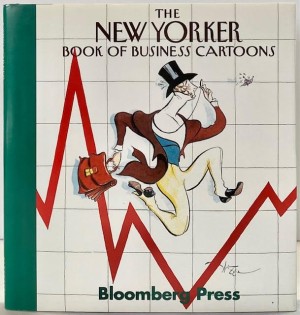
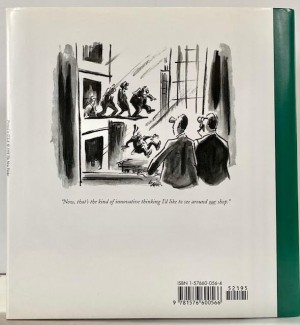
Hardcover. New York, Bloomsberg Press, 1st Edition, 1998, Book: Very Good, Dust Jacket: Very Good, 110 pages. Hardcover. B/w illustrations throughout. Gray cover boards, green quarter cloth, gilt title on spine. Binding tight. Spine straight. Pages clean and unmarked. Dust jacket unclipped, excellent. In beautiful condition. Spanning the years from 1938-1998, each of these 100 classic cartoons pack a time-lsss, powerful punch.
Softcover. Chjcago, University of Chicago Press, 2nd pr., 1991, Book: Very Good, Dust Jacket: None, Softcover, 240 pages. Nietzsche's New Seas makes available for the first time in English a representative sample of the best recent Nietzsche scholarship from Germany, France, and the United States. Michael Allen Gillespie and Tracy B. Strong have brought together scholars from a variety of disciplines--philosophy, history, literary criticism, and musicology--and from schools of thought that differ both methodologically and ideologically. The contributors--Karsten Harries, Robert Pippin, Eugen Fink, Hans-Georg Gadamer, Kurt Paul Janz, Sarah Kofman, Jean-Michel Rey, and the editors themselves--take a new approach to Nietzsche, one that begins with the claim that his enigmatic utterances can best be understood by examining the style or structure of his thought. Clean copy.
Softcover. New York, Denniston and Cheetham, 1803, Book: Very Good, Dust Jacket: None, 139 pages, original softcover pamphlet here bound in archival cardboard folder with cloth spine minus outer wrappers. Some small ink numbers on title page, small stickers on spine and front of folder. Gutter cracked between pages 64 and 65, otherwise very good. No foxing.
Softcover. New York, New York Times Book Co., 1st Edition, 1973, Book: Very Good, Dust Jacket: None, 320 pages. Softcover. Wrapper very good with just a touch of tanning from age. Binding tight. Edges have some shelf wear. Pages clean and unmarked. In great shape.,
Hardcover. Boston, Gambit, 1st, 1970, Book: Very Good, Dust Jacket: Very Good, Hardcover, 194 pages. A collection of David Levine's political cartoons, which were selected and introduced by John Kenneth Galbraith, a companion to Pens and Needles, another volume of literary caricatures by John Updike. It covers the American political scene in detail from Joseph McCarthy to Nixon, along with drawings of Lyndon Johnson, and Hubert Humphrey. Illustrated in black and white and indexed.
Hardcover. Cambridge MA, Harvard University Press , 1st, 1993, Book: Very Good, Dust Jacket: Very Good, Hardcover in a bright, lightly worn dust jacket. 338 pages. INSCRIBED BY THE AUTHOR on the half-title page. After the triumphs of Montgomery and Selma, Martin Luther King, Jr., rallied his forces and headed north. The law was on his side, the nation seemed to be behind him, the crusade for civil rights was rapidly gathering momentum--and then, in Chicago, heartland of America, the movement stalled. What happened? This book is the first to give us the full story--a vivid account of how the Chicago Freedom Movement of 1965-1967 attempted to combat northern segregation. Northern Protest captures this new kind of campaign for civil rights at a fateful turning point, with effects that pulse through the nation's race relations to the day. James Ralph has written the fullest and most perceptive account yet to appear of the 1966 civil-rights campaign in Chicago, a crucial event in the history of the movement. Clean copy.
Hardcover. Moscow, Progress Publishers, 1st, 1971, Book: Very Good, Dust Jacket: Very Good, Hardcover in a bright dust jacket, 357 pages. "On March 18, 1871, the workers of Paris expelled the bourgeois rulers of the city and took power into their own hands , a shining achievement never to be forgotten. Ten days later, on March 28, they set up the Paris Commune, the world's first proletarian state. It was of an entirely new type, being governed by the people and for the people, with all its social and political measures taken in the interest of the working people, the working class above all." -from the Preface. First printing of this selection, published for the centenary of the Commune. With ribbon bookmark. Clean copy.
Hardcover. Berkeley CA, University of California Press, 1st, 1998, Book: Very Good, Dust Jacket: Very Good, Hardcover in a bright, unclipped dust jacket, 361 pages. During the Cold War years of the 1950s, William F. Knowland was one of the most important figures in American politics. As the Republican leader of the U.S. Senate, the wealthy California newspaper heir was recognized and respected by millions. His influence with President Eisenhower led to Earl Warren's appointment as chief justice, and Knowland set in motion a U.S.-China policy that remains part of our international direction today. Yet he committed suicide in 1974, following a personal decline that included political humiliation, a ruined marriage, and the loss of his family fortune. This is the first full-scale biography of Bill Knowland, written by two journalists who came to know him after he left Washington in 1958. Gayle B. Montgomery was a political editor at the Oakland Tribune, the newspaper owned by Knowland's father, the power-wielding Joseph R. Knowland. James W. Johnson was a Tribune editorial writer. Both men worked with Knowland when he returned to the newspaper after giving up his Senate seat in a failed bid to become governor of California. Knowland lost the governorship race to Edmund G. (Pat) Brown; had he won, many observers felt Knowland would have had a clear shot at the White House. This is a book not only about Mr. Republican, but also one that illuminates the strengths and deficiencies of Republican party politics during the years when the party was at its zenith. In portraying the life of Bill Knowland, the authors cast a glaring light both on the machinations of political power and on the Republican establishment's aspirations in the Warren-Eisenhower era. Clean copy.
Hardcover. NY, Doubleday, 1st, 1970, Book: Very Good, Dust Jacket: Very Good, Hardcover in a bright dust jacket, 445 pages. Story of the struggle among Jefferson, Hamilton and Burr for power and influence during the early days of the nation. Name on front fly leaf, otherwise clean.
NY, Harper and Brothers, 1913, Book: Very Good, Dust Jacket: None, Two-color art of Uncle Sam greeting Woodrow Wilson by C. Budd. Approx. 10 X 12". PLEASE NOTE: The image shown is a scan of the actual product you are purchasing. What you see is what you get. The sheet may have some imperfections beyond the cropped area shown. You are buying THIS PAGE ONLY- not the entire magazine. Your order will be placed carefully between stiff paper and an acetate overlay, then packed in a rigid cardboard sleeve to prevent bending.
1964, Book: Very Good, Color art of political convention with dealmakers huddling. 8 3/4 X 12", very good. PLEASE NOTE: The image shown is a scan of the actual product you are purchasing. What you see is what you get. The sheet may have some imperfections beyond the cropped area shown. You are buying THE COVER ONLY- not the entire magazine. Your order will be placed carefully between stiff paper in clear plastic envelope, then packed in a rigid cardboard sleeve to prevent bending.
1972, Book: Very Good, Color cartoon of motorcycle police leading a political parade. 8 3/4 X 12", very good. PLEASE NOTE: The image shown is a scan of the actual product you are purchasing. What you see is what you get. The sheet may have some imperfections beyond the cropped area shown. You are buying THE COVER ONLY- not the entire magazine. Your order will be placed carefully between stiff paper in clear plastic envelope, then packed in a rigid cardboard sleeve to prevent bending.
1960, Book: Very Good, Color art by Constantin Alajalov, split image of voters in Alaska and Hawaii. 10 X 13". Very good. PLEASE NOTE The image shown is a scan of the actual product you are purchasing. What you see is what you get. The sheet may have some imperfections beyond the cropped area shown. You are buying THIS PAGE ONLY- not the entire magazine. Your order will be placed carefully between stiff paper and an acetate overlay, then packed in a rigid cardboard sleeve to prevent bending.
Softcover. Louisiana State University, reprint, 1974, Book: Very Good, Dust Jacket: None, Softcover, 654 pages with index. After more than half a century, Origins of the New South is still recognized both as a classic in regional historiography and as the most perceptive account yet written on the period which spawned the New South. Historian Sheldon Hackney recently summed it up this way: "The pyramid still stands. Origins of the New South has survived relatively untarnished through twenty years of productive scholarship, including the eras of consensus and of the new radicalism. . . . Woodward recognizes both the likelihood of failure and the necessity of struggle. It is this profound ambiguity which makes his work so interesting. Like the myth of Sisyphus, Origins of the New South still speaks to our condition." Light rubbing to wrappers, clean copy.
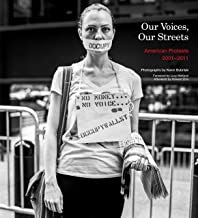
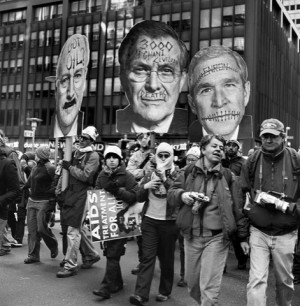
Hardcover. NY, powerHouse Books, 1st, 2020, Book: Very Good, Dust Jacket: Very Good, Hardcover in a bright, unclipped dust jacket, 164 pages. The crowds in the street at the 2001 inauguration made it clear America was at a difficult and defining moment after a contentious election. Following the inauguration of 2001 and the tragedy of 9/11, the American streets- as they have been since the country's founding-became the setting for numerous memorials and vigils, parades and protests. These photographs chronicle events in New York, Washington, D.C., and Vermont. The gatherings were large and sometimes small, and in both cases usually unnoticed by the mainstream media. These street portraits show a diversity of Americans: veterans, families of men and women on active duty, families of the victims of the 9/11 tragedy, parents of U.S. servicemen and women killed in the Iraq War, security personnel, police, Muslim Americans, anti-war activists, disenfranchised minorities, and anarchist youth. The common denominators that unite these images are the lens of the Hasselblad camera and the public stage of the American streets.
Cambridge, MA, Harvard University Press,, 1st, 1967, Book: Very Good, Dust Jacket: Very Good, Hardcover in a lightly worn dust jacket, 402 pages. "Miss Lang focuses on the content of Pa Chin novels and short stories, which vividly describe the life of Chinese youth. She also pays great attention to the western, particularly Russian and French, influences on his political philosophy."
Hardcover. NY, Simon & Schuster, 1st, 1991, Book: Very Good, Dust Jacket: Very Good, Hardcover in a bright dust jacket, 304 pages. Details the 'whole story' of events leading up to and away from the American invasion of Panama. By December 1989, when George Bush unleashed American troops, Panama had become a crisis. The U.S. Christmas invasion had one real purpose: topple Manuel Antonio Noriega, the general whose name had become synonymous with drugs, deception, and murder. Clean copy.
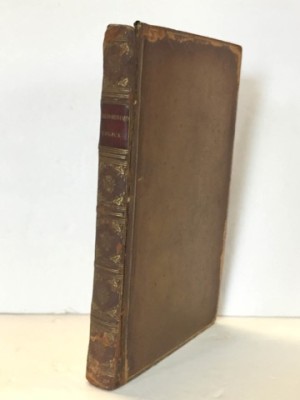
Hardcover. London, printed by C. & R. Baldwin for Thomas Payne, 1st, 1808, Book: Very Good, Dust Jacket: None, Hardcover, polished brown calf, 253 pages. A clean copy of the First Edition of Samuel Johnson's tract on the Corn Laws written in 1766 for the use of his friend William Gerard Hamilton - an important politician of the period who achieved a brilliant reputation as an orator - despite his nickname of 'Single Speech Hamilton' The volume was edited by Malone, who found the tract among Hamilton's papers and contributed a long preface. 8vo., xlvi, 253, [1]p colophon.; Stipple engraved frontispiece portrait. Previous owner's bookplate on inside front cover, edgewear/rubbing to calf along gilt ruled border on covers, spine with gilt decoration, red morroco label on spine. Front cover hinge tender, but holding.
Hardcover. London, Chapman & Hall, 1st, 1912, Book: Very Good, Dust Jacket: None, Hardcover, red cloth covers with gilt lettering, 325 pages including index. Front endpaper glued to inside cover, Clean copy. Memoirs of a journalist who covered the British Parliament for 45 years.
Softcover. Cambridge MA, Harvard University Press, 3rd pr., 1971, Book: Very Good, Dust Jacket: None, Softcover, blue wrappers, 200 pages. Name on half-title page, otherwise clean. Some fading to cover wrappers.
Hardcover. London, Cambridge University Press, 1st, 1962, Book: Very Good, Dust Jacket: Good, Volume I: Appeal to the People, 388 pages. Volume II: The Growth of Parties, 404 pages. Volume III: The Stuff of Politics, 493 pages. Minor dust jacket edge wear and rub, small stain on top edge of volume II, otherwise, all clean and tight.
Hardcover. NY, Viking Press, 1st, 1967, Book: Very Good, Dust Jacket: Very Good, Hardcover in a bright dust jacket with light edgewear, 371 pages. After WW II the US acquired an empire - one that embraces much of the world in a network of military pacts, economic ties, and political commitments. Steel describes how this empire originated, how it grew, and why is has been incapable of defending America's real interests, or of spreading her humanitarian ideals to other nations. Name on front fly leaf, otherwise clean.

 "Nazis in Pre War London 1930 1939: The Fate and Role of German Party Members and British Sympathizers by: James J. Barnes; Patience P. Barnes")
 "New Yorker Book of Business Cartoons, Theby: Robert Mankoff (Editor)")
 "Nietzsche's New Seas: Explorations in Philosophy, Aesthetics, and Politics by: Michael Allen Gillespie (Editor), Tracy B. Strong (Editor)")

 "Nine Old Men, Theby: Pearson, Drew and Robert S. Allen")
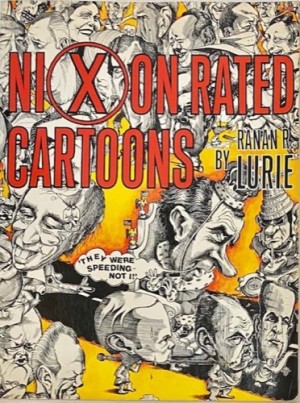
 "Nixon Rated Cartoonsby: Ranan R. Lurie")
 "No Known Survivors - David Levine's Political Plankby: David Levine and John Kenneth Galbraith")
 "Northern Protest: Martin Luther King Jr., Chicago and the Civil Rights Movement (SIGNED COPY)by: Ralph Jr., James R.")
 "On the Paris Commune by: Marx, Karl/ Engels, Friedrich")
 "One Step from the White House: The Rise and Fall of Senator William F. Knowlandby: Gayle B. Montgomery , James W. Johnson, et al.")
 "Ordeal of Ambition: Jefferson Hamilton Burr by: Daniels, Jonathan")
 "ORIG VINTAGE MAGAZINE COVER: Harper's Weekly March 8 1913 - Inauguration Issueby: N/A")
 "ORIGINAL VINTAGE MAGAZINE COVER: New Yorker Aug. 22 1964 - Politicians huddlingby: Arthur Getz (Illust.)")
 "ORIGINAL VINTAGE MAGAZINE COVER: New Yorker Sept. 23 1972 - Police escort by: Charles Saxon (Illust.)")
 "ORIGINAL VINTAGE MAGAZINE COVER: Saturday Evening Post- November 12, 1960 -Voting linesby: Constantin Alajalov (Illust.)")
 "Origins of the New South: 1877-1913 by: Vann Woodward, C.")
 "Our Voices, Our Streets: American Protests 2001-2011by: Kevin Bubriski, Howard Zinn, et al.")
 "Pa Chin and His Writings - Chinese Youth Between the Two Revolutionsby: Lang, Olga")
 "Panama: The Whole Story by: Buckley, Kevin")
 "PARLIAMENTARY LOGICK: to which are subjoined two speeches, delivered in the House of Commons of Ireland.With an appendix, containing Considerations on the Corn Laws, by Samuel Johnson, LL.D. never before")
 "Parliamentary Reminiscencesby: William Jeans")
 "Party and Army: Professionalism and Political Control in the Chinese Officer Corps 1949 1964 by: Ellis Joffe")
 "Pax Americanaby: Ronald Steel")