Hardcover. New York, John Day, 1st, 1927, Book: Very Good, Dust Jacket: None, Hardcover, red cloth covers, 9 page introduction by Calkins, followed by 50 b&w plates. The best of ad brochures and catalogs from the 1920s. Internally clean, cloth spine has wear, chipping to top and bottom otherwise very good.
Hardcover. US, A&C Black, 1st, 2011-03-01, Book: Very Good, Dust Jacket: None, Hardcover, 200 pages, illustrated throughout color. Clean, unmarked copy with only minor wear to covers. Propaganda Prints reviews the history, cultural diversity and legacy of Art in the service of social and political change.
Hardcover. PA, Hermes Press, 1st, 2015, Book: Very Good, Dust Jacket: None, 192 pages. hardcover with no dust jacket. Clean, unmarked copy with only minor wear to boards. Music inspired, science fiction and fantasy combined in a way that revolutionized poster art of the Psychedelic 1960's-era. Famous for his rock posters, The Psychedelic Rock Art of Carl Lundgren, a Detroit, Michigan based artist, showcases his posters which were as important to the Detroit Music and Art history as were the music legends themselves; The Who, Jefferson Airplane and Pink Floyd to name a few. The book's forward is written by Mitch Ryder, who was lead vocalist of a Detroit 1960's rock group The Detroit Wheels. The introduction is by Russ Gibb, a former radio personality and rock promoter from Dearborn, Michigan, who played a major role in the late sixties/early seventies Motor City music scene.
Hardcover. NY, Assouline, 1st, 2005, Book: Very Good, Dust Jacket: Very Good, Hardcover, 189 pages. "Not only is Andree Putman a wizard of design; she is also a muse that inspires timelessness." Jack Lang, former French Minister of Culture. Andree Putman was first cut above the rest when, twenty years ago, she conceived the first boutique hotel, the Morgan. She was also the one to open a new path for modern design, reinstating the importance of such major designers as Eileen Gray, Robert Mallet Stevens, Mariano Fortuny, and Jean-Michel Frank, among informed professionals. Since then, Putman's eclecticism has led her to embrace projects as diverse as the Guggenheim Museum, the Azzedine Alaia boutique and Peter Greenaway movie sets. Today, the designer's elegant and bold style is known throughout the world, from Los Angeles to Shanghai, a city where she created numerous projects. Andree Putman Style is a journey into the world of an uncommon designer, one which acquaints the reader with the influences and taste that inspired this amazing woman.
Hardcover. NY, Rizzoli, 1st, 2023, Book: Very Good, Dust Jacket: Very Good, Hardcover in a bright dust jacket. This special volume presents a visual timeline of Ralph Lauren's remarkable history as a lifestyle innovator. Lauren's unparalleled ability to seamlessly blend fashion and the home is illustrated with the groundbreaking designs and innovative use of materials that have distinguished the home collection since its inception in 1983: menswear-inspired Oxford Cloth bedding that required the creation of special looms and took two years to refine; the sleek RL-CF1 chair, crafted of carbon fiber and inspired by Lauren's McLaren F1 racecar; and an appreciation for a timeworn, weathered aesthetic, as exemplified in the iconic Writer's Chair with its hand-burnished leather and rich patina. Historic achievements such as the opening of his first New York City flagship on Madison Avenue - which invited guests to experience the complete World of Ralph Lauren in a residential environment - and his renowned restaurants that offer the epitome of gracious hospitality, demonstrate the magnitude of Ralph Lauren's influence on the worlds of lifestyle design and hospitality. The timeline is complete with quotes from distinguished members of the design world and prominent figures of our culture including Oprah Winfrey, Hillary Rodham Clinton, and architecture critic Paul Goldberger. Ralph Lauren's signature ability to create transportive environments begins with his private homes that inspire his iconic lifestyle collections. Ralph Lauren: A Way of Living offers an in-depth look at all the places Lauren calls home, from a sprawling ranch in Colorado and an island retreat in Jamaica, to a Fifth Avenue penthouse overlooking Manhattan's Central Park, a seaside home in Montauk and a country estate in Bedford. Lauren's homes are deeply personal expressions of his vision for living; captivating imagery is complemented by essays and descriptions written in his own words that intimately express the meaning of home and share inspiration and anecdotes for each residence. The photos of Lauren's captivating homes are followed by a celebration of Ralph Lauren Home's lifestyle collections - cinematic worlds that are brought to life with iconic imagery showcasing Lauren's pioneering lifestyle approach and all-encompassing home collection. DUE TO WEIGHT. DOMESTIC SHIPPING ONLY.
Hardcover. San Francisco, Chronicle Books, 1st, 2010, Book: Very Good, Dust Jacket: Very Good, Hardcover in a bright dust jacket, 186 pages. A 21st century retelling of a 2500-year-old story: Artist and veteran Pixar animator Sanjay Patel lends a lush, whimsical illustration style and lighthearted voice to one of Hindu mythology's best-loved and most enduring tales. Teeming with powerful deities, love-struck monsters, flying monkey gods, magic weapons, demon armies, and divine love, Ramayana: Divine Loophole tells the story of Rama, a god-turned-prince, and his quest to rescue his wife Sita after she is kidnapped by a demon king. Clean copy
Hardcover. NY, Universe / Vendome, 1st, 1999, Book: Very Good, Dust Jacket: Very Good, Hardcover in a bright, unclipped dust jacket. A illustrated survey of the career and influence of a master of design showcases some of his most famous and influential works, including the Coca-Cola bottle and truck, the package for Lucky Strike cigarettes, and the Studebaker automobile.Clean copy.
Hardcover. NY, Knopf, 1st, 2009, Book: Very Good, Dust Jacket: Very Good, Hardcover, 352 pages. In this chatty, self-absorbed memoir told with a hefty dose of name-dropping and a devout reverence for fame and fortune, British interior decorator Haslam proudly reveals his intimate connections with many members of British and American high society from the 1950s to the present, from his distant relation to Princess Diana to his brief but adoring encounters with Tallulah Bankhead, Mick Jagger, the Beatles, Joan Crawford, and many more. Indeed his busy social life started young; for most of the first hundred pages he is a fairly wide-eyed ingenue at Eton, followed by stints in London, New York, California, and back to London as a magazine editor, interior designer, and columnist. His has been a life where everyone and everything is darling and divine; in his world, elevator doors open to reveal Salvador Dali, and Andy Warhol is a frequent and amusing dinner companion. While claiming to be telling all, Haslam hides most of what makes many memoirs truly personal and affecting; in exchange readers get a chance to feel as if they are on a first-name basis with the stars. His superficial obsession with high society is, still, highly entertaining and refreshingly honest, and will delight those who travel in international circles of design and fashion.
Hardcover. New York, Abbeville Press, 1st, 1988, Book: Very Good, Dust Jacket: Very Good, Hardcover, large format, 342 pages. "Each of the 300 posters included in Reel Art has been reproduced to the uncompromising standards of all Abbeville's fine art books. The selection of posters is world-class, many never been published, and the definite text, by screenwriter and film historian Stephen Rebello, tells the vastly entertaining story behind the posters and their creators." The four decades between 1910 and 1950 were the golden age of the American movie poster, an era when wonderful films wer promoted through the talents of legendary illustrators like Thomas Hart Benton, Norman Rockwell, Howard Chandler Christy and Jmes Montgomery Flagg, as well as a small army of unknowns. It was a time when big studios lavished fortunes on poster campaigns - from modest one-sheets posted on neighbourhood fences to the gargantuan forty-eight sheets that usurped entire sides of multi-storey buildings. Hollywood knew that the right image could seduce millions past the box office and into the theatre. Today such graphics fetch five-figure prices from collectors seeking a Casablanca or a King Kong.
Hardcover. NY, Flammarion, 1st, 2004, Book: Very Good, Dust Jacket: Very Good, Hardcover, 224 pages, color and b&w illustrations. Rene Herbst's enduring furniture designs provide fundamental lessons for today's interior designers. A staunch modernist, Herbst was a founding member and later president of the Union des artistes modernes (UAM) in France, which sought to make domestic comfort accessible to all, regardless of class. The diversity of his work is testament to his prolific and creative output, and his design is marked by its simplicity and functionality. The French architect turned designer was nicknamed the "man of steel" because he pioneered the use of the material for furniture years before mass production on a large scale was possible. In 1929 he created several versions of his celebrated Sandow Chair, which ignited his research into serial production and inaugurated the era of mass production. This book presents a selection of the best works from the Herbst Collection held by the library of the Musee des Arts decoratifs in Paris, and demonstrates how Herbst was the catalyst of a new style of living that spurred the birth of modernity.
Hardcover. London, Laurence King Publishers, 1st, 2008, Book: Very Good, Dust Jacket: None, Hardcover, 192 pages. A pictorial tour of unique loos of the world. No dj issued.
Hardcover. The Monacelli Press , 1st, 2018, Book: Very Good, Dust Jacket: Very Good, Hardcover in a bright dust jacket, 264 pages. Richard Filipowski (1923-2008) was among the most gifted polymaths in the annals of American modernism. Whether as a painter, sculptor, or designer of furniture and jewelry, Filipowski developed a lush, abstract, and amazingly consistent visual language that marks him among the finest figures of midcentury art and design. As a student at the Institute of Design (formerly the New Bauhaus) in Chicago, he quickly became a protege of founder Laszlo Moholy-Nagy, who featured several of Filipowski's works in his seminal text Vision in Motion (1947); Filipowski was the only student Moholy-Nagy called upon to join the faculty, where he taught alongside Walter Gropius and Marcel Breuer. Recruited by Gropius to develop a course in design fundamentals at Harvard, which remains a cornerstone of design pedagogy to this day, he would move to MIT where he taught for more than three decades, until his retirement in 1988. With a foreword by Laszlo Moholy-Nagy's daughter Hattula, Richard Filipowski: Art and Design Beyond the Bauhaus is the first monograph of this master, who over the course of his career created a unique body of work in diverse media that has largely, until recently, been held in private collections due to his relative lack of compulsion to seek media attention or worldly rewards. But now through the efforts of the Filipowski family and new attention by design scholars--several of whom contribute essays here on Filipowski's graphic and painted works, sculpture, furniture, and position in design history--the work is being revealed to a new generation of aficionados. Richard Filipowski is a rich document of a life and career that is poised to reenter the canon of modernism.
Hardcover. Newburyport Press, 1st, 2006, Book: Very Good, Dust Jacket: Very Good, Hardcover in a bright, unclipped jacket. Richard Henry Arbib was considered one of the leading industrial designers in the United States in the years following World War II. By the 1950s, he had established himself as one of the true visionaries in his field, producing groundbreaking design concepts not only for automobiles, but for a range of products that included wristwatches, pens, boats and even personal helicopters--designs so innovative than many of them would still be considered advanced today. This book is an attempt to rediscover both the man and his extraordinary work. Combining a biographical essay and commentary by historian and collector Frederic A. Sharf with 35 never-before-seen drawings by Arbib, this is a revelatory look at one of the great artists of America's industrial history, and the first biographic study of his work.
Hardcover. US, Taschen, 1st, 2014, Book: Very Good, Dust Jacket: Very Good, 560 pages. A compilation of more than 750 remarkable album covers, from legendary to rare record releases. Artists as varied as Elvis Presley, The Beatles, The Sex Pistols, Pink Floyd, The Cure, Iron Maiden, and Sonic Youth are gathered together in celebration of the cover art that defined their albums and their cult status. Each cover is accompanied by a fact sheet listing the art director, photographer or illustrator, year, label, and more, while nearly 250 records that marked particular turning points for a band, an artist, or the music genre, are highlighted with short descriptions. Large heavy volume. Like new in publisher's shrink-wrap.
Hardcover. NY, Abrams, 1st, Book: Very Good, Dust Jacket: Very Good, Hardcover, 272 pages. Reproduces all 728 of the magazine's covers and includes behind-the-scenes stories and excerpts from articles and interviews with the idols of rock and rythym-and-blues.
Hardcover. New York, Rizzoli, 1st, 2006, Book: Very Good, Dust Jacket: Very Good, 262 pages. Hardcover with dust jacket. Sunfading to spine. Minor soiling to dust jacket. An otherwise very clean, unmarked copy with only minor edgewear. Rooms celebrates some of the most luxurious and bold interiors around the globe and the creative sensibilities of the people who inspired them. Beautifully presented through the sumptuous photography of Derry Moore, the 12th Earl of Drogheda, who has photographed some of the world's most spectacular houses as well as some of the most notable personalities in their homes, this lavish publication captures the dramatic spirit of such vivid figures as famed early twentieth-century interior designer Elsie de Wolfe, contemporary design legend Renzo Mongiardino, and the legendary decorator Nancy Lancaster. Moore revolutionized interior photography with his technical acuity, his keen aesthetic eye and his impeccably good taste. This vision culminated in an inspired collaboration with Joseph Holtzman, founding editor in chief and art director of the celebrated and controversial magazine Nest, and one of the great tastemakers of our age. This long-awaited book features a remarkable array of spectacular interiors, ranging from Charleston, the famed haunt of the Bloomsbury group, to India's Falaknuma Palace, Pauline de Rothschild's London residence, and Chatsworth Hall, Derbyshire, the grandest of English country houses.
Hardcover. NY, Thames & Hudson, 1st, 2022, Book: Very Good, Dust Jacket: None, Hardcover, pictorial boards, oversize format. 408 pages with 534 color illustrations. Rudolph de Harak (1924-2002) is one of the most influential graphic designers of the mid-twentieth century. This beautifully produced, comprehensive monograph is devoted to this fascinating and significant figure and provides an in-depth account of de Harak's life and work. From his early years in Los Angeles to his success as a design consultant and educator in New York City, de Harak brought inventiveness to everything he designed, from record covers to book jackets, from furniture to exhibitions. De Harak's work was influenced by early modernist masters, such as Will Burtin, Gyorgy Kepes, Alvin Lustig, and Max Bill, as well as by the rigor, simplicity, and rationalism of the International Style, Abstract Expressionism, Op Art, and Pop Art. Organized chronologically into six chapters that cover de Harak's life and career, each supported by sidebars on the designers, architects, and art movements that have influenced his work, Rudolph de Harak Graphic Designer documents de Harak's pioneering and prolific fifty-year career in graphic, experiential, industrial, and furniture design for a wide range of clients, including the Metropolitan Museum of Art, Cummins engine company, McGraw Hill publishing, and many others. PLEASE NOTE: DUE TO WEIGHT, DOMESTIC SHIPPING ONLY.
Hardcover. NY, Abrams, 1st, 2001, Book: Very Good, Dust Jacket: Very Good, Hardcover, 176 pages. Before there was Martha Stewart, there was Russel Wright (1904-1976), the great mid-century modern American designer who pioneered the concept of "easier living" for the middle class, a uniquely American lifestyle that was gracious but contemporary and informal. Yet despite Wright's enormous influence, there has been no major survey of his work until now. This handsome volume-which accompanies an exhibition at Cooper-Hewitt, National Design Museum in New York City-showcases more than 125 of Wright's best designs for inexpensive, mass-produced dinnerware, textiles, and furniture. As the flurry of Wright auction activity on Ebay shows, there is a thriving collectors' market for his designs. 125 illustrations, 65 in full color, 176 pages, 71/2 x 10".
Hardcover. London, VIVAYS, 1st, 2012, Book: Very Good, Dust Jacket: Very Good, 200 pages. Hardcover with dust jacket. Like new in publisher's shrink-wrap. "This volume, based on rarely seen Russian archives, traces the history of the silent film poster in Russia, starting with a poster designed by Paul Assaturov ("Stenka Razin", 1908) in the style of ancient naive Russian imagery to the latest advertise- ment for a silent movie by Yuri Pimenov from 1934. Full-page reproductions of 161 Russian silent film posters are presented here in chronological order - from the very beginning of the 20th century until the 1930s.
Hardcover. Chicago, University of Chicago Press, 1st, 2005, Book: Very Good, Dust Jacket: Very Good, Hardcover, 284 pages. In Rustic Cubism, Bruce Adams tells the fascinating story of Moly-Sabata, an art colony founded in the Rhone Valley during the height of French modernism by Cubist pioneer Albert Gleizes. Following his social and spiritual agenda of earthly labor and a Celtic-medievalist view of Christianity, Gleizes' disciples worked to fuse Cubism with a revival of ancient agrarian, artisanal traditions. The most important and committed member of this experimental commune was ceramicist Anne Dangar (1885-1951). Generously illustrated with photographs of the art and social milieu of the period, this captivating and original narrative makes a considerable contribution to our understanding of French modernism and early twentieth-century cultural politics as well as of the life of a most talented and intriguing female artist.
Softcover. Santa Barbara CA, UCSB Art Museum, 2nd pr., 1979, Book: Very Good, Dust Jacket: None, Softcover, 105 pages illustrated with b&w photos and architectural drawings. Clean, crisp copy of this exhibition catalog.
Softcover. Saratoga Springs NY, Lyrical Ballad Book Store, 1st, 1991, Book: Very Good, Dust Jacket: None, Softcover, 183 pages. Conceiving of the City of Saratoga Springs as a museum in which the exteriors of buildings are the works of art, many key examples of architecture are carefully placed within the context of local and national history and of architectural style. Illustrated with many black and white photos. Clean copy
Hardcover. London, Laurence King, 1st, 2011, Book: Very Good, Dust Jacket: Very Good, Hardcover, 428 pages. This is the first book to be published on one of the greatest American designers of the 20th Century, who was as famous for his work in film as for his corporate identity and graphic work. With more than 1,400 illustrations, many of them never published before and written by the leading design historian Pat Kirkham, this is the definitive study that design and film enthusiasts have been eagerly anticipating. Saul Bass (1920-1996) created some of the most compelling images of American post-war visual culture. Having extended the remit of graphic design to include film titles, he went on to transform the genre. His best known works include a series of unforgettable posters and title sequences for films such as Alfred Hitchcock's Vertigo and Otto Preminger's The Man With The Golden Arm and Anatomy of a Murder. He also created some of the most famous logos and corporate identity campaigns of the century, including those for major companies such as AT&T, Quaker Oats, United Airlines and Minolta. His wife and collaborator, Elaine, joined the Bass office in the late 1950s. Together they created an impressive series of award-winning short films, including the Oscar-winning Why Man Creates, as well as an equally impressive series of film titles, ranging from Stanley Kubrick s Spartacus in the early 1960s to Martin Scorsese s Cape Fear and Casino in the 1990s. Designed by Jennifer Bass, Saul Bass's daughter and written by distinguished design historian Pat Kirkham who knew Saul Bass personally, this book is full of images from the Bass archive, providing an in depth account of one of the leading graphic artists of the 20th century.

 "Printing for Commerce: Specimens Exhibited By the Institute 1926by: Calkins (Introduction), Ernest Elmo")
 "Propaganda Prints: A History of Art in the Service of Social and Political Changeby: Moore, Colin")
 "Psychedelic Rock Art of Carl Lundgren, Theby: Lundgren, Carl")
 "Putman Styleby: Gerschel, Stephane")
 "Ralph Lauren A Way of Living: Home, Design, Inspirationby: Lauren, Ralph")
 "Ramayana: Divine Loophole by: Patel, Sanjay")


 "Raymond Loewy and Streamlined Designby: Tretiack, Philippe")
 "Redeeming Features: A Memoirby: Haslam, Nicholas")
 "Reel Art: Great Posters from the Golden Age of the Silver Screen by: Rebello Stephen; Richard Allen")
 "Rene Herbst: Pioneer of Modernismby: Guillemette Delaporte")

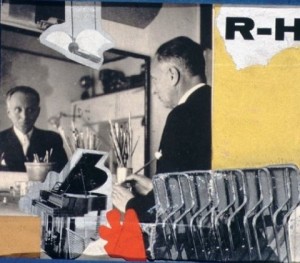
 "Restroom: Contemporary Designby: Hudson, Jennifer")
 "Richard Filipowski: Art and Design Beyond the Bauhausby: Marisa Bartolucci (Editor), Hattula Moholy-Nagy (Foreword)")
 "Richard H. Arbib: 1917-1995 Visionary American Designerby: Arbib, Richard")
 "Rock Coversby: Busch, Robbie")
 "Rolling Stone The Complete Covers 1967-1997by: Fred Woodward, Jann S. Wenner , et al.")
 "Roomsby: Moore, Derry")
 "Rudolph de Harak Graphic Designer: Rational Simplicity by: Richard Poulin")
 "Russel Wright: Creating American Lifestyleby: Donald Albrecht , Robert Schonfeld, et al.")
 "Russian and Soviet Collages : 1920s - 1990sby: Vasily Elkin/ et al")
 "Russian Film Posters: 1900-1930by: Boerner, Maria-Christina")
 "Rustic Cubism: Anne Dangar and the Art Colony at Moly-Sabataby: Adams, Bruce")

 "Saratoga Springs: An architectural history, 1790-1990 by: Kettlewell, James K")
 "Saul Bass: A Life in Film and Designby: Jennifer Bass , Pat Kirkham , et al.")