Hardcover. New York , Abrams, 1st, 2009, Book: Very Good, Dust Jacket: Very Good, Hardcover, 304 pages. Illustrated in color throughout. A survey of the many murals in the (now rapidly gentrifying) Mission District, the barrio Latino of San Francisco, combining elements of Mexican mural painting, surrealism, pop art, urban punk, and graffiti.
Hardcover. Croydon UK, Fonthill Media, 1st, 2016, Book: Very Good, Dust Jacket: Very Good, Hardcover in a bright dust jacket, 160 pages. You might be surprised to learn that many of the consumer brands and products we enjoy today exist because of streetcar advertising. The Industrial Revolution of the early 1900's and a massive consumer audience riding over 50,000 streetcars in nearly 3,000 cities and towns in every state of the union provided a great opportunity for Barron Collier, a native of Memphis, Tennessee. He simply used streetcar advertising to bring these two forces together and created the largest streetcar advertising empire in the world. By age twenty-six, he was a millionaire and at one time had business offices in 70 cities with business interests in more than a thousand cities. Most of these advertising cards have remarkable color graphics; over 250 of them are included in this book for your viewing pleasure. While streetcar advertising is definitely not a major advertising medium today, the advertising community might be surprised to learn that the basic principles of consumer advertising have not changed that much in the last one hundred years. Investors might do well to review this book to see which companies are still producing these popular products and brands as they represent some of the most successful businesses in America today.
Hardcover. New York , Mark Batty Publisher, 1st, 2003, Book: Very Good, Dust Jacket: Very Good, 286 pages, a comprehensive and inspirational guide to editorial design packed with contemporary examples of sophisticated and effective solutions for virtually any design challenge. Moser's thorough understanding of the process, combined with intriguing juxtapositions of layouts, no-nonsense comments and original insight make for an entertaining and useful book. Chapters range from Grid Systems and Formats to Covers, Logos and Inside Pages, Types of Page and Themes, even a section on the design of magazine spines-illustrated with over 1500 examples from publications around the world, and drawn from the author's personal collection of over one million magazines! A great reference book for all graphic designers, art directors and editorial writers.
Hardcover. NY, Posters Please, 1st, 2003, Book: Very Good, Dust Jacket: None, Hardcover, auction catalogue with beautiful pictures of posters in color. An exceptional copy in the original title-blocked cloth.
Softcover. Seattle, Fantagraphics Books, 1st, 2009, Book: Very Good, Dust Jacket: None, Softcover, 180 pages. The Sweetly Diabolic Art features paintings, drawings, and sketches from the 1940s through the 1990s, most never previously published or exhibited, as well as more artifacts from Flora's 1940s tenure in the Columbia Records art department and rare newspaper and magazine illustrations spanning several decades. Sweetly Diabolic is also the first printing of an abandoned children's book concept, The X-Ray Eyes of Wallingford Hume. Equally fascinating are original, never-before-published roughs and rejected images from Flora's 1950s and '60s children's books and a gallery of pen and pencil sketches from the 1940s. Sweetly Diabolic also collects, for the first time rarely seen cartoon-science illustrations: the images are augmented by personal vignettes, mementos from the family archives, and a 1984 interview with award-winning graphic designer Robert M. Jones, who offers priceless insights.
Softcover. NY, Picador/Farrar Straus Giroux, 1st US, 2022, Book: Very Good, Dust Jacket: None, Softcover, 398 pages, Illustrated in color and b&w. In 1922, Cyril Power, a fifty-year-old architect, left his family to work with the twenty-four-year-old Sybil Andrews. They would be together for twenty years. Both became famous for their dynamic, modernist linocuts-streamlined, full of movement and brilliant color, summing up the hectic interwar years. Yet at the same time, they looked back to medieval myths and early music, to country ways that were disappearing from sight. Jenny Uglow's Sybil & Cyril: Cutting Through Time traces their struggles and triumphs, conflicts and dreams, following them from Suffolk to London, from the New Forest to Vancouver Island. This is a world of futurists, surrealists, and pioneering abstraction, but also of the buzz of the new, of machines and speed, of shops and sport and dance, shining against the threat of depression and looming shadows of war. Remainder dot to top edge otherwise like new.
Hardcover. Mexico, Fundacion Olga y Rufino Tamayo, Reprint, 2002, Book: Very Good, Dust Jacket: Very Good, 150 pages. Hardcover with dust jacket. Clean, unmarked copy with only minor wear to dust jacket. Book text in Spanish. Former price tag residue on back of dust jacket. Color illustrations throughout.
Hardcover. New Haven CT, Yale University Press, 1st, 2017, Book: Very Good, Dust Jacket: Very Good, Hardcover, 260 pages, in a bright, unclipped dust jacket. A riveting and superbly illustrated account of the enigmatic House Beautiful editor's profound influence on mid-century American taste From 1941 to 1964, House Beautiful magazine's crusading editor-in-chief Elizabeth Gordon introduced and promoted her vision of "good design" and "better living" to an extensive middle-class American readership. Her innovative magazine-sponsored initiatives, including House Beautiful's Pace Setter House Program and the Climate Control Project, popularized a "livable" and decidedly American version of postwar modern architecture. Gordon's devotion to what she called the American Style attracted the attention of Frank Lloyd Wright, who became her ally and collaborator. Gordon's editorial programs reshaped ideas about American living and, by extension, what consumers bought, what designers made, and what manufacturers brought to market. This incisive assessment of Gordon's influence as an editor, critic, and arbiter of domestic taste reflects more broadly on the cultures of consumption and identity in postwar America. Nearly 200 images are featured, including work by Ezra Stoller, Maynard Parker, and Julius Shulman. This important book champions an often-neglected source--the consumer magazine--as a key tool for deepening our understanding of mid-century architecture and design.
Hardcover. Glitterati , 1st, 2019, Book: Very Good, Dust Jacket: None, Hardcover, pictorial boards, 228 pages. What do Elmer's Glue, Krylon Spray Paint, and Reese's Peanut Butter Cups have in common? The designer Ted Eron, of course. You may not know his name, but you know Ted Eron. Although he remains largely unknown in the public consciousness, Eron played an integral role in defining the aesthetics of everyday goods and household staples in the 1950s and '60s. In Ted Eron Designed That, Joseph Eron and Elizabeth Eron Roth - Ted's children - chronicle the life and art of their father through a nostalgic tour of the iconic graphic designs that have shaped and revolutionised twentieth-century visual culture. From his humble beginnings painting signs in the basement of a market while attending Cooper Union, to the Eron & Eron Industrial Design years during World War II and beyond, Ted Eron Designed That pays a long overdue tribute to the man behind the iconic designs. Still in publisher's shrink wrap.
Hardcover. Glitterati , 1st, 2019, Book: Very Good, Dust Jacket: None, Hardcover, pictorial boards, 228 pages. What do Elmer's Glue, Krylon Spray Paint, and Reese's Peanut Butter Cups have in common? The designer Ted Eron, of course. You may not know his name, but you know Ted Eron. Although he remains largely unknown in the public consciousness, Eron played an integral role in defining the aesthetics of everyday goods and household staples in the 1950s and '60s. In Ted Eron Designed That, Joseph Eron and Elizabeth Eron Roth - Ted's children - chronicle the life and art of their father through a nostalgic tour of the iconic graphic designs that have shaped and revolutionised twentieth-century visual culture. From his humble beginnings painting signs in the basement of a market while attending Cooper Union, to the Eron & Eron Industrial Design years during World War II and beyond, Ted Eron Designed That pays a long overdue tribute to the man behind the iconic designs. Still in publisher's shrink wrap.
Hardcover. San Francisco, Chronicle Books, 1st, 1996, Book: Very Good, Dust Jacket: Very Good, Hardcover in a bright dust jacket, 344 pages. Includes the following essays: Painted and Block-Printed Cloths, Cloths Decorated with Gold & Silver Leaf / Roller-Printed Cloths, Tie-Dyed Cloths / Woven Cloths & Embroideries / History of Indian Textiles, by Zahid Sardar / etc. Color illustrations throughout. Foreword and afterword by Kokyo Hatanaka; Clean, bright copy. DUE TO WEIGHT, DOMESTIC SHIPPING ONLY.
NY, The Art Directors Club, 1st, 1979, Book: Very Good, Dust Jacket: None, Hardcover in pictorial boards, no dust jacket issued. 540 pages with 1002 examples of award-winning graphic art. Clean copy. NOTE: DUE TO WEIGHT, DOMESTIC SHIPPING ONLY.
NY, Roto Vision for the Art Directors Club, 1st, 1989, Book: Very Good, Dust Jacket: Very Good, Hardcover in a bright dust jacket. 568 pages, colour & b/w illustrations. Cover & section designs by Kit Hinrichs. Hall of Fame features on Rudolph de Harak & Raymond Loewy. Includes work by David Carson, Tocani, Massimo Vignelli, Michael Bierut, Seymour Chwast, Pushpin, Woody Pirtle, Paula Scher, Stefan Sagmeister, April Greiman, Milton Glaser, Trickett & Webb, Ivan Chermayeff, Andy Warhol, Irving Penn, Henry Wolf, Tibor Kalman, Chip Kidd, Art Spiegelman, Joe Pytka, Adrian Lyne, David Bailey, David Lynch, John Rushworth, David Hillman, Alan Fletcher, Marcello Minale, Bruce Duckworth, Mary Lewis, Derek Birdsall, Mervyn Kurlansky, among others. Clean.
Hardcover. NY, Pantheon, 1st, 2005, Book: Very Good, Dust Jacket: None, Hardcover, 108 pages in color. With all his literary accolades and awards, it's easy to forget Ware (Jimmy Corrigan) is one of the warmest, funniest cartoonists in America. The Acme Novelty Library collects a few issues of Ware's comic book series by the same name and adds plenty of new pages and visual delights. It is, like all of his work, an utterly immersive experience. You're not just reading his comics, you're inhabiting his world: from fake ads to diagrams for paper models to a lengthy and very funny fictional history of the Acme Novelty Company. These strips combine complex and beautiful visuals with the humor of hapless, often sad characters in ridiculous predicaments. "Rusty Brown", a series of strips based around an obsessive collector who will be the subject of Ware's next graphic novel, is particularly strong. These comics showcase Ware's unusual sensitivity towards his characters, building an incisive, multi-dimensional portrait of Brown and his friend Chalky White. On top of all of these riches there is Ware's own personal "history of art" in cartoon form, and a multi-page story about a naked superhero. Combining surreal humor, cutting satire, stunning visuals, and empathic characters, Ware's latest is a wondrous journey into the universe of a master cartoonist in peak form.
Hardcover. NY, Pantheon, 1st, 2005, Book: Very Good, Dust Jacket: None, Hardcover, 108 pages in color. With all his literary accolades and awards, it's easy to forget Ware (Jimmy Corrigan) is one of the warmest, funniest cartoonists in America. The Acme Novelty Library collects a few issues of Ware's comic book series by the same name and adds plenty of new pages and visual delights. It is, like all of his work, an utterly immersive experience. You're not just reading his comics, you're inhabiting his world: from fake ads to diagrams for paper models to a lengthy and very funny fictional history of the Acme Novelty Company. These strips combine complex and beautiful visuals with the humor of hapless, often sad characters in ridiculous predicaments. "Rusty Brown", a series of strips based around an obsessive collector who will be the subject of Ware's next graphic novel, is particularly strong. These comics showcase Ware's unusual sensitivity towards his characters, building an incisive, multi-dimensional portrait of Brown and his friend Chalky White. On top of all of these riches there is Ware's own personal "history of art" in cartoon form, and a multi-page story about a naked superhero. Combining surreal humor, cutting satire, stunning visuals, and empathic characters, Ware's latest is a wondrous journey into the universe of a master cartoonist in peak form.
Softcover. Philadelphia, Philadelphia Museum of Art, 1st, 1973, Book: Very Good, Dust Jacket: None, Softcover in bright pictorial wrappers, 212 pages. With a catalogue of selected buildings and a checklist of the architecture and projects of Frank Furness. Illustrated with b&w photos and plans. Small ink notation on title apge otherwise clean.
Hardcover. New York, Universe Publishing, 2nd printing, 2009, Book: Very Good, Dust Jacket: None, Non paginated. Hardcover. Six pages of pop-ups in excellent condition, each page has several smaller pop-ups laid in. Bright cover boards & bright illustrations throughout by illustrator, Anton Radevsky. A magnificent journey through the history of architecture. Featuring amazing three-dimensional replications of famous buildings from ancient to modern times, The Architecture Pop-Up Book showcases artwork, photographs, pop-ups, and detailed text of the ancient Egyptian pyramids; the great constructions of Greece and Rome, such as the Parthenon and the Colosseum; majestic Asian wonders, including the Taj Mahal; Gothic and Neoclassical masterpieces, such as Notre Dame and the Florence Duomo; and the work of such important modern architects as Gaudi, Frank Lloyd Wright, and Frank Gehry. From a brilliantly elaborate Gothic cathedral nave to a telescoping Chrysler Building skyscraper, the talent and imagination of architects and builders from all eras and from all over the world are displayed and compared here.Clean, unmarked & tight copy.
Softcover. NY, Ballantine Books, 1st pbk., 2002, Book: Very Good, Dust Jacket: None, Softcover, 224 pages illustrated in color. A pictorial celebration of the art that went into creating the second prequel to Star Wars, Attack of the Clones. With hundreds of sketches, storyboards, matte paintings, blueprints, costume designs and more. Includes the script for the film written by director George Lucas and Jonathan Hales.
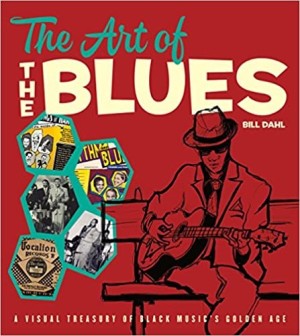
Hardcover. Chicago, University of Chicago Press, 1st, 2016, Hardcover in a bright dust jacket, still in publisher's shrinkwrap. This stunning book charts the rich history of the blues, through the dazzling array of posters, album covers, and advertisements that have shaped its identity over the past hundred years. The blues have been one of the most ubiquitous but diverse elements of American popular music at large, and the visual art associated with this unique sound has been just as varied and dynamic. There is no better guide to this fascinating graphical world than Bill Dahl--a longtime music journalist and historian who has written liner notes for countless reissues of classic blues, soul, R&B, and rock albums. With his deep knowledge and incisive commentary--complementing more than three hundred and fifty lavishly reproduced images--the history of the blues comes musically and visually to life.
Hardcover. NY, Metropolitan Museum of Art, 1st, 2024, Hardcover in a bright dust jacket, 256 pages illustrated in color. An exploration of late nineteenth-century American literary posters. a vibrant genre at the vanguard of modern commercial art and graphic design spurred by innovations in printing technology, the modern poster emerged in the 1890s as a popular form of visual culture in the United States. Created by some of the best-known illustrators and graphic designers of the period including Will H. Bradley, Florence Lundborg, Edward Penfield, and Ethel Reed these advertisements for books and high-tone periodicals such as Harper's and Lippincott's went beyond the realm of commercial art, incorporating bold, stylized imagery and striking typography. This book, based on the renowned Leonard A. Lauder Collection, explores the craze for literary posters, which became sought after collectibles even in their day. It offers new scholarly perspectives that address the aesthetic sophistication and modernity of the literary poster; the impact of early experiments in the field of advertising psychology; the expanded opportunities for women artists, who played an important role in advancing the so-called poster style; and the printmaking techniques that artists employed in this novel art form. A lively survey of a little-known but highly influential period in graphic design,
Hardcover. NY, H. Bittner and Company, 1st, 1945, Book: Very Good, Dust Jacket: None, Hardcover, blue buckram stamped with gilt code of arms and lettering on spine. Limited to 1000 copies. A study of an artistic family who created theatrical designs dating from the 1680s to the 1780s under eight names. Illustrated with 53 plates. Small review slip tipped on front fly leaf. Some darkening to covers and spine, internally clean and bright. No dust jacket.

 "Street Art San Francisco: Mission Muralismoby: Jacoby, Annice (Editor)")
 "Streetcar Advertising in Americaby: Woodson J. Savage III")
 "Surprise Me: Editorial Designby: Moser, Horst")
 "Swank Posters Xxxiii: Poster Auctions International, Inc Xxxiiiby: Rennert, Jack (Editor)")
 "Sweetly Diabolic Art of Jim Flora, Theby: Chusid, Irwin")
 "Sybil & Cyril: Cutting Through Time by: Jenny Uglow")
 "Tamayo Ilusradorby: Tamayo, Rufino")
 "Tastemaker: Elizabeth Gordon, House Beautiful, and the Postwar American Homeby: Monica Penick")
 "Ted Eron Designed That by: Eron, Joseph B./Elizabeth Eron Roth,")
 "Ted Eron Designed That by: Eron, Joseph B./Elizabeth Eron Roth,")
 "Textile Arts of Indiaby: Hatanaka, Kokyo")


 "The 54th Art Directors Annual (The One Show) by: The Art Directors Club of New York")
 "The 58th Art Directors Annualby: The Art Directors Club")

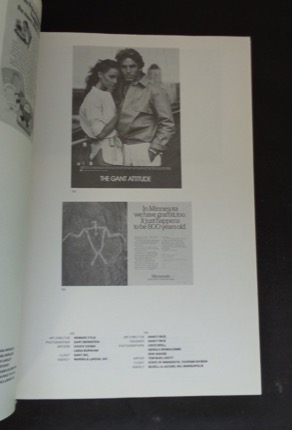
 "The 62nd Art Directors Annual of Advertising, Editorial and Television Art And Designby: The Art Directors Club, Inc")
 "The 68th Art Directors' Annual: Including the 3rd Annual International Exhibition by: Zulli, Jeri & Gregory, Jonathan (Editors)")
 "The ABC's of The Bauhaus and Design Theoryby: Miller, J. Abbott; Lupton, Ellen")
 "The Acme Novelty Library (Pantheon Graphic Library)by: Ware, Chris")
 "The Acme Novelty Library (Pantheon Graphic Library)by: Ware, Chris")
 "The Architecture of Frank Furness by: O'Gorman, James F.; Thomas, George E.")
 "The Architecture Pop Up Bookby: Radevsky, Anton")
 "The Art of Star Wars. Episode II. Attack of the Clones. Including the Complete Script of the Film by: Vaz, Mark Cotta")
 "The Art of the Blues: A Visual Treasury of Black Music's Golden Ageby: Bill Dahl")
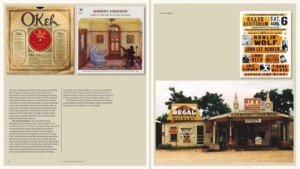
 "The Art of the Literary Posterby: Allison Rudnick")
 "The Bibiena Familyby: Mayor, A. Hyatt")