Hardcover. New York, Ecco, 2nd pr., 2016, Book: Very Good, Dust Jacket: Very Good, Hardcover, 734 pages, b&w illustrations. The definitive biography of the beguiling Diane Arbus, one of the most influential and important photographers of the twentieth century, a brilliant and absorbing exposition that links the extraordinary arc of her life to her iconic photographs. It is impossible to understand the transfixing power of Arbus's photographs without exploring her life. Lubow draws on exclusive interviews with Arbus's friends, lovers, and colleagues; on previously unknown letters; and on his own profound critical insights into photography to explore Arbus's unique perspective and to reveal important aspects of her life that were previously unknown or unsubstantiated. He deftly traces Arbus's development from a wealthy, sexually precocious free spirit into first, a successful New York fashion photographer and then, a singular artist who coaxed secrets from her subjects. Lubow reveals that Arbus's profound need not only to see her subjects but to be seen by them drove her to forge unusually close bonds with these people, helping her discover the fantasies, pain, and heroism within each of them, and leading her to create a new kind of photographic portraiture charged with an unnerving complicity between the subject and the viewer.
Hardcover. New York, Ecco, 2016, 2016, Book: Very Good, Dust Jacket: Very Good, 734 pages. Hardcover. B&w photographs throughout. Clean, unmarked copy with only minor wear to dust jacket.
Hardcover. NY, Random House, 1st, 2003, Book: Very Good, Dust Jacket: Very Good, Hardcover in a btight dust jacket. 352 pages. Monograph published in conjunction with a major exhibition. Essays by by Sandra S. Phillips and Neil Selkirk and an over 100 page chronolgy by Doon Arbus and Elisabeth Sussman. Also features an afterword by Doon Arbus and biographies by Jeff L. Rosenheim. Includes 200 full page duotones, many that have never been published before and numerous other smaller images. Clean copy. DOMESTIC SHIPPING ONLY.
Hardcover. NY, Scribner, 1st, 2024, Book: Very Good, Dust Jacket: Very Good, Hardcover in a bright, unclipped dust jacket, 405 pages, b&w illustrations. The McLaughlin twins were trailblazing female photographers, celebrated in their time as stars in their respective fields, but have largely been forgotten since. Here, in Double Click, Carol Kino brings these two brilliant women and their remarkable accomplishments to vivid life. Frances was the only female photographer on staff in Conde Nast's photo studio, hired just after Irving Penn, and became known for streetwise, cinema verite-style work, which appeared in the pages of Glamour and Vogue. Her sister Kathryn's surrealistic portraits filled the era's new "career girl" magazines, including Charm and Mademoiselle. Both twins married Harper's Bazaar photographers and socialized with a glittering crowd that included the supermodel Lisa Fonssagrives and the photographer Richard Avedon. Kino uses their careers to illuminate the lives of young women during this time, an early 20th-century moment marked by proto-feminist thinking, excitement about photography's burgeoning creative potential, and the ferment of wartime New York.
Hardcover. NY, Farrar, Straus And Giroux, 1st, 2024, Book: Very Good, Dust Jacket: Very Good, Hardcover in a bright dust jacket, 464 pages. A personal exploration of the American West and the work of one of America's greatest photographers. Timothy O'Sullivan is America's most famous war photographer. You know his work even if you don't know his name: A Harvest of Death, taken at Gettysburg, is an icon of the Civil War. He was also among the first photographers to elevate what was then a trade to the status of fine art. The images of the American West he made after the war, while traveling with the surveys led by Clarence King and George Wheeler, display a prescient awareness of what photography would become; years later, Ansel Adams would declare his work 'surrealistic and disturbing.' At the same time, we know very little about O'Sullivan himself. Nor do we know-really know-much more about the landscapes he captured. Robert Sullivan's Double Exposure sets off in pursuit of these two enigmas. This book documents the author's own road trip across the West in search of the places, many long forgotten or paved over, that O'Sullivan pictured. It also stages a reckoning with how the changes wrought on the land were already under way in the 1860s and '70s, and how these changes were a continuation of the Civil War by other means.
Hardcover. Stockholm, Journal, 1st, 2005, Book: Very Good, Dust Jacket: Very Good, 304 pages, 85 color, 210 b&w plates. Hardcover with dust jacket. Like new in publisher's shrink-wrap.
Hardcover. NY, VH1 Press , 1st, 2006, Book: Very Good, Dust Jacket: Very Good, Hardcover, 160 pages. She was riveting to look at, a sprite of the zeitgeist, the living distillation of the over-amped vision of New York in the mid-sixties. Like many exotic creatures that Andy Warhol shed his light on, she initially bloomed--became the symbol for all that was hip and stylish--and just as quickly began to disintegrate. Told with unsparing candor, and with images that capture her at the peak of her Factory stardom, Edie Factory Girl is the short but enduring cultural story of Edie Sedgwick--releasing in time for the film of the same name starring Sienna Miller, and including rare photos of Miller as Edie.
Hardcover. San Francisco, Chronicle Books, 1st, 2006, Book: Very Good, Dust Jacket: Very Good, Hardcover, 192 pages, illustrated with color, b&w photos throughout. A visual biography of Edie Sedgwick, 60's fashion and film icon. Like new in an acetate dust jacket.Model, film star, socialite, friend, lover, addict, Edie Sedgwick was the first "it" girl of the Andy Warhol Factory scene and later muse to Bob Dylan. The arc of Edie's life traced the rise and fall of the 1960s from idyllic experimentation to dissolute recklessness. After being toasted by the whole of New York City, Edie died alone of a drug overdose in California at the age of 28. David Weisman (with John Palmer) filmed Edie for the last five years of her life in his cult film Ciao! Manhattan. When he recently uncovered lost footage of Edie, David was inspired to create Edie: Girl on Fire, a book and a documentary film that explores Edie's true story. He and coauthor Melissa Painter have tracked down and interviewed many of Edie Sedgwick's surviving intimates, including Danny Fields, Baby Jane Holzer, and Ultra Violet. They also unearthed hundreds of never-before-published photos portraits, professional ad shoots, and heartbreaking snapshots of the girl who won New York's heart and nearly burned down the Chelsea hotel. The book also features a CD with Edie's last interview ever, a riveting account of a rollercoaster life.
Softcover. Madrid, La Fabrica, 1st, 2013, Book: Very Good, Dust Jacket: None, 256 pages. Softcover. Very clean, unmarked copy with minor wear to wrapper edges. Over 250 full page black and white photographs. Includes photographs of iconic figures such as, John and Jackie Kennedy, Nikita Khrushchev, Martin Luther King Jr., Muhammed Ali, Alfred Hitchcock, Joan Baez, and Salvador Dali.
Hardcover. NY, Prestel, 1st, 2015, Book: Very Good, Dust Jacket: None, Hardcover, 192 pages, color and b&w images. This first volume in a major new series of illustrated biographies of Magnum photographers traces the life and achievements of Eve Arnold, who captured an incredible array of subjects with remarkable clarity and compassion. Eve Arnold (1912-2012) was born to a poor immigrant family in Philadelphia and became a photographer by chance. In 1950 Arnold was a 38-year-old Long Island housewife when she enrolled in a six-week photography course that led to her groundbreaking photo essay on black fashion models in Harlem. She went on to become the first woman to join Magnum Photos and, eventually, one of the most accomplished photojournalists of her time. Filled with reproductions of Arnold's acclaimed photographs, shot in both color and black and white, as well as previously unseen archival images, this biography relates Arnold's bold images to the fascinating story of their making. Renowned for her intimate portraits of figures such as Marilyn Monroe, Malcolm X, and Queen Elizabeth, Arnold was equally comfortable documenting the lives of the poor and dispossessed. "I don't see anybody as either ordinary or extraordinary. I see them simply as people in front of my lens." To her images of migrant workers, disabled veterans, and protesters for civil rights in the US and against apartheid in South Africa, she brought an unflinching eye and a strong sense of social justice. This highly engrossing narrative tells a compelling story of an intrepid artist whose life's purpose was to report on the lives of others.
Hardcover. London, Thames and Hudson, 1st, 1999, Book: Very Good, Dust Jacket: Very Good, 384 pages. Hardcover with dust jacket. Clean, tight copy with black and white photographs throughout. Light wear ton dust jacket. The life of Erwin Blumenfeld, one of the century's best-known photographers, was by no means conventional. By turns acerbic, self-mocking, playful, even absurd, his autobiography is a compelling, virtuoso account of an extraordinary man. All his subjects--his Jewish family, the Germans, the Vichy French, his models, New York publishers--are dealt equal measures of wit, mockery, and merciless irony. He spares himself least of all. Born in turn-of-the-century Berlin, Blumenfeld was drafted to serve in the First World War, first as an ambulance driver (although he couldn't drive) and then as a bookkeeper in a field brothel, and he was awarded the Iron Cross for giving his sergeant French lessons. Between the wars he was part of an avant-garde circle that included such artists as Else Lasker-Schler, George Grosz, and members of the Dada movement. During the Second World War, Blumenfeld was interned in a series of French camps but eventually arrived in New York, where he found work with Vogue and Harper's Bazaar, producing many of their most memorable covers and becoming fashion's highest-paid photographer. From the creator of some of the most striking and influential photographs ever taken, Blumenfeld's autobiography--published here in English for the first time--is a biting and iconoclastic take on the century, and the insightful, gripping story of an exceptional life. Remainder line to bottom edge.
Hardcover. NY, Henry Holt and Co., 1st, 2017, Book: Very Good, Dust Jacket: Very Good, Hardcover in a bright dust jacket, 294 pages. Robert Capa and Gerda Taro were young Jewish refugees, idealistic and in love. As photographers in the 1930s, they set off to capture their generation's most important struggle-the fight against fascism. Among the first to depict modern warfare, Capa, Taro, and their friend Chim took powerful photographs of the Spanish Civil War that went straight from the action to news magazines. They brought a human face to war with their iconic shots of a loving couple resting, a wary orphan, and, always, more and more refugees-people driven from their homes by bombs, guns, and planes. Today, our screens are flooded with images from around the world. But Capa and Taro were pioneers, bringing home the crises and dramas of their time-and helping give birth to the idea of bearing witness through technology. With a cast of characters ranging from Langston Hughes and George Orwell to Pablo Picasso and Ernest Hemingway, and packed with dramatic photos, posters, and cinematic magazine layouts, here is Capa and Taro's riveting, tragic, and ultimately inspiring story. Clean copy.
Hardcover. London, Phaidon Press, 1st, 2005, Book: Very Good, Dust Jacket: Very Good, 208 pages. Hardcover with dust jacket. Like new in publisher's shrink-wrap. An intimate collection of family photographs by over 50 photographers.
Hardcover. London, Phaidon Press, 1st, 2005, Book: Very Good, Dust Jacket: Very Good, 208 pages. Hardcover with dust jacket. Like new in publisher's shrink-wrap. An intimate collection of family photographs by over 50 photographers.
Hardcover. NY, Penguin Press, 1st, 2018, Book: Very Good, Dust Jacket: Very Good, Hardcover in a bright, unclipped dust jacket. 256 pages, b&w photos. For Bill Cunningham, New York City was the land of freedom, glamour, and, above all, style. Growing up in a lace-curtain Irish suburb of Boston, secretly trying on his sister's dresses and spending his evenings after school in the city's chicest boutiques, Bill dreamed of a life dedicated to fashion. But his desires were a source of shame for his family, and after dropping out of Harvard, he had to fight them tooth-and-nail to pursue his love. When he arrived in New York, he reveled in people-watching. He spent his nights at opera openings and gate-crashing extravagant balls, where he would take note of the styles, new and old, watching how the gowns moved, how the jewels hung, how the hair laid on each head. This was his education, and the birth of the democratic and exuberant taste that he came to be famous for as a photographer for The New York Times. After two style mavens took Bill under their wing, his creativity thrived and he made a name for himself as a designer. Taking on the alias William J.--because designing under his family's name would have been a disgrace to his parents--Bill became one of the era's most outlandish and celebrated hat designers, catering to movie stars, heiresses, and artists alike. Bill's mission was to bring happiness to the world by making women an inspiration to themselves and everyone who saw them. These were halcyon days when fashion was all he ate and drank. When he was broke and hungry he'd stroll past the store windows on Fifth Avenue and feed himself on beautiful things. Fashion Climbing is the story of a young man striving to be the person he was born to be: a true original. But although he was one of the city's most recognized and treasured figures, Bill was also one of its most guarded. Written with his infectious joy and one-of-a-kind voice, this memoir was polished, neatly typewritten, and safely stored away in his lifetime. He held off on sharing it--and himself--until his passing. Between these covers, is an education in style, an effervescent tale of a bohemian world as it once was, and a final gift to the readers of one of New York's great characters.
Hardcover. Zurich, Edition Stemmle, 1st, 1995, Book: Very Good, Dust Jacket: Very Good, Hardcover, 127 pages, minor dust jacket edge wear, otherwise, very clean and tight copy. Edited by Karl Steinarth and with the text of his interview of Berko. Features essays by Colin Ford and Helmut Gernsheim. Includes numerous color and black and white images list of previous exhibitions and bibliography.
Hardcover. New York, Atria Books, 1st Hardcover, 2016, Book: Very Good, Dust Jacket: Very Good, 416 pages. Hardcover with dust jacket. Remainder mark to bottom edge of textblock. Otherwise a very clean, unmarked copy with only minor edgewear to dust jacket. Black and white photographs. Tracing the highs and lows of fashion photography from the late 1940s to today, Gross vividly chronicles the fierce rivalries between photographers, fashion editors, and publishers like Conde Nast and Hearst, weaving together candid interviews, never-before-told insider anecdotes and insights born of his three decades of front-row and backstage reporting on modern fashion. An unprecedented look at an eccentric and seductive profession and the men and women who practice it on the treacherous shifting sands of pop and fashion culture, Focus depicts--perhaps most importantly--the rewards and cost, both terribly high, of translating an artist's vision of beauty for an often cold and cruel commercial reality.
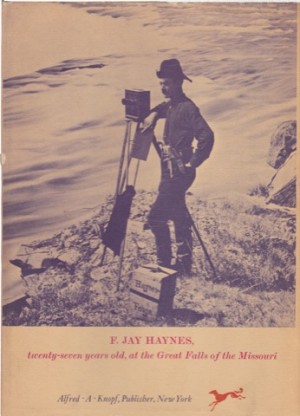
Hardcover. NY, Alfred A. Knopf, 1st, 1964, Book: Very Good, Dust Jacket: Good, Hardcover in a bright, price-clipped dust jacket. 414 pages, numerous b/w illustrations, owner's gift inscription on endpaper, slight foxing, text clean and sound. Small paper scar at bottom of spine where sticker was removed.
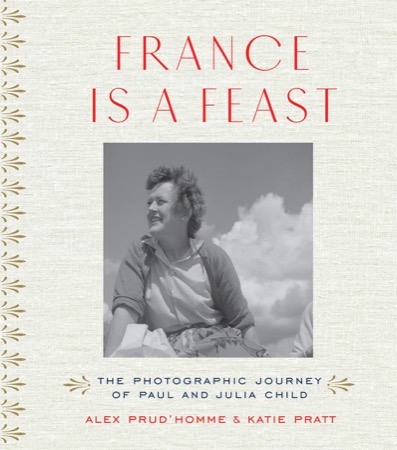
Hardcover. NY, Thames & Hudson, 1st, 2017, Book: Very Good, Dust Jacket: Very Good, Hardcover in a bright, unclipped dust jacket. "While it seems we've already seen photographs of every centimeter of Paris from every angle, it's a pleasure to look at the postwar city through Child's viewfinder. A trained draftsman, painter and lithographer, he had strong theories about composition and light, as well as a desire to distill 'some aspect of each place,' whether it be fishermen on the Seine, geometrically framed by the overlapping arches of a bridge, or an old woman unwittingly anchoring an angular shadow in the South of France. As accomplished as the photographs are, and as engaging a character as Paul Child is revealed to be, the real draw here will undoubtedly be his intimate portraits of Julia Child before she was, well, Julia Child. What ultimately makes this enjoyable celebration of his work an important part of the Child archive is that it illuminates the third side of that fabled triangle, connecting us to his love of Julia - and France." (NYTimes) Clean copy.
Hardcover. New Haven, CT, Yale University Press, 1st, 2015, Book: Very Good, Dust Jacket: Very Good, 224 pages. Hardcover with dust jacket. Very clean, like new copy still in publishers shrink wrap. Over 200 duotone images throughout. Tight copy. Born in Cork, Ireland, Frank Browne (1880-1960) was both a distinguished Jesuit and an accomplished photographer. At age 17, before commencing his studies for the priesthood, he embarked on a tour of Europe armed with a camera. Browne quickly discovered a strong affinity for photography, and continued to take photographs throughout his life. It was not until 1985, however-when Father Edward O'Donnell SJ discovered a large trunk in the Irish Jesuit Provincial's House and found it packed with negatives and photographs-that Browne was catapulted to international fame. Father Browne's remarkable life is recorded in the superb selection of images presented in this book. With wit and a sharp eye, he observed 20th-century Ireland; life as a Jesuit priest; his experience as a passenger on the first leg of the voyage of the Titanic in 1912; and his later travels throughout Europe, Egypt, Yemen, Ceylon, and Australia. This handsome, copiously illustrated volume offers a complete survey of the photographic work of an exceptional man.
Hardcover. NY, Scalo/DAP, 1st, 1996, Book: Very Good, Dust Jacket: Very Good, Hardcover, 572 pages, b&w photos. As a photographer for Life magazine from 1936 to 1959, John Phillips witnessed his share of troubles. His discerning and unflinching eye captured images as horrific as concentration camps and battlefield remnants with a kind of detachment that seemed to share his audience's senses of shock and outrage. He also found himself in the company of such illustrious leaders as FDR, Churchill, Stalin, and Tito during his prodigious travels across the world. Phillips, who died in 1996, was with the magazine from its inception, and his work helped to cement the publication's reputation for capturing unforgettable moments and images. Though plenty of lighter moments grace these pages, many of the included photographs are devoted to exposing one of the most turbulent periods of the 20th century, giving the book a historic sense of tragedy that can still be felt 50 years later.
Hardcover. Chicago, IL, NTC Publishing Group, 1st, 1996, Book: Very Good, Dust Jacket: Very Good, 256 pages. Hardcover with dust jacket. Clean, unmarked copy with only minor wear to dust jacket. A unique collection of photographs offers an intimate, behind-the-scenes visual chronicle of baseball players from the 1930s, '40s, and '50s
Hardcover. NY, Farrar, Straus and Giroux, 1st, 2017, Book: Very Good, Dust Jacket: Very Good, Hardcover in a bright dust jacket, 206 pages. Famously unabashed, W. Eugene Smith was photography's most celebrated humanist. As a photo essayist at Life magazine in the 1940s and '50s, he established himself as an intimate chronicler of human culture. His photographs of war and disaster, villages and metropolises, doctors and midwives, revolutionized the role of images in journalism, transforming photography for decades to come. When Smith died in 1978, he left behind eighteen dollars in the bank and forty-four thousand pounds of archives. He was only fifty-nine, but he was flat worn-out. His death certificate read "stroke," but, as was said of the immortal jazzman Charlie Parker, Smith died of "everything," from drug and alcohol benders to weeklong work sessions with no sleep. Lured by the intoxicating trail of people that emerged from Smith's stupefying archive, Sam Stephenson began a quest to trace his footsteps. In Gene Smith's Sink, Stephenson merges traditional biography with rhythmic digressions to revive Smith's life and legacy. Traveling across twenty-nine states, Japan, and the Pacific, Stephenson profiles a lively cast of characters, including the playwright Tennessee Williams, to whom Smith likened himself; the avant-garde filmmaker Stan Brakhage, with whom he once shared a Swiss chalet; the artist Mary Frank, who was married to his friend Robert Frank; the jazz pianists Thelonious Monk and Sonny Clark, whose music was taped by Smith in his loft; and a series of obscure caregivers who helped keep Smith on his feet. The distillation of twenty years of research, Gene Smith's Sink is an unprecedented look into the photographer's potent legacy and the subjects around him. Clean, bright copy.
Hardcover. New York , PowerHouse Books, 1st, 2006, Book: Very Good, Dust Jacket: Very Good, 192 pages. Hardcover with dust jacket. Clean, unmarked copy with only minor wear to dust jacket. Black and white pictures throughout. Every city-dweller has seen them, and ever city-dweller could list the telltale signs: the fur, the gold, the hats, the cars. They are the original macks, the original players. They are Big City pimps--the heroes of gangsta rap. Bob Adelman and Susan Hall dive headlong into their world in the classic investigative docudrama Gentleman of Leisure: A Year in the Life of a Pimp, an in-depth exploration of the underworld figures that populate our streets at night. The first book of its kind, Gentleman of Leisure, originally published in 1972 and now reproduced in a facsimile edition, is a collection of photographs and interviews dramatically documenting the private life of a pimp and his prostitutes. The people who appear in this book are not models: they are real people with real lives. Only their names have been changed to protect the guilty, their stories are real. Armed only with a camera and a tape recorder, Adelman and Hall entered the lives of the pimp Silky and his women. What they found flew in the face of prevailing prejudices: stripped of stereotype and myth, the pimps and whores that shared their tales were complex people embroiled in romantic dramas, with a code of behavior as intricate as the Mafia's, and a defined sense of self.

 "Diane Arbus: Portrait of a Photographerby: Lubow, Arthur")
 "Diane Arbus: Portrait of a Photographerby: Lubow, Arthur")
 "Diane Arbus: Revelations by: Arbus, Diane")
 "Double Click: Twin Photographers in the Golden Age of Magazinesby: Carol Kino")
 "Double Exposure: Resurveying the West with Timothy O'Sullivan America's Most Mysterious War Photographer by: Robert Sullivan")
 "Dream of Jerusalem, The: Lewis Larsson and the American Colony Photographersby: Grondahl, Mia")
 "Edie Factory Girlby: David Dalton and Nat Finkelstein")
 "Edie: Girl on Fireby: Painter, Melissa and David Weisman")
 "Enrique Meneses: A Reporter's Lifeby: Lafuente, Gumersindo")
 "Eve Arnold: Magnum Legacyby: Janine di Giovanni, Susan Meiselas , et al.")


 "Eye to I: An Autobiography of a Photographerby: Blumenfeld, Erwin")
 "Eyes of the World: Robert Capa, Gerda Taro, & the Invention of Modern Photojournalism by: Marc Aronson / Marina Budhos")
 "Family: Photographers Photograph Their Familiesby: Spencer-Wood, Sophie")
 "Family: Photographers Photograph Their Familiesby: Spencer-Wood, Sophie")
 "Fashion Climbing: A Memoir with Photographsby: Bill Cunningham")
 "Ferenc Berko: 60 Years of Photographyby: Berko, Ferenc")
 "Focus: The Secret, Sexy, Sometimes Sordid World of Fashion Photographersby: Gross, Michael")
 "Following the Frontier with F. Jay Haynes, Pioneer Photographer of the Old Westby: Tilden, Freeman")

 "France is a Feast: The Photographic Journey of Paul and Julia Childby: Alex Prud'homme, Katie Pratt")
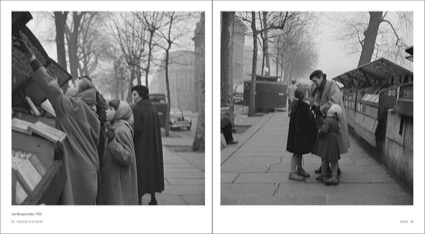
 "Frank Browne: A Life through the Lensby: Davison, Edwin (Editor)")
 "Free Spirit in a Troubled Worldby: John Phillips and Walter Keller")
 "Game That Was: The George Brace Baseball Photo Collectionby: Cahan, Richard")
 "Gene Smith's Sink: A Wide-Angle View by: Sam Stephenson")
 "Gentleman of Leisure: A Year in the Life of a Pimpby: Adelman, Bob (Photographer)")