Hardcover. NY, D.A.P. /Distributed Art Publishers, 1st, 2012, Book: Very Good, Dust Jacket: Very Good, Hardcover in a bright dust jacket, 288 pages. The Bitter Years was the title of a seminal exhibition held in 1962 at The Museum of Modern Art, New York, curated by Edward Steichen, and 2012 marks its fiftieth anniversary. The show featured 209 images by photographers who worked under the aegis of the U.S. Farm Security Administration (FSA) in 1935-41, as part of Roosevelt's New Deal. The FSA, set up to combat rural poverty during the Great Depression, included an ambitious photography project that launched many photographic careers, most notably those of Walker Evans and Dorothea Lange. The exhibition featured their work as well as that of ten other FSA photographers, including Ben Shahn, Carl Mydans and Arthur Rothstein. Their images are among the most remarkable in documentary photography--testimonies of a people in crisis, hit by the full force of economic turmoil and the effects of drought and dust storms. This volume includes all the photographs in the original show, in a structure and sequence that reflect those devised by Steichen for the exhibition. Clean copy. DOMESTIC SHIPPING ONLY.
Hardcover. Chicago, University of Chicago Press, 1st, 2010, Book: Very Good, Dust Jacket: Very Good, Hardcover in a bright dust jacket, 321 pages, b&w illustrations. In The Cruel Radiance, Susie Linfield challenges the idea that photographs of political violence exploit their subjects and pander to the voyeuristic tendencies of their viewers. Instead she argues passionately that looking at such images--and learning to see the people in them--is an ethically and politically necessary act that connects us to our modern history of violence and probes the human capacity for cruelty. Grappling with critics from Walter Benjamin and Bertolt Brecht to Susan Sontag and the postmoderns--and analyzing photographs from such events as the Holocaust, China's Cultural Revolution, and recent terrorist acts--Linfield explores the complex connection between photojournalism and the rise of human rights ideals. In the book's concluding section, she examines the indispensable work of Robert Capa, James Nachtwey, and Gilles Peress and asks how photography should respond to the increasingly nihilistic trajectory of modern warfare. Clean copy.
Hardcover. Wake Forest University Press, 1st, Book: Very Good, Dust Jacket: Very Good, Hardcover in a bright dust jacket. Introduction by Ciaran Carson. A collection of 70 duotone photographs that transforms the visually dramatic landscape of Donegal into a dramatic visual narrative of its places & people. Clean copy.
Softcover. Austin TX, University of Texas Press, 3rd Pr., 1994, Book: Very Good, Dust Jacket: None, Softcover, 264 pages including appendices, bibliography and index. Profusely illustrated with b&w and color photographs. Superb images, portraits of individuals and family groups, and their arts, convey a quality of intimacy and serenity. Scenes of daily activity show many details of the way the Navajos life has been lived. Clean, bright copy. DOMESTIC SHIPPING ONLY.
Hardcover. Berkeley CA, University of California Press, 1st, 2009, Book: Very Good, Dust Jacket: Very Good, Hardcover. Like new in publishers shrink-wrap. Text by Robert Flynn Johnson; introduction by Alexander McCall Smith. 208 pages; over 220 duo-toned and color photos; 10 x 10 inches. A collection of interesting vernacular photography.
Hardcover. NY, Aperture, 1st, 1978, Book: Very Good, Dust Jacket: Very Good, Hardcover, 160 pages. An evocative and candid collection of some of the first photographs made in that country. Along with descriptive captions, these images describe the daily life and surroundings of an era now passed. The people are as seen through Western eyes, and the places are as traversed by foreigners. These early photographers were explorers and adventurers. They lugged huge cameras with heavy glass plates over rugged, unfamiliar terrain. Interspersed throughout the book are passages from significant texts and travelers' diaries, observations and opinions that echo and illuminate the images. For many Chinese, these photographers were the first white faces ever seen, and they carried with them previously undreamed-of contraptions. For all this, there is an unguarded air to many of the portraits, and the street scenes have the candid look of today's street photographer.
Hardcover. NY, Epicenter Communications / Random House, 1st, 1993, Book: Very Good, Dust Jacket: Very Good, Hardcover in a bright dust jacket, 272 pages. "contains over 230 of the most compelling photographs and images of healers in the battlefield, many of them in color, culled from over one hundred archives in more than a dozen countries... Beginning with Matthew Brady's photographs of surgery at Antietam during the Civil War... through two world wars, to Vietnam, the Gulf War, and regional struggles ongoing today." Clean copy. DOMESTIC SHIPPING ONLY.
Hardcover. New York , Phaidon, 1st , 2004, Book: Very Good, Dust Jacket: Very Good, Hardcover. Like new in publisher's shrink-wrap. Unpaginated (432 pages ), with 278 black-and-white plates. 11-3/4 x 8-3/4 inches. An epic collection of poignant and often controversial stories photographed and written by acclaimed social documentary photographer Eugene Richards.
Hardcover. Chicago, University of Chicago Press , 1st, 2015, Book: Very Good, Dust Jacket: Very Good, Hardcover in a bright dust jacket. 280 pages. Preface by Geoff Dyer. Essay by David Van Reybrouck. Includes 20 color plates and 80 halftones. Still in publisher's shrinkwrap. The First World War presents a startlingly different perspective, one based on rare glass plate photographs, that reveals the war with previously unseen, even uncanny, clarity. Scanned from the original plates, with scratches and other flaws expertly removed, these oversized reproductions offer a wealth of unusual moments, including scenes of men in training, pictures of African colonial troops on the Western front, landscapes of astonishing destruction, and postmortem portraits of Belgian soldiers killed in action. Readers previously familiar with only black-and-white or sepia-toned prints of the hostilities will be riveted by the book's many authentic color photographs, products of the early autochrome method. From children playing war games to a wrenching deathbed visit, these images are extraordinary not only for their subject matter, but also for the wide range of emotions they evoke.
Softcover. London, The Observer/Thames & Hudson, 1st, 1980, Book: Very Good, Dust Jacket: None, Softcover, 120 full-page black-and white plates. Semi-stiff pictorial covers, titled in purple. Published to accompany an exhibition at the National Portrait Gallery. Introduction by Patrick O'Donovan. This collection showcases the distinctive photographic work of Jane Bown, a renowned British photographer known for her ability to capture candid and evocative portraits with a "gentle eye." Clean, bright copy.
Hardcover. Millbrae CA, Celestial Arts, 1st, 1981, Book: Very Good, Dust Jacket: Very Good, Hardcover, oblong format in a bright dust jacket. 168 pages, map frontis. Period photographs throughout primarily from the San Francisco Public Library collection, as well as the Bancroft Library and Presidio Army Museum collections among others. Clean copy.
Hardcover. Museums of San Francisco/ DelMonico Books, 1st, Book: Very Good, Dust Jacket: Very Good, Hardcover in a bright dust jacket. In 1974 the photojournalist and art photographer Steve Kahn began a series of provocative black-and-white Polaroids of porn-industry models posing in seedy Hollywood apartments. What began as an exploration of staged photography and portraiture evolved over the next three years into "The Hollywood Suites," a multi-faceted conceptual project in which Kahn turned his lens away from the models to deconstruct their seemingly mundane and monotonous surroundings. Endlessly fascinating, Kahn's series touches on myriad themes including bondage, containment, isolation, and the poetics of absence. This volume includes more than 100 works arranged in chronological groupings based on the original Polaroid film sessions and features essays that offer a scholarly assessment of a groundbreaking work. Published on the occasion of the exhibition "Steve Kahn: The Hollywood Suites" at the de Young museum, San Francisco, from September 9, 2018 to March 31, 2019.
Hardcover. Museums of San Francisco/ DelMonico Books, 1st, Book: Very Good, Dust Jacket: Very Good, Hardcover in a bright dust jacket. In 1974 the photojournalist and art photographer Steve Kahn began a series of provocative black-and-white Polaroids of porn-industry models posing in seedy Hollywood apartments. What began as an exploration of staged photography and portraiture evolved over the next three years into "The Hollywood Suites," a multi-faceted conceptual project in which Kahn turned his lens away from the models to deconstruct their seemingly mundane and monotonous surroundings. Endlessly fascinating, Kahn's series touches on myriad themes including bondage, containment, isolation, and the poetics of absence. This volume includes more than 100 works arranged in chronological groupings based on the original Polaroid film sessions and features essays that offer a scholarly assessment of a groundbreaking work. Published on the occasion of the exhibition "Steve Kahn: The Hollywood Suites" at the de Young museum, San Francisco, from September 9, 2018 to March 31, 2019.
Hardcover. NY, powerHouse, 1st, 2009, Book: Very Good, Dust Jacket: Very Good, Hardcover, 112 pages. Established in 1866, the Ku Klux Klan still remains one of America's most secretive organizations. New York photojournalist Anthony Karen first transcended that secrecy several years ago when he got the opportunity to photograph a KKK cross-lighting ceremony. Since then, Karen has been documenting Klan organizations throughout the country. In The Invisible Empire: Ku Klux Klan, those photographs are compiled to form an absorbing document of one of the most notorious groups in history. Taken with unrestricted access, Karen's images bring us deep inside America's most private white nationalist organizations. Beginning with a brief introduction into the history of the Klan, the book provides detailed visual accounts of modern-day Klan life, including candid shots of rallies, individual portraits of Klansmen and women, as well as a look at the naturalization process for new members. Presented in intimate profiles are: a functioning Klan ministry, a group that has merged National Socialism with Klan ideologies, and a 58-year-old seamstress who makes custom Klan robes, among others. Accompanied by quotations from the late Dale Fox, Imperial Wizard of The Brotherhood of the Klans, The Invisible Empire: Ku Klux Klan offers an unprecedented glimpse into the shadowy society and its mysterious inner workings.
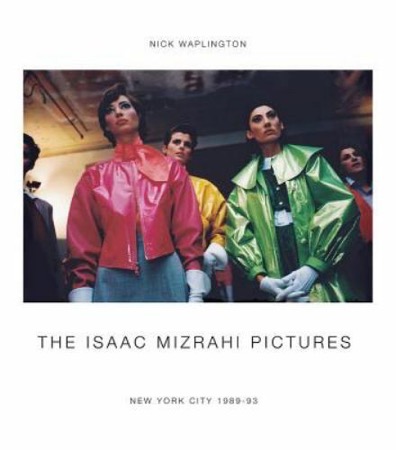
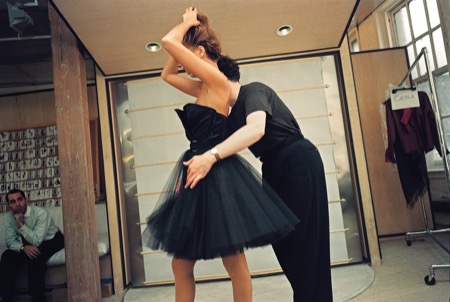
Hardcover. Damiani, 1st, 2016, Book: Very Good, Dust Jacket: None, Hardcover in pictorial boards. 168 pages, color photos. From 1989 to 1993, New York fashion designer Isaac Mizrahi granted the British photographer Nick Waplington rare backstage access to photograph every detail of the designer's fitting sessions in the weeks before his twice-yearly fashion shows. Combining Waplington's gritty verite style with Mizrahi's haute couture sensibilities, the resulting images offer a candid glimpse into the world of fashion when supermodels including Cindy Crawford, Christy Turlington and Naomi Campbell reigned supreme. At the same time, Waplington set out to document the wildly creative nightlife of the '90s "club kid" culture in New York, juxtaposing his images of uptown style with downtown looks and taking pictures at some of the city's most infamous clubs, such as the Pyramid Club and Save the Robots. Clean copy in publisher's shrinkwrap.
Hardcover. Damiani, 1st, 2016, Book: Very Good, Dust Jacket: None, Hardcover in pictorial boards. 168 pages, color photos. From 1989 to 1993, New York fashion designer Isaac Mizrahi granted the British photographer Nick Waplington rare backstage access to photograph every detail of the designer's fitting sessions in the weeks before his twice-yearly fashion shows. Combining Waplington's gritty verite style with Mizrahi's haute couture sensibilities, the resulting images offer a candid glimpse into the world of fashion when supermodels including Cindy Crawford, Christy Turlington and Naomi Campbell reigned supreme. At the same time, Waplington set out to document the wildly creative nightlife of the '90s "club kid" culture in New York, juxtaposing his images of uptown style with downtown looks and taking pictures at some of the city's most infamous clubs, such as the Pyramid Club and Save the Robots. Clean copy.
Hardcover. NY, Knopf, 1st, 2009, Book: Very Good, Dust Jacket: Very Good, Hardcover, 268 pages. After having a breakdown in the midst of working on a photo-essay on Pittsburgh in 1957, legendary photographer W. Eugene Smith holed up in a loft in New York's Chelsea, in the Tin Pan Alley area. There, over the next several years, he became deeply embroiled in the New York City jazz scene, opening his home as a practice and performance space for some of the great artists of mid-century jazz, including Thelonious Monk, Zoot Sims and many others. Of course, he took pictures--both of musicians and of a window-size view of mid-century New York--and also wired the place for recording, logging hours and hours of tape, capturing the music and the talk around it. These photos and tapes had been thought lost--the stuff of rumor, buried in Smith's archive--until Stephenson dug them out and culled the best, along with transcriptions of material from the tapes, for this landmark book. Smith's stunning use of contrast makes figures like Monk seem dramatic and completely ordinary at the same time. The photos of the city offer a rare glimpse into a neighborhood being itself when it thought no one was watching. This will be an essential book for jazz fans, photography lovers and those interested in the history of New York.
Hardcover. NY, Abrams, 1st, 2007, Book: Very Good, Dust Jacket: Very Good, Hardcover, 200 pages. The photography that Americans invented in the 1960s and ?70s was as fresh and vital as their music. Photographers of those years believed in their medium?s unlimited capacities of expression. Between the publication of Robert Frank?s The Americans (1958) and the coming of post-modernism, the photographers featured in this book embarked on their own personal quests. Whether they roamed the world, like Lee Friedlander and Garry Winogrand, or sought out its dark corners, like Larry Clark and Nan Goldin, they shared a fierce devotion to their medium and its unique qualities. The generation that created this work knew it was remarkable. Today, with Gilles Mora as a guide, we can look back on it with even greater appreciation, since we know that these were indeed the last photographic heroes. Also includes work by Joel Meyerowitz, William Eggleston, and many others.
Hardcover. NY, Abrams, 1st, 2007, Book: Very Good, Dust Jacket: Very Good, Hardcover, 200 pages. The photography that Americans invented in the 1960s and ?70s was as fresh and vital as their music. Photographers of those years believed in their medium?s unlimited capacities of expression. Between the publication of Robert Frank?s The Americans (1958) and the coming of post-modernism, the photographers featured in this book embarked on their own personal quests. Whether they roamed the world, like Lee Friedlander and Garry Winogrand, or sought out its dark corners, like Larry Clark and Nan Goldin, they shared a fierce devotion to their medium and its unique qualities. The generation that created this work knew it was remarkable. Today, with Gilles Mora as a guide, we can look back on it with even greater appreciation, since we know that these were indeed the last photographic heroes. Also includes work by Joel Meyerowitz, William Eggleston, and many others.
Hardcover. NY, Abradale Press, reprint, 1995, Book: Very Good, Dust Jacket: Very Good, Hardcover in a bright, price-clipped dust jacket. A collection of photograph reproductions and accompanying text of O. Watson Link's work on the Norfolk and Western Railway.
Hardcover. NY/London, Booth-Clibborn, 1st, 2011, Book: Very Good, Dust Jacket: Very Good, Hardcover, 300 pages. Basil Hyman, a keen amateur photographer, took hundreds of photographs of everyday life in Britain during the 1950s. The Lost Album is a nostalgic look back at this long-gone era, filled with photographs made during a time of enormous social change--just after World War II and before the "Swinging Sixties"--and a wealth of ephemera: theater tickets and playbills, newspaper advertisements, ration books, and much more. Special inserts include actual facsimiles of some of these now-obscure items--talismans from a slower time, when formality, pride, and courtesy prevailed. There are special sections on two major events: the Festival of Britain in 1951, and the Coronation of Queen Elizabeth II in 1953. With brief, lively introductions and captions, this is a captivating snapshot of how people lived and played in Britain in those years.
Softcover. GR, Steidl, 1st, 2010, Book: Very Good, Dust Jacket: None, Two softcover volumes in a card slipcase. 750 total pages. Lost since 1939, the Mexican suitcase contains nearly 4,500 negatives documenting the Spanish Civil War by Robert Capa, Chim (David Seymour), and Gerda Taro. These films had traveled from Paris via the south of France to Mexico City, where, almost seventy years later, they were rediscovered and now reside in the collection of the International Center of Photography.
Softcover. GR, Steidl, 1st, 2010, Book: Very Good, Dust Jacket: None, Two softcover volumes in a card slipcase. 750 total pages. Lost since 1939, the Mexican suitcase contains nearly 4,500 negatives documenting the Spanish Civil War by Robert Capa, Chim (David Seymour), and Gerda Taro. These films had traveled from Paris via the south of France to Mexico City, where, almost seventy years later, they were rediscovered and now reside in the collection of the International Center of Photography.
Hardcover. Phaidon, 1st, 2000, Book: Very Good, Dust Jacket: Very Good, Hardcover, 191 pages. The story of the making of the film, The Misfits, starring Marilyn Monroe, Clark Gable, Montgomery Clift. The Magnum Photographic Agency was given exclusive rights to photograph the making of the film, and sent nine of it's most famous photographers; Dennis Stock, Inge Morath, Ernst Erwitt, Bruce Davidson, Henri Cartier-Bresson, Cornell Capa, and Eve Arnold. With 200 of the photographs reproduced here, with an essay and interview with Arthur Miller. As new in original shrinkwrap.

 "The Bitter Years: Edward Steichen and the Farm Security Administration Photographsby: Francoise Poos, Jean Back, Gabriel Bauret")
 "The Cruel Radiance: Photography and Political Violenceby: Linfield, Susie")
 "The Donegal Picturesby: Giese, Rachel")
 "The Enduring Navaho by: Gilpin, Laura")
 "The Face in the Lens: Anonymous Photographsby: Johnson, Robert Flynn")
 "The Face of China: As Seen by Photographers and Travelers 1860-1912by: L. Carrington Goodrich and Nigel Cameron")
 "The Face of Mercy: A Photographic History of Medicine at War by: Naythons, Matthew (produced by); with narrative by Sherwin B. Nuland, M.D.; [Prologue by William Styr")
 "The Fat Baby : Storiesby: Richards, Eugene")
 "The First World War: Unseen Glass Plate Photographs of the Western Front by Carl De Keyzerby: Carl De Keyzer/David Van Reybrouck")
 "The Gentle Eye: Photographs by Jane Bown of The Observer by: Jane Bown")
 "The Great San Francisco Earthquake and Fire 1906by: Saul, Eric; Denevi, Don")
 "The Hollywood Suitesby: Steve Kahn")
 "The Hollywood Suitesby: Steve Kahn")
 "The Invisible Empire: Ku Klux Klanby: Anthony S. Karen")
 "The Isaac Mizrahi Pictures: New York City 1989-1993 Photographs by Nick Waplingtonby: Waplington, Nick")
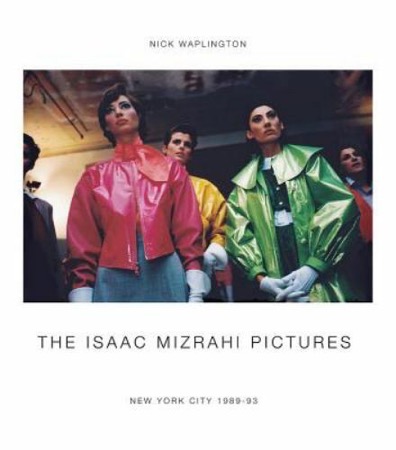
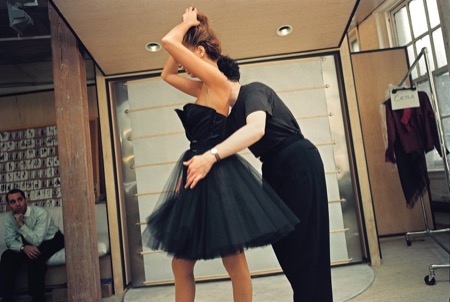
 "The Isaac Mizrahi Pictures: New York City 1989-1993 Photographs by Nick Waplingtonby: Waplington, Nick")
 "The Jazz Loft Project: Photographs and Tapes of W. Eugene Smith from 821 Sixth Avenue, 1957-1965by: Sam Stephenson")
 "The Last Photographic Heroes: American Photographers of the Sixties and Seventiesby: Gilles Mora")
 "The Last Photographic Heroes: American Photographers of the Sixties and Seventiesby: Gilles Mora")
 "The Last Steam Railroad in Americaby: Garve, Thomas and Winston O. Link.")
 "The Lost Album: A Visual History of 1950s Britainby: Hyman, Basil")
 "The Mexican Suitcase: The Legendary Spanish Civil War Negatives of Robert Capa, Gerda Taro, and David Seymour by: Cynthia Young; David Balsells")
 "The Mexican Suitcase: The Legendary Spanish Civil War Negatives of Robert Capa, Gerda Taro, and David Seymour by: Cynthia Young; David Balsells")
 "The Misfits: Story of a Shootby: Arthur Miller, Serge Toubiana, et al.")