Hardcover. London, Faber & Faber, 1st, 1962, Book: Very Good, Dust Jacket: Very Good, Hardcover. B&W drawings by C. Walter Hodges. 189 pages. Light edgewear to dust jacket.
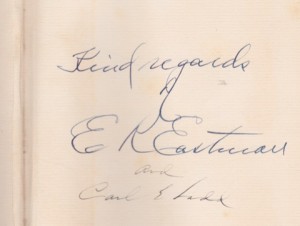
Hardcover. NY, Nesterman Publishing., 1st, 1943, Book: Very Good, Dust Jacket: None, Hardcover, maroon cloth stamped in gilt. 263 pages, b/w illustrations by Al Coleman. SIGNED BY BOTH AUTHORS on the front fly leaf. A memoir of growing up on farms in central and western New York before the turn of the century. A hilarious account that recalls all the joys and a few of the mishaps that accompanied Horse and Buggy days on the farm. Clean, tight copy.
Hardcover. New Haven, Yale University Press, 1st, 1937, Book: Very Good, Dust Jacket: None, 973 pages over two volumes, illustrated throughout in b&w. Dark blue cloth with gilt titles to spines. No dust jackets. Minor wear to covers, else a neat, clean set.
Hardcover. NY, Oxford University Press, 1st, 2011, Book: Very Good, Dust Jacket: Very Good, Hardcover in a bright dust jacket, 229 pages, b&w illustrations. The searing accounts of Aleksandr Solzhenitsyn, Evgeniia Ginsberg and Varlam Shalamov opened the world's eyes to the terrors of the Soviet Gulag. But not until now has there been a memoir of life inside the camps written from the perspective of an actual employee of the Secret police. In this riveting memoir, superbly translated by Deborah Kaple, Fyodor Mochulsky describes being sent to work as a boss at the forced labor camp of Pechorlag in the frozen tundra north of the Arctic Circle. Only twenty-two years old, he had but a vague idea of the true nature of the Gulag. What he discovered was a world of unimaginable suffering and death, a world where men were starved, beaten, worked to death, or simply executed. Mochulsky details the horrific conditions in the camps and the challenges facing all those involved, from prisoners to guards. He depicts the power struggles within the camps between the secret police and the communist party, between the political prisoners (most of whom had been arrested for the generic crime of "counterrevolutionary activities") and the criminal convicts. And because Mochulsky writes of what he witnessed with the detachment of the engineer that he was, readers can easily understand how a system that destroyed millions of lives could be run by ordinary Soviet citizens who believed they were advancing the cause of socialism. Clean copy.
Hardcover. Fairfax, VA, National Rifle Association, reprint, 1995, Book: Very Good, Dust Jacket: None, Hardcover, 306 pages, illustrated throughout in b/w. Red embossed faux leather with gilt title and decor, all edges gilt, red ribbon marker. Clean, tight copy.
Softcover. Burlington VT, The Horn Company, 2nd pr., 1980, Book: Very Good, Dust Jacket: None, Softcover, 75 pages, cream wrappers with black lettering, gun stock on cover. First published in 1975, this second edition has a glued binding that's not destined to last. All there and in good condition. Scarce reference.
Hardcover. New York , Harry N. Abrams, 1st, 1994, Book: Very Good, Dust Jacket: Very Good, Like new in publishers shrink-wrap. "Christian M. Nebehay, a leading Klimt scholar who knew the artist personally in the last year of his life, places Klimt in the context of the society which he both shocked and delighted. The best of his abundant sketches and the finished paintings which they precede are brought together for the first time, juxtaposed to alllow direct comparison" With 370 illustrations including 135 plates in full color.
Hardcover. Los Angeles, J. Paul Getty Museum, 1st, 2002, Book: Very Good, Dust Jacket: Very Good, 416 pages, profusely illustrated. After years of research, this complete retrospective offers, as no volume before it, an assessment of Le Gray's important place in the history of photography. His work had remained largely unknown by the general public until he was rediscovered in the 1960s and was deemed by connoisseurs to be the Monet of photography. Gustave Le Gray began as a young painter in Rome, then became a fashionable portrait photographer in Paris. He received commissions from Napoleon Ill, and astonished viewers with his painterly landscapes and ravishing seascapes. Facing bankruptcy, he feld Paris with Alexandre Dumas to Palermo, travelled to the Middle East, and finally settled in Egypt, where he became drawing master to the ruler's children and continued to make photographs until his death in 1884. Le Gray's work had remained largely unknown by the general public until he was rediscovered in the 1960s.
Hardcover. London, Jonathan Cape, 1st, 1925, Book: Very Good, Dust Jacket: None, Hardcover, blue cloth covers. Selection of the writings of Henry William Massingham (1860-1924), an English journalist and editor of The Nation from 1907 to 1923. 368 pages, frontis portrait. Clean, unmarked.
Hardcover. Chicago, IL, University of Chicago Press, 1st, 1987, Book: Very Good, Dust Jacket: Very Good, 171 pages. Hardcover with dust jacket. Minor foxing to front flyleaf. An otherwise clean, unmarked copy. Black and white photographs throughout. SIGNED BY AUTHOR ON FRONT FLYLEAF.
Softcover. Old Lyme CT, Lyme Historical Society, 1995, Book: Very Good, Softcover, 162 pages. Part of the Lyme Heritage Series: a series of essays about Hamburg Cove, Lyme, Connecticut, accompanied by photographs/paintings in b&w and color. Clean copy.
Hardcover. NY, Walker Books, 1st, 1997, Book: Very Good, Dust Jacket: Very Good, Hardcover in a bright, unclipped dust jacket, 214 pages. Over the past couple of decades, our national debt has become a favorite political football for Democrats and Republicans alike. Yet few Americans seem aware that the debt has a long and (mostly) honorable history. Alexander Hamilton considered it a kind of political Krazy Glue, which would also spur American industry by keeping taxes high. This borrowing power enabled the North to win the Civil War without wrecking its economy and rescued us from the Great Depression. John Steele Gordon doesn't deny the dangers of an entire nation living on credit; indeed, he believes that our fiscal affairs are a mess. But he puts this mess in fascinating perspective. And he's quick to see the human side of economic behavior: "One problem," he writes, "is that human nature predisposes us to recognize depression easily and quickly, but prosperity, like happiness, is most easily seen in retrospect." Name on front fly leaf, otherwise clean.
Hardcover. NY, G.P. Putnam's Sons, 1st, 1874, Book: Very Good, Dust Jacket: None, Hardcover, 256 pages. Fold-out frontis, b&w Illustrations, very nice, clean copy. Written by "two of its teachers." Includes "Fifty Cabin and Plantation Songs" arranged by Thomas P. Fenner. Illustrated with a four-fold engraved frontispiece, depicting several of the school's buildings as seen from the water, and many other engravings. An interesting account of the school, including a brief history of Virginia and of slavery and its aftermath in that state, and one of the earliest publications of slave music.
Hardcover. New Haven, CT, Yale University Press, 1st, 2012, Book: Very Good, Dust Jacket: Very Good, 272 pages. Hardcover with dust jacket. Very clean, like new in publishers shrink-wrap. This book features specially commissioned photographs of an extraordinary, newly formed collection of fashionable handbags that date from the 16th century to the present day. It has been acquired for exhibition in the first museum devoted to the handbag, in Seoul, South Korea. The project is a commission undertaken by experimental exhibition-maker Judith Clark, whose innovative practices are revealed in Handbags.
Hardcover. Washington DC, Government Printing Office, 1st, 1948, Book: Very Good, Dust Jacket: None, Hardcover, olive green cloth hardcover with gilt lettering on spine. 986 pages, includes drawings, photographs, maps (some fold-out) and an extensive bibliography. Super condition with just a small ownership sticker on inside front cover, otherwise a clean, tight copy. DUE TO WEIGHT, DOMESTIC SHIPPING ONLY.
Hardcover. Washington DC, Government Printing Office, 1st, 1949, Book: Very Good, Dust Jacket: None, Hardcover, olive green cloth hardcover with gilt lettering on spine. This is Smithsonian Institution Bureau of American Ethnology Bulletin 143; 818 pages, includes drawings, photographs, maps and an extensive bibliography. Super condition with just a small ownership sticker on inside front cover, otherwise a clean, tight copy. DUE TO WEIGHT, DOMESTIC SHIPPING ONLY.
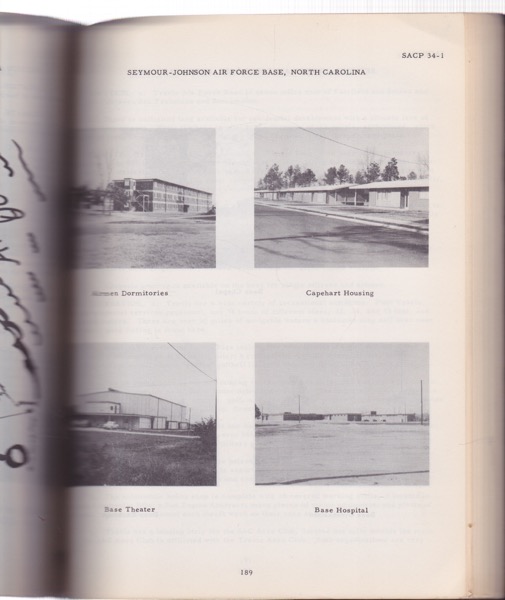
Softcover. Washington DC, United States Air Force, 1959, Book: Very Good, Dust Jacket: None, Softcover, unpaginated, approximately 300 stapled pages. A guide to the SAC's worldwide bases, circa 1959. 8 1/2 X 11", three hole punched. Profusely illustrated with b&w photos of airfields, barracks, NCO clubs, housing for airmen and other facilities covering bases in the states, England, Guam, Germany, etc. Also maps showing locations. Not classified in the early days of the Cold War. Front fly leaf with and introduction by Thomas Power, Commanding General.
Hardcover. Cambridge, Mass., The MIT Press, 1st, 2000, Book: Very Good, Dust Jacket: Very Good, Hardcover, 351 pages, illustrated throughout in color. SIGNED AND INSCRIBED BY AUTHOR on half-title and title page. Clean, unmarked copy with only minor wear to dust jacket.
Hardcover. Cambridge, Mass., The MIT Press, 1st, 2000, Book: Very Good, Dust Jacket: Very Good, Hardcover, 351 pages, illustrated throughout in color. SIGNED BY AUTHOR on half-title and title page. Clean, unmarked copy with only minor wear to dust jacket.
Softcover. New Haven CT, Yale University Press, reprint, 1996, Book: Very Good, Dust Jacket: None, Softcover, 248 pages. Copybooks and the Palmer method, handwriting analysis and autograph collecting - these words conjure up a lost world, in which people looked to handwriting as both a lesson in conformity and a talisman of individuality. In this engaging history, ranging from colonial times to the present, Tamara Plakins Thornton explores the shifting functions and meanings of handwriting in America.
Hardcover. NY, McGraw-HIll Books, 1st, 1975, Book: Very Good, Dust Jacket: Very Good, Hardcover in a bright, price-clipped dust jacket. 412 pages with index, b&w photos. A chronicle of the Hollywood that was, a mythic playground where cinema of both enduring and dubious value was created. .Into this world of illusion and disillusion came some of the greatest literary figures in our history. This is their story, from the 1930's and the early days of sound to the House Un-American Activities Committee. Clean copy.
Hardcover. Berkeley CA, University of California Press, 1st, 1971, Book: Very Good, Dust Jacket: Good, Hardcover in an unclipped, edgeworn dust jacket, 271 pages with b&w illustrations. No markings.
Hardcover. US, NBM Publishing, 1st, 2008, Book: Very Good, Dust Jacket: Very Good, Hardcover, 110 pages, illustrated throughout in color and b&w. Opper was already a quite successful cartoonist/illustrator for the prestigious Puck magazine when William Randolph Hearst lured him out to create a comic strip for the New York Journal. While a step down from (relatively) high to low brow, Opper jumped at the chance and out came ?Happy Hooligan" an un-heroized vagrant who ends up very badly at the end of each strip, no matter how much good he might mean. His perennial demise surely went on to inspire Wile E. Coyote or Mr. O, especially as his own cowardice and unworthiness contributes to his hilarious woes. This second entry in ?Forever Nuts' presents a collection of the better early full color Sundays. Clean, tight copy.

 "Growing Up in the 13th Centuryby: Duggan, Alfred")
 "Growing Up in the Horse and Buggy Days (SIGNED COPY)by: Ladd, C. E. and Eastman, E. R.")

 "Guide to the History and the Historic Sites of Connecticut (2 volumes)by: Crofut, Florence S. Marcy")
 "Gulag Boss: A Soviet Memoirby: Fyodor Vasilevich Mochulsky /Deborah Kaple (Transl.)")
 "Guns of the Old Westby: Chapel, Charles Edward")
 "Gunsmiths and Gunmakers of Vermont: A Partial Checklist from the Early Years Through 1900by: Horn, Warren R.")
 "Gustav Klimt: From Drawing to Paintingby: Nebehay, Christian M.")
 "Gustave Le Gray, 1820-1884by: Aubenas, Sylvie")
 "H. W. M. a Selection from the Writings of H. W. Massinghamby: Massingham H. W.")
 "H.H. Richardson: Architectural Forms for an American Society (SIGNED)by: O'Gorman, James F.")
 "Hamburg Cove: Past and Present by: Stanley Schuler (Ed.)")
 "Hamilton's Blessing: The Extraordinary Life and Times of Our National Debtby: John Steele Gordon")
 "Hampton and Its Students by Two of Its Teachers with 50 Cabin and Plantation Songsby: Armstrong, Mrs. M.I. and Helen W. Ludlow")
 "Handbags: The Making of a Museumby: Clark, Judith")
 "Handbook of Old Burial Hill, Plymouth, Massachusetts: Its History, Its Famous Dead, and Its Quaint Epitaphsby: Perkins, Frank H.")
 "HANDBOOK OF SOUTH AMERICAN INDIANS Volume 3: The Tropical Forest Tribes by: Steward Julian H. (ed.)")
 "HANDBOOK OF SOUTH AMERICAN INDIANS Volume 5: The Comparative Ethnology of South American Indians by: Steward Julian H. (ed.)")
 "Handbook of Strategic Air Command Bases: SACP 34-1by: N/A")

 "Hands on the Land: A History of the Vermont Landscape (SIGNED COPY)by: Albers, Jan")
 "Hands on the Land: A History of the Vermont Landscape (SIGNED COPY)by: Albers, Jan")
 "Handwriting in America: A Cultural History by: Tamara Plakins Thornton")
 "Hanging on in Paradiseby: Guiles, Fred Lawrence")
 "Hanoverian London, 1714-1808 by: Rude, George")
 "Happy Hooligan (Forever Nuts: Classic Screwball Strips)by: Opper, Frederick Burr")