Softcover. US, Stichting Kunstboek/DAP, 1st, 2005-03-15, Book: Very Good, Dust Jacket: None, Softcover, 160 pages with 120 color plates. Like new in publishers shrink-wrap. Founded in Berlin in 1989, Buro Kiefer is one of today's most important, innovative and respected international landscape design firms. Combining both a mathematic and aesthetic logic, Buro Kiefer's work responds to the ever-expanding responsibilities of landscape design: interaction with the fields of architecture, urban and regional development, and even the cultural tradition of garden art. Presented in this book are many of the firm's important projects, each of which shows a seamless blending of town and landscape, and a contemporary understanding of urban space.
Hardcover. Ostfildern GR, Hatje Cantz, 1st, 2011, Book: Very Good, Dust Jacket: None, Like new in publisher's shrink-wrap. Catherine Opie (born 1961) has forged new idioms in both portrait and landscape photography, frequently combining the two genres to explore how people occupy different landscapes--from high school football players on the field to ice fishermen on frozen lakes, to surfers waiting for the next wave.
Hardcover. NY, Fordham University Press, 1st, 2001, Book: Very Good, Dust Jacket: Very Good, Hardcover in a bright, unclipped dust jacket. With more than 250 photographs, in color as well as black and white, this attractive book captures the diversity of today's Park against the kaleidoscopic background of the changing seasons.
Hardcover. Pound Press, 1st, 2009, Book: Very Good, Dust Jacket: Very Good, Hardcover in a bright dust jacket. Photographing the intersection between culture and nature for over 25 years, Virginia Beahan creates luminous and finely detailed images with an 8x10 view camera that describe the complexities of this relationship in diverse geographic settings. Her eight-year project in the waning years of Fidel Castro's revolutionary Cuba resulted in a major 2009 monograph entitled CUBA singing with bright tears. The images depict a country both tragic and beautiful, struggling beneath the weight of history. Larger-than-life images of revolutionary heroes Che Guevara and Jose Marti populate the island. The Bay of Pigs is sublime and treacherous; an atmospheric body of water rimmed with jagged black coral is the same unwelcoming shore that greeted invading CIA-trained Cuban exiles over forty-seven years ago. On a billboard, Fidel Castro reminds us that the US might invade again, and if so, he "will die fighting." Virginia Beahan's work falls within the tradition of great American photographers such as Walker Evans and Robert Adams. Her luminous and detailed large-format photographs reveal a landscape imbued with nuanced stories of culture shaped by geography and human action. Cuba's long and complicated relationship with the United States is part of this unfolding drama. Clean, bright copy.
Hardcover. Vilnius, Baltos Lankos, 1st, 1995, Book: Very Good, Dust Jacket: Very Good, 69 duotone plates, images taken by the Lithuanian photographer Jozef Chechowicz (1819-1888). Mostly landscapes of the city and it's buildings, some with people. Beautifully produced volume, limited to 2000 copies. Light edgewear to dust jacket.
Hardcover. NY, Norton, 1st, 2003, Book: Very Good, Dust Jacket: Very Good, Hardcover, 160 pages. A tribute to the barn by the master documentarian of our time. As an elemental part of our landscape and our history, barns evoke childhood memories for many of us, recollections of a simpler way of life. Regardless of their size or shape, their forms follow their functions. They are honest. They are beautiful. And they are rapidly vanishing. Across the land we see abandoned farms with barns falling down, being torn down, and only occasionally being converted to other uses. As urban sprawl eats up the countryside and food-producing Goliaths put small farmers out of business, the need for old barns has diminished. For most of his life as a photographer, David Plowden has admired and photographed barns. In recent years, as their disappearance accelerated, he made it his mission to document these beautiful structures, before they too are lost. The result is this beautiful book, his hymn to the American barn. 130 duotone photographs.
Hardcover. Benteli Verlags , 1st, 2017, Book: Very Good, Dust Jacket: None, Oblong hardcover with a pictorial label, 192 pages. The faded remnants of a glorious past are captured in all their morbid beauty, in images that manifest the ephemeral and go beyond all conventional associations and conceptions of the American South: Days Gone By combines carefully crafted photographs from the past ten years with a cultural history of the region's social and structural changes. With an unflinching gaze, Jorg Rubbert presents the demise of countless small towns between Georgia, Mississippi and Texas, their suffering particularly tangible following the financial crisis. Rural towns, idyllic at first glance, are soon revealed as forgotten relics of times long past.
Softcover. Los Angeles, Hennessey & Ingalls, 1st US, 2000, Book: Very Good, Dust Jacket: None, Softcover, 130 pages, b&w and color photographs. A pictorial study of dead factories, rail-yards, harbors, and aircraft boneyards, originally published in Germany in 1981. Clean copy.
Hardcover. Scalo, 1st, 1995, Book: Very Good, Dust Jacket: Very Good, Hardcover in a bright dust jacket, 308 pages. In 1987 Dirk Reinartz set out on his sad itinerary: Dachau, Auschwitz, Ravensbruck, Treblinka. The list goes on. Seven years later he compiled this series of 200 black-and-white photographs of the 24 ruins of the death camps. In 279 chilly, gray photographs taken at 25 different Nazi concentration camps, Reinartz successfully portrays the very purpose--death--of these horrific places. In the photographs, no figure intrudes on the stark emptiness and brutal orderliness of the camps' architecture. The photographs are carefully composed, and their tonal range deliberately compressed, so that there is no brightness in them, only shades of gray. Nor is there any shred of sentiment, only emptiness and silence. In his text, Krockow contrasts the truth of the pictures and the superficial, "amusement park" ambiance that greets actual visitors to the camps today. He meditates as well on the failings of the human mind that allowed the power to kill to go unchecked. Disturbing photographs, thoughtful text. Clean copy.
Hardcover. San Francisco, Chronicle, reprint, 2007, Book: Very Good, Dust Jacket: Very Good, Softcover, 80 pages illustrated in color. A collection of gorgeous desert landscapes.
Hardcover. Baltimore, Johns Hopkins University Press, 1st, 1998, Book: Very Good, Dust Jacket: Very Good, Hardcover in a dust jacket with light fading to spine, 96 pages, 50 color photographs. Since the end of the Cold War, the U.S. government has been quietly focusing on how to utilize the vast tracks of land that were sequestered as munitions plants during WWII. In Joliet, Illinois, Terry Evans has photographed one such plant, and it's surrounding landscape, creating a gentle sense of irony in these beautiful color landscapes, many of which are low altitude aerial photographs. Part of the Center for American Places Series. Clean copy.
Softcover. Carmel CA , Friends of Photography Bookstore, 1st, 1981, Book: Good, Dust Jacket: None, 55 pages. Softcover. Extensive b&w photography throughout. Some rubbing to spine and corners. Some soil to covers, otherwise clean, tight copy. Untitled, No. 25 in the Friends of Photography publications on serious photography. Includes Harry Callahan's distinguished career in photography, "Lee Friedlander, Photographer of 1980," Mark Klett, the 1980 Ferguson Grant recipient, Beaumont Newhall on John B. Green, Anita Ventura Mozley on Imogen Cunningham's beginnings, and more.
Hardcover. Merrell, 1st, 2002, Book: Very Good, Dust Jacket: Very Good, Hardcover, 144 pages. Wright Morris was the poet laureate of Middle America. An icon of the 1940s, he died in 1998. Honored many times for his literary work, Morris twice received the prestigious American Book Award for The Field of Vision (1957) and Plains Song (1981), and pioneered the "photo-text." But Morris also created memorable images capturing the soul and mystique of the Midwest. Morris's images are the expression of his life-long quest to discover a vernacular and imagined America. His images brilliantly subvert such "cliched" motifs as grain elevators, Model T Fords, a farmer's cutlery set, or dusty badlands. Here, for the first time, the full emotional impact of his extraordinarily beautiful photographs-as forceful as his more celebrated writing-has been given free reign.
Hardcover. NY, Farrar, Straus And Giroux, 1st, 2024, Book: Very Good, Dust Jacket: Very Good, Hardcover in a bright dust jacket, 464 pages. A personal exploration of the American West and the work of one of America's greatest photographers. Timothy O'Sullivan is America's most famous war photographer. You know his work even if you don't know his name: A Harvest of Death, taken at Gettysburg, is an icon of the Civil War. He was also among the first photographers to elevate what was then a trade to the status of fine art. The images of the American West he made after the war, while traveling with the surveys led by Clarence King and George Wheeler, display a prescient awareness of what photography would become; years later, Ansel Adams would declare his work 'surrealistic and disturbing.' At the same time, we know very little about O'Sullivan himself. Nor do we know-really know-much more about the landscapes he captured. Robert Sullivan's Double Exposure sets off in pursuit of these two enigmas. This book documents the author's own road trip across the West in search of the places, many long forgotten or paved over, that O'Sullivan pictured. It also stages a reckoning with how the changes wrought on the land were already under way in the 1860s and '70s, and how these changes were a continuation of the Civil War by other means.
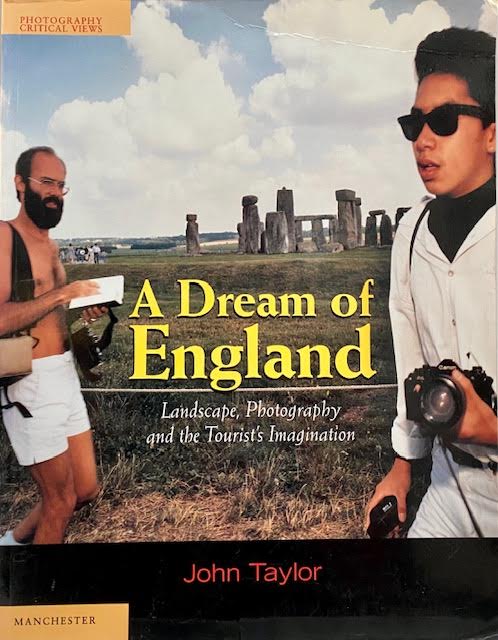
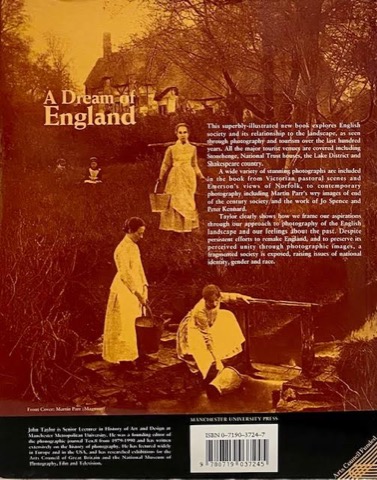
Softcover. Manchester, England, Manchester University Press, 1st Paperback Edition, 1994, Book: Very Good, Dust Jacket: None, 300 pages. Softcover. Color and b/w illustrations throughout. Wrapper very good, has a crease at the top right corner of front cover. Pages clean and unmarked, edges have some light foxing/tanning. Binding tight. In great shape. This superbly-illustrated new book explores English society and its relationship to the landscape, as seen through photography and tourism over the last hundred years.
Hardcover. Lincoln NE, University of Nebraska Press, 1st, 2011, Book: Very Good, Dust Jacket: Very Good, Hardcover, oblong format, in a bright dust jacket, 144 pages. B&w and color photographs by Delevingne. Focusing on Adams County in the Columbia Plateau in eastern Washington, Drylands, a Rural American Saga is a pictorial essay documenting the reality underlying our national self-portrait. Both an exception to and a paradigm of the country's agricultural folkways, Adams County offers a panorama of rolling cropland, sagebrush scree, and deep coulees formed by volcanic forces and ice-age floods. The shortage of rainfall, however, mocks the richness of the soils produced by prehistoric events. Yet as documented in these pages, the harvests of Adams County produce a significant share of the nation's food, standing as clear testimony to the skill and perseverance of those who work the land. Clean copy.
Hardcover. NY, W. W. Norton , 1st, 2007, Book: Very Good, Dust Jacket: Very Good, Hardcover, 176 pages, 120 b&w images. Once locked away in European archives, these early modernist photographs of America rival those of Steichen and Evans. Emil Otto Hoppe was born in Munich in 1878 but lived in London from 1900 until his death in 1972. He was an early and important modernist whose seminal views of the United States in the 1920s rival those of his peers: Paul Strand, Edward Steichen, Alfred Stieglitz, and Walker Evans. His work shows us an America as only an outsider could: brave, new, and grand in scale but with a hint of trouble brewing in the gaps between its multicultural and economic diversities.
Hardcover. NY, W. W. Norton , 1st, 2008, Book: Very Good, Dust Jacket: Very Good, Hardcover, 208 pages, b&w illustrations. Photographer E. O. Hoppe journeyed to Australia in the 1930s with the goal of capturing "the true spirit" of the nation. Enthralled by the country and its people, he traveled for a year tirelessly capturing images of life in bustling cities as well as the remote interior. No other photographer had presented such a comprehensive national portrait at the time; his iconic images captured a land both wild and refined. Very good in a bright dust jacket.
Hardcover. Santa Fe, Museum of New Mexico Press, 1st, 2011, Book: Very Good, Dust Jacket: Very Good, Hardcover in a bright, unclipped dust jacket, 188 pages, color and b&w photos. Since its invention, photography has been used to document and interpret the landscape. Survey photographers in the 1860s were the first environmental advocates, arguing for the U.S. national park system. During the first half of the 20th century photographers Ansel Adams and Eliot Porter were central figures in influencing American attitudes toward wilderness and conservation. This book traces the development of environmental photography beginning with Adams, Porter and others, and the next generation of landscape photographers - Robert Adams, Richard Misrach, Robert Glenn Ketchum, Patrick Nagatani, Mark Klett, whose works confronted the issues of landscape and the environment in less idealised terms. Shifting from the historical framework, the book presents new work by twenty-three photographers working in the U.S., the next wave of artists using the camera to engage the environmental issues of the day. Clean copy.
Softcover. London, Random House UK, 1st, 1995, Book: Very Good, Dust Jacket: None, 160 pages, illustrated throughout with b&w photos of England's coastline. Light wear to wrappers, else a very neat, tight copy.
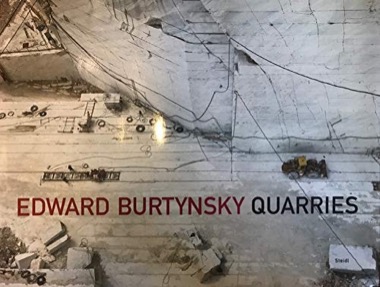
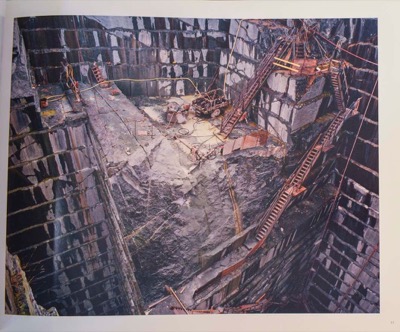
Hardcover. Gottingen GR, Steidl Publishers, 1st, 2009, Book: Very Good, Dust Jacket: Very Good, Hardcover in a bright dust jacket with light edgewear. Large format, 191 pages. Essay by Michael Mitchell. A striking collection of 80 color photographs taken by Burtynsky over the course of seventeen years at various quarry sites around the world. Including Canada, Italy, China, Spain, Portugal, India and America these thought provoking studies of sites that are created as we dig into the earth for material in order to build our cities, urge us to consider how we as viewers are simultaneously attracted yet repulsed by these landscapes somewhere a building is created while a landscape is destroyed. DOMESTIC SHIPPING ONLY.
Softcover. Garden City, N.Y., Doubleday & Co., 1st, 1971, Book: Good, Dust Jacket: None, Small folio. Eight loose reproductions in stiff paper chemise folder with "photographer sheet" by Peter Bunnell. Fine in faintly soiled and faintly rubbed illustrated slipcase. Plates are 11" x 14" and are suitable for framing.
Hardcover. NY, Holt, Rinehart & Winston, 1st, 1985, Hardcover in a bright dust jacket, square format, 114 pages. This handsome book provides a first-time look at the black-and-white artistry of one of the century's master photographers. Ninety-one images, some going back almost fifty years, together with a richly evocative text by the author, record an authentic vision of the American Southwest - past and present. Large book measures about 12 x 11, introduction section of 25 pages followed by section of 88 b&w plates (total 91 plates in book). Clean copy.
Hardcover. New York, Dahesh Museum of Art, July 2002, Book: Near Fine, Dust Jacket: Near Fine, Hardcover in a dust jacket. Never opened, still in original shrink wrap. Spotless copy. Frederic Church (1826-1900), who gained international renown for paintings such as Niagara (1857), Heart of the Andes (1859), Twilight in the Wilderness (1860), and The Icebergs (1861), was inspired by his extensive travel and study. His work was also informed by his appreciation of a new visual medium. Fire & Ice, a selection from the several thousand photographs and daguerreotypes Church collected at Olana, his Orientalist home on the Hudson River, provides insight into the interests and taste of one of nineteenth-century America's greatest painters.

 "Buro Kiefer: Landscape Designby: Schroder, Thies; Joosten, Hanns (Photographer)")
 "Catherine Opie: Empty and Fullby: Medvedow, Jill")
 "Central Park : A Photographic Excursionby: Freund, James")
 "CUBA: singing with bright tearsby: Virginia Beahan; Contributor Jon Lee Anderson/Pico Iyer")

 "David Plowden: The American Barnby: Plowden, David")
 "Days Gone By: Roadside Photographs of the American South by: Jorg Rubbert")
 "Dead Tech: A Guide to the Archeology of Tomorrow by: Hamm, Manfred/ Steinberg, Rolf/ Jungk, Robert")
 "Deathly Still: Pictures of Concentration Camps by: Dirk Reinartz. Christian Graf von Krockow.")
 "Desert Realtyby: Freeman, Ed")
 "Disarming the Prairieby: Terry Evans, Tony Hiss (Introduction)")
 "Discovery and Recognition (Untitled 25)by: Alinder, James")
 "Distinctly American: The Photography of Wright Morrisby: Alan Trachtenberg and Ralph Lieberman")
 "Double Exposure: Resurveying the West with Timothy O'Sullivan America's Most Mysterious War Photographer by: Robert Sullivan")
 "Dream of England, A: Landscape, Photography and the Tourist's Imaginationby: Taylor, john")
 "Drylands, a Rural American Sagaby: Lionel Delevingne (Author), Steve Turner")
 "E. O. Hopp")
 "E. O. Hopp")
 "Earth Now: American Photographers and the Environment by: Ware, Katherine")
 "Edge of the Land, The by: Godwin, Fay")
 "Edward Burtynsky: Quarries by: Burtynsky, Edward")
 "Eight Photographs. Edward Westonby: Weston, Edward")
 "Eliot Porter's Southwestby: Porter, Eliot (text & photographs)")
 "Fire & Ice: Treasures from the Photographic Collection of Frederic Church at Olanaby: Fels, Thomas")