Hardcover. San Francisco, CA, Chronicle Books, 1st, 1997, Book: Very Good, Dust Jacket: Very Good, 298 pages. Dark blue cloth covers, embossed titles to spine, dark blue dust jacket with photographic illustration, profusely illustrated with gorgeous color photographs. Light rubbing to dust jacket, small nick to dust jacket at mid-spine, pages crisp and unmarked, clean boards; a beautiful book in great condition. Author Harvey H. Kaiser spent ten years exploring the historic architecture of the Western National Parks, from the rain forrests of the Olympic Peninsular to the awesome wonder of the Grand Canyon, and from rough-hewn travelers' cabins to Yosemite's spectacular Ahwahnee Hotel and Mount Hood's Timberline Lodge. Organized by region and park, and rich with historic detail.
Softcover. Argentum, 1st, 2008, Book: Very Good, Dust Jacket: None, Softcover, 126 pages in color. Critically acclaimed photographer David Ward explores the essential attributes of a successful landscape photograph--simplicity, ambiguity, and beauty--in this intriguing companion to his first book, Landscape Within. David discusses how the notion of beauty has been viewed by artists and psychologists and how, despite various modifications over the centuries, the concept of beauty remains relevant. David suggests that all photographers' work either poses a question or seeks to impose the photographer's viewpoint, and he goes on to investigate how photography affects our interpretation of the world around us. Accompanied by a selection of David's stunning, large-format landscape images, this is an elegant and insightful look into the nature of photography. Clean copy.
Hardcover. Los Angeles, CA, J. Paul Getty Museum, 1st, 2012, Book: Very Good, Dust Jacket: Very Good, 112 pages. Hardcover with dust jacket. Very clean, unmarked copy with only minor wear to dust jacket edges. Like painters and draftsmen before them, photographers turned to the landscape as a source of inspiration after the invention of the medium in 1839. Since then, changing artistic movements and technical advancements have provided opportunities for camera artists to approach the subject in diverse and imaginative ways, as illustrated by the wide range of works from the extensive collection of the J. Paul Getty Museum in Landscape in Photographs.
Hardcover. NY, Lustrum Press, 1st, 1980, Book: Very Good, Dust Jacket: Good, Hardcover in a lightly worn dust jacket with minor wrinkles to rear panel. 175 pages. Photographs and essays by Robert Adams, Lewis Baltz, Harry Callahan, Paul Caponigro, Hamish Fulton, William Garnett, Eliot Porter, Art Sinsabaugh, George Tice, and Brett Weston. No markings.
Hardcover. Athens GA, University of Georgia Press, 1st, 2015, Book: Very Good, Dust Jacket: Very Good, Hardcover in a bright dust jacket. 254 pages, b&w illustrations. George Alexander Grant is an unknown elder in the field of American landscape photography. Just as they did the work of his contemporaries Ansel Adams, Edward Weston, Eliot Porter, and others, millions of people viewed Grant's photographs; unlike those contemporaries, few even knew Grant's name. Landscapes for the People shares his story through his remarkable images and a compelling biography profiling patience, perseverance, dedication, and an unsurpassed love of the natural and historic places that Americans chose to preserve. A Pennsylvania native, Grant was introduced to the parks during the summer of 1922 and resolved to make parks work and photography his life. Seven years later, he received his dream job and spent the next quarter century visiting the four corners of the country to produce images in more than one hundred national parks, monuments, historic sites, battlefields, and other locations. He was there to visually document the dramatic expansion of the National Park Service during the New Deal, including the work of the Civilian Conservation Corps. Grant's images are the work of a master craftsman. His practiced eye for composition and exposure and his patience to capture subjects in their finest light are comparable to those of his more widely known contemporaries. Nearly fifty years after his death, and in concert with the 2016 centennial of the National Park Service, it is fitting that George Grant's photography be introduced to a new generation of Americans.
Softcover. London, Reaktion Books,, 1st, 2004, Book: Very Good, Dust Jacket: None, Softcover, 223 pages, 144 illistrations, most in color. An exploration of the cult and celebration of death, loss and memory. Tracing the history and design of burial places throughout Europe and the USA, Ken Worpole ranges from village churchyards to tightly packed cities of the dead, such as the Jewish Cemetery in Prague and Pere Lachaise in Paris.
Hardcover. NY, D.A.P./Distributed Art Publishers, 1st, 2008, Book: Very Good, Dust Jacket: None, Hardcover, 89 pages, large format. Tipped-on front board. Slight bump to bottom right corner. In publisher shrink wrap. A natural chronicler of all things uniquely American, photographer Lee Friedlander here puts his lens to the work of Frederick Law Olmsted (1822-1903), designer of many of this country's most iconic public landscapes and the father of North American landscape architecture. Olmsted was responsible for a staggering number of America's greatest parks, including the Niagara reservation (North America's oldest state park), Washington Park, the Biltmore Estate, the U.S. Capitol building landscape and entire parkway systems in Buffalo and Louisville. His most famous work remains New York City's Central Park, a pioneering egalitarian gesture that, at the time, was very unusual for its ready accessibility. No dust jacket issued. DOMESTIC SHIPPING ONLY.
Softcover. Ft. Worth, Morgan & Morgan/ Amon Carter Museum, 1st, 1973, Book: Very Good, Dust Jacket: None, Unpaginated, 44 b&w images by the photographer, foreword by Ansel Adams. Softcover, clean, tight copy.
Hardcover. New York, Aperture, 1st, 1986, Book: Very Good, Dust Jacket: Very Good, Non-paginated. Hardcover with price-clipped dust jacket. Black and white photographs by Bill Brandt throughout. Clean, tight copy.
Hardcover. Santa Monica CA, Angel City Press, Book: Very Good, Dust Jacket: None, Hardcover, pictorial boards. Gives a lush, visual tour of a Los Angeles that no longer exists--one of elegant office buildings and stately mansions that were razed in the name of "progress" to build the city's famous freeways. Featuring stunning black-and-white photography from Arnold Hylen that captures a lost era, the book contains an original essay by the photographer that provides historical background and context for the time period. This new edition contains additional, never-before-seen photographs from Hylen and newly unearthed information from historian Nathan Marsak on these lost architectural treasures. Arnold Hylen (1908-1987) was a commercial and architectural photographer based in Los Angeles. Between the late 1940s and the late 1960s, Hylen traversed the streets of Los Angeles, photographing it's vanishing landscape. Still in publisher's shrinkwrap.
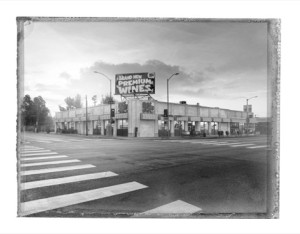
Hardcover. NY, Prestel, 1st, 2017, Book: Very Good, Dust Jacket: None, Hardcover, 160 pages. This photographic homage to Los Angeles presents a timeless depiction of the great city. In his book New York Sleeps, Christopher Thomas traveled the empty streets of New York City shooting dreamy cityscapes with a large-format Polaroid camera. For this new book he focuses his lens on Los Angeles, capturing in duotone images of the iconic buildings and spaces in the city: the Chinese Theatre without tourists, the Griffith Observatory peacefully alone, the Hollywood Boulevard without celebrities or onlookers. Around the city's artdeco buildings and mid-century drive-ins, sidewalks, and parking lots are vacant. Shot in the early morning, with the sun's rays just hinting between buildings, or at dusk, when the light is inchoate and mournful, these pictures are a tender valentine to Los Angeles. Fans of New York Sleeps will be thrilled to encounter another sublime project by Thomas. And residents and lovers of Los Angeles will be awestruck at this new interpretation of the City of Angels.
Hardcover. London, Thames & Hudson, 1st, 2005, Book: Very Good, Dust Jacket: Very Good, 256 pages. Hardcover with dust jacket. Very clean, unmarked copy still in publishers shrink-wrap. Since the invention of photography, Ireland has been a magnet for photographers, but this book is unique in bringing together the work done by the unrivaled talents of the members of Magnum. From Ireland's first attempts to forge a modern identity in the 1950s to the confident country of the twenty-first century, here is a stunning survey of a beautiful and complex place and people, through times of peace as well as troub
Hardcover. New York, Aperture/SADEV, 1st, 1986, Book: Very Good, Dust Jacket: Very Good, Hardcover, 104 pages, b&w photographs, small format catalogue with extensive notes. A fine copy in the illustrated dust jacket. Bridges made aerial photographs of the earthworks in Peru, Yucatan and Chiapas, and in the U.S. in California, Arizona, New Mexico, Mississippi, South Dakota, as well as France and England. Preface by Haven O'More. Essays by Maria Reiche, Charles Gallenkamp, Lucy Lippard, Keith Critchlow. Clean, bright in an unclipped dust jacket.
Hardcover. NY, Viking Press, 1st, 1970, Book: Very Good, Dust Jacket: Very Good, Hardcover in a bright dust jacket. A collection of color and black and white photographs from the famed Life photographer. Clean copy.
Hardcover. Damiani, 1st, 2007, Book: Very Good, Dust Jacket: Very Good, Hardcover, 260 pages. Italian photographer Maurizio Galimberti works exclusively in Polariod. His mosaics of square, white-bordered frames have captured personalities including Andres Serrano, Wim Wenders, Monica Bellucci and Sting, among many others, piece by piece. When he doesn't scratch designs onto the developing pictures with a stick or even a toothbrush, preemptively disrupting any sense that his work directly reflects the real, he takes hundreds of shots of the same subject and eventually assembles up to 140 in a single finished grid. His patrons have included Conde Nast, Rizzoli and Time, and, in advertising, Cartier, Rolex, Nokia, Fiat and Veuve Cliquot. This personal portfolio of the city of New York is full of clean-edged skyscrapers and bridges, limitless streets, multicolored signs, vivid people and limpid skies. Galimberti's Big Apple is thoroughly deconstructed and reconstructed, and the resulting unreal city corresponds perfectly with the soul of New York.
Hardcover. NY, Harry N. Abrams/Hood Museum of Art, 1st, 1988, Book: Very Good, Dust Jacket: Very Good, Hardcover in a bright, unclipped dust jacket. A beautiful and intimate treatment of the architecture of the early industrialization of New England. 108 pages of color plates. Essays by Noel Perrin & Kenneth Breisch. Clean copy.
Softcover. NY, Rizzoli, 1st, 1983, Book: Very Good, Dust Jacket: None, Softcover, 144 pages. Color plates throughout. All photographs have been made in NYC from the same apartment window which gives a large view on Central Park and on the street. Ruth Orkin gathers photographs around the Sheep Meadow area of Central Park in New York, and includes shots of parades, rallies, and the Manhattan skyline. Clean, bright copy.
Hardcover. Bunker Hill Publishing Inc, Piermont, NH, 2009, Book: Very Good, Dust Jacket: Very Good, 144 pages. Hardcover with dust jacket. Clean, unmarked copy with only minor wear to dust jacket. Color pictures throughout. Neon Mesa: Wonders of the Southwest is a stunning photographic record of the vernacular landscape of the American Southwest - the roadside landscape littered with the signs, relics, sights and debris of countless anonymous road trips. The Four Corners is a unique region where Colorado, New Mexico, Arizona and Utah meet. Rob Atkins' photos capture the irony and pathos of the place in icons of the American Dreams, be they those of the Nuclear Age, the Frontier, the Cowboy, or the Native American, all caught in the stark majestic images of a present already passing, in rusting road-signs, flickering neon light, and derelict motels, set against some of America's most awe-inspiring natural scenery. The dazzling light of the Southwest, the enormous skies and stark desert imagery form the back drop to Rob Atkins stunning exploration of a quintessential American landscape. He captures visual gems with his camera from the ghostly quarries of old motels and roadside wrecks, of decaying signs and faded walls, and writes about the minutiae of lost Americana with affection and great style.
Hardcover. NY, Aperture, 1st, 2005, Book: Very Good, Dust Jacket: Very Good, Hardcover in a bright, unclipped dust jacket, 107 pages, illustrated throughout in color. Each of Beahan and McPhee's extraordinary images captures a point of collision between natural and constructed worlds. Introduction by Rebecca Solnit. Afterword by John McPhee. Light shelf-wear to dust jacket, else a clean, tight copy.
Hardcover. San Francisco, Chronicle Books, 1st, 2006, Book: Very Good, Dust Jacket: Very Good, Hardcover, 120 pages, color photos. Terry Falke's wry, lyrical photographs center on the terrain of the American Southwest and the ubiquity of humanity s imprint on it. The images in Observations in an Occupied Wilderness both honor and subvert the grand tradition of western landscape photography, conveying the bleak splendor of the land and Falke's sheer love of looking. Gorgeous, sardonic, and playful, Falke's work emphasizes beauty and incongruity, and is as much about human nature as it is about the land. Shot with a large-format camera, the resultant images are personal and provocative, raising as many questions than they answer. This remarkable debut monograph is a shrewd exploration of our last wild places.
Hardcover. New Haven CT, Yale University Press, 1st, 2018, Book: Very Good, Dust Jacket: None, Hardcover, 156 pages, no dj issued. An insightful new look at two renowned photographers, their interconnected legacies, and the vital documents of urban transformation that they created. In this comprehensive study, Kevin Moore examines the relationship between Eugene Atget (1857-1927) and Berenice Abbott (1898-1991) and the nuances of their individual photographic projects. Abbott and Atget met in Man Ray's Paris studio in the early 1920s. Atget, then in his sixties, was obsessively recording the streets, gardens, and courtyards of the 19th-century city--old Paris--as modernization transformed it. Abbott acquired much of Atget's work after his death and was a tireless advocate for its value. She later relocated to New York and emulated Atget in her systematic documentation of that city, culminating in the publication of the project Changing New York.
Hardcover. New Haven CT, Yale University Press, 1st, 2018, Book: Very Good, Dust Jacket: None, Hardcover, 156 pages, no dj issued. An insightful new look at two renowned photographers, their interconnected legacies, and the vital documents of urban transformation that they created. In this comprehensive study, Kevin Moore examines the relationship between Eugene Atget (1857-1927) and Berenice Abbott (1898-1991) and the nuances of their individual photographic projects. Abbott and Atget met in Man Ray's Paris studio in the early 1920s. Atget, then in his sixties, was obsessively recording the streets, gardens, and courtyards of the 19th-century city--old Paris--as modernization transformed it. Abbott acquired much of Atget's work after his death and was a tireless advocate for its value. She later relocated to New York and emulated Atget in her systematic documentation of that city, culminating in the publication of the project Changing New York.
Hardcover. NY, Norton, 1st , 1999, Book: Very Good, Dust Jacket: Very Good, Hardcover. Color photos. Introduction by Kathleen Norris. 130 pages. Clean, unmarked copy with only minor wear to dust jacket. This is an excellent collection of 77 photos taken 1985-1995 across the high plains states from Montana to Texas. All are in richly captured color, and all manage to bring the panorama of this wide open country within the viewfinder of the still camera. Brown's achievement is to show the suggestive and telling details that transform these "empty" landscapes into spaces that are filled with drama and atmosphere.
Softcover. Albuquerque, University of New Mexico Press, 1st, 1999, Book: Very Good, Dust Jacket: None, Softcover, oblong format, color photos. The end of the twentieth century represents an unsettled time, and the contemporary Southwest, as seen by Virgil Hancock III in these fifty-two exquisite color photographs, is a strange place full of omens and signs. His images peer beyond the scenery, beyond the tourism-council view of this region as a storied land of golf courses and climate-controlled shopping centers. He gets at the soul of the Southwest, of the nation, and, in his best photographs, at the human condition itself, seizing on the accidental symbols that speak to our yearnings and shortfalls: skyward-pointing arrows and crosses and dreams just beyond reach at Indian casinos, failed department stores, retirement cities. He photographs signs of the violence that has been endemic to the region and shows us ruins, not of the Anasazi or Spanish missions, but of commercialization, scarcely twenty years old, already gone belly-up.

 "Landmarks in the Landscapeby: Kaiser, Harvey H.")
 "Landscape Beyond: A Journey into Photographyby: David Ward")
 "Landscape in Photographsby: Hellman, Karen")
 "Landscape: Theory by: Adams Robert; Baltz Lewis; Callahan Harry; Caponigro Paul; Fulton Hamish; Garnett William; Porter Eliot; Sinsabaugh Art; Tice George; Weston Bre")
 "Landscapes for the People: George Alexander Grant, First Chief Photographer of the National Park Serviceby: Ren Davis (Author), Helen Davis (Author), Timothy Davis (F")
 "Last Landscapes: The Architecture of the Cemetery in the West by: Worpole, Ken")
 "Lee Friedlander: Photographs, Frederick Law Olmsted: Landscapesby: Lee Friedlander")
 "Liliane De Cockby: De Cock, Liliane")
 "Literary Britian: Landmarks, Landscapes and Houses of the Great Writers and Poetsby: Brandt, Bill")
 "Los Angeles Before the Freeways: Images of an Era 1850-1950by: Arnold Hylen / Nathan Marsak")
 "Lost in L.A.by: Christopher Thomas")

 "Magnum Irelandby: Banville, John")
 "Markings: Aerial Views of Sacred Landscapesby: Bridges, Marilyn")
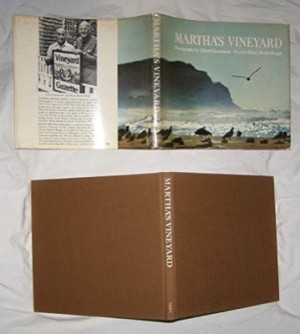
 "Martha's Vineyardby: Eisenstaedt, Alfred and Henry Beetle Hough")

 "Maurizio Galimberti: New York Polaroidby: Giuliana Scim")
 "Mills and Factories of New England by: Hambourg, Serge/Perrin Noel & Kenneth Breisch (essays)")
 "More Pictures From My Windowby: Orkin, Ruth")
 "Neon Mesa: Wonders of the Southwestby: Atkins, Rob")
 "No Ordinary Land: Encounters in a Changing Environmentby: Beahan, Virginia and Laura McPhee")
 "Observations in an Occupied Wilderness: Photographs by Terry Falkeby: Falke and Carol McCusker, Terry")
 "Old Paris and Changing New York: Photographs by Eugene Atget and Berenice Abbottby: Kevin Moore")
 "Old Paris and Changing New York: Photographs by Eugene Atget and Berenice Abbottby: Kevin Moore")
 "On The Plainsby: Brown, Peter")
 "Open Range and Parking Lots: Southwest Photographsby: Hancock, Virgil and Gregory McNamee")