Softcover. Paris, Cedic/Nathan, 1st, 1987, Book: Very Good, Dust Jacket: None, Softcover, 315 pages, b&w illustrations. FRENCH TEXT. INSCRIBED BY THE AUTHOR on the title page. Johann Heinrich Lambert (26 or 28 August 1728 - 25 September 1777) was a polymath from the Republic of Mulhouse, at that time allied to the Swiss Confederacy, who made important contributions to the subjects of mathematics, physics (particularly optics), philosophy, astronomy and map projections.
Hardcover. London, Sherwood and Co., Later Edition, 1825, Book: Fair, Dust Jacket: None, 463 pages. Hardcover. Reprint edition dated 1825 - "A New and Improved Edition, Adapted to the Present State of Science by C. F. Partington". Illustrated with black & white drawings, diagrams. Body of book rebound in current covers at some point. Front hinge cracked, cloth tape along spine is weak, with faint remains of title label. Top 2" of title page missing. Light to moderate foxing to some plates/pages. Sold 'As-Is'.
Hardcover. Braunschweig, Vieweg, 2nd Ed., 1898-99, Book: Very Good, Dust Jacket: None, Two volumes, ex-library set bound in half leather and marbled boards, spines with raised bands and gilt lettering. A third volume was added by the author in 1908. Previous owner's signature and usual stamping and residue to end papers, sticker to bottom of spines. GERMAN TEXT.
Hardcover. London, Allen Lane, 2008, Hardcover in a bright dust jacket. The writings of Lewis Carroll have inspired and entertained generations of readers and have influenced the work of everyone from James Joyce to John Lennon. But the extraordinary imagination that created Alice's Adventures in Wonderland and its sequel, Through the Looking Glass, was not limited simply to fantasy, logic and word play. Charles Lutwidge Dodgson, who wrote under the pseudonym Lewis Carroll, was for many years lecturer in mathematics at Christ Church, Oxford, and published works in the fields of geometry, logic and algebra. He also made significant contributions to subjects as varied as voting patterns and the design of tennis tournaments, and he created large numbers of imaginative recreational puzzles based on mathematical ideas. For the first time, Lewis Carroll in Numberland explores both his serious and his recreational work and places it in the context of his many other activities, mathematical and otherwise. Clean copy.
Hardcover. Homewood, Illinois, Richard D. Irwin, Inc., 1st, 1961, Book: Very Good, Dust Jacket: Good, 545 pages. Reprints of 18 articles approaching marketing issues from a mathematical viewpoint. Dark blue cloth covers, light blue spine, black & gilt titles, illustrated dust jacket with mylar protective covering, numerous b&w diagrams, charts and graphs. Dust jacket discolored at edges and spine, chipping to edges, small half-inch chunk from bottom front right corner, though dust jacket still very neat with mylar covering, clean boards, pages crisp and unmarked; a very neat, tight copy.
Hardcover. NY, Macmillan, 1st US, 1904, Book: Very Good, Dust Jacket: None, Hardcover, dark green pebbled cloth, gilt lettering on spine. 165 pages including index plus 4 pages of publisher's ads. This is the first English translation and first American edition of the classic work originally published in Italy. Clean, tight copy.
NY, Harper and Brothers, 1913, Book: Very Good, Dust Jacket: None, Color illustration of a stern male teasher looking down on a laughing boy. Art by Chas. A. MacLellan. Approx. 10 X 13". PLEASE NOTE: The image shown is a scan of the actual product you are purchasing. What you see is what you get. The sheet may have some imperfections beyond the cropped area shown. You are buying THIS PAGE ONLY- not the entire magazine. Your order will be placed carefully between stiff paper and an acetate overlay, then packed in a rigid cardboard sleeve to prevent bending.
1978, Book: Very Good, Color art by Birnbaums of jazz musicians done in broad brush strokes. 8 3/4 X 12", very good. PLEASE NOTE: The image shown is a scan of the actual product you are purchasing. What you see is what you get. The sheet may have some imperfections beyond the cropped area shown. You are buying THE COVER ONLY- not the entire magazine. Your order will be placed carefully between stiff paper in clear plastic envelope, then packed in a rigid cardboard sleeve to prevent bending.
Hardcover. Cambridge [England] ; New York, Cambridge University Press, 1st, 1994, Book: Very Good, Dust Jacket: Very Good, 386 pages. Hardcover. Black & white illustrations throughout. Minor dust jacket edge wear, spine faded, otherwise, very clean and tight copy.
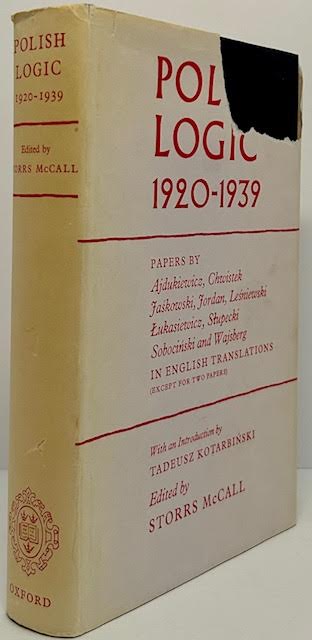
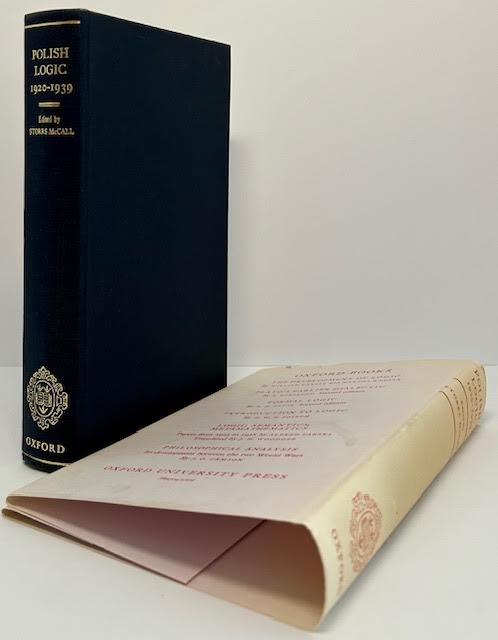
Hardcover. London, England, Oxford at the Clarendon Press, 1st Edition, 1967, Book: Very Good, Dust Jacket: Fair, 406 pages. Hardcover. Previous owner's name on front flyleaf. Dust jacket price clipped, has some damage to top right corner of front cover, as well as agewear. Navy blue cover boards, gilt title on spine. The years between the two wars saw a rich flowering of work in formal logic in Poland. Yet the writings of Polish logicians of that time have largely remained inaccessible to English-speaking readers.
Softcover. Cambridge UK, Cambridge University Press, reprint, 2014, Book: Very Good, Dust Jacket: None, Softcover, like new. 371 pages. Written by noted quantum computing theorist Scott Aaronson, this book takes readers on a tour through some of the deepest ideas of maths, computer science and physics. Full of insights, arguments and philosophical perspectives, the book covers an amazing array of topics. Beginning in antiquity with Democritus, it progresses through logic and set theory, computability and complexity theory, quantum computing, cryptography, the information content of quantum states and the interpretation of quantum mechanics. There are also extended discussions about time travel, Newcomb's Paradox, the anthropic principle and the views of Roger Penrose. Aaronson's informal style makes this fascinating book accessible to readers with scientific backgrounds, as well as students and researchers working in physics, computer science, mathematics and philosophy.
Softcover. Oxford UK, Clarendon Press, reprint, 2002, Book: Very Good, Dust Jacket: None, Softcover, 353 pages. Social revolutions--that is critical periods of decisive, qualitative change--are a commonly acknowledged historical fact. But can the idea of revolutionary upheaval be extended to the world of ideas and theoretical debate? The publication of Kuhn's The Structure of Scientific Revolutions in 1962 led to an exciting discussion of revolutions in the natural sciences. A fascinating, but little known, off-shoot of this was a debate which began in the United States in the mid-1970's as to whether the concept of revolution could be applied to mathematics as well as science. Michael Grove declared that revolutions never occur in mathematics, while Joseph Dauben argued that there have been mathematical revolutions and gave some examples. This book is the first comprehensive examination of the question. It reprints the original papers of Grove, Dauben, and Mehrtens, together with additional chapters giving their current views. To this are added new contributions from nine further experts in the history of mathematics, who each discuss an important episode and consider whether it was a revolution. The whole question of mathematical revolutions is thus examined comprehensively and from a variety of perspectives. This thought-provoking volume will interest mathematicians, philosophers, and historians alike. Small bump to bottom corner, otherwise clean, very good.
Hardcover. New York, Cambridge University Press, 1st, 1996, Book: Very Good, Dust Jacket: Very Good, 314 pages. Hardcover with dust jacket. Clean, unmarked copy with only minor wear to dust jacket. Black and white pictures.
Hardcover. Cambridge MA, MIT Press, 1st, 1970, Book: Very Good, Dust Jacket: Good, Hardcover, silver boards with white lettering on spine. In a worn dust jacket with chipping and fading. The 16 articles in this book were prepared for the Conference of Newtonian Studies, held at the University of Texas, 300 years after what Newton himself described as his best year (1665), when he returned to his hometown to escape the plague in Cambridge. Articles cover Newton's life and society, his scientific achievements, philosophical analyses of his scientific achievements, and Newton's influence. B&w illustrations. Mild soil to edges of front fly leaf, otherwise clean, no markings.
Hardcover. NY, Springer, 1st, 2004, Book: Very Good, Dust Jacket: None, Hardcover, glossy yellow boards, 192 pages. John Wallis (1616-1703) was the most influential English mathematician prior to Newton. He published his most famous work, Arithmetica Infinitorum, in Latin in 1656. This book studied the quadrature of curves and systematized the analysis of Descartes and Cavelieri. Upon publication, this text immediately became the standard book on the subject and was frequently referred to by subsequent writers. This will be the first English translation of this text ever to be published. To the modern reader, the Arithmetica Infinitorum reveals much that is of historical and mathematical interest, not least the mid seventeenth-century tension between classical geometry on the one hand, and arithmetic and algebra on the other. Newton was to take up Wallis's work and transform it into mathematics that has become part of the mainstream, but in Wallis's text we see what we think of as modern mathematics still struggling to emerge. It is this sense of watching new and significant ideas force their way slowly and sometimes painfully into existence that makes the Arithmetica Infinitorum such a relevant text even now for students and historians of mathematics alike. Name on front fly leaf, otherwise clean.
Hardcover. UK, Clarendon Press/Oxford, 5th pr., 1971, Book: Very Good, Dust Jacket: None, Hardcover, dark blue cloth with gilt lettering on spine, 783 pages. Revised with corrections. An important and monumental work of relevance both to philosophy and mathematics.
Softcover. Cambridge UK, Cambridge University Press, 1st pbk., 2002, Book: Very Good, Dust Jacket: None, Softcover, 359 pages. In this major reevaluation of Isaac Newton's intellectual life, Betty Jo Teeter Dobbs shows how his pioneering work in mathematics, physics, and cosmology was intertwined with his study of alchemy. Professor Dobbs argues that to Newton those several intellectual pursuits were all ways of approaching Truth, and that Newton's primary goal was not the study of nature for its own sake but rather an attempt to establish a unified system that would have included both natural and divine principles. She also argues that Newton's methodology was much broader than modern scholars have previously supposed, and she traces the evolution of his thought on the intertwined problems of the microcosmic "vegetable spirit" of alchemy and the "cause" of the cosmic principle of gravitation. Clean, bright copy.
Hardcover. Oxford UK, Clarendon Press, reprint, 1964, Book: Very Good, Dust Jacket: None, Hardcover, blue cloth with gilt lettering on spine. 316 pages including index. First published in 1952. Clean, bright copy.
Hardcover. New York, Reynal & Hitchcock, 1st, 1938, Book: Very Good, Dust Jacket: None, 2 Hardcover volumes. Volume 1 - 655 pages. Black & white illustrations. Moderate fading to spine of red cloth covers. Light wear. Clean, tight copy. Volume 2 - 640 pages. Black & white illustrations. Moderate fading to spine of red cloth covers. Light wear. Clean, tight copy.
Hardcover. Paris, Gauthier-Villars, 1st, 1895, Book: Very Good, Dust Jacket: None, 530 pages, ex-library bound in 3/4 leather and marbled boards, spines with raised bands and gilt titles. The usual stamping, end paper residue, sticker shadow and reference number at bottom of spine. Internally very good, clean. FRENCH TEXT.
Softcover. Indianapolis, Hackett Publishing, reprint, 1989, Book: Very Good, Dust Jacket: None, Softcover, 358 pages. This volume includes Whewell's seminal studies of the logic of induction (with his critique of Mill's theory), arguments for his realist view that science discovers necessary truths about nature, and exercises in the epistemology and ontology of science. The book sets forth a coherent statement of a historically important philosophy of science whose influence has never been greater: every one of Whewell's fundamental ideas about the philosophy of science is presented here. Clean, bright copy.

 "La place de J-H. Lambert (1728-1777) dans l'histoire de la perspective (INSCRIBED COPY)by: Roger Laurent")


 "Lectures on Select Subjects in Mechanics, Hydrostatics, Pneumatics, Optics, and Astronomyby: Ferguson, James/C. F. Partington")
 "Lehrbuch der Algebra (2 Volumes)by: Weber, Heinrich")
 "Lewis Carroll in Numberland: His Fantastical Mathematical Logical Life by: Wilson, Robin")
 "Mathematical Models and Methods in Marketingby: Bass et al. (eds.)")
 "Mathematics and Statistics for the Bio-Sciencesby: Eason, G., C.W.Coles and G. Gettinby")
 "Modern Theory of Physical Phenomena: Radio-Activity, Ions, Electrons by: Righi, Augusto/Trowbridge, Augustus (transl.)")

 "ORIG VINTAGE MAGAZINE COVER March 15 1913 - Stern teacher and pupilby: Chas. A. MacLellan.")
 "ORIGINAL VINTAGE MAGAZINE COVER: New Yorker Jan. 16 1978 - Abacusby: Eugene Mihaesco (Illust.)")
 "Phyllotaxis: A Systemic Study in Plant Morphogenesisby: Jean, Roger V.")
 "Polish Logic 1920-1939: Papers by Ajdukiewicz, Chwistek, Jaskowski, Jordan, Lesniewski, Lukasiewicz, Slupecki, Sobocinski, and Wajsbergby: McCall, Storrs (Editor), Ta")
 "Quantum Computing Since Democritus by: Scott Aaronson")
 "Revolutions in Mathematicsby: Donald Gillies (Ed.)")
 "Scientific Explanation a Study of the Function of Theory Probability and Law in Science- Based on the Tarner Lectures 1946 by: Braithwaite, Richard Bevan")
 "Solar System Astronomy in America: Communities, Patronage, and Interdisciplinary Science, 1920-1960by: Doel, Ronald E.")
 "The Annus Mirabilis of Sir Isaac Newton, 1666-1966by: Palter, Robert (editor)")
 "The Arithmetic of Infinitesimals: John Wallis, 1656 (Sources and Studies in the History of Mathematics and Physical Sciences)by: Wallis John;/Stedall Jacqueline A. (I")
 "The Development of Logic by: Kneale, William and Martha Kneale")
 "The Janus Faces of Genius: The Role of Alchemy in Newton's Thoughtby: Dobbs, Betty Jo Teeter")
 "The Method of Descartes: A Study of the 'Regulae' by: L. J. Beck")
 "The Notebooks of Leonardo Da Vinci - Two Volumesby: MacCurdy (Editor), Edward")
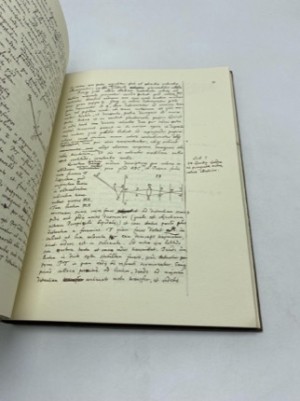
 "The unpublished first version of Isaac Newton's Cambridge Lectures on Optics 1670-1672. A facsimile of the autograph, now Cambridge University Library MS. Add. 4002 with an introduction by D.T. Whiteside")

 "Theorie des Fonctions Algebriques et de Leurs Integralesby: Appell, Paul and Edouard Goursat")
 "Theory of Scientific Methodby: Whewell, William, Editor: Butts, Robert E.")