Hardcover. Cambridge UK, Cambridge University Press , 1st, 2007, Book: Very Good, Dust Jacket: Very Good, Hardcover in a bright dust jacket, 283 pages. This book offers a comprehensive treatment of the philosophical system of the seventeenth-century philosopher Pierre Gassendi. Gassendi's importance is widely recognized and is essential for understanding early modern philosophers and scientists such as Locke, Leibniz and Newton. Offering a systematic overview of his contributions, LoLordo situates Gassendi's views within the context of sixteenth- and early seventeenth-century natural philosophy as represented by a variety of intellectual traditions, including scholastic Aristotelianism, Renaissance Neo-Platonism, and the emerging mechanical philosophy. LoLordo's work will be essential reading for historians of early modern philosophy and science. Name on front fly leaf, otherwise clean.
Softcover. UK, Oxford University Press, Revised Ed., 2001, Book: Very Good, Dust Jacket: None, Softcover, 384 pages. Published here for the first time is much of a final and long-anticipated work on the philosophy of history by the great Oxford philosopher and historian R. G. Collingwood (1889-1943). The original text of this uncompleted work has only recently been discovered and is accompanied here by Collingwood's shorter writings on historical knowledge and inquiry. Besides containing entirely new ideas, these incredible writings discuss many of the issues which Collingwood famously raised in The Idea of History and in his Autobiography. This book also includes two conclusions written by Collingwood, which were eventually revised and published as The Idea of Nature. and a lengthy editorial introduction that puts Collingwood's writings in their context and discusses the philosophical questions they initiate. A landmark publication, this work will appeal not only to those studying Collingwood but also to anyone broadly curious about philosophy of history. Clean copy.
Softcover. Oxford UK, Cambridge University Press, reprint, 2013, Book: Very Good, Dust Jacket: None, Softcover, 264 pages. Examines the reception of Socinian ideas in England, providing a rereading of political and ecclesiastical developments during the English Revolution. Light pencil marking to 10 pages, otherwise clean.
Hardcover. Berkeley, CA , University of California Press, 1st, 2002, Book: Very Good, Dust Jacket: Very Good, 283 pages. Hardcover with dust jacket. A very clean, unmarked copy with only minor wear to dust jacket edges. A tight copy. Black and white illustrations throughout. This richly detailed study reconceptualizes a striking but enigmatic moment in Rembrandt's art from the 1650s--one of the artist's most prolific and creative periods. Michael Zell identifies a significant theological shift in Rembrandt's use of religious imagery and interprets this shift in light of the unique religious and social conditions of seventeenth-century Amsterdam. Rembrandt's biblical art has generally been regarded as the embodiment of a Protestant aesthetic. By looking closely at the artist's relationship with his patron Rabbi Menasseh ben Israel and the ideas of a group of "philosemitic" Protestants with whom the rabbi was engaged in an apologetic dialogue, Zell deepens and complicates our understanding of Rembrandt's sacred art from this period.
Hardcover. Oxford, Clarendon Press, First Edition, 2006, Book: Very Good, Dust Jacket: Very Good, 356 pages. Hardcover with illustrated endpapers. Black cloth covered boards with gilt titles to spine. Dust jacket with light sunfade to bottom edge. Illustrations in bw throughout. Clean & unmarked copy.
Hardcover. Cambridge UK, Cambridge University Press, 1st, 2010, Book: Very Good, Dust Jacket: Very Good, Hardcover in a bright dust jacket, 187 pages. Examines Rousseau's contribution as a constitutionalist and builder of institutions, relating his major ideas to twenty-first century debates. Rubber stamp on copyright page, otherwise clean.
Springer, Book: Very Good, Dust Jacket: None, Hardcover, glazed boards, 381 pages. This groundbreaking publication is the first comprehensive assessment of the extent to which scepticism featured in evolving Enlightenment philosophy, with expert commentary on a range of thinkers including less well known, but nonetheless influential figures.
Softcover. Kessinger Publishing, reprint, Book: Very Good, Dust Jacket: None, Softcover, 457 pages. A photocopied facsimile reprint of the 1685 volume. FRENCH TEXT. Clean copy.
Softcover. Cambridge UK, Cambridge University Press, 1st, 1996, Book: Very Good, Dust Jacket: None, Softcover, 216 pages. This remarkable expression of republican thought has never before been published. Algernon Sidney was among the most unrelenting republican partisans of the seventeenth century, and was executed for his opposition to Charles II. Written during Sidney's continental exile, the vivid Court Maxims was only recently rediscovered. The work presents a lively discussion about the principles of government and the practice of politics, articulating a vital tradition of republicanism in an absolutist age.
Hardcover. Oxford UK, Oxford University Press, 1st, 2015, Book: Very Good, Dust Jacket: Very Good, Hardcover in a bright dust jacket, 184 pages. Alexander X. Douglas offers a new understanding of Spinoza's philosophy by situating it in its immediate historical context. He defends a thesis about Spinoza's philosophical motivations and then bases an interpretation of his major works upon it. The thesis is that much of Spinoza's philosophy was conceived with the express purpose of rebutting a claim about the limitations of philosophy made by some of his contemporaries. They held that philosophy is intrinsically incapable of revealing anything of any relevance to theology, or in fact to any study of direct practical relevance to human life. Spinoza did not. He believed that philosophy reveals the true nature of God, and that God is nothing like what the majority of theologians, or indeed of religious believers in general, think he is. The practical implications of this change in the concept of God were profound and radical. As Douglas shows, many of Spinoza's theories were directed towards showing how the separation his opponents endeavored to maintain between philosophical and non-philosophical (particularly theological) thought was logically untenable.
Hardcover. Cambridge UK, Cambridge University Press, 1st, 2004, Book: Very Good, Dust Jacket: Very Good, Hardcover in a bright dust jacket with mild edgewear. 295 pages. Stoicism is now widely recognized as one of the most important philosophical schools of ancient Greece and Rome. But how did it influence Western thought after Greek and Roman antiquity? The contributors recruited for this volume include leading international scholars of Stoicism as well as experts in later periods of philosophy. They trace the impact of Stoicism and Stoic ideas from late antiquity through the medieval and modern periods. Name on front fly leaf otherwise clean.
Hardcover. London, Reaktion Books, 2013, 2013, Book: Very Good, Dust Jacket: Very Good, 336 pages. Hardcover with dust jacket. Profusely illustrated in full color & black & white throughout. Clean, tight copy.
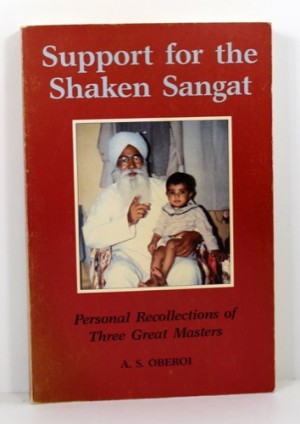
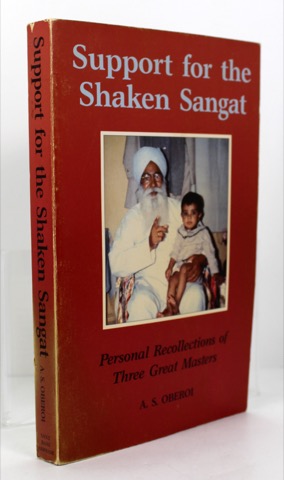
Softcover. Sanbornton, Sant Bani Press, First Edition, 1984, Book: Very Good, Dust Jacket: None, 333 pages. Softcover. Full page, full color illustrations and a few in bw. Interviews & reflections with Kirpal Singh, Baba Sawan & Sant Ajaib. Light wear to spine edges, light sunfading to lower spine. Discolored smudge to top edge. Previous owner's signature to preliminary pages. Otherwise, clean & unmarked copy.
Softcover. Cambridge UK, Cambridge University Press, reprint, 2010, Book: Very Good, Dust Jacket: None, Softcover, 449 pages. Thomas Hobbes is widely acknowledged as the most important political philosopher to have written in English. Originally published in 2007, Taming the Leviathan is a wide-ranging study of the English reception of Hobbes's ideas. In the first book-length treatment of the topic for over forty years, Jon Parkin follows the fate of Hobbes's texts (particularly Leviathan) and the development of his controversial reputation during the seventeenth century, revealing the stakes in the critical discussion of the philosopher and his ideas. Revising the traditional view that Hobbes was simply rejected by his contemporaries, Parkin demonstrates that Hobbes's work was too useful for them to ignore, but too radical to leave unchallenged. His texts therefore had to be controlled, their lessons absorbed and their author discredited. In other words the Leviathan had to be tamed. Taming the Leviathan significantly revised our understanding of the role of Hobbes and Hobbism in seventeenth-century England. Clean copy.
Hardcover. New Haven CONNECTICUT, Yale University Press, 1st, 1978, Book: Very Good, Dust Jacket: Very Good, Hardcover, 317 pages, b&w illustrations, red cloth with gilt lettering on spine. Bright dust jacket with price-clip.
Hardcover. NY, Oxford University Press, 1st, 1998, Book: Very Good, Dust Jacket: Very Good, Hardcover in a very good dust jacket with fading to spine, 403 pages. The concept of the atom is very near scientific bedrock, touching first causes, fundamental principles, our conception of the nature of reality. This book is a translation from the French of a history of atomic thought and theory, from ancient Greece to the present day. Pullman grounds his coverage of scientific theory always in the religious and philosophical context of the times, covering the whole period of Western civilization, including in passing the major scientific philosophies of the Muslim world and India. The transition of atomism from a philosophical position to an experimental science, in the mid-19th century, is well handled, and the coverage is nicely rounded out by a treatment of the first visual proof of atoms' material existence by direct microscopic imaging of individual atoms about 10 years ago. Name on front fly leaf otherwise clean.
Hardcover. Princeton NJ, Princeton University Press, 1st, 1993, Book: Very Good, Dust Jacket: Very Good, Hardcover in a bright dust jacket with light edgewear, 419 pages. By the mid-1600s, the commonsense, manifest picture of the world associated with Aristotle had been undermined by skeptical arguments on the one hand and by the rise of the New Science on the other. What would be the scientific image to succeed the Aristotelian model? Thomas Lennon argues here that the contest between the supporters of Descartes and the supporters of Gassendi to decide this issue was the most important philosophical debate of the latter half of the seventeenth century. Descartes and Gassendi inspired their followers with radically opposed perspectives on space, the objects in it, and how these objects are known. Lennon maintains that differing concepts on these matters implied significant moral and political differences: the Descartes/Gassendi conflict was typical of Plato's perennial battle of the gods (friends of forms) and giants (materialists), and the crux of that enduring philosophical struggle is the exercise of moral and political authority. Lennon demonstrates, in addition, that John Locke should be read as having taken up Gassendi's cause against Descartes. In Lennon's reinterpretation of the history of philosophy between the death dates of Gassendi and Malebranche, Locke's acknowledged opposition to Descartes on some issues is applied to the most important questions of Locke exegesis.
Softcover. UK, Cambridge University Press, 4th pr., 2008, Book: Very Good, Dust Jacket: None, Softcover, 745 pages. Beginning with Homer and ending in late antiquity with Christian and pagan reflections on divine and human order, this volume is the first general and comprehensive treatment of Rome ever to be published in English. Its international team of distinguished scholars includes historians of law, politics, culture and religion, as well as philosophers. The volume will long remain an accessible and authoritative guide to Greek and Roman thinking about government and community. Remainder line on bottom edge otherwise clean.
Hardcover. Cambridge UK, Cambridge University Press, 1st, 1998, Book: Very Good, Dust Jacket: Very Good, Hardcover in a dust jacket with mild fading to spine, 949 pages. Volume 1 only of a 2-volume set. The Cambridge History of Seventeenth-Century Philosophy offers a uniquely comprehensive and authoritative overview of early-modern philosophy written by an international team of specialists. As with previous Cambridge Histories of Philosophy the subject is treated by topic and theme, and since history does not come packaged in neat bundles, the subject is also treated with great temporal flexibility, incorporating frequent reference to medieval and Renaissance ideas. The basic structure corresponds to the way an educated seventeenth-century European might have organized the domain of philosophy. Thus, the history of science, religious doctrine, and politics feature very prominently. Name on front fly leaf, about 12 pages with light pencil markings. Otherwise clean.
Hardcover. Montreal, McGill-Queen's University Press, 1st, 1997, Book: Very Good, Dust Jacket: None, Hardcover, gray cloth stamped in black. 164 pages. The Career of Toleration considers the Locke-Proast controversy from the standpoint of political theory, examining Locke's and Proast's texts and tracing their relationship to later discussions of toleration. Vernon reconstructs the grounds of the dispute, drawing attention to the long-term importance of the arguments and evaluating their relative strength. He then examines issues of toleration in later contexts, specifically James Fitzjames Stephen's critique of John Stuart Mill, the perfectionist alternative to contractualist liberalism, and the view that the traditional attachment to toleration must, by the force of its own arguments, move from liberalism to a defence of a much stronger form of democracy. Arguing that Locke's and Proast's exchange marks a turning point in the intellectual history that has helped to structure the terms of modern political debate, Vernon presents a solid case for thinking that the exchange between Locke and Proast is as important for the twentieth century as it was for the seventeenth. Bright, clean copy.
Hardcover. Oxford UK, Clarendon Press, Revised Ed., 1992, Book: Very Good, Dust Jacket: Very Good, Hardcover in a bright dust jacket, 592 pages, b&w illustrations. Lady Anne Conway was a remarkable woman who became a philosopher in her own right at a time when most women were denied even basic education. The Conway Letters is the record of her friendship with the Cambridge Platonist, Henry More, which began when he acted as her unofficial tutor in philosophy and lasted until her death. The letters cover a wide range of topics - personal, philosophical, religious, and social. They give a detailed picture of the More-Conway circle, including such figures as Jeremy Taylor, Ralph Cudworth, Robert Boyle, and Francis Mercury van Helmont, as well as Lady Conway's Quaker associates, George Keith and William Penn. The letters are thus a valuable source for mid-seventeenth-century history, and especially for the intellectual history of the period. Revised from the 1930 printing with new material and introduction by Sarah Hutton. Name on front fly leaf, small chip/tear to top spine of the dust jacket.
Hardcover. Bristol UK, Thoemmes , 1st, 2003, Hardcover set, two volumes complete, black cloth with red and gilt titles on spine, 1116 pages, ribbon bookmarks. No slipcase. In this Dictionary, more than four hundred biographical entries encompass all the Dutch thinkers who exercised a major influence on the intellectual life of the Golden Age, as well as those who developed their ideas and beliefs through interaction with other scholars. Additional entries describe foreign philosophers who lived in the country temporarily and whose work was influenced by their stay. These include John Locke, Rene Descartes and Pierre Bayle. Ther is some pencil marking to the endpapers, mostly in Vol. 1. Otherwise clean, tight copies. PLEASE NOTE: DUE TO WEIGHT, DOMESTIC SHIPPING ONLY.
Hardcover. Berlin/Boston, De Gruyter, 1st, 2016, Book: Very Good, Dust Jacket: None, Hardcover, blue boards, 205 pages. INSCRIBED BY PERLMAN on the front fly leaf. Abraham Heschel believed that the Holocaust was an "Eclipse of Humanity." In the philosophical and historical context in which it occurred, Heschel saw this eclipse as embedded in the phenomenological approach of Heidegger. Focusing on their respective phenomenological methods, attitudes toward being, Heschel's view of Adam and Heidegger's notion of Dasein, this book is an analysis of Heschel's critique of Heidegger and the postmodernism that followers of Heidegger espoused. Clean, bright copy.

 "Pierre Gassendi and the Birth of Early Modern Philosophy by: Lolordo, Antonia")
 "Principles of History: And Other Writings in Philosophy of History by: R. G. Collingwood; Editor W. H. Dray; Editor W. J. van der Dussen")
 "Reason and Religion in the English Revolution: The Challenge of Socinianismby: Mortimer, Sarah")
 "Reframing Rembrandt: Jews and the Christian Image in Seventeenth-Century Amsterdamby: Zell, Michael")
 "Rise of Modern Philosophy, Theby: Kenny, Anthony")
 "Rousseau, Law and the Sovereignty of the People by: Putterman, Ethan")
 "Ruin of The Ancient Civilization and The Triumph of Christianity, Theby: Ferrero, Guglielmo")
 "Scepticism in the Eighteenth Century. Enlightenment, Lumieres, Aufklarung. by: Charles, S?©bastien & Plinio J. Smith. (Eds).")
 "Sentimens de Quelques Theologiens de Hollande Sur La Acentsacentsa A Acentsa Acentshistoire Critique Du Vieux Testament (1685 )by: Simon, Richard")
 "Sidney: Court Maxims Cambridge Texts in the History of Political Thoughtby: Sidney")
 "Spinoza and Dutch Cartesianism: Philosophy and Theology by: Douglas, Alexander X.")
 "Stoicism: Traditions and Transformationsby: Strange, Steven K./Zupko, Jack (Ed.)")
 "Story of Black, Theby: Harvey, John")
 "Support of the Shaken Sangat - Personal Recollections of Three Great Mastersby: Oberoi, A. S.")
 "Taming the Leviathan: The Reception of the Political and Religious Ideas of Thomas Hobbes in England 1640??\"1700 (Ideas in Contextby: Parkin, Jon")
 "Teachings of Taoist Master Chuang, Theby: Saso, Michael")
 "The Atom in the History of Human Thoughtby: Pullman, Bernard")
 "The Battle of the Gods and Giants:The Legacies of Descartes and Gassendi 1655-1715 by: Thomas M. Lennon")
 "The Cambridge History of Greek and Roman Political Thoughtby: Christopher Rowe (Editor), Malcolm Schofield (Editor)")
 "The Cambridge History of Seventeenth-Century Philosophy, Volume 1by: Garber, Daniel/ Ayers, Michael")
 "The Career of Toleration: John Locke, Jonas Proast, and After by: Vernon, Richard")
 "The Conway Letters: The Correspondence of Anne, Viscountess Conway, Henry More, and Their Friends, 1642-1684 by: Nicolson, Marjorie Hope/Hutton, Sarah")
 "The Dictionary of Seventeenth and Eighteenth-Century Dutch Philosophers- 2 Volumesby: Van Bunge, Wiep & Henri Krop, Bart Leeuwenburgh, Han van Ruler, Paul Schuurman,")
 "The Eclipse of Humanity: Heschel's Critique of Heidegger (INSCRIBED COPY)by: Perlman, Lawrence")