Softcover. Indianapolis, Liberty Fund, reprint, Book: Very Good, Dust Jacket: None, Softcover, 211 pages. Edited and with an Introduction by Blair Worden. This edition brings back into print, after two and a half centuries, the pioneering work of English republicanism, Marchamont Nedham's The Excellencie of a Free-State, which was written in the wake of the execution of King Charles I. First published in 1656, and compiled from previously written editorials in the parliamentarian newsbook Mercurius Politicus, The Excellencie of a Free-State addressed a dilemma in English politics, namely, what kind of government should the Commonwealth adopt? Clean, bright copy.
Softcover. Cambridge UK, Cambridge University Press, 1st pbk., 2002, Book: Very Good, Dust Jacket: None, Softcover, 359 pages. In this major reevaluation of Isaac Newton's intellectual life, Betty Jo Teeter Dobbs shows how his pioneering work in mathematics, physics, and cosmology was intertwined with his study of alchemy. Professor Dobbs argues that to Newton those several intellectual pursuits were all ways of approaching Truth, and that Newton's primary goal was not the study of nature for its own sake but rather an attempt to establish a unified system that would have included both natural and divine principles. She also argues that Newton's methodology was much broader than modern scholars have previously supposed, and she traces the evolution of his thought on the intertwined problems of the microcosmic "vegetable spirit" of alchemy and the "cause" of the cosmic principle of gravitation. Clean, bright copy.
Hardcover. NY, Frederick Ungar, 1st thus, 1974, Book: Very Good, Dust Jacket: Very Good, Hardcover in a lightly worn dust jacket, 263 pages. 1st American Edition of this Abridged Translation. This is Kraus's masterpiece, with half of Europe as its stage. It is presented here in English for the first time, in an abridged version that preserves the essence of the 800-page original. Its influence on Brecht, Ionesco, and other playwrights is acknowledged. Mingling actual quotations, news reports, and government orders with Kraus's own satiric dialogue, this immense drama (never meaning to be performed) offers a vast fresco of events at the front and at home during, as it prophesied, the last days of the Austro-Hungarian Empire. Indeed, Kraus anticipated the development of atomic warfare and its threat to all mankind. Some of Kraus is untranslatable, but, as Stanley Kauffmann wrote in his New Republic review, "Ungar has done us a benefit at least by bringing us a bit closer to this sharp-eyed, angry, prickly, lover-hater of mankind." INSCRIBED BY FREDERICK UNGAR, the editor and publisher on the half-title page. He also wrote the 14 page introduction. Clean copy.
Hardcover. Chicago, University of Chicago Press, 1st, 2011, Book: Very Good, Dust Jacket: Very Good, Hardcover in a bright dust jacket, 250 pages. With The Lucretian Renaissance, Gerard Passannante offers a radical rethinking of a familiar narrative: the rise of materialism in early modern Europe. Passannante begins by taking up the ancient philosophical notion that the world is composed of two fundamental opposites: atoms, as the philosopher Epicurus theorized, intrinsically unchangeable and moving about the void; and the void itself, or nothingness. Passannante considers the fact that this strain of ancient Greek philosophy survived and was transmitted to the Renaissance primarily by means of a poem that had seemingly been lost--a poem insisting that the letters of the alphabet are like the atoms that make up the universe. Name and date on front fly leaf, light pencil marginalia and a few underlinings.
Hardcover. Oxford UK, Clarendon Press, 1st, 1993, Book: Very Good, Dust Jacket: Very Good, Hardcover in a bright dust jacket, Maurice Wiles was Regius Professor of Divinity at the University of Oxford from 1970-1991. To celebrate his seventieth birthday, a group of distinguished friends and colleagues have written this important series of original and perceptive essays on the twin themes of making and remaking Christian doctrine. The topics covered in this thought-provoking collection range from the notion of divine action in Hebrew Wisdom literature to reflections on the nature of the ministry, from the concept of God and the doctrines of Christology and of the Trinity to the character of theological reflection, and from revelation and tradition to the "lex orandi," the nature of interpretation in religion and the historical basis of theological understanding. Clean copy.
Hardcover. London, Humanities Press, Revised Ed., 1951, Book: Very Good, Dust Jacket: None, A Historical and Critical Essay. Analyzes the works of Copernicus, Kepler, Galileo, Descartes, Hobbes, Gilbert, Boyle, and Newton to establish the reasons for the triumph of the modern scientific perspective. Hardcover, blue cloth with bright gilt lettering on spine, 343 pages. Clean, bright copy.
Softcover. The Hague, Martinus Nijhoff, 2nd Ed., 1965, Book: Very Good, Dust Jacket: None, Two matching softcover volumes, 765 total pages, b&w illustrations. Clean copies.
Hardcover. Rochester NY, University of Rochester Press, 1st, 1996, Book: Very Good, Dust Jacket: Very Good, Hardcover in a bright dust jacket, 224 pages. 10 Essays, ranging from Locke, Berkeley, and Hume to Foucault's Critique of the Enlightenment, with an Introduction by Sylvana Tomaselli. Contributors include Richard H. Popkin, Peter Laslett, and Michael Ayers.
Softcover. Cambridge UK, Cambridge University Press, reprint, 1995, Book: Very Good, Dust Jacket: None, Softcover, 290 pages. This study provides a comprehensive reinterpretation of the meaning of Locke's political thought. John Dunn restores Locke's ideas to their exact context, and so stresses the historical question of what Locke in the Two Treatises of Government was intending to claim. By adopting this approach, he reveals the predominantly theological character of all Locke's thinking about politics and provides a convincing analysis of the development of Locke's thought. In a polemical concluding section, John Dunn argues that liberal and Marxist interpretations of Locke's politics have failed to grasp his meaning. Locke emerges as not merely a contributor to the development of English constitutional thought, or as a reflector of socio-economic change in seventeenth-century England, but as essentially a Calvinist natural theologian. Name on front fly leaf, otherwise clean.
Hardcover. London, Pickering & Chatto, 1st, 1999, Book: Very Good, Dust Jacket: None, Hardcover, black cloth, spine with maroon title block and gilt lettering, 377 pages. Vol. 2 ONLY of a six volume set. Clean, bright copy, no markings.
Hardcover. London, Pickering & Chatto, 1st, 1999, Book: Very Good, Dust Jacket: None, Hardcover, black cloth, spine with maroon title block and gilt lettering, 384 pages. Vol. 3 ONLY of a six volume set. Name and date on front fly leaf, otherwise clean.
Hardcover. London, Pickering & Chatto, 1st, 1999, Book: Very Good, Dust Jacket: None, Hardcover, black cloth, spine with maroon title block and gilt lettering, 448 pages. Vol. 4 ONLY of a six volume set. Clean, bright copy, no markings.
Hardcover. Ithaca NY, Cornell University Press, 2nd pr., 2005, Book: Very Good, Dust Jacket: Very Good, Hardcover in a bright dust jacket, 261 pages, previous owner's signature on front fly leaf. "Evil is the most serious of our moral problems. All over the world cruelty, greed, prejudice, and fanaticism ruin the lives of countless victims. Outrage provokes outrage. Millions nurture seething hatred of real or imagined enemies, revealing savage and destructive tendencies in human nature. Understanding this challenges our optimistic illusions about the effectiveness of reason and morality in bettering human lives. But abandoning these illusions is vitally important because they are obstacles to countering the threat of evil. The aim of this book is to explain why people act in these ways and what can be done about it." The first part of this book is a detailed discussion of six horrible cases of evil: the Albigensian Crusade of about 1210; Robespierre's Terror of 1793?94; Franz Stangl, who commanded a Nazi death camp in 1943?44; the 1969 murders committed by Charles Manson and his "family"; the "dirty war" conducted by the Argentinean military dictatorship of the late 1970s; and the activities of a psychopath named John Allen, who recorded reminiscences in 1975. John Kekes includes these examples not out of sensationalism, but rather to underline the need to hold vividly in our minds just what evil is. The second part shows why, in Kekes's view, explanations of evil inspired by Christianity and the Enlightenment fail to account for these cases and then provides an original explanation of evil in general and of these instances of it in particular.
Softcover. Padova Italy, Editrice Antenore, 1st, 1961, Book: Very Good, Dust Jacket: None, Softcover, cream color wrappers with black and blue type, 141 pages with index. Foreword by author. English text. Name on front fly leaf, light pencil marking to 10 pages.
Hardcover. Princeton NJ, Princeton University Press, 1st, 2004, Book: Very Good, Dust Jacket: Very Good, Hardcover in a bright dust jacket, 375 pages. In probing chapters on C. G. Jung, Hans-Georg Gadamer, Georges Bataille, and Maurice Blanchot, Wolin discovers an unsettling commonality: during the 1930s, these thinkers leaned to the right and were tainted by a proverbial "fascination with fascism." Frustrated by democracy's shortcomings, they were seduced by fascism's grandiose promises of political regeneration. The dictatorships in Italy and Germany promised redemption from the uncertainties of political liberalism. But, from the beginning, there could be no doubting their brutal methods of racism, violence, and imperial conquest. Postmodernism's origins among the profascist literati of the 1930s reveal a dark political patrimony. The unspoken affinities between Counter-Enlightenment and postmodernism constitute the guiding thread of Wolin's suggestive narrative. In their mutual hostility toward reason and democracy, postmodernists and the advocates of Counter-Enlightenment betray a telltale strategic alliance--they cohabit the fraught terrain where far left and far right intersect. Clean copy.
Hardcover. Chicago, University Of Chicago Press, reprint, 1990, Book: Very Good, Dust Jacket: None, Softcover, 334 pages. The Spirit of Modern Republicanism sets forth a radical reinterpretation of the foundations on which the American regime was constructed. Thomas L. Pangle argues that the Founders had a dramatically new vision of civic virtue, religious faith, and intellectual life, rooted in an unprecedented commitment to private and economic liberties. It is in the thought of John Locke that Pangle finds the fullest elaboration of the principles supporting the Founders' moral vision. Clean copy.
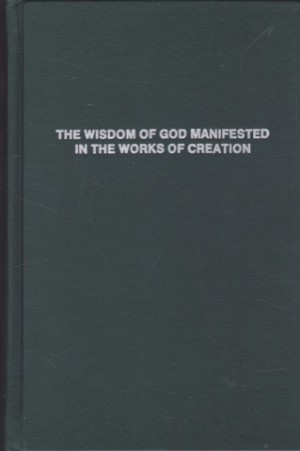
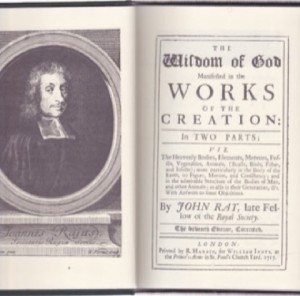
Hardcover. NY, Arno Press, reprint, 1977, Book: Very Good, Dust Jacket: None, Hardcover, dark green cloth with gilt lettering. A facsimile reprint of the London 1717 edition. 405 pages plus publisher's ads. Light pencil notes on front endpapers with owner's name in ink. Otherwise clean, tight copy.
Hardcover. New Haven CT, Yale University Press, 1st, 2001, Book: Very Good, Dust Jacket: None, Hardcover in burgundy cloth boards with gilt lettering to front panel and spine, as issued w/out dj. Short inscription on front fly leaf, otherwise clean. This book gathers together for the first time an important body of texts written between 1672 and 1686 by the great German philosopher and polymath Gottfried Leibniz. These writings, most of them previously untranslated, represent Leibniz's sustained attempt on a problem whose solution was crucial to the development of his thought, that of the composition of the continuum. The volume begins with excerpts from Leibniz's Paris writings, in which he tackles such problems as whether the infinite division of matter entails "perfect points," whether matter and space can be regarded as true wholes, whether motion is truly continuous, and the nature of body and substance. Comprising the second section is Pacidius Philalethi, Leibniz's brilliant dialogue of late 1676 on the problem of the continuity of motion. In the selections of the final section, from his Hanover writings of 1677-1686, Leibniz abandons his earlier transcreationism and atomism in favor of the theory of corporeal substance, where the reality of body and motion is founded in substantial form or force. Leibniz's texts (one in French, the rest in Latin) are presented with facing-page English translations, together with an introduction, notes, appendixes containing related excerpts from earlier works by Leibniz and his predecessors, and a valuable glossary detailing important terms and their translations.
Softcover. Indianapolis, Hackett Publishing, reprint, 1989, Book: Very Good, Dust Jacket: None, Softcover, 358 pages. This volume includes Whewell's seminal studies of the logic of induction (with his critique of Mill's theory), arguments for his realist view that science discovers necessary truths about nature, and exercises in the epistemology and ontology of science. The book sets forth a coherent statement of a historically important philosophy of science whose influence has never been greater: every one of Whewell's fundamental ideas about the philosophy of science is presented here. Clean, bright copy.
Softcover. Princeton, Princeton University Press, 1st Edition, 2000, Book: Very Good, Dust Jacket: None, 382 pages. Softcover in very good condition with full color photo of Isaiah Berlin to cover. Tight copy. Clean & unmarked text.
Hardcover. Cambridge MA, Belknap Press / Harvard University Press, 1st, 1979, Book: Very Good, Dust Jacket: Very Good, Hardcover in a lightly worn dust jacket, 896 pages. This masterly study has a grand sweep. It ranges over centuries, with a long look backward over several millennia. Yet the history it unfolds is primarily the story of individuals: thinkers and dreamers who envisaged an ideal social order and described it persuasively, leaving a mark on their own and later times. The roster of utopians includes men of all stripes in different countries and eras--figures as disparate as More and Fourier, the Marquis de Sade and Edward Bellamy, Rousseau and Marx. Fascinating character studies of the major figures are among the delights of the book. 1980 National Book Award winner. Name on front fly leaf, otherwise clean.
Softcover. Lanham MD, Rowman & Littlefield , 1st, 2003, Book: Very Good, Dust Jacket: None, Softcover, 349 pages. In Vergil's Empire, Eve Adler offers an exciting new interpretation of the political thought of Vergil's Aeneid. Adler argues that in this epic poem, Vergil presents the theoretical foundations of a new political order, one that resolves the conflict between scientific enlightenment and ancestral religion that permeated the ancient world. The work concentrates on Vergil's response to the physics, psychology, and political implications of Lucretius' Epicurean doctrine expressed in De Rerum Natura. Proceeding by a close analysis of the Aeneid, Adler examines Vergil's critique of Carthage as a model of universal enlightenment, his positive doctrine of Rome as a model of universal religion, and his criticism of the heroism of Achilles, Odysseus, and Epicurus in favor of the heroism of Aeneas. Beautifully written and clearly argued, Vergil's Empire will be of great value to all interested in the classical world. Clean copy.
Hardcover. NY, Peter H. Wyden, 1st, 1973, Book: Good, Dust Jacket: Fair, Hardcover in a dust jacket that has a water stain to rear panel. Mild ripple to rear cloth, but book, text pages not affected. There is some foxing/tanning to top edge of text block. No markings. Walter Kaufmann in defining the conflicts in Germany that put Hitler in power, are very similar to our challenges today. A good read for people who want to understand underlying impulses in our culture.

 "The Excellencie of a Free-State: Or, The Right Constitution of a Commonwealthby: Marchamont Nedham")
 "The Janus Faces of Genius: The Role of Alchemy in Newton's Thoughtby: Dobbs, Betty Jo Teeter")
 "The Last Days of Mankind: A Tragedy in Five Acts by: Kraus, Karl; /Ungar, Frederick(Ed.) /Wright, E Sue (transl.)")
 "The Lucretian Renaissance: Philology and the Afterlife of Traditionby: Passannante, Gerard")
 "The Making and Remaking of Christian Doctrine: Essays in Honour of Maurice Wilesby: Coakley, Sarah, /Pailin, David A. (Editors)")
 "The Metaphysical Foundations Of Modern Physical Scienceby: Edwin Arthur Burtt")
 "The Phenomenological Movement: A Historical Introduction (2 volumes). by: Spiegelberg, Herbert")
 "The Philosophical Canon in the 17th and 18th Centuries: Essays in Honour of John W. Yolton by: Rogers, G. A. J.; Tomaselli, Sylvana (eds.)")
 "The Political Thought of John Locke: An Historical Account of the Argument of the 'Two Treatises of Government'by: Dunn, John/John Locke")
 "The Reception of Locke's Politics Vol 2: Patriarchalism, the Social Contract and Civic Virture 1705- 1760by: Goldie, Mark (Ed.)")
 "The Reception of Locke's Politics Vol 3: The Age of the American Revolution 1760-1780by: Goldie, Mark (Ed.)")
 "The Reception of Locke's Politics Vol 4: Poitical Reform in the Age of The French Revolution 1780-1838by: Goldie, Mark (Ed.)")
 "The Roots of Evilby: Kekes, John")
 "The School of Padua and the Emergence of Modern Scienceby: Randall, John Herman")
 "The Seduction of Unreason: The Intellectual Romance with Fascism from Nietzsche to Postmodernismby: Richard Wolin")
 "The Spirit of Modern Republicanism: The Moral Vision of the American Founders And the Philosophy of Locke by: Pangle, Thomas L.")
 "The Wisdom of God Manifested in the Works of Creationby: John Ray")
 "The Yale Leibniz: The Labyrinth of the Continuum Writings on the Continuum Problem 1672-1686by: Leibniz GW; Richard TW. Arthur/ Translator")
 "Theory of Scientific Methodby: Whewell, William, Editor: Butts, Robert E.")
 "Three Critics of the Enlightenment - Vico, Hamann, Herderby: Berlin, Isaiah/Henry Harder (Editor)")
 "Unthinkable Swift, The - The Spontaneous Philosophy of a Church of England Manby: Montag, Warren")
 "Utopian Thought in the Western World by: Manuel, Frank E. and Fritzie P. Manuel")
 "Vergil's Empire: Political Thought in the Aeneidby: Eve Adler")
 "Without Guilt and Justice: From Decidophobia to Autonomy by: Kaufmann, Walter")