Princeton NJ, Princeton University Press, 1st, 2020, Book: Very Good, Dust Jacket: None, Hardcover, 264 pages, still in publisher's shrinkwrap. Lewis Carroll began photographing children in the mid-nineteenth century, at a time when the young medium of photography was opening up new possibilities for visual representation and the notion of childhood itself was in transition. In this lavishly illustrated book, Diane Waggoner offers the first comprehensive account of Carroll as a photographer of modern childhood, exploring how his photographs of children gave visual form to emerging conceptions of childhood in the Victorian age. Situating Carroll's photography within the broader context of Victorian visual and social culture, Waggoner shows how he drew on images of childhood in painting and other media, and engaged with the visual language of the Victorian theater, fancy dress, and Pre-Raphaelitism. She provides the first in-depth analysis of Carroll's photographing of boys, which she examines in the context of boys' education and reveals to be a significant part of his photographic career. Waggoner draws on a wealth of rare archival material, demonstrating how Carroll established new aesthetic norms for images of girls, engaged with evolving definitions of masculinity, and pushed the idea of childhood to the limit with his use of dress and nude images
Hardcover. Gottingen GR, Steidl/Howard Greenberg Library, 1st, 2018, Book: Very Good, Dust Jacket: None, Hardcover, 143 pages. Tan cloth with pictorial paste-down. In 1936, science-teacher turned photographer Lewis Hine was commissioned by the National Research Project, a division of the Works Progress Administration, to produce a visual document of the industries that the US government hoped would provide the jobs that would lift the country out of the Great Depression. Hine, already well-established as a chronicler of social conditions of his day, produced more than 700 photographs for this project, the last major work of his career.By emphasizing the inherent tension between machinery and workers, Hine imbued these compelling images with his characteristic rigor and aesthetic appeal. These photographs, and their implied message, are particularly relevant today given high unemployment rates and radical shifts in the role of the worker in the rapidly changing world economy. Included in this book is an essay by the eminent photographic historian, Judith Mara Gutman, in which she discusses the project and the photographs in the context of the economic conditions of the time and the artistic and technological innovations of the era.
Hardcover. Sydney AU, T&G PUBLISHING, 1st, 2011, Book: Very Good, Dust Jacket: Very Good, Hardcover, 395 pages, Like new in publishers shrink-wrap. Lewis Morley - I to Eye will illuminate and crystallise this body of work in a career retrospective, incorporating literally hundreds of photographs covering all aspects of Morley's work, from England, france and the united States, also the fashion beginnings in the 1950s through the personality portraits of the 60s to his work of the 70's, 80s and 90s. In a career that has spanned some 50 years, Morley has worked with equal ease in theatre, fashion, portraiture, magazine photography and documentary reportage. His body of work, particularly his portraits of key figures of 1960's London, is highly recognised, and with his famous photo of Christine keeler naked upon a chair, Morley produced an image that is probably one of the most memorable (and most copied) of any photographs of any time.
Hardcover. Sydney AU, T&G PUBLISHING, 1st, 2011-11-15, Book: Very Good, Dust Jacket: Very Good, Hardcover, 395 pages, Like new in publishers shrink-wrap. Lewis Morley - I to Eye will illuminate and crystallize this body of work in a career retrospective, incorporating literally hundreds of photographs covering all aspects of Morley's work, from England, france and the united States, also the fashion beginnings in the 1950s through the personality portraits of the 60s to his work of the 70's, 80s and 90s. In a career that has spanned some 50 years, Morley has worked with equal ease in theatre, fashion, portraiture, magazine photography and documentary reportage. His body of work, particularly his portraits of key figures of 1960's London, is highly recognised, and with his famous photo of Christine keeler naked upon a chair, Morley produced an image that is probably one of the most memorable (and most copied) of any photographs of any time.
Hardcover. New York, Doubleday and Co., reprint, 1963, Book: Very Good, Dust Jacket: Very Good, Hardcover. Photographs and text by Edward Steichen. Includes a biographical outline. Illustrated end pages. 249 black and white plates. Measures 11.5x10 inches. Edward Steichen (1879-1973) was the most frequently featured photographer in Alfred Stieglitz' groundbreaking magazine Camera Work during its run from 1903 to 1917. Later he worked for Conde Nast magazines Vogue and Vanity Fair. After World War II he became the Director of the Department of Photography at New York's Museum of Modern Art. Note: This book is the First edition, second printing (The book was originally published in 1963 with duotone and color plates, this second printing is in black and white only). In a very good dust jacket.
Hardcover. Hatje Cantz, 1st, 2009, Book: Very Good, Dust Jacket: Very Good, Hardcover, 128 pages. For five years, noted Paris-based portrait photographer Lillian Birnbaum documented a group of girls during their transition from childhood to young womanhood, examining their initial, innocent awakenings to their own feminine allure. This is a state that is particularly difficult to capture, according to essayist Doris van Drathen, for Birnbaum's photographs present that delicate space between the unconscious and the conscious; the passage from a world of dreams, chaos and fantasy into a world more and more contained by the forces of reality. A moment at the threshold between 'no longer' and 'not yet' in the life of a girl, just prior to her realizing that her feminine seductiveness will one day actually curb her freedom as an independent individual and she will begin to mirror her womanhood in how others view her.
Softcover. Dallas, Society of Friends of the Mexican Culture, 1st, 1991, Book: Very Good, Dust Jacket: None, Softcover, exhibition catalog, 116 pages. Published to accompany exhibit September, 1991 through June 1992. Light shelf wear, clean.
Hardcover. Chicago, University of Chicago Press, 1st, 2009, Book: Very Good, Dust Jacket: Very Good, Hardcover, 132 pages. Sight is central to the medium of photography. But what happens when the subjects of photographic portraits cannot look back at the photographer or even see their own image? An in-depth pictorial study of blind schoolchildren in Mexico, Look at me draws attention to (and distinctions between) the activity of sight and the consciousness of form. Combining aspects of his earlier, acclaimed street work with an innovative approach to portraiture, Chicago-based photographer Jed Fielding has concentrated closely on these children's features and gestures, probing the enigmatic boundaries between surface and interior, innocence and knowing, beauty and grotesque. Design, composition, and the play of light and shadow are central elements in these photographs, but the images are much more than formal experiments; they confront disability in a way that affirms life. Fielding's sightless subjects project a vitality that seems to extend beyond the limits of self-consciousness. In collaborative, joyful participation with the children, he has made pictures that reveal essential gestures of absorption and the basic expressions of our creatureliness.
Hardcover. Danbury NH, Addison House, 1st, 1978, Book: Very Good, Dust Jacket: Very Good, 187 pages. INSCRIBED BY JACOBI on title page. Black & white photography of Lotte Jacobi.
Softcover. Woodstock, VT, Countryman Press, 1st, 1982, Book: Very Good, Dust Jacket: None, 47 pages. Softcover with paper wrappers and dust jacket. Black and white phtoographs throughout.
Softcover. US, The Countryman Press, 1st, 1982, Book: Very Good, Dust Jacket: None, 47 pages, photos in b&w. Light sun-fade to spine, else a clean, tight copy. From publisher's jacket flap: "Berlin was a magic place for the arts in the twenties and early thirties, and no more so than in theater and dance. Fortunately for us, in the midst of this brilliant world, a young woman destined to become one of the best portrait photographers was just beginning her long illustrious career. Fourth generation photographer (her great grandfather had been taught by Daguerre), Lotte Jacobi photographed the brightest personalities of Berlin (and later New York), many of them her friends, in a direct and honest way that remains surprisingly fresh even today. In this book, along with Lotte's reminiscences of each, are revealing portraits of Peter Lorre, Lotte Lenya, Emil Jannings, Anna May Wong, Rene Clair, Lil Dagover, Claire Bauroff, Pauline Koner, Hanya Holme, and many others. Theater and Dance Photographs is a remarkable record of a remarkable time."
Hardcover. Baton Rouge, Louisiana State University Press, 1st, 1977, Book: Very Good, Dust Jacket: None, Hardcover. Introduction by William Mills. French text rendered by James and Elisabeth Spohrer. Brown tweed with photo and blind stamped cover. Clear plastic cover not present. Numerous full page black & white photographs by Turner Browne, map of Louisiana highlighting the Cajun Country, text in English and French,
Softcover. San Francisco, Chronicle Books, 1st, 1999, Book: Very Good, Dust Jacket: None, Softcover, 400 pages. A sequel to "The Body", this volume contains over 300 images, discovered during a lifetime's discriminating research into a century and a half of photography. They represent love and desire in all its many forms: the love of parents for their children and vice versa; the love between men and women; between men; between women. There is forbidden love. There is love as a saleable commodity and love as a symbol of absolute generosity. There is love of the body and love of the divine. Sex, affection, adoration, adulation; all these words have their visual equivalents in these images.
Hardcover. Stockport UK, Dewi Lewis, 1st, 2013, Book: Very Good, Dust Jacket: None, 80 pages, 40 color images by Simoneau documenting his relationship with Caroline Annandale. Clean. No dust jacket issued. Simoneau, a Montreal-based photographer, chronicles his long romantic relationship with Caroline Annandale. Having met at a photography workshop in 2000, Simoneau and Annandale engaged in what the book's description calls a "feverish" relationship, which took a turn on September 11th 2001, the date of the World Trade Center attacks in New York. Shortly afterwards, Annandale enlisted in the US Army and was shipped off to Iraq. Simoneau, the photographer of this love story, stayed behind. Simoneau does not present what might be expected from a 'war' book, nor does he delve into the gender role switch of the female partner going to combat while the male stays back on the homefront. Instead, his view of war becomes a unique assembly of what he sees and feels from a distance. Removed from the actual conflict, but connected emotionally to Caroline Annandale, Simoneau's view takes on a limited frame: he can see only what is sent to him or what is represented in the media during wartime. Love and War therefore is a book about war, and yet, the war is defined by the absence it's created in Simoneau's life.
Hardcover. Heidleburg, Kehrer Verlag, 1st, N/A, Book: Very Good, Dust Jacket: None, Hardcover. Like new in publisher's shrink-wrap. 95 pages. Collection of color photographs of families and friends photographed by the Pennsylvania photographer.
Softcover. Germany, Schirmer/Mosel, 1st, 1996, Book: Very Good, Dust Jacket: None, Softcover. 128 pages, b&w photos. Portraits include Alfred Hitchcock, Grace Jones, Marilyn Manson, Radiohead, Tubac, Andy Warhol, Mike Tyson , Frank Stella, Louise Bourgeois, Jeff Koons, Cindy Sherman. Bright, clean copy.
Hardcover. Munich, Prestel Verlag, 1st, 2020, Book: Very Good, Dust Jacket: Very Good, Hardcover in a bright dust jacket, pages. "Born Dora Kallmus (1881-1963), the Austrian fashion and portrait photographer who went by the moniker Madame d'Ora was the most acclaimed portraitist of fin de siecle Vienna. After relocating to Paris in the 1920s, she opened one of the most stylish Art Deco portrait studios where her models included Pablo Picasso, Josephine Baker, and Collette, among many others. This book, accompanying the largest exhibition devoted to Madame d'Ora ever presented in the United States, includes sections focusing on the different periods of the photographer's life, from her early upbringing as the daughter of Jewish intellectuals in Vienna, to her days as a premier society portraitist, through her survival during the Holocaust." Still in publisher's shrinkwrap.
Hardcover. Munich, Prestel Verlag, 1st, 2020, Book: Very Good, Dust Jacket: Very Good, Hardcover in a bright dust jacket, pages. "Born Dora Kallmus (1881-1963), the Austrian fashion and portrait photographer who went by the moniker Madame d'Ora was the most acclaimed portraitist of fin de siecle Vienna. After relocating to Paris in the 1920s, she opened one of the most stylish Art Deco portrait studios where her models included Pablo Picasso, Josephine Baker, and Collette, among many others. This book, accompanying the largest exhibition devoted to Madame d'Ora ever presented in the United States, includes sections focusing on the different periods of the photographer's life, from her early upbringing as the daughter of Jewish intellectuals in Vienna, to her days as a premier society portraitist, through her survival during the Holocaust." Still in publisher's shrinkwrap.
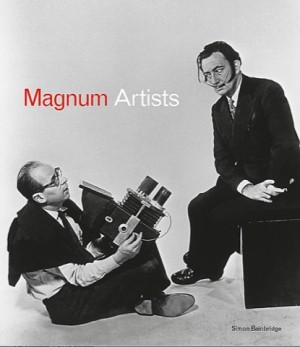
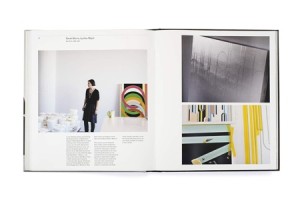
Hardcover. Laurence King Publishing, 1st, 2020, Book: Very Good, Dust Jacket: None, Hardcover in pictorial boards. 272 pages in coloe and b&w. Matisse and Picasso by Robert Capa, Takashi Murakami by Olivia Arthur, Warhol and de Kooning by Thomas Hoepker, Bonnard by Henri Cartier-Bresson, Sonia Delaunay by Herbert List, Kiki Smith by Susan Meiselas, and many more. For the first time, Magnum Artists brings together a collection of over 200 photographs that define the unique relationship between the world's greatest photography collective and the world's greatest artists. Still in publisher's shrinkwrap.
Hardcover. Corte Madera CA, Gingko Press, 1st, 1998, Book: Very Good, Dust Jacket: Very Good, Hardcover, 257 pages. Recognized as the most original photographer of the 20th century, Man Ray delighted the avant-garde of the 1920s and 1930s with daring, creative experimentation. He was the first Surrealist photographer, a gifted rebel with an incisive eye and a passion for freedom and pleasure. This outstanding monograph sheds new light on Man Ray's photographic genius -- incredibly, around one third of these images have never before been published. Visually spectacular and intellectually stimulating it shatters the myth -- cultivated by Man Ray himself -- that his photographic creativity resulted from timely mistakes and chance occurrences. Featured are many of his solarizations, rayographs, unconventional portraits and sensual nudes. Previous owner's signature on front fly leaf.
Hardcover. New Haven CT, Yale University Press, 1st, 2021, Book: Very Good, Dust Jacket: None, Hardcover, pictorial boards, 320 pages. A detailed look at the photographic processes pioneered by Man Ray in the 1920s and 30s, which resulted in groundbreaking portraits of many of his celebrated friends and lovers. Clean copy.
Hardcover. NY, Abrams, 1st, 2008, Book: N, Hardcover, 168 pages. Nelson Mandela, an icon of the international struggle for freedom and equality, whose importance rivals that of Martin Luther King and Mahatma Gandhi, turns ninety in July 2008. Mandela spent twenty-seven years in prison for his opposition to the apartheid regime of his native South Africa. Released in 1990, he pursued a policy of reconciliation, steering his nation into the ranks of the world's multi-racial democracies. He was elected president of South Africa in 1994. Photographer David Turnley covered Mandela and South Africa for the world's press, beginning in the 1980s. He witnessed the turbulence of the last violent years of apartheid, was there when Mandela was released from prison, campaigned with him during the presidential election, and sought out the significant people and places of his life. In Mandela: Struggle and Triumph, he tells in words and photographs the dramatic and emotional story of the most powerful movement for civil rights since the American civil rights movement, through the eyes of its legendary leader.
Hardcover. New Haven CT, Yale University Press, reprint, 2004, Book: Very Good, Dust Jacket: Very Good, Hardcover, 208 pages. Between 1936 and 1941 Walker Evans and James Agee collaborated on one of the most provocative books in American literature, Let Us Now Praise Famous Men (1941). While at work on this book, the two also conceived another less well-known but equally important book project entitled Many Are Called. This three-year photographic study of subway passengers made with a hidden camera was first published in 1966, with an introduction written by Agee in 1940. Long out of print, Many Are Called is now being reissued with a new foreword and afterword and with exquisitely reproduced images from newly prepared digital scans. Many Are Called came to fruition at a slow pace. In 1938, Walker Evans began surreptitiously photographing people on the New York City subway. With his camera hidden in his coat--the lens peeking through a buttonhole--he captured the faces of riders hurtling through the dark tunnels, wrapped in their own private thoughts. By 1940-41, Evans had made over six hundred photographs and had begun to edit the series. The book remained unpublished until 1966 when The Museum of Modern Art mounted an exhibition of Evans's subway portraits.
Hardcover. New Haven CT, Yale University Press, 1st, 2022, Book: Very Good, Hardcover, pictorial boards, Photographer Marcia Resnick (b. 1950) earned recognition as part of the legendary Downtown New York art scene of the 1970s and 1980s. Her portraits of the era's major cultural figures, such as Jean-Michel Basquiat, John Belushi, and Susan Sontag, have contributed to the scene's mythic status. Against this backdrop, Resnick also produced a significant body of work that engaged with the history of art, took a humorous approach to conceptual art and feminism, and proposed new ideas for what photography could be. Spanning the artist's career, this richly illustrated volume explores Resnick's early influences and education at Cooper Union and CalArts; discusses her series and photobooks such as See and Re-visions; and situates the artist's work within the history of contemporary art. An afterword by Laurie Anderson speaks to the very personal vision of Resnick's photography. Still in publisher's shrinkwrap.

 "Lewis Carroll's Photography and Modern Childhoodby: Diane Waggoner")
 "Lewis Hine: When Innovation Was King: The WPA National Research Project Photographs 1936-37 by: Judith Mara Gutman/Lewis Hine")
 "Lewis Morley I to Eye: The Definitive Retrospective on One of the 20th Century's Outstanding Photographersby: Lewis Morley; Charlotte Cotton; Gael Newton")
 "Lewis Morley I to Eye: The Definitive Retrospective on One of the 20th Century's Outstanding Photographersby: Morley, Lewis")
 "Life in Photography, Aby: Steichen, Edward")
 "Lillian Birnbaum: Transitionby: Doris von Drathen and Lilian Birnbaum")
 "Lola Alvarez Bravo: The Frida Kahlo Photographsby: Lola Alvarez Bravo; Frida Kahlo; introduction and interview by Salomon Grimberg")
 "Look at me: Photographs from Mexico City by Jed Fieldingby: Jed Fielding , Britt Salvesen, et al.")

 "Lotte Jacobi: Theater & Dance Photographsby: Jacobi, Lotte")
 "Lotte Jacobi: Theater & Dance Photographsby: Jacobi, Lotte")
 "Louisiana Cajuns / Cajuns De La Louisianeby: Browne, Turner")
 "Love and Desire: Photoworks by: Ewing, William")
 "Love and Warby: Simoneau, Guillaume")
 "Lydia Panas: The Mark of Abelby: George Slade, Maile Maloy, Lydia Panas (Photographer)")
 "Mad Dogby: Watson, Albert")
 "Madame d'Ora by: Ora Madame d'/ Monika Faber/Ronald Lauder; et al.")
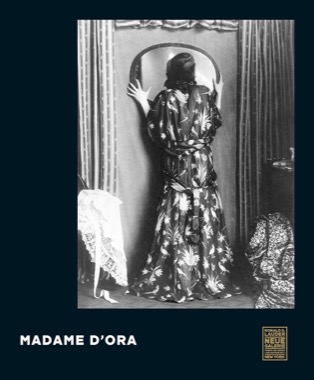
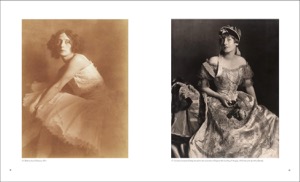
 "Madame d'Oraby: Ora Madame d'/ Monika Faber/Ronald Lauder; et al.")
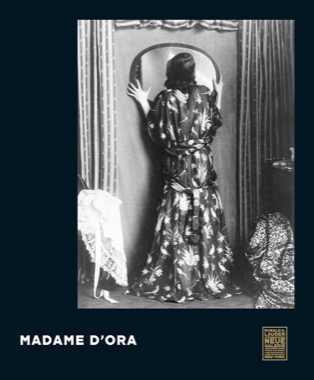
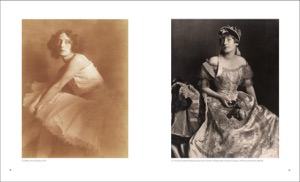
 "Magnum Artists: Great Photographers Meet Great Artists by: Bainbridge, Simon")
 "Man Ray: Photography and Its Doubleby: Alain Sayag and Emmanuelle De I'Ecotais")
 "Man Ray: The Paris Years by: Michael R. Taylor")
 "Mandela : Struggle and Triumphby: Turnley, David")
 "Many Are Calledby: Walker Evans , James Agee, et al.")
 "Marcia Resnick: As It Is or Could Be by: Resnick, Marcia")