Softcover. London, The Observer/Thames & Hudson, 1st, 1980, Book: Very Good, Dust Jacket: None, Softcover, 120 full-page black-and white plates. Semi-stiff pictorial covers, titled in purple. Published to accompany an exhibition at the National Portrait Gallery. Introduction by Patrick O'Donovan. This collection showcases the distinctive photographic work of Jane Bown, a renowned British photographer known for her ability to capture candid and evocative portraits with a "gentle eye." Clean, bright copy.
Hardcover. New York, Crown Publishers, 1st, 1988, Book: Very Good, Dust Jacket: Very Good, 255 pages, illustrated throughout in color. Light shelf-wear to dust jacket, else a clean, tight copy. "The Guards, a body of some 5500 officers and men whose special task it is to protect the British sovereign are the oldest and perhaps the most unusual military institution in the West. They are not just gorgeously caparisoned performers marching up and down outside the royal palaces in London and Windsor...they are also a highly disciplined and versatile military formation, found wherever the British army is called upon to soldier, from the jungles of Central America to the mean streets of Belfast." Many color photographs.
Hardcover. Museums of San Francisco/ DelMonico Books, 1st, Book: Very Good, Dust Jacket: Very Good, Hardcover in a bright dust jacket. In 1974 the photojournalist and art photographer Steve Kahn began a series of provocative black-and-white Polaroids of porn-industry models posing in seedy Hollywood apartments. What began as an exploration of staged photography and portraiture evolved over the next three years into "The Hollywood Suites," a multi-faceted conceptual project in which Kahn turned his lens away from the models to deconstruct their seemingly mundane and monotonous surroundings. Endlessly fascinating, Kahn's series touches on myriad themes including bondage, containment, isolation, and the poetics of absence. This volume includes more than 100 works arranged in chronological groupings based on the original Polaroid film sessions and features essays that offer a scholarly assessment of a groundbreaking work. Published on the occasion of the exhibition "Steve Kahn: The Hollywood Suites" at the de Young museum, San Francisco, from September 9, 2018 to March 31, 2019.
Hardcover. Museums of San Francisco/ DelMonico Books, 1st, Book: Very Good, Dust Jacket: Very Good, Hardcover in a bright dust jacket. In 1974 the photojournalist and art photographer Steve Kahn began a series of provocative black-and-white Polaroids of porn-industry models posing in seedy Hollywood apartments. What began as an exploration of staged photography and portraiture evolved over the next three years into "The Hollywood Suites," a multi-faceted conceptual project in which Kahn turned his lens away from the models to deconstruct their seemingly mundane and monotonous surroundings. Endlessly fascinating, Kahn's series touches on myriad themes including bondage, containment, isolation, and the poetics of absence. This volume includes more than 100 works arranged in chronological groupings based on the original Polaroid film sessions and features essays that offer a scholarly assessment of a groundbreaking work. Published on the occasion of the exhibition "Steve Kahn: The Hollywood Suites" at the de Young museum, San Francisco, from September 9, 2018 to March 31, 2019.
Softcover. NY, Fotofolio, 1st, 1999, Book: Very Good, Dust Jacket: None, Softcover, 64 pages. Selected portrait studies of infants of both sexes, and in various attitudes, taken between 1994 and 1999; with the photographer's short introduction and acknowledgments.
Softcover. NY, Fotofolio, 1st, 1999, Book: Very Good, Dust Jacket: None, Softcover, 64 pages. Selected portrait studies of infants of both sexes, and in various attitudes, taken between 1994 and 1999; with the photographer's short introduction and acknowledgments.
Hardcover. NY, Harper, 1st, 1999, Book: Very Good, Dust Jacket: Very Good, Hardcover, 80 pages. In this unique collaboration Arturo Patten, one of the most important portrait photographers of our time, and acclaimed writer Russell Banks visit the hardscrabble north country of Patten, Maine, to study its inhabitants. Patten's haunting portraits of the town's residents evoke characters who exist in Russell Banks's fiction. Banks, the author of Cloudsplitter, The Sweet Hereafter, and Affliction, observes Patten's "characters" from his remote cabin in the Adirondack hills of upstate New York, where he surrounds himself with the thirty-seven portraits and contemplates what they tell us about Patten, Maine, about portraiture, and ultimately about ourselves.
Hardcover. NY, HarperCollins, 1st, 1999, Book: Very Good, Dust Jacket: Very Good, Hardcover, 80 pages. In this unique collaboration Arturo Patten, one of the most important portrait photographers of our time, and acclaimed writer Russell Banks visit the hardscrabble north country of Patten, Maine, to study its inhabitants. Patten's haunting portraits of the town's residents evoke characters who exist in Russell Banks's fiction. Banks, the author of Cloudsplitter, The Sweet Hereafter, and Affliction, observes Patten's "characters" from his remote cabin in the Adirondack hills of upstate New York, where he surrounds himself with the thirty-seven portraits and contemplates what they tell us about Patten, Maine, about portraiture, and ultimately about ourselves.
Hardcover. NY, Henry Holt & Co., 1st, 1998, Book: Very Good, Dust Jacket: Very Good, Hardcover, 150 pages. The noted photojournalist draws on her archive of photographs of the most important Jewish writers of the twentieth century to present an album of ninety pictures accompanied by an assessment of their significance
Hardcover. NY, Henry Holt & Co, 1s, 1998, Book: Very Good, Dust Jacket: Very Good, Hardcover, 150 pages. B&w portraits. Jill Krementz has made a career of photographing writers. The Jewish Writer features her portraits of 78 "people of the book," among them Saul Bellow, Hannah Arendt, Maurice Sendak, and David Mamet. Some of these portraits are contemplative; others are joyous. What distinguishes them is Krementz's ability to capture the essence of a moment that is at once exquisite and mundane, be it playwright Wendy Wasserstein rolling up her sleeves at her computer or an elfin Stanley Kunitz half-hiding in the blooms of his Provincetown garden. A mischievous Bruce Jay Friedman dashes around Southampton in a spiffy convertible; a bearded, bandana'd, and bespectacled Allen Ginsberg appears at the 1972 Democratic National Convention. (Though some of these photographs date from the early '70s, most are much more recent.) Each portrait is accompanied by a description of the author's life and work, and the relationship of each to Judaism, or, more accurately, Jewishness. The Jewish Writer is a spirited testament to the enormous and diverse contributions Jewish writers have made to our literary landscape.
Hardcover. New York, Harper Design, 1st, 2007, Book: Very Good, Dust Jacket: Very Good, Hardcover, 128 pages. Illustrated with 75 gorgeous b&w photographs of John F. Kennedy, Jacqueline and their children by Richard Avedon. Foreword by Robert Dallek. Text by Shannon Thomas Perich.
Hardcover. NY, Harper Design, 1st, 2007, Book: Very Good, Dust Jacket: Very Good, Hardcover, 128 pages. In the early 1960s, Richard Avedon was commissioned by Harper's Bazaar to create Observations, a column that consisted of a series of nine photographic essays. The subject of the first essay was John F. Kennedy and his young family, who sat for formal black-and-white portraits just three weeks prior to Kennedy's presidential inauguration. Six images appeared in the magazine's February 1961 issue. That same day, Avedon created more informal color portraits of Kennedy and his family at the Kennedy compound in Palm Beach. One of these images ran as the cover of LOOK magazine's February 28 issue, with photographs by Avedon inside. Just before the magazine hit the newsstands and was delivered to over 6.5 million people, a set of photographs, comprised mostly of the LOOK images, was released by the White House and appeared in newspapers across the country. During his lifetime, Richard Avedon donated more than two hundred images to the Smithsonian Institution, including all of the photographs of the Kennedy family sitting for Harper's Bazaar. Smithsonian curator Shannon Thomas Perich has culled more than seventy-five images from that donation for The Kennedys: Portrait of a Family, making these stunning photographs available for view for the first time. Perich's introductory essay--accompanied by a wealth of archival photographs of both Avedon and the Kennedy family--provides historical background on the two sittings within a political and cultural context and critically examines the work of one of the finest photographers of the twentieth century. A foreword by Robert Dallek, distinguished historian and author of the bet-selling An Unfinished Life: John F. Kennedy, 1917-1963, provides authoritative and compelling insight to one of the most fascinating presidents in American history.
Hardcover. Daab Publishing, 1st, 2006, Book: Very Good, Dust Jacket: Very Good, Hardcover, 240 pages. David Bradford is a photographer and New York City taxi driver, who epitomizes the concept of carrying a camera during regular day-to-day activities. Bradford mainly shoots while he's working, capturing the essence of New York City in all its human, architectural and climatic diversity. In his second book, he presents a selection of his passengers, which sat down at his backseat. The result is a collection that captures the breadth of humanity - the whole world of people - that can pass through the back seat of a New York City taxi.
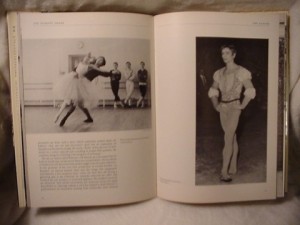
Hardcover. NY, Quadrangle Books, 1st US, 1976, Book: Very Good, Dust Jacket: Very Good, Hardcover in a bright, unclipped dust jacket. 288 pages, over 300 photos in b&w of the performer. Clean copy.
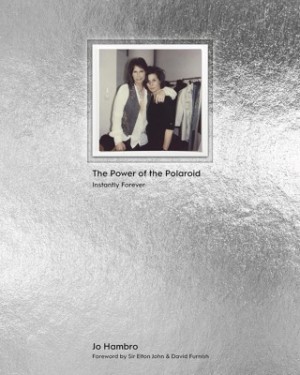
Hardcover. London, Clearview, 1st, 2019, Book: Very Good, Dust Jacket: None, Hardcover, pictorial boards with a paste-down label, 160 pages, illustrated in color and b&w. Foreword by Elton John and David Furnish. A polaroid is the physical and organic reminder of a particular moment, enabling the creative team to step back and fully consider the technical and artistic direction of a photoshoot. The excitement of watching the image slowly developing and seeing the final result makes the polaroid a tiny artwork all of its own.In this book, uber-stylist and storyteller Jo Hambro showcases some of her vast personal records of polaroids taken from the fashionshoots she has worked on over the last two decades. Combined with her extraordinary notebooks, scribbles and sketches formulating the stories that each shoot is based on, (in which polaroids are an indispensable part), we are taken into the hidden world of fashion's creative process. Clean copy.
Hardcover. Boston, Bulfinch, 1st, 1991, Book: Very Good, Dust Jacket: Very Good, Hardcover, 135 pages, Color photos by Schiffman that originally appeared in Rolling Stone magazine. Brief profiles accompany portraits of Robin Williams, Steve Martin, Lilly Tomlin, Jerry Lewis, Jonathan Winters, Whoopi Goldberg, and other comedians.
Hardcover. NY, Random House, 1st, 1999, Book: Very Good, Dust Jacket: Very Good, Hardcover, 240 pages. The Sixties is the product of a 30-year collaboration between photographer Richard Avedon and writer Doon Arbus, whose images and words combine in this volume to create a compelling portrait of one of the 20th century's most tumultuous decades. Avedon, the celebrated photographer whose portraits of some of the best-known personalities of our age have graced the pages of Harper's Bazaar, Vogue, and The New Yorker magazines since the early 1950s, was prolific during the '60s. Looked at together, his images from those years create a visual time capsule. This large book is filled with a cacophony of Yippies, Black Panthers, Weathermen, Hare Krishnas, Andy Warhol Factory Superstars, pop artists, rock musicians, astronauts, pacifists, politicians, electroshock therapists, media correspondents, civil rights lawyers, antiwar activists, and more--all shot against his signature white background. Arbus, a novelist and writer for magazines including Rolling Stone and The Nation (and the daughter of photographer Diane Arbus), conducted interviews with many of the subjects. Snippets of those conversations provide an intimate and unforgettable document of the tension, vulnerability, anger, recklessness, hope, and empowerment many people experienced during that era. Brief biographies of the portrait sitters, as well as a chronology that spans the first signs of the war in Vietnam in 1960 to its final conclusion in 1973, provide excellent context for the images.
Hardcover. NY, Random House, 1st, 1999, Book: Very Good, Dust Jacket: Very Good, Hardcover, 240 pages. The Sixties is the product of a 30-year collaboration between photographer Richard Avedon and writer Doon Arbus, whose images and words combine in this volume to create a compelling portrait of one of the 20th century's most tumultuous decades. Avedon, the celebrated photographer whose portraits of some of the best-known personalities of our age have graced the pages of Harper's Bazaar, Vogue, and The New Yorker magazines since the early 1950s, was prolific during the '60s. Looked at together, his images from those years create a visual time capsule. This large book is filled with a cacophony of Yippies, Black Panthers, Weathermen, Hare Krishnas, Andy Warhol Factory Superstars, pop artists, rock musicians, astronauts, pacifists, politicians, electroshock therapists, media correspondents, civil rights lawyers, antiwar activists, and more--all shot against his signature white background. Arbus, a novelist and writer for magazines including Rolling Stone and The Nation (and the daughter of photographer Diane Arbus), conducted interviews with many of the subjects. Snippets of those conversations provide an intimate and unforgettable document of the tension, vulnerability, anger, recklessness, hope, and empowerment many people experienced during that era. Brief biographies of the portrait sitters, as well as a chronology that spans the first signs of the war in Vietnam in 1960 to its final conclusion in 1973, provide excellent context for the images.
Hardcover. London, Merrell, 1st, 2003, Book: Very Good, Dust Jacket: Very Good, Hardcover, 351 pages, color and b&w plates. This book collects Willoughby's candid photographs from the sets of various great films since the 1950s. Also included are filmographies of the directors with whom he has worked. As the subtitle indicates, he really has collaborated with many of the great cinema luminaries. Beginning with Vincente Minnelli, they include Orson Welles, William Wellman, George Stevens, Mike Nichols, William Wyler, Alfred Hitchcock, and others. The most interesting aspect of this book is indisputably the photos (most of them black and white), many of which were shot in informal settings, showing directors and actors in seemingly unguarded moments. He made himself seem invisible, Willoughby said, by blending in with the movie crew, once he realized they were invisible to the actors.
Hardcover. Boston, David R. Godine, 1st, 2009, Hardcover, 192 pages. The photography of Angus McBean encompasses more than three decades of the history of British theater. His work includes most of the memorable productions of the Old Vic Company and of what is now the Royal Shakespeare Company; opera productions at Glyndebourne and the Royal Opera House, Covent Garden; ballet and operetta at Sadler's Wells; and West End productions of plays and musicals both old and new -- hundreds of productions in all. He was the favorite photographer of Vivien Leigh, Laurence Olivier, and Edith Evans, and he photographed countless plays starring John Gielgud, Ralph Richardson, and Alec Guinness, not to mention younger stars such as Audrey Hepburn, Richard Burton, and Elizabeth Taylor. In fact, McBean photographed virtually every great actor of his era, perhaps the most brilliant years in the annals of British theater. His studio was active and eclectic; among his patrons were not only actors, singers, and dancers, but also playwrights, producers, composers, artists, and writers. In his early career, McBean had been a pioneer of surrealist photography, with a highly popular series of "surrealized" portraits that appeared in The Sketch, and, later, of montage and multiple-exposure photography in a long-running series for The Tatler. In 1969, McBean approached Harvard University to initiate the sale of his collection, and in the following year his archive of glass plate negatives, index prints, and programs, together with the copyrights, became a part of the Harvard Theatre Collection, where it remains the most often-requested collection of visual material. The photographs in this book, selected and captioned by the archive's curator, Fredric Woodbridge Wilson, have been carefully reproduced from the original negatives.
Hardcover. Boston, David Godine, 1st, 2009, Book: Very Good, Dust Jacket: Very Good, Hardcover, 192 pages. The photography of Angus McBean encompasses more than three decades of the history of British theater. His work includes most of the memorable productions of the Old Vic Company and of what is now the Royal Shakespeare Company; opera productions at Glyndebourne and the Royal Opera House, Covent Garden; ballet and operetta at Sadler's Wells; and West End productions of plays and musicals both old and new-hundreds of productions in all. McBean was the favorite photographer of Vivien Leigh, Laurence Olivier, and Edith Evans, and he photographed countless plays starring John Gielgud, Ralph Richardson, and Alec Guinness, not to mention younger stars such as Audrey Hepburn, Richard Burton, and Elizabeth Taylor. In fact, McBean photographed virtually every great actor of his era, perhaps the most brilliant years in the annals of British theater.
New Haven CT, Yale University Press, 1st, 2011, Book: Very Good, Dust Jacket: None, Hardcover, decorated black cloth, 160 pages. An amazing treasure trove of unpublished images, this intriguing and entertaining book looks at how women explored their identity through popular photography in the 20th century Snapshots preserve more than individual likeness and memory. Photographs of celebrations, vacations, and gatherings of family and friends are collected with the aim of constructing and preserving a personal identity for future generations. What happens, however, when a snapshot is subsequently discarded or displaced and becomes merely an "anonymous" image? This and many other questions are discussed in this fascinating selection of anonymous images depicting three women. Presumably all taken by nonprofessionals, these snapshots were acquired over time by a private collector interested in their eclectic yet familiar details, who named the grouping after the iconic Greco-Roman motif.
Hardcover. NP, Somogy Art Publishers, 1st, 2006, Book: Very Good, Dust Jacket: Very Good, Hardcover, 96 pages. This fascinating collection of photographs documents a relatively unknown episode of Jewish history in Eastern Europe. Illustrating how the 1920s and 1930s saw the creation and development of "Jewish agricultural colonies" in the Soviet Union, Lithuania, Latvia, Poland, and Romania, this history shows that the aim was to "normalize" Jews by teaching them "productive" professional skills. These recently discovered photographs offer a unique and moving insight into the Jewish experience in central and Eastern Europe before World War II. This edition includes English, French, and Yiddish.

 "The Gentle Eye: Photographs by Jane Bown of The Observer by: Jane Bown")
 "The Guardsby: Jorre, John De St")
 "The Hollywood Suitesby: Steve Kahn")
 "The Hollywood Suitesby: Steve Kahn")
 "The Inconvenience Of Being Bornby: Amy Arbus")
 "The Inconvenience Of Being Bornby: Amy Arbus")
 "The Invisible Stranger: The Patten, Maine, Photographs of Arturo Pattenby: Russell Banks and Arturo Patten")
 "The Invisible Stranger: The Patten, Maine, Photographs of Arturo Pattenby: Russell Banks and Arturo Patten")
 "The Jewish Writerby: Jill Krementz")
 "The Jewish Writerby: Krementz, Jill")
 "The Kennedys: Portrait Of A Familyby: Avedon, Richard")
 "The Kennedys: Portrait of a Familyby: Richard Avedon and Shannon Thomas Perich")
 "The Man Who Shot Garbo: The Hollywood Photographs of Clarence Sinclair Bull by: Pepper, Terence / John Kobal")
 "The New York Taxi Back Seat Bookby: Bradford, David/Barry Wells")
 "The Nureyev Image by: Bland, Alexander")

 "The Power of the Polaroid: Instantly Foreverby: Hambro, Jo")
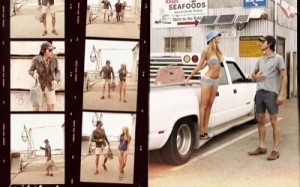
 "The Rolling Stone Book of Comedyby: Bonnie Schiffman and Bill Zehme")
 "The Sixtiesby: Avedon, Richard and Doon Arbus")
 "The Sixtiesby: Avedon, Richard and Doon Arbus")
 "The Star Makers: On Set with Hollywood's Greatest Directorsby: Willoughby, Bob/ Sydney Pollack (Intro.)")
 "The Theatrical World of Angus McBean: Photographs from the Harvard University Theatre Collectionby: Fredric Woodbridge Wilson and Richard Traubner")
 "The Theatrical World of Angus McBean: Photographs from the Harvard University Theatre Collectionby: Fredric Woodbridge Wilson and Richard Traubner")
 "The Three Graces: Snapshots of Twentieth-Century Womenby: Michal Raz-Russo")
 "The Tradesmen and the Farmers of Yiddishland: 1921-1938by: Pollack, Emmanuelle (Editor)")