Softcover. Lanham MD, Scarecrow Press, 2006, Book: Very Good, Dust Jacket: None, Softcover, 331 pages, b&w illustrations. Like most ground-breaking art forms, contemporary creative music is rarely understood or accepted in its own time, and for those reasons, can largely go unheard. Music and the Creative Spirit: Innovators in Jazz, Improvisation, and the Avant Garde aims to give today's brightest music innovators due recognition and respect, celebrating their work and creativity. Through personal interviews, artists such as Pat Metheny, Regina Carter, Joshua Redman, Fred Anderson, Dave Holland, Bill Frisell, David Murray, and John Zorn-to name just a few-offer clear, frank discussions about music, creativity, work, society, culture, current events, and more. Clean, bright copy.
Softcover. NY, Basic Books, reprint, 2007, Book: Very Good, Dust Jacket: None, Softcover, 359 pages. Stanley Crouch-MacArthur "genius" award recipient, co-founder of Jazz at Lincoln Center, National Book Award nominee, and perennial bull in the china shop of black intelligentsia- has been writing about jazz and jazz artists for over thirty years. His reputation for controversy is exceeded only by a universal respect for his intellect and passion. As Gary Giddons notes: "Stanley may be the only jazz writer out there with the kind of rhinoceros hide necessary to provoke and outrage and then withstand the fulminations that come back." Now, in a long-awaited collection, Crouch collects fifteen of his most influential, and most controversial pieces (published in Jazz Times, The New Yorker, the Village Voice, and elsewhere), and includes two new essays as well. The pieces range from the introspective "Jazz Criticism and its Effect on the Art Form" to a rollicking debate with Amiri Baraka, to vivid, intimate portraits of the legendary performers Crouch has known. The first, autobiographical essay reflects on his life in jazz as a drummer, a promoter, a critic, and most of all a lover of this quintessentially American art form. And the closing essay, about a young Italian saxophonist, expresses undaunted optimism for the worldwide vibrancy of jazz.Throughout, Crouch's work reminds us not only of why he is one of the world's most important living jazz critics, but also of why jazz itself remains, against all odds, an elemental component of our cultural identity. Clean, bright copy.
Softcover. Berkeley CA, University of California Press, 1st pbk, 2007, Book: Very Good, Dust Jacket: None, Softcover, 398 pages. Alex Stewart's excellent book tackles a subject which has been hidden in plain sight: the central importance of the big band, not as dead artifact of the Swing Era, but as a seminal and nurturing force through the entire history of jazz down to our own time. Through an attractive blend of ethnographic participant-observation, historiography, and formal analysis, Stewart puts the big band at the center of jazz, arguing for its indispensability as a locus of instrumental training and rehearsal, composition, legitimation, and professional networking. Informed and enriched by his own experience as a performer in those worlds. Light crease to front cover, clean copy.
Hardcover. NY, W.W. Norton & Company, 1st, 2010, Book: Very Good, Dust Jacket: Very Good, Hardcover in a bright dust jacket, 430 pages. During America's Swing Era, no musician was more successful or controversial than Artie Shaw: the charismatic and opinionated clarinetist-bandleader whose dozens of hits became anthems for "the greatest generation." But some of his most beautiful recordings were not issued until decades after he'd left the scene. He broke racial barriers by hiring African-American musicians. His frequent "retirements" earned him a reputation as the Hamlet of jazz. And he quit playing for good at the height of his powers. The handsome Shaw had seven wives (including Lana Turner and Ava Gardner). Inveterate reader and author of three books, he befriended the best-known writers of his time. Tom Nolan, who interviewed Shaw between 1990 and his death in 2004 and spoke with one hundred of his colleagues and contemporaries, captures Shaw and his era with candour and sympathy, bringing the master to vivid life and restoring him to his rightful place in jazz history. Clean, bright copy.
Softcover. Lincoln NE, University Of Nebraska Press , 1st pbk, 1995, Book: Very Good, Dust Jacket: None, Softcover, 432 pages. Collects letters and essays that are published during the 1850s and 1860s. This title highlights the notorious 1850 article "Judaism in Music". It includes prose pieces such as "On the Performing of Tannhauser"; "On Musical Criticism"; and, "Music of the Future". It offers suggestions for the reform of opera houses in Vienna, Paris, and Zurich. Clean copy.
Hardcover. New Haven CT, Yale University Press, 1st, 2013, Book: Very Good, Dust Jacket: Very Good, Hardcover, 606 pages, b&w illustrations. In a bright, unclipped dust jacket. Clean copy. An extraordinary selection of revealing letters to and from one of the titans of 20th-century music. Leonard Bernstein was a charismatic and versatile musician--a brilliant conductor who attained international super-star status, and a gifted composer of Broadway musicals (West Side Story), symphonies (Age of Anxiety), choral works (Chichester Psalms), film scores (On the Waterfront), and much more. Bernstein was also an enthusiastic letter writer, and this book is the first to present a wide-ranging selection of his correspondence. The letters have been selected for the insights they offer into the passions of his life--musical and personal--and the extravagant scope of his musical and extra-musical activities.
Hardcover. New Brunswick, Rutgers University Press, 1st, 1960, Book: Very Good, Dust Jacket: Good, 177 pages. Hardcover. Illustrated with black & white photographs. Price clipped dust jacket with wear along edges - now protected with clear plastic cover. Clean, tight copy. Report on the men and women who lived in the South and created work songs, spirituals, blues, and jazz.
Hardcover. Boston, Northeastern University Press, 1st, 1996, Book: Very Good, Dust Jacket: Very Good, Hardcover, 426 pages, b&w photographs. Bright, clean copy. This engaging biography of Harold Arlen charts the course of his brilliant career, from band leader in his native Buffalo, New York, to songwriter and vocalist in vaudeville, to composer of Broadway musicals and revues at Harlem's Cotton Club, to writer of the everlasting music in The Wizard of Oz and other films. Drawing on a treasure trove of family documents and memorabilia, Edward Jablonski vividly describes Arlen's life, including his loving but troubled marriage to Anya, the strained relationship with his father and brother, his alcoholism and illnesses, and his friendship with Marlene Dietrich. Populated with such greats as Johnny Mercer, George and Ira Gershwin, E. Y. Harburg, Bert Lahr, and Judy Garland, the book also captures the spirit of Arlen's times and conveys a sense of the inner workings of the music business.
Softcover. Chicago, University of Chicago Press, 1st, 1997, Book: Very Good, Dust Jacket: None, Softcover, 306 pages, b&w illustrations. In Creating Country Music, Richard Peterson traces the development of country music and its institutionalization from Fiddlin' John Carson's pioneering recordings in Atlanta in 1923 to the posthumous success of Hank Williams. Clean copy.
Hardcover. NY, Oxford University Press, 1st, 2011, Book: Very Good, Dust Jacket: Very Good, Hardcover in a bright, unclipped dust jacket. 336 pages, b&w illustrations. Author Larry Hamberlin guides us through this large but oft-forgotten repertoire of operatic novelties, and brings to life the rich humor and keen social criticism of the era. In the early twentieth-century, when new social forces were undermining the view that our European heritage was intrinsically superior to our native vernacular culture, opera-that great inheritance from our European forebearers-functioned in popular discourse as a signifier for elite culture. Tin Pan Opera shows that these operatic novelty songs availed this connection to a humorous and critical end. Combining traditional, European operatic melodies with the new and American rhythmic verve of ragtime, these songs painted vivid images of immigrant Americans, liberated women, and upwardly striving African Americans, striking emblems of the profound transformations that shook the United States at the beginning of the American century. Clean copy.
Softcover. Evanston IL, Northwestern University Press, 1st, 2010, Book: Very Good, Dust Jacket: None, Softcover, 390 pages. INSCRIBED BY AUTHOR on title page. A swing note is, to the listener of the rhythm, an unexpected note, and it is the spark of life in jazz and its relatives. Whether playing the standards or the most experimental piece, it is how a musician handles these notes--fearlessly or safely--that determines the fate of the performance. Howard Reich's critical writing is similarly unexpected and fearless, and Let Freedom Swing is a collection of the articles from the past three decades that best capture this spirit. Each section of Let Freedom Swing composes a suite, focusing on either a person, place, or scene. Reich gives new life to the standards with his profiles and elegies for such giants as Gershwin, Ellington, and Sinatra. A profile of Louis Armstrong brings out the often angry side of Satchmo but also reveals a more remarkable musician and human being. His open-mindedness makes Reich a particularly astute observer of the experimental and new, from Ornette Coleman to Chicago experimentalist Ken Vandermark. And his observations about street music open our ears to the songs of everyday life. Reich's fearlessness is evident in his writing about daunting subjects, such as the New Orleans music scene after Katrina, the lost legacy of jazz in Panama, and the complicated legacy of "race music" in America. Clean copy.
Softcover. Southern Domestic, 1st, 2019, Book: Very Good, Dust Jacket: None, Softcover, 328 pages, b&w illustrations. SIGNED BY RIGBY on the title page. follows one young woman's progression from Elton John fan in the Pittsburgh suburbs to Manhattan art student; from punk show habitue to fledgling musician to cult singer-songwriter who caused a sensation with 1996 debut solo album Diary Of A Mod Housewife. Set in a ramshackle twentieth century New York world of homemade clubs and bands, through love affairs, temp jobs and motherhood, GIRL TO CITY describes the screw-ups and charmed moments it took for a girl in the crowd at CBGB to pick up a guitar and sing her truth on stage, creating an identity as an artist back when female musician role models were still rare. Clean copy.
Softcover. Chicago, University of Chicago Press, 1st, 1997, Book: Very Good, Dust Jacket: None, Softcover, 253 pages. In this work, Ingrid Monson juxtaposes musicians' talk and musical examples to ask how musicians go about "saying something" through music in a way that articulates identity, politics, and race. Clean, bright copy.
Softcover. Advance Music, 1st, 1994, Book: Very Good, Dust Jacket: None, Softcover, 534 pages. The understanding of the musical techniques of composition cannot be reduced to a handbook of simplified rules. Music is complex and ever changing. It is the purpose of this book to trace the path of musical growth from the late Romantic period to the serial techniques of the contemporary composer. Through the detailed analysis of the musical characteristics that dominate a specific style of writing, a graduated plan is organized and presented here in the form of explanations and exercises. A new analytical method substitutes for the diatonic figured bass and makes exercises and the analysis of non-diatonic literature more manageable. The explanations describing each technique are thorough. They are designed to help the teacher and the student see the many extenuating circumstances that affect a particular analytical decision. More important than a dogmatic decision on a particular key center or a root tone, for example, is the understanding of why such an underdeterminate condition may exist. Minor wear to covers, clean copy.
Hardcover. New Haven CT, Yale University Press, 1st, 2004, Book: Very Good, Dust Jacket: Very Good, Hardcover in a bright dust jacket. 387 pages, b&w illustrations throughout. Remainder marks to top and bottom edge. Light edge wear to dust jacket. Else a very clean, tight copy.
Hardcover. Milwaukee WI, Amadeus, 1st, 2016, Book: Very Good, Dust Jacket: Very Good, Hardcover in a bright dust jacket, 406 pages, illustrations. INSCRIBED by co-editor Malcolm Crocker. A rare, revealing look at the composer, written by his granddaughter Tatiana. Featuring a wealth of correspondence and photographs from his family's archives, this book provides new, fascinating details about the composer's life, work, and relations with close friends and colleagues, including Borodin, Mussorgsky, and Tchaikovsky. It also sheds new light on his wife, Nadezhda Purgold, an accomplished composer and pianist who helped her husband with his own compositions. Many letters involve Rimsky-Korsakov's other family members and important figures in art, history, literature, and music of the late 19th and early 20th centuries. Clean copy.
Hardcover. NY, Hachette, 1st, 2024, Book: Very Good, Dust Jacket: Very Good, Hardcover in a bright, unclipped dust jacket, 513 pages. Veteran music journalist Robert Hilburn presents the definitive portrait of an American legend. Hilburn has known Newman since his club debut at the Troubadour in 1970, and the two have maintained a connection in the decades since, conversing over the course of times good and bad. Though Newman has long refused to talk with potential biographers, he now gives Hilburn unprecedented access not only to himself but also to his archives, as well as his family, friends, and collaborators. Bob Dylan, Paul Simon, John Williams, Linda Ronstadt, Don Henley, Bonnie Raitt, Chuck D, James Taylor, and New York Times' Pulitzer-winning columnists, Thomas Friedman and Wesley Morris, among others, contributed to the book. Clean copy.
Great Neck, NY, Musical Vistas, 1st, 1987, Book: Very Good, Dust Jacket: Very Good, A collection of cartoons all about violins by an Hungarian artist who became one of the world's best violin makers. Dust jacket with light edgewear to corners.
Hardcover. Boston, Oliver Ditson Co., 1st, 1905, Book: Very Good, Dust Jacket: None, Hardcover. Black & white frontis. portrait of author. Preface by Booker T. Washington. Ex-lib with small bookplate, residue to rear end paper, light marking. Top edge gilt. 127 pages.
Hardcover. UK, Cambridge University Press, 1st, 1983, Book: Very Good, Dust Jacket: Very Good, Hardcover, 492 pages, b&w photos. In a lightly worn dust jacket, clean copy. Otto Klemperer was one of the great conductors of the century, best known in the last years of his life for his performances and recordings of the classical symphonic repertory from Mozart to Mahler. Volume 1 only.
Hardcover. New Haven CT, Yale University Press, 1st, 2011, Book: Very Good, Dust Jacket: Very Good, Hardcover in a bright, unclipped dust jacket, 336 pages. Despite the apparent incompatibility between Mozart's humanitarian and cosmopolitan outlook and Nazi ideology, the Third Reich tenaciously promoted the great composer's music to further the goals of the fascist regime. In this revelatory book, Erik Levi draws on period articles, diaries, speeches, and other archival materials to provide a new understanding of how the Nazis shamelessly manipulated Mozart for their own political advantage. The book also explores the continued Jewish veneration of the composer during this period while also highlighting some of the disturbing legacies of Mozart reception that resulted from Nazi appropriation of his work. Augmented by rare contemporary illustrations, Mozart and the Nazis will be widely welcomed by readers with interests in music, German history, Holocaust studies, propaganda, and politics in the twentieth century. Clean copy.
Hardcover. Chicago, Chicago Review Press, 1st, 2017, Book: Very Good, Dust Jacket: Very Good, Hardcover in bright, unclipped dust jacket. Maximum Volume offers a glimpse into the mind, the music, and the man behind the sound of the Beatles. The first book of two, Maximum Volume traces Martin's early years as a scratch pianist and his groundbreaking work as the head of Parlophone Records. It dramatically narrates the story of Martin's unlikely discovery of the Beatles and his painstaking efforts to prepare their newfangled sound for the British music marketplace. As the story unfolds, Martin and the band craft numerous number-one hits, progressing toward the landmark album Rubber Soul--all of which bear Martin's unmistakable musical signature.
Softcover. Dublin IR, The Lilliput Press, 1st, 2005, Book: Very Good, Dust Jacket: None, Softcover, 266 pages, b&w illustrations. INSCRIBED BY SANDS on the front fly leaf. 'With a Fenian fiddle in one ear and an Orange drum in the other', singer Tommy Sands was reared in the foothills of the Mourne mountains, where he still lives. As a child, he was immersed in folk music - his father played the fiddle, his mother the accordion. The kitchen was where Protestant and Catholic farmers alike would gather for songs and storytelling at the end of a day's harvesting. During the sixties and seventies Tommy was chief songwriter for The Sands Family, who played wherever they were welcome, from local wakes and weddings to New York's Carnegie Hall; his songs have been recorded by Joan Baez, Dolores Keane, Dick Gaughan and The Dubliners. He tells of his family's traditional way of life; of the turbulent days of the civil rights movement; The Bothy Band brawling in Brittany; encounters with Alan Stivell, Mary O'Hara and Pete Seeger; Ian Paisley on his radio show Country Ceili; and a 'defining moment' during the Good Friday Agreement talks, when he organized an impromptu performance with children and Lambeg drummers. The Songman is a memoir replete with warmth and wit.
Hardcover. London, Cassell and Company, 2nd pr., 1950, Book: Very Good, Dust Jacket: Good, Hardcover in a lightly worn and chipped dust jacket. 182 pages B/w photographs, drawings and diagrams illustrate the text: "3 half-tone and 82 other illustrations." First part of the book originally published in 1923 as a Work Handbook; this edition adds a second part giving detailed instruction for making a 'cello. Original publisher's cloth binding in sand color with black lettering at spine.
Softcover. Jackson MS, University Press of Mississippi , 1st, 2018, Book: Very Good, Dust Jacket: None, Softcover, 235 pages. Throughout his life, Louis Armstrong tried to explain how singing with a barbershop quartet on the streets of New Orleans was foundational to his musicianship. Until now, there has been no in-depth inquiry into what he meant when he said, "I figure singing and playing is the same," or, "Singing was more into my blood than the trumpet." Creating the Jazz Solo: Louis Armstrong and Barbershop Harmony shows that Armstrong understood exactly the relationship between what he sang and what he played, and that he meant these comments to be taken literally: he was singing through his horn. Clean copy, like new.
Hardcover. NY, St. Martin's Press, 1st, 1997, Book: Very Good, Dust Jacket: Very Good, Hardcover in a bright, unclipped dust jacket. From the dj: "Is jazz dead? In these pages Tom Piazza takes aim at those who argue that it is... Blues Up and Down chronicles two decades of upheaval in the jazz world - and presents a persuasive argument for the music's continuing role in our culture." Among the chapters are: McCoy Tyner's Present Tense; Mary Lou Williams Keeps the Faith; Black and Tan Fantasy; Portrait of Wynton Marsalis; Keepers of the Flame; The Little Record Labels That Could; How Two Pianists Remade a Tradition; Jazz Piano's Heavyweight Champ; etc. SIGNED BY PIAZZA on the title page.
Softcover. Ventura CA, Pathfinder Publishing, 1st, 1990, Book: Good, Dust Jacket: None, Softcover, 214 pages, b&w illustrations. The story of the career, music, and life of the man who made drums a solo instrument, symbolized the swing era, and is still internationally recognized as "the world's greatest drummer." Book was once owned by a smoker and has odor.
Hardcover. Milwaukee WI, Backbeat Books, 1st, 2009, Book: Very Good, Dust Jacket: None, Hardcover, pictorial boards with spiral binding, 304 pages. The Fiddle Handbook is a treasure trove of information spanning the whole range of fiddle playing. It looks in detail at the most commonly played styles among today's fiddlers. From America, there's old time, bluegrass, Cajun, Western swing, country, blues, rock, klezmer, and jazz, while from the British Isles there's Irish, Scottish, and English. There is also a quick romp through Eastern Europe and beyond, from the spike fiddles of Africa and Asia to the Chinese Erhu, the fabulous Indian Sarangi, and the mysterious Norwegian Hardingfele. A wealth of musical examples - ornaments, bowing patterns, scales, modes, exercises and complete tunes - are faithfully reproduced on the accompanying CDs, to give you a taste of each style. Clean copy.
Hardcover. San Francisco, Pomegranate, 1st, 1992, Book: Very Good, Dust Jacket: Very Good, 164 pages. Hardcover. Black & white photographs by Jazz musician Milt Hinton. Dust jacket with light wear. Clean, tight copy.
Hardcover. Burlington VT, Ashgate, 1st, 2010, Book: Very Good, Dust Jacket: Very Good, Hardcover, 245 pages, in a bright. unclipped dust jacket. Fado, often described as 'urban folk music', emerged from the streets of Lisbon in the mid-nineteenth century and went on to become Portugal's 'national' music during the twentieth. It is known for its strong emphasis on loss, memory and nostalgia within its song texts, which often refer to absent people and places. One of the main lyrical themes of fado is the city itself. Fado music has played a significant role in the interlacing of mythology, history, memory and regionalism in Portugal in the second half of the twentieth century. Richard Elliott considers the ways in which fado songs bear witness to the city of Lisbon, in relation to the construction and maintenance of the local. Elliott explores the ways in which fado acts as a cultural product reaffirming local identity via recourse to social memory and an imagined community, while also providing a distinctive cultural export for the dissemination of a 'remembered Portugal' on the global stage.
Hardcover. Solana Beach, CA, Santa Monica Press LLC, 1st, 2014, Book: Very Good, Dust Jacket: Very Good, 336 pages. Hardcover with dust jacket. A very clean, unmarked copy with only minor wear to dust jacket edges. A very clean, unmarked copy. Color and black & white photographs throughout.
Softcover. Boston, Museum of Fine Arts Boston, 1st, 2000, Book: Very Good, Dust Jacket: None, Softcover, 224 pages illustrated in color. Looks at guitars from the point of view of design, visual impressions and artistic statement. Lots of guitars starting with acoustics with different sound holes and body styles to some of the more wild styles from the 50's to today (think V, Wandre, Veleno, Kawai Moonsault, etc) as well as some classics that made a statement in it's time and have become timeless (Tele. Strat, Les Paul, 335 etc.) A lot of different and weird guitars in gorgeous photographs.
Hardcover. NY, Oxford University Press;, 1st, 1992, Book: Very Good, Dust Jacket: Very Good, Hardcover in a bright, unclipped dust jacket, 288 pages. As an essayist and Village Voice columnist, Gary Giddins is widely known as a preeminent jazz writer. Walter Clemons, writing in Newsweek, hailed him as "the best jazz critic now at work," praising his "elegant prose" and "encyclopedic knowledge." Yet he has won a devoted audience for his reflections on popular culture, books, and movies as well--including a marvelous essay on Jack Benny that Gay Talese selected for Best American Essays of 1987. In Faces in the Crowd, Giddins once again demonstrates his graceful style and sharp wit in a brilliant collection of critiques,assessments, and profiles of major figures in the culture of our century.
Softcover. Camden NJ, RCA Records, 1st, circa 1939, Book: Very Good, Dust Jacket: None, Softcover, 44 pages staple bound wraps. 9 1/4 tall x 6 3/4 ". Edited by John Reid. Illustrated with B&W photos. Lists by musicians and bands with descriptions and reviews of specific records. Lists of personel and recording dates. A bit of wear and soiling to cover. Panassie was an important writer about Jazz of the 1930's and he gives interesting reviews of the music of the great of the period who mostly recorded with RCA.
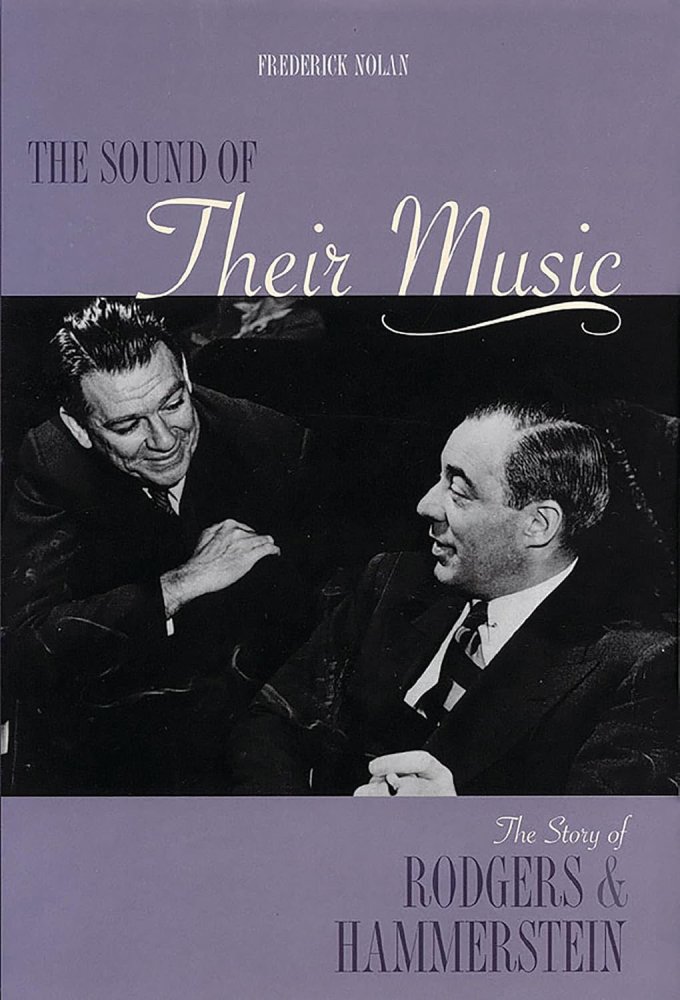
Hardcover. Guilford CT, Applause, 1st, 2021, Book: Very Good, Dust Jacket: Very Good, Hardcover in a bright, unclipped dust jacket. 200 pages, b&w illustrations. Richard Rodgers, Oscar Hammerstein, Jerome Kern, Irving Berlin, and . . . Dorothy Fields. These are the giants of the golden age of musical theater. Although she may not be as well known as her male counterparts, Dorothy Fields was America's most brilliant and successful female lyricist, who for five decades kept up with the greats. As the only woman among the boys' club of popular song, Fields was welcomed by her fellow male artists, who considered her as both an equal and a beloved colleague. Working with thirteen different composers, Fields wrote the lyrics and/or librettos for unforgettable masterpieces, such as Annie Get Your Gun, Redhead, and Sweet Charity. Her more than four hundred songs include the standards "On the Sunny Side of the Street," "Pick Yourself Up," and "The Way You Look Tonight," among other classic tunes.
Softcover. San Francisco, Miller Freeman Books, 1st, 1995, Book: Very Good, Dust Jacket: None, Softcover, 263 pages, b&w illustrations. This story of a musician hailed as a genius and dismissed as a madman will appeal to anyone intrigued by the fine line between creative inspiration and insanity. the author looks deep inside the life and music of this talented but tormented bass player who revolutionized his instrument and became one of the most potent forces in modern music. "Like his heroes Charlie Parker and Jimi Hendrix, Jaco didn't make it to age 40. But by the time he died at 35, the music world was indebted to him. Jaco had reinvented the role of the electric bass. Includes is the CD, "Jaco Pastorius: The Birthday Concert" in a pocket in the back of the book and is in excellent condition.
Hardcover. NY, Gotham Books, 1st, 2012, Book: Very Good, Dust Jacket: Very Good, Hardcover in a bright, unclipped dust jacket. 455 pages, b&w photos. The definitive biography of James Brown, the Godfather of Soul, with fascinating findings on his life as a Civil Rights activist, an entrepreneur, and the most innovative musician of our time. Playing 350 shows a year at his peak, with more than forty Billboard hits, James Brown was a dazzling showman who transformed American music. His life offstage was just as vibrant, and until now no biographer has delivered a complete profile. The One draws on interviews with more than 100 people who knew Brown personally or played with him professionally. Using these sources, award-winning writer RJ Smith draws a portrait of a man whose twisted and amazing life helps us to understand the music he made. The One delves deeply into the story of a man who was raised in abject-almost medieval-poverty in the segregated South but grew up to earn (and lose) several fortunes. Covering everything from Brown's unconventional childhood (his aunt ran a bordello), to his role in the Black Power movement, which used "Say It Loud (I'm Black and Proud)" as its anthem, to his high-profile friendships, to his complicated family life, Smith's meticulous research and sparkling prose blend biography with a cultural history of a pivotal era. Clean, bright copy.
NY, Jeremy P. Tarcher/Penguin, 1st pbk, 2009, Book: Very Good, Dust Jacket: None, Softcover, 361 pages, b&w illustrations. INSCRIBED BY JANIS IAN on the title page. The legendary singer and songwriter of the 70s gives us her memoir in the music business. Clean copy.
Hardcover. Philadelphia, Chilton Book Co, 1st, 1971, Book: Very Good, Dust Jacket: Very Good, Hardcover in a bright, unclipped dust jacket. 176 pages, profusely illustrated in b&w. Clean copy.
Hardcover. Lake Oswego OR, Metamorphous Press, 1st, 1985, Book: Very Good, Dust Jacket: Very Good, Hardcover in a bright dust jacket, b&w illustrations, 104 pages. A veteran piano tuner presents a non-technical, literary view of the quixotic tuning system used on keyboard instruments for hundreds of years. Focuses on the "comma", which is the pitch difference by which (9/8)^12 > (2/1), discusses its history, its importance in piano tuning, and philosophically what it all means. Winner of the Western States Book Award for creative nonfiction in 1986.
Softcover. Santa Fe Springs CA, Hathaway and Bowers, 1st, 1970-71, Book: Good, Dust Jacket: None, Nine softcover catalogs from the foremost dealer in antique music makers: Organs, pianinos, automatic harps, music boxes, etc. Catalogues No. 9 through 17, 1969-1971. All with b&w illustrations. Pages vary, 60-100. From a museum library with light stamping, small stickers on covers. Otherwise clean.
Hardcover. New York , Charles Scribner's Sons, 1st, 1972, Book: Very Good, Dust Jacket: Good, 176 pages, illustrated throughout in b&w. Dust jacket price clipped with slight rubbing, wear, sunning to edges and spine. Internally very good.